Published: Dec 13, 2022
Last Updated: September 18, 2026
Next Review: September 2027, or sooner if major nutrition or weight management guidance changes
Written and Source Checked by: Adel Galal, Founder and Lead Writer at NextFitLife
Review Status: This article is educational nutrition and weight management content. It has not been medically reviewed by a doctor, registered dietitian, endocrinologist, obesity medicine specialist, or other licensed healthcare professional.
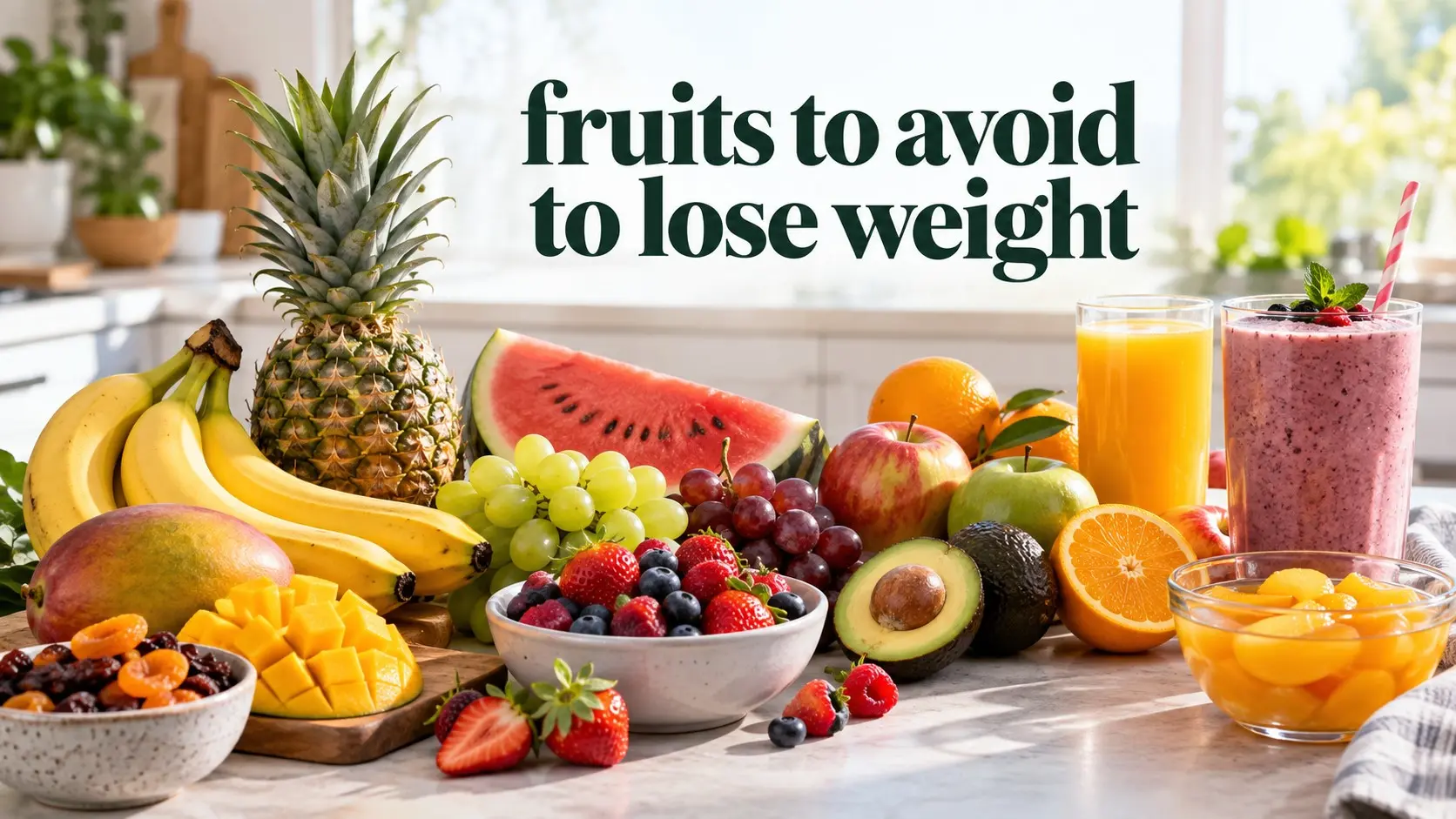
Are there really fruits to avoid to lose weight?
For most people, no.
That is the most important fact in this guide.
Bananas are not making you gain fat.
Mangoes are not blocking your metabolism.
Grapes are not secretly ruining your diet.
Pineapple does not turn directly into belly fat.
Watermelon is not too sugary for weight loss.
And avocado does not need to disappear from your plate.
Whole fruit can fit very well into a healthy weight loss plan.
Fruit provides water.
Fruit provides fiber.
Fruit provides vitamins and minerals.
Many fruits also have a relatively low energy density.
This means they can provide a useful amount of food without a huge number of calories.
The real issue is usually not the fruit itself.
The bigger issues are:
- Fruit juice
- Large dried fruit portions
- Fruit packed in syrup
- Sweetened fruit products
- Oversized smoothies
- Very large portions of calorie dense fruit foods
This article clears up the confusion.
You will learn which six fruits are often placed on avoid lists, why they usually do not deserve to be banned, which fruit forms deserve more attention, and how to eat fruit while losing weight.
For the bigger picture, start with the NextFitLife Weight Loss and Metabolism Guide.
Quick Answer: Which Fruits Should You Avoid to Lose Weight?
You usually do not need to completely avoid any normal whole fruit to lose weight.
The better rule is:
Choose whole fruit most often.
Pay more attention to fruit juice, sweetened fruit drinks, large dried fruit servings, fruit packed in heavy syrup, oversized smoothies, and very large portions of energy dense fruit products.
Weight loss comes from your overall energy balance.
No single banana or mango decides whether you lose fat.
Why Whole Fruit Is Usually Helpful for Weight Loss
Whole fruit has several useful features.
Fruit Contains Water
Many fruits contain a lot of water.
This adds volume.
More volume can make a snack or meal feel more satisfying.
Fruit Contains Fiber
Dietary fiber slows digestion and can help with fullness.
Fiber also supports bowel health.
Whole Fruit Takes Time to Eat
You chew an apple.
You peel an orange.
You eat berries one bite at a time.
That is very different from drinking several pieces of fruit in one glass.
Fruit Can Replace Higher Calorie Snacks
If an apple replaces cookies, candy, or chips, your total calorie intake may fall.
This is where fruit can help with healthy weight loss.
6 Fruits Often Told to Avoid and the Real Truth
| Fruit | Why It Gets Blamed | The Better Approach |
|---|---|---|
| Bananas | More carbohydrate than berries | Enjoy a normal portion and pair with protein if useful |
| Grapes | Easy to eat quickly | Place a portion in a bowl instead of eating from a large bag |
| Mangoes | Sweet and easy to overeat | Use a measured serving |
| Pineapple | Natural sugar content | Choose fresh or unsweetened pineapple |
| Watermelon | Tastes very sweet | Enjoy a normal serving and remember it contains lots of water |
| Avocado | Higher calorie because of healthy fat | Use a suitable portion rather than banning it |
1. Bananas: Do You Really Need to Avoid Them?
No.
Bananas appear on many lists of fruits to avoid to lose weight.
The usual reason is their carbohydrate and natural sugar content.
But that does not make bananas unhealthy.
A banana also provides:
- Potassium
- Vitamin B6
- Fiber
- Carbohydrate for energy
A banana can make a useful snack.
It can also work well before physical activity.
How to Eat Bananas During Weight Loss
Use a normal serving.
You can pair banana with:
- Plain Greek yogurt
- Cottage cheese
- A small amount of nut butter
- Oats
Pairing fruit with protein can make the snack more satisfying.
The problem is not the banana.
The problem may be turning one banana into a huge smoothie with juice, sweetened yogurt, honey, nut butter, and other calorie dense ingredients.
2. Grapes: Healthy but Easy to Eat Quickly
Grapes are small.
They taste sweet.
They are easy to grab.
That can make them easy to eat without noticing the amount.
But grapes still provide:
- Water
- Vitamins
- Plant compounds
They do not need to be banned.
Better Portion Strategy
Do not sit with a giant container if you tend to eat mindlessly.
Put a portion in a bowl.
Then put the rest away.
This is portion awareness.
It is not food restriction.
3. Mangoes: Sweet Does Not Mean Bad
Mango often appears on weight loss avoid lists because it tastes very sweet.
That is not a good reason to ban it.
Mango also provides:
- Vitamin C
- Vitamin A precursors
- Fiber
- Plant compounds
The key is the portion.
A bowl of mango can fit into a weight loss diet.
Several large mangoes plus other snacks may make calorie control harder.
Smart Mango Tip
Add mango to plain yogurt.
Or use a modest amount with oats.
You get sweetness without needing added sugar.
4. Pineapple: Natural Sugar Is Not the Same as Added Sugar
Pineapple tastes sweet.
That does not make it equivalent to candy.
Fresh pineapple contains water, vitamins, and fiber.
What deserves more attention is pineapple packed in heavy syrup.
The syrup can add extra sugar and calories.
Better Choice
Choose:
- Fresh pineapple
- Frozen pineapple without added sugar
- Canned pineapple in water
- Canned pineapple in its own juice
Check the label when buying packaged fruit.
5. Watermelon: Sweet but Full of Water
Watermelon tastes very sweet.
This causes many people to assume it must be bad for weight loss.
But watermelon contains a large amount of water.
That makes it relatively low in energy density.
It can be a refreshing fruit choice.
What About Blood Sugar?
Food choices should not be judged by sweetness alone.
Your portion, overall meal, health, and total diet all matter.
If you have diabetes, you can ask your healthcare team or registered dietitian how fruit fits your individual carbohydrate plan.
6. Avocado: Healthy but More Calorie Dense
Avocado is different from most sweet fruits.
It contains more fat.
Most of that fat is unsaturated.
Avocado also provides fiber.
But it is more calorie dense than berries, melon, apples, or oranges.
This means portion size deserves attention when weight loss is the goal.
Should You Avoid Avocado?
No.
Use an amount that fits your total eating pattern.
You may add avocado to:
- Salads
- Eggs
- Whole grain toast
- Bean bowls
The mistake is not eating avocado.
The mistake can be treating a calorie dense healthy food as though portion size never matters.
So What Fruit Forms Should You Actually Limit?
This is where the weight loss conversation becomes more useful.
The following six categories deserve more attention than ordinary whole bananas, grapes, mangoes, pineapple, watermelon, or avocado.
1. Large Amounts of Fruit Juice
Fruit juice is different from whole fruit.
Whole fruit contains intact structure and fiber.
Juice is much easier to drink quickly.
You may consume the equivalent of several pieces of fruit without feeling as full.
CDC guidance recommends choosing whole fruit over juice.
A 2024 systematic review and meta analysis also found evidence supporting limits on fruit juice to reduce excess calorie intake and weight gain risk.
Better Choice
Eat an orange rather than drinking a large glass of orange juice.
Eat an apple rather than drinking apple juice.
2. Large Portions of Dried Fruit
Dried fruit can be nutritious.
Drying removes much of the water.
This makes the food smaller and more calorie dense by volume.
It also makes large amounts easy to eat quickly.
Examples include:
- Raisins
- Dates
- Dried apricots
- Dried figs
- Dried cranberries
Some products also contain added sugar.
Better Choice
Use a small portion.
Check the ingredient list for added sugar.
Pair dried fruit with a protein or other filling food when helpful.
3. Fruit Packed in Heavy Syrup
Canned fruit can be a healthy and convenient choice.
The problem is not the can.
The issue is what the fruit is packed in.
Heavy syrup adds extra sugar and calories.
Better Choice
Choose fruit packed in:
- Water
- Its own juice
- No added sugar liquids
CDC specifically recommends watching for added sugar or syrup in canned fruit.
4. Sweetened Fruit Cups and Fruit Sauces
Fruit cups can vary a lot.
Some are mostly fruit.
Others contain added syrup or sugar.
Fruit sauces can also have added sugar.
This can turn a simple fruit serving into a more calorie dense product.
What to Check
Look at:
- Added sugars
- Serving size
- Ingredients
Choose the simpler product when possible.
5. Oversized Smoothies
A smoothie can be healthy.
It can also become a very large meal without feeling like one.
A smoothie may contain:
- Several fruits
- Juice
- Honey
- Nut butter
- Sweetened yogurt
- Protein powder
- Oats
- Seeds
Each ingredient may be fine.
Together, the calories can add up quickly.
Better Smoothie Formula
Keep it simple.
Try:
- One fruit serving
- Plain Greek yogurt or another protein source
- Water, milk, or unsweetened fortified soy drink
- Optional vegetables such as spinach
Do not assume a liquid meal has fewer calories simply because it looks healthy.
6. Fruit Desserts With Added Sugar and Fat
Apple pie is not the same as an apple.
Chocolate covered dried fruit is not the same as plain fruit.
Fried banana is not the same as fresh banana.
Fruit cobbler is not the same as berries.
These foods can still fit occasionally.
But their calories often come from more than the fruit.
Added sugar, pastry, cream, chocolate, oil, or butter may provide much of the energy.
Judge the whole food.
Do not blame the fruit.
Whole Fruit vs Fruit Juice for Weight Loss
| Feature | Whole Fruit | Fruit Juice |
|---|---|---|
| Fiber | Usually higher | Usually lower |
| Chewing | Yes | No |
| Eating speed | Usually slower | Usually faster |
| Fullness | Often greater | Often lower |
| Easy to overconsume | Usually less | Usually more |
| Best everyday choice | Usually yes | Keep portions modest |
Fresh, Frozen, Canned, or Dried Fruit: Which Is Best?
You do not need to buy only fresh fruit.
Frozen fruit can be excellent.
Canned fruit can also be useful.
Dried fruit can fit too.
The main things to check are:
- Added sugar
- Syrup
- Portion size
- Total calories
Fresh Fruit
Easy to eat whole.
Often high in water.
Frozen Fruit
Convenient.
Choose versions without added sugar.
Canned Fruit
Useful and affordable.
Choose water or its own juice rather than heavy syrup.
Dried Fruit
Convenient and nutrient dense.
Use smaller portions because the water has been removed.
Are High Sugar Fruits Bad for Weight Loss?
No.
This phrase is often misleading.
Whole fruit sugar comes inside a food that also contains water, fiber, micronutrients, and plant compounds.
This is not the same as adding large amounts of table sugar to a drink or dessert.
Weight loss depends on your overall calorie intake and eating pattern.
You do not need to rank every fruit by sugar content.
Does Fruit Sugar Turn Into Belly Fat?
Not automatically.
Eating one sweet fruit does not send fat directly to your stomach.
Belly fat changes as part of overall energy balance and body fat regulation.
Genetics, age, hormones, activity, sleep, and total food intake all matter.
Read the Belly Fat Loss Guide for a full explanation.
Does Fructose in Fruit Cause Weight Gain?
Fruit contains natural fructose.
That does not mean whole fruit causes weight gain.
Research needs to distinguish whole fruit from high intakes of added sugars and sweetened drinks.
A systematic review of whole fresh fruit found that increasing fruit intake generally supported weight maintenance or modest weight loss.
The food source matters.
Which Fruits Are Best for Weight Loss?
There is no single best fruit.
Choose fruit you enjoy and can eat in a useful portion.
Good choices may include:
- Apples
- Oranges
- Berries
- Pears
- Peaches
- Plums
- Kiwi
- Melons
- Grapefruit
These foods often provide water and fiber.
But bananas, grapes, mangoes, pineapple, and other fruits can fit too.
Are Berries Better Than Bananas?
They are different.
Berries tend to provide fewer calories by volume and a lot of fiber.
Bananas provide more carbohydrate and energy.
That can be useful for an active person.
You do not need to call one healthy fruit good and another bad.
Are Apples Good for Weight Loss?
Apples are a useful whole fruit choice.
They provide water and fiber.
They also require chewing.
An apple may work well as a snack when it replaces a more calorie dense snack.
Is Grapefruit a Fat Burning Fruit?
No.
Grapefruit is nutritious.
It is not a fat burner.
You do not need grapefruit before every meal to lose weight.
There is another important point.
Grapefruit can interact with some medicines.
If your medicine has a grapefruit warning, follow the advice from your pharmacist or healthcare professional.
Is Pineapple a Fat Burning Fruit?
No.
Pineapple contains an enzyme called bromelain.
That does not mean pineapple melts body fat.
Eat pineapple because you enjoy it and it provides useful nutrients.
Do not use it as a fat loss treatment.
Can You Eat Fruit at Night and Still Lose Weight?
Yes.
There is no universal time when fruit suddenly becomes fattening.
Your total eating pattern matters more than the clock.
If fruit helps replace cookies or chips at night, it may be a useful choice.
Should You Stop Eating Fruit After 6 PM?
No.
This is not necessary for most people.
Weight loss does not depend on banning fruit after one clock time.
Can You Eat Fruit Every Day While Losing Weight?
Yes.
CDC guidance includes fruit in a healthy eating pattern.
The better question is how fruit fits into your overall food intake.
Whole fruit can be part of a daily weight loss plan.
How Much Fruit Should You Eat?
Your needs depend on age, sex, activity, calorie needs, health, and the rest of your diet.
You do not need an unlimited amount.
You also do not need to fear normal servings.
A balanced eating plan should include variety.
Fruit is only one food group.
Fruit Portion Examples
| Fruit | Simple Portion Idea | Easy Weight Loss Tip |
|---|---|---|
| Apple | One medium fruit | Eat whole rather than as juice |
| Banana | One small or medium banana | Pair with yogurt if you need more fullness |
| Grapes | A small bowl | Portion before eating |
| Mango | A modest bowl | Add to yogurt instead of sweetened dessert |
| Berries | A bowl | Add to oats or yogurt |
| Avocado | A portion that fits your meal | Remember that it is more energy dense |
| Dried fruit | Small portion | Measure rather than eating from the bag |
How to Make Fruit More Filling
Fruit can work alone.
It can also be paired with protein or healthy fat.
Try:
- Apple with plain Greek yogurt
- Berries with cottage cheese
- Banana with plain yogurt
- Pear with a small portion of nuts
- Peach with cottage cheese
This can create a more balanced weight loss snack.
For more ideas, read High Protein Snack Ideas for Weight Loss.
Fruit Smoothie vs Whole Fruit
A smoothie is not automatically bad.
But it changes how easy it is to consume fruit quickly.
Whole fruit requires more chewing.
That can slow eating.
If you enjoy smoothies, keep the ingredients simple.
Do not assume a giant smoothie is a light snack.
What About Acai Bowls?
Acai itself is not the problem.
The issue is what may be added.
Some large bowls contain:
- Sweetened acai puree
- Banana
- Granola
- Honey
- Nut butter
- Coconut
- Dried fruit
That can become a very large meal.
Choose portions with awareness.
What About Coconut?
Coconut is nutritious.
It is also more calorie dense because it contains a lot of fat.
Coconut does not need to be banned.
But large amounts of coconut flakes, coconut cream, or coconut desserts can add a lot of energy.
Fruit and a Calorie Deficit
Weight loss requires an appropriate calorie deficit over time.
Fruit can fit into that deficit.
In fact, replacing a higher calorie snack with whole fruit can make the deficit easier for some people.
The important word is replace.
If you simply add several extra fruit snacks on top of everything you already eat, total calories may rise.
Read How Weight Loss Works for the basic science.
Fruit and Protein for Weight Loss
Fruit is not usually a major protein source.
This is why a fruit only meal may not keep some people full for long.
You can pair fruit with:
- Greek yogurt
- Cottage cheese
- Eggs
- Soy yogurt with adequate protein
- A measured amount of nuts
This gives you fruit plus protein for satiety.
Fruit and Fiber for Weight Loss
Whole fruit can contribute useful fiber.
But your diet should also include:
- Vegetables
- Beans
- Lentils
- Oats
- Whole grains
- Nuts
- Seeds
No one food needs to carry your entire fiber intake.
Can Too Much Fruit Stop Weight Loss?
Any food can contribute to excess calorie intake if eaten in very large amounts.
Fruit is no exception.
But this does not mean normal fruit intake is a common cause of weight loss failure.
Before blaming fruit, review:
- Portions
- Cooking oils
- Sweet drinks
- Restaurant meals
- Alcohol
- Snacks
- Weekend eating
- Activity
- Sleep
For a full checklist, read Why Am I Not Losing Weight in a Calorie Deficit?.
Fruit and Diabetes During Weight Loss
Whole fruit can fit into many diabetes eating plans.
But individual carbohydrate needs vary.
If you use insulin or medicine that can cause low blood glucose, large diet changes may affect your treatment.
Talk with your healthcare team before making major changes.
When Might Someone Need to Limit Certain Fruits?
There are situations where fruit choices need to be personalized.
These can include:
- Fructose intolerance
- Some digestive disorders
- Kidney disease requiring potassium management
- Diabetes with individual carbohydrate targets
- Medicine that interacts with grapefruit
- Food allergy
These are medical or individual nutrition issues.
They are not general reasons for everyone to avoid fruit.
Best Fruit Swaps for Weight Loss
| Instead of | Try | Why |
|---|---|---|
| Large glass of fruit juice | Whole orange or apple | More fiber and chewing |
| Large bag of dried fruit | Fresh fruit plus a small dried fruit portion | More water and easier portion control |
| Fruit in heavy syrup | Fruit packed in water or its own juice | Less added sugar |
| Huge smoothie | Simple smoothie or whole fruit | Easier calorie control |
| Fruit dessert with cream and pastry | Fresh fruit with plain yogurt | Less added sugar and fat |
Simple Fruit Snack Ideas
- Apple with plain Greek yogurt
- Berries with cottage cheese
- Orange with a small serving of nuts
- Banana with plain yogurt
- Pear with cinnamon
- Watermelon with plain yogurt
- Mango mixed into plain Greek yogurt
Common Fruit Weight Loss Mistakes
Believing Bananas Make You Fat
They do not.
Drinking Fruit Instead of Eating It
Whole fruit is generally more filling.
Eating Dried Fruit Straight From a Large Bag
Small pieces make large portions easy to consume.
Ignoring Added Sugar in Canned Fruit
Check for syrup.
Building a 700 Calorie Smoothie and Calling It a Snack
Healthy ingredients still contain calories.
Calling Natural Fruit Sugar the Same as Added Sugar
The food matrix matters.
Trying to Cut Fruit Instead of Sweet Drinks
For many people, sugary drinks are a more useful place to start.
Using Fruit as a Fat Burning Food
No fruit melts body fat.
Thinking You Can Eat Unlimited Fruit
Healthy does not mean unlimited.
Ignoring the Rest of Your Diet
Weight loss comes from the full pattern.
How I Approach Fruits to Avoid to Lose Weight
I am Adel Galal, founder and lead writer of NextFitLife.
I have maintained a personal interest in health, fitness, nutrition, weight management, wellness, and healthy aging for more than 30 years.
My work focuses on comparing reliable health guidance and current research, checking common claims, and turning complex nutrition topics into simple language.
The phrase fruits to avoid to lose weight is a good example of why context matters.
A headline can make bananas, grapes, mangoes, or pineapple sound like weight loss problems.
That is too simple.
Whole fruit is usually not the issue.
What matters more is the form, the portion, the total diet, and whether the fruit is replacing a more calorie dense food or simply being added on top.
I prefer a practical rule.
Eat whole fruit.
Choose variety.
Watch portions when foods are more calorie dense.
Limit added sugars.
Be more careful with juice and very large dried fruit portions.
And do not turn nutritious foods into unnecessary fear.
Conclusion: Fruits to Avoid to Lose Weight Are Mostly a Myth
The idea that there is a strict list of fruits to avoid to lose weight is mostly misleading.
Bananas can fit.
Mangoes can fit.
Grapes can fit.
Pineapple can fit.
Watermelon can fit.
Avocado can fit.
The smarter approach is to choose whole fruit most often.
Pay more attention to juice.
Watch dried fruit portions.
Choose canned fruit without heavy syrup.
Check added sugar.
Keep smoothies reasonable.
And remember that total calories and your overall eating pattern drive weight change.
Your next step is simple.
Keep your favorite whole fruit and replace one fruit drink or heavily sweetened fruit product with the whole version this week.
References and Sources
- Centers for Disease Control and Prevention.
Tips for Increasing Vegetables and Fruits in Your Diet: Healthy Eating for Healthy Weight.
Updated July 23, 2026.
https://www.cdc.gov/healthy-weight-growth/healthy-eating/fruits-vegetables.html
- Centers for Disease Control and Prevention.
Tips for Healthy Eating for a Healthy Weight.
Updated April 29, 2026.
https://www.cdc.gov/healthy-weight-growth/healthy-eating/index.html
- National Institute of Diabetes and Digestive and Kidney Diseases.
Eating and Physical Activity to Lose or Maintain Weight.
https://www.niddk.nih.gov/health-information/weight-management/adult-overweight-obesity/eating-physical-activity
- Hebden L, O'Leary F, Rangan A, Singgih Lie E, Hirani V, Allman Farinelli M.
Impact of Whole, Fresh Fruit Consumption on Energy Intake and Adiposity: A Systematic Review.
https://pubmed.ncbi.nlm.nih.gov/31139631/
- Nguyen M, Jarvis SE, Chiavaroli L, et al.
Consumption of 100% Fruit Juice and Body Weight in Children and Adults: A Systematic Review and Meta Analysis.
JAMA Pediatrics. 2024.
https://pubmed.ncbi.nlm.nih.gov/38227336/
Explore More NextFitLife Weight Loss and Nutrition Guides
- Weight Loss and Metabolism Guide
- How Weight Loss Works
- Natural Weight Loss
- Healthy Rate of Weight Loss
- High Protein Foods for Weight Loss
- High Protein Snack Ideas for Weight Loss
- Healthy Drinks to Reduce Belly Fat
- Weight Loss Tracking
- Lasting Weight Loss
- Why Am I Not Losing Weight in a Calorie Deficit?
Frequently Asked Questions About Fruits to Avoid to Lose Weight
What fruits should I avoid to lose weight?
Most people do not need to completely avoid normal whole fruits. A better strategy is to choose whole fruit most often and limit large servings of juice, dried fruit, fruit packed in heavy syrup, and sweetened fruit products.
Are bananas bad for weight loss?
No. Bananas can fit into a weight loss diet. Portion size and your overall calorie intake matter more than banning bananas.
Are grapes bad for weight loss?
No. Grapes can fit into a healthy eating pattern. Because they are small and easy to eat quickly, placing a portion in a bowl may help with portion awareness.
Is mango bad for weight loss?
No. Mango is nutritious and can fit into a weight loss diet. Enjoy a suitable portion rather than treating mango as a forbidden food.
Is pineapple bad for weight loss?
No. Fresh pineapple provides water, fiber, vitamins, and other nutrients. Pineapple packed in heavy syrup deserves more attention because of the added sugar.
Is watermelon bad for weight loss?
No. Watermelon contains a large amount of water and can fit into a weight loss eating plan. Sweet taste alone does not make a fruit fattening.
Is avocado bad for weight loss?
No. Avocado provides fiber and unsaturated fat. It is more calorie dense than many other fruits, so portion awareness can be useful when weight loss is the goal.
Is fruit juice bad for weight loss?
Fruit juice is easier to consume quickly and generally provides less fiber and fullness than whole fruit. Current guidance favors whole fruit over juice for everyday eating.
Is dried fruit bad for weight loss?
Dried fruit can be nutritious, but removing water makes it more calorie dense by volume and easier to overeat. Use a small portion and check for added sugar.
Can I eat fruit every day and still lose weight?
Yes. Whole fruit can be part of a healthy weight loss plan. Your total eating pattern and calorie intake matter.
Does fruit sugar cause belly fat?
Whole fruit does not automatically cause belly fat. Body fat changes are influenced by total energy intake, activity, genetics, age, hormones, sleep, and other factors.
Is fructose from fruit bad for weight loss?
Whole fruit should not be treated the same as high intakes of added fructose or sweetened drinks. Whole fruit contains fiber, water, and nutrients and is generally compatible with weight management.
What is the best fruit for weight loss?
There is no single best fruit. Apples, berries, citrus fruit, pears, kiwi, peaches, and melons can all be useful choices, and other fruits can fit too.
Is grapefruit a fat burning fruit?
No. Grapefruit is nutritious but does not directly burn body fat. It can also interact with some medicines, so follow medicine warnings carefully.
Does pineapple burn belly fat?
No. Pineapple does not selectively burn belly fat. It can still be part of a healthy eating plan.
Can I eat fruit at night and lose weight?
Yes. There is no universal time when fruit suddenly causes weight gain. Your overall calorie intake and eating pattern matter more than the clock.
Should I stop eating fruit after 6 PM?
No. Most people do not need a fruit cut off time for weight loss.
Are smoothies good for weight loss?
They can be, but large smoothies can contain several fruit servings plus juice, nut butter, sweetened yogurt, honey, and other calorie dense ingredients. Keep the recipe simple.
Is canned fruit healthy for weight loss?
Yes. Choose fruit packed in water or its own juice rather than heavy syrup when possible.
Can eating too much fruit stop weight loss?
Very large amounts of any food can raise calorie intake. However, normal whole fruit intake is rarely a reason to ban fruit. Review the full diet before blaming fruit.
Should people with diabetes avoid fruit?
Not necessarily. Whole fruit can fit into many diabetes meal plans. Individual carbohydrate needs and medicines vary, so personalized advice may be useful.
What fruit form is best for weight loss?
Whole fruit is generally the best everyday choice because it retains its natural water, fiber, structure, and chewing experience.
What should I eat instead of fruit juice?
Choose the whole fruit when practical. An orange, apple, berries, pear, or other whole fruit usually provides more fiber and fullness than juice.

Health & wellness writer with 30+ years of experience in nutrition, fitness, and healthy aging. Founder of NextFitLife.com — evidence-based health guidance.