Published: Jun 3, 2023
Last updated: July 2026
Reviewed for accuracy: Editorially reviewed and fact-checked against cancer, menopause, oncology-supportive-care, and public-health sources
Reading time: 15–20 minutes
Hot flashes can feel sudden.
Your face may feel warm.
Your chest may heat up.
You may sweat.
Your heart may beat faster.
You may wake up soaked at night.
It is normal to worry and ask: are hot flashes a sign of cancer?
The honest answer is this.
Most hot flashes are not cancer.
They are often linked with menopause, hormone changes, medicines, stress, heat, alcohol, spicy food, thyroid problems, or infection.
But hot flashes and heavy night sweats can sometimes happen with cancer or cancer treatment.
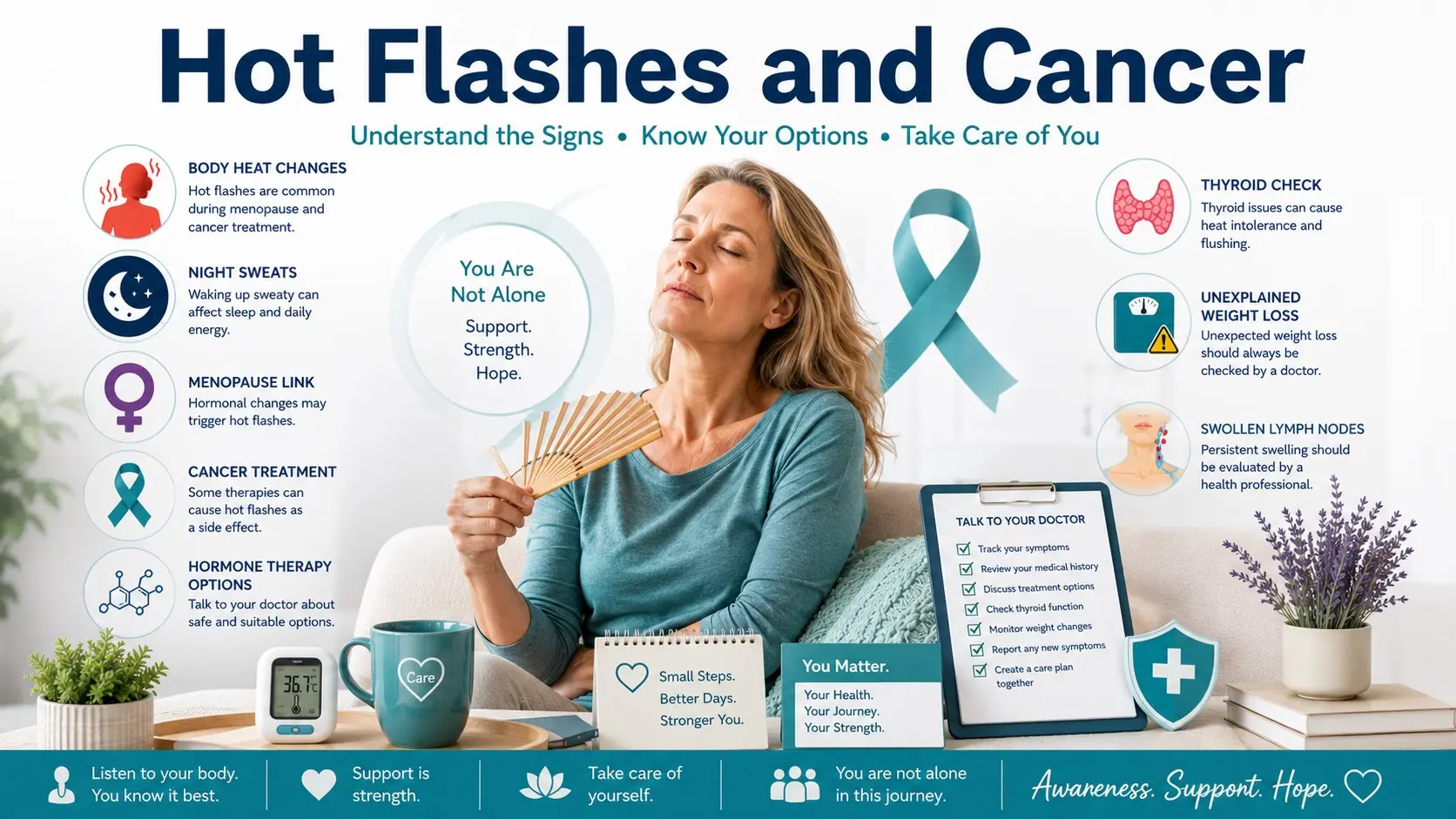
This guide explains hot flashes and Cancer, links, common non-cancer causes, treatment side effects, red flags, tests, safe relief tips, and when to get checked.
For more help, visit our Cancer Awareness & Prevention Hub, Women’s Health Hub, Men’s Health Hub, Medical Tests & Screenings Hub, Mental Health & Wellness Hub, and Health Hub.
Medical note: This article is for education only. It does not diagnose or treat cancer, menopause, thyroid disease, infection, lymphoma, leukemia, neuroendocrine tumours, hormone problems, or cancer treatment side effects. Get medical care if hot flashes or night sweats are severe, new, unexplained, drenching, or linked with fever, weight loss, swollen lymph nodes, chest pain, shortness of breath, fainting, or fast, irregular heartbeat.
Quick Answer: Are hot flashes a sign of Cancer?
Hot flashes are usually not a sign of cancer.
The most common cause is hormone change, especially around menopause.
But hot flashes or night sweats can sometimes be linked with:
- Cancer treatment
- Hormone therapy for cancer
- Chemotherapy-related menopause
- Surgery that lowers sex hormones
- Radiation that affects hormone organs
- Some cancers that cause sweating
- Infection during cancer care
- Fever
- Medicine side effects
The key is not one hot flash.
The key is the full pattern.
Very heavy night sweats, fever, weight loss, swollen lumps, or symptoms that do not go away should be checked.
What do hot flashes feel like?
A hot flash is a sudden wave of heat.
It may last a few minutes.
It may happen in the day or night.
Symptoms may include:
- Sudden warmth
- Sweating
- Flushed face
- Red neck or chest
- Fast heartbeat
- Anxiety feeling
- Chills after sweating
- Waking up soaked
- Poor sleep
- Tiredness the next day
Night hot flashes are often called night sweats.
Some night sweats are mild.
Drenching night sweats soak clothes or bedding.
When to Get Checked
Call a doctor if hot flashes or night sweats are:
- New and unexplained
- Very heavy or drenching
- Happening often
- Waking you from sleep
- Getting worse
- Not linked with menopause or a known cause
- Happening after a new medicine
- Happening during cancer treatment
- Happening after cancer treatment
Get checked soon if they happen with:
- Unexplained fever
- Unexplained weight loss
- Swollen lymph nodes
- Severe fatigue
- Itchy skin
- Ongoing cough
- Shortness of breath
- New pain
- Easy bruising
- Unusual bleeding
- Change in bowel habits
- Blood in stool or urine
These signs do not always mean cancer.
But they do need medical review.
When it may be urgent
Get urgent help now if sweating or hot flashes come with:
- Chest pain
- Severe shortness of breath
- Fainting
- Confusion
- Severe weakness
- Very fast or irregular heartbeat
- High fever with feeling very unwell
- Signs of infection during chemotherapy
- Severe headache with weakness or speech trouble
- Vomiting blood
- Black stools
If you are in cancer treatment and develop a fever, call your cancer team right away.
Hot Flashes and Cancer Treatment
Hot flashes are common during or after some cancer treatments.
This can happen because treatment may lower estrogen or testosterone.
Hormones help control body temperature.
When hormone levels drop, the body may react with hot flashes.
Cancer treatments that may trigger hot flashes include:
- Hormone therapy for breast cancer
- Hormone therapy for prostate cancer
- Hormone therapy for endometrial cancer
- Chemotherapy that causes early menopause
- Ovary removal surgery
- Testicle removal surgery
- Radiation that affects the ovaries or testes
- Medicines that affect hormone levels
If hot flashes start after cancer treatment, tell your cancer team.
Do not stop treatment on your own.
Hot Flashes After Breast Cancer
Some breast cancer treatments can lower estrogen.
This can cause menopause-like symptoms.
Hot flashes may happen with:
- Tamoxifen
- Aromatase inhibitors
- Ovarian suppression
- Chemotherapy-related menopause
- Surgery that removes the ovaries
Hormone replacement therapy may not be safe for some breast cancer survivors.
Ask your oncology team before using hormones, herbs, or supplements.
Hot Flashes During Prostate Cancer Treatment
Some prostate cancer treatments lower testosterone.
This is often called androgen deprivation therapy.
It can cause hot flashes in men.
Symptoms may include:
- Sudden heat
- Sweating
- Night sweats
- Poor sleep
- Fatigue
- Mood changes
Tell your cancer team if symptoms affect sleep or daily life.
Can cancer itself cause sweating?
Sometimes, yes.
Some cancers can cause sweating or night sweats.
This is more often talked about with:
- Hodgkin lymphoma
- Non-Hodgkin lymphoma
- Leukemia
- Some neuroendocrine tumors
- Some advanced cancers
But night sweats have many non-cancer causes too.
That is why testing matters.
Do not self-diagnose cancer from sweating alone.
Hot Flashes vs Night Sweats
Hot flashes can happen at any time.
Night sweats happen during sleep.
Night sweats may wake you up.
You may need to change clothes or sheets.
Night sweats can be caused by:
- Warm room
- Heavy blankets
- Menopause
- Anxiety
- Alcohol
- Spicy food
- Fever
- Infection
- Medicines
- Thyroid problems
- Low blood sugar
- Cancer treatment
- Some cancers
Heavy, drenching, repeated night sweats need a medical check.
Common Non-Cancer Causes of Hot Flashes
Many hot flashes are not cancer.
Here are common causes.
1. Menopause and Perimenopause
This is one of the most common causes.
Hormone levels change.
Hot flashes and night sweats may happen for months or years.
They may affect sleep and mood.
2. Medicines
Some medicines can cause sweating or hot flashes.
These may include:
- Antidepressants
- Hormone medicines
- Pain medicines
- Diabetes medicines
- Steroids
- Fever medicines when fever breaks
- Cancer medicines
Do not stop the medicine by yourself.
Ask your doctor or pharmacist.
3. Thyroid Problems
An overactive thyroid can cause heat intolerance and sweating.
Other signs may include:
- Fast heartbeat
- Weight loss
- Shaking hands
- Anxiety
- Loose stools
- Feeling hot
- Trouble sleeping
A blood test can check thyroid function.
4. Infection
Infections can cause fever and sweating.
Examples include viral infections, bacterial infections, tuberculosis, and others.
A fever with feeling very unwell needs medical care.
5. Anxiety and Stress
Stress can make the body feel hot.
It can also cause sweating and a racing heart.
But do not blame anxiety if symptoms are new, severe, or linked with red flags.
6. Alcohol, Caffeine, and spicy food
These can trigger hot flashes in some people.
Try tracking them.
Then reduce what makes symptoms worse.
7. Warm Room or Heavy Bedding
A hot room can cause sweating.
Try lighter bedding and cooler air.
If sweating continues in a cool room, get checked.
8. Low blood sugar
Low blood sugar can cause sweating, shaking, hunger, and a fast heartbeat.
This can happen in some people with diabetes.
Ask your doctor if you think this is happening.
How Doctors Check Hot Flashes
Your doctor will ask questions.
They may ask:
- When did it start?
- How often does it happen?
- Is it day or night?
- Do clothes or sheets get soaked?
- Do you have a fever?
- Have you lost weight?
- Do you have swollen glands?
- Are you in menopause?
- Do you take cancer treatment?
- What medicines do you use?
- Do you drink alcohol?
- Do you have thyroid symptoms?
- Do you have any symptoms of infection?
They may do a physical exam.
They may order tests.
Possible Tests
Tests depend on your story.
They may include:
- Complete blood count
- Thyroid blood test
- Liver tests
- Kidney tests
- Blood sugar test
- Inflammation markers
- Menopause hormone tests in selected cases
- Infection tests
- Chest X-ray if needed
- Imagine if your doctor finds a reason
- Biopsy of a swollen lymph node if needed
Do not ask for random scans first.
Start with a doctor visit and the right exam.
How to Track Symptoms
A simple symptom diary can help.
Write down:
- Date and time
- How long did it last
- Day or night
- Mild or drenching
- Triggers
- Foods or drinks
- Medicines
- Stress level
- Room temperature
- Fever
- Weight changes
- Other symptoms
Bring this to your doctor.
Safe Ways to Ease Hot Flashes
These steps may help with mild hot flashes.
They do not treat cancer or infection.
1. Keep Cool
- Use a fan.
- Wear light layers.
- Use breathable bedding.
- Keep the room cool.
- Drink cool water.
2. Track Triggers
Common triggers include:
- Alcohol
- Hot drinks
- Spicy food
- Stress
- Warm rooms
- Caffeine
- Tight clothes
Not everyone has the same triggers.
3. Try Slow Breathing
Slow breathing may help during a hot flash.
- Sit down.
- Relax your shoulders.
- Breathe in slowly.
- Breathe out slowly.
- Repeat for 1 to 2 minutes.
4. Move Your Body
Gentle exercise can support sleep, mood, and health.
Try walking, stretching, yoga, or light strength work if safe.
5. Support Sleep
- Keep the room cool.
- Use light bedding.
- Avoid heavy meals late.
- Limit alcohol.
- Keep a steady sleep time.
- Keep spare clothes nearby.
6. Ask About Medical Options
If symptoms are strong, ask your doctor.
Options may include non-hormonal medicines.
Hormone therapy may help some people, but it is not safe for everyone.
This is very important for people with a history of breast cancer, endometrial cancer, blood clots, stroke, or liver disease.
Always ask your doctor or cancer team first.
What Not to Do
- Do not assume hot flashes mean cancer.
- Do not ignore drenching night sweats.
- Do not ignore fever or weight loss.
- Do not stop cancer medicine on your own.
- Do not start hormone therapy without medical advice.
- Do not use “detox” products for sweating.
- Do not rely on supplements instead of a checkup.
- Do not ignore swollen lymph nodes.
- Do not ignore infection signs during cancer treatment.
- Do not delay care for chest pain or fainting.
Hot Flashes and Cancer Survivors
Cancer survivors may have hot flashes for many reasons.
Potential causes include:
- Menopause from treatment
- Hormone therapy
- Ovary or testicle surgery
- Radiation effects
- Stress
- Sleep problems
- Medicines
- Fear of recurrence
Tell your oncology team.
There may be safe ways to help.
You do not have to just suffer through it.
Hot Flashes in Men
Men can have hot flashes too.
They may happen with:
- Prostate cancer hormone therapy
- Low testosterone
- Medicines
- Thyroid problems
- Infection
- Anxiety
- Alcohol
Men with new hot flashes should get checked, especially if symptoms are strong or linked with weight loss, fever, or night sweats.
Hot Flashes in Younger People
Hot flashes in younger people may happen from:
- Medicines
- Thyroid problems
- Infection
- Anxiety
- Early menopause
- Hormone changes
- Cancer treatment
- Rare hormone tumors
New or unexplained symptoms should be checked.
Can Supplements Help?
Be careful with supplements.
Some products claim to stop hot flashes.
But they may not be safe for everyone.
Some can act like hormones.
Some can interact with cancer medicines.
Some can affect blood thinning, blood pressure, or the liver.
Ask your doctor before using:
- Black cohosh
- Soy isoflavones
- Red clover
- Evening primrose oil
- Herbal menopause blends
- High-dose vitamins
- Detox teas
This is very important if you have cancer or have had cancer before.
Simple 7-Day Hot Flash Tracking Plan
This plan does not replace care.
It helps you see patterns.
Day 1: Write the Pattern
Write when hot flashes happen and how strong they are.
Day 2: Check Night Sweats
Note if clothes or bedding are soaked.
Day 3: Track Food and Drink
Watch alcohol, caffeine, spicy food, and hot drinks.
Day 4: Check Temperature
Take your temperature if you feel feverish.
Day 5: Check Other Symptoms
Note weight loss, fatigue, pain, swollen nodes, cough, or itching.
Day 6: Review Medicines
Write down all medicines, herbs, and supplements.
Day 7: Decide on Care
Book a doctor visit if symptoms are new, severe, drenching, or unexplained.
Daily Hot Flash Checklist
- Did I have a hot flash today?
- Was it mild or severe?
- Did I sweat through clothes or sheets?
- Did I have a fever?
- Did I lose weight without trying?
- Do I have swollen lymph nodes?
- Did I start a new medicine?
- Am I in cancer treatment?
- Did I avoid triggers?
- Do I need to call a doctor?
Questions to Ask Your Doctor
- What could be causing my hot flashes?
- Could this be menopause?
- Could this be a medicine side effect?
- Could my thyroid be involved?
- Could this be an infection?
- Do I need blood tests?
- Do I need cancer screening?
- Are my night sweats concerning?
- Are hormone treatments safe for me?
- What non-hormonal options can help?
- Are supplements safe with my medicines?
- What symptoms indicate urgent care?
FAQ
Are hot flashes a symptom of cancer?
Hot flashes are usually not cancer. They are often linked with menopause, medicines, thyroid problems, stress, heat, alcohol, or infection. But hot flashes and night sweats can sometimes happen with cancer or cancer treatment.
What cancers can cause night sweats?
Night sweats can sometimes happen with lymphoma, leukemia, some neuroendocrine tumours, and some advanced cancers. But infections, menopause, medicines, thyroid disease, and anxiety are also common causes.
Are hot flashes common during cancer treatment?
Yes. Hot flashes can happen during some cancer treatments, especially treatments that lower estrogen or testosterone, such as hormone therapy, chemotherapy-related menopause, ovary removal, or prostate cancer hormone therapy.
When should I worry about hot flashes?
Worry if hot flashes are new, severe, unexplained, drenching at night, or linked with fever, weight loss, swollen lymph nodes, severe fatigue, chest pain, shortness of breath, or fast, irregular heartbeat.
What do cancer night sweats feel like?
They may be heavy or drenching and can soak clothes or bedding. But heavy night sweats can also happen from infection, menopause, medicines, and other non-cancer causes.
Can breast cancer treatment cause hot flashes?
Yes. Some breast cancer treatments can lower estrogen or change hormone signals. This can lead to hot flashes and night sweats. Ask your oncology team about safe relief options.
Can prostate cancer treatment cause hot flashes?
Yes. Hormone therapy for prostate cancer can lower testosterone and may cause hot flashes, sweating, sleep problems, and mood changes.
Can stress cause hot flashes?
Stress and anxiety can cause heat, sweating, and a racing heart. But new or severe symptoms should still be checked, especially with fever, weight loss, or night sweats.
How are hot flashes checked?
A doctor may ask about timing, menopause, medicines, cancer treatment, fever, weight loss, and swollen nodes. Tests may include blood count, thyroid test, blood sugar, infection tests, or other tests based on symptoms.
Can I use supplements for hot flashes after cancer?
Do not use supplements without asking your doctor or cancer team. Some supplements can act like hormones or interact with cancer medicines.
Related Reading
- Cancer Awareness & Prevention Hub
- Women’s Health Hub
- Men’s Health Hub
- Medical Tests & Screenings Hub
- Mental Health & Wellness Hub
- Cancer Prevention: Daily Habits That May Lower Risk
- Breast Cancer Symptoms and Treatment Tips
- Pancreatic Cancer: Symptoms, Causes, and When to Worry
- Lung Cancer Symptoms NHS: Early Signs and Care
- Secondary Liver Cancer: Symptoms and Care
- Health Hub
Key Takeaway
Hot Flashes and Cancer can be linked in some cases.
But most hot flashes are not cancer.
Common causes include menopause, medicines, thyroid problems, stress, alcohol, spicy food, warm rooms, and infection.
Cancer treatment can also cause hot flashes, especially treatments that lower estrogen or testosterone.
Get checked if hot flashes or night sweats are new, severe, drenching, unexplained, or linked with fever, weight loss, swollen lymph nodes, severe fatigue, chest pain, shortness of breath, or fast irregular heartbeat.
Sources
- National Cancer Institute — Hot Flashes and Night Sweats
- American Cancer Society — Managing Hot Flashes and Night Sweats
- Cancer Research UK — Signs and Symptoms of Cancer
- Cancer Research UK — Sweating and Cancer
- Macmillan Cancer Support — Hot Flushes and Sweating
- Macmillan Cancer Support — Menopausal Symptoms and Cancer Treatment
- Mayo Clinic — Hot Flashes Symptoms and Causes
- NHS — Non-Hodgkin Lymphoma Symptoms
- National Cancer Institute — Symptoms of Cancer

Health & wellness writer with 30+ years of experience in nutrition, fitness, and healthy aging. Founder of NextFitLife.com — evidence-based health guidance.