Last Updated: July 13, 2026
Topic: Benefits of Physical Activity
Reading Time: About 11 minutes
Content Note: This article is for education only. It does not replace medical advice.
The Benefits of physical activity are bigger than weight loss.
Movement can help your heart.
It can help your brain.
It can help your muscles.
It can help your bones.
It can help your mood.
It can help your sleep.
It can help your daily energy.
You do not need to be an athlete.
You do not need a gym.
You do not need a hard workout.
You can start with walking, stretching, light strength work, dancing, gardening, stairs, or simple movement breaks.
For many adults, 30 minutes a day, 5 days a week, is a helpful target.
But if that feels too much, start with 5 minutes.
Slight movement still counts.
This guide explains the major benefits of physical activity and how to start safely in real life.
Quick answer
The Benefits of Physical Activity include better heart health, stronger muscles, better balance, better blood sugar control, easier weight management, better sleep, lower stress, better mood, stronger bones, better brain health, and more daily energy.
Adults can aim for 150 minutes of moderate activity weekly plus 2 days of muscle-strengthening activity.
You can split this into 30 minutes a day, 5 days a week.
What is physical activity?
Physical activity means any movement that uses your muscles and uses energy.
It is not only a formal exercise.
It can include:
- Walking
- Cleaning
- Gardening
- Dancing
- Stairs
- Stretching
- Cycling
- Swimming
- Strength training
- Playing with children
This is why daily movement matters.
You can build health with small actions throughout the day.
How much physical activity does adults need?
A common adult goal is 150 minutes of moderate activity each week.
That can look like 30 minutes a day, 5 days a week.
Adults also need muscle-strengthening activity 2 days each week.
Moderate activity means your heart beats faster, but you can still talk.
Brisk walking is a simple example.
If 30 minutes feels hard, split it.
- 10 minutes in the morning
- 10 minutes after lunch
- 10 minutes after dinner
This makes 150 minutes of exercise per week feel easier.
Before you start
Start with your current level.
Do not push through sharp pain.
Do not jump into intense workouts if you have been inactive.
Talk with a qualified healthcare professional before starting a new activity plan if you have chest pain, heart disease, diabetes, high blood pressure, breathing problems, dizziness, fainting, severe joint pain, recent surgery, pregnancy, long-term illness, or a history of exercise-related symptoms.
Stop activity and seek help if you feel chest pain, fainting, severe shortness of breath, sudden weakness, confusion, severe dizziness, or sharp pain.
1. Physical activity supports heart health
Your heart is a muscle.
Movement helps it work better.
Walking, cycling, swimming, dancing, and other aerobic activities can support heart and blood vessel health.
Regular movement can also help improve fitness over time.
This is one of the biggest heart health benefits of movement.
You do not need to start with running.
A brisk walk is enough to begin.
2. It helps with blood sugar control
Movement helps your body use energy.
It can help your body use blood sugar better.
This matters for many adults, especially people at risk for type 2 diabetes.
A short walk after meals may be a simple starting habit for some people.
If you have diabetes or take medicine that affects blood sugar, ask your healthcare provider what is safe.
This is a practical blood sugar control benefit.
3. It helps with weight management
Physical activity can support weight management.
It helps you use energy.
It can also help protect muscle when paired with strength training and enough protein.
But movement works best with healthy food habits.
It is not a punishment for eating.
It is a way to care for your body.
This supports weight management more safely.
4. It strengthens muscles
Muscle helps you lift, carry, stand, climb, and move with confidence.
Strength activity can include:
- Chair squats
- Wall push-ups
- Resistance bands
- Light dumbbells
- Step ups
- Farmer carries
This is why strength training matters.
Powerful muscles make daily life easier.
5. It supports bone health
Bones respond to safe loading.
Walking, stairs, resistance training, and balance work may help support bone strength over time.
This matters more than our age.
If you have osteoporosis, high fall risk, or a recent fracture, ask a qualified professional which moves are safe.
This is one reason bone health and movement belong together.
6. It improves balance and stability
Balance helps prevent falls.
It also helps you feel more confident when walking, turning, and using stairs.
Simple balance work can include:
- Standing near a chair
- Heel-to-toe walking
- Slow marching
- Single leg stands with support
- Step ups
This supports balance exercises for daily life.
7. It can improve mood
Movement can help mood.
It can give your day structure.
It can help you feel more in control.
It can help you step away from stress.
You do not need a perfect workout to feel a little better.
A 10-minute walk can be a good start.
This is one of the most useful mental health benefits of exercise.
8. It may reduce stress
Stress can build in the body.
Movement can help you release tension.
Try:
- A short walk
- Gentle stretching
- Slow breathing after movement
- Yoga-inspired mobility
- Light cycling
This supports stress relief.
It does not solve every problem, but it can make the next step feel easier.
9. It supports better sleep
Regular activity can help some people sleep better.
Better sleep can also make movement easier the next day.
Try to keep intense exercise away from bedtime if it wakes you up.
Gentle evening stretching or walking may work better for some people.
This supports sleep quality.
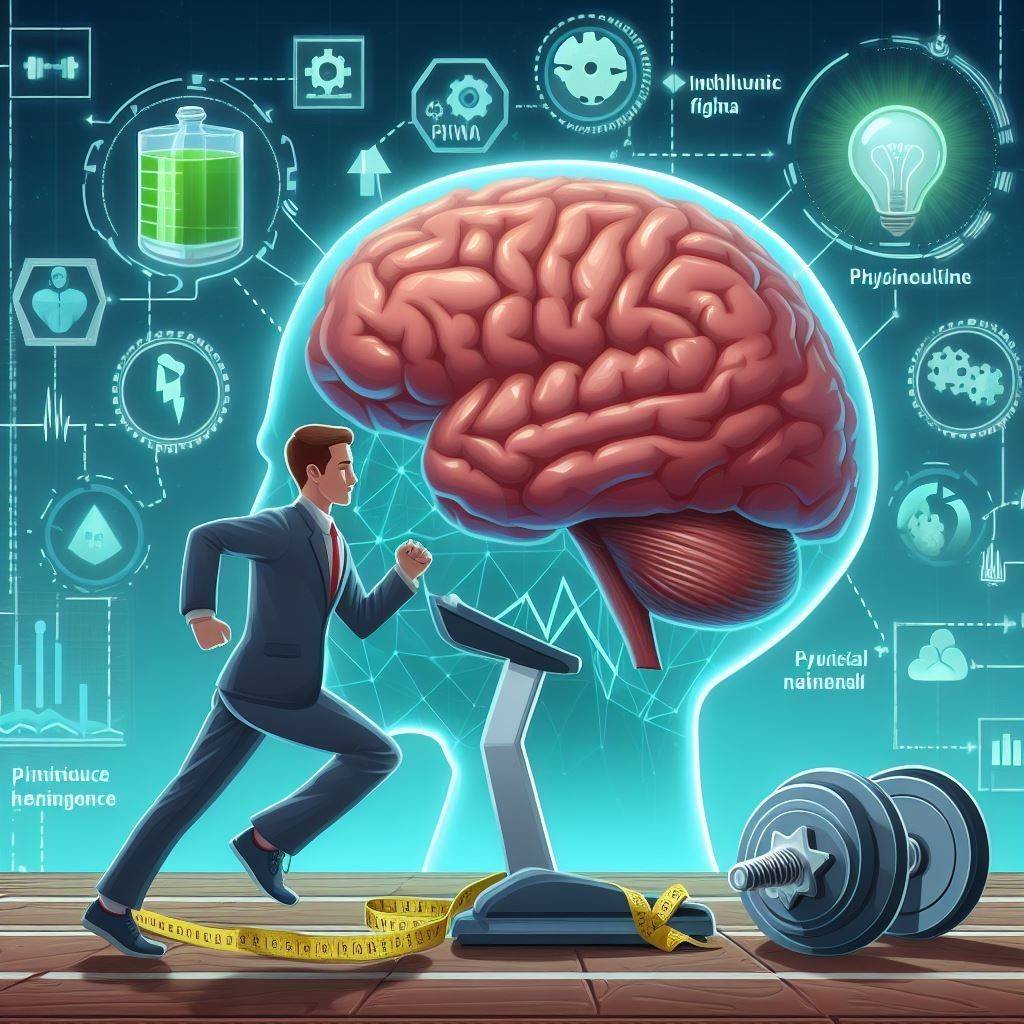
10. It helps your brain
Movement supports blood flow and overall health.
It can help focus, memory, mood, and daily alertness for many people.
Physical activity is not only for the body.
It is also part of brain health.
Walking outdoors can be a simple way to combine movement, light, and a mental reset.
11. It improves energy over time
It may sound strange, but moving more can help you feel more energetic.
At first, you may feel tired if you are inactive.
That is why you should start small.
Over time, your body can become better at daily tasks.
This supports daily energy.
12. It helps you sit less
Sitting for long periods can make your body feel stiff.
You can add light movement during the day.
- Stand during phone calls.
- Walk for 2 minutes every hour.
- Stretch your calves.
- Use stairs when safe.
- Take a short walk after meals.
This helps reduce sedentary behaviour.
Even light activity can help reduce some risks of sitting too much.
13. It builds confidence
Physical activity can help you trust your body again.
Each small session proves that you can show up.
That confidence can spread into food choices, sleep, work, and stress.
You do not need to be perfect.
You only need to keep returning to the habit.
What counts as 30 minutes a day?
You can choose many options.
- 30-minute brisk walk
- 10 minutes of walking, 3 times
- 20 minutes walking plus 10 minutes stretching
- 15 minutes cycling plus 15 minutes strength work
- 10 minutes of stairs, 10 minutes of walking, 10 minutes of mobility
Choose what fits your life.
The best plan is the one you repeat.
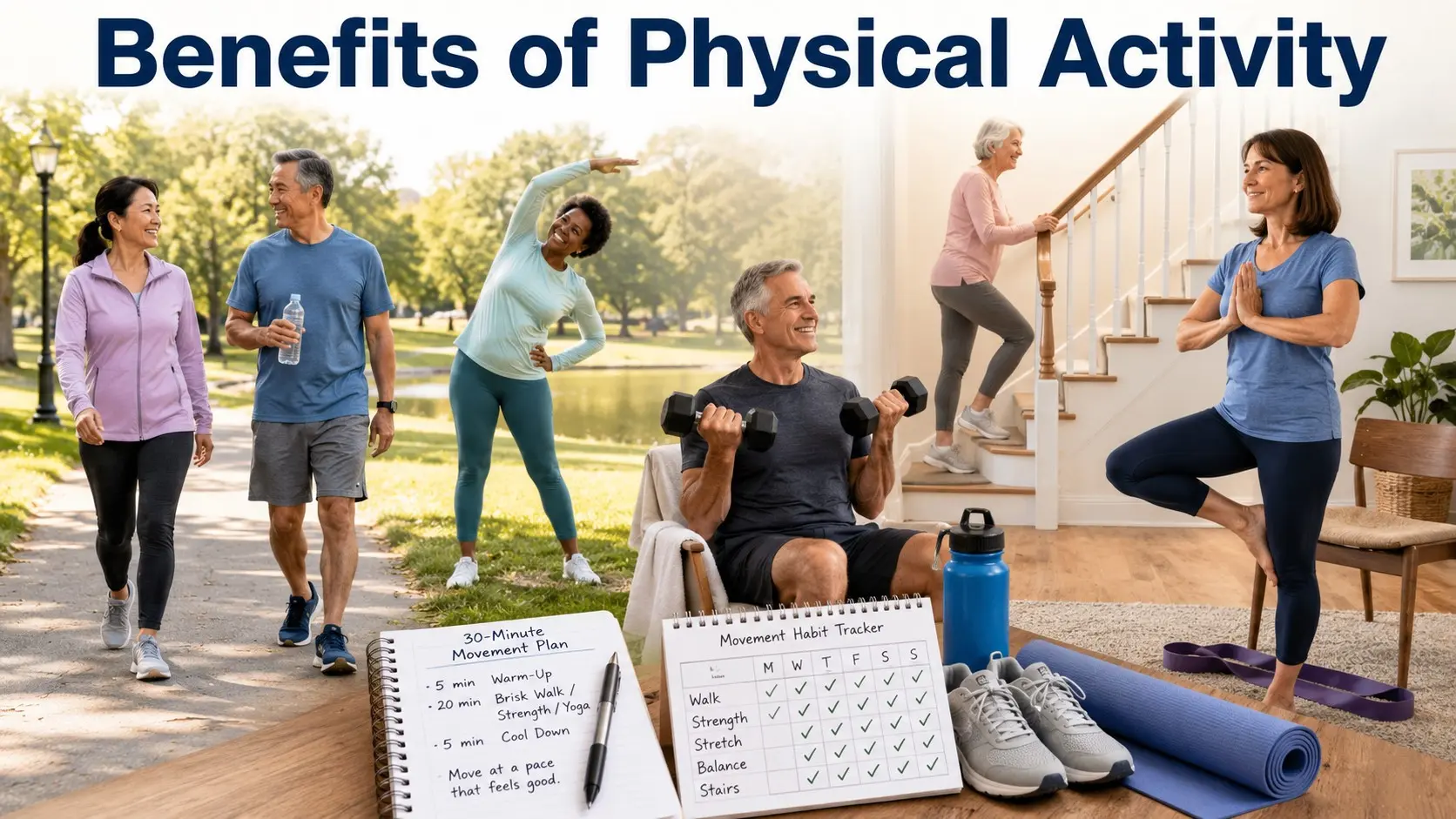
Beginner 30-minute movement plan
Use this plan if you want a simple start.
First 5 minutes
Walk slowly and warm up.
Next 15 minutes
Walk at a pace where you can talk.
Next 5 minutes
Do simple strength moves.
- Chair squats
- Wall push-ups
- Standing marches
Last 5 minutes
Cool down with slow walking and gentle stretching.
This is a simple beginner workout.
Weekly physical activity plan
Monday
30-minute walk.
Tuesday
Light strength training.
Wednesday
30-minute walk or cycling.
Thursday
Rest or gentle stretching.
Friday
30-minute walk.
Saturday
Strength training and balance work.
Sunday
Easy walk, family activity, or rest.
This plan supports active lifestyle habits without moving feel extreme.
How to start if you feel out of shape
Start smaller than you think.
Try 5 minutes.
Then stop while you still feel good.
Repeat tomorrow.
Build slowly.
Your first goal is not fitness perfection.
Your first goal is trust.
How to make physical activity easier
- Keep walking shoes visible.
- Plan movement on your calendar.
- Walk with a friend.
- Use music or a podcast.
- Choose a safe route.
- Keep a water bottle ready.
- Track minutes, not perfection.
This helps with exercise motivation.
How to stay safe
- Warm up first.
- Start slowly.
- Use comfortable shoes.
- Drink water.
- Rest when needed.
- Stop with sharp pain.
- Increase time and intensity slowly.
Safe movement is better than hard movement; you cannot keep.
Common mistakes to avoid
- Doing too much too soon
- Skipping rest
- Ignoring pain
- Only doing cardio and skipping strength
- Thinking brief sessions do not count
- Waiting for motivation before starting
- Comparing yourself to advanced athletes
A steady routine beats a perfect plan.
My simple rule
Do not ask only, “What workout is best?”
Ask, “What movement can I repeat this week?”
That question works better.
Movement becomes powerful when it becomes normal.
Conclusion
The Benefits of physical activity include better heart health, stronger muscles, better balance, better mood, better sleep, improved energy, and support for weight management.
You do not need to start with hard workouts.
Start with walking.
Add light strength work.
Sit less.
Move in small pieces.
Your next step: choose one 10 minute walk today and use it as your first step toward the Benefits of physical activity.
Related guides from NextFitLife
This article is part of our Fitness Hub. You may also want to visit our Fitness for Beginners Guide, Cardio & Endurance Guide, and Strength Training & Muscle Building Guide.
FAQ
What are the main Benefits of physical activity?
The main Benefits of physical activity include better heart health, stronger muscles, better balance, weight management, improved mood, better sleep, more energy, and better blood sugar control.
Is 30 minutes of physical activity a day enough?
For many adults, 30 minutes a day, 5 days a week can help reach 150 minutes of moderate activity weekly. Adults also need muscle-strengthening activity 2 days each week.
What counts as physical activity?
Walking, cycling, swimming, dancing, gardening, cleaning, stairs, stretching, strength training, and active play can all count as physical activity.
Can beginners start with 5 minutes?
Yes. Beginners can start with 5 minutes and build slowly. Some physical activity is better than none.
Does physical activity help the brain?
Physical activity can support brain health, mood, focus, and stress control. Walking outdoors can be a simple starting habit.
Who should ask a doctor before becoming more active?
Talk with a healthcare professional if you have chest pain, heart disease, diabetes, high blood pressure, breathing problems, dizziness, fainting, severe joint pain, recent surgery, pregnancy, long term illness, or exercise related symptoms.
References and Sources

Health & wellness writer with 30+ years of experience in nutrition, fitness, and healthy aging. Founder of NextFitLife.com — evidence-based health guidance.