
NextFitLife Fitness Hub
Published: March 2026 · Last updated: July 2026 · Next review: July 2027
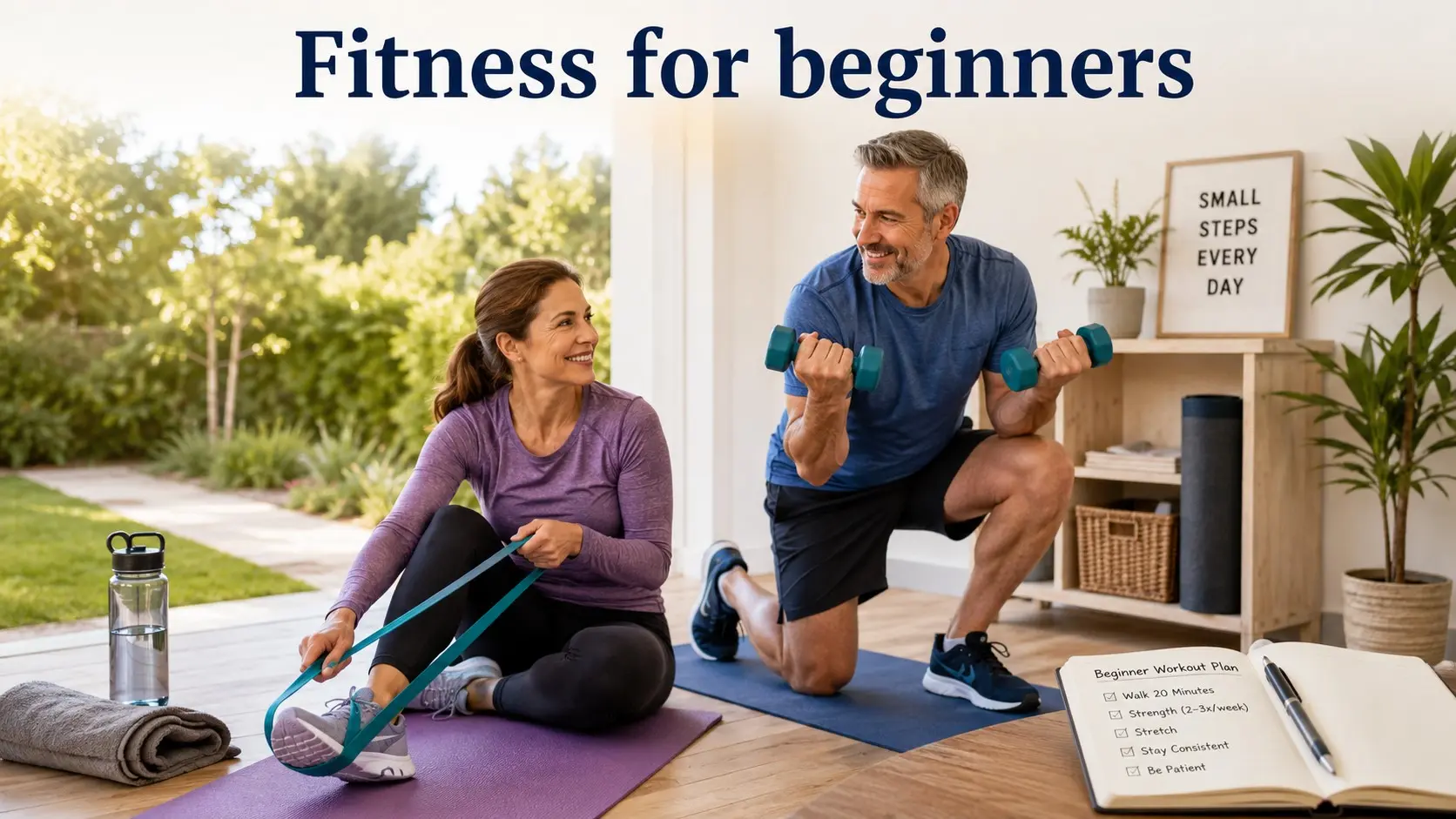
This guide is part of the NextFitLife Fitness Hub, where you can explore related topics such as strength training, cardio, yoga, recovery, home workouts, fitness nutrition, and mind-body movement.
Important beginner fitness safety note
This guide is for education only. It does not diagnose symptoms, replace medical care, prescribe a personal workout plan, or tell you to start, stop, or change medication, treatment, supplements, diet, rehabilitation, or exercise.
Stop exercising and seek urgent medical help if you have chest pain, severe shortness of breath, fainting, severe dizziness, sudden weakness, signs of stroke, confusion, seizure, severe injury, uncontrolled bleeding, or symptoms that feel sudden, severe, unusual, or dangerous.
Speak with a qualified healthcare professional before starting or intensifying exercise if you have heart disease, chest symptoms, high blood pressure, diabetes, pregnancy, dizziness, fainting, severe obesity, chronic pain, joint problems, osteoporosis, recent surgery, long inactivity, a history of injury, neurological symptoms, or any condition that may affect safe movement.
Source and review standard for beginner fitness content
Source standard: Beginner fitness articles should use trusted exercise, medical, public-health, sports-medicine, weight-management, and injury-prevention sources where relevant. Articles about weight loss, CrossFit-style workouts, older adults, diabetes, chronic disease, pregnancy, injuries, or rapid results need extra caution.
Review priority: High for articles about getting fit fast, weight loss, belly fat, exercise after 50 or 60, CrossFit-style workouts, long inactivity, chronic disease, and exercise with symptoms. Medium for general lifestyle, walking, habit-building, and beginner routine articles.
Reader safety note: A beginner routine should match your current ability. Exercise choice, intensity, frequency, pace, equipment, rest, and progression depend on your health history, symptoms, schedule, fitness level, and recovery.
Trusted sources used for beginner fitness guidance
The sources used vary by article, but beginner fitness content should commonly reference trusted sources such as:
- CDC: Adult Activity — An Overview
- CDC: Adding Physical Activity as an Adult
- CDC: Older Adult Activity — An Overview
- World Health Organization: Physical Activity
- MedlinePlus: Exercise and Physical Fitness
- MedlinePlus: Benefits of Exercise
- MedlinePlus: Sports Injuries
- MedlinePlus: How to Avoid Exercise Injuries
- NIDDK: Choosing a Safe and Successful Weight-Loss Program
- American Heart Association: Physical Activity Recommendations for Adults
Individual articles should include their own references when they discuss specific workouts, weight loss, older adults, CrossFit-style routines, belly fat, busy schedules, home strength training, health conditions, or injury risk.
How to use this beginner fitness guide
Start with the section closest to your current situation. If you are completely new, begin with getting-started guides, walking, simple strength training, and habit-building before trying high-intensity workouts or advanced routines.
If you are over 50 or 60, have been inactive for a long time, or have symptoms or medical conditions, use these articles as educational support and ask a qualified healthcare or fitness professional which activities are appropriate.
Fitness for beginners articles
These articles are grouped by topic. Some older URLs or article titles may still include hype words such as “evidence-based,” “ultimate,” “fast,” “best,” “boost,” “power,” “transform,” “burn,” “lose belly fat,” “easy results,” or “lose big.” The safer visible titles below are the standard to follow as the posts are updated.
Getting started with fitness
- How to Get Fit: A Beginner-Friendly Guide to Starting Safely – Starting point for fitness newcomers.
- How to Get Fit: What Can Realistically Improve With Consistent Habits? – Safer framing for quick-start fitness goals.
- How to Get Fit at 50: Strength, Cardio, Mobility, and Safety Basics – Fitness after 50.
- Start Fitness: Simple Steps to Begin Moving More Safely – Beginning a fitness routine.
- Fitness Program for Beginners: How to Build a Simple Weekly Plan – Structured beginner fitness planning.
- How to Stay Fit: Habits, Consistency, and Long-Term Movement – Maintaining fitness long term.
- Fitness Journey: Building Confidence, Strength, and Sustainable Habits – Mindset and approach for beginners.
- Getting Fit at 60: Safe Exercise, Strength, Balance, and Recovery – Beginner-friendly advice for older adults.
Healthy lifestyle foundations
- Healthy and Active Lifestyle: Movement, Food, Sleep, and Daily Habits – Building an active life.
- The Importance of Health and Fitness: Why Movement Matters – Why fitness matters for daily life.
- Health and Fitness for Busy People: Simple Habits That Fit Real Schedules – Fitness for time-constrained beginners.
- Lifestyle Tips for Health and Fitness: Simple Starting Points – Simple lifestyle adjustments.
- Fitness Lifestyle Tips: Movement, Recovery, Food, and Consistency – Integrating fitness into daily life.
Beginner workouts and movement techniques
- Exercises to Do While Walking: Simple Add-Ons and Safety Tips – Walking-based beginner movements.
- Indoor Walking Exercise: Beginner-Friendly Movement at Home – Walking indoors for beginners.
- Daily Walking Challenge: Building a Consistent Walking Habit – Walking challenge for new exercisers.
- CrossFit-Style Workouts for Beginners: Scaling, Safety, and Basics – Beginner CrossFit-style workout introductions.
- Bodyweight CrossFit-Style Workouts: No-Equipment Conditioning Ideas – No-equipment CrossFit-style workouts.
- Beginner Exercises at Home: Movement, Strength, and Belly Fat Expectations – Home exercises with realistic fat-loss framing.
- Simple Strength Training Exercises at Home: Beginner-Friendly Basics – Beginner strength training at home.
- Strength Training Exercises at Home for Beginners: Safe Starting Options – Home strength training for beginners.
- Beginner Core Workout: Stability, Control, and Simple Progressions – Starter core routine.
Weight loss basics for beginners
- Healthy Ways to Lose Weight: Safer Habits and Realistic Expectations – Beginner weight-loss basics.
- Basic Weight Loss Tips: Food, Movement, Sleep, and Consistency – Fundamental weight-management guidance.
- Simple Ways to Lose Weight: Practical Habits That May Help – Beginner weight-management strategies.
- Simple Meal Plan for Weight Loss: Balanced Meals and Planning Tips – Beginner meal-planning ideas.
Frequently asked questions
What is the best way to start fitness as a beginner?
A good starting point is to choose simple activities you can repeat, such as walking, light strength training, mobility work, and short home workouts. Start gradually, build consistency, and increase time or intensity slowly.
How much exercise should beginners do?
Beginners can start below the full weekly activity target and build up over time. General adult guidance commonly recommends 150 minutes of moderate-intensity aerobic activity per week plus 2 days of muscle-strengthening activity, but the right starting point depends on your current fitness, symptoms, and health history.
Is walking enough for beginners?
Walking is one of the most accessible beginner activities. It can help build consistency, endurance, and confidence. Many beginners also benefit from adding light strength training, balance work, and mobility as they progress.
Should beginners try CrossFit-style workouts?
Beginners should be cautious with high-intensity or complex workouts. CrossFit-style exercises may need scaling, coaching, rest, and technique practice. Start with basic movement patterns before adding speed, heavy loads, or high volume.
Can beginner exercises reduce belly fat?
Beginner exercise can support calorie expenditure, strength, and overall health, but no exercise can guarantee fat loss from one specific body area. Body-fat change depends on food intake, total activity, sleep, stress, health conditions, medication, and consistency.
When should beginners stop exercising and get help?
Stop exercising and seek urgent medical help for chest pain, severe shortness of breath, fainting, severe dizziness, sudden weakness, confusion, seizure, signs of stroke, severe injury, or symptoms that feel sudden, severe, or unsafe.
Do beginners need supplements?
No. Supplements are not required for most beginners to start exercising or build healthier habits. Focus first on movement, sleep, hydration, balanced meals, and consistency. Ask a qualified professional before using supplements, especially if you take medication or have a medical condition.
Are these articles medically reviewed?
Some high-risk beginner fitness articles may receive medical, physical therapy, sports medicine, weight management, or professional fitness review. When a page has been reviewed, the reviewer’s name, credentials, and review date should be shown clearly. If no reviewer is listed, readers should treat the article as editorially reviewed fitness information, not personal medical or training advice.
References and sources
These references support the safety and source standards for this beginner fitness sub-hub. Individual articles should include additional sources specific to their workouts, populations, goals, and claims.
- Centers for Disease Control and Prevention. Adult Activity: An Overview.
- Centers for Disease Control and Prevention. Adding Physical Activity as an Adult.
- Centers for Disease Control and Prevention. Older Adult Activity: An Overview.
- World Health Organization. Physical Activity.
- MedlinePlus. Exercise and Physical Fitness.
- MedlinePlus. Benefits of Exercise.
- MedlinePlus. Sports Injuries.
- MedlinePlus Medical Encyclopedia. How to Avoid Exercise Injuries.
- National Institute of Diabetes and Digestive and Kidney Diseases. Choosing a Safe and Successful Weight-Loss Program.
- American Heart Association. Recommendations for Physical Activity in Adults.
Our editorial and review standards
To understand how NextFitLife handles health and fitness content, corrections, medical review, and reader safety, read:
Your beginner fitness path starts with small steps
Every experienced exerciser started somewhere. A beginner-friendly routine usually works best when it is simple, repeatable, and adjusted to your current ability.
Use this sub-hub as a starting map. Choose one simple habit, practice it consistently, and build gradually as your confidence, strength, and endurance improve.
Medical and fitness disclaimer
All fitness content on NextFitLife is for educational purposes only and is not intended to replace professional medical advice, diagnosis, personal training, physical therapy, nutrition care, weight-management care, emergency care, or treatment. Always consult a qualified healthcare provider before starting or changing exercise, supplements, diet, medication, rehabilitation, or treatment, especially if you have symptoms, a medical condition, take prescription medication, are pregnant, are immunocompromised, or are managing a chronic disease.
If you experience urgent symptoms during or after exercise, such as chest pain, severe shortness of breath, fainting, sudden weakness, signs of stroke, severe dizziness, severe allergic reaction, uncontrolled bleeding, confusion, seizure, or severe injury, seek emergency medical help immediately.