
Published: Jun 30, 2024
Last updated: July 2026
Reviewed for accuracy: Editorially reviewed and fact-checked against digestive-health and medical sources
Reading time: 14–18 minutes
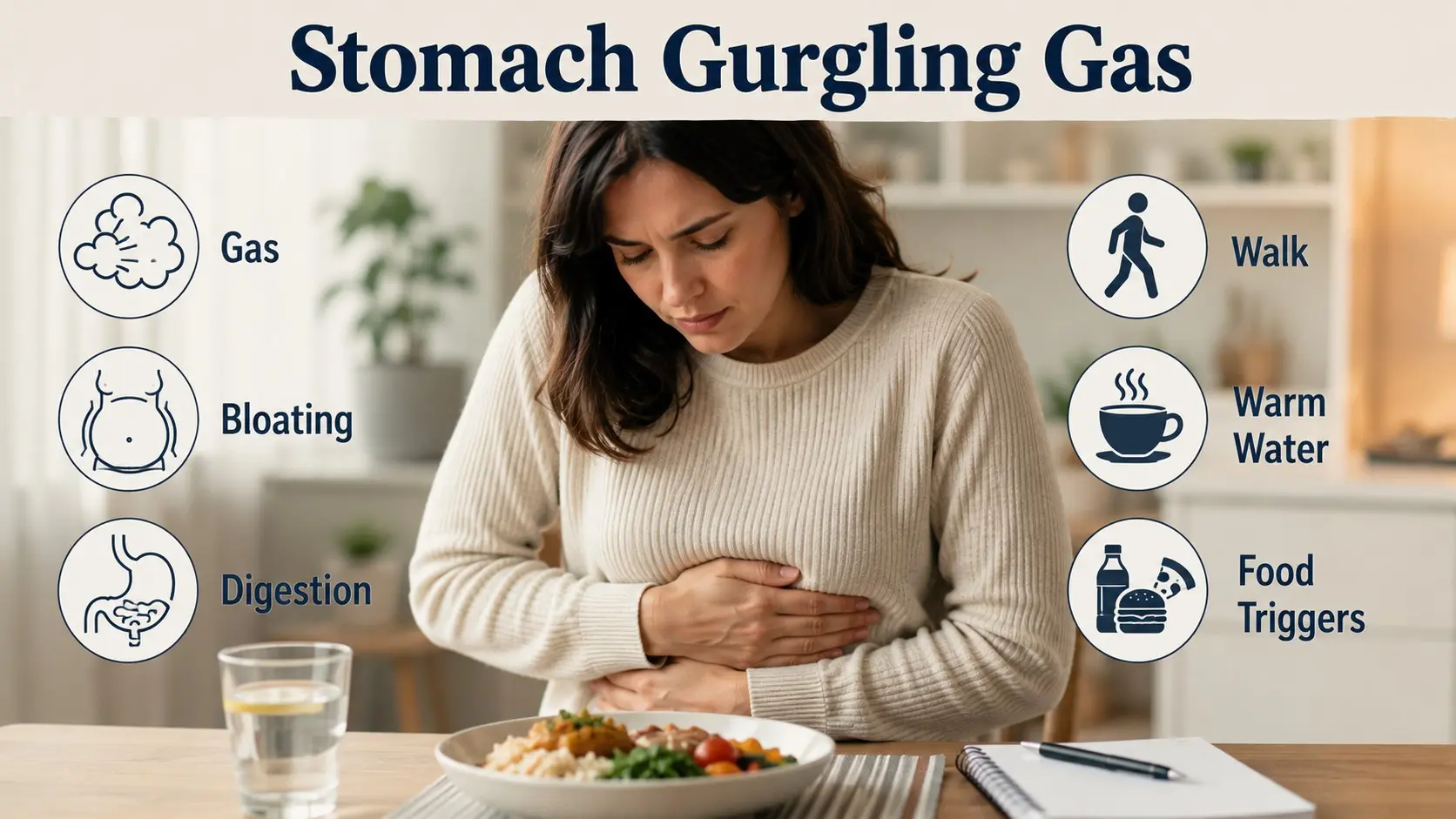
Stomach gurgling and gas can feel awkward. Your belly makes noise in a quiet room. You feel bloated. You may burp, pass gas, or feel pressure in your stomach. Most of the time, this is normal digestion. Food, fluid, air, and gas move through the gut. That movement can make sounds.
But stomach gurgling with bad gas, bloating, pain, or diarrhea can be more than a small bother. It may happen after eating too fast, drinking fizzy drinks, swallowing air, eating gas-producing foods, constipation, stress, food intolerance, infection, or irritable bowel syndrome.
This guide brings together our posts about stomach gurgling gas, bad gas, bloating, pain, diarrhea, and symptoms that last for a week. It explains quick fixes, common causes, safe home steps, and warning signs that mean you should speak with a healthcare professional.
For more gut-health help, visit our Digestive Health & Gut Hub. You can also explore our Health Hub and General Wellness & Lifestyle Hub.
Medical note: This article is for education only. It does not diagnose or treat any condition. If you have severe belly pain, blood in stool, black stool, fever, vomiting, dehydration, weight loss, pain that gets worse, bloating that will not go away, diarrhea that lasts more than a few days, or symptoms that keep coming back, contact a healthcare professional.
Quick Answer: Why Is My Stomach Gurgling With Gas?
Your stomach may gurgle because food, fluid, air, and gas are moving through your digestive tract. This can happen when you are hungry, after meals, after fizzy drinks, after eating fast, or after eating foods that create more gas.
Common causes include:
- Eating too fast
- Swallowing air
- Fizzy drinks
- Beans, lentils, onions, cabbage, broccoli, or high-fiber foods
- Diary if you have lactose intolerance
- Constipation
- Stress or anxiety
- Indigestion or reflux
- Food intolerance
- A stomach bug
- Irritable bowel syndrome, also called IBS
- Some medicines or supplements
Most belly sounds are not dangerous. But gurgling with severe pain, fever, blood, vomiting, dehydration, or long-lasting diarrhea needs medical care.
Is stomach gurgling normal?
Yes. Stomach and bowel sounds are normal. They happen when the gut moves food, liquid, and gas. Doctors may call these sounds bowel sounds or borborygmi.
Normal gurgling may happen:
- When you are hungry
- After eating
- After drinking water
- After drinking carbonated drinks
- After eating high-fiber foods
- When gas moves through the bowel
- During mild digestion changes
If the only symptom is noise, it is often not a big problem. If the noise comes with pain, bloating, diarrhea, constipation, fever, weight loss, or blood in stool, take it more seriously.
Quick Fixes for Stomach Gurgling and Gas
Need fast help for an awkward moment? Try these simple steps.
- Sip warm water slowly.
- Take a short walk.
- Sit upright.
- Avoid lying flat right after eating.
- Gently massage your belly in a clockwise direction.
- Loosen tight clothing around your waist.
- Use the bathroom if you need to pass stool or gas.
- Eat slowly at your next meal.
- Avoid fizzy drinks for the rest of the day.
- Try peppermint tea if it is safe for you.
- Avoid chewing gum if it makes you swallow air.
- Pause diary if it often triggers symptoms.
Do not force gas to stay in. If possible, step away and let your body release it. Holding gas can make pressure and bloating worse.
When to See a Doctor
Speak with a healthcare professional if stomach gurgling and gas affect your daily life or do not improve with simple steps.
Get medical advice if you have:
- Gas or bloating that keeps coming back
- Stomach pain that will not go away
- Diarrhea that lasts more than a few days
- Constipation that keeps coming back
- Blood in your stool
- Black or tar-like stool
- Unexplained weight loss
- Fever or chills
- Vomiting
- Signs of dehydration
- Severe or worsening pain
- Symptoms that wake you from sleep
- A swollen belly that is getting worse
Seek urgent care if you have severe belly pain, chest pain, fainting, confusion, repeated vomiting, blood in vomit, bloody diarrhea, a hard swollen belly, or you cannot pass stool or gas with bad pain.
1. Eating Too Fast
Eating fast makes you swallow more air. It also gives your gut less time to handle food calmly. This can lead to burping, bloating, gurgling, and gas.
Try this:
- Put your fork down between bites.
- Chew more slowly.
- Eat without rushing.
- Avoid eating while walking or driving.
- Stop before you feel stuffed.
A calm meal can help your stomach feel calmer too.
2. Fizzy Drinks
Carbonated drinks add gas to your stomach. Soda, sparkling water, beer, and energy drinks may cause burping, pressure, and belly sounds.
Try this:
- Switch to still water for a few days.
- Avoid drinking through a straw.
- Drink slowly.
- Limit soda and sweet drinks.
If gurgling improves, fizzy drinks may be one trigger.
3. Gas-producing foods
Some foods create more gas because gut bacteria break them down. This is normal. It does not mean the food is “bad.” Many gas-producing foods are healthy.
Common gas triggers include:
- Beans
- Lentils
- Chickpeas
- Broccoli
- Cabbage
- Cauliflower
- Onions
- Garlic
- Apples
- Wheat for some people
- Dairy for people with lactose intolerance
- Sugar alcohols such as sorbitol or xylitol
Do not cut out many foods at once. Try a food diary first. If symptoms are strong or confusing, ask a doctor or dietitian for help.
4. Too Much Fiber Too Fast
Fiber is good for health. But adding too much fiber suddenly can cause gas, bloating, and loud bowel sounds.
Try this:
- Add fiber slowly over days or weeks.
- Drink enough water.
- Start with small portions of beans or lentils.
- Cook vegetables well if raw vegetables bother you.
- Spread fiber across the day.
Your gut may need time to adjust.
5. Lactose Intolerance
Lactose is a sugar in milk and dairy. Some people do not digest it well. This can cause gas, bloating, cramps, diarrhea, and gurgling after dairy.
Potential signs include:
- Gas after milk
- Bloating after ice cream
- Diarrhea after dairy
- Belly cramps after cheese, milk, or cream
- Symptoms that improve when dairy is reduced
Do not self-diagnose forever. A healthcare professional can help confirm the cause. Lactose-free dairy or lactase products may help some people.
6. Constipation
Constipation can trap gas. This may lead to gurgling, bloating, pressure, and pain. You may feel full even when you have not eaten much.
Helpful steps may include:
- Drink enough fluids.
- Walk daily.
- Eat fiber slowly and regularly.
- Do not ignore the urge to go.
- Set a calm bathroom routine.
- Ask a pharmacist or doctor before using laxatives often.
Get medical advice if constipation is new, severe, painful, or linked with blood, weight loss, vomiting, or a swollen belly.
7. Stress and Anxiety
The gut and brain are closely linked. Stress can change how your gut moves. It may cause gurgling, cramps, loose stool, constipation, nausea, or bloating.
Try these simple stress steps:
- Breathe slowly for 2 minutes.
- Walk outside.
- Stretch your belly and hips gently.
- Drink warm tea.
- Write down what is worrying you.
- Eat slowly instead of eating while tense.
If stress, panic, or low mood affects daily life, ask for support. Visit our Mental Health & Wellness Hub for more related topics.

8. Bad Gas With Strong Smell
Bad-smelling gas can happen after certain foods. It can also happen when food is not digested well or when gut bacteria break down sulfur-rich foods.
Common triggers include:
- Eggs
- Meat
- Onions
- Garlic
- Broccoli
- Cabbage
- Beans
- Dairy if lactose is a problem
- Some protein powders
Try smaller portions. Eat slowly. Drink water. Keep a food diary. If bad gas comes with diarrhea, weight loss, fever, blood, or strong pain, see a healthcare professional.
9. Stomach Gurgling and Bloating
Bloating means your belly feels full, tight, or swollen. It may happen with gas, constipation, food intolerance, eating fast, menstrual changes, stress, IBS, or other gut conditions.
Simple steps:
- Eat smaller meals.
- Walk after meals.
- Avoid fizzy drinks.
- Reduce gum chewing.
- Try warm water or tea.
- Check if dairy, wheat, onions, or beans trigger symptoms.
- Treat constipation if present.
See a healthcare professional if bloating does not go away, keeps coming back, gets worse, or comes with pain, vomiting, diarrhea, constipation, fever, weight loss, or blood in stool.
10. Stomach Gurgling, Pain, and Bloating
Gurgling with mild pressure can happen with gas. But pain changes the picture. Pain may come from trapped gas, constipation, indigestion, food intolerance, infection, IBS, gallbladder problems, ulcers, or other causes.
Gas pain may feel like:
- Pressure
- Cramping
- Sharp moving pain
- Relief after passing gas or stool
- Bloating that changes during the day
Get medical care if pain is severe, fixed in one place, getting worse, linked with fever, vomiting, blood, black stool, weight loss, or a hard swollen belly.
11. Stomach Gurgling and Diarrhea
Gurgling with diarrhea often happens because the gut is moving faster than usual. This may be caused by a stomach bug, food poisoning, stress, food intolerance, IBS, or a medicine side effect.
Simple steps for mild diarrhea:
- Drink fluids often.
- Use oral rehydration solution if needed.
- Eat simple foods if you can tolerate them.
- Avoid alcohol.
- Avoid greasy meals.
- Wash your hands well.
- Rest.
See a healthcare professional if diarrhea is severe, lasts more than a few days, includes blood, comes with fever, causes dehydration, or happens after travel, antibiotics, or possible food poisoning.
12. Stomach Gurgling, Gas, and Diarrhea
This mix can feel messy and stressful. It may happen after eating something that irritates your gut, during infection, with lactose intolerance, with IBS, or after too much caffeine, alcohol, or sugar alcohols.
What may help:
- Drink water or oral rehydration solution.
- Eat bland foods for a short time.
- Avoid dairy until symptoms calm if dairy makes it worse.
- Avoid fizzy drinks.
- Avoid heavy, fried foods.
- Rest your gut with smaller meals.
- Call a doctor if symptoms are strong or lasting.
Do not use anti-diarrhea medicine if you have bloody diarrhea, high fever, or suspected serious infection unless a healthcare professional says it is safe.
13. Stomach Gurgling for a Week
If stomach gurgling and gas last for a week, look at the full picture. Is it getting better? Is there pain? Diarrhea? Constipation? Fever? Weight loss? Blood? New medicine? New diet?
A week of mild gas after a diet change may improve. A week of diarrhea, pain, bloating, or poor appetite needs more attention.
Possible reasons include:
- Recent food change
- More fiber than usual
- Stress
- Constipation
- Stomach infection
- Food intolerance
- IBS flare
- Medication side effect
Speak with a healthcare professional if symptoms last, keep coming back, or affect your normal life.
14. IBS and Stomach Gurgling
IBS can cause belly pain, bloating, gas, diarrhea, constipation, or both. Symptoms often come and go.
IBS may be more likely if:
- Pain improves after passing stool
- Symptoms change with stress
- Diarrhea or constipation keeps returning
- Bloating changes during the day
- Certain foods trigger symptoms
Do not assume it is IBS without medical advice. Other conditions can look similar. NHS advises seeing a GP if you think you may have IBS and symptoms have lasted more than 4 weeks.
15. Medicines and Supplements
Some medicines and supplements can cause gas, bloating, diarrhea, or constipation.
Possible triggers include:
- Antibiotics
- Iron supplements
- Magnesium supplements
- Some diabetes medicines
- Some pain medicines
- Fiber supplements
- Protein powders
- Sugar-free products with sugar alcohols
Do not stop prescribed medicine on your own. Ask your healthcare professional if symptoms started after a new medicine.
Foods That Often Trigger Gas
Each person is different. These foods may trigger gas in some people:
- Beans and lentils
- Chickpeas
- Broccoli
- Cabbage
- Cauliflower
- Onions
- Garlic
- Milk and ice cream
- Wheat products for some people
- Apples and pears
- Fizzy drinks
- Beer
- High-fat meals
- Sugar-free gum or sweets
Do not remove all these foods forever. Many are healthy. Test one trigger at a time.
How to Keep a Simple Food and Symptom Diary
A food diary can help you find patterns.
Write down:
- What you ate
- What time you ate
- How fast you ate
- Drinks you had
- Stress level
- Bowel movements
- Gas, pain, bloating, or diarrhea
- How long symptoms lasted
Do this for 1 to 2 weeks. Bring it to your doctor if symptoms continue.
Gentle 24-Hour Reset for Gas and Gurgling
This is not a cure. It is a simple way to calm mild symptoms.
Morning
- Drink water.
- Eat slowly.
- Choose a simple breakfast.
- Avoid fizzy drinks.
Midday
- Take a 10-minute walk.
- Eat a smaller lunch.
- Avoid chewing gum.
- Skip very greasy foods.
Evening
- Eat dinner earlier.
- Choose warm, simple food.
- Walk gently after dinner.
- Relax your body before bed.
If symptoms get worse, stop guessing and seek medical advice.
What About Probiotics?
Probiotics may help some people with certain digestive symptoms. But they do not help everyone. The effect depends on the person, the strain, the dose, and the cause of symptoms.
Ask a healthcare professional before using probiotics if you have a weak immune system, serious illness, cancer treatment, a central line, or severe ongoing symptoms.
What About Peppermint?
Peppermint tea or peppermint oil may help some people with gas or IBS-type symptoms. But peppermint can worsen reflux or heartburn in some people.
Do not use peppermint oil capsules without advice if you have reflux, gallbladder disease, liver disease, are pregnant, take medicines, or have a chronic condition.
What About Simethicone?
Simethicone is an over-the-counter gas medicine. Some people feel it helps. Evidence is mixed, but it is widely used for gas symptoms.
Ask a pharmacist or doctor if it is safe for you, especially if you are pregnant, take medicine, or have ongoing symptoms.

Red Flags: Do Not Ignore These Symptoms
Get medical advice quickly if stomach gurgling and gas come with:
- Severe belly pain
- Pain that gets worse
- Blood in stool
- Black stool
- Vomiting blood
- Fever
- Repeated vomiting
- Signs of dehydration
- Diarrhea that lasts more than a few days
- Unexplained weight loss
- Loss of appetite that continues
- Bloating that does not go away
- A hard or swollen belly
- Unable to pass stool or gas
- Symptoms after recent antibiotics
- Symptoms after travel
- Symptoms that wake you from sleep
These signs do not always mean something dangerous. But they need proper care.
Stomach Gurgling and Bowel Cancer Worry
Many people worry that stomach noises mean cancer. Most stomach gurgling is not cancer. It is often normal digestion, gas, diet, stress, or bowel movement changes.
But certain symptoms should be checked. These include blood in stool, unexplained weight loss, ongoing change in bowel habits, ongoing pain, anemia, or symptoms that keep getting worse.
If you are worried about bowel cancer warning signs, read our guide to colon cancer warning signs. You can also read bowel cancer and stomach noises for a safer explanation of this topic.
How Doctors May Check Ongoing Gas and Gurgling
If symptoms continue, a healthcare professional may ask about your diet, bowel habits, medicines, stress, travel, infections, and family history.
They may consider:
- Physical exam
- Blood tests
- Stool tests
- Tests for infection
- Tests for celiac disease
- Tests for inflammation
- Food intolerance review
- Breath tests in some cases
- Imaging if needed
- Colonoscopy or endoscopy if warning signs are present
For more testing education, visit our Medical Tests & Screenings Hub.
What Not to Do
- Do not panic over normal belly sounds.
- Do not ignore severe pain or blood in stool.
- Do not cut out many foods without a plan.
- Do not use laxatives often without advice.
- Do not use anti-diarrhea medicine with bloody diarrhea or high fever unless a doctor says it is safe.
- Do not blame every symptom on stress.
- Do not keep taking a supplement if it clearly worsens symptoms.
- Do not delay care if symptoms last or get worse.
Simple Daily Habits for a Calmer Gut
- Eat slowly.
- Chew well.
- Drink water.
- Walk daily.
- Limit fizzy drinks.
- Do not rush meals.
- Manage stress.
- Sleep enough.
- Add fiber slowly.
- Keep a food diary if symptoms repeat.
For healthy lifestyle steps, read Healthy Lifestyle Roadmap: 14 Practical Tips for Better Health. If poor habits are affecting digestion, energy, and sleep, read Effect of Unhealthy Lifestyle: Warning Signs, Health Risks, and How to Reset.
FAQ about Stomach gurgling gas
Why is my stomach gurgling, and I have gas?
It may be normal digestion. It can also happen from eating fast, fizzy drinks, gas-producing foods, constipation, stress, food intolerance, or a stomach bug.
How do I stop stomach gurgling fast?
Sip warm water, sit upright, walk for a few minutes, avoid fizzy drinks, loosen tight clothes, and use the bathroom if you need to pass gas or stool.
Is stomach gurgling bad?
Usually no. Belly sounds are often normal. It is more concerning if you also have severe pain, diarrhea, vomiting, fever, blood in stool, weight loss, or bloating that will not go away.
Why do I have bad gas?
Bad gas may come from foods such as eggs, meat, beans, onions, garlic, cabbage, dairy, or protein powders. It can also happen with food intolerance, infection, constipation, or gut conditions.
What helps stomach gurgling and bloating?
Eat smaller meals, walk after meals, avoid fizzy drinks, eat slowly, treat constipation, drink water, and track trigger foods. See a doctor if bloating lasts or keeps coming back.
What if stomach gurgling and gas last for a week?
If symptoms last for a week, check for triggers like diet change, stress, constipation, infection, or new medicine. See a healthcare professional if symptoms continue, worsen, or include pain, diarrhea, fever, blood, or weight loss.
Can stomach gurgling happen with diarrhea?
Yes. Gurgling with diarrhea can happen when the gut moves faster than usual. Causes may include infection, food intolerance, IBS, stress, or medicine side effects.
When is diarrhea with gurgling serious?
It is more serious if diarrhea is bloody, severe, lasts more than a few days, causes dehydration, comes with high fever, or happens after travel or antibiotics.
Can stress cause stomach gurgling?
Yes. Stress can affect gut movement and may cause gurgling, cramps, bloating, diarrhea, or constipation in some people.
Should I stop eating fiber if it gives me gas?
Do not stop all fiber forever. Add fiber slowly, drink water, and try smaller portions. If symptoms are strong, ask a healthcare professional or dietitian for help.
Related Reading
- Digestive Health & Gut Hub
- Health Hub
- General Wellness & Lifestyle Hub
- Nutrition & Vitamins Hub
- Medical Tests & Screenings Hub
- Healthy Lifestyle Roadmap: 14 Practical Tips for Better Health
- Effect of Unhealthy Lifestyle: Warning Signs, Health Risks, and How to Reset
- Self-Care Habits: 10 Evidence-Based Rituals to Elevate Your Lifestyle
- Colon Cancer Warning Signs: Symptoms That Should Be Checked
- Bowel Cancer and Stomach Noises: What Symptoms Matter Most
Key Takeaway
Stomach gurgling and gas are often normal. They may happen when your gut moves food, air, fluid, and gas. Simple causes include eating fast, fizzy drinks, high-fiber foods, dairy intolerance, constipation, stress, or a short stomach bug.
Simple fixes may help: slow eating, warm water, walking, less fizzy drink, smaller meals, treating constipation, and finding food triggers.
But do not ignore warning signs. See a healthcare professional if you have severe pain, blood in stool, black stool, fever, vomiting, dehydration, weight loss, bloating that will not go away, diarrhea that lasts more than a few days, or symptoms that keep coming back.
Sources
- NIDDK — Symptoms & Causes of Gas in the Digestive Tract
- NIDDK — Gas in the Digestive Tract
- Mayo Clinic — Gas and Gas Pains: Symptoms and Causes
- Mayo Clinic — Belching, Gas and Bloating: Tips for Reducing Them
- NHS — Flatulence
- NHS — Stomach Ache
- NHS — Diarrhoea and Vomiting
- NHS — Symptoms of IBS

Health & wellness writer with 30+ years of experience in nutrition, fitness, and healthy aging. Founder of NextFitLife.com — evidence-based health guidance.