
NextFitLife First Aid & Home Remedies
Published: March 2026
Last updated: August 7, 2026
Next editorial review: August 2027 or sooner if first-aid guidance changes
Medical review status:
This sub-hub page has not been medically reviewed. Individual articles identify a named qualified reviewer when a medical review has taken place.
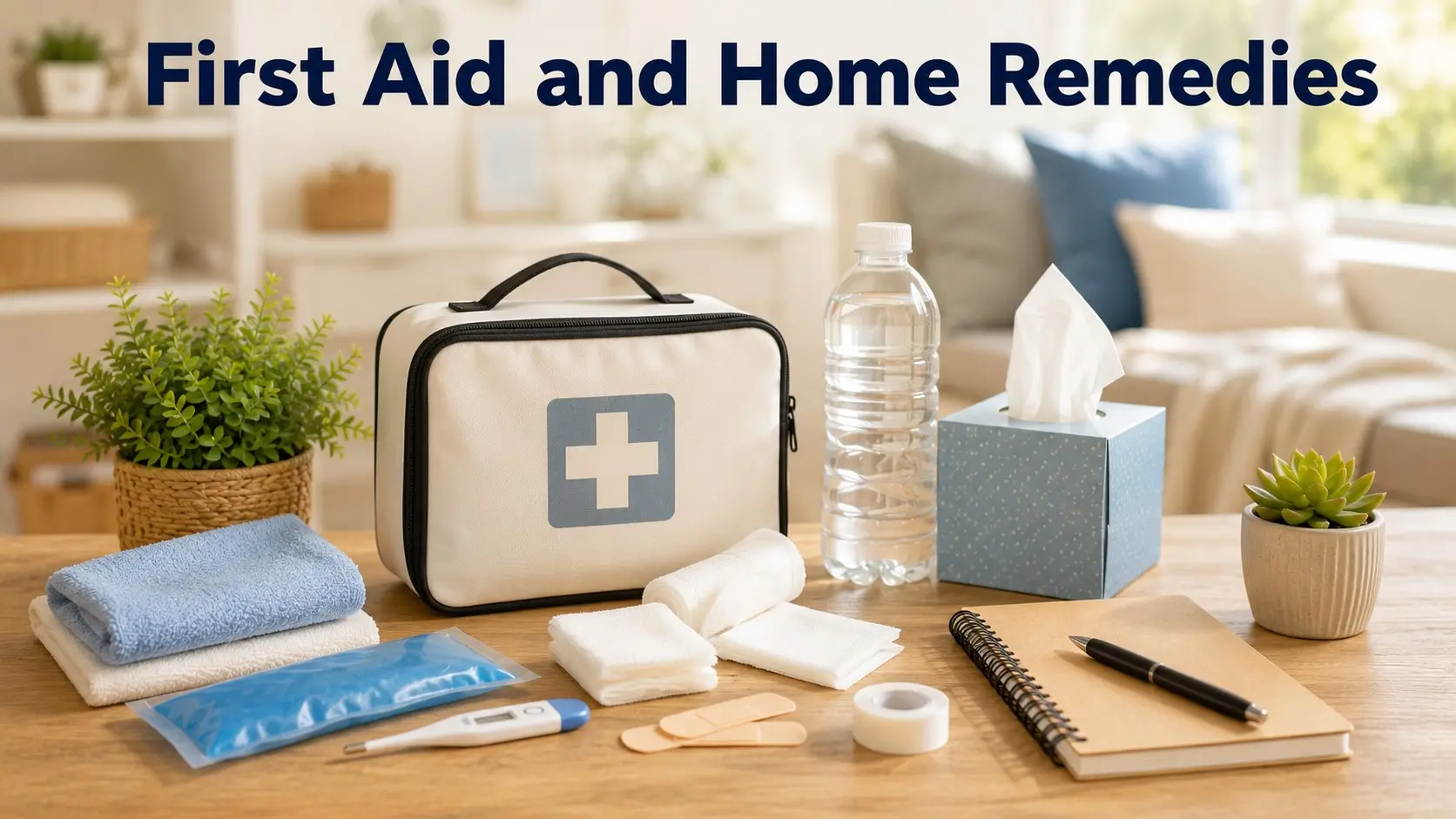
This First Aid & Home Remedies sub-hub explains immediate first steps for common injuries and emergencies, plus limited home care for mild problems. First aid is temporary care given until the person recovers or professional help takes over. It is not a substitute for emergency services, diagnosis, surgery, dental treatment, prescription medicine, or other definitive care.
A home remedy should never be presented as a cure for a serious disease. Pancreatitis, gallbladder attacks, severe gout, sleep apnea, poor circulation, serious infection, persistent tinnitus, and other medical conditions need condition-specific evaluation rather than a household remedy.
Call emergency services for life-threatening symptoms
Seek emergency help for severe breathing difficulty, choking with an ineffective or absent cough, severe allergic reaction, uncontrolled or spurting bleeding, unconsciousness, seizure, severe chest pain, signs of stroke, major burns, severe trauma, or another immediately dangerous condition.
If a person is unresponsive and not breathing normally, call emergency services, get an automated external defibrillator if one is available, and begin CPR according to your training and current local first-aid guidance.
First-aid instructions are easiest and safest to perform when learned through an accredited hands-on or blended first-aid and CPR course before an emergency occurs.
Choose the right first-aid topic
Severe bleeding
Call emergency services and apply firm direct pressure. Life-threatening bleeding from an arm or leg may require a tourniquet when one is available and you know how to use it.
Burns
Stop the burning process and cool a thermal burn with clean, cool running water. Do not use ice, butter, toothpaste, or oily home remedies.
Choking
Complete airway blockage can become fatal quickly. Call for emergency help and use current choking first aid appropriate for the person’s age and condition.
Allergic reactions
Anaphylaxis can begin quickly. Use prescribed epinephrine promptly when available and call emergency services.
Poison exposure
Do not guess or induce vomiting. Contact a local poison center or emergency service for substance-specific advice.
Nosebleeds and minor home care
Learn evidence-based first steps for common nosebleeds, minor bites, water trapped in the ear, and small nail injuries.
Before using a home remedy
- Make sure the problem is minor enough for home care. Severe, rapidly worsening, infected, bleeding, breathing-related, neurological, or traumatic symptoms may need urgent care.
- Do not put butter, oil, toothpaste, flour, or other kitchen products on a burn.
- Do not induce vomiting after a suspected poisoning unless a poison specialist specifically instructs you to do so.
- Do not insert cotton swabs, tools, candles, or other objects into the ear canal.
- Do not use leftover antibiotics, prescription creams, steroids, or another person’s medicine as a home remedy.
- Do not use baking soda, concentrated vinegar, essential oils, herbs, or supplements as a substitute for treatment of gout, infection, pancreatitis, gallbladder disease, circulation problems, or another diagnosed condition.
- Babies, pregnant people, older adults, immunocompromised people, and people with diabetes, kidney disease, heart disease, liver disease, or anticoagulant use may need a lower threshold for professional care.
Life-threatening bleeding: pressure first, emergency help immediately
Bleeding can become life-threatening when blood is flowing continuously, spurting, soaking through materials rapidly, or accompanied by signs of shock such as pale or cool skin, rapid breathing, weakness, confusion, or reduced responsiveness.
Call emergency services. Apply steady, firm direct pressure over the wound with gauze, cloth, or another suitable dressing. Keep pressure on until bleeding stops, a tourniquet is applied when appropriate, another responder takes over, or emergency professionals arrive.
For life-threatening bleeding from an arm or leg, a commercial tourniquet can save a life. Ideally, learn tourniquet use through formal first-aid or bleeding-control training before an emergency. Once an effective tourniquet is applied for life-threatening bleeding, do not loosen or remove it while waiting for professional care.
Burn first aid: cool the burn, do not add a home remedy
For a thermal burn, move away from the heat source and cool the affected skin under clean, cool running water as soon as possible. American Red Cross guidance recommends cooling with clean running water for about 5 to 20 minutes, while avoiding hypothermia when a large area is involved.
Do not apply ice directly to a burn and do not cover it with butter, cream, toothpaste, cooking oil, or another household product. Remove jewelry or loose clothing near the burn if it is not stuck to the skin.
Emergency evaluation is appropriate for deep burns, large burns, electrical burns, many chemical burns, burns involving the face, mouth, hands, feet, major joints or groin, circumferential burns, and significant burns in very young, older, or medically vulnerable people.
Chemical and electrical burns require specialized first aid. Avoid exposing yourself to the chemical or electrical source while trying to help.
Choking can become fatal within minutes
A person with complete or severe airway obstruction may be unable to speak, cry, breathe, or cough effectively and may become pale, blue, confused, or unresponsive.
Call emergency services. Current American Red Cross adult and child guidance uses cycles of 5 back blows followed by 5 abdominal thrusts for a responsive person with severe choking, continuing until the object is expelled or the person becomes unresponsive.
Choking care differs for infants, pregnant people, people whose body size makes abdominal thrusts unsuitable, and anyone who becomes unconscious. Formal first-aid training is strongly recommended because technique matters.
Anaphylaxis needs epinephrine and emergency care
Anaphylaxis is a rapid, potentially life-threatening allergic reaction. Warning signs can include difficulty breathing, wheezing, throat tightness, tongue or lip swelling, trouble swallowing, widespread hives, dizziness, fainting, vomiting, or shock.
If the person has a prescribed epinephrine auto-injector, use it promptly according to the device instructions and call emergency services. Antihistamines are not a substitute for epinephrine when anaphylaxis is occurring.
Poison exposure needs substance-specific advice
If someone swallows, inhales, injects, or is exposed through the eyes or skin to a potentially poisonous substance, contact your local poison center or emergency service promptly. Advice depends on the substance, amount, route of exposure, age, weight, symptoms, and time since exposure.
Do not make the person vomit. Ipecac is no longer recommended for routine poisoning first aid. If the person collapses, has a seizure, has trouble breathing, or cannot be awakened, call emergency services immediately.
For a chemical splash in the eye, begin rinsing immediately with plenty of room-temperature water and continue for at least 15 to 20 minutes while seeking poison-center or medical guidance. Remove contact lenses when possible.
Minor first aid and home care
Nosebleeds
For a common nosebleed, sit upright and lean forward rather than tilting the head back. Pinch the soft part of both nostrils firmly and continuously while breathing through the mouth. Mayo Clinic guidance recommends maintaining pressure for about 10 to 15 minutes before checking.
Seek emergency care for heavy bleeding, faintness or lightheadedness, significant facial or head trauma, breathing difficulty, or bleeding that does not stop after repeated proper pressure. Recurrent nosebleeds also deserve medical review, especially in someone taking anticoagulants or with a bleeding disorder.
Minor cuts and scrapes
For a small superficial wound, wash your hands, control minor bleeding with gentle direct pressure, rinse the wound with clean running water, and cover it with a clean dressing when useful. Deep punctures, bites, contaminated wounds, wounds with embedded objects, loss of sensation or movement, or wounds with uncontrolled bleeding need professional assessment.
Mosquito and other minor insect bites
Many minor insect bites cause temporary itching, redness, or swelling and can be managed with gentle washing and a cool compress. Watch for increasing redness, warmth, pain, drainage, fever, or other signs of infection.
Trouble breathing, facial or tongue swelling, throat tightness, fainting, or other symptoms of anaphylaxis require emergency treatment.
Water trapped in the ear
Tilting the affected ear downward, gently pulling the outer ear, and allowing time for water to drain may help. Do not insert cotton swabs, sharp objects, or other tools into the ear canal.
Ear pain, drainage, fever, hearing loss, dizziness, a known eardrum perforation, ear tubes, or symptoms that persist should be assessed rather than repeatedly treated with home drops.
Broken nail
A small broken nail can often be trimmed carefully, protected from snagging, and kept clean. A deep tear into the nail bed, uncontrolled bleeding, severe pain, crushed finger or toe, or signs of infection may require medical care.
Conditions that should not be promoted as home-remedy problems
Pancreatitis and gallbladder pain
Pancreatitis can require hospital treatment, and severe or persistent upper-abdominal pain, vomiting, fever, jaundice, or signs of dehydration should not be managed with a “natural pancreatitis remedy.” Gallbladder attacks also need appropriate diagnostic evaluation.
Explore Digestive Health & Gut →
Gout, sciatica, and joint pain
These need condition-specific pain and musculoskeletal guidance. Baking soda is not an evidence-based substitute for gout treatment, and “sciatica relief in 8 minutes” should not be treated as first aid.
Explore Pain Management & Conditions →
Snoring and sleep apnea
Loud snoring with witnessed breathing pauses, gasping, choking, morning headaches, or significant daytime sleepiness may indicate sleep apnea and needs sleep-health evaluation rather than repeated home-remedy articles.
Explore General Wellness & Lifestyle →
Nail fungus and dermatitis
Fungal nail disease and inflammatory skin conditions are not first-aid problems. They belong in the dedicated skin, hair, and nail hub.
Explore Skin, Hair & Nail Health →
Tinnitus and poor circulation
Persistent tinnitus is a hearing symptom, and leg-circulation symptoms can reflect vascular disease. Neither should be marketed as a simple home-remedy problem.
Build a practical first-aid kit
A household first-aid kit can include disposable gloves, sterile gauze, adhesive bandages, medical tape, antiseptic wipes, a clean cold pack, tweezers for superficial splinters, a thermometer, emergency contact information, and personal emergency medicines such as prescribed epinephrine.
Consider adding a commercial tourniquet if household members have received bleeding-control training. Check expiration dates regularly and keep medicines and hazardous products locked away from children.
Source standard for first-aid content
First-aid instructions should come from recognized emergency-care, poison-control, government, or clinical organizations and should be reviewed whenever accepted first-aid protocols change. Condition-specific home-care articles should cite the specialty source relevant to that condition.
Core sources for this topic include:
- American Red Cross: Life-Threatening External Bleeding
- American Red Cross: Burns
- American Red Cross: Adult and Child Choking
- MedlinePlus: Anaphylaxis
- Poison Control: First Aid for Poisoning
- Mayo Clinic: First Aid for Nosebleeds
- MedlinePlus: Insect Bites and Stings
These organizations do not endorse NextFitLife. Individual articles should cite the exact source supporting the first-aid steps they provide.
Frequently asked questions
What is the first thing to do for severe bleeding?
Call emergency services and apply firm direct pressure to the wound. For life-threatening bleeding from an arm or leg, a properly applied tourniquet can be lifesaving when available and used correctly.
Should I put ice or butter on a burn?
No. Cool the burn with clean, cool running water. Direct ice can further injure tissue, and butter, oils, creams, or toothpaste can trap heat or contaminate the burn.
Should I make someone vomit after they swallow a poison?
No. Do not induce vomiting. Contact a local poison center or emergency medical service for advice specific to the substance and exposure.
What is the correct position for a nosebleed?
Sit upright and lean forward. Pinch the soft part of the nose continuously for about 10 to 15 minutes before checking whether the bleeding has stopped.
Can antihistamines replace epinephrine during anaphylaxis?
No. When anaphylaxis is occurring and prescribed epinephrine is available, use it promptly and call emergency services. Antihistamines do not replace epinephrine for a life-threatening reaction.
Are home remedies safe for pancreatitis or gallbladder pain?
No home remedy should replace medical evaluation for suspected pancreatitis or significant gallbladder pain. Severe abdominal pain, persistent vomiting, fever, jaundice, or dehydration can need urgent care.
Can tinnitus or poor circulation be cured with a home remedy?
No. Persistent tinnitus and circulation symptoms need cause-specific evaluation. Household remedies or supplements should not be promoted as cures.
Is every article in this sub-hub medically reviewed?
No. An article is medically reviewed only when it clearly displays the reviewer’s name, relevant credentials, and review date. Otherwise, treat it as general educational content.
Editorial policies and contact
Use home care only when the situation is appropriate for home care
First aid is meant to preserve life, prevent deterioration, and support recovery until professional care takes over when needed. The safest household remedy is often knowing when not to improvise. When symptoms are severe, rapidly worsening, medically complex, or unfamiliar, use qualified emergency or medical guidance instead of trying another remedy.
Medical disclaimer
NextFitLife provides general educational information and does not replace first-aid or CPR training, emergency services, poison-control guidance, diagnosis, medical treatment, dental treatment, prescription medicine, or individualized care. In an emergency, contact your local emergency service.