Last Updated: June 2026
- Updated with 2026 AAO and Sleep Medicine research
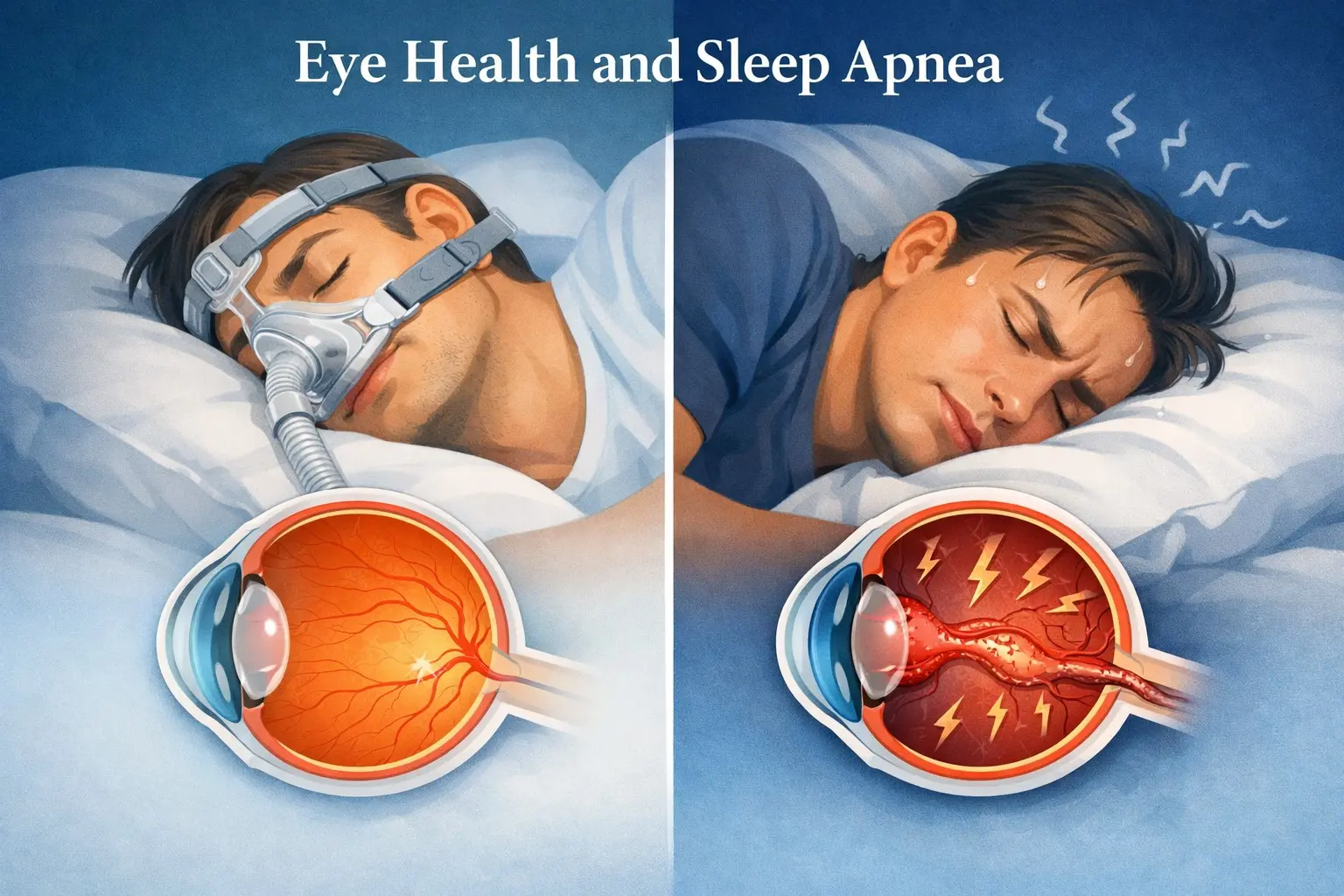
Eye Health and sleep apnea share a surprising connection. While most people with sleep apnea focus on heart risks, high blood pressure, and fatigue, few realize how much the condition can harm their eyes.
Obstructive sleep apnea (OSA) is linked to several serious eye diseases, yet this relationship remains largely overlooked. Treating OSA not only improves breathing and energy but can also protect vision and overall eye health.
Complete eye health guide: vision care, prevention and wellness
I researched this topic carefully after a close family member was diagnosed with both glaucoma and sleep apnea at the same appointment. His ophthalmologist told him directly that the two conditions were almost certainly connected. That conversation started with this article.
| KEY FACTS | Obstructive sleep apnea (OSA) affects over 1 billion people worldwide - the WHO estimates People with OSA have a 2 to 5 times higher risk of developing glaucoma Floppy Eyelid Syndrome - where eyelids turn outward during sleep - is present in up to 96% of obese OSA patients OSA increases the risk of non-arteritic anterior ischemic optic neuropathy (NAION) by up to 5 times Central serious chorioretinopathy (CSR) - a retinal condition - is significantly linked to OSA CPAP therapy reduces eye pressure and improves several OSA-related eye conditions Eye doctors increasingly check OSA risk in patients with unexplained glaucoma or NAION |
What is obstructive sleep apnea, and why does it harm the Eyes?
Obstructive sleep apnea happens when the throat muscles relax too much during sleep. The airway collapses partially or completely. Breathing stops. Oxygen levels in the blood drop. The brain wakes the body just enough to reopen the airway. This can happen hundreds of times per night.
Each time oxygen drops, every organ in the body is affected. Your eyes are no exception. They need a steady supply of oxygenated blood to function and protect themselves from damage. Repeated oxygen drops at night - combined with increased blood pressure surges and disrupted sleep architecture - create the perfect conditions for multiple types of eye damage.
There are three fundamental mechanisms through which sleep apnea harms the eyes: repeated intermittent hypoxia (oxygen drops), increased intraocular pressure during apnea events, and chronic systemic inflammation caused by oxidative stress from repeated oxygen dips.
The 5 Eye Conditions Most Strongly Linked to Sleep Apnea
| Eye Condition | How OSA Causes It | How Much Risk Increases | Reversible with CPAP? | |
| Glaucoma | Raised IOP during apnea events damages the optic nerve | 2 to 5x higher risk | Partial - IOP may decrease with CPAP | |
| Floppy Eyelid Syndrome (FES) | Eyelid tissue becomes lax from repeated mechanical pressure during sleep | Up to 96% of obese OSA patients | Improves with CPAP and positioning | |
| NAION | Oxygen drops cause acute ischemia to the optic nerve head blood supply | 4 to 5x higher risk | No damage is permanent; CPAP may prevent recurrence | |
| Central Serous Chorioretinopathy | Elevated cortisol from OSA causes fluid under the retina | Significantly elevated | Often resolves with CPAP treatment | |
| Dry Eye and MGD
| Floppy eyelids expose the eye surface during sleep; CPAP mask leaks cause dry eyes | Common association | Improves with proper CPAP mask fitting and lid treatment | |
Sleep Apnea and Glaucoma: The Strongest Link
The connection between sleep apnea and glaucoma is the most studied and most established of all the eye-OSA relationships. Multiple large population studies confirm that people with OSA have significantly elevated glaucoma risk.
The mechanism is direct. During each apnea event, two things happen simultaneously. Intraocular pressure rises sharply as the body strains against the closed airway. And blood oxygen drops, reducing the oxygen supply to the optic nerve. The optic nerve head is particularly vulnerable to this combination - elevated pressure plus reduced oxygen is exactly the environment where glaucoma damage accelerates.
Glaucoma prevention and early detection tips
A 2019 study published in Ophthalmology found that people with severe OSA had a 4.98 times higher odds of developing normal-tension glaucoma compared to those without OSA. Normal-tension glaucoma - where the optic nerve is damaged despite normal eye pressure - has long puzzled ophthalmologists. OSA may explain a significant proportion of these cases.
What this means for your eye care
If you have been diagnosed with glaucoma - especially normal-tension glaucoma - your ophthalmologist should ask about sleep quality, snoring, and daytime fatigue. If you snore heavily, wake up refreshed, or have been told you stop breathing in your sleep, ask your doctor about a sleep study. The two conditions may be directly connected.
Floppy Eyelid Syndrome: The Eye Condition Almost Exclusive to OSA
Floppy Eyelid Syndrome (FES) is one of the most striking eye-OSA connections. The upper eyelids become unusually lax and rubbery. They can fold outward spontaneously or with very minimal pressure. When a person with FES sleeps face-down on a pillow - common in people with OSA who shift positions frequently - the eyelid rolls outward. The eye surface is exposed all night.
This chronic overnight exposure causes papillary conjunctivitis - inflammation of the inner eyelid lining - along with chronic dry eye, mucus discharge, and corneal damage over time. People with FES often report waking with red, sticky eyes every morning. Many are treated for allergic conjunctivitis for years before anyone checks for sleep apnea.
I find this connection particularly interesting. Studies show FES is present in up to 96 percent of obese patients with OSA. It is so strongly linked that some ophthalmologists say discovering FES in a patient should automatically prompt a sleep study referral. CPAP treatment and positional therapy - avoiding face-down sleeping - significantly improves FES.
NAION - The Eye Stroke That Is Strongly Linked to Sleep Apnea
Non-arteritic anterior ischemic optic neuropathy (NAION) is often called an eye stroke. It occurs when blood supply to the front of the optic nerve is suddenly cut off, causing permanent vision loss in part of the visual field - often the bottom half. It is the most common acute optic nerve disease in adults over 50.
The connection to sleep apnea is powerful. Most NAION events happen during sleep or while walking. This timing strongly implicates the nocturnal oxygen drops of OSA as a trigger. The optic nerve head - which has a relatively precarious blood supply at the best of times - is particularly vulnerable when oxygen levels are repeatedly dropping during sleep.
A landmark study found that 89 percent of patients with NAION had OSA when formally tested - even though most were previously undiagnosed. This extraordinary prevalence makes OSA essentially mandatory in any new NAION case.
How sleep and rest affect your eye health and vision
Importantly, while NAION damage is permanent, CPAP therapy appears to reduce the risk of NAION occurring in the second eye - an important protection in a condition that frequently affects both eyes over time.
Central Serous Chorioretinopathy and Sleep Apnea
Central serious chorioretinopathy (CSR or CSCR) is a condition where fluid accumulates under the central retina, causing distorted or blurred central vision. It is most common in young to middle-aged men - a demographic that also has high rates of undiagnosed OSA.
The mechanism involves elevated cortisol. OSA chronically activates the stress response, raising cortisol levels throughout the night and into the day. Cortisol increases the permeability of choroidal blood vessels under the retina, allowing fluid to leak through. Multiple studies have found significantly elevated OSA rates in CSR patients compared to the general population.
The clinical implication is important. A CSR that recurs or does not resolve may be driven by untreated sleep apnea. Several case reports document complete resolution of CSR after CPAP therapy was started. Ophthalmologists managing chronic CSR should consider OSA as a contributing factor.
CPAP Therapy and Dry Eye - A Problem and a Solution
CPAP - continuous positive airway pressure - is the most effective treatment for obstructive sleep apnea. It works by delivering pressurized air through a mask that keeps the airway open during sleep. For the eyes, CPAP therapy creates one problem while solving several others.
Dry eye syndrome: causes, symptoms and natural remedies
The Problem - CPAP Mask Leaks and Dry Eye
A poorly fitting CPAP mask can leak air toward the eyes during sleep. This airstream dries the ocular surface significantly. People with CPAP-related dry eye wake with burning, red, gritty eyes. The fix is usually straightforward: having the mask properly fitted by a CPAP specialist, adding a humidifier to the CPAP device, or switching to a different mask style that directs airflow away from the eyes.
The Solution: CPAP reduces intraocular pressure
Multiple studies show that consistent CPAP use reduces intraocular pressure - the primary treatable risk factor for glaucoma. A 2019 meta-analysis found that CPAP therapy significantly reduced IOP in OSA patients, with the greatest reduction seen in those with the most severe apnea. This makes CPAP an indirect but meaningful protector of optic nerve health.
Eye health after 40: the conditions that develop without symptoms
Warning Signs That Your Eye Condition May Be Linked to Sleep Apnea
| TELL YOUR DOCTOR OR EYE SPECIALIST IF YOU HAVE | Glaucoma - especially normal-tension glaucoma with no apparent cause NAION - vision loss in one eye, often noticed upon waking Floppy or very loose upper eyelids that fold outward easily Red, sticky eyes every morning that do not respond to allergy treatment Central serious chorioretinopathy that recurs or does not fully resolve AND any of these sleep symptoms: loud snoring, waking gasping or choking, excessive daytime sleepiness, waking with headaches, or being told you stop breathing Ask your doctor about a sleep study. The two conditions may be directly connected. |
What to Do If You Have Both Eye Health and Sleep Apnea Problems
| Step | Action | Who to See? | Why It Matters? |
| 1 | Get formally tested for sleep apnea if you have any of the eye conditions above | GP or sleep specialist | Formal diagnosis opens access to CPAP treatment |
| 2 | Start CPAP therapy and optimise your mask fit | Sleep clinic | Reduces IOP, cortisol, and nocturnal hypoxia that drive eye damage |
| 3 | Tell your ophthalmologist about your OSA diagnosis | Ophthalmologist | Changes monitoring frequency and may change treatment approach |
| 4 | Have a dilated eye exam, including a visual field test | Ophthalmologist | Establish baseline and check for glaucoma, optic nerve, and retinal changes |
| 5 | Manage blood pressure, weight, and blood sugar | GP | All three independently worsen both OSA and eye disease risk |
| 6 | If dry eye worsens after CPAP, have the mask refitted and add a humidifier | Sleep clinic or CPAP supplier | Poorly fitting masks leak air that dries the ocular surface |
What I Learned from a Family Member's Eye Health and Sleep Apnea Conditions
| ADEL GALAL | A close family member was diagnosed with glaucoma at 61. Normal-tension type. His eye pressure was not particularly high. His ophthalmologist was puzzled.
At the same appointment, the ophthalmologist asked about sleep. He described heavy snoring, waking tired, and dozing during the day. The ophthalmologist referred him for a sleep study immediately.
The result: severe obstructive sleep apnea. AHI of 42 events per hour. He had never been diagnosed. He thought the snoring was just normal.
He started CPAP therapy. Within 6 months his intraocular pressure had dropped by 3 mm Hg without any change to his glaucoma eye drops. His ophthalmologist said the CPAP was contributing to better pressure control. He also said something that has stayed with me: The eye and the body are not separate systems. What happens in your sleep affects what happens in your eyes. We need to look at the whole person. I could not agree more. If you have glaucoma, ask your doctor about sleep apnea. If you have sleep apnea, tell your eye doctor at your next exam. |
Key Takeaways - Eye Health and Sleep Apnea
| SUMMARY | Sleep apnea damages the eyes through three mechanisms: oxygen drops, raised eye pressure, and chronic inflammation Glaucoma risk is 2 to 5 times higher in people with OSA - especially normal-tension glaucoma Floppy Eyelid Syndrome is found in up to 96% of obese OSA patients - often mistaken for allergy NAION (eye stroke) has been found in 89% of formally tested cases - OSA screening is now standard Central serous chorioretinopathy is linked to elevated cortisol from OSA - CPAP can resolve it CPAP therapy reduces intraocular pressure and may slow glaucoma progression CPAP mask air leaks cause dry eye - fixable with proper mask fitting and a humidifier Tell your eye doctor if you snore heavily or have been diagnosed with sleep apnea Tell your sleep doctor if you have glaucoma, NAION, floppy eyelids, or chronic CSR |
References and Sources
1- Sleep Apnea and Glaucoma - Ophthalmology Journal 2019
https://pubmed.ncbi.nlm.nih.gov/30419448/
Peer-reviewed study. Use for: 4.98x normal-tension glaucoma risk in severe OSA and mechanism data.
2- NAION and Sleep Apnea - Archives of Ophthalmology
https://pubmed.ncbi.nlm.nih.gov/17210801/
Landmark study. Use for: 89% OSA prevalence in NAION patients and CPAP recurrence prevention.
3- Floppy Eyelid Syndrome and Obstructive Sleep Apnea - Survey of Ophthalmology
https://pubmed.ncbi.nlm.nih.gov/26547315/
Review article. Use for: FES prevalence up to 96% in obese OSA patients and treatment response.
4- CPAP and Intraocular Pressure - Meta-analysis, Journal of Glaucoma
https://pubmed.ncbi.nlm.nih.gov/30543571/
Meta-analysis. Use for: CPAP therapy significantly reduces IOP in OSA patients.
5-Central Serous Chorioretinopathy and Sleep Apnea - Retina Journal
https://pubmed.ncbi.nlm.nih.gov/24886722/
Peer-reviewed study. Use for: cortisol mechanism and OSA link to CSR, CPAP resolution cases.
Part of Our Eye Health Series
This article is part of our complete eye health resource.
Read all topics in our Complete Eye Health Guide or browse our
Eye Health and Vision Resource Directory.
Adel Galal
Health and Wellness Writer | 30+ Years Personal Practice | Founder, NextFitLife.com
Adel Galal has studied
health, vision care, and natural aging for over 30 years. At 58, he writes from genuine
lived experience - including supporting a family member through the discovery that sleep
apnea was driving his glaucoma. He is not a doctor or ophthalmologist. Everything shared
reflects personal research, experience, and consultation with healthcare providers. Always
consult a qualified healthcare professional for diagnosis and treatment.

Health & wellness writer with 30+ years of experience in nutrition, fitness, and healthy aging. Founder of NextFitLife.com — evidence-based health guidance.