Published: February 12, 2026
Last Updated: July 27, 2026
Next Review: July 2027, or earlier if important glaucoma screening, treatment, lifestyle, or prevalence guidance changes
Written and Source Checked by: Adel Galal, Founder and Lead Writer at NextFitLife
Review Status: Editorially reviewed against current National Eye Institute, CDC, American Academy of Ophthalmology, and peer-reviewed glaucoma research. Not medically reviewed by an ophthalmologist, optometrist, pharmacist, or glaucoma specialist.
Glaucoma prevention does not mean that every case can be stopped through food, exercise, supplements, or eye exercises.
Glaucoma is a group of diseases that damage the optic nerve. The damage is permanent, and the most common form usually produces no noticeable symptoms during its early stages.
The most effective vision-protection strategy is to:
- Understand your personal risk
- Have comprehensive eye examinations at the recommended intervals
- Detect optic-nerve damage early
- Lower eye pressure when treatment is indicated
- Use prescribed treatment consistently
- Protect the eyes from injury
- Attend lifelong monitoring when glaucoma is diagnosed
Healthy habits support general eye and cardiovascular health, but they cannot replace glaucoma eye drops, laser treatment, surgery, optic-nerve imaging, or visual-field testing.
Quick Answer: Can Glaucoma Be Prevented?
Glaucoma cannot always be prevented. Age, family history, ancestry, eye anatomy, elevated eye pressure, previous injury, steroid exposure, and other factors may increase risk.
The most effective protection is early detection through a comprehensive eye examination, followed by consistent pressure-lowering treatment when glaucoma or high-risk ocular hypertension is diagnosed.
Most open-angle glaucoma causes no noticeable symptoms at first. Measuring eye pressure alone is not enough because glaucoma can develop at statistically normal pressure, while some people with elevated pressure never develop optic-nerve damage.
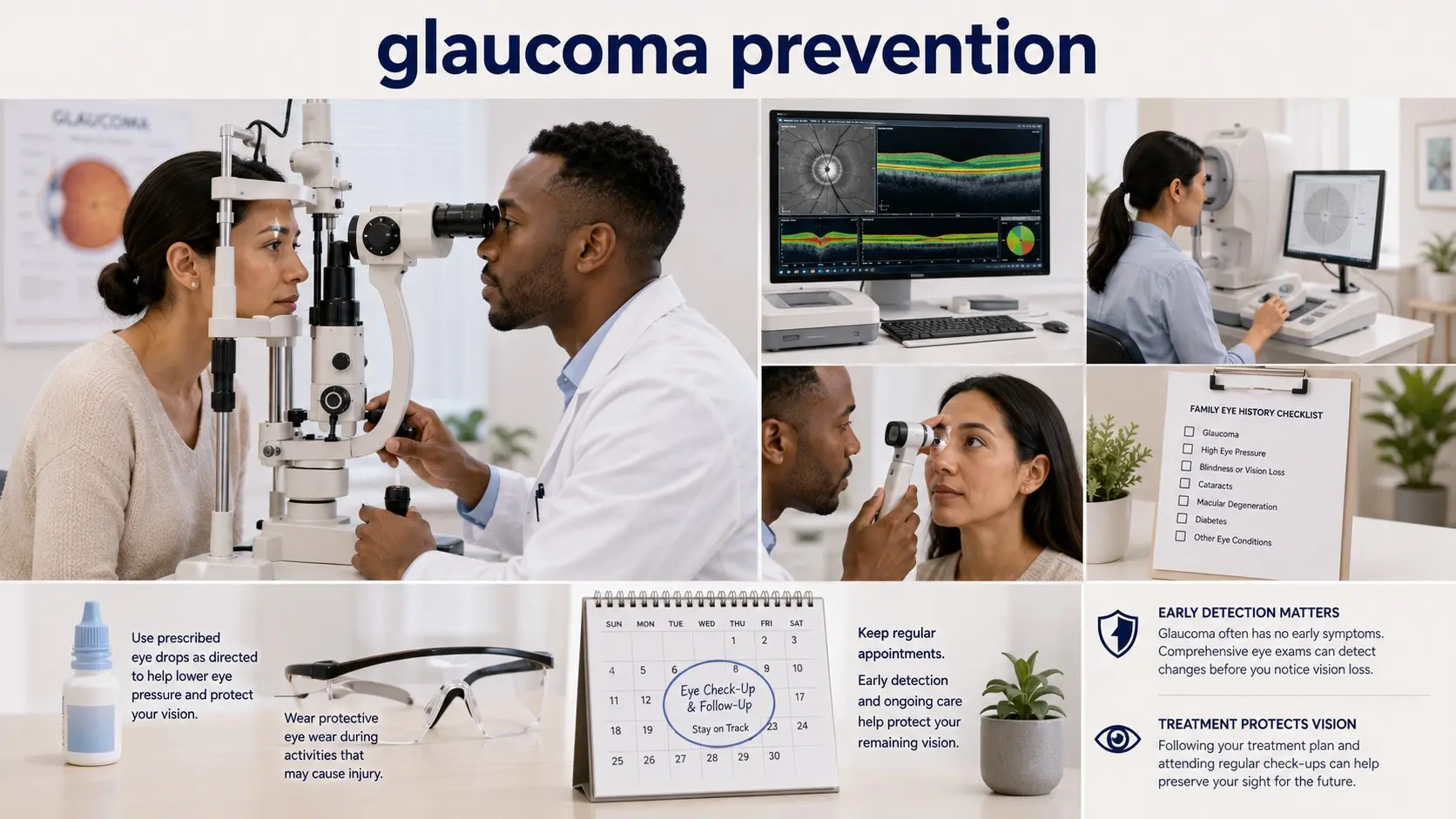
A glaucoma assessment may include a dilated optic-nerve examination, tonometry, peripheral visual-field testing, optical coherence tomography, corneal-thickness measurement, and examination of the drainage angle.
Healthy activity, not smoking, protective eyewear, a balanced diet, and good management of general health support overall wellbeing. They do not replace prescribed eye drops, laser treatment, surgery, or specialist monitoring.
Acute Angle Closure Is an Eye Emergency
Seek immediate emergency eye care for a combination of:
- Sudden severe eye pain
- A red eye
- Sudden blurred or reduced vision
- Halos or rainbow-colored rings around lights
- Severe headache
- Nausea or vomiting
These symptoms may indicate that the drainage angle has suddenly closed and eye pressure has risen rapidly.
Do not wait for sleep, hydration, eye drops belonging to someone else, or a routine appointment. Rapid treatment may be needed to protect vision.
What Is Glaucoma?
Glaucoma is a group of eye diseases that cause progressive damage to the optic nerve.
The optic nerve carries visual information from the retina to the brain. When enough nerve fibers are damaged, areas of vision are lost.
Glaucoma can affect:
- One eye more than the other
- Peripheral vision
- Contrast sensitivity
- Vision in dim lighting
- Central vision in advanced disease
Vision already lost from glaucoma cannot currently be restored. Treatment aims to prevent or slow additional damage.
Why Is Glaucoma Called the Silent Thief of Sight?
Primary open-angle glaucoma usually develops gradually and painlessly.
During its early stages, a person may still have:
- Clear central vision
- No eye pain
- No redness
- No obvious daily limitation
The brain may also compensate for small areas of peripheral loss, making the change difficult to notice.
By the time a person recognizes tunnel vision or significant side-vision loss, substantial permanent damage may already be present.
This is why waiting for symptoms is not an effective glaucoma-screening strategy.
How Does Glaucoma Damage the Optic Nerve?
The eye continuously produces a clear fluid called aqueous humor.
This fluid normally:
- Forms inside the eye.
- Flows through the pupil.
- Reaches the drainage angle.
- Leaves through drainage tissues and other pathways.
If fluid does not drain efficiently, pressure may increase.
However, glaucoma is more complex than fluid simply building up until the nerve is damaged.
Optic-nerve vulnerability may also be influenced by:
- Age
- Blood supply
- Corneal properties
- Eye anatomy
- Genetics
- Existing nerve structure
- How pressure changes over time
Some people develop glaucoma despite eye-pressure readings within the statistically typical range.
Eye Pressure and Glaucoma
Intraocular pressure, commonly shortened to IOP, is the pressure inside the eye.
Elevated IOP is a major modifiable risk factor for glaucoma, but it is not the entire diagnosis.
There Is No Single Diagnostic Number
A single pressure threshold cannot:
- Confirm glaucoma
- Rule out glaucoma
- Show whether the optic nerve is worsening
- Determine the correct treatment target
Pressure changes throughout the day and may be influenced by:
- Measurement technique
- Corneal thickness and biomechanics
- Body position
- Medicines
- Exercise
- Fluid intake
- Time of day
What Is a Target Pressure?
A target pressure is an individualized treatment goal chosen by the ophthalmologist.
It may depend on:
- Current pressure
- Amount of optic-nerve damage
- Visual-field loss
- Rate of progression
- Age and life expectancy
- Corneal thickness
- Other eye conditions
- Treatment risks and side effects
The target may be revised if tests show progression.
Glaucoma Versus Ocular Hypertension
Ocular hypertension means eye pressure is elevated without detectable glaucomatous optic-nerve or visual-field damage.
Not every person with ocular hypertension develops glaucoma.
Factors That May Increase the Need for Treatment
- Higher pressure
- Thin central corneas
- Older age
- Suspicious optic-nerve appearance
- Family history
- Other glaucoma risk factors
Clinical trials have shown that pressure-lowering drops can delay or prevent glaucoma in some people at higher risk.
Treatment is therefore individualized rather than automatically prescribed to everyone with one elevated reading.
Main Types of Glaucoma
Primary Open-Angle Glaucoma
This is the most common glaucoma type in the United States.
It usually:
- Develops slowly
- Has no early symptoms
- Affects peripheral vision first
- Requires long-term monitoring and treatment
Normal-Tension Glaucoma
Normal-tension glaucoma causes characteristic optic-nerve damage despite pressure measurements that are not unusually high.
Lowering pressure can still reduce the risk of additional progression.
Angle-Closure Glaucoma
Angle closure occurs when the iris blocks access to the eye's drainage angle.
It may be:
- Sudden and symptomatic
- Intermittent
- Chronic and relatively quiet
Acute angle closure is an emergency.
Secondary Glaucoma
Secondary glaucoma develops because of another condition or exposure, such as:
- Eye injury
- Inflammation or uveitis
- Steroid use
- Abnormal blood vessels
- Previous eye surgery
- Lens-related conditions
- Selected medicines
Childhood and Congenital Glaucoma
Glaucoma can occur in infants and children.
Possible signs in a baby or young child include:
- Excessive tearing
- Light sensitivity
- Cloudy-looking corneas
- Unusually large eyes
- Frequent eyelid squeezing
Suspected childhood glaucoma requires prompt pediatric ophthalmology care.
How Common Is Glaucoma?
CDC modeling estimated that approximately:
- 4.2 million Americans were living with glaucoma in 2022
- 1.5 million had vision-affecting glaucoma
The figures include diagnosed and estimated undiagnosed disease.
Glaucoma prevalence increases with age, and demographic patterns vary between populations.
Because open-angle glaucoma may remain symptom-free for years, many people are unaware that damage has begun.
Who Is at Higher Risk of Glaucoma?
Anyone can develop glaucoma, but risk is higher with certain characteristics.
Important Risk Factors
- Increasing age
- Family history of glaucoma
- Elevated eye pressure
- Thin central corneas
- Suspicious optic-nerve appearance
- High myopia
- Previous eye injury
- Long-term or high-dose steroid exposure
- Previous eye surgery
- Eye inflammation
- Certain drainage-angle anatomy
Medical Conditions
Conditions such as diabetes, blood-pressure disorders, migraine, and sleep apnea may influence overall eye health or coexist with glaucoma.
The relationships are complex. Having one of these conditions does not prove that glaucoma will develop.
Ask the eye-care professional whether a medical condition changes your examination schedule or treatment plan.
Family History and Ancestry
Family History
A parent, sibling, or child with glaucoma can increase personal risk.
Tell your eye-care professional:
- Which relative has glaucoma
- At what age it was diagnosed
- Whether surgery was required
- Whether significant vision loss occurred
Relatives of a person with glaucoma should be encouraged to arrange comprehensive eye examinations rather than relying on vision screenings.
Black or African American Adults
Black or African American adults have higher rates of open-angle glaucoma and may develop disease at younger ages.
NEI identifies Black or African American adults over age 40 as a higher-risk group.
Hispanic or Latino Adults
Risk increases among older Hispanic or Latino adults, particularly after age 60.
Asian and Other Populations
Some Asian populations have higher rates of angle-closure glaucoma, while others have higher rates of normal-tension or open-angle disease.
Ancestry is one part of risk assessment. Eye anatomy, age, family history, pressure, and optic-nerve findings remain important.
Steroids, Eye Injury, and Secondary Glaucoma
Steroid Exposure
Steroids can raise eye pressure in susceptible people.
Relevant forms may include:
- Steroid eye drops
- Eye injections
- Oral steroid tablets
- Injected steroids
- High-dose or long-term inhaled steroids
- Skin steroid products used near the eyes
Do not stop medically necessary steroid treatment independently.
Tell both the prescriber and eye-care professional about:
- The steroid name
- Dose
- Route
- Duration
- Previous pressure response
Ask whether pressure monitoring is needed.
Eye Injury
Blunt or penetrating injury can damage the drainage angle and cause glaucoma immediately or years later.
Wear appropriate protective eyewear during:
- Power-tool use
- Construction
- Metalwork
- Woodworking
- Yard work
- Chemical handling
- Sports with eye-injury risk
Tell an eye-care professional about previous trauma, even when the injury happened many years ago.
Glaucoma Symptoms and Warning Signs
Open-Angle Glaucoma
Early open-angle glaucoma usually causes no symptoms.
Advanced disease may cause:
- Loss of peripheral vision
- Tunnel vision
- Difficulty navigating dim environments
- Reduced contrast sensitivity
- Difficulty detecting steps or objects to the side
Angle-Closure Warning Signs
Emergency symptoms can include:
- Severe eye pain
- Redness
- Sudden blurred vision
- Halos around lights
- Headache
- Nausea
- Vomiting
Do Not Wait for Tunnel Vision
Recognizing side-vision loss is not an effective early-detection method.
Comprehensive examination and comparison of objective tests are needed to identify early or progressive damage.
When Should You Have an Eye Examination?
Examination timing should be personalized.
Adults Without Symptoms or Known Risk Factors
The American Academy of Ophthalmology recommends a baseline comprehensive medical eye examination by about age 40, when early eye disease may begin to appear.
The interval after that depends on:
- Age
- Examination findings
- Medical history
- Family history
- Eye symptoms
Higher-Risk Adults
People at higher risk may need comprehensive dilated eye examinations every one to two years or at another interval selected by their eye-care professional.
Higher-risk groups include people with:
- A family history of glaucoma
- Elevated eye pressure
- Black or African American ancestry over age 40
- Older age
- Suspicious optic nerves
- Thin corneas
- Significant myopia
- Steroid exposure
- Previous eye trauma
Diagnosed Glaucoma or Ocular Hypertension
Follow the exact monitoring schedule established by the treating ophthalmologist.
Depending on risk and progression, follow-up may be needed more frequently than a routine annual examination.
Read the Medical Tests and Screenings Hub for more preventive-care guidance.
What Happens During a Glaucoma Assessment?
Glaucoma cannot be reliably diagnosed using only one test.
A comprehensive assessment may include:
- Medical and family history
- Visual-acuity testing
- Refraction
- Eye-pressure measurement
- Dilated optic-nerve examination
- Optic-nerve photographs
- Visual-field testing
- OCT imaging
- Corneal-thickness measurement
- Gonioscopy
The most useful information often comes from comparing results over time.
Tonometry: Measuring Eye Pressure
Tonometry measures pressure inside the eye.
Methods include:
- Applanation tonometry using gentle contact
- Air-puff tonometry
- Handheld instruments
- Other specialized methods
Why One Pressure Check Is Not Enough
A single reading can miss:
- Pressure changes during the day
- Normal-tension glaucoma
- Early optic-nerve damage
- Measurement effects caused by corneal properties
A pressure check at a pharmacy, screening fair, or optical shop cannot replace a complete glaucoma assessment.
Dilated Optic-Nerve Examination
Dilating drops widen the pupil so the clinician can examine the optic nerve and retina more clearly.
The examiner looks for:
- Optic-disc shape
- Changes in the neuroretinal rim
- Asymmetry between the eyes
- Hemorrhages near the optic disc
- Other signs of nerve damage
Photographs may be used to document the baseline appearance and detect future change.
Visual-Field Testing
A visual-field test maps how well different areas of vision are detected while the eye looks at a central target.
It may identify patterns of peripheral loss caused by glaucoma.
Why Tests Are Repeated
Results can be affected by:
- Fatigue
- Learning the test
- Loss of concentration
- An incorrect lens correction
- Dry eye
More than one test may be needed to confirm a defect or calculate the rate of progression.
OCT Optic-Nerve Imaging
Optical coherence tomography, or OCT, uses light to create detailed cross-sectional images.
In glaucoma care, it may measure:
- Retinal nerve-fiber layer thickness
- Ganglion-cell layers
- Optic-nerve-head structure
OCT may detect structural changes before a person notices symptoms.
OCT Is Not Interpreted Alone
Results can be influenced by:
- High myopia
- Scan quality
- Eye movement
- Retinal disease
- Normal anatomical variation
The clinician compares OCT with the optic-nerve examination, pressure, visual fields, and previous scans.
Why Is Corneal Thickness Measured?
Pachymetry measures central corneal thickness.
Corneal thickness can influence:
- How pressure measurements are interpreted
- Risk estimates in ocular hypertension
- Clinical decisions about monitoring or treatment
A thin cornea does not automatically prove glaucoma, and a thick cornea does not guarantee protection.
What Is Gonioscopy?
Gonioscopy uses a special mirrored lens to examine the drainage angle between the iris and cornea.
It helps determine whether the angle is:
- Open
- Narrow
- Closed
- Damaged by injury
- Affected by abnormal blood vessels or other changes
This information helps classify the glaucoma type and choose appropriate treatment.
Glaucoma Awareness and Vision-Protection Plan
| Action | Why It Matters |
|---|---|
| Know your family history | Family history can change when examinations should begin. |
| Get a comprehensive eye exam | Symptoms and eye pressure alone cannot rule out glaucoma. |
| Keep copies of test results | OCT, visual fields, and photographs are most useful when compared over time. |
| Use treatment consistently | Lowering pressure reduces the risk of further damage. |
| Report steroid use | Steroids can raise pressure in susceptible people. |
| Protect against injury | Eye trauma may cause secondary glaucoma immediately or years later. |
| Ask about exercise modifications | Head-down positions and heavy straining may temporarily raise pressure. |
| Know emergency symptoms | Acute angle closure may threaten vision rapidly. |
| Encourage relatives to be examined | Glaucoma risk often runs in families. |
What Can Lifestyle Do for Glaucoma?
Lifestyle can support:
- General cardiovascular health
- Mobility and balance
- Medication routines
- Protection from injury
- Quality of life
Lifestyle cannot:
- Reverse optic-nerve damage
- Replace pressure-lowering treatment
- Guarantee glaucoma prevention
- Determine whether glaucoma is progressing
- Replace OCT or visual-field testing
No food, supplement, breathing method, eye exercise, or sleep position has been proven to cure glaucoma.
Exercise and Glaucoma
Regular physical activity supports cardiovascular health, mobility, mood, sleep, and general wellbeing.
Research suggests that aerobic and resistance exercise can cause an immediate, temporary reduction in eye pressure after a session. Long-term effects and the influence on glaucoma progression are less certain.
Potentially Suitable Activities
- Walking
- Cycling
- Dancing
- Swimming
- Moderate resistance training
- Other activities approved for your general health
Exercise Is Not a Glaucoma Prescription
There is no universal exercise duration or intensity that prevents glaucoma.
Do not reduce or stop eye drops because exercise temporarily lowers a pressure reading.
Ask for Individual Guidance If You Have:
- Advanced glaucoma
- Rapid progression
- Very low target pressure
- Recent eye surgery
- Significant visual-field loss
- Other medical restrictions
Yoga, Inversions, Breath-Holding, and Heavy Lifting
Head-Down Yoga Positions
Studies show that head-below-heart yoga positions can rapidly and temporarily increase eye pressure.
People with glaucoma should discuss prolonged positions such as:
- Headstands
- Shoulder stands
- Other inversions
- Long-held downward-facing positions
Modification does not mean all yoga must be stopped.
Possible alternatives include:
- Seated poses
- Standing poses
- Supported poses that keep the head above the heart
- Relaxation without inversion
Tell the yoga instructor that you have glaucoma and follow the ophthalmologist's advice.
Heavy Lifting
Very heavy lifting combined with breath-holding and forceful straining can temporarily increase pressure.
Safer general principles include:
- Use controlled technique.
- Exhale during the effort.
- Avoid prolonged breath-holding.
- Avoid maximal straining unless cleared professionally.
There is no universal weight limit for every person with glaucoma.
Diet and Glaucoma Prevention
No specific diet has been proven to prevent or cure glaucoma.
A balanced dietary pattern can support cardiovascular and general eye health.
Useful Food Groups
- Leafy green vegetables
- Other colorful vegetables
- Fruit
- Beans and lentils
- Fish
- Nuts and seeds
- Whole grains
Leafy Greens and Dietary Nitrates
Observational studies have found an association between greater dietary-nitrate or leafy-green intake and lower risk of some open-angle glaucoma patterns.
This does not prove that leafy greens:
- Lower eye pressure
- Prevent glaucoma in every person
- Reverse optic-nerve damage
- Replace prescribed treatment
Supplements
No vitamin, antioxidant, herbal product, or omega-3 supplement has been established as a glaucoma cure or standard pressure-lowering treatment.
Discuss supplements before use because they may:
- Interact with medicines
- Affect bleeding
- Contain excessive doses
- Delay proven treatment
Read Foods for Eye Health and Better Vision.
Caffeine and Eye Pressure
Caffeine research is mixed.
A large amount of caffeine can temporarily raise eye pressure in some people with glaucoma or ocular hypertension.
Habitual caffeine intake has not shown a simple universal relationship with glaucoma risk. Genetic susceptibility and baseline pressure may affect the response.
Practical Guidance
- Do not assume everyone with glaucoma must stop coffee.
- Avoid using caffeine immediately before a pressure test unless instructed otherwise.
- Discuss high intake when pressure is difficult to control.
- Reduce intake gradually when needed to avoid withdrawal symptoms.
There is no universal number of cups that applies to every patient.
Smoking and General Eye Health
Smoking damages cardiovascular and respiratory health and increases the risk of several eye diseases.
Research on smoking as an independent cause of open-angle glaucoma remains inconsistent.
Not smoking is still an important eye-health recommendation because smoking is associated with:
- Cataracts
- Age-related macular degeneration
- Vascular disease
- Poor wound healing
- General health risks
Use evidence-based cessation support rather than relying on willpower alone.
Sleep, Sleep Apnea, and Sleeping Position
Sleep Apnea
Sleep apnea has been associated with several eye and vascular conditions, including glaucoma in observational research.
Ask for medical assessment when sleep problems include:
- Loud snoring
- Breathing pauses
- Gasping during sleep
- Morning headaches
- Severe daytime sleepiness
Treat diagnosed sleep apnea for its established health risks. Do not assume that treatment alone controls glaucoma.
Sleeping Position
Eye pressure changes with body position, but research has not established one ideal sleeping position for every person with glaucoma.
Do not stack pillows, change sides, or elevate the bed as a glaucoma treatment without individualized advice.
The ophthalmologist may discuss position when:
- Glaucoma is advanced in one eye
- Nighttime pressure is a concern
- Pressure remains difficult to control
Can Screen Time Cause Glaucoma?
Ordinary screen use has not been established as a cause of glaucoma.
Screen use may cause temporary:
- Dryness
- Eye fatigue
- Headache
- Focusing discomfort
The 20-20-20 rule and natural blinking may improve digital eye strain, but they do not prevent, detect, or treat glaucoma.
Read Eye Exercises for Screen Time and Digital Eye-Strain Relief.
How Is Glaucoma Treated?
Glaucoma treatment lowers eye pressure to reduce the risk of additional optic-nerve damage.
Treatment may include:
- Prescription eye drops
- Laser treatment
- Minimally invasive glaucoma surgery
- Traditional drainage surgery
- A combination of treatments
The correct approach depends on:
- Glaucoma type
- Pressure
- Target pressure
- Amount of damage
- Rate of progression
- Age
- Other eye conditions
- Medicine side effects
- Ability to use treatment consistently
Treatment cannot restore vision already lost, but it can help preserve remaining vision.
Glaucoma Eye Drops
Prescription eye drops commonly work by:
- Improving fluid drainage
- Reducing fluid production
- Using more than one mechanism
Common Medicine Classes
- Prostaglandin analogs
- Beta blockers
- Alpha agonists
- Carbonic anhydrase inhibitors
- Rho kinase inhibitors
- Combination products
The dosing schedule depends on the exact medicine. Follow the prescription label rather than a general online schedule.
Tell the Prescriber About:
- Asthma or other lung disease
- Slow heart rate or heart rhythm problems
- Low blood pressure
- Kidney disease
- Pregnancy or breastfeeding
- Allergies
- Other eye drops and medicines
Possible Side Effects
Depending on the medicine, side effects may include:
- Stinging
- Redness
- Dryness
- Temporary blur
- Eyelash growth
- Darkening of the iris or eyelid skin
- Fatigue
- Breathing or heart-rate effects
Report significant side effects rather than stopping treatment independently.
How to Use Glaucoma Eye Drops Correctly
- Wash and dry your hands.
- Check the bottle label.
- Tilt the head back or lie down.
- Gently pull down the lower eyelid.
- Look upward.
- Place one drop into the lower-lid pocket unless instructed otherwise.
- Avoid touching the bottle tip to the eye, lashes, or skin.
- Close the eye gently without squeezing.
- When instructed, press lightly at the inner corner of the closed eyelids.
- Wait the recommended interval before using another drop.
Why Inner-Corner Pressure May Help
Light pressure over the tear-drainage area can reduce movement of medicine into the nose and bloodstream.
This may:
- Keep more medicine on the eye
- Reduce selected systemic side effects
Ask for Help When Drops Are Difficult
Solutions may include:
- A drop-assistance device
- Written instructions
- A phone reminder
- Linking drops to a daily habit
- A combination medicine
- Laser treatment
- Help from a family member or caregiver
Laser Treatment for Glaucoma
Laser treatment may improve fluid drainage or create an opening that relieves an angle-related blockage.
Selective Laser Trabeculoplasty
Selective laser trabeculoplasty may be used for open-angle glaucoma or ocular hypertension.
It may:
- Lower pressure
- Reduce the number of drops needed
- Serve as an initial or additional treatment
Its effect can diminish over time, and additional treatment may still be needed.
Laser Peripheral Iridotomy
Laser peripheral iridotomy creates a small opening in the iris to improve fluid movement in eyes at risk of angle closure.
The procedure does not remove the need for future monitoring.
Glaucoma Surgery
Surgery may be recommended when:
- Eye drops and laser do not reach the target pressure
- Disease continues to progress
- Pressure is dangerously high
- Medicine side effects are unacceptable
- Treatment adherence is difficult
Possible Procedures
- Minimally invasive glaucoma surgery
- Trabeculectomy
- Drainage implants
- Other pressure-lowering operations
Possible Risks
- Pressure that is too low or remains too high
- Infection
- Bleeding
- Cataract
- Corneal problems
- Need for additional surgery
- Vision loss
The ophthalmologist should explain the expected benefit, alternatives, recovery plan, and warning signs.
Why Treatment Adherence Matters
Glaucoma treatment is preventive: it is used to reduce future damage.
A person may feel no different whether pressure is controlled or uncontrolled.
Do not stop treatment because:
- The eyes feel normal
- Central vision is clear
- A recent pressure reading was lower
- The bottle is inconvenient
- Side effects seem minor
Instead, discuss barriers such as:
- Cost
- Forgetting doses
- Difficulty squeezing the bottle
- Tremor or arthritis
- Redness or discomfort
- Complex schedules
- Travel
Alternative drops, combination products, laser, surgery, reminders, or assistance devices may improve adherence.
Family Glaucoma Awareness Plan
When one person is diagnosed:
- Ask which glaucoma type is present.
- Tell parents, siblings, and adult children.
- Encourage them to arrange comprehensive eye examinations.
- Share the approximate age at diagnosis.
- Record the family history for future medical visits.
- Update relatives when additional family members are diagnosed.
A simple family conversation may help someone obtain an examination before symptoms develop.
Questions to Ask an Ophthalmologist
- Do I have glaucoma, ocular hypertension, or a suspicious optic nerve?
- Which glaucoma type do I have?
- What is my target pressure?
- How was that target chosen?
- How much optic-nerve damage is present?
- What do my visual-field and OCT tests show?
- Is the condition progressing?
- How often should my pressure be checked?
- How often do I need OCT and visual-field testing?
- Does corneal thickness affect my pressure interpretation?
- Is my drainage angle open or narrow?
- Could a steroid or another medicine raise my pressure?
- Are my exercise or yoga habits safe?
- Is caffeine relevant to my pressure pattern?
- Am I using my drops correctly?
- Could laser treatment be appropriate?
- When would surgery be considered?
- Should my close relatives have earlier examinations?
- Which symptoms require emergency care?
What Not to Do
- Do not wait for symptoms before arranging a high-risk examination.
- Do not assume a normal pressure reading rules out glaucoma.
- Do not diagnose glaucoma from an online vision test.
- Do not stop glaucoma drops because the eyes feel normal.
- Do not use another person's eye drops.
- Do not stop steroid treatment independently.
- Do not rely on food, supplements, exercise, or meditation as treatment.
- Do not perform prolonged inversions without discussing safety.
- Do not repeatedly hold your breath during heavy lifting.
- Do not deliberately overhydrate to change eye pressure.
- Do not assume screen breaks prevent glaucoma.
- Do not delay emergency care for acute angle-closure symptoms.
Key Takeaway
Glaucoma cannot always be prevented, but much glaucoma-related vision loss can be reduced through early detection and consistent treatment.
The most important actions are:
- Know your risk factors.
- Record your family eye history.
- Obtain comprehensive eye examinations.
- Do not rely on symptoms or pressure testing alone.
- Use prescribed drops correctly.
- Attend visual-field, OCT, and follow-up appointments.
- Report steroid exposure.
- Protect the eyes from injury.
- Ask about safe exercise modifications.
- Recognize acute angle-closure symptoms.
Healthy eating, activity, sleep care, and not smoking support general health, but they cannot replace proven glaucoma treatment.
Recommended next step: Find out when you last had a comprehensive dilated eye examination—not only a glasses check or pressure screening. Arrange an appointment sooner when you have a family history, steroid exposure, previous eye trauma, elevated pressure, suspicious optic nerves, or another significant risk factor.
References and Sources
National Eye Institute: Glaucoma
National Eye Institute: Glaucoma Awareness and Risk
CDC Vision and Eye Health Surveillance System: Glaucoma Prevalence
American Academy of Ophthalmology: Eye Health Information for Adults 40 to 65
National Eye Institute: Get a Dilated Eye Examination
National Eye Institute: Glaucoma Medicines
National Eye Institute: How to Put in Eye Drops
National Eye Institute: Laser Treatment for Glaucoma
National Eye Institute: Glaucoma Surgery
National Eye Institute: Landmark Glaucoma Clinical Research
Systematic Review: Impact of Exercise on Intraocular Pressure
Intraocular Pressure During Head-Down Yoga Positions
Systematic Review: Caffeine and Intraocular Pressure
Dietary Caffeine, Genetic Risk, Eye Pressure, and Glaucoma
Dietary Nitrate Intake and Primary Open-Angle Glaucoma Risk
Medical review note: Because this article discusses optic-nerve disease, emergency angle closure, eye-pressure interpretation, steroid risks, prescription medicines, laser treatment, surgery, and exercise modifications, it should be prioritized for review by an ophthalmologist, optometrist, or qualified medical reviewer.
Related NextFitLife Guides and Topic Hubs
Related Eye-Health Guides
- Eye Health Complete Guide: Vision Care, Symptoms, and Prevention
- Medical Tests and Screenings Hub
- Foods for Eye Health and Better Vision
- How to Improve Your Eyesight Naturally
- Eye Exercises for Screen Time and Digital Eye-Strain Relief
- Eye Health After LASIK Surgery
- Healthy Lifestyle Roadmap
NextFitLife Topic Hubs
Frequently Asked Questions About Glaucoma Prevention and Early Detection
Can glaucoma be prevented?
Glaucoma cannot always be prevented. Early detection, pressure-lowering treatment, eye-injury prevention, and consistent monitoring can reduce the risk of serious additional vision loss.
Can early detection prevent blindness from glaucoma?
Early detection allows treatment to begin before extensive damage occurs. Treatment cannot restore lost vision, but it can slow or prevent additional loss in many patients.
What is glaucoma?
Glaucoma is a group of diseases that progressively damage the optic nerve and may cause permanent loss of peripheral and central vision.
Why is glaucoma called the silent thief of sight?
Open-angle glaucoma usually has no early pain or obvious symptoms, allowing peripheral vision loss to develop unnoticed.
Does glaucoma always cause high eye pressure?
No. Normal-tension glaucoma causes characteristic optic-nerve damage even when pressure readings are not unusually high.
Does high eye pressure always mean glaucoma?
No. Ocular hypertension means pressure is elevated without detectable optic-nerve or visual-field damage. Some people are monitored, while higher-risk patients may be treated.
What is ocular hypertension?
Ocular hypertension is elevated eye pressure without established glaucomatous nerve damage or visual-field loss.
What is normal-tension glaucoma?
It is glaucoma that develops despite pressure readings within the statistically typical range. Lowering pressure can still reduce progression risk.
What is open-angle glaucoma?
Open-angle glaucoma is a usually gradual and symptom-free form in which the drainage angle remains physically open but pressure regulation and optic-nerve health become abnormal.
What is angle-closure glaucoma?
Angle closure occurs when the iris blocks access to the drainage angle, causing intermittent, chronic, or suddenly severe pressure elevation.
Which angle-closure symptoms are an emergency?
Sudden severe eye pain, redness, blurred vision, halos around lights, headache, nausea, or vomiting require immediate emergency eye care.
Who is at higher risk of glaucoma?
Risk factors include increasing age, family history, elevated eye pressure, thin corneas, suspicious optic nerves, Black or African American ancestry, significant myopia, steroid exposure, and previous eye injury.
Does glaucoma run in families?
Yes. A close family history increases risk, so parents, siblings, and adult children of affected patients should arrange comprehensive eye examinations.
At what age should glaucoma screening begin?
Adults without symptoms or known risks should have a baseline comprehensive medical eye examination by about age 40. Higher-risk people may need earlier assessment.
How often should adults receive an eye examination?
The interval depends on age, family history, ancestry, pressure, corneal thickness, optic-nerve findings, medical history, and previous test results.
Is an eye-pressure test enough to detect glaucoma?
No. Glaucoma may occur with statistically normal pressure. Diagnosis also considers the optic nerve, visual fields, OCT imaging, corneal thickness, and drainage angle.
What is tonometry?
Tonometry is a test that measures pressure inside the eye using gentle contact, an air puff, a handheld device, or another technique.
What is a visual-field test?
A visual-field test maps peripheral and central vision while the person responds to lights presented in different locations.
What does OCT show in glaucoma?
OCT creates detailed images that measure retinal nerve-fiber and ganglion-cell layers and help detect or monitor structural optic-nerve damage.
Why is corneal thickness measured?
Central corneal thickness affects the interpretation of pressure measurements and contributes to risk assessment in ocular hypertension.
What is gonioscopy?
Gonioscopy uses a special mirrored lens to examine whether the eye's drainage angle is open, narrow, closed, damaged, or abnormal.
Can glaucoma vision loss be reversed?
No current treatment restores vision already lost from glaucoma. Treatment focuses on protecting remaining vision.
Can exercise lower eye pressure?
Aerobic and resistance exercise may cause a temporary reduction after a session. The long-term effect varies and exercise does not replace glaucoma treatment.
Can exercise prevent glaucoma?
Exercise supports general health but has not been proven to prevent every case of glaucoma or replace comprehensive examinations.
Is weightlifting safe with glaucoma?
Many people can perform resistance exercise, but prolonged breath-holding and maximal straining may temporarily raise pressure. Individual guidance may be needed.
Are headstands or inversions safe with glaucoma?
Head-down positions can rapidly raise eye pressure. People with glaucoma should discuss inversions and possible modifications with their ophthalmologist.
Does caffeine raise eye pressure?
Large caffeine doses can temporarily raise pressure in some people with glaucoma or ocular hypertension. There is no universal coffee limit for every patient.
Can food prevent glaucoma?
No food or dietary pattern has been proven to prevent or cure glaucoma. Balanced nutrition supports general cardiovascular and eye health.
Do leafy greens lower glaucoma risk?
Observational studies have found associations between leafy-green or dietary-nitrate intake and lower risk of some glaucoma patterns, but they do not prove prevention.
Do omega-3 supplements help glaucoma?
Omega-3 supplements are not established glaucoma treatment and should not replace eye drops, laser, surgery, or monitoring.
Can smoking cause glaucoma?
The independent relationship between smoking and open-angle glaucoma remains uncertain. Smoking still damages overall eye, cardiovascular, and respiratory health.
Can screen time cause glaucoma?
Ordinary screen use has not been established as a glaucoma cause. Screen breaks may reduce dryness and eye strain but do not prevent glaucoma.
Can steroids raise eye pressure?
Yes. Steroid drops, injections, tablets, inhalers, and skin products used near the eyes can raise pressure in susceptible people.
How are glaucoma eye drops used correctly?
Use one prescribed drop without touching the bottle tip to the eye, close the eye gently, and apply light inner-corner pressure when instructed.
Can glaucoma drops be stopped when pressure becomes normal?
No. The pressure may be normal because treatment is working. Do not stop or change drops without the prescribing ophthalmologist's approval.
Is laser treatment effective for glaucoma?
Laser treatment can lower pressure in selected glaucoma types, but the effect varies and additional drops, repeat laser, or surgery may be needed.
When is glaucoma surgery needed?
Surgery may be recommended when drops and laser do not reach the target pressure, disease progresses, or medicines cannot be used effectively.
Can glaucoma be controlled for life?
Many people maintain useful vision with early diagnosis, consistent treatment, and lifelong monitoring, although individual disease courses vary.
Should relatives of someone with glaucoma be examined?
Yes. Close relatives should tell their eye-care professional about the family history and follow an appropriate examination schedule.
Which vision symptoms require emergency care?
Sudden severe eye pain, redness, blurred vision, halos, nausea, vomiting, sudden vision loss, or another rapid visual change require urgent assessment.
Medical Disclaimer
All health content on NextFitLife is provided for general educational and informational purposes only. This article does not diagnose, prevent, or treat open-angle glaucoma, angle-closure glaucoma, normal-tension glaucoma, ocular hypertension, optic-nerve disease, or another eye condition.
Glaucoma cannot always be prevented. Healthy habits may support general health, but they cannot replace comprehensive eye examinations, pressure-lowering eye drops, laser treatment, surgery, or monitoring by an ophthalmologist.
Do not stop glaucoma drops or medically necessary steroid treatment without speaking with the prescribing clinician. Do not change caffeine intake, exercise, sleeping position, supplements, or fluid intake as a glaucoma treatment without individualized advice.
Seek emergency eye care for sudden severe eye pain, a red eye, blurred vision, halos around lights, severe headache, nausea, vomiting, sudden vision loss, or another rapid visual change.

Health & wellness writer with 30+ years of experience in nutrition, fitness, and healthy aging. Founder of NextFitLife.com — evidence-based health guidance.