Published: June 2026
Last Updated: July 26, 2026
Next Review: July 2027, or earlier if important MGD, dry-eye diagnosis, omega-3, thermal-pulsation, IPL, or prescription-treatment guidance changes
Written and Source Checked by: Adel Galal, Founder and Lead Writer at NextFitLife
Review Status: Editorially reviewed against the 2025 TFOS DEWS III reports, American Academy of Ophthalmology information, FDA device documents, CDC contact-lens guidance, and peer-reviewed MGD research. Not medically reviewed by an ophthalmologist, optometrist, pharmacist, or registered dietitian.
Your eyes may feel gritty, burn after screen use, water unexpectedly, or become blurry until you blink. Artificial tears may help briefly before the symptoms return.
These symptoms can occur with meibomian gland dysfunction, commonly shortened to MGD.
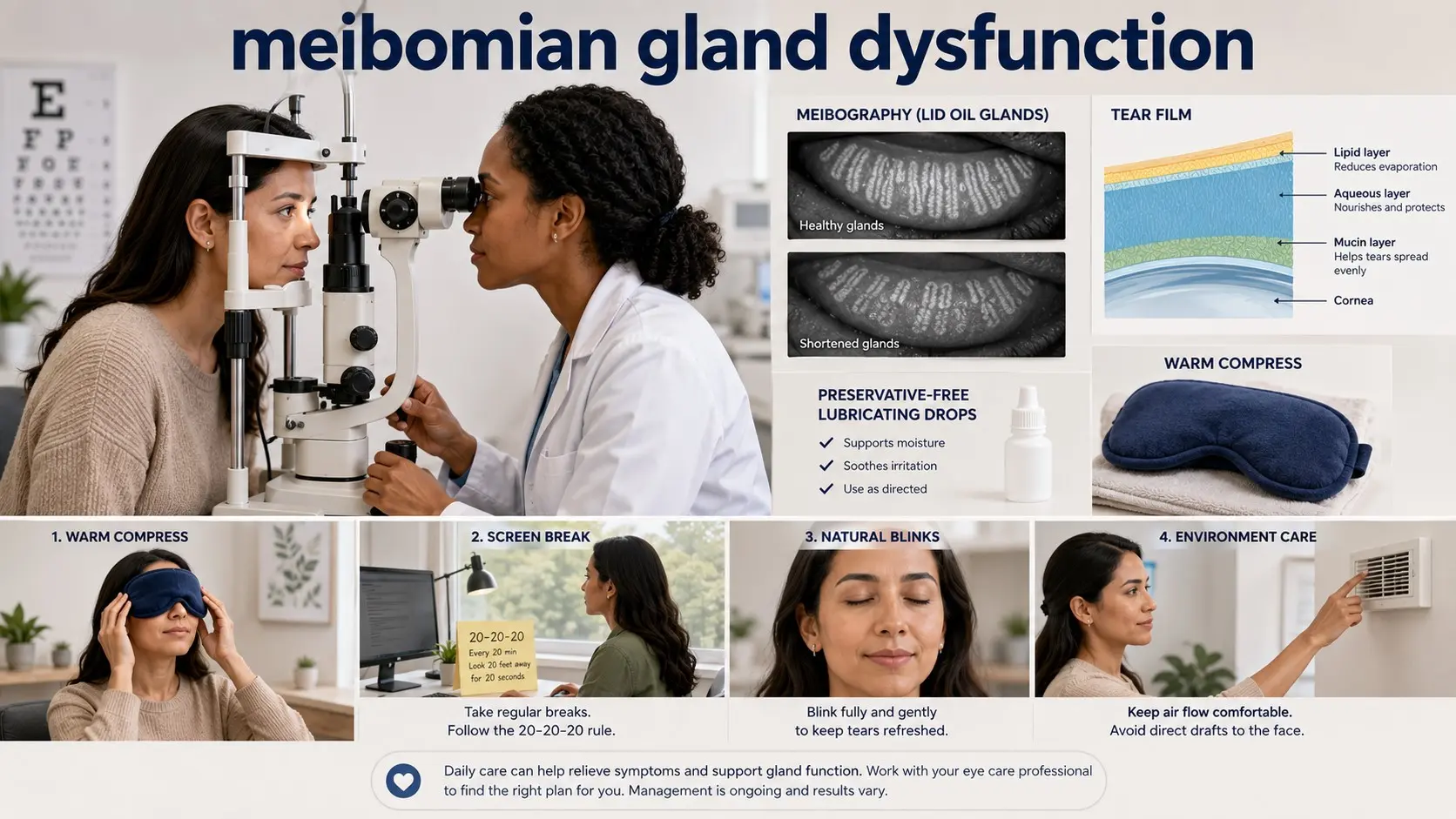
The meibomian glands are oil-producing glands inside the eyelids. Their oil helps slow tear evaporation and keeps the tear film stable between blinks. When the glands become blocked, inflamed, damaged, or produce poor-quality oil, the tears may evaporate too quickly.
MGD is a common contributor to evaporative dry eye, but it is not the only cause of burning, grittiness, watery eyes, or fluctuating vision. Allergy, infection, contact-lens complications, medication effects, aqueous-deficient dry eye, corneal disease, and nerve-related pain can produce similar symptoms.
That is why a successful routine begins with the correct diagnosis rather than assuming every dry-feeling eye needs the same warm compress, cleanser, supplement, or procedure.
Quick Answer: What Is Meibomian Gland Dysfunction?
Meibomian gland dysfunction occurs when the eyelid's oil-producing glands do not release enough healthy meibum.
This oil normally forms part of the outer tear-film layer and helps reduce tear evaporation. When gland output is blocked or abnormal, the tear film may break up too quickly, causing burning, grittiness, fluctuating blur, watery eyes, eyelid irritation, and discomfort in dry or air-conditioned environments.
Daily management may include a comfortably warm eyelid compress, gentle eyelid care when indicated, natural full blinking during screen use, environmental changes, and suitable lubricating drops.
The exact routine depends on the examination findings. Some people also need prescription anti-inflammatory treatment, management of rosacea or Demodex, contact-lens changes, thermal pulsation, intense pulsed light, or another office procedure.
MGD is often chronic. Treatment aims to improve gland output, stabilize the tear film, control inflammation, and reduce symptoms rather than guarantee a permanent cure.
Eye Symptoms That Need Urgent Care
Do not assume that severe or sudden symptoms are ordinary MGD.
Seek urgent eye care for:
- Sudden loss or major reduction of vision
- Severe eye pain
- A red eye with reduced vision
- Marked sensitivity to light
- A chemical splash or significant eye injury
- Contact-lens-related pain, redness, discharge, or blurred vision
- Sudden flashes with many new floaters
- A curtain, shadow, or missing area of vision
Remove contact lenses immediately when pain, significant redness, light sensitivity, discharge, or reduced vision develops, and contact an eye-care professional.
Arrange an Eye Examination When:
- Symptoms continue despite appropriate self-care
- One eye is consistently worse than the other
- Vision remains blurred after blinking
- You have repeated eyelid swelling, styes, or chalazia
- There is thick discharge or eyelids are stuck together
- You are becoming increasingly intolerant of contact lenses
- You have rosacea, autoimmune disease, or previous eye surgery
- An eyelid lesion does not heal or causes eyelash loss
- Dry-eye symptoms significantly affect reading, driving, work, or sleep
What Are the Meibomian Glands?
The upper and lower eyelids contain rows of long, narrow meibomian glands.
Each gland opens along the eyelid margin, just behind the eyelashes. The glands produce an oily material called meibum.
Why Is Meibum Important?
The tear film is a complex mixture containing water, oil, proteins, salts, mucins, and other protective substances.
The meibomian oil helps:
- Slow tear evaporation
- Maintain a smoother optical surface
- Reduce friction during blinking
- Support tear-film stability
- Limit overflow of tears across the eyelid margin
How Does Blinking Help?
A complete blink brings the eyelids together and helps move meibum from the glands toward their openings.
Normal blinking also spreads the tear film over the cornea.
When blinking becomes less frequent or incomplete, oil distribution and tear-film renewal may become less effective.
What Goes Wrong in Meibomian Gland Dysfunction?
MGD is not one single gland problem.
It may involve:
- Blocked gland openings
- Thick or altered meibum
- Reduced oil secretion
- Eyelid-margin inflammation
- Changes in the gland structure
- Loss or shortening of glands
- Excessive secretion in less common forms
Obstructive MGD
In obstructive MGD, the gland openings or ducts become partly or fully blocked. The meibum may become difficult to express or appear cloudy, granular, thick, or paste-like.
Reduced Secretion
Some glands produce less oil even without an obvious surface blockage.
Gland Dropout
Long-standing disease may be associated with shortening or loss of visible gland tissue on meibography.
Home care cannot reliably regrow gland tissue that has been lost. Treatment instead aims to preserve remaining function, reduce inflammation, improve secretion where possible, and control symptoms.
Is MGD the Same as Dry-Eye Disease?
No.
Dry-eye disease is a broader condition involving loss of tear-film or ocular-surface stability.
MGD is one important driver of dry-eye disease, especially when excessive evaporation is involved.
Evaporative Dry Eye
Evaporative dry eye occurs when tears leave the eye surface too quickly. Poor meibomian oil quality or quantity can contribute.
Aqueous-Deficient Dry Eye
Aqueous-deficient dry eye occurs when the lacrimal glands do not produce enough watery tear fluid.
It may occur with:
- Sjögren disease
- Other autoimmune conditions
- Age-related changes
- Selected medicines
- Lacrimal-gland disorders
Mixed Dry Eye
Many people have more than one driver. For example, a person may have MGD, reduced watery tears, allergy, and nerve-related sensitivity at the same time.
This helps explain why one treatment rarely works for everyone.
Symptoms of Meibomian Gland Dysfunction
Possible symptoms include:
- Burning or stinging
- Gritty, sandy, or foreign-body sensation
- Fluctuating blurry vision
- Vision that temporarily clears after blinking
- Watery eyes
- Eyelid-margin redness
- Crusting or debris around the lashes
- Contact-lens discomfort
- Eye fatigue during screen use
- Symptoms in air-conditioned, heated, dry, or windy environments
- Repeated styes or chalazia
Why Can MGD Cause Watery Eyes?
A dry or unstable ocular surface can trigger reflex tearing.
The eye may produce more watery tears, but those tears may still evaporate quickly when the protective oil layer is inadequate.
Why Can Vision Clear After Blinking?
Blinking temporarily redistributes tears and oil across the cornea. This can briefly smooth the optical surface.
Blur that does not clear after blinking may have another cause and should be assessed.
Symptoms and Signs May Not Match
Some people have significant symptoms with relatively modest examination findings. Others have visibly abnormal glands but report little discomfort.
This mismatch is one reason treatment should consider both symptoms and objective signs.
What Causes Meibomian Gland Dysfunction?
MGD is usually associated with several interacting factors rather than one simple cause.
| Factor | Possible Relationship to MGD or Dry Eye |
|---|---|
| Increasing age | Gland structure, secretion, and tear-film stability can change over time. |
| Rosacea | Inflammation and abnormal lid-margin blood vessels may affect gland function. |
| Blepharitis | Lid-margin inflammation, crusting, bacteria, or debris may coexist with MGD. |
| Demodex mites | Selected patients have mite-associated eyelid inflammation that needs specific treatment. |
| Incomplete blinking | May reduce effective oil expression and tear-film spreading. |
| Prolonged screen work | Can reduce blink frequency or increase incomplete blinking and symptom awareness. |
| Contact-lens wear | May worsen tear-film instability or discomfort in susceptible users. |
| Dry air, wind, heating, or air conditioning | Can increase tear evaporation and worsen symptoms. |
| Hormonal influences | Sex hormones influence meibomian-gland biology and may contribute in selected patients. |
| Isotretinoin exposure | Can affect sebaceous and meibomian-gland function. |
| Previous eye surgery | Surface disruption, medicines, reduced corneal sensation, or pre-existing MGD may contribute to postoperative dryness. |
MGD prevalence estimates vary widely between studies because populations, age groups, geographic regions, and diagnostic definitions differ.
How Do Screen Use and Incomplete Blinking Affect MGD?
People often blink less frequently or less completely while concentrating on a phone, computer, tablet, game, or detailed near task.
This may:
- Reduce tear-film renewal
- Reduce effective oil spreading
- Increase evaporation
- Increase temporary blur or burning
- Make existing MGD symptoms more noticeable
Screen Habits That May Help
- Use regular distance-viewing breaks.
- Complete occasional gentle full blinks.
- Increase text size instead of leaning closer.
- Place the screen at a comfortable distance.
- Keep the screen near or slightly below eye level.
- Reduce glare.
- Redirect fans and vents away from the face.
Screen use does not prove that permanent gland damage is occurring, but it can aggravate symptoms and incomplete blinking in susceptible people.
Read Eye Exercises for Screen Time and Digital Eye-Strain Relief.
Rosacea, Blepharitis, and Demodex
Rosacea
Facial rosacea can affect the eyelids and ocular surface.
Possible signs include:
- Facial flushing
- Visible small blood vessels
- Red eyelid margins
- Repeated styes or chalazia
- Burning or gritty eyes
Management may involve dermatologic care, prescription medicines, IPL in suitable patients, or other eye treatments.
Blepharitis
Blepharitis is inflammation of the eyelid margins. It may coexist with MGD.
Possible signs include:
- Crusting around eyelashes
- Lid-margin redness
- Itching
- Burning
- Flaking skin
Demodex
Demodex mites can contribute to eyelid inflammation in selected patients.
A characteristic sleeve-like buildup around the base of the lashes may be present.
General eyelid wipes may not eliminate Demodex. A clinician may recommend a targeted prescription or procedure.
Contact Lenses, Eye Makeup, and MGD
Contact Lenses
MGD may reduce comfortable contact-lens wearing time.
A professional may review:
- Lens material
- Replacement schedule
- Wearing time
- Cleaning method
- Fit
- Use of rewetting or lubricating drops
- Whether a temporary break is needed
Remove lenses and seek prompt care for pain, marked redness, discharge, light sensitivity, or reduced vision.
Eye Makeup
Cosmetics placed directly over the gland openings may contribute to irritation or blockage in susceptible users.
Helpful habits include:
- Remove makeup before sleep.
- Avoid applying eyeliner directly over the inner lid margin when it worsens symptoms.
- Replace products according to hygiene recommendations.
- Do not share eye cosmetics.
- Stop products that cause redness, swelling, or burning.
Medicines and Hormonal Factors
Selected medicines can contribute to dry-eye symptoms or affect gland function.
Examples that may require review include:
- Isotretinoin and other retinoids
- Antihistamines
- Some antidepressants
- Some blood-pressure medicines
- Hormonal treatments
- Topical eye medicines containing irritating preservatives
This does not mean that a medicine should be stopped.
Ask the prescriber to review:
- When symptoms began
- Recent dose changes
- Other possible causes
- Whether a safer alternative exists
- The risks of changing treatment
Never stop isotretinoin, antidepressants, blood-pressure medicine, or another prescribed treatment independently.
How Is Meibomian Gland Dysfunction Diagnosed?
An ophthalmologist or optometrist may use several findings rather than one test.
Symptom History
The clinician may ask about:
- Burning, grittiness, watering, and blur
- Screen use
- Contact lenses
- Previous surgery
- Skin conditions
- Medicines
- Autoimmune disease
- Environmental triggers
- How symptoms affect daily life
Eyelid-Margin Examination
A slit-lamp examination may reveal:
- Blocked or capped gland openings
- Irregular lid margins
- Redness or abnormal vessels
- Crusting or debris
- Changes in eyelash position
- Signs of Demodex
Meibum Expressibility and Quality
The clinician may apply controlled pressure to evaluate whether meibum flows and what it looks like.
Healthy secretion is generally clearer and easier to express than thick or obstructed secretion.
Ocular-Surface Examination
Testing may include:
- Tear-film break-up time
- Ocular-surface staining
- Tear quantity
- Tear osmolarity
- Inflammation testing
- Corneal sensitivity
- Blink assessment
What Is Meibography?
Meibography uses infrared imaging to display the structure of the meibomian glands inside the eyelids.
It may show:
- Gland shortening
- Distortion
- Dilation
- Areas of gland loss
What Meibography Cannot Show Alone
An image does not automatically explain symptom severity.
Meibography should be interpreted alongside:
- Symptoms
- Gland secretion
- Tear-film stability
- Ocular-surface health
- Other risk factors
It may be useful for documenting structural changes and supporting treatment discussions, but it is not required in every case.
Why Tear Break-Up Time Alone Is Not Enough
Tear break-up time measures how long the tear film remains stable after a blink.
A short result can support a dry-eye diagnosis, but it is not specific to MGD.
Tear instability may also occur with:
- Aqueous-deficient dry eye
- Mucin or surface-cell abnormalities
- Contact-lens use
- Ocular-surface inflammation
- Incomplete blinking
Likewise, someone may have meibomian-gland changes without an abnormal result during one measurement.
MGD diagnosis should therefore combine the symptom history, lid examination, gland findings, tear-film tests, and ocular-surface assessment.
A Safe Daily-Care Framework for MGD
This framework is educational. It is not a universal prescription.
| Step | Safer Guidance |
|---|---|
| 1. Confirm the cause | Obtain an eye examination when symptoms persist or recur. |
| 2. Warm closed eyelids | Use a comfortably warm compress according to professional or manufacturer instructions. |
| 3. Avoid forceful expression | Use gentle massage only when it has been recommended and demonstrated. |
| 4. Clean when indicated | Use an eyelid-safe cleanser when blepharitis, crusting, or debris is present. |
| 5. Lubricate appropriately | Use preservative-free, lipid-containing, gel, or other products according to symptoms and advice. |
| 6. Improve blinking | Take screen breaks and complete natural full blinks without squeezing. |
| 7. Reduce evaporation | Redirect air, use appropriate humidity, and protect the eyes from wind. |
| 8. Review contacts and cosmetics | Adjust products and wearing habits when they worsen symptoms. |
| 9. Reassess | Persistent symptoms may require prescription treatment or an in-office procedure. |
How to Use a Warm Compress Safely
Warm compresses are commonly used for obstructive MGD. Heat may help soften thickened meibum and support secretion.
The ideal temperature, duration, and frequency have not been established for every person or device.
Safer Warm-Compress Steps
- Wash and dry your hands.
- Remove contact lenses.
- Prepare a clean compress according to its instructions.
- Test it against the skin before placing it near the eyes.
- Make sure it feels comfortably warm, not hot.
- Close the eyelids fully.
- Rest the compress gently over the eyelids without pressing.
- Use it for the time recommended by the device instructions or eye-care professional.
- Remove it immediately if it causes burning, pain, or skin injury.
- Clean the reusable device as instructed and do not share it.
Cloth Versus Reusable Eye Mask
A warm cloth is inexpensive but may cool quickly.
A reusable eye mask may retain warmth more consistently, but it can also be overheated if instructions are not followed.
No particular brand is required. Choose a product designed for eyelid use and follow its heating, cleaning, and replacement instructions.
Who Should Ask Before Using Heat?
- People with reduced facial sensation
- People with recent eye surgery
- People with an active eye infection
- People with severe eyelid inflammation
- People unable to judge temperature reliably
Should You Massage or Express the Eyelids at Home?
Gentle massage may be advised after warming in selected cases.
It should not be confused with forceful meibomian-gland expression.
Potential Risks of Aggressive Expression
- Eyelid bruising
- Skin irritation
- Eye pain
- Pressure on the eyeball
- Surface injury
- Worsening inflammation
Safer Principle
Use only the light technique demonstrated by your eye-care professional.
Do not:
- Pinch the eyelids
- Press hard against the eye
- Use metal tools
- Attempt to squeeze out visible material
- Continue when massage causes pain or prolonged redness
Professional gland expression uses controlled technique and appropriate examination equipment. It should not be copied from an online video.
When Is Eyelid Hygiene Useful?
Eyelid cleansing may be useful when MGD occurs with:
- Blepharitis
- Crusting
- Oily debris
- Flaking skin
- Makeup residue
- Clinically identified Demodex-related debris
Safer Cleansing Guidance
- Wash and dry your hands.
- Keep the eyes closed.
- Use a product designed for eyelid use or recommended professionally.
- Clean the eyelid margins gently.
- Avoid placing cleanser directly inside the eye.
- Stop if burning, swelling, redness, or skin irritation increases.
What About Baby Shampoo?
Diluted baby shampoo has historically been used for eyelid hygiene, but it may irritate the skin or ocular surface in some people.
An eyelid-specific product may be more appropriate. Follow the advice of your eye-care professional rather than assuming one cleanser is suitable for everyone.
Demodex Requires Specific Care
Ordinary cleansing may not eliminate Demodex infestation. A clinician may recommend a prescription treatment or targeted procedure.
Which Eye Drops Help MGD?
Lubricating drops do not directly unblock every gland, but they can reduce friction, improve comfort, and temporarily stabilize the tear film.
Preservative-Free Drops
Preservative-free products may be preferred when drops are needed frequently or when preservatives aggravate the ocular surface.
Lipid-Containing or Emulsion Drops
These products contain an oil or lipid component and may help selected patients with an evaporative dry-eye component.
No single formulation is best for everyone.
Gels and Ointments
Thicker products may provide longer-lasting lubrication, especially overnight, but can temporarily blur vision.
Using Drops Safely
- Follow the label or professional instructions.
- Do not touch the bottle tip to the eye or eyelashes.
- Do not share eye drops.
- Check compatibility with contact lenses.
- Discard the product when instructed.
- Seek advice when drops cause persistent burning or redness.
Repeated use of redness-relief drops does not treat MGD and may cause rebound redness in some users.
Environmental and Screen Adjustments
Reduce Direct Airflow
Redirect:
- Fans
- Car vents
- Air-conditioning vents
- Heating vents
away from the face.
Consider Humidity
A humidifier may improve comfort in a very dry indoor environment. Clean it regularly to prevent contamination.
Protect Against Wind
Wraparound glasses or other appropriate eye protection may reduce airflow during cycling, outdoor work, or windy weather.
Use Natural Full Blinks
- Relax the forehead and jaw.
- Close the eyelids gently and completely.
- Pause briefly.
- Open normally without squeezing.
Hydration
Maintain suitable hydration for your health, activity, and climate.
There is no universal fluid amount that treats MGD, and drinking extra water alone does not open blocked glands.
People with heart, kidney, or other conditions should follow their clinician's fluid advice.
Do Omega-3 Supplements Improve MGD?
Research findings are mixed.
Some trials and reviews have reported improvements in selected dry-eye symptoms or signs. Other high-quality trials have found no meaningful benefit over their comparison treatments.
A 2024 randomized trial in people with dry-eye disease associated with MGD found that re-esterified triglyceride omega-3 supplementation was not superior to grape-seed oil for improving symptoms.
What This Means
- Omega-3 is not a universal MGD treatment.
- One dose cannot be recommended to every reader.
- Dietary fish intake and supplement use are not identical interventions.
- Benefits may vary according to formulation, dose, population, and outcome measured.
Discuss Supplements First If You:
- Use anticoagulant or antiplatelet medicine
- Have a bleeding disorder
- Are preparing for surgery
- Are pregnant or breastfeeding
- Have a fish allergy
- Take several other supplements
- Have liver, metabolic, or other significant health conditions
A balanced eating pattern that includes fish, vegetables, fruit, legumes, nuts, seeds, and other nutrient-rich foods can support general health, but no food has been proven to clear blocked glands.
Read Foods for Eye Health and Better Vision.
Prescription Treatments for MGD and Associated Dry Eye
Prescription treatment depends on the main drivers identified during the examination.
Anti-Inflammatory Eye Drops
Selected patients may receive prescription drops intended to reduce ocular-surface inflammation or improve tear function.
These may take time to work and can cause temporary burning or other side effects.
Short-Term Steroid Drops
A clinician may prescribe a short course in selected inflammatory cases.
Steroid eye drops require monitoring because inappropriate or prolonged use can contribute to:
- High eye pressure
- Glaucoma
- Cataracts
- Delayed healing
- Worsening infection
Never use leftover or another person's steroid drops.
Topical Antibiotic or Anti-Inflammatory Treatment
Topical azithromycin or another clinician-selected medicine may be considered in selected cases involving lid-margin inflammation or altered meibum.
Oral Tetracycline-Class Treatment
Low-dose doxycycline or a related medicine may be considered for severe MGD, rosacea-associated disease, or persistent inflammation.
Possible considerations include:
- Stomach irritation
- Sun sensitivity
- Pregnancy restrictions
- Medicine interactions
- Antibiotic stewardship
Demodex Treatment
Clinically significant Demodex blepharitis may require a targeted prescription treatment.
Tea tree oil and concentrated essential oils can irritate the eye and should not be placed near the ocular surface without professional guidance.
Thermal Pulsation for MGD
Thermal-pulsation systems are clinician-operated devices that apply controlled heat and pressure to the eyelids.
LipiFlow is one example of an FDA-cleared system for adults with chronic cystic eyelid conditions including MGD.
Possible Benefits
A treatment may improve selected:
- Gland-function measurements
- Meibum expressibility
- Tear-film findings
- Dry-eye symptoms
Important Limitations
- Not every patient improves.
- Benefit size varies.
- Duration of benefit is uncertain beyond several months.
- Additional daily care may still be needed.
- Existing gland loss may limit response.
- Cost-effectiveness remains uncertain.
- Some supporting studies have industry involvement.
Questions to Ask Before Treatment
- Which findings make me a suitable candidate?
- How much gland tissue remains?
- Which alternative treatments are available?
- What outcome is realistic?
- How will improvement be measured?
- What ongoing home care will still be needed?
Intense Pulsed Light for MGD
Intense pulsed light, or IPL, applies pulses of non-laser light to the skin around the eyelids while the eyes are protected.
It may help selected patients with:
- MGD
- Ocular rosacea
- Abnormal lid-margin blood vessels
- Inflammatory evaporative dry eye
How IPL May Help
Proposed effects include:
- Reducing abnormal superficial blood vessels
- Modifying inflammation
- Warming gland secretions
- Supporting gland expression when combined with other care
Why Screening Matters
Suitability may depend on:
- Skin type
- Recent tanning or sun exposure
- Light-sensitive medicines
- Pregnancy status
- Eye and skin conditions
- Professional eye protection
Treatment protocols and duration of benefit vary. IPL should not be performed without appropriately trained professional supervision and proper eye protection.
Other In-Office MGD Procedures
Professional Gland Expression
Controlled expression may be used to assess or remove obstructed secretions.
It can be uncomfortable and should not be attempted forcefully at home.
Microblepharoexfoliation
This procedure removes debris from the eyelid margins in selected patients with significant blepharitis or buildup.
Low-Level Light Therapy
Light-based treatments are being used or studied for selected forms of MGD and dry eye. Protocols and evidence vary.
Meibomian-Gland Probing
Probing involves inserting a small instrument into gland ducts in selected severe or refractory cases.
It is invasive, is not routine first-line care, and requires specialist assessment.
Punctal Plugs
Punctal plugs reduce tear drainage.
They may help selected dry-eye patients, but retaining tears before controlling significant eyelid or surface inflammation may not be appropriate in every case.
MGD Treatment Comparison
| Treatment | Possible Role | Important Limitation |
|---|---|---|
| Warm compress | May soften obstructed meibum and support secretion | Technique, temperature, duration, and response vary |
| Gentle massage | May support flow after warming when professionally advised | Forceful expression can cause injury or inflammation |
| Eyelid cleanser | Useful for blepharitis, crusting, or debris | May irritate and is not required for every patient |
| Lubricating drops | Temporary symptom relief and surface lubrication | Do not restore every blocked gland |
| Lipid-containing drops | May supplement the lipid layer in evaporative dry eye | No single formulation works best for everyone |
| Omega-3 supplement | Optional discussion in selected patients | Evidence is mixed; interactions and side effects are possible |
| Prescription drops | Treat associated inflammation or tear dysfunction | Require diagnosis, monitoring, and time to work |
| Oral doxycycline | Selected severe or rosacea-associated cases | Medicine risks, restrictions, and interactions |
| Thermal pulsation | Controlled in-office heating and pressure | Cost, variable response, and uncertain long-term durability |
| IPL | Selected inflammatory or rosacea-associated MGD | Requires screening, eye protection, and multiple visits in many protocols |
How Is MGD Treatment Progress Measured?
Success should not be judged only by whether the eyes feel better immediately after a compress.
Symptom Measures
- Burning
- Grittiness
- Fluctuating blur
- Contact-lens comfort
- Screen tolerance
- Use of lubricating drops
- Impact on reading, work, and driving
Clinical Measures
- Meibum quality
- Gland expressibility
- Tear-film stability
- Ocular-surface staining
- Eyelid-margin inflammation
- Blink completeness
- Meibography findings when used
Symptoms may improve before every clinical sign normalizes—or vice versa.
How Long Does Improvement Take?
There is no universal timeline.
Response depends on:
- Disease severity
- How much gland tissue remains
- Whether inflammation or Demodex is present
- Adherence and technique
- Environmental exposure
- Contact-lens use
- Associated health conditions
Follow the reassessment schedule recommended by your eye-care professional rather than assuming that every case should improve within a fixed number of weeks.
When Home Care Is Not Enough
Arrange reassessment when:
- Symptoms remain significant despite consistent, correctly performed care
- Compresses or cleansers make symptoms worse
- You need lubricating drops very frequently
- Contact-lens use becomes increasingly uncomfortable
- Repeated styes or chalazia occur
- There is significant rosacea or eyelid inflammation
- Vision remains unstable
- Symptoms affect sleep, driving, or work
Further care may include:
- A revised dry-eye diagnosis
- Different lubricating drops
- Prescription anti-inflammatory treatment
- Demodex treatment
- Rosacea management
- Contact-lens changes
- Thermal pulsation
- IPL
- Another office procedure
Questions to Ask an Ophthalmologist or Optometrist
- Do I have MGD, another form of dry eye, or both?
- Are my glands blocked, inflamed, damaged, or producing abnormal oil?
- Do I have blepharitis, rosacea, allergy, or Demodex?
- Would meibography add useful information?
- Which warm compress is appropriate?
- How long and how often should I use it?
- Should I massage my eyelids?
- Can you demonstrate the correct technique?
- Do I need eyelid cleanser every day?
- Which lubricating drop is suitable?
- Should I choose a preservative-free or lipid-containing product?
- Could a medicine contribute to my symptoms?
- Should I change my contact lenses or wearing schedule?
- Would omega-3 supplementation be safe or useful for me?
- Do I need prescription treatment?
- Am I a candidate for thermal pulsation or IPL?
- How will we measure progress?
- Which symptoms require urgent care?
What Not to Do
- Do not use a compress that feels hot or painful.
- Do not press on the eyeballs.
- Do not forcefully squeeze the eyelids.
- Do not perform gland expression with tools at home.
- Do not place baby shampoo, essential oils, or unapproved products inside the eyes.
- Do not start high-dose omega-3 supplements without reviewing safety.
- Do not use leftover antibiotic or steroid eye drops.
- Do not continue contact lenses through pain, redness, discharge, or blurred vision.
- Do not assume all dry eye is caused by MGD.
- Do not expect one procedure to provide permanent relief.
- Do not delay urgent care for sudden or severe symptoms.
Key Takeaway
Meibomian gland dysfunction affects the oil-producing glands of the eyelids and can contribute to evaporative dry eye.
Possible symptoms include:
- Burning
- Grittiness
- Watery eyes
- Fluctuating blur
- Eyelid irritation
- Contact-lens discomfort
A practical management plan may include:
- Confirming the diagnosis
- Using safe, comfortable eyelid warming
- Avoiding forceful gland expression
- Cleaning the eyelids when blepharitis or debris is present
- Using appropriate lubricating drops
- Improving blinking and screen habits
- Reducing environmental evaporation
- Managing rosacea, Demodex, contact lenses, and medicine effects
- Using prescription or in-office treatment when needed
MGD is commonly chronic, but individualized treatment can improve symptoms and tear-film stability.
Recommended next step: Arrange an eye examination when symptoms persist, frequently recur, affect contact-lens wear, or remain mainly in one eye. Bring a list of your medicines, eye drops, cosmetics, contact lenses, previous eye procedures, and home treatments.
References and Sources
TFOS DEWS III: Management and Therapy Report
TFOS DEWS III Management and Therapy Report—PubMed
TFOS DEWS III: Diagnostic Methodology
TFOS DEWS III Diagnostic Methodology—PubMed
American Academy of Ophthalmology: What Is Dry Eye?
American Academy of Ophthalmology: Treating Evaporative Dry Eye Associated With MGD
Dry-Eye Disease Associated With Meibomian Gland Dysfunction
Re-Esterified Triglyceride Omega-3 Fatty Acids in MGD-Associated Dry Eye
Omega-3 Randomized Clinical Trial—PubMed
Thermal Pulsation in the Management of MGD: Ophthalmic Technology Assessment
U.S. FDA: LipiFlow Thermal Pulsation System Clearance Summary
CDC: Contact-Lens-Related Bacterial Keratitis
National Eye Institute: Retinal Detachment Warning Signs
Medical review note: Because this article discusses chronic ocular-surface disease, warm-compress safety, prescription medicines, antibiotics, omega-3 supplements, Demodex, thermal pulsation, IPL, and urgent eye symptoms, it should be prioritized for review by an ophthalmologist, optometrist, or qualified medical reviewer.
Related NextFitLife Guides and Topic Hubs
Related Eye-Health Guides
- Eye Health Complete Guide: Vision Care, Symptoms, and Prevention
- Stye vs Chalazion: Differences, Treatment, and Warning Signs
- Eye Exercises for Screen Time and Digital Eye-Strain Relief
- Simple Eye Care Tips for Clearer, More Comfortable Vision
- Foods for Eye Health and Better Vision
- Eye Health After LASIK Surgery
- How to Improve Your Eyesight Naturally
NextFitLife Topic Hubs
Frequently Asked Questions About Meibomian Gland Dysfunction
What is meibomian gland dysfunction?
MGD occurs when the eyelid's oil-producing glands become blocked, inflamed, damaged, or produce abnormal meibum, contributing to tear evaporation and dry-eye symptoms.
Is MGD the same as dry-eye disease?
No. MGD is one important driver of dry-eye disease. People may also have reduced watery tears, allergy, inflammation, or other ocular-surface problems.
What do the meibomian glands do?
They produce oil that helps slow tear evaporation, reduce eyelid friction, and stabilize the tear film between blinks.
What causes meibomian glands to become blocked?
MGD can be associated with age, rosacea, blepharitis, inflammation, altered meibum, incomplete blinking, contact lenses, dry environments, hormonal factors, isotretinoin, and other influences.
What are the most common MGD symptoms?
Symptoms may include burning, grittiness, watery eyes, fluctuating blur, eyelid irritation, repeated styes or chalazia, and contact-lens discomfort.
Can MGD cause watery eyes?
Yes. An unstable or irritated ocular surface may trigger reflex watery tears that still evaporate quickly when the oil layer is inadequate.
Why does blurry vision clear after blinking?
Blinking temporarily redistributes tears and oil over the cornea, briefly smoothing the optical surface.
Can screen use worsen MGD symptoms?
Yes. Concentrated screen use may reduce blink frequency or increase incomplete blinking, worsening tear-film instability and evaporation.
Do incomplete blinks affect the meibomian glands?
Incomplete blinking can reduce effective oil spreading and gland expression, although it is only one possible contributor to MGD.
Can contact lenses cause or worsen MGD?
Contact-lens wear may worsen tear-film instability or discomfort in susceptible users. Lens type, fit, wearing time, hygiene, and replacement schedule should be reviewed.
Is MGD related to rosacea?
Yes. Rosacea may affect the eyelid margins, superficial blood vessels, inflammation, and meibomian-gland function.
Can isotretinoin affect the meibomian glands?
Yes. Isotretinoin can affect sebaceous and meibomian-gland function and may contribute to dry-eye symptoms.
How is MGD diagnosed?
Diagnosis may include symptom assessment, slit-lamp eyelid examination, evaluation of meibum quality and expressibility, tear-film testing, ocular-surface staining, blink assessment, and sometimes meibography.
What is meibography?
Meibography is infrared imaging that can show gland shortening, distortion, dilation, or areas of gland loss inside the eyelids.
Is tear break-up time enough to diagnose MGD?
No. A short tear break-up time supports tear instability but is not specific to MGD and should be interpreted with the broader examination.
Can meibomian gland dysfunction be cured?
MGD is often chronic. Treatment may improve gland secretion, tear-film stability, inflammation, and symptoms, but permanent cure cannot be guaranteed.
Can damaged meibomian glands grow back?
Established gland loss does not reliably regrow. Treatment aims to preserve and improve the function of remaining glands and control symptoms.
Do warm compresses help MGD?
They may soften thickened meibum and support secretion in obstructive MGD. Response depends on technique, device, disease severity, and other factors.
How warm should an eye compress be?
It should feel comfortably warm rather than hot. Follow the product instructions or the advice of an eye-care professional and stop if it causes pain or burning.
How long should a warm compress be used?
There is no universal duration for every device or patient. Follow the product instructions or individualized professional recommendation.
Can a warm compress burn the eyelids?
Yes. Eyelid skin is delicate, and overheated microwaveable masks or cloths can cause burns. Test the temperature first.
Should you massage the eyelids after warming?
Gentle massage may be advised in selected cases. Avoid squeezing, strong pressure, or any technique that presses on the eyeball.
Is it safe to on the eyeball.
Is it safe to express meibomian glands at home?
Forceful expression is not recommended at home because it can cause pain, bruising, inflammation, or ocular-surface injury.
Should baby shampoo be used on the eyelids?
It has historically been used, but it may irritate some people. An eyelid-specific cleanser or professionally recommended approach may be preferable.
Which eye drops are best for evaporative dry eye?
The best product depends on symptoms and examination findings. Options include preservative-free lubricants, lipid-containing emulsions, gels, ointments, and prescription treatments.
Are preservative-free drops better?</h.
Are preservative-free drops better?
They may be preferable for frequent use or for people whose ocular surface is sensitive to preservatives.
Do lipid-based eye drops help MGD?
They may supplement the tear-film lipid layer and improve comfort in selected people with evaporative dry eye, but they do not unblock every gland.
Do omega-3 supplements improve MGD?
Evidence is mixed. Some studies suggest benefit, while others found no meaningful symptom advantage. Supplements are not a universal treatment.
Is LipiFlow effective?
Thermal pulsation may improve selected gland-function or symptom measures, but not every patient improves and the size and duration of benefit vary.
How long does thermal pulsation last?
Duration varies. Evidence beyond several months remains uncertain, and some patients continue home care or need additional treatment.
Does IPL help meibomian gland dysfunction?
IPL may help selected patients, particularly those with rosacea, inflammation, or abnormal lid-margin vessels. Treatment requires professional screening and eye protection.
When are antibiotics used for MGD?
Topical or oral antibiotics may be prescribed in selected inflammatory, rosacea-associated, or severe cases. They are not required for every patient.
Can MGD cause recurrent chalazia?
Blocked meibomian glands can contribute to repeated chalazia, although persistent or unusual eyelid lumps require professional assessment.
How long does MGD treatment take?
There is no fixed timeline. Improvement depends on disease severity, gland structure, inflammation, treatment technique, adherence, and associated conditions.
When should dry-eye symptoms be checked urgently?
Urgent care is needed for sudden vision loss, severe pain, marked light sensitivity, a red eye with reduced vision, chemical exposure, injury, or contact-lens-related pain and redness.
Medical Disclaimer
All health content on NextFitLife is provided for general educational and informational purposes only. This article does not diagnose or treat meibomian gland dysfunction, dry-eye disease, blepharitis, rosacea, Demodex infestation, infection, allergy, corneal disease, or another eye condition.
MGD care should be individualized. Do not press on the eyeballs, forcefully squeeze the eyelids, use overheated compresses, place baby shampoo or unapproved products inside the eyes, or perform aggressive gland expression at home.
Do not start omega-3 supplements, oral antibiotics, prescription drops, or in-office device treatment without professional advice. Supplements and medicines can cause side effects or interact with other treatment.
Seek urgent eye care for sudden vision loss, severe eye pain, marked light sensitivity, a red eye with reduced vision, chemical exposure, eye injury, contact-lens-related pain, flashes with many new floaters, or a curtain-like shadow across vision.

Health & wellness writer with 30+ years of experience in nutrition, fitness, and healthy aging. Founder of NextFitLife.com — evidence-based health guidance.