Last updated: September 10, 2026
Next editorial review: September 2027 or sooner if major folate or pregnancy nutrition guidance changes
Written and source-checked by: Adel Galal, Founder and Lead Writer at NextFitLife
Medical review status: This article is educational and source-checked. It has not been medically reviewed by a doctor, registered dietitian, obstetrician, pharmacist, or other licensed healthcare professional.
Foods high in folate are easy to add to normal meals.
You do not need a complicated diet.
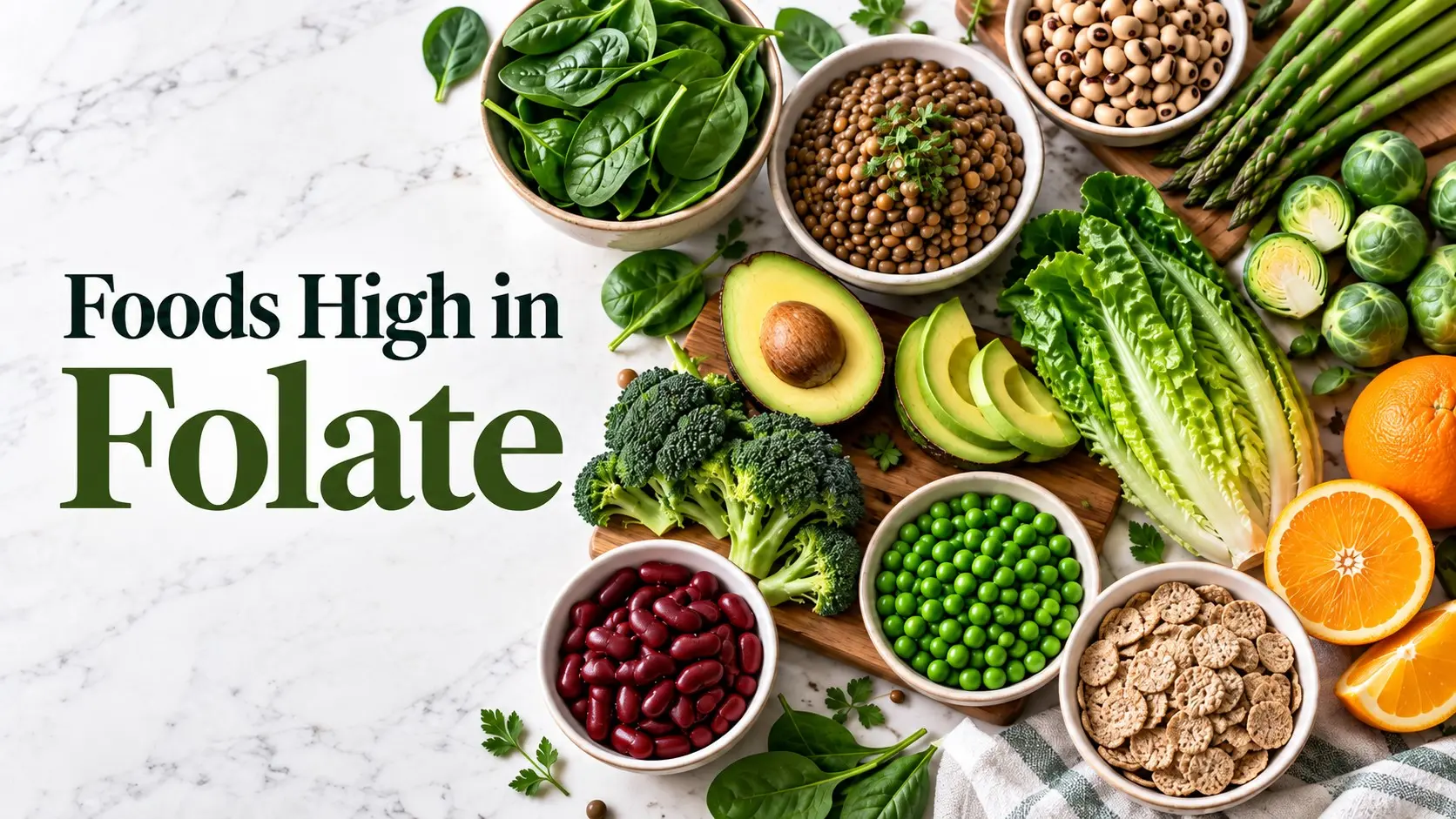
Spinach, beans, asparagus, avocado, broccoli, peas, lettuce, lentils, and some fortified foods can all help you meet your needs.
Most adults need 400 micrograms of dietary folate equivalents each day.
Pregnancy raises that need to 600 micrograms DFE.
But there is one detail I do not want readers to miss.
Folate from food and folic acid used in supplements and fortified foods are related.
They are not exactly the same.
Quick Answer: What Foods Are Highest in Folate?
Some of the best folate rich foods include cooked lentils, beef liver, cooked spinach, black eyed peas, asparagus, Brussels sprouts, romaine lettuce, avocado, broccoli, mustard greens, green peas, and kidney beans.
Fortified breakfast cereals and enriched grain foods can also provide folic acid.
A simple rule works well.
Eat beans or lentils often.
Add green vegetables.
Use fruit and other vegetables for variety.
Then check fortified foods when they are already part of your diet.
For more vitamin guidance, visit the NextFitLife Nutrition and Vitamins Hub.
Medical and Nutrition Safety Notice
I am not a dermatologist or A doctor, and this content does not replace professional medical advice. What I share comes from real-life experience, extensive research, and consultation with healthcare providers. Always consult qualified medical professionals for diagnosis and treatment of any health condition.
Do not diagnose folate deficiency from tiredness or other symptoms alone.
Do not start a high dose folic acid supplement because of symptoms without professional advice.
This matters if you take medicines, have a digestive disorder, have unusual blood test results, or are pregnant.
What Is Folate?
Folate is vitamin B9.
Your body needs it to make DNA.
It supports normal cell division.
It also helps your body make healthy red blood cells.
Folate is especially important during periods of rapid growth.
This includes pregnancy.
Natural folate is found in many foods.
Good vitamin B9 foods include vegetables, beans, peas, fruit, nuts, eggs, liver, and some other foods.
What Is the Difference Between Folate and Folic Acid?
This is one of the most important parts of the article.
Folate is the broad name for forms of vitamin B9.
Natural foods contain folate.
Folic acid is a form used in supplements and fortified foods.
You may find folic acid in:
- Enriched bread
- Enriched pasta
- Enriched rice
- Some breakfast cereals
- Fortified corn masa flour
- Multivitamins
- Prenatal vitamins
Folic acid is absorbed more efficiently than natural food folate.
This is why food labels use another term.
Dietary folate equivalents.
What Does DFE Mean?
DFE stands for dietary folate equivalent.
It helps account for differences in absorption.
| Source | Equivalent |
|---|---|
| Natural food folate | 1 mcg equals 1 mcg DFE |
| Folic acid eaten with food | 0.6 mcg equals 1 mcg DFE |
| Folic acid supplement taken without food | 0.5 mcg equals 1 mcg DFE |
This does not mean fortified cereal is better than spinach.
It simply means the forms are absorbed differently.
How Much Folate Do You Need?
| Life Stage | Recommended Amount |
|---|---|
| Adults age 19 and older | 400 mcg DFE daily |
| Teenagers age 14 to 18 | 400 mcg DFE daily |
| Pregnancy | 600 mcg DFE daily |
| Breastfeeding | 500 mcg DFE daily |
You do not need to count every microgram at every meal.
Look at your overall eating pattern.
21 Essential Foods High in Folate
1. Cooked Lentils
Lentils are one of my favorite natural folate sources.
One cup of cooked lentils provides about 358 micrograms of folate in USDA nutrient data.
That is close to the full adult daily target.
Lentils also provide fiber and plant protein.
Use them in soup, curry, salads, or rice dishes.
2. Beef Liver
Three ounces of braised beef liver provide about 215 mcg DFE.
That is about 54 percent of the Daily Value.
Liver is very nutrient dense.
But you do not need it every day.
Pregnant readers should ask their healthcare professional about liver intake because liver is also very high in preformed vitamin A.
3. Cooked Spinach
Half a cup of boiled spinach provides about 131 mcg DFE.
That is about one third of the Daily Value.
Cooked spinach is easy to add to eggs, soup, beans, pasta, or rice.
It is one of the strongest everyday high folate foods.
4. Black-Eyed Peas
Half a cup of cooked black-eyed peas provides about 105 mcg DFE.
That is about 26 percent of the Daily Value.
This is a useful amount from a small serving.
Add them to soups, salads, stews, or grain bowls.
5. Fortified Breakfast Cereal
A cereal fortified with 25 percent of the Daily Value provides about 100 mcg DFE in the NIH example.
Brands differ.
Check the label.
If you could become pregnant, look for the actual amount of folic acid as well.
6. Enriched White Rice
Half a cup of cooked enriched white rice provides about 90 mcg DFE.
The word enriched matters.
Some of this vitamin B9 comes from folic acid added during food production.
Check the package because products differ.
7. Asparagus
Four boiled asparagus spears provide about 89 mcg DFE.
That is about 22 percent of the Daily Value.
Asparagus works well beside fish, poultry, beans, eggs, or other vegetables.
8. Brussels Sprouts
Half a cup of cooked Brussels sprouts provides about 78 mcg DFE.
That is about 20 percent of the Daily Value.
Roasting can give them a very different taste from boiling.
Choose the cooking method you enjoy.
9. Enriched Spaghetti
Half a cup of cooked enriched spaghetti provides about 74 mcg DFE.
This value partly reflects folic acid added to enriched grain products.
Pair pasta with vegetables or beans to increase natural folate too.
10. Romaine Lettuce
One cup of shredded romaine provides about 64 mcg DFE.
That is around 16 percent of the Daily Value.
Romaine works well with beans, avocado, vegetables, and other folate sources.
11. Avocado
Half a cup of sliced avocado provides about 59 mcg DFE.
It is not the richest source.
But it is easy to use.
Add avocado to salads, eggs, toast, beans, or grain bowls.
12. Raw Spinach
One cup of raw spinach provides about 58 mcg DFE.
Notice that cooked spinach gives much more folate per cup measure.
That is because spinach shrinks during cooking.
You fit far more leaves into a cooked half cup.
13. Cooked Broccoli
Half a cup of cooked broccoli provides about 52 mcg DFE.
Broccoli also works well with beans and enriched grains.
No single vegetable needs to supply your full daily folate target.
14. Mustard Greens
Half a cup of cooked mustard greens provides about 52 mcg DFE.
That is similar to cooked broccoli in the NIH table.
Use mustard greens when you like their stronger flavour.
15. Enriched White Bread
One slice of enriched white bread provides about 50 mcg DFE in the NIH reference table.
This comes largely from added folic acid.
Not every bread has the same amount.
Read the label.
16. Green Peas
Half a cup of cooked green peas provides about 47 mcg DFE.
Peas are easy to add to rice, pasta, soups, stews, or vegetable dishes.
17. Kidney Beans
Half a cup of canned kidney beans provides about 46 mcg DFE.
They also give you fibre and plant protein.
Add them to chilli, salads, wraps, rice, or soup.
18. Wheat Germ
Two tablespoons of wheat germ provide about 40 mcg DFE.
You can add it to cereal, oatmeal, or yogurt.
Use it as one small contribution rather than your main source.
19. Tomato Juice
Three quarters of a cup of canned tomato juice provides about 36 mcg DFE.
If you drink tomato juice regularly, check sodium too.
Some products contain a lot.
20. Orange Juice
Three-quarters of a cup of orange juice provides about 35 mcg DFE.
It contributes folate.
It is not one of the richest sources.
Whole fruit gives you fibre that juice does not provide in the same amount.
21. Turnip Greens
Half a cup of cooked turnip greens provides about 32 mcg DFE.
They can contribute to your total when eaten with beans, lentils, or other vegetables.
Foods High in Folate Chart
| Food | Serving | Folate | Approximate Daily Value |
|---|---|---|---|
| Cooked lentils | 1 cup | 358 mcg | About 90% |
| Beef liver | 3 ounces | 215 mcg DFE | 54% |
| Cooked spinach | 1/2 cup | 131 mcg DFE | 33% |
| Black-eyed peas | 1/2 cup | 105 mcg DFE | 26% |
| Fortified cereal | Example serving | 100 mcg DFE | 25% |
| Enriched white rice | 1/2 cup | 90 mcg DFE | 22% |
| Asparagus | 4 cooked spears | 89 mcg DFE | 22% |
| Brussels sprouts | 1/2 cup | 78 mcg DFE | 20% |
| Enriched spaghetti | 1/2 cup | 74 mcg DFE | 19% |
| Romaine lettuce | 1 cup | 64 mcg DFE | 16% |
| Avocado | 1/2 cup | 59 mcg DFE | 15% |
| Raw spinach | 1 cup | 58 mcg DFE | 15% |
| Cooked broccoli | 1/2 cup | 52 mcg DFE | 13% |
| Mustard greens | 1/2 cup | 52 mcg DFE | 13% |
| Enriched white bread | 1 slice | 50 mcg DFE | 13% |
| Green peas | 1/2 cup | 47 mcg DFE | 12% |
| Kidney beans | 1/2 cup | 46 mcg DFE | 12% |
| Wheat germ | 2 tablespoons | 40 mcg DFE | 10% |
| Tomato juice | 3/4 cup | 36 mcg DFE | 9% |
| Orange juice | 3/4 cup | 35 mcg DFE | 9% |
| Turnip greens | 1/2 cup | 32 mcg DFE | 8% |
Food values are reference amounts.
Actual values change with food type, portion, brand, preparation, and fortification.
What Other Foods Contain Folate?
The list does not stop at 21.
Other useful sources include:
- Oranges
- Papaya
- Peanuts
- Bananas
- Eggs
- Cantaloupe
- Vegetarian baked beans
- Crab
These foods contain less folate per reference serving than the strongest options above.
They still contribute.
Can You Get Enough Folate From Food?
Many adults can.
The easiest strategy is to stop thinking about folate as one special food.
Build it across meals.
For example:
Eat fortified cereal at breakfast.
Have beans or lentils at lunch.
Add spinach, asparagus, broccoli, or peas at dinner.
That can provide a meaningful amount without turning your diet into a supplement plan.
My Simple Food First Folate Formula
I use a very simple structure when reviewing a folate rich meal.
Start with a legume.
Add a green vegetable.
Then add the rest of the meal.
Examples include:
- Lentils with spinach and rice
- Black eyed peas with mustard greens
- Kidney beans with romaine and avocado
- Beans with broccoli and enriched rice
- Eggs with spinach and enriched toast
This creates a diet rich in natural folate sources without making every meal complicated.
Does Pregnancy Change the Folate Plan?
Yes.
This is where “food first” needs an important limit.
The recommended folate intake during pregnancy is 600 mcg DFE per day.
But current pregnancy prevention guidance also talks specifically about folic acid.
The CDC states that all women capable of becoming pregnant should get 400 mcg of folic acid every day.
This helps prevent neural tube defects.
The CDC updated this guidance in July 2026.
Eating folate-rich foods is still important.
But spinach and lentils are not a reason to ignore folic acid guidance.
How Much Folic Acid Is Recommended Before Pregnancy?
The U.S. Preventive Services Task Force recommends a daily supplement containing 400 to 800 mcg of folic acid for people who plan to become pregnant or could become pregnant.
It recommends starting at least one month before conception.
Supplementation should continue through the first two to three months of pregnancy.
Some people have higher-risk conditions that require different advice.
That decision belongs with a healthcare professional.
What About MTHFR?
This topic causes a lot of confusion online.
Having a common MTHFR variant does not mean you should automatically avoid folic acid.
The CDC continues to recommend folic acid for people who could become pregnant.
Folic acid is the form shown to help prevent neural tube defects.
If you have a known genetic condition or a past pregnancy affected by a neural tube defect, get personal medical advice.
What Is Folate Deficiency?
Folate deficiency means your body does not have enough folate to support normal functions.
Severe deficiency can cause megaloblastic anemia.
Possible symptoms include:
- Fatigue
- Weakness
- Shortness of breath
- Problems concentrating
- Irritability
- Headache
- Heart palpitations
- Tongue or mouth changes
These symptoms have many causes.
They do not prove a folate deficiency.
Blood tests and medical history can help identify the real cause.
Who Is More Likely to Have Low Folate?
Low folate is more likely in some groups.
These include people with:
- Alcohol use disorder
- Conditions that reduce nutrient absorption
- Celiac disease
- Inflammatory bowel disease
- Very poor dietary intake
- Certain medicine-related problems
Pregnancy also increases folate requirements.
Folate Deficiency and B12 Deficiency Can Look Similar
This matters a lot.
Both folate deficiency and vitamin B12 deficiency can cause megaloblastic anemia.
Large amounts of folic acid can improve the anemia caused by B12 deficiency without fixing the nerve damage that B12 deficiency can cause.
That is one reason I would not treat anemia with folic acid without knowing the cause.
For more B12 guidance, read B12 Rich Foods.
Can You Eat Too Much Natural Folate?
No upper limit has been set for naturally occurring folate from foods.
High food folate intake has not been reported to cause the same problems associated with excessive synthetic folic acid intake.
This does not mean you need to chase extreme amounts.
It simply means the safety concern is mainly about supplemental and fortified forms.
How Much Folic Acid Is Too Much?
For adults age 19 and older, the U.S. upper limit is 1,000 mcg per day of folic acid from supplements and fortified foods.
This limit does not apply to natural folate in food.
It also does not apply when a healthcare professional prescribes a higher amount for a medical reason.
More is not better simply because folic acid is a vitamin.
Can Folate Supplements Interact With Medicine?
Yes.
This is another reason to check before adding high-dose supplements.
Methotrexate interacts with folate metabolism.
The effect depends on why methotrexate is being used.
Some medicines used for seizures can also interact with folate.
Sulfasalazine can reduce folate absorption.
If you use these medicines, ask your doctor or pharmacist before changing folate intake through supplements.
Does Folate Lower Homocysteine?
Folic acid supplementation lowers homocysteine levels.
That does not mean every person should take folic acid for heart health.
Clinical studies have not shown a consistent reduction in heart attacks or cardiovascular death simply from using folic acid and other B vitamins to lower homocysteine.
Eat enough folate because folate is essential.
Do not turn it into a general heart supplement.
Does Folate Improve Memory?
Folate is needed for normal brain and cell function.
But taking extra folic acid has not consistently prevented dementia or improved cognitive function in clinical trials.
A vitamin being necessary does not mean taking more than you need makes your brain work better.
Does Cooking Destroy Folate?
Natural food folate can be affected by storage and cooking.
That does not mean you need to eat every vegetable raw.
Cooked spinach remains a strong folate source.
So do cooked asparagus, Brussels sprouts, broccoli, beans, and peas.
Eat these foods in ways you enjoy.
Folic acid added to fortified foods is more stable than natural food folate.
Is Raw Spinach Better Than Cooked Spinach for Folate?
Not when you compare the listed serving sizes.
One cup of raw spinach provides about 58 mcg DFE.
Half a cup of cooked spinach provides about 131 mcg DFE.
Cooking shrinks the leaves.
That lets a small cooked serving contain a lot of spinach.
Both are useful.
Are Eggs High in Folate?
Eggs contain folate.
They are not one of the richest sources.
One large hard-boiled egg provides about 22 mcg DFE in the NIH table.
Eat eggs for the whole nutrient package.
Do not depend on them as your main folate source.
Are Oranges High in Folate?
Oranges contain some folate.
One small orange provides about 29 mcg DFE.
That is useful.
But beans and leafy greens provide much more.
Is Avocado a Good Folate Source?
Yes.
Half a cup provides about 59 mcg DFE.
That is around 15 percent of the Daily Value.
Add it to meals instead of expecting it to cover the full requirement.
Are Beans Good Sources of Folate?
Yes.
Beans and peas are some of the most practical vitamin B9 foods.
Black eyed peas provide about 105 mcg DFE per half cup.
Kidney beans provide around 46 mcg DFE per half cup.
Lentils can provide even more.
This is one reason legumes appear so often in my food first approach.
How Do You Read Folate on a Nutrition Label?
The FDA requires folate to be shown as mcg DFE.
If a food contains added folic acid, the amount of folic acid is also shown in parentheses.
You might see:
Folate 200 mcg DFE including 120 mcg folic acid.
That is not a mistake.
The DFE value accounts for better absorption of folic acid.
The FDA considers 20 percent Daily Value or more per serving a high source of a nutrient.
Are Fortified Foods Bad?
No.
Fortification serves a purpose.
Folic acid was added to enriched grain products in the United States to reduce the risk of neural tube defects.
Fortified foods can contribute meaningfully to folate intake.
I would still read the whole food label.
A product is not automatically healthy simply because it contains folic acid.
Natural Folate Versus Fortified Food
| Natural Folate Foods | Folic Acid Fortified Foods |
|---|---|
| Spinach | Enriched bread |
| Beans | Enriched pasta |
| Peas | Enriched rice |
| Asparagus | Some breakfast cereals |
| Broccoli | Some fortified corn masa products |
| Avocado | Some other enriched grain foods |
You do not need to choose one side.
A normal diet can contain both.
A Simple One-Day Folate Meal Plan
Breakfast
Fortified cereal with fruit.
Lunch
Kidney bean and romaine salad with avocado.
Snack
An orange with a small handful of peanuts.
Dinner
Lentils with cooked spinach and a side of broccoli or asparagus.
This is an example.
It is not a medical meal prescription.
How I Approach Folate Foods
I have spent more than 30 years reading and applying practical information about nutrition, fitness, health, and healthy aging.
My health and wellness writing experience spans more than 15 years.
When I look at a vitamin article, I do not want a giant list with no context.
I want to know what the serving means.
I want to know whether the nutrient is natural or added.
I want to know when food is enough.
And I want to know when “food first” stops being complete advice.
Folate is a good example.
Beans and greens are excellent everyday foods.
But current pregnancy guidance still has a specific role for folic acid.
Common Folate Mistakes
| Mistake | Better Approach |
|---|---|
| Treating folate and folic acid as exactly the same | Understand that folic acid is one form of folate used in supplements and fortified foods |
| Ignoring DFE | Use DFE because natural folate and folic acid have different absorption |
| Relying on one green vegetable | Combine legumes, greens, vegetables, fruit, and fortified foods |
| Assuming food replaces pregnancy folic acid advice | Follow current folic acid guidance when pregnancy is possible |
| Taking high-dose supplements for fatigue | Find the cause of symptoms first |
| Ignoring vitamin B12 | Remember that B12 and folate deficiency can both cause megaloblastic anemia |
| Thinking more folic acid is always better | Stay within recommended amounts unless a clinician advises otherwise |
Conclusion: Make Foods High in Folate Part of Normal Meals
Foods high in folate do not need to be unusual.
Lentils, spinach, beans, asparagus, broccoli, avocado, peas, lettuce, and fortified grain foods can all contribute.
Start with food.
Build variety.
Read labels when foods contain added folic acid.
And keep pregnancy folic acid guidance separate from the normal food first discussion.
Your next step is simple: add one legume and one green vegetable to your grocery list this week, then build two meals around them.
References and Sources
- National Institutes of Health Office of Dietary Supplements. Folate Fact Sheet for Health Professionals.
Detailed guidance on folate needs, DFE, food sources, deficiency, upper limits, pregnancy, and medicine interactions.
NIH Folate Health Professional Fact Sheet - Centers for Disease Control and Prevention. Folic Acid Sources and Recommended Intake.
Updated July 2026 guidance on folic acid, pregnancy prevention, fortified foods, and the 400 mcg recommendation.
CDC Folic Acid Guidance - U.S. Preventive Services Task Force. Folic Acid Supplementation to Prevent Neural Tube Defects.
Recommendation for 400 to 800 mcg of folic acid daily for people planning or capable of pregnancy.
USPSTF Folic Acid Recommendation - U.S. Food and Drug Administration. Folate and Folic Acid on Nutrition and Supplement Facts Labels.
Official guidance explaining DFE, food labels, fortified foods, pregnancy needs, and folic acid labeling.
FDA Folate Label Guidance - U.S. Department of Agriculture. FoodData Central.
USDA database containing current food composition data, including folate and dietary folate equivalents.
USDA FoodData Central
Continue Reading on NextFitLife
- Nutrition and Vitamins Hub
- B12 Rich Foods Guide
- Foods High in Vitamin B6
- Healthy Fitness Foods
- NextFitLife Health Fitness and Nutrition Guides
About the Author
Frequently Asked Questions About Foods High in Folate
What foods are highest in folate?
Strong sources include cooked lentils, beef liver, cooked spinach, black-eyed peas, asparagus, Brussels sprouts, beans, romaine lettuce, avocado, broccoli, and fortified grain foods.
How much folate do adults need each day?
Most adults age 19 and older need 400 mcg DFE of folate each day.
How much folate is needed during pregnancy?
The folate RDA during pregnancy is 600 mcg DFE daily. Current CDC guidance also recommends 400 mcg of folic acid daily for women capable of becoming pregnant.
What is the difference between folate and folic acid?
Folate is the general term for vitamin B9 forms. Natural foods contain folate. Folic acid is a form used in supplements and fortified foods and is absorbed more efficiently.
What does mcg DFE mean?
DFE means dietary folate equivalent. It accounts for the fact that folic acid from fortified foods and supplements is absorbed better than naturally occurring food folate.
Are lentils high in folate?
Yes. One cup of cooked lentils provides about 358 mcg of folate in USDA nutrient data, making lentils one of the strongest practical plant sources.
Is spinach high in folate?
Yes. Half a cup of cooked spinach provides about 131 mcg DFE. One cup of raw spinach provides about 58 mcg DFE.
Is avocado high in folate?
Avocado is a useful source. Half a cup of sliced avocado provides about 59 mcg DFE, or roughly 15 percent of the Daily Value.
Can I get enough folate from food?
Many adults can get enough from a varied diet containing beans, lentils, green vegetables, fruit, and fortified foods. Pregnancy folic acid guidance is a separate issue.
Do I still need folic acid if I eat folate-rich foods?
If you could become pregnant, current CDC guidance recommends 400 mcg of folic acid daily even while eating a healthy diet rich in natural folate.
Can too much folic acid be harmful?
The adult upper limit is 1,000 mcg per day from supplements and fortified foods unless a healthcare professional recommends a higher dose. This upper limit does not apply to natural food folate.
What are signs of folate deficiency?
Folate deficiency can cause megaloblastic anemia. Possible symptoms include fatigue, weakness, shortness of breath, headache, trouble concentrating, and mouth or tongue changes. These symptoms have many possible causes.
Can folate deficiency be confused with vitamin B12 deficiency?
Yes. Both can cause megaloblastic anemia. High folic acid intake can improve anemia while neurological problems from vitamin B12 deficiency remain untreated, so proper evaluation matters.
Are fortified foods a good folate source?
Yes. Enriched breads, pasta, rice, and some breakfast cereals can provide folic acid. Check the nutrition label because amounts vary between products.
Should people with an MTHFR variant avoid folic acid?
Current CDC guidance does not recommend avoiding folic acid simply because of a common MTHFR variant. People with individual medical concerns should discuss them with a qualified healthcare professional.

Health & wellness writer with 30+ years of experience in nutrition, fitness, and healthy aging. Founder of NextFitLife.com — evidence-based health guidance.