Published on: Original publication date is not visible on the current public WordPress page
Last updated: September 13, 2026
Next review: September 2027, or sooner if major sports nutrition or public health guidance changes
Written and source -checked by: Adel Galal, Founder and Lead Writer at NextFitLife
Medical review status: This article has not been medically reviewed by a doctor, registered dietitian, sports dietitian, exercise physiologist, or other licensed healthcare professional.
Fitness food does not need to come in a tub.
It does not need a sports label.
And it does not need to promise more energy, faster recovery, or bigger muscles.
The best Healthy Fitness Foods are often simple foods.
Think eggs.
Oats.
Rice.
Potatoes.
Yogurt.
Beans.
Fruit.
Vegetables.
Fish.
Chicken.
Tofu.
Nuts.
Seeds.
Water.
Your exact needs depend on what you do.
A person walking for 30 minutes has different needs from someone running for two hours.
A person lifting weights has different priorities from someone preparing for a long cycling event.
That is why the full eating pattern matters more than one supposed superfood.
Important health note: This content is for general educational purposes and does not replace professional medical advice, diagnosis, or treatment. Consult an appropriately qualified healthcare professional for personal medical concerns. This article explains published guidance and does not provide a personal clinical assessment. Always consult qualified medical professionals for diagnosis and treatment of any health condition.
Speak with a qualified healthcare professional or registered dietitian before making major diet changes if you have diabetes, kidney disease, heart disease, liver disease, digestive disease, an eating disorder, pregnancy-related needs, a diagnosed nutrient deficiency, or take medicine that affects blood glucose, blood pressure, fluid balance, or appetite.
What Are the Best Healthy Fitness Foods?
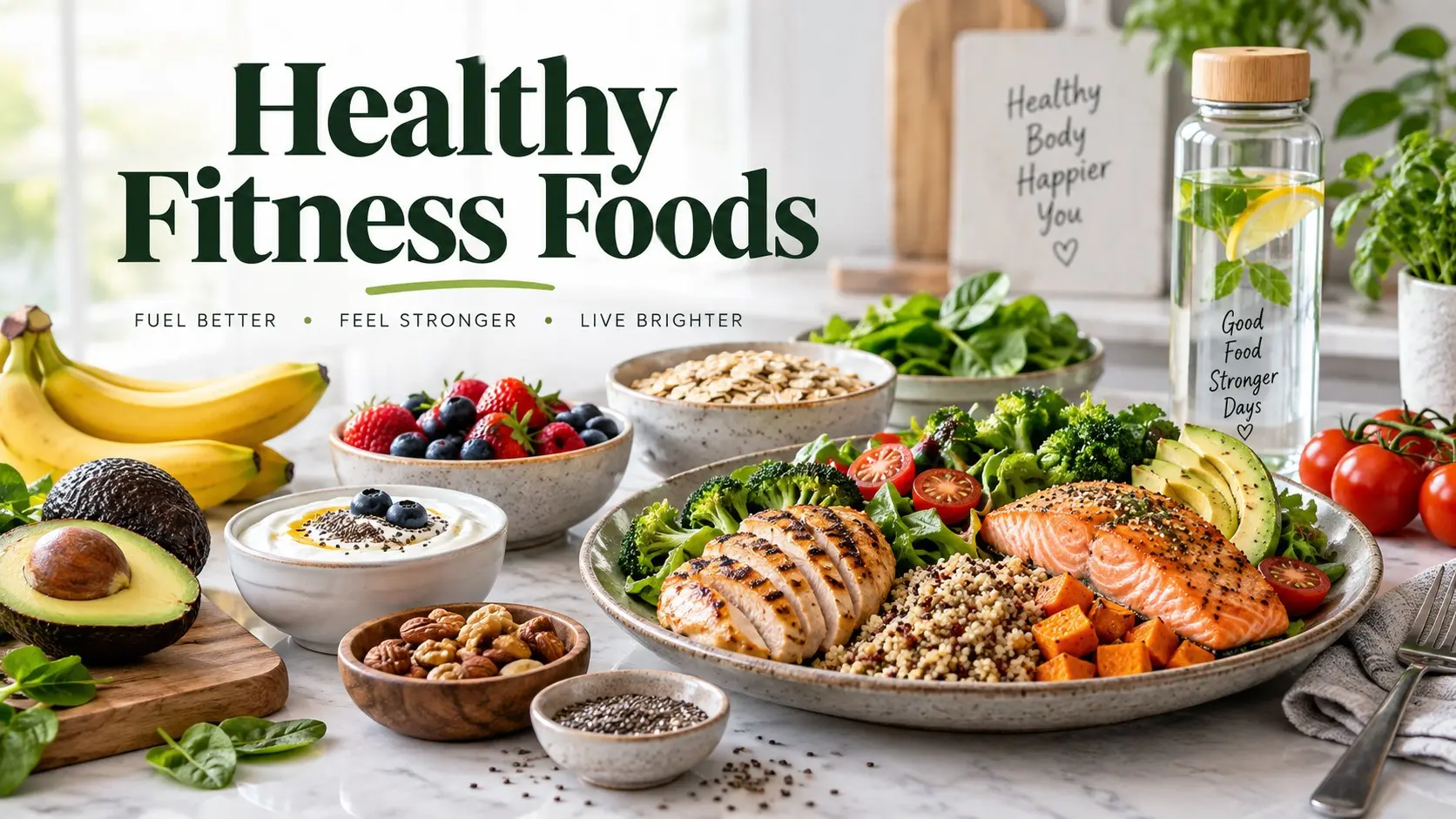
Quick answer: The best Healthy Fitness Foods are foods that help you meet your energy and nutrient needs. Useful choices include protein foods such as eggs, fish, poultry, yogurt, tofu, lentils, and beans. Carbohydrate foods such as oats, rice, potatoes, fruit, bread, and quinoa help provide training fuel. Vegetables, nuts, seeds, avocado, and olive oil add fibre, vitamins, minerals, and healthy fats.
You do not need all 25 foods every day.
You need variety over time.
Fitness Starts With Enough Food
Sports nutrition is often presented as a supplement problem.
It usually starts with food.
The Australian Institute of Sport explains that adequate energy intake is a basic part of supporting health and performance.
This concept is called energy availability.
In simple terms, your body needs enough energy left after exercise to support normal body functions.
Chronically eating too little can make training, recovery, mood, bone health, menstrual function, and general health harder to maintain.
More food is not always better.
Too little is not better either.
Carbohydrate Is Useful Training Fuel
Carbohydrate gets blamed for many things it does not deserve.
Your body stores carbohydrate as glycogen.
That glycogen is an important fuel during many types of exercise.
Useful carbohydrate foods include:
- Oats
- Rice
- Potatoes
- Sweet potatoes
- Bread
- Pasta
- Fruit
- Beans
- Lentils
- Quinoa
WHO's 2026 healthy diet guidance says carbohydrates should come mainly from whole grains, vegetables, fruits, and pulses for most people.
You do not need to avoid white rice or bread around training if those foods work well for you.
Protein Supports Muscle Repair and Adaptation
Exercise creates a training signal.
Dietary protein supplies amino acids.
Your body uses those amino acids to build and repair tissue.
This is part of muscle protein synthesis.
A large resistance training meta-analysis found that protein intake can improve gains in muscle and strength when combined with resistance training.
But more protein is not always better.
In that analysis, the average muscle gain benefit appeared to level off around 1.6 grams per kilogram of body weight per day.
This is a research reference point.
It is not a personal prescription.
Individual needs vary.
For a deeper guide, read Best Nutrition for Muscle Building.
Healthy Fats Matter Too
Fat is not just extra calories.
Dietary fat helps provide energy and supports normal body functions.
Useful sources include:
- Olive oil
- Avocado
- Walnuts
- Almonds
- Seeds
- Salmon
WHO recommends shifting fat intake toward unsaturated fats rather than saturated and industrial trans fats.
25 Healthy Fitness Foods at a Glance
| Food | Main Nutrition Role | Useful Time |
|---|---|---|
| 1. Chicken | Protein | Meals and recovery |
| 2. Salmon | Protein and omega-3 fats | Main meals |
| 3. Eggs | Protein and micronutrients | Breakfast or meals |
| 4. Greek yogurt | Protein and calcium | Breakfast or snacks |
| 5. Cottage cheese | Protein and calcium | Meals or snacks |
| 6. Milk or fortified soy milk | Protein, fluid, and nutrients | Meals or recovery |
| 7. Tofu and tempeh | Plant protein | Main meals |
| 8. Lentils | Protein, carbohydrate, iron, fibre | Main meals |
| 9. Beans and chickpeas | Protein, carbohydrate, fibre | Meals and snacks |
| 10. Oats | Carbohydrate and fibre | Breakfast or before training |
| 11. Brown rice and other grains | Carbohydrate | Main meals |
| 12. Whole grain bread | Carbohydrate and fibre | Quick meals or before exercise |
| 13. Potatoes and sweet potatoes | Carbohydrate and potassium | Main meals |
| 14. Quinoa | Carbohydrate plus some protein | Main meals |
| 15. Bananas | Carbohydrate and potassium | Before or after exercise |
| 16. Berries | Fruit, fibre, vitamin C | Meals and snacks |
| 17. Oranges and kiwi | Carbohydrate and vitamin C | Meals and snacks |
| 18. Spinach | Folate, vitamin K, carotenoids, iron | Main meals |
| 19. Broccoli | Fibre and micronutrients | Main meals |
| 20. Tomatoes and peppers | Vitamin C and plant compounds | Meals and snacks |
| 21. Almonds and walnuts | Unsaturated fats, minerals, some protein | Snacks or meals |
| 22. Pumpkin and chia seeds | Fats, fibre, magnesium, zinc | Meals and snacks |
| 23. Avocado | Unsaturated fat and fibre | Main meals |
| 24. Olive oil | Unsaturated fat | Meals |
| 25. Hummus | Chickpeas, tahini, fibre, healthy fat | Snacks or meals |
1. Chicken Gives You a Simple Protein Base
Chicken is popular in fitness meals because it makes protein easy.
Use breast, thigh, or another cut that fits your meal.
Add rice, potatoes, bread, or another carbohydrate when you need more training fuel.
Add vegetables for fibre and micronutrients.
Chicken is useful.
It is not required for muscle growth.
2. Salmon Adds Protein and Omega-3 Fats
Salmon provides protein.
It also provides EPA and DHA omega-3 fats.
That makes it a useful seafood choice.
Salmon is not a treatment that guarantees less workout inflammation or faster recovery.
Eat salmon because it is nutritious.
Do not treat it as a recovery medicine.
3. Eggs Provide Complete Protein
Eggs provide protein and all essential amino acids.
They also provide choline, vitamin B12, selenium, and other nutrients.
Use them with:
- Oats
- Toast
- Potatoes
- Fruit
- Vegetables
Cook eggs safely.
Raw eggs in smoothies are not necessary.
4. Greek Yogurt Makes Protein Easy
Plain Greek yogurt is useful at breakfast or after training.
Add:
- Berries
- Banana
- Oats
- Chia seeds
- Walnuts
Some yogurts contain live cultures.
That does not mean every yogurt has the same probiotic effect.
Check the label.
5. Cottage Cheese Is Useful Any Time of Day
Cottage cheese provides dairy protein.
Cottage cheese does not require a special bedtime schedule.
You do not need to eat cottage cheese before sleep.
Total daily nutrition matters more.
Eat it when it fits your routine.
6. Milk and Fortified Soy Milk Can Support Recovery Meals
Milk gives you fluid, carbohydrate, protein, calcium, vitamin B12, and other nutrients.
Fortified soy milk is one of the closest plant alternatives for protein.
Use either in:
- Oats
- Smoothies
- Cereal
- Meals
Other plant drinks can contain much less protein.
Check the label if protein matters to you.
7. Tofu and Tempeh Are Strong Plant Protein Choices
Soy foods can support an active lifestyle.
Tofu and tempeh provide useful amounts of plant protein.
Use them with rice, noodles, potatoes, or bread.
Add vegetables and a suitable sauce.
You do not need meat at every meal.
For a complete plant-focused plan, read Vegetarian Bodybuilding Meal Plan.
8. Lentils Combine Protein and Carbohydrate
Lentils do two jobs.
They provide plant protein.
They also provide carbohydrate and fibre.
They contain iron too.
Plant iron is nonheme iron.
Your body absorbs it less efficiently than heme iron from animal foods.
Pair lentils with vitamin C-rich foods such as tomatoes or peppers.
9. Beans and Chickpeas Are Affordable Fitness Foods
Beans and chickpeas provide:
- Protein
- Carbohydrate
- Fiber
- Iron
- Folate
- Potassium
Add beans to rice.
Add chickpeas to salad.
Blend chickpeas into hummus.
You do not need expensive food to eat for fitness.
10. Oats Give You Useful Carbohydrates and Fibre
Oats work well before training when you have time to digest them.
They also make a simple breakfast.
Try oats with:
- Milk or soy milk
- Greek yogurt
- Fruit
- Seeds
For exercise very soon after eating, a lower-fibre carbohydrate may feel more comfortable for some people.
11. Rice and Other Grains Help Fuel Training
Rice is not a bad fitness food.
White rice can be easy to digest.
Brown rice adds more fibre.
Both can fit.
Other useful grains include barley, bulgur, and whole grain pasta.
Choose based on the meal and your stomach.
12. Whole Grain Bread Makes Fast Meals Easier
Bread is convenient.
Use it with:
- Eggs
- Tuna
- Hummus
- Peanut butter
- Cheese
- Tofu
You do not need to remove bread to become fit.
13. Potatoes and Sweet Potatoes Are Useful Carbohydrate Foods
Both white potatoes and sweet potatoes can fit a fitness diet.
Sweet potatoes provide beta-carotene.
White potatoes provide potassium and vitamin C.
The preparation matters.
Baked or roasted potatoes are very different from a huge serving of deep-fried potatoes.
14. Quinoa Is Useful but Not a Protein Replacement
Quinoa contains all essential amino acids.
But a normal serving does not provide as much protein as chicken, fish, tofu, eggs, or Greek yogurt.
Think of quinoa mainly as a nutrient-rich carbohydrate food with some extra protein.
Pair it with a stronger protein source.
15. Bananas Are Easy Exercise Fuel
Bananas provide carbohydrate and potassium.
They are portable.
They are easy to eat.
That makes them useful before or after exercise.
But one banana does not reliably prevent muscle cramps.
Cramps can have many causes.
Do not assume a potassium problem every time a muscle cramps.
16. Berries Add Fruit, Fibre, and Vitamin C
Blueberries, strawberries, raspberries, and blackberries are easy to add to meals.
Use them in:
- Yogurt
- Oats
- Smoothies
- Fruit bowls
Berries contain plant compounds.
You do not need to call them detox foods or miracle recovery foods.
17. Oranges and Kiwi Add Vitamin C
Vitamin C helps with normal collagen formation and improves absorption of plant iron when eaten with iron-rich foods.
Try orange, kiwi, peppers, or berries with plant-based meals.
Whole fruit also provides more fibre than juice.
18. Spinach Is Nutritious but Does Not Automatically Boost Energy
Spinach provides folate, vitamin K, carotenoids, and nonheme iron.
Spinach does not guarantee more energy during hard workouts.
If you have iron deficiency, correcting it matters.
If your iron status is normal, eating extra spinach does not act like an energy supplement.
NIH notes that iron deficiency anemia can reduce exercise capacity.
Iron supplements are not recommended just because someone exercises.
19. Broccoli Adds Fibre and Micronutrients
Broccoli provides fibre, vitamin C, vitamin K, folate, and other nutrients.
It supports a balanced diet.
It does not directly repair muscle or reduce workout inflammation in a guaranteed way.
Eat it because vegetables matter.
20. Tomatoes and Peppers Add Colour and Vitamin C
A fitness plate does not need to be beige.
Tomatoes and peppers make meals brighter.
They also provide vitamin C and other plant nutrients.
Add them to eggs, rice bowls, salads, sandwiches, beans, and lentils.
21. Almonds and Walnuts Add Healthy Fats
Nuts provide unsaturated fats, minerals, fibre, and some protein.
They are easy to carry.
They are also energy-dense.
A small handful differs from eating a large bag without noticing.
Walnuts provide the plant omega-3 fat ALA.
ALA is not the same as EPA and DHA from seafood.
22. Pumpkin Seeds and Chia Seeds Add Minerals and Fibre
Pumpkin seeds provide magnesium, zinc, fats, and protein.
Chia seeds provide fibre and the plant omega-3 fat ALA.
Pumpkin seeds and chia are nutritious foods, but they do not guarantee muscle relaxation or faster recovery.
These are nutritious foods.
That is enough reason to use them.
23. Avocado Adds Unsaturated Fat and Fibre
Avocado can fit in sandwiches, bowls, eggs, salads, and toast.
It does not directly speed muscle repair.
It provides useful fat and fibre.
Because it is energy-dense, portions can matter depending on your goals.
24. Olive Oil Is a Practical Healthy Fat
Olive oil works in salads and cooked meals.
It is rich in monounsaturated fat.
Use it in normal portions.
A healthy oil still provides energy.
25. Hummus Turns Chickpeas Into an Easy Snack
Hummus provides chickpeas and tahini.
That means some protein, fibre, and unsaturated fat.
Pair it with:
- Carrots
- Cucumber
- Peppers
- Whole grain bread
- Crackers
Hummus is useful.
It is not a very high-protein food compared with eggs, yogurt, fish, tofu, or chicken.
What Should You Eat Before Exercise?
The best pre-workout food depends on how soon you will exercise.
If you have several hours, a normal meal can work.
Examples include:
- Chicken with rice and vegetables
- Tofu with rice
- Oats with yogurt and fruit
- Eggs with potatoes and fruit
If exercise starts soon, a smaller, easy-to-digest snack may feel better.
Examples include:
- Banana
- Toast
- Yogurt
- Fruit
- Small oat snack
There is no universal pre-workout meal.
What Should You Eat After Exercise?
A normal balanced meal is usually enough.
Use protein plus carbohydrate.
Examples include:
- Chicken with potatoes
- Salmon with rice
- Tofu with noodles
- Eggs with toast and fruit
- Greek yogurt with oats and berries
- Lentils with rice
You do not have to drink a protein shake immediately after your final repetition.
There Is No Tiny Thirty-Minute Anabolic Window
Exercise affects muscle metabolism for much longer than thirty minutes.
Total daily nutrition is more important than racing to the locker room with a shake.
If you ate a normal protein-containing meal before training, eat your next normal meal afterward.
If you trained after a long period without food, eating sooner may be more practical.
Do You Need Food During Exercise?
Often, no.
For a short normal gym workout, walk, or exercise class, water and your normal meals may be enough.
Longer or harder exercise can change the picture.
Endurance events and long training sessions may benefit from carbohydrate and fluid during exercise.
The Australian Institute of Sport recommends matching nutrition strategies to the event and training demands.
This is where sports drinks, gels, or simple carbohydrate foods can sometimes be useful.
They are tools.
They are not required for every workout.
For long walking sessions, read Food for Walking Long Distances.
Water Comes Before Sports Drinks for Most Everyday Exercise
Hydration matters.
Your fluid needs vary with:
- Body size
- Sweat rate
- Weather
- Exercise duration
- Exercise intensity
- Clothing
Drink enough to replace normal fluid losses.
Do not force extreme amounts of water.
Over-drinking can also be dangerous.
Do You Need Electrolytes?
Not for every workout.
AIS guidance notes that the salt content of a normal diet is usually enough to replace normal electrolyte losses.
Sports drinks or electrolyte products can be useful in some long, hot, high-sweat situations.
The need is individual.
You do not need an electrolyte packet because you walked for thirty minutes.
Bananas Do Not Guarantee Cramp Prevention
Eating these foods does not guarantee that muscle cramps will be prevented.
Potassium is important.
So is magnesium.
But muscle cramps have many causes.
NIH notes that magnesium deficiency can cause cramps, but most cramps are caused by other factors.
If cramps are frequent, severe, or new, discuss them with a healthcare professional rather than treating yourself with supplements.
Iron Matters More Than Most Fitness Foods Lists Explain
Iron helps carry oxygen through the body.
Iron deficiency anemia can reduce exercise capacity.
People at higher risk include some women, endurance athletes, vegetarians, vegans, and people with blood loss or other medical conditions.
Useful foods include:
- Lean meat
- Seafood
- Lentils
- Beans
- Tofu
- Fortified grains
- Nuts
- Seeds
Do not take high dose iron because you feel tired.
Tiredness has many causes.
NIH recommends diagnosing iron deficiency before using treatment doses.
Magnesium Is Important but Not a Magic Recovery Mineral
Magnesium supports normal muscle and nerve function.
Food sources include:
- Nuts
- Seeds
- Beans
- Whole grains
- Leafy vegetables
More magnesium does not automatically mean better performance.
Severe magnesium deficiency is uncommon in otherwise healthy people.
Do You Need Supplements to Stay Fit?
No.
The Australian Institute of Sport warns that most supplements do not improve performance.
Some supplements have evidence for specific situations.
Examples in the AIS Group A category include creatine, caffeine, beta-alanine, nitrate, sodium bicarbonate, sports drinks, isolated protein products, and certain medical supplements.
That does not mean everyone should take them.
Food, training, sleep, and hydration come first.
Protein Powder Is Convenience, Not a Requirement
Protein powder can help when normal food is inconvenient.
It is not better simply because it comes in a shaker bottle.
You can get protein from:
- Eggs
- Fish
- Poultry
- Dairy
- Soy
- Beans
- Lentils
Three Simple Fitness Meals
Chicken Quinoa Fitness Bowl
Ingredients:
- Cooked chicken
- Cooked quinoa
- Spinach
- Tomatoes
- Avocado
- Lemon juice
Method: Add quinoa to a bowl. Add chicken and vegetables. Finish with avocado and lemon.
This gives you protein, carbohydrates, vegetables, and healthy fat.
Salmon Sweet Potato Plate
Ingredients:
- Salmon
- Sweet potato
- Broccoli
- Lemon
- Small amount of olive oil
Method: Bake the salmon and sweet potato. Steam or roast the broccoli. Serve with lemon.
This is a normal meal.
It does not need to be marketed as a recovery superfood plate.
Greek Yogurt Overnight Oats
Ingredients:
- Rolled oats
- Greek yogurt
- Milk or soy milk
- Berries
- Chia seeds
- Cinnamon
Method: Mix everything except the berries. Refrigerate overnight. Add berries before eating.
This works for breakfast or as a substantial snack.
A Simple One-Day Fitness Eating Pattern
| Time | Example | Main Role |
|---|---|---|
| Breakfast | Oats, Greek yogurt, banana, berries | Carbohydrate, protein, fibre |
| Lunch | Chicken or tofu, rice, vegetables, olive oil | Protein, carbohydrate, vegetables |
| Before exercise if hungry | Banana or toast with yogurt | Easy fuel |
| Dinner | Salmon or lentils, potatoes, broccoli | Protein, carbohydrate, micronutrients |
| Optional snack | Fruit with cottage cheese or hummus with vegetables | Extra nutrition when hungry |
This is an example.
It is not a personal prescription.
Do You Need Special Food on Rest Days?
No.
Your body is still recovering.
Keep eating balanced meals.
Your energy needs may be a little different from a hard training day.
That does not mean you should remove all carbohydrates or protein.
Fitness Food for Weight Loss Looks Similar
The same basic foods can support fat loss.
The major difference is total energy intake.
Keep protein adequate.
Keep vegetables and fruit high.
Use carbohydrate in portions that fit your activity.
Be aware of energy-dense foods such as oil, nuts, seeds, avocado, cheese, and large snack portions.
For more help, visit the Weight Loss and Metabolism Hub.
Fitness Food for Muscle Gain Also Looks Similar
You do not need a completely different food list.
You often need more total food.
Protein still matters.
Carbohydrate helps support training.
For a complete guide, read Best Nutrition for Muscle Building.
Can Vegetarians Eat for Fitness?
Yes.
Use:
- Eggs
- Greek yogurt
- Cottage cheese
- Tofu
- Tempeh
- Edamame
- Lentils
- Beans
- Chickpeas
- Seitan
- Soy milk
Pay attention to vitamin B12, iron, zinc, calcium, vitamin D, and other nutrients depending on your exact diet.
Can Vegans Eat for Fitness?
Yes.
A vegan diet can support strength, endurance, and an active lifestyle when it is well planned.
Vitamin B12 requires special attention.
Fully vegan diets need a reliable B12 source from fortified foods or a suitable supplement.
For a detailed plan, read the Vegetarian Bodybuilding Meal Plan.
Fitness Food Does Not Need to Be Expensive
Affordable choices include:
- Oats
- Rice
- Potatoes
- Eggs
- Lentils
- Beans
- Chickpeas
- Bananas
- Frozen vegetables
- Canned fish
- Peanut butter
Frozen vegetables can be just as practical as fresh ones.
Canned beans are fine.
Rinse them if you want less sodium.
Common Fitness Nutrition Mistakes
1. Eating Too Little
A very active body needs enough fuel.
2. Fearing Carbohydrates
Carbohydrates are useful exercise fuel.
3. Chasing Huge Protein Numbers
More is not always better.
4. Drinking Sports Drinks for Every Workout
Water is often enough for ordinary sessions.
5. Treating Bananas as a Cramp Cure
Muscle cramps are more complex than potassium alone.
6. Taking Iron Without Testing
Too much iron can be harmful.
7. Buying Supplements Before Fixing Meals
Normal food should usually come first.
8. Calling Every Nutritious Food a Recovery Food
Broccoli and berries are healthy.
That does not mean they directly speed muscle repair.
9. Ignoring Hydration
Food alone cannot replace adequate fluid.
10. Copying an Elite Athlete's Diet
Your training load may be completely different.
How to Build a Simple Fitness Plate
| Part | Examples |
|---|---|
| Protein | Chicken, eggs, fish, yogurt, tofu, lentils, beans |
| Carbohydrate | Rice, oats, potatoes, bread, quinoa, fruit |
| Vegetables or fruit | Spinach, broccoli, peppers, tomatoes, berries, oranges |
| Healthy fat | Olive oil, avocado, nuts, seeds |
| Fluid | Water or another suitable drink |
My Practical Approach to Fitness Nutrition
I would not start with a supplement store.
I would start with meals.
Are you eating enough?
Is there protein?
Is there carbohydrate for training?
Are vegetables and fruit present?
Are you drinking enough fluid?
Are you sleeping?
Is your training plan realistic?
Those questions matter more than whether your smoothie contains the newest powder.
Conclusion
Healthy Fitness Foods are not miracle foods.
They are practical foods that help you meet the demands of an active life.
Use eggs, fish, chicken, tofu, beans, lentils, yogurt, oats, rice, potatoes, fruit, vegetables, nuts, seeds, avocado, and olive oil.
Use carbohydrates to fuel activity.
Use protein to support muscle repair and adaptation.
Drink enough fluid.
Pay attention to iron and other nutrients when your diet or health increases your risk of deficiency.
And remember that supplements are optional tools, not the foundation.
Your next step: Choose one protein food, one carbohydrate food, one fruit or vegetable, and one healthy fat from this guide. Build tomorrow's main meal around those four foods.
References and Sources
- World Health Organization. Healthy Diet. Updated January 26, 2026.WHO explains the core principles of adequacy, balance, moderation, and diversity. It also provides current guidance on carbohydrates, vegetables, fruit, fibre, fats, free sugars, and sodium.Read the WHO Healthy Diet Guidance
- Centers for Disease Control and Prevention. How to Have Healthier Meals and Snacks. Updated April 29, 2026.CDC recommends a variety of protein foods, vegetables, fruits, fibre-rich whole grains, dairy without added sugars, and healthy fats such as olive oil while limiting highly processed foods and added sugars.Read the CDC Healthy Meals and Snacks Guide
- Australian Institute of Sport. Performance Nutrition HQ.AIS sports dietitians explain nutrition fundamentals, adequate energy intake, fueling before and during training, recovery nutrition, hydration, and building an individualized nutrition plan.Explore AIS Performance Nutrition Resources
- National Institutes of Health Office of Dietary Supplements. Dietary Supplements for Exercise and Athletic Performance.NIH explains protein, iron, supplements, performance claims, safety, and why correcting a true nutrient deficiency differs from taking extra nutrients when levels are already adequate.Read the NIH Exercise and Athletic Performance Fact Sheet
- Morton RW and colleagues. Protein Supplementation and Resistance Training: Systematic Review, Meta-Analysis and Meta Regression.This large open access analysis included 49 resistance training studies and found that dietary protein supplementation can improve gains in muscle and strength when combined with resistance exercise.Read the Full Open Access Protein Review
Continue Reading on NextFitLife
- Best Nutrition for Muscle BuildingLearn how protein, carbohydrate, energy intake, healthy fats, and resistance training work together.
- Vegetarian Bodybuilding Meal PlanBuild muscle with eggs, dairy, tofu, tempeh, lentils, beans, grains, nuts, seeds, and smart nutrient planning.
- Food for Walking Long DistancesLearn when normal meals are enough and when longer endurance activity may need extra carbohydrate, fluid, or electrolytes.
- Healthy Snack RecipesFind simple snack ideas using yogurt, fruit, chickpeas, edamame, eggs, vegetables, oats, nuts, and seeds.
- Nutrition and Vitamins HubReview iron, magnesium, vitamin D, vitamin B12, calcium, zinc, food sources, deficiencies, and supplement safety.
- Nutrition Tips for Improving Your HealthBuild better everyday meals around vegetables, fruit, whole grains, legumes, protein foods, and healthy fats.
- Top Healthy Foods GuideExplore practical foods for everyday nutrition without miracle claims or superfood hype.
- Weight Loss and Metabolism HubLearn how food, protein, fibre, portions, physical activity, sleep, and body composition fit together.
Main nutrition hub: Visit the NextFitLife Nutrition and Vitamins Hub for more food, nutrient, deficiency, and supplement guidance.
About the Author
Adel Galal is the Founder and Lead Writer at NextFitLife.
Adel has maintained a personal interest in health, fitness, nutrition, sleep, wellness, and healthy aging for more than 30 years.
His health and wellness writing experience spans more than 15 years.
NextFitLife launched in January 2022.
Adel researches nutrition and fitness topics by comparing public health guidance, government nutrition resources, sports nutrition organizations, systematic reviews, and peer-reviewed research.
His background in data analysis, structured review, information management, and systems thinking helps him organize complex information into practical guidance.
For fitness nutrition content, he separates general healthy eating from athlete-specific fueling and avoids describing foods as guaranteed performance enhancers, fat burners, or recovery treatments.
Adel is not a physician, registered dietitian, sports dietitian, pharmacist, physiotherapist, dermatologist, certified personal trainer, exercise physiologist, or other licensed healthcare professional.
This article provides general education only. It does not prescribe a personal calorie target, protein intake, carbohydrate target, hydration plan, electrolyte dose, supplement program, or sports nutrition treatment.
Learn more about Adel Galal, NextFitLife, and the site's editorial approach on the About Us page.
Frequently Asked Questions
What are healthy fitness foods?
Healthy Fitness Foods are normal nutritious foods that can help provide energy, protein, carbohydrate, healthy fats, fluids, vitamins, and minerals for an active lifestyle.
What foods are best for getting fit?
No single food makes a person fit. Useful choices include eggs, fish, poultry, tofu, beans, lentils, yogurt, oats, rice, potatoes, fruit, vegetables, nuts, and seeds combined with regular physical activity.
What should I eat before a workout?
If you have several hours before exercise, eat a normal meal containing carbohydrate and protein. Closer to exercise, simple foods such as a banana, toast, yogurt, or fruit may be easier to digest.
What should I eat after a workout?
A normal meal containing protein and carbohydrate works well. Examples include chicken with rice, tofu with noodles, salmon with potatoes, eggs with toast, or yogurt with oats and fruit.
Do I need protein immediately after exercise?
No strict thirty-minute window is required. Total daily protein and the meals around your training session matter more than racing to drink a shake immediately.
How much protein do I need for fitness?
Protein needs depend on age, body size, diet, training, health, and goals. Research in resistance training suggests around 1.6 grams per kilogram per day is a useful reference point for many trained adults, but it is not a personal prescription.
Do carbohydrates help workouts?
Yes. Carbohydrates are an important exercise fuel and help maintain glycogen stores. The amount you need depends on training intensity, duration, and total activity.
Are bananas good before exercise?
Yes. Bananas provide easy carbohydrate and potassium and are convenient before exercise. They do not guarantee protection against muscle cramps.
Do bananas prevent muscle cramps?
No food can guarantee cramp prevention. Muscle cramps can have several causes. Potassium and magnesium are important nutrients, but frequent cramps should not automatically be treated as a mineral deficiency.
Is spinach good for athletes?
Spinach provides folate, vitamin K, carotenoids, and nonheme iron. It is nutritious, but eating spinach does not automatically increase workout energy when iron status is already normal.
Are oats good before exercise?
Yes. Oats provide carbohydrate and fibre and can work well when you have enough time to digest them before activity.
Is rice good for fitness?
Yes. Rice provides carbohydrate for energy. White rice can be easy to digest, while brown rice provides more fibre. Both can fit an active diet.
Are potatoes good for fitness?
Yes. Potatoes and sweet potatoes provide carbohydrate and potassium. They can be useful parts of meals before or after exercise.
Is quinoa a high protein fitness food?
Quinoa contains some protein and all essential amino acids, but a normal portion provides less protein than foods such as eggs, chicken, fish, Greek yogurt, or tofu. It works well as a carbohydrate-rich side food.
Is Greek yogurt good after a workout?
Yes. Greek yogurt provides protein and can be paired with fruit or oats for carbohydrates. It is one convenient option rather than a required recovery food.
Is cottage cheese best before bed?
No. Cottage cheese can provide useful protein at any time of day. You do not need to eat it before sleep to build or repair muscle.
Do I need a sports drink during exercise?
Not for most short everyday workouts. Water and normal meals are often enough. Longer, harder, or hot weather exercise can create a greater need for carbohydrate, fluid, and sometimes electrolytes.
Do I need electrolytes every time I sweat?
No. A normal diet usually replaces ordinary electrolyte losses. Long duration exercise, high sweat rates, or hot conditions can increase needs.
How much water should I drink during exercise?
There is no universal amount. Fluid needs depend on body size, sweat rate, exercise duration, intensity, weather, and other factors. Avoid both dehydration and excessive forced drinking.
Do I need supplements for fitness?
No. Most people can build an active eating pattern from food. Some supplements have evidence for specific situations, but they should not replace food, training, sleep, and hydration.
Do I need protein powder?
No. Protein powder is mainly a convenient way to add protein. Eggs, dairy, fish, poultry, tofu, beans, lentils, and other foods can also provide protein.
Can vegetarians eat enough protein for fitness?
Yes. Eggs, dairy, tofu, tempeh, edamame, lentils, beans, chickpeas, seitan, soy milk, and protein powders, when needed, can all contribute.
Can vegans support an active lifestyle?
Yes. A well-planned vegan diet can support exercise. Protein, vitamin B12, iron, zinc, calcium, vitamin D, iodine, and omega-3 intake deserve attention.
Does iron improve exercise performance?
Correcting iron deficiency anemia can improve exercise capacity. Taking extra iron when iron status is already adequate does not improve performance, and excessive iron can be harmful.
Does magnesium prevent exercise cramps?
Magnesium deficiency can cause cramps, but most cramps are not automatically caused by magnesium deficiency. Do not use high-dose supplements without a reason.
What is the best food during exercise?
Short, normal workouts may not require food. During long endurance exercise, easy carbohydrate sources such as sports drinks, gels, bananas, or other tolerated foods may be useful depending on the event.
What foods help muscle recover?
Recovery is supported by enough total energy, protein, carbohydrate, fluids, sleep, and time. There is no single food that guarantees faster muscle recovery.
What foods should active people avoid?
You do not need a strict forbidden food list. Build most meals from nutritious foods and limit patterns dominated by highly processed foods, excessive added sugar, heavy alcohol intake, and foods that crowd out needed nutrients.
Are healthy fats good for fitness?
Yes. Olive oil, avocado, nuts, seeds, and fatty fish provide useful unsaturated fats. They are energy-dense, so portions can matter depending on your goals.
Is fruit good for fitness?
Yes. Whole fruit provides carbohydrate, water, fibre, vitamins, minerals, and plant compounds. It can work before exercise, after exercise, or as part of everyday meals.

Health & wellness writer with 30+ years of experience in nutrition, fitness, and healthy aging. Founder of NextFitLife.com — evidence-based health guidance.