Published on: October 4, 2026
Next review: October 2027, or sooner if major acne treatment guidance changes.
Written and source checked by: Adel Galal, Founder and Lead Writer at NextFitLife
Clinical review status: This educational article has not been medically reviewed by a dermatologist.
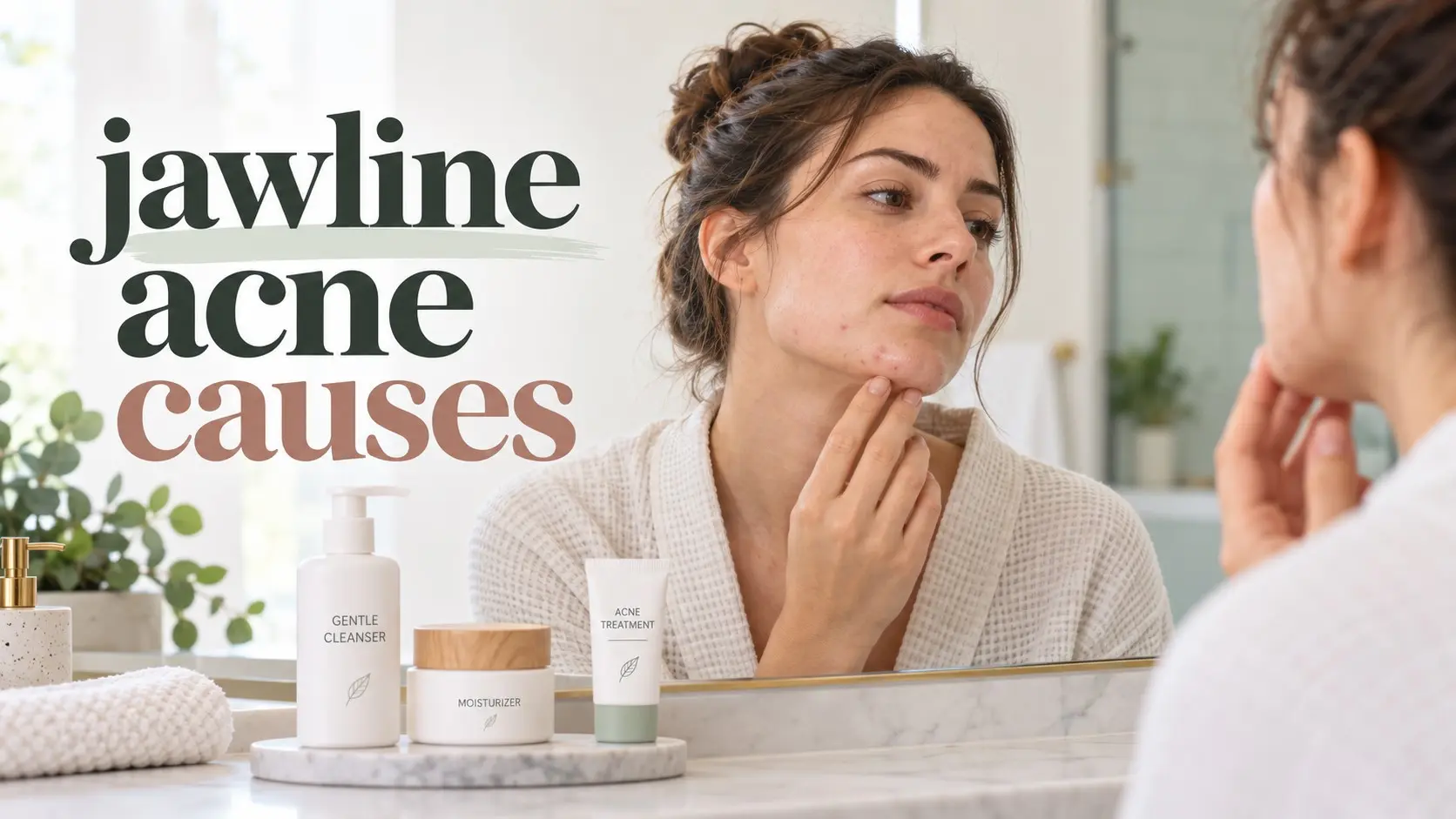
Jawline acne causes are not always hormonal. Hormone shifts are one common trigger, but friction, shaving, pore clogging products, stress, medicines, and other skin problems can affect the same area. The best clue is the pattern: when the acne starts, what the bumps look like, and what else changed at the same time.
That is the part I would focus on first.
A pimple on your jaw does not arrive with a label that says “hormonal.” Yet this is how jawline acne is often treated online. The location can give us a clue, but it cannot make the diagnosis by itself.
Deep bumps that return before a period tell one story. Tiny bumps after shaving tell another. Spots sitting right under a helmet strap point somewhere else again.
The pattern matters more than the postcode on your face.
Medical Notice: I am not a dermatologist or a doctor, and this content does not replace professional medical advice. What I share comes from real life experience, extensive research, and consultation with healthcare providers. Always consult qualified medical professionals for diagnosis and treatment of any health condition.
Table of Contents
- Quick Answer
- What jawline acne really means
- Why location alone is not enough
- 11 Clues and Triggers
- Hormone shifts
- PCOS clues
- Pregnancy and birth control changes
- Friction and sweat
- Shaving and ingrown hairs
- Skin products
- Hair and beard products
- Stress
- Medicines
- Diet patterns
- Acne lookalikes
- What Helps
- Simple skincare
- Benzoyl peroxide
- Salicylic acid
- Retinoids
- Azelaic acid
- Hormonal treatment
- Red Flags
- Deep painful acne
- Scarring
- Hormonal symptoms
- Pregnancy
- When it may not be acne
- FAQs and Next Steps
What actually causes acne along the jaw?
Acne starts inside a hair follicle.
Oil and dead skin cells collect inside the follicle and form a clog. Inflammation can then turn that clog into a red pimple, a pus filled spot, or a deeper painful lump.
This is the same basic process behind acne on the forehead, cheeks, chest, and back.
Your jaw is not a special kind of skin that gets only hormonal acne.
Hormones can push the process along, but so can friction, products, shaving, stress, and some medicines.
For a wider look at acne prone skin, visit the NextFitLife Skin Health Guide.
Use the pattern before blaming hormones
Here is a simple way to think about chin and jawline acne.
| Pattern | Possible Clue | Useful Next Step |
|---|---|---|
| Deep spots that return before a period | Hormonal acne | Track the menstrual pattern |
| Acne plus irregular periods or excess facial hair | Possible androgen or PCOS pattern | Discuss the full symptom pattern with a clinician |
| Bumps exactly where a strap rubs | Acne mechanica | Reduce rubbing, heat, and trapped sweat |
| Bumps after shaving | Razor bumps or follicle irritation | Review shaving technique |
| Breakout after a new cream, oil, or makeup product | Product related pore clogging or irritation | Simplify the routine |
| Small itchy bumps that all look alike | Possible folliculitis or another acne mimic | Get the diagnosis checked |
| Dry red bumps around the mouth | Possible perioral dermatitis | Avoid assuming it is normal acne |
1. Hormone shifts can drive deep lower face acne
Hormones deserve a place near the top of the list, just not the whole list.
Androgens are hormones that can increase oil activity in the skin. More oil can make blocked follicles and inflammation easier to develop.
This helps explain why some adults notice hormonal jawline acne around the chin, jaw, and lower face.
The timing can be especially useful.
If deep sore bumps appear around the same point in your menstrual cycle, then calm down and return the next month, tell your dermatologist or other clinician. That repeating pattern gives them useful information.
2. Jaw acne plus other hormone signs needs a closer look
Acne alone does not mean you have polycystic ovary syndrome, or PCOS.
Look at the bigger picture.
Persistent acne that appears with irregular periods, unwanted facial or body hair, scalp hair thinning, fertility problems, or dark thickened skin deserves medical assessment.
These signs can occur with PCOS and higher androgen activity.
PCOS acne still needs proper acne care, but treating the skin alone may not answer the bigger health question.
3. Pregnancy and birth control changes can shift the pattern
Hormone levels change during pregnancy. They can also change after starting, stopping, or changing hormonal birth control.
That does not mean every new pimple is caused by birth control or pregnancy, but the timing is worth noting.
Pregnancy matters for another reason too: some common acne medicines are not suitable during pregnancy.
If you are pregnant, trying to become pregnant, or think pregnancy is possible, review your acne products with a qualified clinician before continuing them.
4. Friction and trapped sweat can create acne in one exact strip
This is one of the easiest triggers to miss.
A helmet strap, mask edge, sports guard, tight collar, or other gear can trap heat and sweat while rubbing the same skin again and again.
The result can be acne mechanica.
The shape gives you a clue. If the spots sit almost exactly under the area that rubs your jaw, look at the equipment before changing your whole skincare routine.
Clean items that touch your face, remove sweaty gear when you are done, and reduce repeated pressure where possible.
5. Shaving can cause acne like bumps that need different care
A razor changes the problem.
After shaving, a cut hair can curl back into the skin and cause a red bump. This is called pseudofolliculitis barbae, but most people call it a razor bump.
Ingrown hairs are especially common when beard hair is coarse or curly.
They can look almost identical to acne along the jaw and neck.
Use a clean sharp razor, soften the hair first, use a shaving product that reduces friction, and shave in the direction of hair growth. Avoid repeatedly shaving over inflamed bumps.
If shaving bumps keep leaving dark marks or scars, a dermatologist can help.
6. Skin products can clog the same area you are trying to treat
A new moisturizer, foundation, sunscreen, primer, or face oil deserves attention if your breakout started soon after you began using it.
Products do not need to feel greasy to be a problem for your skin.
For acne prone skin, I prefer to start with products labeled noncomedogenic or made for acne prone skin. Even then, no label guarantees that every person's skin will agree with a product.
The NextFitLife guide to noncomedogenic skincare explains why this label is useful without treating it as a promise.
7. Hair and beard products travel farther than you think
Look beyond your face routine.
Hair oil can touch the jaw while you sleep. Conditioner can run over the lower face in the shower. Beard oils and styling balms sit directly on acne prone skin.
If the breakout began after a new hair or beard product, stop that product for a reasonable trial while keeping the rest of the routine stable.
Changing six products at once tells you almost nothing.
8. Stress can make existing acne harder to control
Stress does not mean you failed to relax enough.
It can still matter.
Stress related changes in the body can affect oil production and inflammation, which may make existing adult acne flare.
The mistake is reacting to a stressful breakout by scrubbing harder, picking more, or adding several harsh products.
Keep your treatment steady and your skin care gentle.
9. Medicines can change your skin
Sudden acne after a medication change deserves attention.
Some prescription medicines and hormone treatments can cause or worsen acne in certain people.
Do not stop a prescribed medicine because your skin changed.
Tell the clinician who prescribed it. The medicine may be necessary, and the acne may still be treatable without changing the main treatment.
10. Diet may affect acne, but do not blame one food too quickly
This is where simple internet rules fall apart.
Research has linked some high glycemic eating patterns with worse acne in some people. Some studies have also found an association between cow's milk and acne.
That does not mean sugar or milk explains every case of lower face acne.
I would not remove several food groups at once just because acne appeared on your jaw.
If you suspect a food, keep the rest of your skin routine steady and track what happens. A repeated pattern is more useful than blaming yesterday's dessert.
11. The biggest clue may be that the bumps are not acne
This point can save months of wasted treatment.
Folliculitis can cause inflamed bumps around hair follicles. Shaving, friction, infection, and other irritation can all play a role.
Perioral dermatitis can cause small red bumps around the mouth and chin. The skin may also burn, itch, feel dry, or look flaky.
If every bump looks the same, the rash is very itchy, the skin is scaly, or normal acne treatment keeps making things worse, stop assuming it is acne.
Get the diagnosis checked.
How can you tell if jawline acne may be hormonal?
No home test can prove this from location alone.
Still, several clues make hormones more likely:
- Deep tender bumps along the jaw, chin, or lower face
- Breakouts that repeat around your menstrual cycle
- Adult acne that keeps returning despite basic topical care
- Acne that began after a major hormone change
- Acne with irregular periods or excess hair growth
One clue is interesting. Several clues together are much more useful.
What helps mild jawline acne?
Keep the routine simple enough that you can tell what is working.
A useful basic routine may include gentle cleansing, one proven acne treatment, a light moisturizer, and sunscreen.
The American Academy of Dermatology supports several evidence based acne treatments, including benzoyl peroxide, topical retinoids, salicylic acid, and azelaic acid.
You do not need all of them on the same night.
For blackheads and whiteheads
Clogged pores need treatment that helps keep follicles open.
A topical retinoid such as adapalene is one common option. Salicylic acid can also help clear clogged pores.
If small closed bumps are your main concern, the NextFitLife guide on how to get rid of whiteheads explains the difference between whiteheads and deeper inflammatory acne.
For red inflamed pimples
Benzoyl peroxide is one of the best supported topical acne medicines.
It helps reduce acne related bacteria and inflammation.
More is not better. Too much can leave the skin dry, sore, and peeling, and it can bleach fabric.
For clogged pores and oily skin
Salicylic acid helps remove dead skin from inside pores.
It can suit mild acne with blackheads, whiteheads, and small pimples.
Using a salicylic cleanser plus a salicylic toner plus a strong leave on treatment is usually a poor way to start. Your skin does not need three versions of the same idea.
For acne and leftover marks
Azelaic acid can help acne and can also help some dark marks that remain after spots heal.
It may sting when you first start, so introduce it slowly if your skin is sensitive.
For repeated clogged pores
Topical retinoids help prevent blocked follicles from forming.
They work across the acne prone area rather than acting like a quick spot treatment for one pimple.
They also take time.
If you start a treatment on Monday, Friday is too early to declare it useless.
Do not treat only the pimple you can see
A visible pimple began forming before it reached the surface.
That is why preventive acne treatments are usually used over the acne prone area as directed rather than placed only on today's largest bump.
This is different from squeezing or digging at the skin, which adds more injury and raises the risk of marks.
If redness remains after acne heals, see the NextFitLife guide to post inflammatory erythema after acne.
What should a simple jawline acne routine look like?
| Time | Step | Main Goal |
|---|---|---|
| Morning | Gentle cleanser | Remove oil and sweat without harsh scrubbing |
| Morning | Suitable acne treatment when used | Control clogged or inflamed pores |
| Morning | Noncomedogenic moisturizer | Support the skin barrier |
| Morning | Broad spectrum SPF 30 or higher | Protect skin and healing acne marks |
| Evening | Gentle cleanser | Remove sunscreen, makeup, oil, and dirt |
| Evening | Chosen treatment | Prevent new acne over time |
| Evening | Moisturizer | Reduce dryness and irritation |
If your routine already contains seven active ingredients, I would simplify before adding number eight.
The NextFitLife Healthy Skin 101 Guide gives a simple base routine for acne prone and sensitive skin.
How long should you give a treatment?
Acne medicine works in weeks, not overnight.
AAD patient guidance advises giving many acne treatments about six to eight weeks before expecting meaningful improvement.
You may still get new pimples during the first few weeks.
That does not mean you should keep using a product through severe burning, swelling, blistering, or a painful rash. Those are reasons to stop and seek advice.
For teenage jawline acne, the NextFitLife Teen Acne Treatment Guide gives a simple age appropriate routine.
When does hormonal treatment make sense?
Some stubborn lower face acne responds well to hormone focused treatment.
Dermatologists may consider certain combined birth control pills or spironolactone for suitable patients.
These are prescription medicines, not skincare hacks.
Your medical history, blood pressure, pregnancy plans, medicines, and other health factors can change whether they are a good choice.
Do not borrow another person's spironolactone or use hormonal treatment without proper medical care.
What if the bumps are deep and painful?
Cystic jawline acne and deep nodules deserve more respect than a few small surface pimples.
Deep lesions are more likely to leave scars because the inflammation sits farther down in the skin.
If you keep getting painful lumps under the jaw, do not spend months moving from cleanser to cleanser.
See a dermatologist.
Prescription treatment can control deep acne more effectively, and early care can help reduce future acne scars.
Should you squeeze jawline pimples?
No.
Squeezing pushes and tears inflamed tissue. It can make swelling worse and raise the chance of dark marks and scars.
A deep lump that has no easy opening is especially bad to squeeze.
You are trying to treat an inflamed follicle, not force it through the surface.
Pregnancy changes which acne treatments are safe
This needs its own warning.
Isotretinoin, spironolactone, and tazarotene must not be used during pregnancy. Dermatology guidance also recommends stopping topical retinoids such as adapalene and tretinoin during pregnancy.
If you are pregnant or planning pregnancy, ask your obstetric clinician or dermatologist before starting or continuing an acne medicine.
Even a product sold without a prescription can deserve a quick safety check.
Does jawline acne always mean PCOS?
No.
PCOS is only one possible cause of a hormonal acne pattern.
Acne becomes a stronger clue when it appears with other signs such as:
- Irregular or missed periods
- Excess facial or body hair
- Scalp hair thinning
- Fertility problems
- Dark thickened skin
- Persistent severe acne after adolescence
If several of these fit your situation, bring the whole pattern to your healthcare professional.
Does dirty skin cause jawline acne?
No.
Acne is not proof that your face is dirty.
Washing harder will not scrub a blocked follicle clean. In fact, aggressive scrubbing and harsh products can irritate the skin and make your routine harder to tolerate.
Use your fingertips, a gentle cleanser, and lukewarm water.
Clean is enough.
What about dairy and sugar?
There is some evidence that high glycemic eating patterns may worsen acne in some people. Studies have also found links between cow's milk and acne.
The evidence does not support telling everyone with a chin pimple to stop eating dairy or sugar.
A better approach is to look for a repeat pattern while keeping the rest of your care stable.
Do not remove several major food groups at once without a good reason, especially if you have other nutrition needs or medical conditions.
How can you track the trigger without overthinking it?
Keep it simple for six to eight weeks.
Write down:
- Where the acne appears
- Whether the spots are clogged, red, pus filled, or deep
- Where you are in your menstrual cycle when relevant
- Any new skin, hair, or beard products
- Shaving days
- Helmet, mask, or sports gear use
- Medicine changes
- Any major pattern you notice in food or stress
You are not building a detective board on the wall.
You are looking for repetition.
If the same trigger shows up before the same breakout several times, that clue becomes more useful.
What are the red flags with jawline acne?
Jawline acne is usually not an emergency, but some patterns should move you toward professional care sooner.
Arrange medical or dermatology care if:
- You have deep painful nodules or cysts.
- Acne is leaving scars.
- The condition keeps getting worse despite consistent treatment.
- The problem has a major effect on confidence, mood, school, work, or social life.
- Acne appears with irregular periods or excess hair growth.
- You develop sudden severe acne after a medicine change.
- The bumps are very itchy or scaly and do not behave like normal acne.
- You may be pregnant and are using acne medicine.
- You are picking or squeezing the skin so often that it is becoming injured.
Deep acne deserves earlier treatment because waiting can mean more scars to treat later.
Five mistakes that make jawline acne harder to solve
- Assuming jawline means hormonal. Location gives a clue, not a diagnosis.
- Changing several products together. You lose the ability to tell which change helped or hurt.
- Scrubbing oily skin harder. Irritation does not clear acne faster.
- Squeezing deep bumps. This raises the risk of marks and scars.
- Waiting too long with painful scarring acne. Deep acne deserves professional treatment sooner.
What would I do first?
I would stop looking at the jawline alone and look at the pattern.
If the acne is mild, start with a gentle routine and one suitable evidence based treatment. Use it consistently rather than changing the plan every few days.
If shaving, a new product, or a rubbing strap clearly lines up with the breakout, fix that trigger at the same time.
If the spots are deep, painful, scarring, strongly cycle linked, or paired with other hormone symptoms, move the conversation from the skincare aisle to a qualified healthcare professional.
Conclusion
The smartest way to understand jawline acne causes is to watch what happens around the breakout, not just where the spot sits. Hormones matter, but shaving, friction, products, medicines, and acne lookalikes can produce a very similar pattern.
Start today by choosing one simple routine and tracking your breakouts for several weeks. If the acne is deep, scarring, painful, or comes with other hormonal symptoms, book a medical or dermatology review rather than buying another random treatment.
Related NextFitLife Guides and Hubs
- Skin Health Guide and Skin, Hair and Nail Health Hub
- Healthy Skin 101
- How to Get Rid of Whiteheads
- Noncomedogenic Skincare Meaning
- Post Inflammatory Erythema After Acne
- Best Acne Treatment for Teens
About the Author
Adel Galal is the founder and lead writer at NextFitLife. He researches health, fitness, nutrition, skin care, and healthy aging topics using recognized medical, public health, and academic sources.
His goal is to turn complex health information into clear steps that readers can understand, use safely, and discuss with qualified healthcare professionals.
Adel is not a dermatologist, physician, pharmacist, or other licensed healthcare professional. His work is educational and does not replace personal medical care.
Learn more about Adel Galal and NextFitLife on the About Us page.
Medical Disclaimer: I am not a dermatologist or a doctor, and this content does not replace professional medical advice. What I share comes from real life experience, extensive research, and consultation with healthcare providers. Always consult qualified medical professionals for diagnosis and treatment of any health condition.
Frequently Asked Questions
What is the main cause of jawline acne?
There is no single cause. Jawline acne starts when hair follicles become clogged and inflamed. Hormones, friction, shaving, products, stress, medicines, and other factors can make this process more likely.
Does jawline acne always mean a hormone problem?
No. Hormones are one common trigger, especially with deep cycle linked acne, but the location alone cannot prove that hormones are the cause.
How can I tell if my jawline acne is hormonal?
Hormonal acne becomes more likely when deep lower face spots return around the menstrual cycle or appear with other hormone related symptoms. A healthcare professional can assess the full pattern.
Can PCOS cause jawline acne?
PCOS can cause persistent acne because higher androgen activity can affect the oil glands. Acne plus irregular periods, excess hair growth, or other PCOS signs deserves medical assessment.
Can shaving cause jawline acne?
Shaving can irritate hair follicles and cause razor bumps or ingrown hairs that look like acne. True acne and shaving bumps can also occur together.
What is the best treatment for jawline acne?
The best treatment depends on the acne type. Evidence based options include benzoyl peroxide, topical retinoids, salicylic acid, and azelaic acid. Deep or scarring acne may need prescription treatment.
Does salicylic acid help jawline acne?
Salicylic acid can help unclog pores and may suit mild acne with blackheads, whiteheads, and small pimples.
Does benzoyl peroxide help jawline acne?
Yes. Benzoyl peroxide can help red inflamed acne by reducing acne related bacteria and inflammation.
Can stress cause jawline acne?
Stress can worsen acne in some people, but it is rarely the only cause. Keeping treatment steady during stressful periods is usually more useful than adding harsh products.
When should I see a dermatologist for jawline acne?
See a dermatologist for deep painful acne, cysts, scarring, worsening acne, failed over the counter treatment, or symptoms that suggest the bumps may not be ordinary acne.
Is jawline acne safe to treat during pregnancy?
Some acne treatments can be used during pregnancy while others cannot. Isotretinoin, spironolactone, tazarotene, and topical retinoids should not be used during pregnancy. Ask your obstetric clinician or dermatologist before treating pregnancy acne.
References and Sources
- American Academy of Dermatology, Acne Clinical Guideline
https://www.aad.org/member/clinical-quality/guidelines/acne
- American Academy of Dermatology, Acne Diagnosis and Treatment
https://www.aad.org/public/diseases/acne/derm-treat/treat
- American Academy of Dermatology, Hormonal Therapy for Acne
https://www.aad.org/public/diseases/acne/derm-treat/hormonal-therapy
- American College of Obstetricians and Gynecologists, Polycystic Ovary Syndrome
https://www.acog.org/womens-health/faqs/polycystic-ovary-syndrome-pcos
- American Academy of Dermatology, Acne Treatment During Pregnancy
https://www.aad.org/public/diseases/acne/derm-treat/pregnancy

Health & wellness writer with 30+ years of experience in nutrition, fitness, and healthy aging. Founder of NextFitLife.com — evidence-based health guidance.