Published on: October 21, 2026
Updated on: October 21, 2026
A useful high fiber fruits list should do more than rank fruit by a laboratory number.
Serving size matters. Whole fruit is different from juice. Dried fruit is much more concentrated than fresh fruit, and the fruit with the highest number is not always the one you will actually eat every week.
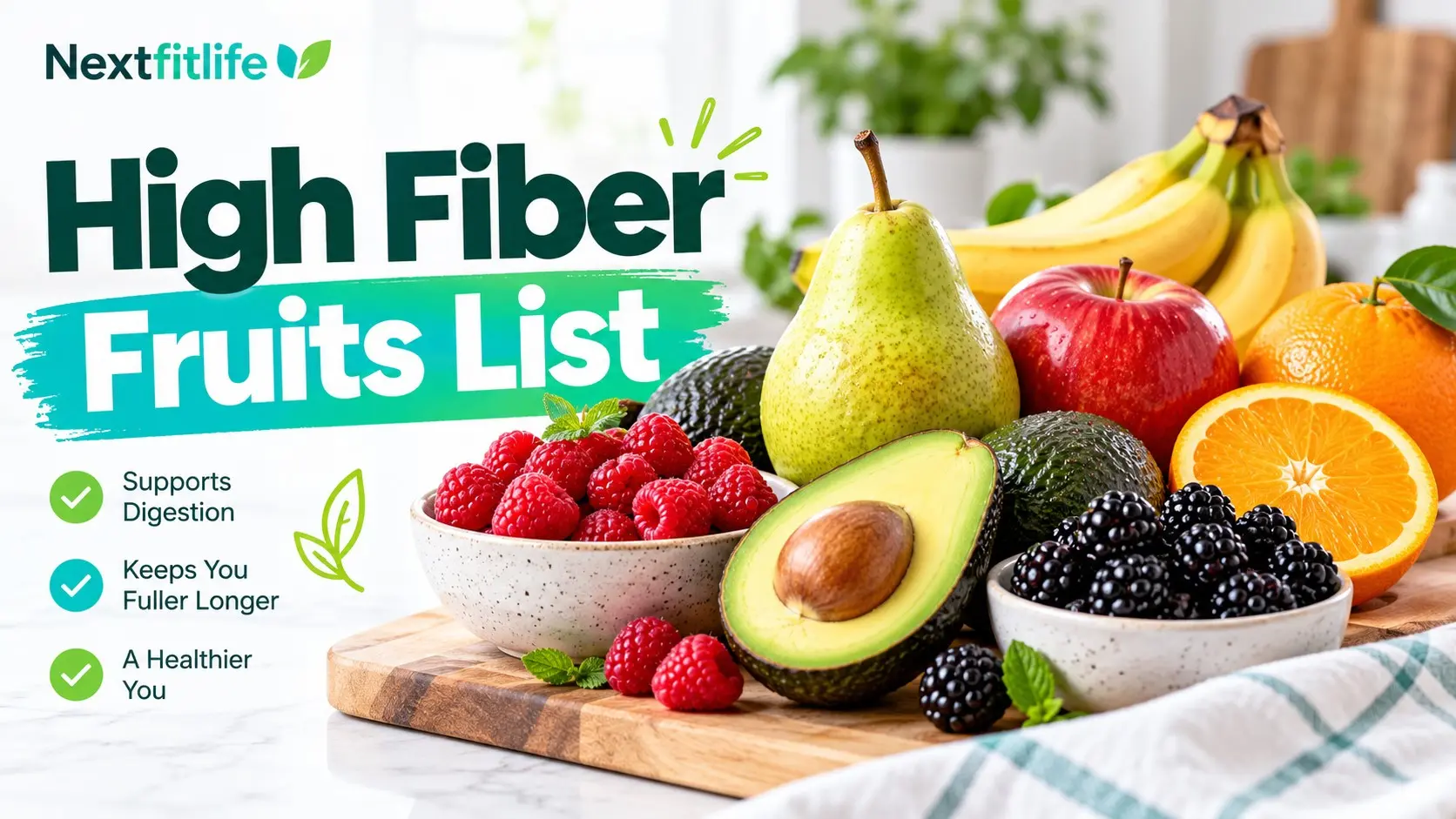
Quick answer: Some of the best high fiber fruits are passion fruit, raspberries, blackberries, guava, avocado, pears, apples, persimmons, pomegranate, kiwi, prunes, and figs. Raspberries are especially useful because one cup provides about 8 grams of fiber. For most people, whole fruit is a better fiber choice than juice, and fiber should be increased gradually if the current diet is low in it.
Medical note: This article is for general information and education. It does not replace medical advice, diagnosis, or treatment.
I am not a dermatologist or a doctor, and this content does not replace professional medical advice. What I share comes from real life experience, extensive research, and consultation with healthcare providers. Always consult qualified medical professionals for diagnosis and treatment of any health condition.
Table of Contents
- 34 fruits compared
- The highest fiber choices
- Best fiber per calorie
- Best everyday fruits
- Whole fruit versus juice
- Fresh versus dried fruit
- Fiber and constipation
- Fruit and diabetes
- Grapefruit medicine warning
- Easy serving ideas
- How much fiber you need
- When more fiber is not better
- Frequently asked questions
- References and Sources
34 Fruits Worth Knowing for Fiber
There are two sensible ways to compare fruit.
You can look at fiber per 100 grams, which makes different foods easier to compare scientifically, or you can look at fiber per normal serving, which is usually more useful at breakfast or snack time.
I prefer the second approach for real life.
| Rank | Fruit | Typical Portion | Approx. Fiber | Practical Note |
|---|---|---|---|---|
| 1 | Passion fruit | 1/2 cup pulp | About 12 g | Very fiber dense, but the serving needs several fruits |
| 2 | Mamey sapote | 1 cup | About 9 g | High fiber tropical option |
| 3 | Guava | 1 cup | About 9 g | Strong fiber and vitamin C choice |
| 4 | Raspberries | 1 cup | About 8 g | One of the best everyday choices |
| 5 | Blackberries | 1 cup | About 7.6 g | Excellent fiber for the calories |
| 6 | Avocado | 1/2 fruit | About 6.7 g | Very low sugar compared with sweet fruits |
| 7 | Gooseberries | 1 cup | About 6 g | Tart and fiber rich |
| 8 | Persimmon | 1 fruit | About 6 g | Useful seasonal choice |
| 9 | Pear | 1 medium | About 5.5 g | Keep the edible skin when you enjoy it |
| 10 | Sapodilla | 1 fruit | Often 5 g or more | Serving size varies widely |
| 11 | Apple | 1 medium | About 4 to 5 g | Easy daily choice with the skin |
| 12 | Breadfruit | About 1/4 fruit | About 4.5 g | Starchy fruit usually eaten cooked |
| 13 | Durian | 1/2 cup | About 4.5 g | Fiber rich but calorie dense |
| 14 | Kiwi | 2 fruits | About 4 g | Useful for fiber and bowel regularity |
| 15 | Kumquats | Several fruits | About 3 to 4 g | The edible peel adds fiber |
| 16 | Blueberries | 1 cup | About 3.5 g | Easy breakfast addition |
| 17 | Pomegranate arils | 1/2 cup | About 3.5 g | Eat the arils, not just the juice |
| 18 | Prunes | 5 prunes | About 3.4 g | Concentrated dried fruit |
| 19 | Dates | A few dates | About 3 to 5 g | Fiber rich but very concentrated |
| 20 | Dried figs | Small handful | About 3 to 5 g | Watch the portion because water has been removed |
| 21 | Fresh figs | 2 fruits | About 3 g | Less concentrated than dried figs |
| 22 | Strawberries | 1 cup | About 3 g | Good food volume for the calories |
| 23 | Orange | 1 medium | About 3 g | Whole orange beats juice for fiber |
| 24 | Banana | 1 medium | About 3 g | Useful, but not a fiber champion |
| 25 | Cherries | 1 cup | About 3 g | Moderate fiber choice |
| 26 | Cranberries | 1 cup raw | About 3.5 g | Avoid confusing raw berries with sweetened dried cranberries |
| 27 | Mango | 1 cup | About 2.5 to 3 g | Nutritious but moderate in fiber |
| 28 | Grapefruit | About 1 cup | About 2.5 g | Check medicine interactions |
| 29 | Peach | 1 medium | About 2 g | Healthy, but not especially high in fiber |
| 30 | Apricots | Several fruits | About 2 to 3 g | Fresh portions are less concentrated than dried |
| 31 | Pineapple | 1 cup | About 2 g | Lower fiber than berries |
| 32 | Plum | 1 fruit | About 1 g | Prunes are much more concentrated |
| 33 | Grapes | 1 cup | About 1.5 g | Healthy fruit, but not a high fiber leader |
| 34 | Watermelon | 1 cup | Less than 1 g | Hydrating, but not a fiber rich fruit |
The lower entries are included for comparison on purpose.
Watermelon and grapes are healthy foods, but calling every healthy fruit “high fiber” makes a list less useful.
Which Fruit Has the Most Fiber?
Passion fruit is one of the strongest fruits by fiber concentration.
USDA based comparisons put it at about 10.4 grams of fiber per 100 grams, and a half cup of pulp can provide roughly 12 grams.
But there is a catch.
A half cup of passion fruit pulp requires several individual fruits.
That may be normal where passion fruit is cheap and abundant, but it is not the easiest daily choice everywhere.
So “highest fiber” and “best everyday fruit” are not always the same answer.
Raspberries May Be the Best All Round Fiber Fruit
If I had to pick one fruit for most people, raspberries would be hard to beat.
One cup provides about 8 grams of dietary fiber, while also giving you a large volume of food for relatively few calories.
Fresh raspberries are excellent.
Frozen raspberries count too.
Use them in:
- Oatmeal
- Plain yogurt
- Overnight oats
- Whole grain cereal
- Fruit bowls
- Smoothies that retain the whole fruit
Frozen berries are often more practical because they last longer and reduce food waste.
Blackberries Give Almost as Much Fiber
One cup of blackberries provides roughly 7.5 to 8 grams of fiber.
Like raspberries, they rank extremely well for fiber density relative to calories.
This makes berries useful when you want a larger food portion while raising fiber intake.
Guava Is a Serious Fiber Fruit
Guava deserves more attention than it usually gets.
One small guava gives about 3 grams of fiber, while a cup provides close to 9 grams.
That makes guava one of the stronger fruits for fiber per 100 grams and per cup.
We cover the fruit in detail in our Guava Nutrition guide.
Avocado Is High in Fiber but Plays a Different Role
Half an avocado gives roughly 6 to 7 grams of fiber.
It also contains much more fat and more calories than berries, but most of that fat is unsaturated.
That does not make avocado worse.
It means it solves a different nutritional problem.
Try avocado with:
- Beans
- Whole grain toast
- Eggs
- Salad
- A grain bowl
Combining avocado with beans gives you more fiber than avocado alone.
Pears Are One of the Easiest Everyday Choices
A medium pear with the skin provides roughly 5.5 grams of fiber.
That is impressive for a fruit you can wash, put in a bag, and eat without preparation.
Keep the skin if you tolerate and enjoy it.
Much of the benefit of apples and pears comes from eating the whole edible fruit rather than peeling away part of it.
Apples Win on Practicality
A medium apple with skin provides roughly 4 to 5 grams of fiber.
That is less than raspberries, but frequency matters.
An apple you eat four times a week contributes more to your diet than an exotic fruit you buy once a year.
Pair apple with peanut butter, nuts, cottage cheese, or plain yogurt when you want a more filling snack.
Which Fruits Give the Most Fiber for the Calories?
Berries stand out.
| Fruit | Why It Works Well |
|---|---|
| Raspberries | Very high fiber relative to calories |
| Blackberries | Nearly as fiber dense as raspberries |
| Guava | Strong fiber concentration in a modest serving |
| Strawberries | Lower fiber total, but large volume for relatively few calories |
If weight management is part of your goal, see our Weight Loss and Metabolism Food Guide.
Which Fruits Have the Best Fiber to Sugar Balance?
Avocado and berries stand out again.
Avocado contains very little sugar for the amount of fiber it provides.
Raspberries and blackberries also give you a strong amount of fiber without being especially sugar dense.
That does not make mangoes, bananas, grapes, or oranges bad foods.
Fruit does not need to be low sugar to be healthy.
The goal is to understand the food rather than fear it.
Whole Fruit Is Usually Better Than Juice for Fiber
If your goal is fiber, eat the fruit.
Whole fruit keeps the pulp, membranes, skin when edible, and other structures that contain fiber.
Juicing removes much of that structure.
Harvard Health notes that whole fruits are generally good sources of fiber, while fruit juices are not.
Think about an orange.
You chew the whole fruit slowly. Its pulp stays with it.
A glass of orange juice can contain the juice from several oranges and is much easier to drink quickly.
For fiber intake, those are not equal choices.
Are Smoothies the Same as Juice?
No.
If the blender keeps the whole edible fruit, including pulp and flesh, much of the fiber remains.
That is different from a juicer that separates liquid from fibrous material.
But smoothies create another issue: portion size.
It is easy to blend several servings of fruit into one large drink and consume it much faster than you would eat the same food.
A simple smoothie might contain:
- Berries
- Plain yogurt
- Milk or an unsweetened alternative
- Oats
- Chia or flax
The fact that food is blended does not remove its calories.
Fresh Fruit and Dried Fruit Need Different Portions
Dried fruit is concentrated food.
Remove most of the water from a plum and you get a prune.
The fiber remains, but the sugar and calories are also concentrated into a smaller bite.
This is why comparing one cup of dried figs with one cup of fresh berries can be misleading.
Both can fit into a healthy diet.
The portions are different.
Are Prunes Good for Constipation?
Prunes are useful because they provide fiber and naturally contain sorbitol.
Sorbitol can draw water into the bowel and contribute to a laxative effect.
That is also why eating a large amount of prunes can cause loose stools, bloating, or cramping.
More is not automatically better.
For a broader plan, see our Best Constipation Treatments guide and Constipation Exercises guide.
Can Kiwi Help With Bowel Regularity?
Kiwi combines fiber with a high water content and has been studied in people with constipation.
It can be a useful fruit choice when you enjoy and tolerate it.
But persistent constipation should not be treated by endlessly adding more fruit.
Medicines, thyroid problems, pelvic floor disorders, IBS, low activity, diabetes, dehydration, and other conditions can contribute.
How Much Fiber Do You Need?
The FDA Daily Value for fiber is 28 grams per day based on a 2,000 calorie diet.
NIDDK gives adult intake guidance ranging from about 22 to 34 grams per day depending on age and sex.
The exact target therefore varies.
You also do not need to get all your fiber from fruit.
A stronger food pattern includes:
- Fruit
- Vegetables
- Beans and lentils
- Whole grains
- Nuts
- Seeds
Harvard's Nutrition Source recommends variety rather than trying to chase one special type of fiber.
Read our Gut Health Foods guide for a wider digestive health approach.
A Simple High Fiber Fruit Day
Breakfast
Add one cup of raspberries to oatmeal or plain yogurt.
The berries alone contribute about 8 grams of fiber.
Lunch
Add half an avocado to a salad with beans or lentils.
Now the fiber comes from several foods rather than one fruit.
Snack
Eat a pear with the skin and a small handful of nuts.
Dinner or Dessert
Add kiwi, pomegranate, berries, or another whole fruit you enjoy.
This approach spreads fiber through the day instead of loading the digestive system with a huge amount at once.
Increase Fiber Gradually
If your current diet is low in fiber, do not double your intake tomorrow.
NIDDK advises adding fiber a little at a time so the body can adjust.
A sudden large increase can cause:
- Gas
- Bloating
- Cramping
- Abdominal pressure
- Changes in bowel habits
Fluids also help fiber work normally.
If you have heart failure, kidney disease, or another reason to limit fluid, follow the fluid advice given by your healthcare team instead of forcing extra water.
More Fiber Is Not Always the Answer to Constipation
This is an important safety point.
Most general constipation advice includes adequate fiber and fluids.
But high fiber intake can be unsuitable when there is bowel narrowing, obstruction risk, or certain gastrointestinal conditions.
Seek medical care for constipation with:
- Severe abdominal pain
- Repeated vomiting
- A swollen abdomen
- Inability to pass gas
- Blood in the stool
- Unexplained weight loss
- A major new change in bowel habits
Do not respond to possible bowel obstruction by eating a huge bowl of bran and fruit.
IBS Can Change Which High Fiber Fruits Feel Best
People with IBS do not always tolerate the same fruits equally.
Pears, dried fruits, and some other fruits contain fermentable carbohydrates that can trigger bloating or bowel symptoms in sensitive people.
More fiber is therefore not automatically better for IBS.
Our IBS Constipation Diet guide explains why fiber type, amount, and tolerance matter.
Can People With Diabetes Eat High Fiber Fruit?
Yes.
Fruit contains carbohydrate, so portion size still matters, especially when someone uses insulin or counts carbohydrates.
Whole fruit is usually a more practical choice than juice because the fiber remains and the food takes longer to eat.
Berries, apples, pears, citrus fruit, guava, and other whole fruits can fit into diabetes eating plans.
Read our Foods for People Living With Diabetes guide for more meal context.
Grapefruit Has a Real Medicine Warning
Grapefruit is healthy food, but it can interact with some medicines.
The FDA warns that grapefruit or grapefruit juice can alter how certain medicines work.
Examples include some:
- Statins
- Blood pressure medicines
- Transplant medicines
- Anti anxiety medicines
- Corticosteroids
- Heart rhythm medicines
- Antihistamines
Not every drug in those groups interacts with grapefruit.
Do not stop medicine because of a food list.
Ask your pharmacist whether your specific medicine has a grapefruit interaction.
Are Bananas High in Fiber?
Bananas contain fiber, but they are not near the top of the list.
A medium banana gives roughly 3 grams.
That is useful.
It simply does not match raspberries at roughly 8 grams per cup or a pear at about 5.5 grams.
Is Watermelon High in Fiber?
No.
Watermelon is high in water and can be refreshing, but it provides less than 1 gram of fiber per cup.
That does not make watermelon unhealthy.
It makes it a poor choice when fiber is the main goal.
Are Grapes High in Fiber?
No.
Grapes contain roughly 1 to 2 grams per cup.
They are nutritious fruit, but berries, pears, apples, guava, and avocado will raise your fiber intake more quickly.
Fresh or Frozen Fruit: Which Has More Fiber?
Frozen whole fruit is a perfectly practical fiber source.
Freezing does not remove dietary fiber in the way juicing removes much of the fibrous structure.
Frozen berries are useful because they:
- Last longer
- Are available throughout the year
- Work well with oats and yogurt
- Reduce waste
Choose unsweetened fruit when possible.
What About Canned Fruit?
Canned fruit can also fit.
Choose fruit packed in water or its own juice more often than fruit packed in heavy syrup if you want to limit added sugar.
Canning changes texture and some nutrient levels, but it does not turn fruit into useless food.
Keep Edible Skins When They Make Sense
Apple and pear skins contribute fiber.
If you enjoy them, keep them.
This does not mean eating fruit peels that people normally discard.
You do not need to chew avocado skin or orange rind to improve your diet.
Eight Easy Ways to Eat More High Fiber Fruit
- Add berries to oatmeal. Frozen berries work well.
- Use a pear as an afternoon snack. Keep the skin when you tolerate it.
- Add avocado to beans or salad. You get fiber from several foods at once.
- Mix guava or kiwi with plain yogurt.
- Add pomegranate arils to salads.
- Keep apples where they are easy to grab.
- Use small portions of prunes or figs instead of huge servings of dried fruit.
- Choose whole oranges more often than orange juice when fiber is the goal.
High Fiber Fruit Mistakes Worth Avoiding
Mistake 1: Calling Every Fruit High Fiber
Healthy and high fiber do not mean the same thing.
Mistake 2: Comparing Unequal Portions
One whole avocado and one strawberry are not comparable servings.
Mistake 3: Treating Juice Like Whole Fruit
Juicing removes much of the fibrous structure.
Mistake 4: Ignoring Dried Fruit Portions
Dried fruit is much more concentrated than fresh fruit.
Mistake 5: Increasing Fiber Too Quickly
Your digestive system needs time to adapt.
Mistake 6: Assuming More Fiber Fixes Every Case of Constipation
Some bowel conditions need a different approach.
Mistake 7: Forgetting Medicine Interactions
Grapefruit is the classic example.
Mistake 8: Getting All Your Fiber From Fruit
Beans, lentils, vegetables, nuts, seeds, and whole grains deserve space too.
Conclusion: Build Your High Fiber Fruits List Around Foods You Will Eat
The best high fiber fruits list is not the one with the most exotic fruit or the largest number beside each item.
It is the one you can actually use.
Raspberries, blackberries, guava, avocado, pears, apples, kiwi, pomegranate, passion fruit, prunes, and figs are strong choices, but you do not need all of them.
Your next step: choose three fruits you already like. Add one to breakfast, keep one as a snack, and use the third with lunch or dinner. Increase fiber gradually, keep whole fruit ahead of juice, and let beans, vegetables, whole grains, nuts, and seeds do part of the work too.
Internal Links + Hub
- Gut Health Foods: Digestion, Fiber and Bloating
- Guava Nutrition
- Best Constipation Treatments
- Constipation Exercises
- IBS Constipation Diet
- Foods for People Living With Diabetes
- Weight Loss and Metabolism Food Guide
- Weight Management and Metabolism Hub
About the Author
Adel Galal is a father of four, three sons and a daughter, and a grandfather of four, with 33 years of hands on parenting experience. He is the founder of Parnthub.com, based in Cairo, Egypt, where he shares practical guidance on feeding, development and family life from newborns to teenagers.
Adel is not a medical professional. Health articles cite trusted sources and are for general information only.
For more information about NextFitLife, its editorial approach, and content standards, visit the NextFitLife About Us page.
Frequently Asked Questions About High Fiber Fruits
Which fruit has the most fiber?
Passion fruit is one of the most fiber dense common fruits, providing about 10.4 grams of fiber per 100 grams. A half cup of pulp can provide roughly 12 grams, although that serving requires several individual fruits.
What is the best everyday fruit for fiber?
Raspberries are one of the best everyday choices because one cup provides about 8 grams of fiber. Blackberries, pears, guava, apples, and avocado are also practical options.
How much fiber should adults get each day?
The FDA Daily Value is 28 grams of fiber based on a 2,000 calorie diet. NIDDK notes that adult needs commonly range from about 22 to 34 grams depending on age and sex.
Are bananas high in fiber?
Bananas contain useful fiber but are not among the highest fiber fruits. A medium banana provides roughly 3 grams.
Is watermelon high in fiber?
No. Watermelon is hydrating but provides less than 1 gram of fiber per cup, so it is not a strong choice when fiber is the main goal.
Are dried fruits high in fiber?
Yes. Prunes, dates, and dried figs can provide useful fiber, but removing water makes dried fruit more concentrated in calories and natural sugars, so portions are usually smaller than with fresh fruit.
Is whole fruit better than juice for fiber?
Yes. Whole fruit keeps much more of its natural fibrous structure. Juice removes much of the pulp and is easier to consume quickly, so whole fruit is usually the better choice when fiber is the goal.
Can high fiber fruit help constipation?
Fruit can support bowel regularity as part of adequate fiber and fluid intake. Increase fiber gradually. Persistent, severe, or painful constipation may have another cause and should not be treated only by adding more fruit.
Can people with diabetes eat high fiber fruit?
Yes. Whole fruit can fit into a diabetes eating plan, but it still contains carbohydrate. Portion size matters, especially for people who count carbohydrates or use insulin.
Why can grapefruit be a problem with medicines?
Grapefruit can change how certain medicines are absorbed or broken down. Some statins, blood pressure medicines, heart rhythm medicines, transplant medicines, and other drugs are affected, so check your specific medicine with a pharmacist.
References and Sources
- U.S. Food and Drug Administration. Dietary Fiber and the Nutrition Facts Label.https://www.accessdata.fda.gov/scripts/InteractiveNutritionFactsLabel/assets/InteractiveNFL_DietaryFiber_October2021.pdf
- National Institute of Diabetes and Digestive and Kidney Diseases. Eating, Diet, and Nutrition for Constipation.https://www.niddk.nih.gov/health-information/digestive-diseases/constipation/eating-diet-nutrition
- Harvard T.H. Chan School of Public Health. Fiber.https://nutritionsource.hsph.harvard.edu/carbohydrates/fiber/
- Harvard Health Publishing. Are Certain Fruits Healthier Than Others?https://www.health.harvard.edu/blog/are-certain-fruits-healthier-than-others-202201312677
- Harvard T.H. Chan School of Public Health. Common Questions About Fruits and Vegetables.https://nutritionsource.hsph.harvard.edu/common-questions-fruits-vegetables/
- U.S. Food and Drug Administration. Grapefruit Juice and Some Drugs Don't Mix.https://www.fda.gov/consumers/consumer-updates/grapefruit-juice-and-some-drugs-dont-mix
- Nutrition Advance. 25 Fruits High in Fiber, using USDA FoodData Central values.https://www.nutritionadvance.com/fruits-high-in-fiber/
- National Cancer Institute. Constipation and Cancer Treatment.https://www.cancer.gov/about-cancer/treatment/side-effects/constipation
Medical disclaimer: I am not a dermatologist or a doctor, and this content does not replace professional medical advice. What I share comes from real life experience, extensive research, and consultation with healthcare providers. Always consult qualified medical professionals for diagnosis and treatment of any health condition.

Health & wellness writer with 30+ years of experience in nutrition, fitness, and healthy aging. Founder of NextFitLife.com — evidence-based health guidance.