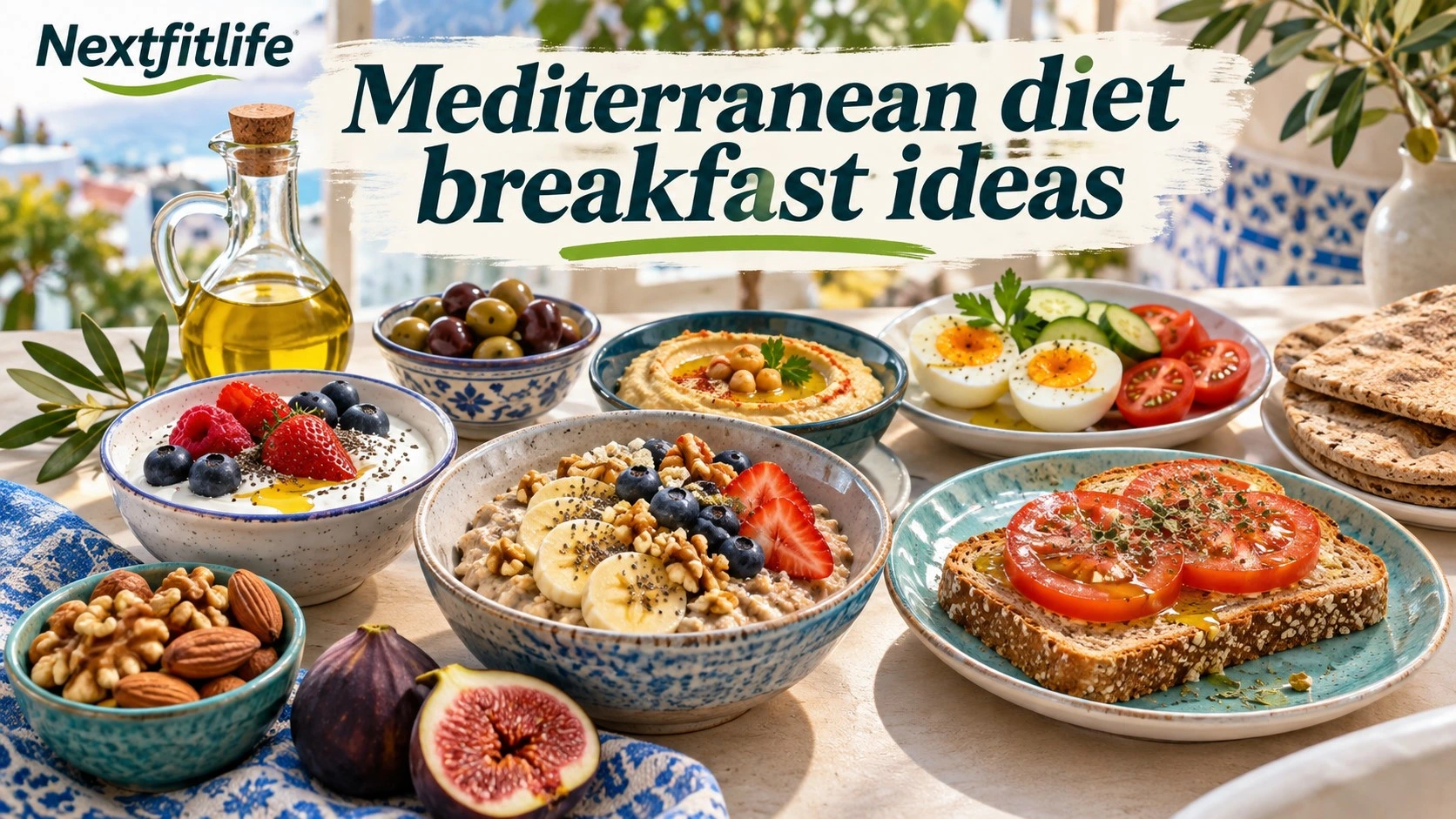
Good Mediterranean diet breakfast ideas do not need expensive ingredients or a long recipe.
Build breakfast around a fiber rich plant food, add useful protein, include fruit or vegetables, then use olive oil, nuts, seeds, tahini, avocado, or another source of unsaturated fat when it fits the meal.
Quick Answer
Mediterranean diet breakfast ideas include Greek yogurt with berries and walnuts, oats with fruit, eggs with vegetables, tomato toast with olive oil, hummus toast, ful medames, chia pudding, savoury oats, and whole grain breakfast bowls. Focus on mostly whole foods, plants, fiber, useful protein, and unsaturated fats.
There is no single official Mediterranean breakfast.
The Mediterranean pattern changes across Southern Europe, North Africa, the Levant, Turkey, and nearby regions. The shared idea is more useful than any one recipe: plenty of vegetables, fruit, beans, whole grains, nuts, seeds, olive oil, and moderate amounts of foods such as dairy, eggs, fish, and poultry.
This article is for general information and education. It does not replace medical advice, diagnosis, or treatment.
For the bigger picture, start with the NextFitLife Healthy Eating Lifestyle Hub.
What You Will Learn
- What makes breakfast Mediterranean
- How to build breakfast without a recipe
- Twenty one sweet and savory breakfast ideas
- What to eat when you only have five minutes
- How to make breakfast more filling
- How to add more fiber
- What to prepare ahead for busy mornings
- Which common breakfast mistakes to avoid
Table of Contents
- What Makes Breakfast Mediterranean?
- The Four-Part Breakfast Formula
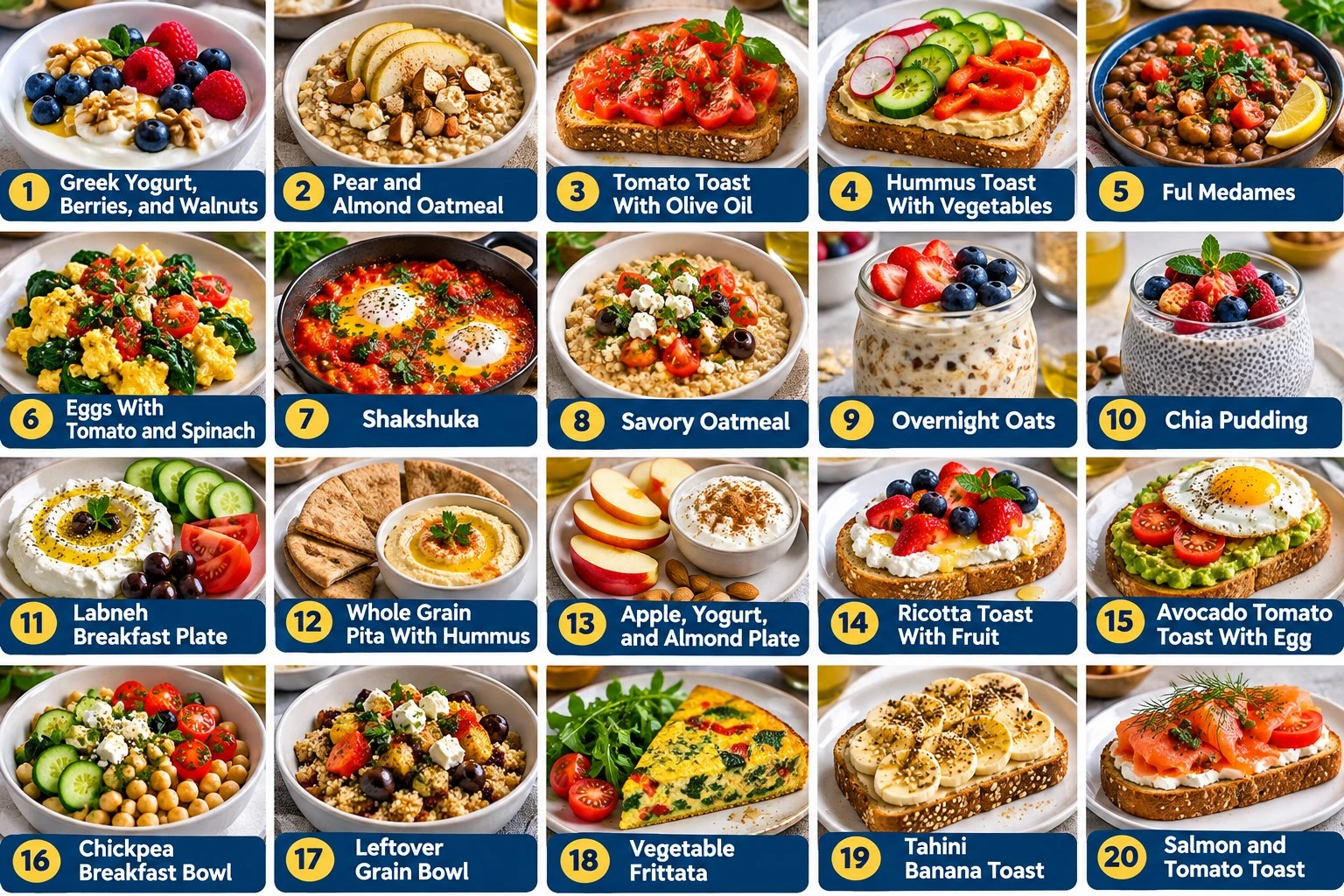
- 1. Greek Yogurt, Berries, and Walnuts
- 2. Pear and Almond Oatmeal
- 3. Tomato Toast With Olive Oil
- 4. Hummus Toast With Vegetables
- 5. Ful Medames
- 6. Eggs With Tomato and Spinach
- 7. Shakshuka
- 8. Savory Oatmeal
- 9. Overnight Oats
- 10. Chia Pudding
- 11. Labneh Breakfast Plate
- 12. Whole Grain Pita With Hummus
- 13. Apple, Yogurt, and Almond Plate
- 14. Ricotta Toast With Fruit
- 15. Avocado Tomato Toast With Egg
- 16. Chickpea Breakfast Bowl
- 17. Leftover Grain Bowl
- 18. Vegetable Frittata
- 19. Tahini Banana Toast
- 20. Salmon and Tomato Toast
- 21. Mediterranean Breakfast Plate
- Five Minute Choices
- Protein, Fiber, and Sweetness
- Meal Prep
- Seven Day Breakfast Plan
- Common Mistakes
- Conclusion
- References and Sources
- Internal Links and Hub
- About the Author
- Frequently Asked Questions
What Makes a Breakfast Mediterranean?
A Mediterranean breakfast is defined more by the overall food pattern than by one traditional dish.
The American Heart Association describes Mediterranean-style eating as rich in vegetables, fruit, grains, beans, nuts, and seeds, with olive oil as a main fat source and moderate amounts of dairy, eggs, fish, and poultry.
Harvard's Nutrition Source also describes it as a mainly plant-based pattern built around whole grains, olive oil, fruit, vegetables, beans, other legumes, nuts, herbs, and spices.
That gives you freedom:
Breakfast can be sweet, savoury, hot, cold, cooked, assembled in two minutes, or built from leftovers. It does not need to look like a restaurant breakfast board.
For more help with the overall pattern, see 11 Smart Eating Lifestyle Habits.
Use This Four-Part Mediterranean Breakfast Formula
You do not need a recipe every morning.
| Part | Examples | Main Job |
|---|---|---|
| Fibre-rich base | Oats, whole grain bread, whole grain pita, beans, barley | Provides carbohydrate and fiber |
| Fruit or vegetables | Berries, pear, apple, tomato, cucumber, spinach, peppers | Adds produce and variety |
| Protein source | Yogurt, eggs, beans, hummus, labneh, fish | Adds protein and meal structure |
| Unsaturated fat | Olive oil, nuts, seeds, tahini, avocado | Adds flavor and healthy fats |
You do not need all four categories in perfect amounts at every meal. Use the formula as a simple guide rather than a scorecard.
1. Greek Yogurt With Berries and Walnuts
Greek yogurt, berries, and walnuts make one of the easiest Mediterranean-style breakfasts.
Choose plain yogurt, then add fresh or frozen berries and walnuts. Cinnamon can add flavor without needing extra sugar.
If you want more fiber, add rolled oats or chia seeds.
Frozen berries work well too and can make this breakfast cheaper and easier to keep at home.
2. Pear and Almond Oatmeal
Oats are a simple whole grain base.
Cook rolled or steel cut oats, then add chopped pear, cinnamon, and almonds.
Use milk or an unsweetened fortified alternative if you prefer a creamier bowl.
For more fruit ideas, see the High Fiber Fruits List.
3. Tomato Toast With Olive Oil
Toast whole grain bread and top it with ripe tomato.
Add a small drizzle of extra virgin olive oil, black pepper, and herbs if you like them.
Add a boiled egg or a small amount of cheese when you want more protein.
Simple tomato bread also shows why Mediterranean breakfast does not have to be sweet.
4. Hummus Toast With Cucumber and Tomato
Hummus works perfectly well at breakfast.
Spread it on whole grain toast, then add cucumber, tomato, parsley, or leafy greens.
This gives you chickpeas, sesame, vegetables, and whole grains in one quick meal.
It is also a useful egg free option.
5. Ful Medames
Ful medames deserves a place in any serious Mediterranean breakfast article.
The fava bean dish is widely eaten for breakfast in Egypt and other parts of the region.
A simple version combines cooked fava beans with lemon, cumin, herbs, and olive oil.
Serve it with tomato, cucumber, and whole grain bread or another bread that fits your needs.
This is the point many breakfast roundups miss:
The Mediterranean region includes North Africa and the eastern Mediterranean. A Mediterranean breakfast is much broader than Greek yogurt and avocado toast.
6. Eggs With Tomato and Spinach
Cook eggs with chopped tomato and spinach in a small amount of olive oil.
Add herbs and serve with whole grain toast if you want a more substantial meal.
Change the vegetables through the week so the meal does not become boring.
7. Shakshuka
Shakshuka combines eggs with a tomato and pepper based sauce.
It takes longer than yogurt or toast, so I would save it for mornings when you have more time or prepare the sauce ahead.
Serve it with whole grain bread.
Its biggest advantage is simple: vegetables become part of breakfast without feeling like a side dish.
8. Savory Oatmeal With Spinach and Egg
Oats do not need fruit and cinnamon every day.
Cook them, then add spinach, tomato, herbs, and an egg.
Finish with pepper and a small drizzle of olive oil.
This is a useful option if you like oats but prefer a savory breakfast.
9. Overnight Oats With Chia and Berries
Combine rolled oats, chia seeds, plain yogurt or milk, and berries.
Refrigerate overnight.
That gives you a ready made breakfast with whole grains, fruit, and seeds.
Taste the fruit before adding honey or syrup. You may not need much extra sweetness.
10. Chia Pudding With Yogurt and Fruit
Mix chia seeds with milk or a suitable alternative and let them thicken in the refrigerator.
Top with plain yogurt, fruit, and a few nuts.
If your normal diet is low in fiber, start with a modest portion rather than doubling the seeds on day one.
For more fiber focused choices, see High Fiber Drinks: 12 Smart Choices.
11. Labneh With Tomato, Cucumber, and Olive Oil
Spread labneh on a plate or whole grain toast.
Add sliced cucumber, tomato, herbs, and a small drizzle of olive oil.
This makes a simple cold breakfast when you do not want eggs or oats.
If the labneh is salty, keep the rest of the meal less salty.
12. Whole Grain Pita With Hummus and Vegetables
Fill whole grain pita with hummus, cucumber, tomato, greens, and herbs.
Fold it and take it with you.
This is one of the easiest portable Mediterranean breakfasts because it needs almost no cooking.
13. Apple, Yogurt, and Almond Plate
Breakfast does not need to become a recipe every morning.
Put an apple, plain yogurt, almonds, and whole grain toast on a plate.
That is a complete breakfast for many people, and it takes almost no preparation.
Simple food is still real food.
14. Ricotta Toast With Figs and Walnuts
Spread ricotta on whole grain toast and add fresh figs when they are available.
Finish with walnuts.
Pear or berries work well when figs are unavailable.
A small amount of honey is optional, but let the fruit do most of the sweetening.
15. Avocado Tomato Toast With Egg
Mash avocado over whole grain toast, then add tomato and an egg.
Finish with lemon, herbs, or pepper.
Avocado is not required for Mediterranean eating, but it fits the broader focus on unsaturated fats.
Use it as one option rather than turning the entire diet into avocado toast.
16. Chickpea Breakfast Bowl
Warm chickpeas with spinach, tomatoes, cumin, paprika, or herbs.
Finish with olive oil and lemon.
Add plain yogurt or a cooked egg if you want more protein.
This works especially well when you like a substantial savory breakfast.
17. Leftover Grain Breakfast Bowl
Cooked barley, farro, quinoa, or another whole grain does not need to wait for lunch.
Make It Sweet
Add plain yogurt, fruit, walnuts, and cinnamon.
Make It Savory
Add tomato, greens, hummus, olive oil, and an egg.
Using leftovers saves time and cuts food waste.
18. Vegetable Frittata
Cook eggs with spinach, peppers, onion, tomato, zucchini, mushrooms, or whatever vegetables need using.
A frittata works especially well for meal prep because you can cook several servings at once.
Pair a slice with fruit or whole grain bread.
19. Tahini Banana Toast
Spread tahini over whole grain toast and add banana slices and cinnamon.
Tahini is made from sesame seeds and gives the breakfast plant fat plus some protein.
This is a useful sweet option when yogurt does not appeal to you.
20. Salmon, Tomato, and Whole Grain Toast
Add cooked salmon or a modest amount of smoked salmon to whole grain bread with tomato, cucumber, lemon, and herbs.
Fish fits the Mediterranean pattern well.
If you use smoked salmon, remember that sodium can be high, so it does not need to become a daily breakfast.
21. Mediterranean Breakfast Plate
This is the easiest option when different people want different foods.
Choose several small items such as:
- Plain yogurt or labneh
- A boiled egg
- Tomato
- Cucumber
- Olives
- Whole grain bread
- whole fruit
- nuts and seeds
You do not need every item.
Think of it as a mix and match plate, not a giant restaurant board.
What Should You Eat When You Only Have Five Minutes?
| Morning Situation | Fast Choice |
|---|---|
| No cooking | Yogurt, berries, walnuts |
| Want savory | Hummus toast with tomato |
| Portable | Whole grain pita with hummus |
| Want warm food | Oatmeal with pear |
| No eggs | Hummus pita or tahini banana toast |
| No dairy | Oats, fruit, nuts, chia |
| Fiber focus | Oats, berries, chia, nuts |
| Very hungry | Ful medames or chickpea bowl |
Does Mediterranean Breakfast Need to Be High in Protein?
No fixed protein target defines the Mediterranean diet.
Protein can still make breakfast more substantial.
Useful sources include yogurt, eggs, beans, chickpeas, hummus, nuts, seeds, fish, and selected dairy foods.
I would focus on the whole meal rather than chasing one protein number.
A useful comparison:
Toast with jam alone is very different from toast with hummus, tomato, cucumber, and a few nuts. The second meal brings fiber, protein, produce, and useful fats together.
Does Breakfast Need Olive Oil to Count?
No.
Olive oil is central to the Mediterranean eating pattern, but breakfast does not fail if you do not use it.
Oats with fruit and walnuts fit the pattern perfectly well.
So does yogurt with berries and seeds.
Do not pour olive oil over food simply to make it qualify.
Is Greek Yogurt Required?
No.
Greek yogurt is popular because it is convenient, has useful protein, and works well with fruit and nuts.
It is still only one option.
You can use another plain yogurt, a suitable fortified alternative, hummus, beans, eggs, or a completely different breakfast.
The Mediterranean diet is not a Greek yogurt subscription.
Can Mediterranean Breakfast Be Sweet?
Yes.
Fruit, figs, dates, banana, or a modest amount of honey can provide sweetness.
What I would limit as the everyday pattern is breakfast built mostly from sweet cereal, large pastries, sweet drinks, or refined bread covered in sugary spread.
Current heart healthy guidance emphasizes limiting added sugar and highly processed foods while focusing on the whole dietary pattern.
Savory Breakfast Deserves More Attention
Vegetables, beans, eggs, bread, herbs, yogurt, olives, and hummus are normal morning foods across many parts of the Mediterranean region.
Ful can be breakfast.
Hummus can be breakfast.
Tomato toast can be breakfast.
You do not need to wait until lunch to eat vegetables.
What About Pastries?
This is where geography and the research model can become confused.
People living around the Mediterranean also eat pastries, white bread, sweets, processed meat, and other foods that do not define the evidence based Mediterranean pattern.
A food does not become a research backed Mediterranean staple simply because someone eats it in Athens, Cairo, Barcelona, or Rome.
Enjoyment still matters.
A pastry can fit sometimes. It just does not need to become the daily foundation.
Is Coffee Allowed?
Yes.
Coffee or tea can fit the eating pattern.
The bigger issue is what gets added.
Plain coffee, coffee with milk, or a lightly sweetened drink is different from a large dessert style coffee containing several syrups and toppings.
Whole Fruit Usually Beats Juice for Fiber
Whole fruit keeps the fibrous plant material that is reduced when juice is separated from the pulp.
That makes berries, apple, pear, figs, orange, or another whole fruit a useful breakfast addition.
If you drink juice, think of it as a beverage rather than your main fruit source.
For a detailed comparison, see High Fiber Fruits List: 34 Smart Picks.
Seven Breakfast Staples I Would Keep at Home
- Rolled oats
- Plain yogurt
- Eggs
- Whole grain bread or pita
- Chickpeas or hummus
- Fruit
- Nuts or seeds
Add olive oil, vegetables, herbs, and spices from the foods you already use.
Those staples are enough to make most breakfasts in this article.
A Simple Sunday Prep Makes the Week Easier
Prepare One Oat Option
Make overnight oats or cook oats that can be reheated.
Boil Several Eggs
Now toast, pita, and breakfast plates take minutes.
Wash Produce
A tomato or cucumber that is ready to use is more likely to reach the plate.
Prepare One Bean Option
Hummus, cooked chickpeas, or ful gives you an instant savory breakfast base.
That is enough meal prep. You do not need twelve matching containers.
What If You Are Trying to Manage Weight?
Mediterranean style eating does not mean unlimited portions.
Nuts, olive oil, tahini, avocado, and cheese can be nutritious, but they also add substantial energy.
Use enough to make the meal satisfying rather than assuming that more is always better because the food is considered healthy.
The broader NextFitLife Healthy Eating Lifestyle Hub explains how to build flexible meals without turning healthy eating into rigid food rules.
What If You Have Diabetes?
Mediterranean style eating can fit diabetes care, but individual carbohydrate needs, medicines, glucose targets, and meal timing vary.
A practical breakfast can combine carbohydrate foods with protein, fiber, and unsaturated fats.
For example, oatmeal with berries and walnuts gives a different meal structure from sweet cereal alone.
If you use insulin or medicine that can cause low blood sugar, major dietary changes should be discussed with your healthcare team.
How Can You Add More Fiber?
Breakfast is an easy place to increase fiber.
Use oats, berries, pears, apples, chia, beans, whole grain bread, nuts, and seeds.
If your current fiber intake is low, increase it gradually rather than doubling several high fiber foods on the same morning.
You can also use the High Fiber Drinks Guide when you want breakfast or snack ideas that use smoothies and other drinks.
Five Mediterranean Breakfast Mistakes I Would Avoid
- Turning the diet into avocado toast every day. Use beans, oats, fruit, yogurt, vegetables, nuts, seeds, and olive oil too.
- Calling any yogurt bowl Mediterranean. Heavily sweetened yogurt, sugary granola, and syrup can turn it into dessert.
- Ignoring vegetables in the morning. Tomato, cucumber, spinach, peppers, and greens fit breakfast perfectly well.
- Buying special foods you do not enjoy. Mediterranean eating should adapt to culture, budget, and taste.
- Making breakfast too complicated. Yogurt with fruit takes minutes. Hummus toast can be just as fast.
A Seven Day Mediterranean Breakfast Example
| Day | Breakfast |
|---|---|
| Monday | Greek yogurt, berries, walnuts |
| Tuesday | Hummus toast, cucumber, tomato |
| Wednesday | Oatmeal, pear, almonds |
| Thursday | Eggs, spinach, whole grain toast |
| Friday | Overnight oats with chia and berries |
| Saturday | Ful medames, tomato, cucumber |
| Sunday | Shakshuka with whole grain bread |
Notice what is missing.
No special powder, detox drink, expensive cereal, or mandatory smoothie.
It is mostly ordinary food.
Conclusion
Use these Mediterranean diet breakfast ideas as a rotation rather than a twenty one item checklist.
Choose three breakfasts that fit your real mornings. Keep the basic ingredients at home, then change the fruit, vegetables, beans, grains, herbs, nuts, and seeds as the week changes.
Your next step: choose one quick sweet breakfast, one quick savory breakfast, and one make ahead breakfast for next week. That gives you variety without turning breakfast into a project.
References and Sources
- American Heart Association. What Is the Mediterranean Diet?
https://www.heart.org/en/healthy-living/healthy-eating/eat-smart/nutrition-basics/mediterranean-diet - American Heart Association. 2026 Dietary Guidance to Improve Cardiovascular Health.
https://professional.heart.org/en/science-news/2026-dietary-guidance-to-improve-cardiovascular-health/top-things-to-know - Harvard T.H. Chan School of Public Health. Mediterranean Diet Review.
https://nutritionsource.hsph.harvard.edu/healthy-weight/diet-reviews/mediterranean-diet/ - Cleveland Clinic. Mediterranean Diet: Food List and Meal Plan.
https://my.clevelandclinic.org/health/body/16037-mediterranean-diet - Gitsi E, et al. The Role of the Mediterranean Diet in Secondary Cardiovascular Disease Prevention: A Systematic Review and Meta Analysis of Cohort Studies. 2026.
https://pubmed.ncbi.nlm.nih.gov/42463337/ - Harvard T.H. Chan School of Public Health. What Should I Eat?
https://nutritionsource.hsph.harvard.edu/what-should-you-eat/
Internal Links and NextFitLife Hub
About the Author
Adel Galal is the founder and lead writer of NextFitLife.com. He has more than 15 years of health and wellness writing experience. He is not a licensed healthcare professional. Read the About page for sources and review rules.
Adel is not a medical professional; health articles cite trusted sources and are for general information only.
Frequently Asked Questions
What is a good Mediterranean diet breakfast?
A good Mediterranean breakfast can combine whole grains or beans, fruit or vegetables, a useful protein source, and unsaturated fat from foods such as olive oil, nuts, seeds, tahini, or avocado.
What are quick Mediterranean diet breakfast ideas?
Quick choices include plain yogurt with berries and walnuts, hummus toast with tomato, whole grain pita with hummus, oatmeal with fruit, or an apple with yogurt and almonds.
Can you eat eggs on a Mediterranean diet?
Yes. Eggs can fit a Mediterranean style eating pattern in moderate amounts alongside vegetables, whole grains, beans, fruit, nuts, olive oil, fish, and other foods.
Is oatmeal part of the Mediterranean diet?
Yes. Oats are a whole grain and fit well with Mediterranean style eating. Add fruit, nuts, seeds, yogurt, or cinnamon instead of relying on heavily sweetened instant oatmeal.
Is Greek yogurt required for a Mediterranean breakfast?
No. Greek yogurt is convenient, but you can also use another plain yogurt, eggs, beans, hummus, labneh, nuts, seeds, fish, or other foods that fit the overall pattern.
Can Mediterranean breakfast be savory?
Yes. Ful medames, hummus toast, eggs with vegetables, shakshuka, labneh with tomato and cucumber, and chickpea bowls are all useful savory choices.
Is avocado required on a Mediterranean diet?
No. Avocado can fit because it provides unsaturated fat, but olive oil, nuts, seeds, tahini, and other foods can fill the same general role.
What is a good make ahead Mediterranean breakfast?
Overnight oats, chia pudding, vegetable frittata, boiled eggs, prepared hummus, and cooked beans are practical make ahead choices for busy mornings.
Can Mediterranean breakfast help increase fiber?
Yes. Oats, berries, pears, apples, beans, chickpeas, chia, nuts, seeds, and whole grain bread can all add fiber to breakfast.

Health & wellness writer with 30+ years of experience in nutrition, fitness, and healthy aging. Founder of NextFitLife.com — evidence-based health guidance.