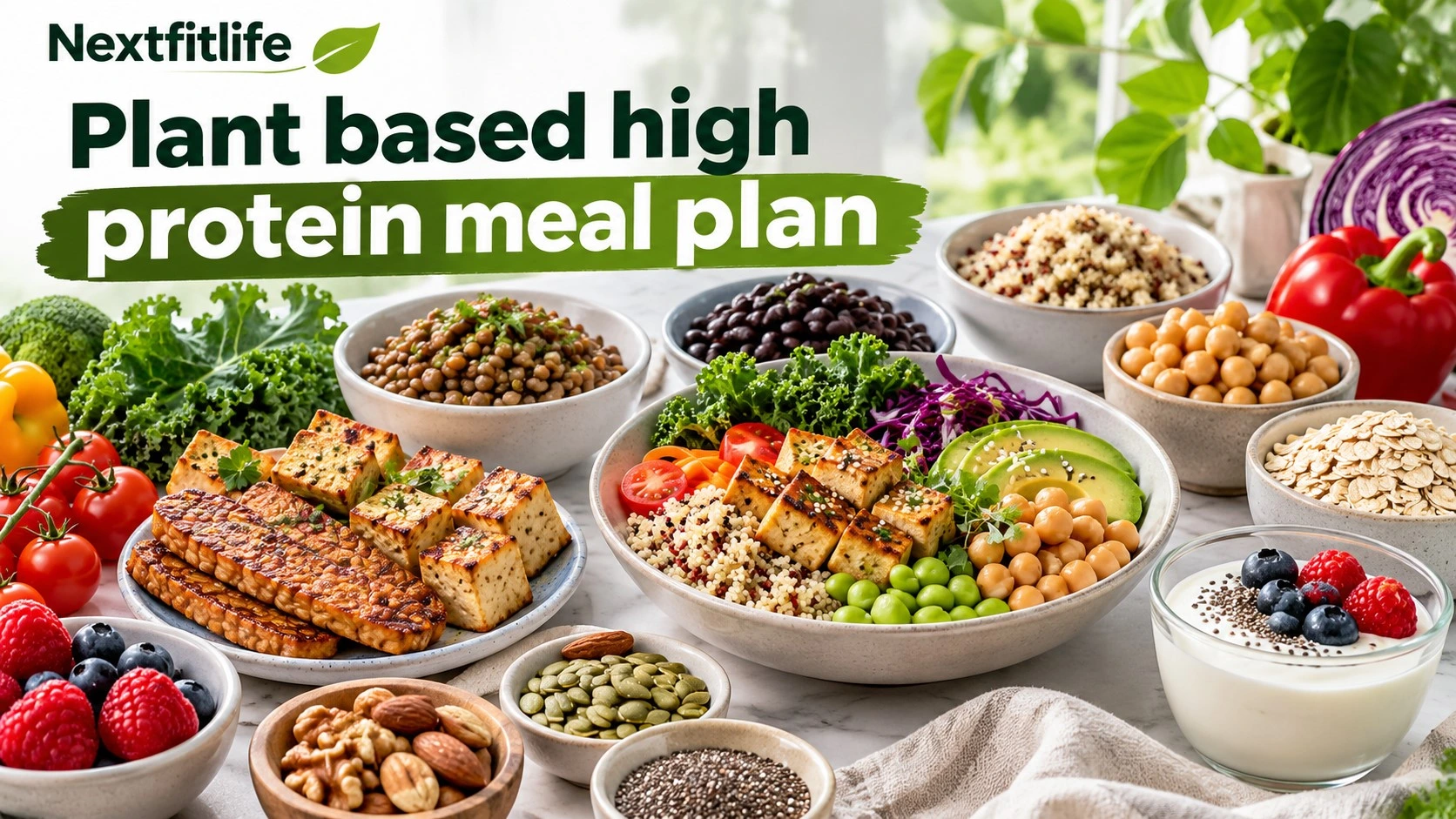
A good plant based high protein meal plan should not feel like tofu at breakfast, tofu at lunch, and a protein shake because dinner came up short.
The better approach is simple. Give each main meal one clear protein source, add enough food to meet your energy needs, then cover the nutrients that deserve extra attention on a fully plant based diet.
Quick Answer
A plant based high protein meal plan should center meals on tofu, tempeh, edamame, lentils, beans, peas, seitan, soy foods, whole grains, nuts, and seeds. Spread protein through the day, eat enough total food, and plan vitamin B12, iron, calcium, iodine, and omega-3 fats on purpose.
That last part matters. A high protein number does not prove that the whole diet is nutritionally complete.
This article is for general information and education. It does not replace medical advice, diagnosis, or treatment.
For the wider food pattern, start with the NextFitLife Healthy Eating Lifestyle Guide. It explains how to build balanced meals without turning food into a list of strict rules.
What You Will Learn
- How to set a sensible protein target
- How to build each meal around a real protein source
- A practical seven day meal plan
- How to raise protein without living on powder
- Why vitamin B12 needs deliberate planning
- How to think about iron, calcium, iodine, and omega-3 fats
- How to meal prep without eating the same bowl all week
Table of Contents
- How Much Protein Do You Need?
- Use a Protein Anchor at Every Main Meal
- Do Plant Proteins Need Pairing?
- 7 Day Meal Plan
- How to Raise Protein Without Powder
- Vitamin B12
- Iron
- Calcium
- Iodine
- Omega 3 Fats
- Soy Foods
- Muscle Building
- Shopping List
- Meal Prep
- Common Mistakes
- Who Needs Personal Advice?
- Conclusion
- References and Sources
- Internal Links and Hub
- About the Author
- Frequently Asked Questions
How Much Protein Do You Actually Need?
Do not copy a protein target from someone online simply because they lift weights.
Protein needs change with body size, age, activity, health, training, energy intake, and goals.
The 2025 to 2030 Dietary Guidelines for Americans promote about 1.2 to 1.6 grams of protein per kilogram of body weight per day. That is higher than the long standing adult RDA of 0.8 grams per kilogram.
Still, the new target should not be treated as one perfect number for every adult. The evidence used for that range focused heavily on weight management trials, and protein needs differ across life stages and medical conditions.
Practical rule:
Use protein targets as a guide, not a score. The meal structure matters more than chasing the biggest number possible.
Give Every Main Meal a Protein Anchor
This solves most of the planning problem.
A bowl of vegetables and rice is plant based, but it is not automatically high protein. Add tofu, lentils, edamame, tempeh, beans, seitan, or another strong source and the meal changes.
| Protein Anchor | Easy Meal Use | Why It Helps |
|---|---|---|
| Tofu | Scramble, curry, stir fry, grain bowl | Versatile soy protein |
| Tempeh | Wraps, bowls, sandwiches | Firm texture and concentrated protein |
| Edamame | Rice bowls, noodles, salads, snacks | Easy frozen soy option |
| Lentils | Soup, curry, pasta sauce, bowls | Protein plus fiber |
| Beans | Chili, tacos, bowls, wraps | Cheap and easy to batch cook |
| Seitan | Bowls, wraps, stir fries | High protein option when gluten is suitable |
Do You Need to Combine Plant Proteins at Every Meal?
No.
You do not need beans and rice on the same fork to get complete protein.
Your body needs all the essential amino acids, but a varied diet can supply them across the day. Soy foods are also useful because they provide all essential amino acids.
So yes, beans with rice works. It is simply not a mandatory pairing rule.
Your 7 Day Plant Based High Protein Meal Plan
This plan does not use one fixed calorie level because that would pretend every reader has the same body and activity level.
Scale the portions to your appetite, training, body size, and health needs.
| Day | Breakfast | Lunch | Dinner | Snack |
|---|---|---|---|---|
| Day 1 | Oats with fortified soy milk, chia, berries, and peanut butter | Lentil quinoa bowl with vegetables and tahini | Tofu broccoli stir fry with brown rice | Edamame with fruit |
| Day 2 | Tofu scramble with vegetables and whole grain toast | Tempeh sandwich with salad | Black bean and sweet potato tacos | Fortified soy milk with nuts |
| Day 3 | Overnight oats with soy milk, hemp, chia, berries, and nut butter | Chickpea quinoa salad with pumpkin seeds | Lentil bolognese with legume pasta and spinach | Roasted edamame or chickpeas |
| Day 4 | Tofu and black bean breakfast wrap | Seitan vegetable bowl with brown rice | Chickpea spinach curry with quinoa | Fortified soy yogurt with berries |
| Day 5 | Oats with soy milk, banana, peanut butter, and ground flax | Edamame noodle bowl with tofu and vegetables | Three bean chili with whole grain bread | Hummus with vegetables and whole grain crackers |
| Day 6 | Savory tofu bowl with potatoes, spinach, mushrooms, and nutritional yeast | Lentil wrap with hummus and roasted vegetables | Tempeh peanut bowl with broccoli and brown rice | Soy yogurt with pumpkin seeds |
| Day 7 | Overnight oats with soy milk, chia, fruit, and nut butter | Leftover bean chili over a baked potato with greens | Tofu or tempeh stir fry with leftover vegetables and grains | Edamame or roasted chickpeas |
Why Day 7 uses leftovers:
A plan is easier to keep when it reduces cooking instead of creating twenty one separate recipes. Reusing beans, grains, tofu, and vegetables is part of the plan, not a failure of creativity.
How Do You Raise Protein Without Another Shake?
Use Fortified Soy Milk
Many almond, rice, coconut, and oat drinks provide much less protein than soy milk.
If breakfast already contains oats, swapping a low protein drink for fortified soy milk can improve the meal without adding another food.
Add Edamame to Bowls
A vegetable rice bowl becomes much more useful when edamame or tofu is added in a real portion.
Use Lentil or Chickpea Pasta Sometimes
Legume pasta is not required, but it is a useful option when regular pasta would leave the meal low in protein.
Increase Tofu Before Increasing Nuts
Nuts are nutritious, but they bring a lot of energy relative to their protein. Use them as support rather than making them the main protein source of every meal.
Use Beans in Normal Food
Chili, tacos, soup, curry, pasta sauce, and grain bowls can all carry beans or lentils without turning dinner into a special diet meal.
Is Protein Powder Required?
No.
Protein powder is a convenience food. It can help when protein needs are high, appetite is low, training is demanding, or meals need to be portable.
But if breakfast and lunch are both low in protein and a huge shake is trying to rescue the day, fix the meals first.
Whole foods also bring fiber, minerals, vitamins, useful carbohydrates, or fats that isolated protein does not provide in the same way.
Vitamin B12 Needs a Real Plan
This is the nutrient I would never leave vague on a fully plant based diet.
NIH notes that people who eat little or no animal food can have trouble getting enough vitamin B12. Natural B12 is found in animal foods, so people following vegan diets need reliable fortified foods or supplements.
Fortified sources can include some:
- Plant milks
- Breakfast cereals
- Nutritional yeast products
- Plant based meat alternatives
Fortification varies, so read the label rather than assuming a product contains B12.
Do not leave B12 to chance.
If you eat a fully vegan diet, use a reliable B12 plan based on fortified foods, supplements, or both, and discuss testing or supplementation with a healthcare professional when needed.
Iron Is Available, but Absorption Is Different
Plant foods contain plenty of iron, but they provide nonheme iron, which is absorbed less efficiently than heme iron from animal foods.
Useful sources include lentils, beans, tofu, fortified cereal, pumpkin seeds, and some leafy greens.
Pair Iron With Vitamin C
This is one of the easiest improvements you can make.
- Lentils with tomatoes
- Beans with peppers
- Tofu with broccoli
- Fortified cereal with berries
If you already have iron deficiency, heavy menstrual bleeding, pregnancy, or another medical reason for low iron, food advice alone may not be enough.
Calcium Still Matters
Do not assume every plant milk provides the same nutrition.
Fortified soy milk is useful because it can provide protein plus calcium. Some tofu also contains meaningful calcium, depending on how it is produced.
Check the label. A drink can look healthy and still provide very little protein or calcium.
Iodine Is Easy to Miss
This is one of the quiet gaps in plant based meal plans.
NIH lists people following vegan diets among groups who may have trouble getting enough iodine, especially when they do not use iodized salt.
Iodized salt is a simple source. Sea salt, Himalayan salt, kosher salt, and other specialty salts are often not iodized.
Check the package rather than guessing.
I would also avoid using large amounts of kelp as a homemade iodine supplement because seaweed iodine content can vary widely.
What About Omega 3 Fats?
Plant foods can provide ALA, one type of omega 3 fat.
Useful sources include:
- Ground flax
- Chia seeds
- Walnuts
- Soy foods
- Some vegetable oils
Algal oil is a plant compatible way to obtain the long chain omega 3 fats EPA and DHA when supplementation is appropriate.
Is Soy Safe to Eat Regularly?
For most people, soy foods are useful, nutrient dense protein sources.
Tofu, tempeh, edamame, and unsweetened fortified soy milk make it much easier to build higher protein plant meals without relying on powder.
If you have a soy allergy or specific medical advice to avoid soy, use other protein sources instead.
Can You Build Muscle on a Plant Based Diet?
Yes, if total energy, protein intake, training, and recovery are adequate.
Protein supports the process, but it does not replace resistance training.
A person can eat a very high protein diet and still gain little muscle if the training stimulus is poor.
For the training side, use the How to Get Fit Guide to combine strength work, cardio, mobility, and recovery.
Spread Protein Through the Day
I would avoid the pattern of a tiny breakfast, a salad for lunch, then one enormous protein dinner.
Use meaningful protein at breakfast, lunch, and dinner. That makes a higher daily intake easier without forcing one meal to do all the work.
Plant Based High Protein Shopping List
| Section | What to Buy |
|---|---|
| Protein anchors | Tofu, tempeh, edamame, lentils, chickpeas, black beans, kidney beans, split peas, seitan |
| Fortified foods | Fortified soy milk, fortified soy yogurt, fortified cereal, fortified nutritional yeast |
| Whole grains | Oats, brown rice, quinoa, whole grain bread, wraps, whole grain pasta |
| Vegetables | Spinach, broccoli, peppers, tomatoes, carrots, cabbage, mushrooms, onions, frozen vegetables |
| Fruit | Berries, bananas, apples, oranges, kiwi, pears, seasonal fruit |
| Nuts and seeds | Peanut butter, tahini, pumpkin seeds, hemp, chia, flax, walnuts |
| Flavor | Olive oil, herbs, spices, lemon, vinegar, iodized salt |
For fruit choices that add useful fiber, use the High Fiber Fruits List: 34 Smart Picks.
If you want more breakfast variety, the Mediterranean Diet Breakfast Ideas guide includes oats, tahini, beans, nuts, seeds, fruit, and other meals that can be adapted into plant based versions.
Meal Prep Without Spending All Day in the Kitchen
Prep components, not seven identical boxes.
Cook Two Legumes
Lentils plus black beans gives you enough variety for bowls, chili, tacos, wraps, and pasta sauce.
Canned beans are fine if they make the plan easier.
Cook One or Two Grains
Brown rice and quinoa can cover several meals without tasting identical once the sauces and vegetables change.
Prepare Two Protein Choices
Bake tofu and cook tempeh.
Now lunch and dinner can change without starting from zero.
Use Frozen Vegetables
There is no nutrition prize for chopping every vegetable yourself. Frozen vegetables can make weeknight meals much easier.
Make One Sauce
Tahini lemon sauce, tomato sauce, or a simple peanut sauce can turn the same basic ingredients into very different meals.
Five Mistakes I Would Avoid
- Calling vegetables the protein source. Vegetables contribute some protein, but tofu, beans, lentils, tempeh, edamame, or seitan should do the main work in a high protein meal.
- Using nuts as the main protein at every meal. Nuts are useful foods, but they are better as support than as the only protein anchor.
- Ignoring total energy. A very bulky plant diet can still leave an active person underfed.
- Forgetting vitamin B12. A colorful diet does not create B12.
- Chasing protein until whole plants disappear. Protein bars, powders, and meat substitutes should not push beans, vegetables, fruit, grains, nuts, and seeds off the plate.
Who Should Get Personal Nutrition Advice?
A generic meal plan is not enough for everyone.
Speak with a doctor or registered dietitian before making large changes if you have:
- Kidney disease
- Pregnancy
- Known iron or vitamin B12 deficiency
- A history of restrictive eating or an eating disorder
- Significant digestive disease
- Food allergies that remove several protein sources
- Very high athletic demands
- Another prescribed medical diet
Children and older adults also have different energy and nutrient needs, so one adult meal plan should not be copied for everyone in a household.
A Simple Way to Start Tomorrow
Do not rebuild your whole kitchen.
- Breakfast: make oats with fortified soy milk, chia, fruit, and peanut butter.
- Lunch: turn a vegetable grain bowl into a tofu, lentil, or edamame grain bowl.
- Dinner: use tofu stir fry, lentil bolognese, bean chili, or tempeh tacos as the main meal.
That is enough for day one.
Conclusion
A useful plant based high protein meal plan should make protein obvious without making food strange.
Build each main meal around a real protein source, eat enough total food, use soy and legumes often, and plan vitamin B12, iron, calcium, iodine, and omega 3 fats rather than hoping they take care of themselves.
Your next step: choose two protein anchors, one grain, and two vegetables today. Prep them once, then build several meals around them instead of starting from zero every night.
References and Sources
- National Institutes of Health, Office of Dietary Supplements. Vitamin B12 Fact Sheet for Consumers.
https://ods.od.nih.gov/factsheets/VitaminB12-Consumer/ - National Institutes of Health, Office of Dietary Supplements. Iron Fact Sheet for Consumers.
https://ods.od.nih.gov/factsheets/Iron-Consumer/ - National Institutes of Health, Office of Dietary Supplements. Iodine Fact Sheet for Consumers.
https://ods.od.nih.gov/factsheets/Iodine-Consumer/ - Journal of Nutrition. Perspectives on the Protein Recommendations in the 2025 to 2030 Dietary Guidelines for Americans. 2026.
Journal of Nutrition 2026 protein perspective - American College of Cardiology. How Do the 2025 to 2030 Dietary Guidelines for Americans Measure Up for Cardiovascular Health? 2026.
ACC review of the 2025 to 2030 Dietary Guidelines
Internal Links and NextFitLife Hub
Frequently Asked Questions
What foods are best for a plant based high protein meal plan?
Useful choices include tofu, tempeh, edamame, lentils, beans, chickpeas, split peas, seitan, fortified soy milk, whole grains, nuts, and seeds.
Do you need protein powder on a plant based diet?
No. Protein powder can be useful for convenience or high protein needs, but a well planned diet can get substantial protein from soy foods, legumes, seitan, grains, nuts, and seeds.
Do plant proteins need to be combined at every meal?
No. You do not have to combine specific plant proteins at every meal. A varied diet can provide all essential amino acids across the day.
Do vegans need vitamin B12?
Yes, vitamin B12 needs deliberate planning on a vegan diet because natural plant foods do not provide reliable amounts. Use reliable fortified foods, supplements, or both.
How can plant based eaters get enough iron?
Use lentils, beans, tofu, fortified cereals, seeds, and other iron rich plant foods. Pairing them with vitamin C rich foods can support iron absorption.
Why is iodine important on a vegan diet?
People who avoid dairy, eggs, and seafood can have fewer common iodine sources. Iodized salt is one practical option, while many specialty salts are not iodized.
Can you build muscle on a plant based diet?
Yes. Muscle gain depends on enough total energy, adequate protein, resistance training, and recovery. Plant foods can provide the protein needed when the diet is planned well.
Is soy a good protein source?
Yes. Tofu, tempeh, edamame, and soy milk are practical protein foods for most people and can make a plant based high protein diet much easier to build.
How should protein be spread through the day?
Use a meaningful protein source at breakfast, lunch, and dinner instead of saving most of the day's protein for one large meal.