Published on: November 17, 2026
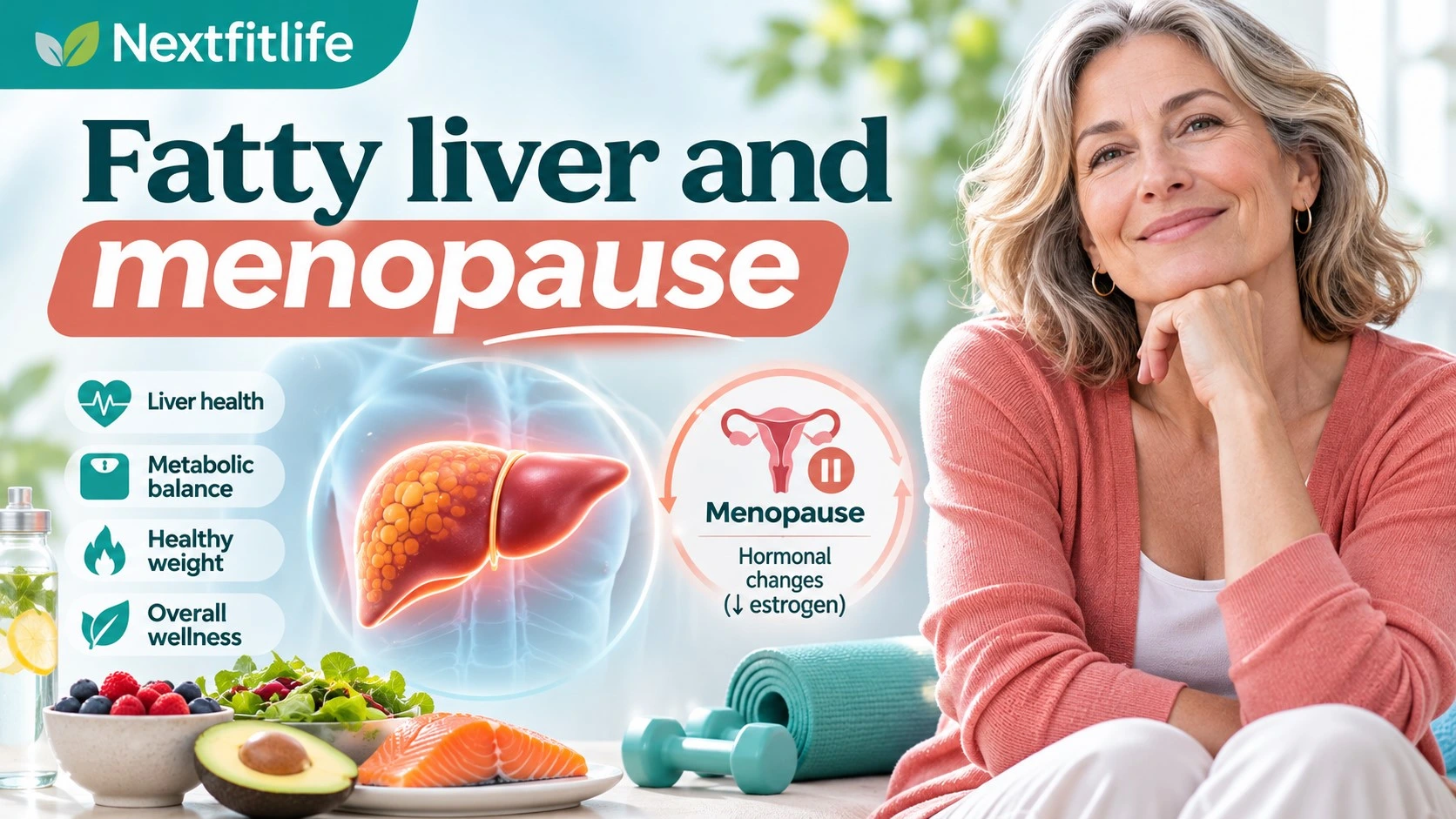
Menopause does not automatically cause fatty liver, but the years around and after menopause are linked with a higher chance of developing metabolic fatty liver disease.
The reason is not one hormone alone. Changes in abdominal fat, insulin sensitivity, cholesterol, muscle mass, activity, sleep, age, and genetics can all overlap during the same stage of life.
Quick answer: The link between fatty liver and menopause is real, but menopause is better viewed as a risk modifier than a single cause. Lower estrogen, more visceral fat, insulin resistance, diabetes, high triglycerides, lower activity, and aging can all raise risk. Fibrosis assessment matters more than liver fat alone.
Health note: This article is for general information and education. It does not replace medical advice, diagnosis, or treatment.
Get urgent medical care for yellow skin or eyes with severe illness, vomiting blood, black stools, new confusion, fainting, severe abdominal swelling, severe weakness, or trouble breathing. These can be signs of serious liver disease or another emergency.
If fatty liver has already been found on an ultrasound, CT, or MRI, the NextFitLife Fatty Liver Disease Guide explains the newer MASLD and MASH terms, fibrosis risk, and current treatment options.
Table of Contents
- What fatty liver means now
- Does menopause cause fatty liver?
- 9 risk factors and changes
- Why fibrosis matters
- Tests your doctor may use
- Hormone therapy and fatty liver
- Weight loss, food, and exercise
- Alcohol and supplements
- When to make an appointment
- When to seek urgent care
- References and Sources
- Internal links and hubs
- About the author
- Frequently asked questions
What Does Fatty Liver Mean Now?
The medical name has changed.
What used to be called nonalcoholic fatty liver disease, or NAFLD, is now commonly called metabolic dysfunction associated steatotic liver disease, or MASLD.
Its inflammatory form is called MASH, which stands for metabolic dysfunction associated steatohepatitis.
The newer terms make the metabolic side of the condition easier to see.
Liver fat often appears alongside problems such as:
- Insulin resistance
- Prediabetes or type 2 diabetes
- High triglycerides
- High blood pressure
- Abdominal fat gain
- Low physical activity
Fatty liver can also occur in people who do not have obesity. If that fits your situation, read 10 Critical Causes of Fatty Liver Without Obesity.
Does Menopause Cause Fatty Liver?
Not by itself.
Research shows that fatty liver is more common after menopause, but that does not prove menopause alone causes liver fat.
A 2023 systematic review and meta analysis found that postmenopausal women had higher odds of fatty liver than premenopausal women. The association remained after researchers adjusted for age and metabolic factors.
That finding matters, but it should not be turned into a simple rule that estrogen loss automatically causes fatty liver.
Several changes can happen at the same time:
- Estrogen falls
- Abdominal fat can increase
- Insulin sensitivity can worsen
- Triglycerides can rise
- Muscle mass can fall
- Activity may decrease
- Sleep can become more difficult
The liver is responding to the whole metabolic picture.
9 Critical Fatty Liver and Menopause Risks
1. Estrogen Decline May Affect Liver Metabolism
Estrogen does more than regulate the menstrual cycle.
It also affects fat distribution, glucose handling, lipid metabolism, muscle, and the liver.
After menopause, lower estrogen signaling is linked with metabolic changes that can favor liver fat accumulation.
Still, estrogen decline should be treated as one part of the story rather than the only explanation.
2. Visceral Fat Can Increase Even Without Major Weight Gain
One of the most important changes is where body fat is stored.
After menopause, fat distribution can shift toward the abdomen.
This deeper abdominal fat is called visceral fat.
It matters because visceral fat is strongly linked with insulin resistance and abnormal blood fats.
A person can therefore gain metabolic risk even if the number on the scale changes only a little.
This is also why normal body weight does not guarantee a healthy liver.
3. Insulin Resistance Can Push More Fat Toward the Liver
Insulin resistance is one of the strongest links between metabolic health and fatty liver.
When the body responds poorly to insulin, glucose control becomes harder and the liver receives stronger signals to make and store fat.
That is why prediabetes and type 2 diabetes deserve attention when fatty liver appears after menopause.
If your liver scan is abnormal, I would want glucose and A1C reviewed as part of the same workup.
4. Triglycerides and Cholesterol Can Change
Menopause can also change blood lipid patterns.
High triglycerides and other abnormal lipid results often sit beside MASLD as part of a wider metabolic pattern.
For that reason, a fatty liver review should usually include:
- Triglycerides
- LDL cholesterol
- HDL cholesterol
- Blood pressure
- A1C or fasting glucose
- Waist size
The liver and the cardiovascular system are not separate problems here.
5. Earlier Menopause May Signal Higher Metabolic Risk
Newer research suggests the age at menopause may also matter.
A 2026 global cohort study found that women with natural menopause before age 50 had a higher later risk of MASLD than matched women whose menopause occurred later.
The study also found more new dyslipidemia and prediabetes in the earlier menopause group.
This does not prove early menopause directly damages the liver.
It does mean menopause timing may be useful information during long term metabolic risk reviews.
6. Losing Muscle Can Make Glucose Control Harder
Midlife health is not only about body fat.
Muscle matters too.
Less muscle means less tissue available to use glucose, especially if activity falls at the same time.
This is one reason resistance training deserves a place beside walking and other aerobic exercise.
Keeping muscle is useful for strength, mobility, glucose control, and long term metabolic health.
7. Fatty Liver Can Stay Silent
MASLD often causes no clear symptoms.
Some people report fatigue or discomfort under the right ribs, but many discover liver fat during an imaging scan or blood test done for another reason.
That means feeling well does not prove the liver is healthy.
It also means menopause symptoms should not automatically be blamed on the liver.
Fatigue can have many causes, including poor sleep, anemia, thyroid disease, depression, medication effects, and hot flashes.
8. Normal Liver Enzymes Do Not Fully Rule Out Disease
This is a point worth remembering.
AST and ALT are useful blood tests, but they do not tell the full story.
People can have meaningful liver fibrosis even when liver enzymes are not dramatically elevated.
Current liver guidance warns against using normal aminotransferase levels alone to rule out advanced disease.
So if your scan shows liver fat and you also have diabetes, obesity, several metabolic risks, or other concerning findings, a normal ALT should not end the discussion.
9. Fibrosis Risk Matters More Than Liver Fat Alone
Liver fat is only the first question.
The next question is whether the liver has developed scarring.
That scarring is called fibrosis.
Advanced fibrosis is more important for long term liver risk than the presence of fat alone.
This is why modern MASLD care focuses more on fibrosis assessment than older articles often did.
What Is FIB 4?
FIB 4 is a noninvasive fibrosis risk calculation.
It uses four pieces of information:
- Age
- AST
- ALT
- Platelet count
A clinician can use the result to help decide whether someone is at lower risk or needs more testing.
It is not a diagnosis by itself.
If the result is not clearly reassuring, the next step may include liver stiffness testing.
What Is Liver Elastography?
Liver elastography estimates how stiff the liver is.
More stiffness can suggest more fibrosis.
Transient elastography is sometimes known by the brand name FibroScan.
This test can give information about scarring that a routine ultrasound may not provide.
The Fatty Liver Disease Guide explains why fibrosis stage matters when deciding how closely someone should be monitored.
What Tests Might Your Doctor Order?
The exact workup depends on your medical history.
A doctor may review:
- AST and ALT
- Bilirubin and other liver tests
- Complete blood count
- Platelet count
- Fasting glucose
- A1C
- Triglycerides
- LDL and HDL cholesterol
- Blood pressure
- Hepatitis testing when appropriate
- Iron studies when needed
- Abdominal imaging
- FIB 4
- Liver elastography
Your clinician should also ask about alcohol, medicines, supplements, weight history, diabetes, menopause timing, and other possible liver conditions.
Simply saying “menopause caused it” is not a complete liver assessment.
Does Hormone Replacement Therapy Prevent Fatty Liver?
I would not use menopausal hormone therapy as a fatty liver treatment.
The biology is interesting because estrogen influences liver metabolism, but human evidence is still mixed.
The effect of hormone therapy may differ with the route, formulation, timing, dose, and the woman's metabolic health.
Current evidence does not support starting hormone therapy only to prevent or treat MASLD.
If menopausal hormone therapy is appropriate for hot flashes, night sweats, bone health, or another accepted reason, liver and metabolic health can be discussed with the prescribing clinician.
That is different from using hormones as a liver medicine.
Can Weight Loss Help Fatty Liver After Menopause?
Yes, when excess weight is part of the problem.
Even modest, sustained weight loss can reduce liver fat.
Larger sustained losses can provide greater improvements in liver inflammation and sometimes fibrosis.
The goal should still be gradual and realistic.
Crash dieting is not a good liver strategy.
Rapid weight loss can create other health problems, including gallstones. For more detail, see 6 Serious Rapid Weight Loss and Gallstones Risks.
What Should You Eat for Fatty Liver After Menopause?
You do not need a liver detox.
A Mediterranean style eating pattern is a strong base for many people with MASLD.
Build meals around:
- Vegetables
- Whole fruit
- Beans and lentils
- Whole grains
- Fish
- Lean protein
- Nuts and seeds
- Olive oil and other unsaturated fats
- Plain yogurt or another suitable protein food
Reduce frequent sugary drinks, oversized portions, heavily processed foods, and excess saturated fat.
Protein is also useful during menopause because preserving muscle supports strength and metabolic health.
For a practical food plan, read Fatty Liver Diet: 14 Proven Foods and Habits That Help.
Can Exercise Help Without Major Weight Loss?
Yes.
Physical activity can improve metabolic health even when the scale changes slowly.
A practical routine can include:
- Brisk walking
- Cycling
- Swimming
- Strength training
- Less sitting during the day
Aerobic activity and resistance training can both be useful.
The best program is not the hardest one.
It is the one you can keep doing.
What About Alcohol?
Alcohol deserves an honest review when fatty liver is found.
A person can have metabolic liver disease and alcohol related liver injury at the same time.
If you have known fibrosis or cirrhosis, your clinician may advise complete alcohol avoidance.
Do not assume alcohol is harmless because the liver disease was described as metabolic.
Should You Use a Liver Cleanse?
I would skip it.
No detox tea, juice cleanse, powder, fast, or supplement can replace proper diagnosis, fibrosis assessment, diabetes care, cholesterol management, activity, or medically appropriate weight management.
Some supplements can even injure the liver.
If you already have abnormal liver tests, show your doctor or pharmacist every supplement you take.
The NextFitLife Liver Health Hub covers fatty liver, detox claims, gallbladder concerns, supplements, and other liver topics in one place.
A Practical Menopause and Liver Checklist
| Question | Why It Matters |
|---|---|
| Was fatty liver confirmed on imaging? | Confirms that liver fat is actually present |
| What are my A1C and fasting glucose? | Checks diabetes and insulin resistance risk |
| What are my triglycerides and cholesterol? | Shows part of the metabolic risk pattern |
| Do I need FIB 4? | Helps estimate fibrosis risk |
| Do I need elastography? | May measure liver stiffness when risk is not clearly low |
| Could alcohol contribute? | Alcohol and metabolic liver disease can overlap |
| Could a medicine or supplement matter? | Some products can affect liver health |
| Did menopause happen early? | Earlier menopause may signal higher metabolic risk |
When Should You Make a Medical Appointment?
Arrange a medical review if:
- A scan reports fatty liver
- Liver enzymes remain abnormal
- You have type 2 diabetes or prediabetes
- Your triglycerides are high
- You have increasing abdominal fat
- You have several metabolic risk factors
- You had earlier menopause and are concerned about metabolic health
- You have persistent discomfort under the right ribs
- Unexplained fatigue continues
A routine appointment is also reasonable if you want help connecting your menopause history, glucose, cholesterol, blood pressure, medicines, and liver results.
When Should You Seek Urgent Care?
Do not wait for a routine appointment if you develop serious warning signs.
Get urgent medical help for:
- Yellow skin or eyes with severe illness
- Vomiting blood
- Black or tarry stools
- New confusion
- Severe unusual sleepiness
- Fainting
- Rapidly increasing abdominal swelling
- Severe weakness
- Trouble breathing
These are not normal menopause symptoms.
Conclusion
The connection between fatty liver and menopause is real, but menopause should be seen as one part of a larger metabolic picture.
Lower estrogen, abdominal fat, insulin resistance, diabetes, high triglycerides, lower muscle mass, aging, activity, alcohol, and genetics can all contribute.
Your next step: if fatty liver has already been found, bring your liver tests, platelet count, A1C, lipid results, medicine list, alcohol history, and menopause history to your next appointment. Ask whether you need FIB 4 or another fibrosis assessment.
References and Sources
- American Family Physician. Menopause and Increased Risk of Metabolic Dysfunction Associated Steatotic Liver Disease.
https://www.aafp.org/afp/2026/0700/fpin-ci-menopause-masld - PubMed. Menopause Is Associated With Increased Prevalence of Nonalcoholic Fatty Liver Disease: A Systematic Review and Meta Analysis.
https://pubmed.ncbi.nlm.nih.gov/36728528/ - American Association for the Study of Liver Diseases. Practice Guidance on the Clinical Assessment and Management of NAFLD.
https://pmc.ncbi.nlm.nih.gov/articles/PMC10735173/ - Mayo Clinic. Fatty Liver Disease, MASLD: Diagnosis and Treatment.
https://www.mayoclinic.org/diseases-conditions/fatty-liver-disease-masld/diagnosis-treatment/drc-20354573 - National Institute of Diabetes and Digestive and Kidney Diseases. Diagnosis of NAFLD and NASH.
https://www.niddk.nih.gov/health-information/liver-disease/nafld-nash/diagnosis - PubMed Central. Earlier Menopause and Risk of Metabolic Dysfunction Associated Steatotic Liver Disease: A Global Cohort Study.
https://pmc.ncbi.nlm.nih.gov/articles/PMC12790266/
Internal Links and NextFitLife Hubs
- Fatty Liver Disease Guide
- Fatty Liver Diet
- Fatty Liver Without Obesity
- Liver Health Hub
- Liver Health Guide
- Rapid Weight Loss and Gallstones
- About NextFitLife
Frequently Asked Questions
Can menopause cause fatty liver?
Menopause is linked with a higher risk of fatty liver, but it is not a single direct cause. Estrogen decline, abdominal fat, insulin resistance, diabetes, blood lipid changes, age, activity, and genetics can all contribute.
Is fatty liver more common after menopause?
Yes. Research has found a higher prevalence of fatty liver in postmenopausal women compared with premenopausal women, even after some metabolic factors are taken into account.
Can fatty liver happen without weight gain?
Yes. A woman can develop fatty liver without major weight gain or obesity. Visceral fat, insulin resistance, diabetes, genetics, low muscle mass, alcohol, and other factors can contribute.
Can liver enzymes be normal with fatty liver?
Yes. Normal AST or ALT levels do not fully rule out fatty liver or meaningful liver fibrosis. Imaging and fibrosis risk assessment may still be needed.
What is FIB 4?
FIB 4 is a noninvasive fibrosis risk score that uses age, AST, ALT, and platelet count. It can help identify who may need further liver stiffness testing.
Does hormone replacement therapy treat fatty liver?
Hormone therapy is not currently recommended solely as a treatment for fatty liver. Its risks and benefits should be based on accepted menopause indications and the individual's medical history.
Can exercise help fatty liver after menopause?
Yes. Aerobic activity and resistance training can improve metabolic health and may help reduce liver fat even when body weight changes only a little.
What diet is best for fatty liver after menopause?
A Mediterranean style eating pattern is a strong option for many people. It emphasizes vegetables, whole fruit, legumes, whole grains, fish, nuts, seeds, unsaturated fats, and suitable protein foods while limiting sugary drinks and heavily processed foods.
When should fatty liver symptoms need urgent care?
Seek urgent medical care for vomiting blood, black stools, new confusion, fainting, severe abdominal swelling, severe jaundice with illness, severe weakness, or trouble breathing.
Does early menopause increase fatty liver risk?
Recent research suggests earlier natural menopause may be linked with a higher later risk of MASLD and other metabolic problems. This is an association and does not prove early menopause directly causes liver disease.