Published on: November 15, 2026
Updated on: November 15, 2026
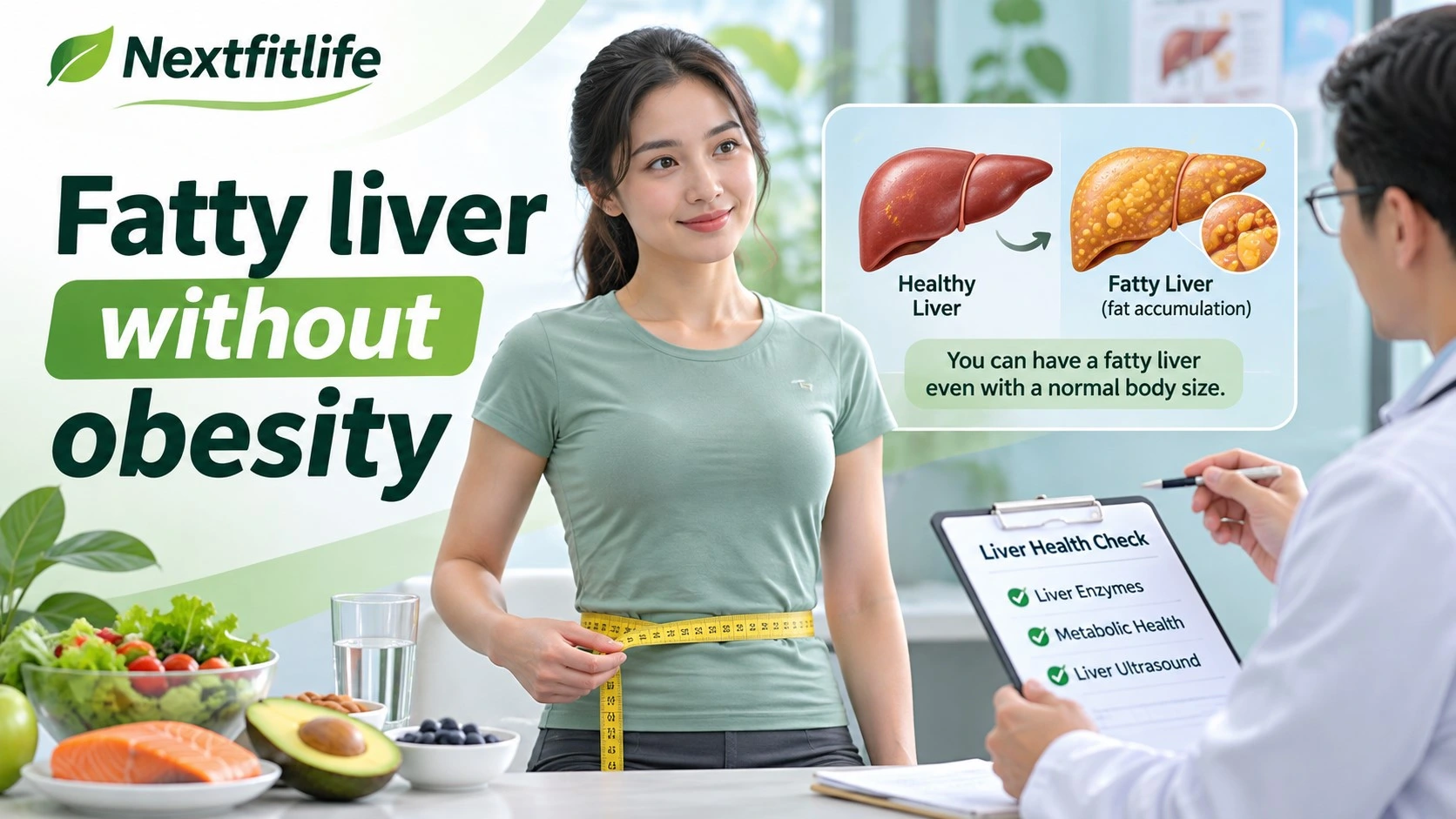
Yes, you can have fatty liver without obesity.
A normal body weight does not prove that your liver has little fat or that your metabolism is healthy. Some people who look lean still have visceral fat, insulin resistance, high blood sugar, high triglycerides, low muscle mass, genetic risk, or another condition that can lead to fat inside the liver.
Quick answer: Fatty liver can occur without obesity. Possible reasons include excess visceral fat, insulin resistance, diabetes, abnormal blood fats, genetics, low muscle mass, alcohol, some medicines, rapid weight loss, and less common medical conditions. The next step is to find the cause and check whether liver scarring is present.
Health note: This article is for general information and education. It does not replace medical advice, diagnosis, or treatment.
Seek urgent medical care if you develop yellow skin or eyes, vomiting blood, black stools, new confusion, severe abdominal swelling, fainting, or rapidly worsening illness. These are not simple signs of uncomplicated fatty liver.
If a scan has already shown liver fat, being thin is not a reason to ignore it. The useful questions are: why is the liver storing fat, and is there any fibrosis?
For a broader overview, see the NextFitLife Fatty Liver Disease Guide and the Liver Health Hub.
Table of Contents
- What fatty liver without obesity means
- Why normal BMI can miss risk
- 10 possible causes
- How serious lean fatty liver can be
- Symptoms to watch
- Can liver tests be normal?
- Tests that help find the cause
- How fibrosis is checked
- Food and exercise
- When to seek care
- References and Sources
- Internal links and hubs
- About the author
- Frequently asked questions
What Does Fatty Liver Without Obesity Mean?
Fatty liver means extra fat has built up inside liver cells.
The newer medical term MASLD means metabolic dysfunction associated steatotic liver disease. It replaced the older term NAFLD for many people whose liver fat occurs with metabolic risk.
A person does not need obesity to have MASLD.
Doctors sometimes use the terms lean fatty liver or lean MASLD when liver fat occurs in someone whose body mass index is below the usual overweight range.
The American Gastroenterological Association has specific guidance for this group. Its lean NAFLD guidance used a BMI below 25 kg/m² for non Asian people and below 23 kg/m² for Asian people.
Those numbers help define groups for care and research, but BMI is only one measurement.
Why Can Normal BMI Miss Liver Risk?
BMI tells you how weight relates to height.
It does not tell you where fat is stored. It also does not separate fat from muscle.
Two people can have the same BMI but very different amounts of visceral fat, muscle, liver fat, and metabolic risk.
| BMI Can Tell You | BMI Cannot Tell You |
|---|---|
| Weight compared with height | How much fat is inside the liver |
| A broad weight category | How much visceral fat you have |
| Whether weight is low, average, or high for height | How much of your weight is muscle |
| A useful screening number | Whether you have insulin resistance or liver fibrosis |
This is why normal weight should not end the investigation when imaging already shows liver fat.
10 Possible Causes of Fatty Liver Without Obesity
1. Visceral Fat Can Be High at a Normal Weight
A person can look slim and still store more fat around the internal organs than expected.
This visceral fat behaves differently from fat stored just under the skin. It is closely linked with metabolic problems and liver fat.
Waist size can therefore add information that BMI misses.
This does not mean a larger waist proves fatty liver. It means fat distribution matters after liver fat has already been found.
2. Insulin Resistance Can Happen Without Obesity
Insulin resistance is not limited to people with obesity.
When the body responds poorly to insulin, it handles glucose and fat differently. This can increase the flow and production of fat in the liver.
A lean person with fatty liver may therefore still need blood sugar testing.
Useful tests can include fasting glucose and HbA1c, depending on the person's history and medical situation.
For more on this metabolic link, see Diabetes, Obesity and Metabolism.
3. Type 2 Diabetes or Prediabetes May Be Present
A person does not have to look overweight to have type 2 diabetes or prediabetes.
Diabetes is strongly linked with fatty liver and with a higher risk of more serious liver disease.
This is why glucose testing matters even when body weight looks normal.
If your doctor finds abnormal glucose, treating that problem becomes part of protecting both liver and heart health.
4. High Triglycerides Can Raise Metabolic Risk
High triglycerides can occur in people at any body size.
Abnormal triglycerides, low HDL cholesterol, high blood pressure, and glucose problems can all point toward metabolic dysfunction.
The American Gastroenterological Association recommends checking for diabetes, abnormal blood fats, and hypertension in lean people with fatty liver.
A normal scale reading does not replace those tests.
5. Genetics Can Change Susceptibility
Some people inherit a higher tendency to store fat in the liver or develop liver injury.
Variants in genes such as PNPLA3 and TM6SF2 have been linked with fatty liver risk.
That does not mean everyone with lean fatty liver needs genetic testing.
Current guidance does not recommend routine genetic testing for every person with this condition.
Family history still matters. Tell your clinician if close relatives have cirrhosis, unexplained liver disease, diabetes, or serious metabolic disease.
6. Low Muscle Mass Can Hide Behind a Low Body Weight
The scale does not know whether your weight comes from muscle or fat.
A person can have a normal or low BMI but relatively little muscle and a less healthy body composition.
Sarcopenia means low muscle mass and function. Research has linked low muscle mass with metabolic liver disease, including in lean people.
This is one reason telling every lean patient to “just lose weight” misses the point.
Building strength, improving fitness, and protecting muscle can be more useful than chasing an even lower number on the scale.
7. Alcohol May Be Contributing
Fat in the liver is not automatically metabolic fatty liver.
Alcohol can also cause liver fat and liver injury.
The amount, frequency, and pattern of drinking all matter. Binge drinking matters too.
A doctor needs an honest picture of alcohol intake because the correct diagnosis affects what happens next.
This is about getting the cause right, not about blame.
8. Some Medicines Can Promote Liver Fat
Some medicines are linked with liver fat or other forms of liver injury.
Examples discussed in lean fatty liver guidance include:
- Amiodarone
- Methotrexate
- Tamoxifen
- Corticosteroids
This does not mean these medicines are unsafe for everyone.
Do not stop a prescription on your own. Bring a full list of medicines and supplements to your clinician and ask whether any could be relevant.
9. Rapid Weight Loss or Poor Nutrition Can Affect the Liver
Fatty liver is usually linked with excess energy and metabolic dysfunction, but that is not the only pathway.
Severe undernutrition, rapid weight loss, and some forms of malnutrition can also affect how fat is handled by the liver.
This matters in a person who has recently lost a lot of weight without trying, has followed a very restrictive diet, or has a condition that affects food absorption.
That pattern needs medical assessment rather than another weight loss diet.
10. Another Medical Condition May Be the Real Cause
This part matters more when a lean person has little obvious metabolic health risk.
Doctors may consider other causes depending on age, history, examination, medicines, and blood tests.
Examples include:
- Chronic hepatitis C
- Some endocrine disorders
- Celiac disease
- Wilson disease
- Familial hypobetalipoproteinemia
- Lysosomal acid lipase deficiency
- Lipodystrophy
- Some toxin exposures
These conditions are not equally common.
The point is simpler: unexplained liver fat in a lean person deserves a proper cause check rather than an automatic assumption that diet alone caused it.
Can Lean Fatty Liver Still Be Serious?
Yes.
Normal weight does not guarantee mild liver disease.
Some people have simple liver fat with little injury. Others develop MASH, where fat is linked with inflammation and liver cell injury.
Some people then develop liver fibrosis, which means scar tissue is building up.
Fibrosis is one of the most useful things to assess because the amount of scarring is closely linked with long term liver risk.
You can read more about this difference in the Life Expectancy With Fatty Liver Disease Guide.
Does Fatty Liver Cause Symptoms?
Often, it causes none.
NIDDK notes that fatty liver disease is often silent.
Some people report tiredness or discomfort in the upper right abdomen, but those symptoms are not specific enough to diagnose fatty liver.
Liver fat is therefore often found during:
- An ultrasound
- A CT scan
- An MRI
- Blood tests
- Testing for another condition
Feeling well does not tell you whether fibrosis is present.
Can Liver Enzymes Be Normal?
Yes.
This is a point people often misunderstand.
Normal ALT and AST do not prove that the liver is free of fat or fibrosis.
Normal liver enzymes are reassuring in some settings, but doctors do not use them alone to rule out meaningful steatotic liver disease.
If imaging already shows fatty liver, the result still deserves context even when the blood tests look normal.
What Tests Help Find the Cause?
A useful workup answers three different questions.
Question 1: Is Liver Fat Really Present?
Ultrasound, CT, and MRI can identify liver fat in different ways.
Routine imaging does not always tell you how much inflammation or scarring is present.
Question 2: Why Is the Fat There?
Your clinician may review or test:
- Alcohol intake
- Medicines and supplements
- Fasting glucose
- HbA1c
- Triglycerides
- Cholesterol
- Blood pressure
- Liver enzymes
- Blood count
- Viral hepatitis risk
- Family history
- Other medical conditions
Question 3: Is There Liver Fibrosis?
This is the question I would not skip.
Liver fat and liver scarring are not the same thing.
A person can have liver fat with little fibrosis, while another person can have more serious scarring.
What Is FIB 4?
FIB 4 is a noninvasive score used to estimate the risk of advanced liver fibrosis.
It uses:
- Age
- AST
- ALT
- Platelet count
It is a screening tool, not a direct picture of the liver.
A lower risk result can reduce the need for more testing in some people. An uncertain or higher risk result may lead to another test.
One common next step is liver stiffness testing with elastography, such as FibroScan.
| Test | What It Helps Assess | Main Limitation |
|---|---|---|
| ALT and AST | Liver cell injury clues | Normal values do not exclude fatty liver or fibrosis |
| Ultrasound | Can show liver fat | Does not fully stage inflammation or fibrosis |
| FIB 4 | Estimates fibrosis risk | It is a risk score, not a direct diagnosis |
| Elastography | Measures liver stiffness | Results still need clinical interpretation |
| Liver biopsy | Can assess liver tissue directly | Invasive and not needed for everyone |
Do Lean People With Fatty Liver Need to Lose Weight?
Not automatically.
A lean person should not be told to keep losing weight simply because weight loss is standard advice for fatty liver in people with excess body fat.
The better goal is to improve the problem that is actually present.
That may include:
- Improving insulin sensitivity
- Reducing excess visceral fat where present
- Building or preserving muscle
- Improving blood sugar
- Lowering high triglycerides
- Improving blood pressure
- Reducing excess alcohol
- Improving diet quality
If a clinician recommends a small amount of weight loss because abdominal fat is high, that is different from telling every lean person to become thinner.
Can Exercise Help Without Weight Loss?
Yes.
NIDDK states that physical activity can help fatty liver even without weight loss.
That matters for people who are already lean.
A useful plan can include both aerobic activity and resistance exercise.
Aerobic Activity
Walking, cycling, swimming, jogging, and similar activities support fitness and metabolic health.
Resistance Training
Strength work helps maintain or build muscle.
That is especially useful when low muscle mass is part of the problem.
The goal is not to punish your body until liver fat disappears. Build a routine you can repeat.
What Should You Eat?
There is no special lean fatty liver detox.
A Mediterranean style eating pattern is a sensible base for many people because it centers meals on minimally processed foods.
Useful choices include:
- Vegetables
- Whole fruit
- Beans and lentils
- Whole grains
- Fish
- Nuts and seeds
- Olive oil
- Reasonable portions of protein foods
Reduce frequent sugar sweetened drinks, large amounts of refined carbohydrate, and heavily processed foods.
If you need a practical food guide, see the Fatty Liver Diet: Foods to Eat and Avoid and 15 Foods Good for Liver Health.
Should You Use Liver Detox Supplements?
I would not start there.
A supplement cannot tell you why fat is in your liver, and some herbal or dietary supplements can injure the liver.
Tell your clinician about everything you take, including herbal products, bodybuilding products, teas, powders, and vitamins.
If you want a clearer explanation of detox claims, read Liver Detox: 10 Safe Ways to Support Liver Health.
When Should You Make a Medical Appointment?
If an ultrasound, CT, or MRI reports fatty liver, arrange follow up even if you feel well and your weight is normal.
Ask about:
- Blood sugar and HbA1c
- Triglycerides and cholesterol
- Blood pressure
- Alcohol intake
- Medicines and supplements
- Viral hepatitis testing when appropriate
- Possible secondary causes
- Liver fibrosis risk
For treatment options after the cause and risk are clearer, see Fatty Liver Disease Treatments.
When Is Faster Care Needed?
Seek urgent medical assessment if you develop:
- Yellow skin or eyes
- Vomiting blood
- Black or bloody stools
- New confusion
- Marked abdominal swelling
- Severe weakness or fainting
- Rapidly increasing leg swelling
- Severe or rapidly worsening abdominal symptoms
These signs are not what we expect from simple, uncomplicated fatty liver.
The Best Question to Ask Your Doctor
If you have been told that your scan shows liver fat even though you are thin, ask:
“Do we know why I have liver fat, and have we checked my fibrosis risk?”
That question moves the discussion away from body weight alone.
It prompts a review of blood sugar, blood fats, visceral fat, alcohol, medicines, other liver causes, and the part that matters most for long term liver health: scarring.
Conclusion
Fatty liver without obesity is real, and normal weight does not automatically mean low liver risk.
Visceral fat, insulin resistance, diabetes, high triglycerides, genetics, low muscle mass, alcohol, medicines, rapid weight change, and other medical conditions can all play a part.
Your next step: if liver fat has been found on a scan, make an appointment to identify the likely cause and ask whether you need a fibrosis assessment. Do not rely on the scale or normal liver enzymes alone.
References and Sources
- National Institute of Diabetes and Digestive and Kidney Diseases. Diagnosis of NAFLD and NASH.
https://www.niddk.nih.gov/health-information/liver-disease/nafld-nash/diagnosis - National Institute of Diabetes and Digestive and Kidney Diseases. Treatment for NAFLD and NASH.
https://www.niddk.nih.gov/health-information/liver-disease/nafld-nash/treatment - American Gastroenterological Association. Diagnosis and Management of NAFLD in Lean Individuals.
https://gastro.org/clinical-guidance/diagnosis-and-management-of-nonalcoholic-fatty-liver-disease-nafld-in-lean-individuals/ - European Association for the Study of the Liver. Clinical Practice Guidelines on metabolic dysfunction associated steatotic liver disease.
https://pmc.ncbi.nlm.nih.gov/articles/PMC11299976/ - Mayo Clinic. Metabolic dysfunction associated steatotic liver disease: Diagnosis and treatment.
https://www.mayoclinic.org/diseases-conditions/fatty-liver-disease-masld/diagnosis-treatment/drc-20354573
Internal Links and NextFitLife Hubs
- Liver Health Hub
- Fatty Liver Disease Guide
- Fatty Liver Diet Guide
- Fatty Liver Disease Treatments
- Foods Good for Liver
- Best Foods for Liver Health
- Liver Detox Guide
- Life Expectancy With Fatty Liver Disease
- Diabetes, Obesity and Metabolism
- Nutrition and Vitamins Hub
Frequently Asked Questions
Can you have fatty liver without obesity?
Yes. Fatty liver can occur in people with a normal BMI. Visceral fat, insulin resistance, diabetes, abnormal blood fats, genetics, low muscle mass, alcohol, medicines, and other medical conditions can contribute.
What is lean fatty liver?
Lean fatty liver describes liver fat in a person who is not overweight by standard BMI cutoffs. When metabolic risk factors are present, the condition may fit within lean MASLD.
Is fatty liver serious if I am thin?
It can be. Body weight does not show how much inflammation or fibrosis is present. The amount of liver scarring matters more than appearance alone.
Can liver enzymes be normal with fatty liver?
Yes. Normal liver enzymes do not completely rule out fatty liver or meaningful fibrosis. Imaging and fibrosis risk assessment may still be needed.
What tests should be checked with lean fatty liver?
Testing depends on the person, but doctors may review glucose, HbA1c, triglycerides, cholesterol, blood pressure, liver tests, medicines, alcohol, viral hepatitis risk, and fibrosis risk.
What is FIB 4?
FIB 4 is a fibrosis risk score that uses age, AST, ALT, and platelet count. It helps identify who may need further liver stiffness testing.
Do I need to lose weight if I already have a normal BMI?
Not automatically. The goal should match the cause. Exercise, muscle building, better blood sugar control, improved diet quality, and reduced visceral fat may matter more than simply lowering body weight.
Can exercise help fatty liver without weight loss?
Yes. Physical activity can improve metabolic health and help fatty liver even when body weight does not change much.
Can alcohol cause fatty liver in a thin person?
Yes. Alcohol can cause liver fat and liver injury at any body size. Drinking amount and pattern should be reviewed when fatty liver is found.
When should fatty liver symptoms need urgent care?
Seek urgent care for yellow skin or eyes, vomiting blood, black stools, new confusion, marked abdominal swelling, fainting, or rapidly worsening illness.