Published – February 1 Last Updated: February 1, 2026
Inflammation in your eyes can lead to serious problems. It can cause dry eyes, blur your vision, and even lead to blindness. But here’s news: eating the right anti-inflammatory foods for eyes can protect your vision naturally!
This guide will show you how to reduce eye inflammation through your diet. You’ll learn:
- Why inflammation hurts your eyes
- Best anti-inflammatory foods
- Foods that cause inflammation
- Simple meal plans to follow
- How the Mediterranean diet helps
Let’s start protecting your eyes today!
What You’ll Learn
✓ How inflammation damages your eyes
✓ Top anti-inflammatory foods for vision
✓ Mediterranean diet for eye health
✓ Foods that increase inflammation
✓ 7-day anti-inflammatory meal plan
What Is Inflammation and Why Does It Hurt Your Eyes?
When your body detects harm or infection, it triggers inflammation as a protective response. Short-term inflammation is helpful. But chronic inflammation damages your eyes.
How Inflammation Affects Your Eyes
Chronic inflammation can cause –
- Dry eye disease
- Macular degeneration
- Diabetic retinopathy
- Uveitis (inflammation inside the eye)
- Optic nerve damage
- Cataracts
- Glaucoma progression
Think of inflammation like a fire. A small fire keeps you warm. But a fire that never stops destroys everything.
What Causes Eye Inflammation?
Common triggers:
- Poor diet (processed foods, sugar)
- Obesity
- Smoking
- Lack of exercise
- Chronic stress
- Not enough sleep
- Environmental toxins
- UV exposure
The American Academy of Ophthalmology says diet plays a major role in eye inflammation.
→ Complete guide: Complete Guide to Eye Health: Vision Care, Prevention & Wellness
The Power of Anti-Inflammatory Foods
Eating anti-inflammatory foods for eyes can fight inflammation naturally. These foods contain special compounds that protect your vision.
How Anti-Inflammatory Foods Work
They help by –
- Neutralizing free radicals (unstable molecules that damage cells)
- Reducing inflammatory chemicals in your body
- Protecting blood vessels in your eyes
- Supporting healthy tear production
- Strengthening your retina
Key Anti-inflammatory Compounds
Look for foods with –
- Antioxidants: Vitamins A, C, E
- Omega-3 fatty acids: DHA and EPA
- Carotenoids: Lutein, zeaxanthin
- Flavonoids: Plant compounds in colourful foods
- Polyphenols: Found in tea, berries, olive oil
Research shows people who eat more anti-inflammatory foods for eyes have –
- 40% lower risk of macular degeneration
- 30% less dry eye disease
- Slower progression of diabetic eye disease
- Better overall eye health
→ Essential nutrients: Vitamins for Eye Health: Complete Guide to Essential Nutrients
Top 15 Anti-Inflammatory Foods for Eyes
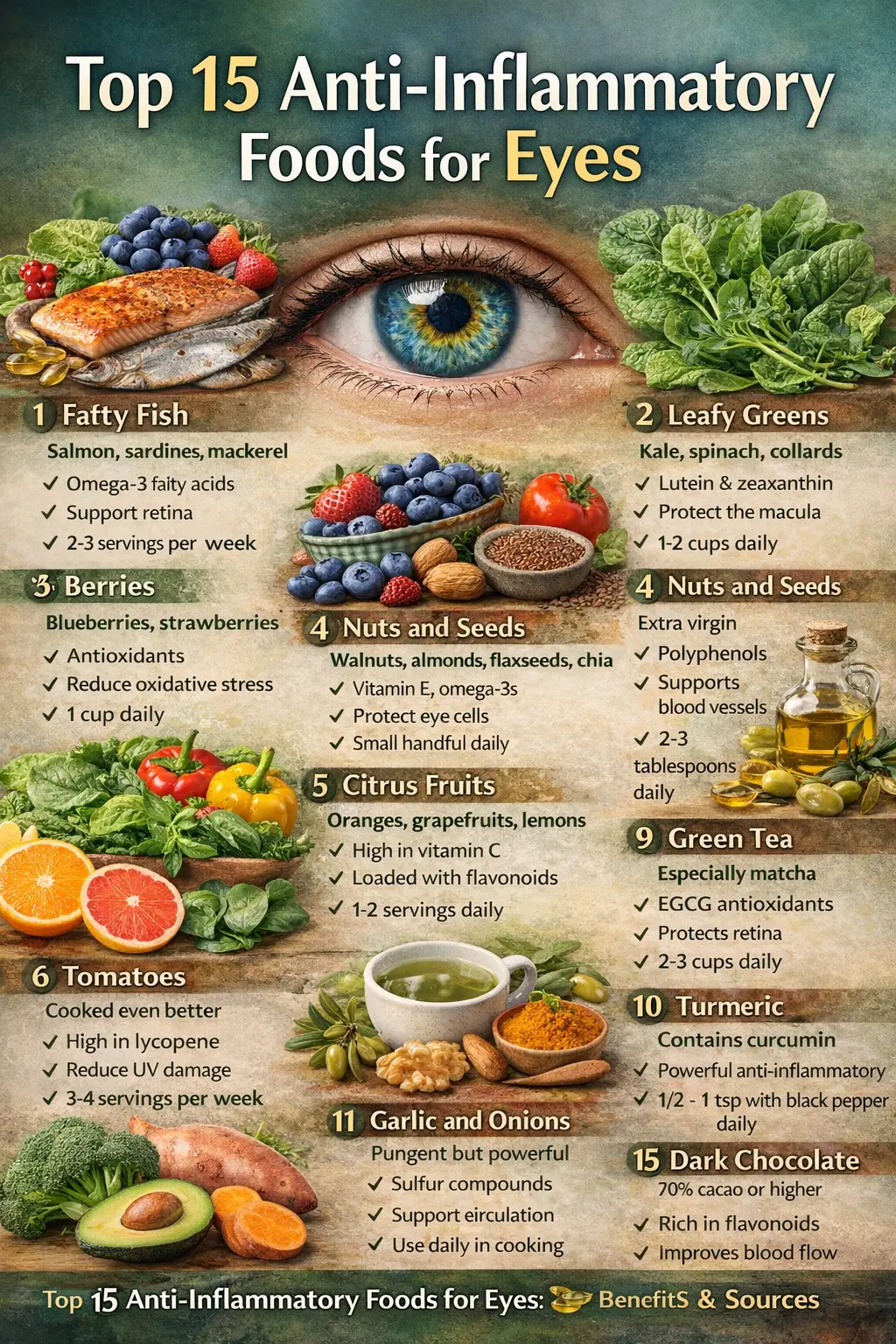
Let’s look at the best foods to reduce eye inflammation.
1. Fatty Fish
Best choices: Salmon, sardines, mackerel
Why they help –
- High in omega-3 fatty acids
- Reduce inflammatory molecules
- Support retina health
- Improve tear quality
How much: 2-3 servings per week
→ Learn more: Omega-3 Fatty Acids and Eye Health: Benefits & Sources
2. Leafy Green Vegetables
Best choices: Kale, spinach, collards
Why they help –
- Packed with lutein and zeaxanthin
- Rich in antioxidants
- Fight free radical damage
- Protect the macula
How much – 1-2 cups daily
Berries
Best choices: Blueberries, strawberries, blackberries
Why do they help –
- Full of antioxidants
- Contain anthocyanins (powerful anti-inflammatories)
- Protect blood vessels
- Reduce oxidative stress
How much – 1 cup daily
Nuts and Seeds
Best choices: Walnuts, almonds, flaxseeds, chia seeds
Why do they help –
- High in vitamin E
- Contain omega-3s (especially walnuts)
- Reduce inflammation
- Protect eye cells
How much – Small handful (1 oz) daily
Olive Oil
Extra virgin is best
Why it helps –
- Contains oleocanthal (an anti-inflammatory compound)
- Rich in polyphenols
- Protects against oxidative damage
- Supports healthy blood vessels
How much – 2-3 tablespoons daily
6. Tomatoes
Cooked tomatoes are even better
Why do they help –
- High in lycopene (powerful antioxidant)
- Reduce oxidative stress
- Protect against UV damage
- Support blood vessel health
How much – 3-4 servings per week
7. Bell Peppers
All colours, especially red
Why do they help –
- Very high in vitamin C
- Contain beta-carotene
- Fight inflammation
- Protect eye tissue
How much – 1 pepper several times weekly
Citrus Fruits
Best choices – Oranges, grapefruits, lemons
Why do they help –
- Loaded with vitamin C
- Contain flavonoids
- Reduce inflammation
- Support collagen in the eyes
How much: 1-2 servings daily
Green Tea
Especially matcha
Why it helps
- Contains EGCG (powerful antioxidant)
- Reduces inflammation
- Protects retinal cells
- May lower eye pressure
How much – 2-3 cups daily
Turmeric
The golden spice
Why it helps –
- Contains curcumin (strong anti-inflammatory)
- Protects against oxidative stress
- May help with uveitis
- Supports eye blood flow
How much – 1/2 – 1 teaspoon daily
Tip – Add black pepper to increase absorption by 2000%!
11. Garlic and Onions
Pungent but powerful
Why do they help –
- Contain sulphur compounds
- Reduce inflammation
- Support circulation
- Lower oxidative stress
How much – Use daily in cooking
12. Avocado
Creamy and nutritious
Why it helps –
- High in lutein
- Contains healthy fats
- Reduces inflammation
- Helps absorb other nutrients
How much –1/2 avocado 3-4 times weekly
13. Sweet Potatoes
Orange = anti-inflammatory power
Why do they help –
- High in beta-carotene
- Rich in vitamins C and E
- Fight free radicals
- Support night vision
How much – 2-3 times weekly
14. Broccoli
Cruciferous superstar
Why it helps –
- Contains sulforaphane (anti-inflammatory)
- High in lutein and zeaxanthin
- Packed with vitamin C
- Protects eye cells
How much – 3-4 servings weekly
15. Dark Chocolate
70% cacao or higher
Why it helps –
- Rich in flavonoids
- Reduces inflammation
- Improves blood flow to the eyes
- Contains antioxidants
How much – 1 oz (small square) daily
→ Complete food list: 10 Best Foods for Eye Health and Better Vision
The Mediterranean Diet for Eye Health
The Mediterranean diet is one of the best anti-inflammatory diets for eyes. Research proves it works!
What Is the Mediterranean Diet?
It focuses on
- Lots of vegetables and fruits
- Whole grains
- Olive oil as the main fat
- Fish and seafood regularly
- Moderate amounts of poultry and eggs
- Small amounts of red meat
- Nuts and legumes
- Herbs and spices
Its limits
- Processed foods
- Red meat
- Refined grains
- Added sugars
Why It Protects Your Eyes
Studies show people who follow the Mediterranean diet have:
- 41% lower risk of late-stage macular degeneration
- Better retinal health
- Less eye inflammation
- Lower risk of diabetic retinopathy
- Healthier blood vessels in the eyes
The National Eye Institute has studied this diet extensively.
Key Principles
- Make plants the star
- Fill half your plate with vegetables
- Eat fruit for dessert
- Snack on nuts
- Use olive oil
- Replace butter with olive oil
- Drizzle on salads
- Cook with it
- Eat fish often
- Aim for 2-3 times weekly
- Choose fatty fish like salmon
- Choose whole grains
- Brown rice over white
- Whole wheat bread
- Oats and quinoa
- Flavour with herbs
- Use garlic, basil, and oregano
- Less salt, more spices
→ Prevention guide: Macular Degeneration Prevention: Diet and Lifestyle Strategies
Foods That Increase Eye Inflammation
To reduce eye inflammation, avoid these foods.
Foods to Limit or Avoid
- Refined Carbohydrates
- White bread
- White pasta
- White rice
- Pastries and cakes
- Sugary cereals
Why they bad: Spike blood sugar, increase inflammation
- Sugary Foods and Drinks
- Soda
- Candy
- Ice cream
- Sweetened coffee drinks
- Energy drinks
Why they’ bad: Cause inflammation, damage blood vessels
- Trans Fats
- Margarine
- Fried foods
- Many packaged snacks
- Frozen pizzas
- Non-dairy creamers
Why they’re bad: Highly inflammatory, damage cells
- Processed Meats
- Hot dogs
- Bacon
- Sausages
- Deli meats
- Jerky
Why they’re bad: High in preservatives and inflammatory compounds
- Excessive Omega-6 Oils
- Corn oil
- Soybean oil
- Vegetable oil
- Sunflower oil (high omega-6)
Why they’re bad: Too much omega-6 compared to omega-3 increases inflammation
Note: You need some omega-6, but most people get too much.
- Excessive Alcohol
- More than 1-2 drinks daily
Why it’s bad: Increases oxidative stress, depletes nutrients
The 80/20 Rule
You don’t have to be perfect! Aim for:
- 80% anti-inflammatory foods
- 20% flexibility for treats
This helps you stick with it long-term.
Supplements to Consider
Along with eating anti-inflammatory foods for eyes, these supplements may help:
Omega-3 Fish Oil
Dose: 1,000-2,000 mg daily
Why: Reduces inflammation, supports the retina
Best for: Dry eyes, AMD prevention
Curcumin (from Turmeric)
Dose: 500-1,000 mg daily
Why: Powerful anti-inflammatory
Best for: General eye inflammation, uveitis
Tip: Take with black pepper extract
Vitamin D
Dose: 1,000-2,000 IU daily
Why: Reduces inflammation, supports immune function
Best for: Dry eyes, overall eye health
Quercetin
Dose: 500 mg daily
Why: Antioxidant and anti-inflammatory
Best for: Allergic conjunctivitis, general inflammation
Always talk to your doctor before starting supplements.
Lifestyle Tips to Reduce Eye Inflammation
Diet isn’t everything. These habits also help reduce eye inflammation:
-
Exercise Regularly
How it helps
- Reduces systemic inflammation
- Improves circulation to the eyes
- Lowers oxidative stress
Recommendation – 30 minutes daily, 5 days weekly
-
Get Enough Sleep
How it helps
- Reduces inflammatory markers
- Allows eye repair
- Decreases oxidative stress
Recommendation – 7-9 hours nightly
-
Manage Stress
How it helps
- Chronic stress increases inflammation
- Relaxation lowers inflammatory chemicals
Try – Meditation, yoga, deep breathing
-
Don’t Smoke
Why it matters
- Smoking massively increases inflammation
- Damages blood vessels in the eyes
- Increases the risk of all eye diseases
→ Learn more: Smoking and Eye Health: Vision Risks and Benefits of Quitting
-
Protect from UV
How it helps
- UV rays cause oxidative damage
- This triggers inflammation
Always – Wear sunglasses outdoors
→ UV guide: UV Protection for Eyes: Complete Guide to Sun Safety
-
Stay Hydrated
How it helps:
- Reduces dry eye inflammation
- Supports tear production
Recommendation – 8-10 glasses of water daily
→ Hydration tips: Hydration and Eye Health: Water’s Role in Vision Wellness
How to Know It’s Working
Signs Your Diet Is Helping
After 4-12 weeks of eating anti-inflammatory foods for eyes, you might notice:
Vision improvements
- Less eye redness
- Reduced dryness
- Better comfort
- Less light sensitivity
- Clearer vision
Overall health
- More energy
- Better sleep
- Less joint pain
- Improved mood
- Weight loss
Medical markers
- Lower inflammatory markers in blood tests
- Better eye exam results
- Stable or improved vision measurements
Track Your Progress
Keep a journal
- Foods you eat
- How do your eyes feel
- Energy levels
- Any symptoms
Get regular eye exams
- Your eye doctor can measure inflammation
- Track disease progression
- Adjust your plan as needed
FAQs about anti-inflammatory foods for eyes
Q: How long until I see results?”
Most individuals begin to see noticeable progress within a month or two. Long-term benefits build over months and years.
Q: Can diet alone prevent eye disease?
A: Diet is very powerful, but it isn’t guaranteed. Combine it with regular eye exams, UV protection, and healthy habits.
Q: Do I have to follow the diet perfectly?
A: No! Even small changes help. Aim for progress, not perfection.
Q: Can I eat any treats?
A: Yes! The 80/20 rule works. Eat anti-inflammatory foods 80% of the time.
Q: Will this help to exist eye disease?
A: It may slow progression and reduce symptoms. But it won’t cure the disease. Always follow your doctor’s treatment plan.
Q: Is the Mediterranean diet expensive?
A: It can be affordable. Focus on beans, seasonal produce, and canned fish. You don’t need expensive ingredients.
Final Thoughts
Eating anti-inflammatory foods for eyes is one of the best things you can do for your vision. These foods protect your eyes from damage, slow the progression of disease, and keep your vision sharp.
The Mediterranean diet is proven to work. It’s delicious, affordable, and benefits your whole body—not just your eyes.
Remember:
- Eat colourful fruits and vegetables
- Choose fatty fish regularly
- Use olive oil
- Avoid processed foods and sugar
- Make it a habit, not a diet
Start with one change today. Your eyes will thank you for years to come!
Medical Disclaimer
This article is for information only. It does not replace medical advice. Talk to your doctor before making major diet changes, especially if you have health conditions or take medications.
https://nextfitlife.com/anti-inflammatory-diet-eyes/

Adel Galal is a health and wellness writer with over 30 years of experience studying and writing about health, fitness, nutrition, and healthy living. He is the founder of NextFitLife.com, where he shares practical, evidence-based guidance to support long-term health at any age. Adel’s mission is simple:
to help people make smarter health choices that fit real life, at any age.