Last Updated: September 7, 2026
Topic: Foods for Healthy Skin
Reading Time: About 16 minutes
Written and Source-Checked by: Adel Galal, Founder and Lead Writer at NextFitLife
Medical Review Status: This article is educational and source-checked. It has not been medically reviewed by a dermatologist, doctor, or registered dietitian.
Healthy skin does not come from one magic berry.
It does not come from a detox drink either.
Your skin needs enough food, protein, fat, vitamins, and minerals.
A varied diet helps provide them.
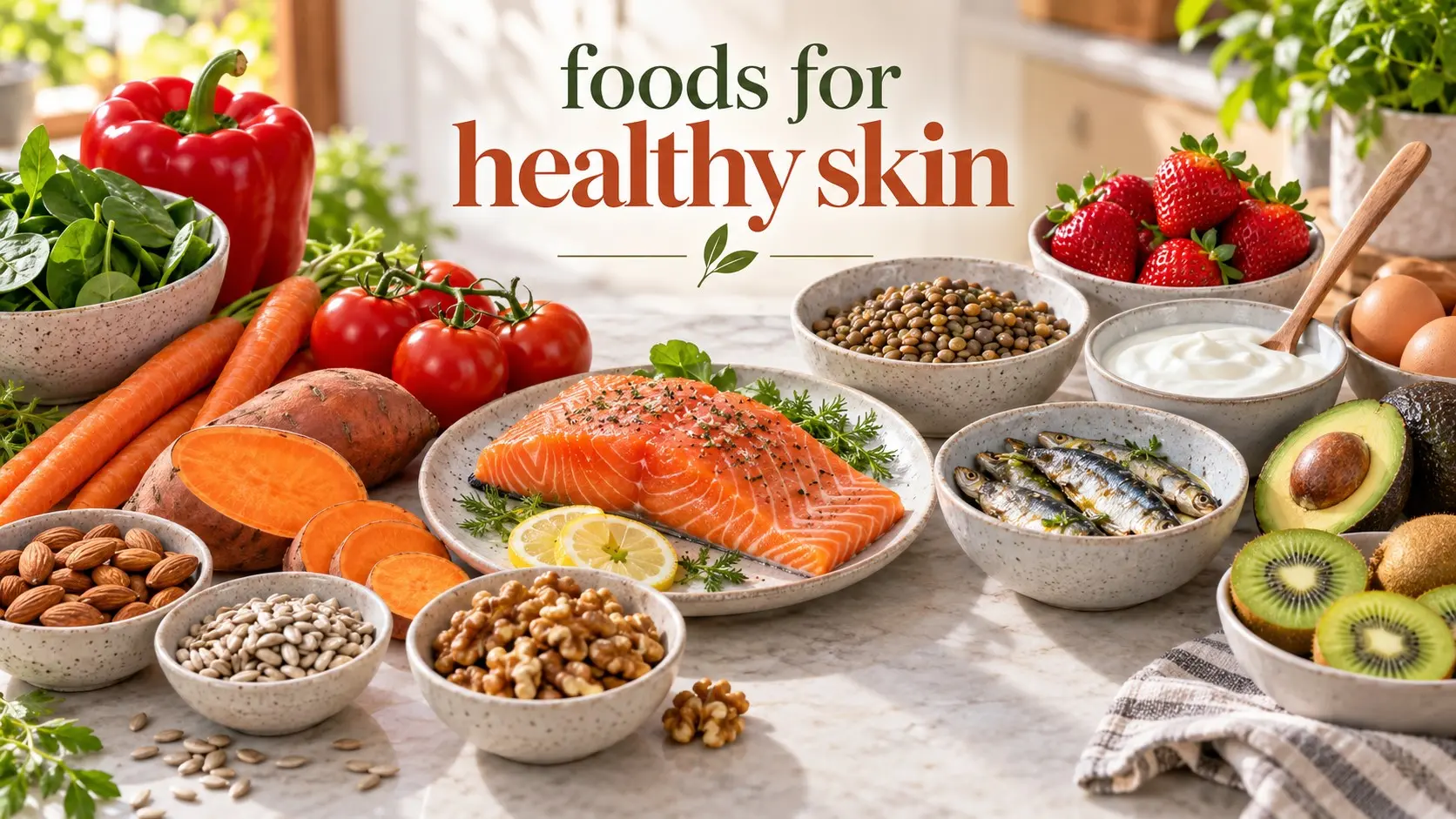
Quick answer: The best foods for healthy skin include salmon, sardines, red bell peppers, kiwi, strawberries, tomatoes, sweet potatoes, carrots, spinach, almonds, sunflower seeds, walnuts, avocado, eggs, and lentils. These foods provide nutrients such as vitamin C, vitamin E, omega 3 fats, zinc, protein, carotenoids, and healthy fats.
Food is only one part of skin health.
For the bigger picture, visit the NextFitLife Skin Health Guide.
You can also use the Healthy Skin 101 Guide for a simple daily skin routine.
Can food really improve your skin?
Food supports your skin.
That is different from saying food cures skin problems.
Your skin needs nutrients to build and maintain tissue.
For example, vitamin C is needed to make collagen.
Zinc is involved in wound healing.
Vitamin E works as an antioxidant.
Essential fatty acids are part of normal cell function.
Protein provides amino acids that the body uses to build tissue.
A diet that gives you enough of these nutrients supports normal skin function.
But food cannot replace:
- Sunscreen
- Moisturizer
- Acne medicine
- Eczema treatment
- Prescription care
- A dermatologist when you need one
No food can make skin poreless.
No food can remove every wrinkle.
No food can guarantee clear skin.
That is not how skin works.
15 foods for healthy skin at a glance
| Food | Main nutrients | Simple way to eat it |
|---|---|---|
| 1. Salmon | Omega-3 fats, protein | Serve with vegetables and rice |
| 2. Sardines | Omega-3 fats, protein, minerals | Add to toast or salad |
| 3. Red bell peppers | Vitamin C, carotenoids | Add raw or cooked to meals |
| 4. Kiwi | Vitamin C | Eat with breakfast or yogurt |
| 5. Strawberries | Vitamin C, plant compounds | Add to oats or yogurt |
| 6. Tomatoes | Lycopene, vitamin C | Use fresh or cooked |
| 7. Sweet potatoes | Beta carotene | Roast or bake |
| 8. Carrots | Beta carotene | Eat raw or cooked |
| 9. Spinach | Carotenoids, vitamin C, folate | Add to eggs, soup, or bowls |
| 10. Almonds | Vitamin E, unsaturated fat | Eat a small handful |
| 11. Sunflower seeds | Vitamin E, healthy fats | Add to salads or oats |
| 12. Walnuts | ALA omega-3, healthy fats | Add to yogurt or snacks |
| 13. Avocado | Unsaturated fat, vitamin E | Add to toast or meals |
| 14. Eggs | Protein, fat, vitamins and minerals | Serve with vegetables |
| 15. Lentils | Protein, zinc, iron, fiber | Add to soup, salad, or bowls |
1. Salmon gives your skin useful fats and protein
Salmon is a strong place to start.
It provides protein.
It also provides EPA and DHA.
These are long-chain omega-3 fatty acids.
Fatty fish such as salmon, mackerel, herring, and sardines are among the major food sources of EPA and DHA.
Essential fatty acids matter for normal cell membranes.
A severe essential fatty acid deficiency can cause rough, scaly skin and dermatitis.
That does not mean salmon cures dry skin.
It means healthy fats belong in a balanced diet.
Easy salmon meal
Serve salmon with brown rice.
Add spinach or broccoli.
Add tomatoes or peppers.
One plate now gives you protein, healthy fats, vegetables, and vitamin C.
2. Sardines are another useful omega-3 fish
Sardines are small.
Nutritionally, they do a lot.
They provide omega-3 fats and protein.
Canned sardines with bones also provide calcium.
Try them:
On toast.
With potatoes.
In salad.
With rice.
You do not need fish every day.
Variety works better.
3. Red bell peppers are packed with vitamin C
Your body needs vitamin C to make collagen.
Collagen is an important structural protein in connective tissue.
Vitamin C also works as an antioxidant.
Red bell peppers are a practical way to get more.
Eat them raw.
Roast them.
Add them to eggs.
Add them to lentils.
Add them to salads.
You do not need a collagen drink to get vitamin C.
Normal food works.
For more options, read the NextFitLife Vitamin C Foods Guide.
4. Kiwi gives you vitamin C in a small fruit
Kiwi is easy.
Cut it.
Scoop it.
Done.
It provides vitamin C and other plant nutrients.
Try kiwi with:
Plain yogurt.
Oats.
Nuts.
Or eat it alone.
The main point is not kiwi itself.
The point is eating a range of fruits and vegetables often.
5. Strawberries add vitamin C and colour
Strawberries are another useful vitamin C food.
They also contain many natural plant compounds.
Add them to:
- Oatmeal
- Plain yogurt
- Whole grain cereal
- Fruit bowls
Frozen strawberries count too.
You do not need fresh berries in winter if they are expensive.
Choose food you can afford and repeat.
6. Tomatoes give you lycopene
Tomatoes contain lycopene.
Lycopene is a carotenoid.
Tomatoes also provide vitamin C.
Use them fresh.
Use canned tomatoes.
Cook them into sauce.
Add them to lentils or beans.
Here is the part that matters.
Do not call tomatoes internal sunscreen.
They are not.
Food cannot replace broad-spectrum SPF 30 or higher when sun protection is needed.
For complete skin protection guidance, see the Skin Health Guide.
7. Sweet potatoes provide beta-carotene
The orange colour tells you something.
Sweet potatoes contain beta-carotene.
Your body can convert beta carotene into vitamin A.
Vitamin A is needed for normal cell growth and function.
Roast a sweet potato.
Add beans.
Add leafy greens.
Add a protein food.
Now you have a full meal.
Do not confuse beta-carotene from food with a high-dose vitamin A supplement.
They are not the same thing.
8. Carrots give you another simple carotenoid source
Carrots also provide beta-carotene.
They are cheap in many places.
They last well.
And they are easy to use.
Eat carrots raw.
Roast them.
Add them to soup.
Add them to rice or lentils.
You do not need a rare superfood for healthy skin.
A carrot works perfectly well as part of a varied diet.
9. Spinach adds several nutrients at once
Spinach gives you carotenoids, folate, vitamin C, and other nutrients.
It also makes meals easy to improve.
Add spinach to:
- Eggs
- Soup
- Pasta
- Lentils
- Rice
- Beans
The goal is not to eat a mountain of spinach.
The goal is to make vegetables normal.
Leafy greens are one easy way to do that.
10. Almonds are a strong vitamin E food
Almonds provide vitamin E.
Vitamin E has antioxidant activity in the body.
It also provides unsaturated fat.
A small handful is enough.
Add almonds to yogurt.
Add them to oats.
Or eat them as a snack.
If you have a tree nut allergy, avoid them.
11. Sunflower seeds make vitamin E easy to add
You do not need nuts to get vitamin E.
Sunflower seeds are another good source.
Use them on:
- Salads
- Oatmeal
- Yogurt
- Grain bowls
Vitamin E is a fat soluble antioxidant.
Your body needs it.
More is not automatically better.
Food is a simple starting point.
12. Walnuts provide plant omega 3 fat
Walnuts contain alpha linolenic acid.
This is called ALA.
ALA is an essential omega 3 fatty acid.
Your body cannot make it.
Walnuts also provide other fats and nutrients.
Add them to:
Oats.
Yogurt.
Salad.
Or eat a small handful.
ALA is not the same as EPA and DHA from fish.
Your body converts only a small amount of ALA to the longer chain forms.
13. Avocado provides unsaturated fat
Avocado contains mostly unsaturated fats.
It also provides vitamin E and other nutrients.
Healthy fats help make a balanced meal.
Use avocado with:
- Eggs
- Beans
- Whole grain toast
- Salad
- Rice bowls
Avocado does not moisturize the skin from the inside like a face cream.
That phrase sounds good in advertising.
It is too simple.
Eat avocado because it is a nutritious food and a useful fat source.
14. Eggs provide protein for normal tissue
Skin needs protein.
Eggs make protein easy to add.
They also provide fat, vitamins, and minerals.
Try eggs with:
- Spinach
- Red peppers
- Tomatoes
- Whole grain toast
- Avocado
This makes a more useful breakfast than relying on a beauty supplement while eating too little food.
Enough protein matters.
Very restrictive eating does not support healthy skin.
15. Lentils provide protein, zinc, iron, and fiber
Lentils deserve a place here.
They provide plant protein.
They also provide iron and some zinc.
Zinc is involved in protein production, cell division, and wound healing.
Lentils work well with vitamin C foods.
Try:
Lentils with tomatoes.
Lentils with peppers.
Lentils with broccoli.
Vitamin C also helps your body absorb plant iron.
Which nutrients matter most for normal skin?
| Nutrient | What it does | Food examples |
|---|---|---|
| Vitamin C | Needed for collagen production and antioxidant function | Peppers, kiwi, strawberries |
| Vitamin E | Fat-soluble antioxidant | Almonds, sunflower seeds, avocado |
| Omega 3 fats | Part of normal cell function and essential fatty acid intake | Salmon, sardines, walnuts |
| Zinc | Supports wound healing, cell division, and protein production | Lentils, seafood, seeds |
| Protein | Provides amino acids used to build tissue | Fish, eggs, lentils, yogurt |
| Carotenoids | Plant pigments with antioxidant activity | Tomatoes, carrots, sweet potatoes, spinach |
Can food make your skin glow?
Glow is not a medical term.
It usually means skin looks rested, smooth, or bright.
A good diet can support normal skin health.
But appearance also depends on:
- Genetics
- Age
- Hormones
- Sleep
- Sun exposure
- Smoking
- Skin conditions
- Skin care
- Medicines
So I would not promise glowing skin from a food list.
I would promise something more useful.
A varied diet supplies nutrients your skin and the rest of your body need.
Can diet help acne?
Sometimes.
But diet is not a complete acne treatment.
The American Academy of Dermatology says research suggests that a low glycemic diet may reduce acne in some people.
Low glycemic foods include many vegetables, beans, and some whole grains.
The evidence is not strong enough to say one diet clears everyone.
AAD also notes an association between cow's milk and acne in some studies.
This does not prove milk causes acne in every person.
The same AAD guidance says studies have not found yogurt or cheese to cause more breakouts.
Do not remove dairy just because you saw an acne video online.
Watch your own pattern.
If you notice the same food seems linked with repeated breakouts, discuss it with a dermatologist or registered dietitian.
Acne treatment still includes proper skin care and medicine when needed.
Does sugar cause acne?
One cookie does not cause everyone's acne.
The better question is your overall eating pattern.
A high-glycemic diet causes blood glucose to rise quickly.
Some studies suggest this pattern may worsen acne in certain people.
That does not mean sugar explains every breakout.
Hormones, genetics, skin products, medicine, and other factors matter too.
Should you stop drinking milk for better skin?
Not automatically.
AAD reports that some studies link cow's milk with acne.
The research does not prove cause and effect.
And dairy does not affect everyone the same way.
If you remove milk, replace the nutrition you lose.
That can include protein, calcium, iodine, vitamin B12, and vitamin D depending on the product.
Do not create a nutrition gap while trying to fix your skin.
Does drinking more water clear your skin?
Water is essential.
Dehydration is not good for your body.
But drinking huge amounts of water does not cure acne.
It does not erase wrinkles.
It does not repair eczema.
Normal hydration matters.
For dry skin, moisturizer works more directly on the skin barrier than drinking extra liters after your fluid needs are already met.
Your fluid needs change with heat, activity, food, pregnancy, and health conditions.
Do collagen foods rebuild facial collagen?
This claim is usually too simple.
Your digestive system breaks dietary protein into amino acids and small peptides.
Your body then uses those building blocks where they are needed.
You do not eat salmon and send its protein directly to a wrinkle.
What makes sense is this:
Eat enough protein.
Get enough vitamin C.
Protect your skin from UV damage.
Do not smoke.
Then let normal biology do its job.
Do you need beauty vitamins for healthy skin?
Usually not if your diet already meets your needs.
Supplements can be useful when they correct a real deficiency.
That is different from taking large doses for cosmetic promises.
Be careful with high doses of:
- Vitamin A
- Vitamin E
- Zinc
- Iron
- Selenium
- Biotin
More is not always safer.
Supplements can also interact with medicine.
Biotin can interfere with some blood tests.
Iron can be harmful when it is not needed.
Start with food.
For more information, use the Nutrition and Vitamins Hub.
What about vegan diets and skin health?
A vegan diet can support healthy skin.
It needs planning.
Useful foods include:
- Lentils
- Beans
- Tofu
- Soy foods
- Nuts
- Seeds
- Whole grains
- Fruit
- Vegetables
- Avocado
Pay attention to protein.
Vegans also need a reliable vitamin B12 source.
Iron, iodine, calcium, vitamin D, zinc, and omega 3 intake can deserve attention too.
Do not assume a plant based diet is nutritionally complete just because it contains vegetables.
What should a skin supporting day of food look like?
You do not need a special skin diet.
Here is a simple example.
Breakfast
Eggs with spinach and red peppers.
Add whole grain toast.
Lunch
Lentils with tomatoes and vegetables.
Add avocado.
Snack
Plain yogurt with strawberries and walnuts.
Dinner
Salmon with sweet potato and leafy vegetables.
Plant-based version
Use tofu, lentils, beans, nuts, seeds, and fortified foods.
This is an example.
It is not a personal meal prescription.
What matters more than any one skin food?
The whole pattern.
Eat enough food.
Eat enough protein.
Eat different vegetables and fruit.
Include beans and whole grains.
Use nuts and seeds.
Include healthy fats.
Eat fish if it fits your diet.
Then take care of your skin from the outside too.
Use gentle products.
Moisturize when needed.
Use broad spectrum SPF 30 or higher when sun protection is needed.
For the full routine, visit Healthy Skin 101.
What foods should you avoid for healthy skin?
I would not create a long banned food list.
That usually makes nutrition harder than it needs to be.
Instead, limit the foods that crowd useful food out of your diet.
Examples include frequent:
- Sugary drinks
- Candy
- Pastries
- Highly refined snacks
- Meals with little protein, fruit, or vegetables
You can still eat dessert.
You can still enjoy food.
Skin health does not require food fear.
Can food protect you from the sun?
No food replaces sunscreen.
This needs to be clear.
Some foods contain carotenoids and antioxidants.
That does not give you reliable SPF protection.
Use food for nutrition.
Use sunscreen, clothing, shade, and sensible sun habits for UV protection.
Can food reverse skin aging?
No.
Aging is normal.
Lines are normal.
Skin changes with age.
Food can support normal nutrition.
It cannot stop time.
For visible skin aging, sun protection matters greatly because UV exposure contributes to premature skin aging.
Do not spend all your money on powders while ignoring sunscreen.
When should skin changes be checked?
Food is not the answer to every skin problem.
See a qualified doctor or dermatologist for:
- Severe acne
- Deep or painful acne
- Scarring acne
- A spreading rash
- Strong swelling
- Blisters
- Signs of infection
- A sore that does not heal
- A changing mole or skin mark
- Persistent severe itching
- Unexplained skin changes
Nutrition cannot diagnose these conditions.
Neither can a beauty blog.
Conclusion
The best foods for healthy skin are not rare.
Salmon gives you healthy fats and protein.
Peppers, kiwi, and strawberries give you vitamin C.
Almonds and sunflower seeds give you vitamin E.
Lentils provide protein and minerals.
Carrots and sweet potatoes provide carotenoids.
Eat a mix.
Then protect your skin from the outside too.
Your next step: Choose 3 foods from this list this week. Add them to meals you already eat. Do not buy a new skin supplement until you have looked at the basics first.
References and Sources
These five sources are open and available to the public.
- American Academy of DermatologyPage: Can the Right Diet Get Rid of Acne?Use: Current dermatologist guidance on diet, glycemic patterns, cow milk, yogurt, cheese, and acne treatment.
Website: AAD.org
- National Institutes of Health Office of Dietary SupplementsPage: Vitamin C Fact Sheet for Health ProfessionalsUse: Vitamin C, collagen production, wound healing, antioxidant function, and food based nutrition.
Website: ODS.NIH.gov
URL: https://ods.od.nih.gov/factsheets/VitaminC-HealthProfessional/
- National Institutes of Health Office of Dietary SupplementsPage: Vitamin E Fact Sheet for Health ProfessionalsUse: Vitamin E antioxidant function, food sources, supplement safety, and nutrient guidance.
Website: ODS.NIH.gov
URL: https://ods.od.nih.gov/factsheets/VitaminE-HealthProfessional/
- National Institutes of Health Office of Dietary SupplementsPage: Omega-3 Fatty Acids Fact Sheet for Health ProfessionalsUse: Omega-3 food sources, essential fatty acids, fish, ALA, EPA, DHA, and deficiency effects on skin.
Website: ODS.NIH.gov
URL: https://ods.od.nih.gov/factsheets/Omega3FattyAcids-HealthProfessional/
- National Institutes of Health Office of Dietary SupplementsPage: Zinc Fact Sheet for Health ProfessionalsUse: Zinc roles in cell division, protein production, immune function, and wound healing.
Website: ODS.NIH.gov
URL: https://ods.od.nih.gov/factsheets/Zinc-HealthProfessional/
Related NextFitLife Guides and Hubs
- Complete Skin Health Guide
- Healthy Skin 101
- NextFitLife Foods and Nutrition Hub
- Nutrition and Vitamins Hub
- Vitamin C Foods Guide
- Magnesium Foods Guide
- Iron and Zinc Foods Guide
- General Wellness and Healthy Lifestyle Hub
Author Bio
Adel Galal is the founder and lead writer of NextFitLife.
He has maintained a personal interest in health, fitness, nutrition, sleep, wellness, skin care, and healthy aging for more than 30 years.
His health and wellness writing experience spans more than 15 years.
These are not medical credentials.
His role is to research common health, food, and beauty questions, compare trusted sources, identify important limits, and explain the evidence in clear language.
NextFitLife aims to avoid miracle skin claims.
The goal is simple.
Explain what food can support.
Explain what it cannot do.
And make clear when medical care matters more than another diet change.
I am not a dermatologist or A doctor, and this content does not replace professional medical advice. This article explains published guidance and does not provide a personal clinical assessment. Always consult qualified medical professionals for diagnosis and treatment of any health condition.
For this topic, Adel Galal is also not a registered dietitian, nutritionist, dermatologist, pharmacist, or licensed healthcare professional.
Skin needs can change with acne, eczema, psoriasis, rosacea, allergies, pregnancy, medicines, food restrictions, medical conditions, and diagnosed nutrient deficiencies.
Learn more about NextFitLife, Adel Galal, the editorial process, and sourcing standards on the About Us page.
Frequently Asked Questions
What are the best foods for healthy skin?
Useful choices include salmon, sardines, peppers, kiwi, strawberries, tomatoes, sweet potatoes, carrots, spinach, almonds, sunflower seeds, walnuts, avocado, eggs, and lentils.
What should I eat every day for healthy skin?
There is no single required food. Eat a varied pattern with vegetables, fruit, protein foods, whole grains, beans, nuts, seeds, and healthy fats.
Which vitamin is most important for skin?
No single vitamin does everything. Vitamin C is needed for collagen production. Vitamin E has antioxidant activity. Vitamin A, zinc, protein, and essential fatty acids also support normal body and skin functions.
What foods contain vitamin C for skin?
Red bell peppers, kiwi, strawberries, citrus fruit, broccoli, and many other fruits and vegetables provide vitamin C.
Which foods provide omega 3 fats?
Fatty fish such as salmon, sardines, mackerel, and herring provide EPA and DHA. Walnuts, chia seeds, and flax provide ALA.
Can food clear acne?
Food alone does not clear every case of acne. A lower glycemic eating pattern may help some people, but effective acne care can also require suitable skin care and medicine.
Does milk cause acne?
Some studies find an association between cow milk and acne, but this does not prove that milk causes acne in everyone. The American Academy of Dermatology notes that yogurt and cheese have not shown the same association.
Does drinking water make skin clear?
Normal hydration supports health, but drinking extra water does not cure acne, eczema, wrinkles, or another skin condition.
Is avocado good for skin?
Avocado provides unsaturated fats, vitamin E, and other nutrients. It can be part of a balanced diet, but it is not an internal moisturizer or skin treatment.
Are eggs good for healthy skin?
Eggs provide protein plus several vitamins and minerals. They can be part of a varied eating pattern that supports normal skin and general health.
Do I need collagen supplements for healthy skin?
No. Collagen supplements are optional. A balanced diet, enough protein, vitamin C, sun protection, sleep, and proper skin care remain important foundations.
Can supplements improve my skin?
Supplements can help when they correct a real nutrient deficiency. High doses are not automatically better and can cause side effects or interact with medicines.

Health & wellness writer with 30+ years of experience in nutrition, fitness, and healthy aging. Founder of NextFitLife.com — evidence-based health guidance.