Published:Sep 18, 2025
Last Updated: July 25, 2026
Next Review: July 2027, or earlier if important calcium, vitamin D, magnesium, kidney, parathyroid, or emergency-treatment guidance changes
Written and Source Checked by: Adel Galal, Founder and Lead Writer at NextFitLife
Review Status: Editorially reviewed against current NIH, MedlinePlus, Endocrine Society, and international hypoparathyroidism guidance. Not medically reviewed by a physician, endocrinologist, nephrologist, registered dietitian, pharmacist, emergency clinician, or medical laboratory professional.
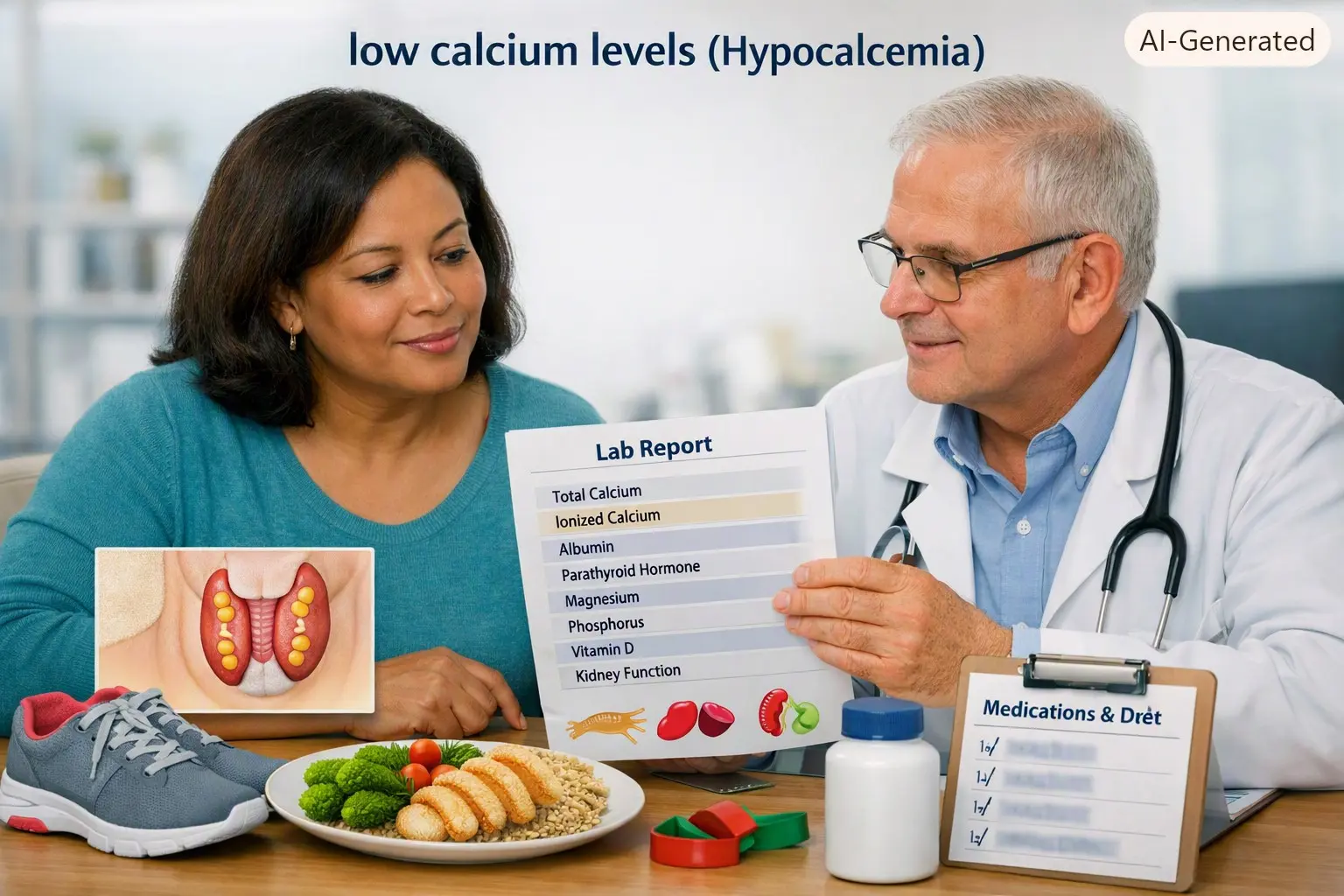
People sometimes use the phrase low calcium disease, but the medical term for a low calcium concentration in the blood is hypocalcemia.
Low calcium levels may cause tingling around the lips, muscle cramps, twitching, spasms, seizures, confusion, or an abnormal heart rhythm. Mild or slowly developing hypocalcemia may cause no obvious symptoms and may be discovered through routine blood testing.
Hypocalcemia has many possible causes. These include vitamin D deficiency, severe magnesium deficiency, underactive parathyroid glands, thyroid or neck surgery, chronic kidney disease, pancreatitis, critical illness, malabsorption, and certain medicines.
A low total-calcium result does not always mean that the biologically active calcium level is low. Albumin affects total calcium, so the result may need to be confirmed with albumin-adjusted calcium or a separate ionized-calcium test.
Treatment depends on the cause and severity. Some mild cases improve after vitamin D, magnesium, or medicine-related problems are corrected. Chronic hypoparathyroidism may require long-term calcium and active vitamin D. Severe symptomatic hypocalcemia may require urgent intravenous treatment and cardiac monitoring.
Quick Answer: What Causes Low Calcium Levels?
Low calcium in the blood is called hypocalcemia. It may cause tingling around the mouth or in the fingers and toes, muscle cramps, spasms, weakness, seizures, or an abnormal heart rhythm.
Common causes include vitamin D deficiency, severe magnesium deficiency, reduced parathyroid hormone after thyroid or neck surgery, chronic kidney disease, pancreatitis, critical illness, malabsorption, and certain medicines.
A low total-calcium result does not always mean active calcium is low. Albumin affects total calcium, so a healthcare professional may repeat the test, review albumin, calculate an adjusted result, or measure ionized calcium.
Treatment depends on the cause and severity. Food and oral supplements may help selected mild or chronic cases, while seizures, severe spasms, breathing difficulty, or heart-rhythm problems may require urgent intravenous calcium and monitored medical care.
When Low Calcium May Be an Emergency
Seek urgent medical care for:
- A seizure
- Severe or continuous muscle spasms
- Hands or feet locking into a cramped position
- Breathing or swallowing difficulty
- Severe throat tightness or voice changes with spasms
- Fainting
- Severe confusion
- Chest pain or serious palpitations
- A suspected abnormal heart rhythm
- Rapidly worsening symptoms after thyroid or neck surgery
Severe hypocalcemia can affect breathing, the nervous system, and the heart’s electrical activity. Emergency treatment may involve intravenous calcium with cardiac monitoring.
What Is Hypocalcemia?
Hypocalcemia means the amount of calcium circulating in the blood is below the appropriate laboratory reference range.
The condition may be:
- Acute: Calcium falls quickly over hours or days.
- Chronic: Calcium remains low for weeks, months, or longer.
- Mild: The laboratory result is slightly low and symptoms may be absent.
- Severe: Calcium is substantially low, symptoms are significant, or the heart, breathing, or nervous system is affected.
The severity of symptoms does not depend only on the number. It also depends on:
- How quickly calcium fell
- The ionized-calcium concentration
- Blood acidity
- Magnesium
- Kidney function
- Medicines
- The underlying condition
A person with slowly developing chronic hypocalcemia may have few symptoms at a level that would cause severe symptoms if calcium fell rapidly.
Low Dietary Calcium Is Not the Same as Low Blood Calcium
This distinction is essential.
Low Dietary Calcium
Dietary calcium insufficiency means a person is not consuming enough calcium to meet long-term nutritional needs.
Over time, inadequate intake can contribute to:
- Reduced bone mineralization
- Osteopenia
- Osteoporosis risk
- Rickets in children
- Osteomalacia in adults
Low Blood Calcium
Hypocalcemia means calcium in the bloodstream is low.
The body normally protects blood calcium by adjusting:
- Parathyroid hormone
- Vitamin D activity
- Kidney calcium handling
- Calcium exchange with bone
Because of this regulation, a person can have poor bone density while the blood-calcium result remains normal.
Does Low Blood Calcium Cause Osteoporosis?
Not automatically.
Long-term poor calcium or vitamin D intake can contribute to weak bones, but osteoporosis is not diagnosed from a low calcium blood test. Many people with osteoporosis have normal total and ionized calcium.
Bone health may require:
- Clinical risk assessment
- A bone-density scan
- Fracture history
- Vitamin D evaluation
- Review of medicines and medical conditions
Read Calcium Deficiency: Symptoms, Causes, and Prevention for a broader nutrition-focused discussion.
Why Does the Body Need Calcium?
About 99% of the body’s calcium is stored in bones and teeth. The remaining calcium circulates in blood and tissues.
Circulating calcium supports:
- Muscle contraction
- Nerve signaling
- Heart-rhythm regulation
- Blood clotting
- Hormone release
- Enzyme function
- Cell communication
The brain, heart, muscles, kidneys, intestines, bones, parathyroid glands, and vitamin D system work together to keep blood calcium within a narrow range.
Total Calcium Versus Ionized Calcium
There are two main ways calcium is measured in the blood.
Total Calcium
Total calcium includes:
- Calcium attached to proteins, mainly albumin
- Calcium attached to small molecules
- Free or ionized calcium
Total calcium is commonly included in a basic or comprehensive metabolic panel.
Ionized Calcium
Ionized calcium is the free calcium that is not attached to proteins.
It is the biologically active form used by:
- Nerves
- Muscles
- The heart
- Blood-clotting pathways
When Might Ionized Calcium Be Measured?
A healthcare professional may consider an ionized-calcium test when:
- Total calcium is abnormal
- Albumin is very low or high
- The total-calcium result does not fit the symptoms
- Kidney or liver disease is present
- The person is critically ill
- Major surgery has occurred
- Abnormal blood proteins may affect the result
- Severe hypocalcemia is suspected
Why Does Albumin Affect Total Calcium?
Albumin is the main protein that binds calcium in the blood.
When albumin is low, total calcium may appear low even when ionized calcium remains within range. This is sometimes called pseudohypocalcemia.
Conditions That May Lower Albumin
- Liver disease
- Kidney disease with protein loss
- Malnutrition
- Inflammation
- Critical illness
- Protein-losing digestive conditions
Albumin-Adjusted Calcium
A laboratory or clinician may calculate an albumin-adjusted calcium estimate.
This can be helpful, but it is still an estimate. Correction formulas may be less reliable in:
- Critical illness
- Advanced kidney disease
- Very abnormal albumin
- Acid-base disorders
- Abnormal blood proteins
Do not diagnose hypocalcemia or decide on supplements using an online corrected-calcium calculator alone.
What Calcium Level Is Considered Low?
There is no single universal cutoff for every person and laboratory.
Reference ranges vary according to:
- The laboratory method
- Age
- Whether total or ionized calcium was measured
- The units used
- Albumin
- Blood pH
Common units include:
- Milligrams per deciliter, or mg/dL
- Millimoles per liter, or mmol/L
Use the reference range printed on your own laboratory report.
Commonly Used Thresholds
Some clinical resources define hypocalcemia as total calcium below approximately 8.5 mg/dL or ionized calcium below approximately 4.6 mg/dL.
These are general thresholds, not personal treatment instructions.
When Is a Low Result More Concerning?
Concern increases when:
- Symptoms are present
- Calcium is falling rapidly
- Ionized calcium is low
- Magnesium is also low
- The electrocardiogram is abnormal
- Recent thyroid or neck surgery occurred
- Kidney failure or critical illness is present
What Are the Symptoms of Low Calcium?
Mild or chronic hypocalcemia may cause no obvious symptoms.
When symptoms occur, they may affect several body systems.
Neuromuscular Symptoms
- Tingling around the lips
- Tingling in the fingers or toes
- Numbness
- Muscle cramps
- Twitching
- Muscle stiffness
- Painful spasms
- Hands or feet drawing into a cramped position
- Tetany
Neurologic Symptoms
- Headache
- Difficulty concentrating
- Confusion
- Irritability
- Seizures
- Reduced consciousness in severe cases
Heart and Circulation Symptoms
- Palpitations
- Faintness
- Low blood pressure in severe cases
- Abnormal heart rhythm
- QT-interval prolongation on an electrocardiogram
Breathing and Throat Symptoms
- Throat spasm
- Voice changes
- Difficulty swallowing
- Difficulty breathing
Possible Chronic Findings
Long-standing hypocalcemia or hypoparathyroidism may be associated with:
- Dry skin
- Coarse hair
- Brittle nails
- Dental changes
- Cataracts
- Calcium deposits in selected tissues
Fatigue, mood changes, brittle nails, and memory complaints are nonspecific and cannot diagnose hypocalcemia.
How Can Vitamin D Deficiency Cause Low Calcium?
Vitamin D helps the intestine absorb calcium from food.
When vitamin D is severely deficient:
- Calcium absorption falls.
- PTH may increase to protect blood calcium.
- The kidneys retain more calcium.
- Calcium may be released from bone.
- Blood calcium may eventually fall when compensation is inadequate.
Who May Be at Risk of Vitamin D Deficiency?
- People with limited vitamin D intake
- People with malabsorption
- People with chronic kidney or liver disease
- Older adults
- People with limited sun exposure
- People taking selected medicines
- People with darker skin living in low-sunlight regions
How Is Vitamin D Status Checked?
The usual blood test is 25-hydroxyvitamin D.
Do not assume that every person with low calcium needs high-dose vitamin D. Treatment depends on:
- The vitamin D result
- Kidney function
- PTH
- Phosphorus
- The cause of hypocalcemia
- Other medicines and health conditions
Read 14 Signs of Vitamin D Deficiency for a broader symptom guide.
How Does Magnesium Deficiency Lower Calcium?
Magnesium helps regulate both the release and action of parathyroid hormone.
Severe magnesium deficiency may:
- Reduce PTH secretion
- Make body tissues less responsive to PTH
- Cause or worsen hypocalcemia
- Prevent calcium from correcting properly
Possible Causes of Low Magnesium
- Persistent diarrhea
- Malabsorption
- Alcohol-use disorder
- Diuretics
- Long-term proton-pump inhibitor use
- Selected cancer treatments
- Kidney magnesium loss
- Poor nutritional intake
Why Magnesium Must Be Checked
Giving calcium without correcting severe magnesium deficiency may not solve the problem.
Do not start high-dose magnesium independently, particularly if you have kidney disease or take medicines that affect electrolytes.
Read Magnesium Deficiency: Symptoms, Causes, and Solutions.
What Is Hypoparathyroidism?
Hypoparathyroidism occurs when the parathyroid glands produce too little parathyroid hormone.
PTH normally helps maintain calcium by:
- Helping the kidneys retain calcium
- Increasing phosphorus excretion
- Supporting activation of vitamin D
- Regulating calcium exchange with bone
Typical Laboratory Pattern
Hypoparathyroidism commonly produces:
- Low calcium
- Low or inappropriately normal PTH
- High phosphorus
Possible Causes
- Thyroid, throat, or neck surgery
- Parathyroid surgery
- Autoimmune disease
- Genetic conditions
- Head-and-neck radiation
- Severe magnesium deficiency
- Inflammatory or infiltrative disease
- Rare mineral-storage disorders
Chronic Complications
Chronic hypoparathyroidism and its treatment may affect:
- Kidney-stone risk
- Kidney calcium deposits
- Kidney function
- Eye health
- Brain calcification
- Quality of life
This is why treatment requires ongoing laboratory and clinical monitoring.
Why Can Calcium Fall After Thyroid or Neck Surgery?
The four parathyroid glands are small and sit close to the thyroid gland.
During surgery, they may be:
- Bruised
- Temporarily deprived of blood flow
- Accidentally removed
- Intentionally removed because of disease
Procedures Associated With Risk
- Total thyroidectomy
- Repeat thyroid surgery
- Parathyroid surgery
- Extensive throat or neck surgery
- Head-and-neck cancer surgery
Symptoms After Surgery
Contact the surgical team promptly for:
- Tingling around the mouth
- Tingling in the fingers or toes
- Muscle cramps
- Facial twitching
- Hand spasms
- Voice or breathing changes
Postoperative hypocalcemia may be temporary or permanent. Follow-up testing determines whether the parathyroid glands recover.
How Does Chronic Kidney Disease Affect Calcium?
The kidneys help regulate calcium, phosphorus, and vitamin D.
Chronic kidney disease may:
- Reduce activation of vitamin D
- Lower intestinal calcium absorption
- Increase phosphorus
- Increase PTH
- Cause complex mineral and bone disorders
Kidney Disease Changes Treatment
People with kidney disease should not self-treat low calcium with large doses of calcium, vitamin D, or magnesium.
Excessive treatment may contribute to:
- High calcium
- High phosphorus
- Kidney stones
- Blood-vessel calcification
- Soft-tissue calcium deposits
Treatment may require coordination between primary care, nephrology, endocrinology, and dietetics.
Pancreatitis, Critical Illness, and Low Calcium
Acute Pancreatitis
Acute pancreatitis can cause hypocalcemia through several mechanisms, including:
- Inflammation
- Fat breakdown and calcium binding
- Low magnesium
- Low albumin
- Critical illness
Low calcium during pancreatitis must be interpreted as part of the full clinical condition.
Critical Illness
Low ionized calcium may occur with:
- Sepsis
- Major trauma
- Severe burns
- Large blood transfusions
- Major surgery
- Critical kidney or liver illness
Hospital treatment focuses on the underlying illness as well as the calcium result.
Blood Transfusions
Citrate used in stored blood products can bind ionized calcium. Rapid or massive transfusion may therefore cause acute hypocalcemia.
Malabsorption and Digestive Disease
Calcium and vitamin D absorption may be reduced by:
- Celiac disease
- Crohn’s disease
- Chronic pancreatitis
- Short-bowel syndrome
- Bariatric surgery
- Other stomach or intestinal surgery
- Severe chronic diarrhea
Clues to Malabsorption
- Persistent diarrhea
- Unintended weight loss
- Greasy or floating stools
- Iron, B12, folate, or vitamin D deficiency
- Low albumin
- Previous gastrointestinal surgery
Treatment must address the digestive condition, not only the calcium result.
Which Medicines May Cause Low Calcium?
Several medicines can reduce calcium directly or through effects on magnesium, vitamin D, bone turnover, or kidney function.
Examples Include:
- Bisphosphonates
- Denosumab
- Calcitonin
- Cinacalcet
- Cisplatin and selected cancer treatments
- Proton-pump inhibitors through magnesium depletion
- Selected anti-seizure medicines through vitamin D metabolism
- Medicines that cause significant kidney electrolyte loss
Higher-Risk Situations
Medicine-related hypocalcemia may be more likely when a person also has:
- Vitamin D deficiency
- Kidney disease
- Low magnesium
- Malabsorption
- Hypoparathyroidism
- Very high bone turnover
Do not stop osteoporosis, cancer, seizure, stomach-acid, kidney, or parathyroid medicine without professional guidance.
Other Possible Causes of Hypocalcemia
Less common causes include:
- Genetic calcium-sensing disorders
- Autoimmune polyglandular syndromes
- Severe liver disease
- Extensive bone formation after treatment of severe hyperparathyroidism
- Acute phosphate loading
- Rare hormone or metabolic disorders
Hungry Bone Syndrome
After surgery for severe hyperparathyroidism, calcium may move rapidly from the blood into bones. This is called hungry bone syndrome.
It may require:
- Frequent calcium testing
- Calcium replacement
- Vitamin D or active vitamin D
- Magnesium monitoring
- Specialist follow-up
Pregnancy, Breastfeeding, and Low Calcium
Pregnancy and breastfeeding do not automatically cause hypocalcemia.
Risk may rise with:
- Severe vitamin D deficiency
- Poor dietary intake
- Malabsorption
- Hypoparathyroidism
- Kidney disease
- Selected medicines
Hypoparathyroidism During Pregnancy
Calcium requirements and hormone patterns change during pregnancy.
Both undertreatment and overtreatment can affect the pregnant person and developing baby, so monitoring may include:
- Calcium
- Phosphorus
- Magnesium
- Kidney function
- Vitamin D treatment
Pregnancy-related calcium treatment should be directed by obstetric and endocrine professionals.
Which Tests May Be Ordered After a Low Calcium Result?
The correct tests depend on symptoms, severity, medical history, and whether the result is acute or chronic.
| Test or Review | What It Helps Assess |
|---|---|
| Repeat total calcium | Confirms whether the result persists |
| Albumin | Helps interpret total calcium |
| Ionized calcium | Measures biologically active calcium |
| PTH | Helps identify a parathyroid-related pattern |
| Magnesium | Detects a cause that may prevent calcium correction |
| Phosphorus | Helps interpret PTH, kidney, and vitamin D patterns |
| 25-hydroxyvitamin D | Assesses vitamin D status |
| Creatinine and eGFR | Evaluates kidney function |
| Electrocardiogram | Assesses heart-rhythm effects such as QT prolongation |
| Urine calcium | Helps monitor selected chronic cases and treatment safety |
| Medication and supplement review | Identifies possible treatment-related causes |
Is a Bone-Density Scan Needed?
A bone-density scan does not diagnose acute hypocalcemia.
It may be considered when there are separate concerns about:
- Osteoporosis
- Fragility fractures
- Long-term steroid use
- Chronic vitamin D deficiency
- Menopause-related bone loss
- Other skeletal risk factors
How Does PTH Help Explain Low Calcium?
PTH should usually rise when calcium is low.
| Calcium | PTH Pattern | Possible Direction |
|---|---|---|
| Low | Low or inappropriately normal | Consider hypoparathyroidism or severe magnesium deficiency |
| Low | Elevated | Consider vitamin D deficiency, kidney disease, malabsorption, or another cause producing secondary PTH elevation |
This table is a simplified guide and cannot replace medical interpretation.
Why Phosphorus Matters
Phosphorus may help separate causes:
- High phosphorus may support hypoparathyroidism or kidney disease.
- Low phosphorus may occur with severe vitamin D deficiency or high PTH activity.
Kidney function and treatment can alter these patterns.
How Is Hypocalcemia Treated?
Treatment depends on:
- Symptoms
- Total and ionized calcium
- How rapidly calcium fell
- Magnesium
- PTH
- Vitamin D
- Kidney function
- The underlying cause
Possible Treatment Components
- Oral calcium
- Vitamin D
- Active vitamin D such as calcitriol
- Magnesium replacement
- Intravenous calcium
- Medicine adjustment under supervision
- Treatment of malabsorption
- Management of kidney disease
- Parathyroid-hormone replacement in selected chronic cases
Treat the Cause, Not Only the Number
Examples include:
- Vitamin D deficiency: Correct vitamin D while monitoring calcium and other minerals.
- Magnesium deficiency: Correct magnesium so PTH can function normally.
- Hypoparathyroidism: Use calcium and active vitamin D, with specialist monitoring.
- Kidney disease: Manage calcium, phosphorus, vitamin D, and PTH as part of kidney care.
- Medicine-related hypocalcemia: Review the medicine and associated risk factors.
- Malabsorption: Treat the digestive condition and replace missing nutrients appropriately.
Oral Calcium Versus Intravenous Calcium
Oral Treatment
Oral calcium may be considered when hypocalcemia is:
- Mild
- Chronic
- Not causing severe symptoms
- Associated with a condition that can be managed outside the hospital
The form, amount, timing, and duration depend on:
- Stomach-acid levels
- Other medicines
- Kidney function
- Dietary intake
- Urine calcium
- The underlying diagnosis
Intravenous Treatment
Intravenous calcium may be required for:
- Seizures
- Tetany
- Severe muscle spasms
- Breathing symptoms
- Significant neurologic symptoms
- Heart-rhythm changes
- Very low calcium
- Rapidly falling calcium
Intravenous calcium requires professional dosing and often cardiac monitoring. It is not a home treatment.
How Is Chronic Hypoparathyroidism Treated?
Conventional treatment often includes:
- Oral calcium
- Active vitamin D
- Magnesium when needed
- Dietary review
- Regular calcium and kidney monitoring
Treatment Goals
The goal is not always to push calcium to the high-normal range.
Clinicians often aim to:
- Control symptoms
- Maintain calcium in a safe range
- Avoid high urine calcium
- Protect kidney function
- Control phosphorus
- Reduce excessive supplement requirements
Parathyroid-Hormone Replacement
Selected adults with chronic hypoparathyroidism may be considered for PTH replacement when conventional treatment does not adequately control symptoms or biochemical abnormalities.
This requires specialist assessment and monitoring.
Which Foods Provide Calcium?
Calcium-rich foods can support general nutrition and may help prevent dietary calcium insufficiency.
They cannot reliably treat severe hypocalcemia, absent PTH, critical illness, or an acute emergency.
Useful Calcium Sources
- Milk
- Plain yogurt
- Cheese in suitable portions
- Fortified soy beverage
- Other calcium-fortified drinks
- Calcium-set tofu
- Sardines with soft edible bones
- Canned salmon with soft edible bones
- Kale
- Bok choy
- Chinese cabbage
- Broccoli
- Fortified cereals and foods
What About Spinach?
Spinach contains calcium, but it also contains a large amount of oxalate, which limits calcium absorption.
Spinach can remain part of a healthy diet, but it should not be presented as one of the most absorbable calcium sources.
Read Nutrition Labels
Fortified foods vary substantially in calcium content.
Check:
- Serving size
- Calcium per serving
- Added sugar
- Sodium
- Whether a fortified drink needs shaking before use
Read What Are Calcium-Enriched Foods? for more food ideas.
Can Low Calcium Levels Be Prevented?
Some causes can be reduced, while others cannot be fully prevented.
Possible Preventive Steps
- Consume adequate calcium for age and health needs
- Use a reliable vitamin D source
- Address chronic diarrhea or malabsorption
- Review medicines that affect calcium or magnesium
- Monitor calcium after thyroid or parathyroid surgery
- Follow kidney-disease treatment plans
- Attend recommended blood tests during osteoporosis or cancer treatment
- Avoid unsupervised high-dose supplement use
Sunlight Is Not a Universal Prescription
The amount of sunlight needed for vitamin D production varies according to:
- Skin tone
- Season
- Latitude
- Age
- Clothing
- Time of day
- Skin-cancer risk
A fixed recommendation such as “10 minutes for everyone” is not reliable or universally safe.
Can Low Calcium Be Cured Permanently?
Sometimes, but not always.
Potentially Reversible Causes
- Vitamin D deficiency
- Magnesium deficiency
- Temporary postoperative parathyroid dysfunction
- Selected medicine effects
- Acute pancreatitis
- Temporary critical illness
Potentially Long-Term Causes
- Permanent hypoparathyroidism
- Genetic calcium disorders
- Advanced chronic kidney disease
- Permanent malabsorption
- Removal of the parathyroid glands
In long-term conditions, the goal may be ongoing control rather than a one-time cure.
The word “cure” should not be used until the underlying cause and expected course are known.
Why Does Treatment Need Monitoring?
Too little treatment may leave calcium dangerously low.
Too much treatment may cause:
- High blood calcium
- High urine calcium
- Kidney stones
- Kidney calcium deposits
- Reduced kidney function
- Constipation or digestive symptoms
- Calcium deposits in soft tissues
Monitoring May Include:
- Total or ionized calcium
- Phosphorus
- Magnesium
- Kidney function
- Vitamin D
- PTH when relevant
- Urine calcium
- Symptoms
- Medicine and supplement doses
Do Not Increase Supplements Because Symptoms Persist
Muscle cramps, tingling, fatigue, and palpitations can have causes other than hypocalcemia.
Increasing calcium without testing may cause harm or delay the correct diagnosis.
When Should You Contact a Healthcare Professional?
Arrange Prompt Assessment for:
- A newly low calcium result
- Repeated low calcium
- Tingling around the mouth
- Frequent muscle cramps or twitching
- New weakness
- Symptoms after thyroid or neck surgery
- Kidney disease
- Persistent diarrhea or malabsorption
- Use of medicines associated with hypocalcemia
- Low magnesium or vitamin D
Seek Urgent Care for:
- Seizures
- Severe spasms or tetany
- Hands or feet locking into a cramped position
- Breathing or swallowing difficulty
- Fainting
- Severe confusion
- Chest pain
- A suspected abnormal heart rhythm
- Rapid worsening after thyroid or neck surgery
Questions to Ask Your Healthcare Team
- Was total or ionized calcium measured?
- What was the laboratory reference range?
- Could low albumin explain the result?
- Should the calcium test be repeated?
- Do I need an ionized-calcium test?
- What are my PTH, magnesium, phosphorus, and vitamin D results?
- Could recent thyroid or neck surgery explain it?
- Could kidney disease contribute?
- Could a medicine be lowering calcium or magnesium?
- Could malabsorption or digestive disease be involved?
- Do I need an electrocardiogram?
- Is oral calcium appropriate?
- Do I need active vitamin D?
- Could magnesium need correction first?
- Will treatment be temporary or long term?
- How often should blood and urine tests be repeated?
- Which symptoms require emergency care?
What Not to Do
- Do not assume that low total calcium always means low ionized calcium.
- Do not assume dietary calcium deficiency and hypocalcemia are the same condition.
- Do not diagnose osteoporosis from a calcium blood test.
- Do not take large calcium, vitamin D, or magnesium doses without guidance.
- Do not stop osteoporosis, cancer, seizure, kidney, or stomach-acid medicine independently.
- Do not treat seizures, severe spasms, or breathing symptoms at home.
- Do not rely on sunlight as the only vitamin D treatment.
- Do not ignore tingling or cramping after thyroid surgery.
- Do not use an online corrected-calcium calculator as a diagnosis.
Key Takeaway
Low calcium in the blood is called hypocalcemia.
It is not the same as simply eating too little calcium, and it is not diagnosed from bone symptoms alone.
Common causes include:
- Vitamin D deficiency
- Severe magnesium deficiency
- Hypoparathyroidism
- Thyroid or neck surgery
- Chronic kidney disease
- Pancreatitis or critical illness
- Malabsorption
- Selected medicines
A low total-calcium result may need confirmation with albumin-adjusted or ionized calcium. PTH, magnesium, phosphorus, vitamin D, kidney function, medicines, surgery history, and symptoms help identify the cause.
Mild or chronic cases may be treated with oral calcium, vitamin D, active vitamin D, magnesium, or treatment of the underlying condition. Severe symptoms may require intravenous calcium and cardiac monitoring.
Recommended next step: Bring the exact calcium result, units, laboratory range, albumin, medicines, supplements, surgery history, and symptoms to a qualified healthcare professional.
References and Sources
MedlinePlus: Calcium Blood Test
MedlinePlus: Ionized Calcium
MedlinePlus: Parathyroid Hormone Test
National Institutes of Health Office of Dietary Supplements: Calcium Fact Sheet for Health Professionals
National Institutes of Health Office of Dietary Supplements: Vitamin D Fact Sheet for Health Professionals
National Institutes of Health Office of Dietary Supplements: Magnesium Fact Sheet for Health Professionals
Endocrine Society: Hypoparathyroidism
International Workshop: Evaluation and Management of Hypoparathyroidism
Related NextFitLife Guides and Topic Hubs
Related Calcium, Vitamin, and Test Guides
- Calcium Deficiency: Symptoms, Causes, and Prevention
- Magnesium Deficiency: Symptoms, Causes, and Solutions
- 14 Signs of Vitamin D Deficiency
- Foods High in Vitamin D
- What Are Calcium-Enriched Foods?
- High Calcium Levels and Cancer: What Your Blood Test May Mean
NextFitLife Topic Hubs
Frequently Asked Questions About Low Calcium Levels
What are low calcium levels?
Low calcium levels, or hypocalcemia, mean the concentration of calcium in the blood is below the appropriate laboratory reference range.
Is hypocalcemia the same as dietary calcium deficiency?
No. Dietary calcium deficiency means calcium intake is inadequate. Hypocalcemia means calcium in the bloodstream is low. A person can have poor bone health while blood calcium remains normal.
What calcium level is considered low?
The cutoff depends on the laboratory, units, age, albumin, and whether total or ionized calcium was measured. Use the reference range printed on your report.
What is ionized calcium?
Ionized calcium is the free, biologically active calcium in the blood. It is used by nerves, muscles, the heart, and blood-clotting pathways.
Can low albumin make calcium appear low?
Yes. Low albumin can reduce total calcium even when ionized calcium remains normal. Albumin-adjusted or ionized calcium may help clarify the result.
What causes low calcium in the blood?
Possible causes include vitamin D deficiency, magnesium deficiency, hypoparathyroidism, neck surgery, kidney disease, pancreatitis, critical illness, malabsorption, and certain medicines.
Can vitamin D deficiency cause hypocalcemia?
Yes. Severe vitamin D deficiency can reduce calcium absorption from the intestine and eventually contribute to low blood calcium.
Can magnesium deficiency lower calcium?
Yes. Severe magnesium deficiency can reduce PTH release and action. Calcium may remain difficult to correct until magnesium is treated.
What is hypoparathyroidism?
Hypoparathyroidism occurs when the parathyroid glands produce too little PTH, causing low calcium and commonly high phosphorus.
Why can calcium fall after thyroid surgery?
The nearby parathyroid glands may be bruised, lose blood supply, or be removed during thyroid or neck surgery, temporarily or permanently reducing PTH.
Can kidney disease cause low calcium?
Yes. Chronic kidney disease can reduce active vitamin D, increase phosphorus, and disrupt PTH and calcium regulation.
Can pancreatitis cause hypocalcemia?
Yes. Acute pancreatitis may lower calcium through inflammation, fat breakdown, low albumin, magnesium problems, and critical illness.
Which medicines may lower calcium?
Examples include bisphosphonates, denosumab, calcitonin, cinacalcet, cisplatin, selected anti-seizure medicines, and medicines that cause magnesium loss.
What symptoms does low calcium cause?
Possible symptoms include tingling around the lips, numbness, muscle cramps, twitching, spasms, confusion, seizures, palpitations, or an abnormal heart rhythm.
Can hypocalcemia cause tingling around the mouth?
Yes. Tingling around the lips and in the fingers or toes is a characteristic symptom of low ionized calcium.
Can low calcium cause muscle spasms?
Yes. Hypocalcemia can increase nerve and muscle excitability, causing cramps, twitching, painful spasms, or tetany.
Can low calcium cause seizures?
Yes. Extremely low or rapidly falling calcium can cause seizures and requires urgent medical treatment.
Can hypocalcemia affect the heart?
Yes. Severe hypocalcemia may prolong the QT interval and contribute to an abnormal heart rhythm.
Does low calcium cause osteoporosis?
Low dietary calcium and vitamin D can contribute to bone loss, but osteoporosis is not diagnosed from low blood calcium. Many people with osteoporosis have normal blood calcium.
Which tests follow a low calcium result?
Testing may include repeat calcium, albumin, ionized calcium, PTH, magnesium, phosphorus, vitamin D, kidney function, and an electrocardiogram when indicated.
Why are PTH and magnesium checked?
PTH shows whether the parathyroid response is appropriate, while severe magnesium deficiency can cause hypocalcemia and prevent successful calcium correction.
Can food correct hypocalcemia?
Food may support mild dietary insufficiency, but it cannot reliably treat severe hypocalcemia, absent PTH, critical illness, or an acute emergency.
Are calcium supplements always needed?
No. Treatment depends on the cause, symptoms, ionized calcium, vitamin D, magnesium, kidney function, and medical history.
When is intravenous calcium required?
Intravenous calcium may be required for seizures, tetany, severe spasms, breathing symptoms, significant neurologic symptoms, heart-rhythm changes, or very low calcium.
Can hypocalcemia be cured permanently?
Reversible causes may resolve after treatment, but permanent hypoparathyroidism, genetic conditions, kidney disease, or chronic malabsorption may require long-term management.
Who may need long-term calcium and active vitamin D?
People with permanent hypoparathyroidism and selected chronic calcium-regulation disorders may need long-term calcium, active vitamin D, and regular monitoring.
When does low calcium require emergency care?
Seek emergency care for seizures, severe spasms, breathing or swallowing difficulty, fainting, severe confusion, chest symptoms, or a suspected abnormal heartbeat.
Medical Disclaimer
All health content on NextFitLife is provided for general educational and informational purposes only. It does not diagnose hypocalcemia, hypoparathyroidism, vitamin D deficiency, magnesium deficiency, kidney disease, pancreatitis, osteoporosis, or another medical condition.
A low total-calcium result may need confirmation with albumin-adjusted or ionized calcium. Treatment depends on the cause, symptoms, kidney function, magnesium, phosphorus, vitamin D, parathyroid hormone, medicines, and medical history.
Do not start or increase calcium, vitamin D, magnesium, or another supplement without professional advice, particularly if you have kidney disease, kidney stones, heart disease, pregnancy, take prescription medicines, or recently had thyroid or neck surgery.
Seek urgent medical care for seizures, severe or continuous spasms, hands or feet locking into a cramped position, breathing or swallowing difficulty, fainting, severe confusion, chest symptoms, or a suspected abnormal heartbeat.

Health & wellness writer with 30+ years of experience in nutrition, fitness, and healthy aging. Founder of NextFitLife.com — evidence-based health guidance.