First published: 2025
Last updated: August 23, 2026
Written and source checked by: Adel Galal, Founder and Lead Writer at NextFitLife
Clinical review status: This article has not been medically reviewed by a dermatologist.
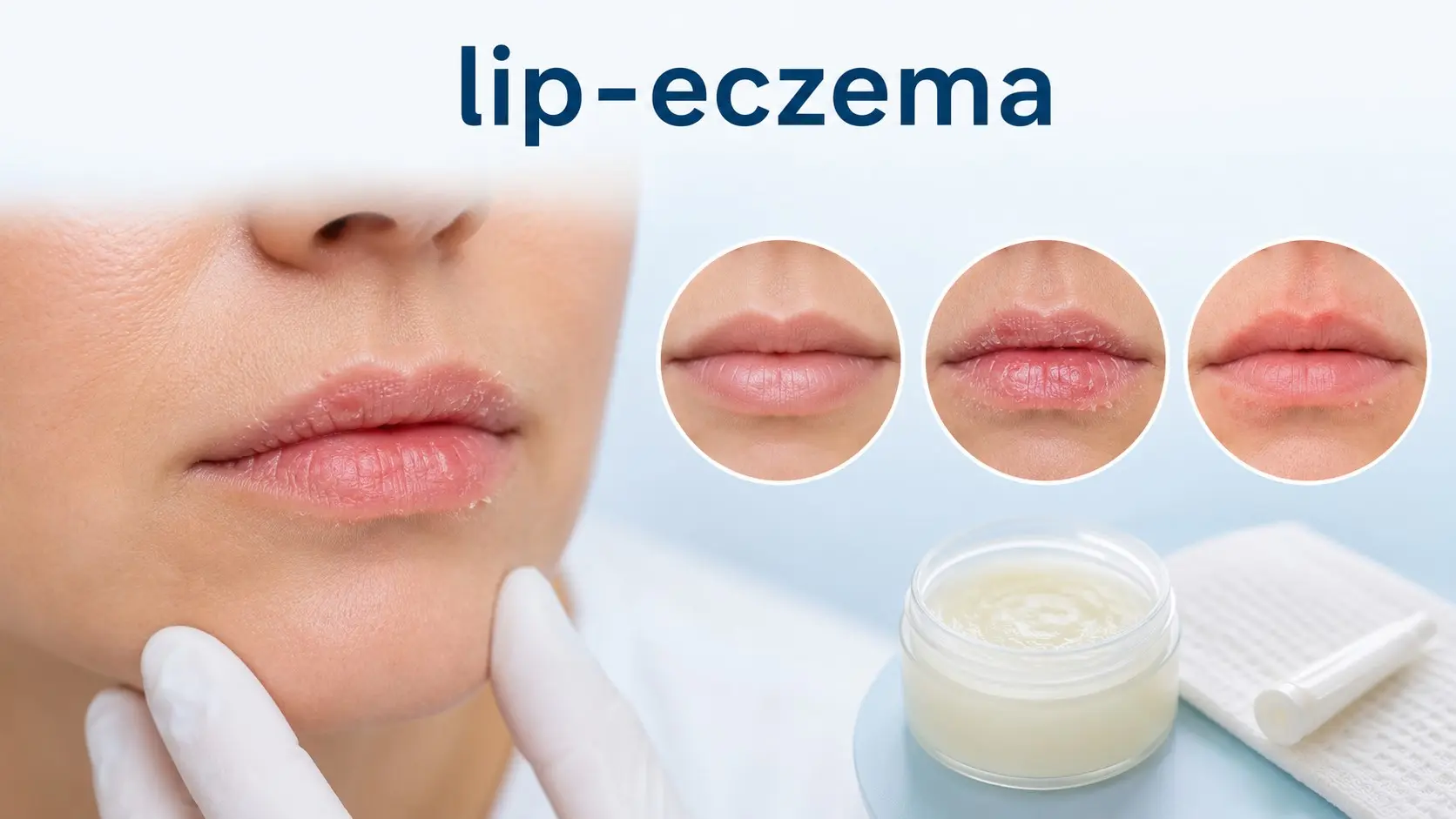
Lip eczema causes dry, red, itchy, sore, cracked, or flaky lips.
Doctors may also call it eczematous cheilitis or lip dermatitis.
It can happen because of atopic eczema.
It can also happen when something irritates your lips or causes an allergic reaction.
Lip balm, lipstick, toothpaste, fragrance, flavoring, saliva, weather, and other products can all play a role.
The best treatment depends on the cause.
For many people, the first useful steps are simple.
Stop products that sting.
Use a plain protective ointment.
Stop licking the lips.
Protect them from wind and sun.
See a dermatologist if the problem keeps returning or does not clear.
Get urgent medical help if lip swelling comes with trouble breathing, swelling of the tongue or throat, faintness, or a rapidly worsening allergic reaction.
What Is the Best Treatment for Lip Eczema?
The best treatment for lip eczema depends on what is causing it.
Start by removing possible irritants.
Use a simple fragrance-free lip balm or plain petrolatum.
Stop licking or biting your lips.
Avoid products that burn or sting.
Protect your lips from sun, wind, and cold.
If the rash does not improve, a dermatologist may check for allergic contact cheilitis.
A doctor may also prescribe a short course of suitable anti inflammatory treatment when needed.
Do not keep treating a persistent lip rash as eczema without getting the diagnosis checked.
What Is Lip Eczema?
Lip eczema is inflammation of the lips.
The medical term is eczematous cheilitis.
Cheilitis simply means inflammation of the lips.
Eczematous cheilitis often affects the red part of the lip and the skin next to it.
It can make the lips:
- Dry
- Red
- Scaly
- Cracked
- Itchy
- Sore
- Burning
There are several forms.
Atopic Cheilitis
Atopic cheilitis is lip eczema linked with atopic dermatitis.
You may also have eczema on your face, hands, arms, or other areas.
The skin barrier is more sensitive.
Dry air, irritation, and products may make symptoms worse.
Irritant Contact Cheilitis
Irritant contact cheilitis happens when something repeatedly irritates the lips.
Common examples include:
- Saliva
- Lip licking
- Strong toothpaste
- Harsh skin products
- Weather exposure
- Some foods
- Repeated rubbing
Allergic Contact Cheilitis
Allergic contact cheilitis happens when the immune system reacts to something touching the lips.
Possible triggers include:
- Lipstick
- Lip balm
- Lip gloss
- Toothpaste
- Mouth care products
- Fragrance
- Flavoring
- Dental materials
- Some medicines
- Nail products transferred from the fingers to the lips
You may have more than one cause at the same time.
What Does Lip Eczema Look Like?
Common lip eczema symptoms include:
- Dry lips
- Flaky lips
- Scaling
- Redness
- Itching
- Burning
- Cracks
- Soreness
- Mild swelling
- Peeling
The skin around the lips may also become irritated.
Symptoms can affect the upper lip, lower lip, or both.
They may come and go.
Can Lip Eczema Burn?
Yes.
Burning and stinging are common with irritated lips.
But a product should not burn because it is "working."
If a balm, lipstick, toothpaste, or cream makes your lips sting, stop using it.
Can Lip Eczema Cause Cracks?
Yes.
Inflamed dry skin can split.
Small cracks can become painful when you smile, eat, or open your mouth.
Cracks only at the corners of the mouth may point to another condition called angular cheilitis.
What Causes Lip Eczema?
There is no single cause.
Finding your trigger matters more than buying many treatments.
1. Atopic Eczema
People with atopic dermatitis may develop eczema on the lips.
The skin barrier is easier to irritate.
This can make the lips more sensitive to weather, saliva, and skin products.
2. Lip Products
Lip products are common triggers.
A product may cause irritation or a true contact allergy.
Possible problem ingredients include:
- Fragrance
- Mint
- Peppermint
- Menthol
- Camphor
- Eucalyptus
- Cinnamon flavor
- Citrus flavor
- Some preservatives
- Some sunscreen ingredients
Even a product labeled natural can cause irritation or allergy.
3. Toothpaste
Toothpaste touches the lips every day.
Flavoring can be a trigger in some people.
Mint, cinnamon, fragrance, and other ingredients may cause irritation or allergy.
If the lips stay irritated, your dentist or dermatologist may ask about toothpaste and mouth care products.
4. Lip Licking
Licking dry lips feels helpful for a moment.
But saliva dries.
Then the lips become dry again.
The repeated wet and dry cycle damages the skin barrier.
This can lead to lip licking dermatitis.
5. Cold, Dry, or Windy Weather
Weather can dry and irritate lips.
Cold air and wind can make existing eczema worse.
Indoor heating can also make the air dry.
6. Sun Exposure
Sun can burn and dry the lips.
Long term sun exposure can also cause a different condition called actinic cheilitis.
This is not simple lip eczema.
7. Saliva and Drooling
Saliva can irritate the skin when it stays on the lips or nearby skin.
This may happen with repeated lip licking or drooling during sleep.
8. Cosmetics and Skin Care
Face creams, makeup, sunscreen, acne products, retinoids, exfoliating acids, and cleansers can reach the lips.
Some can irritate sensitive lip skin.
Keep strong active ingredients away from irritated lips unless a professional tells you to use them there.
9. Medicines
Some medicines can dry or irritate the lips.
Retinoid medicines are a common example.
Do not stop a prescribed medicine without speaking with your healthcare professional.
Is Lip Eczema an Allergy?
Sometimes.
But not every case is allergic.
Contact dermatitis can be either irritant or allergic.
Irritant Reaction
An irritant directly damages the skin barrier.
You do not have to be allergic to it.
Repeated saliva exposure is one example.
Allergic Reaction
An allergy happens when your immune system reacts to a substance.
You may have used the product before without a problem.
An allergy can develop later.
Common Lip Allergy Triggers
Possible triggers include:
- Lipstick
- Lip balm
- Lip gloss
- Fragrance
- Flavoring
- Toothpaste
- Mouthwash
- Dental products
- Sunscreen
- Skin care
- Nail polish or nail products
Do not assume a product is safe because you have used it for years.
What Is Lip Licking Dermatitis?
Lip licking dermatitis is irritation caused by repeated saliva exposure.
The skin becomes wet.
Then it dries.
Then the person licks it again.
This cycle can damage the barrier.
The result may be:
- Redness
- Dryness
- Scaling
- Burning
- Skin irritation around the lips
The irritated area often follows the area the tongue can reach.
How Do You Stop Lip Licking Dermatitis?
The most important step is to reduce lip licking.
Use a simple protective ointment often.
Keep it beside you if licking has become a habit.
A doctor may recommend medicine when inflammation is strong.
The rash can return if the licking starts again.
What Can Look Like Lip Eczema?
Many lip conditions can look similar.
This is why a long lasting rash should not be self diagnosed forever.
Chapped Lips
Chapped lips often follow cold weather, dry air, wind, sun, or repeated licking.
They may improve with simple protection.
Lip eczema tends to be more persistent or recurrent.
It may involve itching, redness, allergy, or eczema elsewhere.
Angular Cheilitis
Angular cheilitis affects the corners of the mouth.
The corners may become:
- Red
- Cracked
- Sore
- Crusted
Saliva often plays a role.
Yeast or bacteria can sometimes infect the cracks.
Treatment depends on the cause.
Cold Sores
Cold sores are caused by herpes simplex virus.
They often begin with tingling, burning, or itching.
Small fluid filled blisters then appear.
Cold sores are contagious.
Lip eczema is not contagious.
Perioral Dermatitis
Perioral dermatitis usually causes small red bumps around the mouth.
It is different from classic lip eczema.
Strong steroid use on the face can worsen some cases.
Persistent bumps around the mouth deserve professional assessment.
Oral Thrush
Thrush mainly affects the inside of the mouth.
It may cause creamy white patches or red sore areas.
It is not the same thing as dry eczema on the outer lips.
Actinic Cheilitis
Actinic cheilitis is caused by long term sun damage.
It often affects the lower lip.
Possible signs include:
- Persistent dryness
- Rough or scaly areas
- Thick patches
- Color changes
- Persistent cracking
- An ulcer that does not heal
- A growing lump
Actinic cheilitis is considered a precancerous condition.
It needs medical assessment.
Do not keep treating a persistent sun damaged lip as eczema.
How Is Lip Eczema Diagnosed?
A dermatologist often starts by looking closely at your lips.
They may ask:
- When did it start?
- Does it itch or burn?
- Do you lick your lips?
- What lip products do you use?
- What toothpaste do you use?
- Do you wear lipstick or lip gloss?
- Do you have eczema elsewhere?
- Does anything make it better or worse?
- Do you work with products that touch your face?
- Do symptoms come back after certain products?
What Is Patch Testing?
Patch testing is a medical test used to look for delayed skin allergies.
A dermatologist places small amounts of possible allergens on your skin.
They stay under special patches.
The skin is checked later for reactions.
Formal patch testing is different from putting a new lip balm on your arm at home.
When Is Patch Testing Useful?
It may help when:
- The lip rash keeps returning
- Removing simple irritants does not solve it
- A cosmetic allergy is suspected
- Toothpaste may be involved
- Several products seem to cause trouble
Finding the trigger can be more useful than adding stronger creams.
Do You Need a Biopsy?
Usually not for ordinary lip eczema.
A dermatologist may consider a biopsy when the diagnosis is unclear or when there is concern about another condition.
A persistent ulcer, lump, or suspicious sun damaged area may need closer evaluation.
How Is Lip Eczema Treated?
Treatment has two main goals.
Repair the skin barrier.
Remove the cause.
1. Stop Irritating Products
If a product burns, stings, or makes the rash worse, stop using it.
You may need a very simple routine for a while.
That may mean stopping:
- Flavored lip balm
- Fragranced lip balm
- Lip plumpers
- Strong lipstick
- Scrubs
- Acids
- Essential oils
- Menthol products
2. Use Plain Petrolatum
Plain petrolatum can help protect dry lips.
It reduces water loss and supports the barrier.
Apply a thin layer several times a day.
Use it before bed.
Choose a product without fragrance or flavor when possible.
3. Use a Simple Fragrance Free Lip Product
A fragrance free lip balm may also help.
Simple ingredients are usually easier to troubleshoot.
Useful barrier ingredients can include:
- Petrolatum
- Mineral oil
- Ceramides
- Dimethicone
- Shea butter when tolerated
If the product stings, stop using it.
4. Stop Lip Licking
This is essential when saliva is the trigger.
Keep a plain barrier ointment nearby.
Apply it when you feel the urge to lick your lips.
5. Protect the Lips from Sun
Use sun protection on the lips when outdoors.
A lip product with suitable SPF can help.
Shade and a wide brim hat add protection.
6. Protect the Lips from Cold and Wind
Use a scarf or face covering in harsh weather.
Apply barrier ointment before going outside.
7. Topical Corticosteroids
A doctor may recommend a mild topical corticosteroid for a short period when eczema is inflamed.
The lips and facial skin are sensitive areas.
Use the strength and duration recommended by your clinician.
Do not keep applying a strong steroid to the lips without medical guidance.
8. Nonsteroid Prescription Treatment
Some people need a prescription nonsteroid anti inflammatory medicine.
A dermatologist may consider medicines such as tacrolimus or pimecrolimus in selected cases.
These are not needed for everyone.
9. Treat Infection When Present
Cracked skin can sometimes become infected.
The correct medicine depends on whether bacteria, yeast, or another cause is involved.
Do not use an antibiotic or antifungal cream just because the lip looks red.
What Should You Put on Lip Eczema?
Keep the routine simple.
For many people, plain petrolatum is a useful first choice.
A fragrance free barrier balm can also help.
The fewer ingredients, the easier it is to identify a trigger.
What Should You Avoid Putting on Lip Eczema?
During a flare, consider avoiding products containing:
- Menthol
- Camphor
- Eucalyptus
- Peppermint
- Mint flavor
- Cinnamon flavor
- Citrus flavor
- Fragrance
- Strong exfoliating acids
- Lip scrubs
- Essential oils
Not every person reacts to every ingredient.
The point is to simplify the routine while irritated skin heals.
Are Natural Remedies Good for Lip Eczema?
Natural does not mean allergy free.
Plant oils, essential oils, herbal extracts, propolis, and flavored products can cause contact reactions in some people.
Do not assume aloe vera, coconut oil, honey, or another home remedy is safer than a simple barrier product.
If you know a product works for your skin and does not irritate it, that is different.
But it is not a universal eczema treatment.
Should You Exfoliate Flaky Lips?
No aggressive scrubbing.
Do not use sugar, salt, toothbrushes, or strong acids on inflamed lips.
Scrubbing can damage the barrier and delay healing.
Let loose skin come away naturally.
Does Drinking More Water Cure Lip Eczema?
No.
Severe dehydration can contribute to dry lips.
But simply drinking extra water does not treat eczema, allergy, or contact irritation.
Drink enough fluid for your normal health needs.
Then treat the skin barrier directly.
What Vitamin Deficiency Causes Lip Eczema?
There is no single vitamin deficiency that normally causes lip eczema.
Nutritional deficiencies can cause some forms of cheilitis or mouth changes.
Examples may include problems with iron or certain B vitamins.
But this is not the same as saying every dry or itchy lip rash is caused by a deficiency.
Do not start high dose supplements just because your lips are dry.
A clinician may order tests if your history or symptoms suggest a nutritional problem.
Do Zinc or Omega Supplements Treat Lip Eczema?
They are not standard treatment for ordinary lip eczema.
Supplements are useful when there is a real nutritional need.
More is not always better.
High doses can cause side effects or interact with medicines.
How Can You Prevent Lip Eczema Flares?
Keep Your Routine Simple
Use fewer products on the lips.
It is easier to spot a trigger.
Use a Barrier Product
Use plain petrolatum or another simple lip barrier when needed.
Do Not Lick Your Lips
Licking is one of the most important avoidable triggers.
Protect Against Weather
Use a barrier before cold or windy weather.
Protect your lips from strong sun.
Watch Toothpaste and Cosmetics
If flares keep returning, write down the products you use.
Look for patterns.
Do Not Keep Switching Products
A new product every few days makes the cause harder to find.
Give your lips a simple routine.
Keep Your Skin Barrier Healthy
Healthy lips are part of healthy skin.
Read our Skin Health Guide for simple barrier care, eczema basics, sun protection, and warning signs.
When Should You See a Dermatologist?
Arrange medical assessment if:
- The rash keeps returning
- Your lips stay inflamed despite simple care
- The problem lasts for several weeks
- You cannot identify the trigger
- The lips are very painful
- You have repeated swelling
- You think toothpaste or cosmetics are causing an allergy
- You may need patch testing
- You have eczema on other parts of your body
When Could It Be an Infection?
Seek medical advice if the lips become:
- Hot
- Very painful
- Increasingly swollen
- Crusted with worsening discharge
- Surrounded by spreading redness
Fever or feeling unwell also needs attention.
When Could It Be Something More Serious?
Have a persistent lip change checked if you notice:
- An ulcer that does not heal
- A growing lump
- Repeated unexplained bleeding
- A persistent thick or rough patch
- Ongoing lower lip changes after years of sun exposure
- Loss of the normal lip border
These signs do not automatically mean cancer.
But they should not be treated as simple eczema without an examination.
When Is Lip Swelling an Emergency?
Get emergency medical help if swelling of the lips occurs with:
- Trouble breathing
- Swelling of the tongue
- Swelling of the throat
- Fainting
- Severe dizziness
- A rapidly worsening allergic reaction
Common Lip Eczema Myths
Myth: Dry lips always mean dehydration
No.
Weather, licking, eczema, contact allergy, skin products, and other causes are common.
Myth: If a lip balm tingles, it is working
No.
Burning or stinging can mean the product is irritating your lips.
Myth: Natural lip balm cannot cause eczema
No.
Natural ingredients can cause irritation or contact allergy too.
Myth: Lip eczema is contagious
No.
Lip eczema is not contagious.
Cold sores are different and can spread to other people.
Myth: Vitamins cure lip eczema
No.
A nutritional deficiency may cause some lip problems, but routine eczema does not have one universal vitamin cure.
Myth: All cracked lip corners are eczema
No.
Cracks mainly at the corners may be angular cheilitis.
References and Sources
The health information in this guide was checked against these open and trusted dermatology and public health sources.
- American Academy of Dermatology: Tips for Healing Dry and Chapped LipsDermatologist guidance on irritating lip product ingredients, useful barrier ingredients, lip licking, sun protection, and when persistent lip problems need assessment.Read the American Academy of Dermatology lip care guide
- American Academy of Dermatology: Patch Testing for Contact DermatitisExplains how formal patch testing identifies delayed skin allergies and how dermatologists use results to help patients avoid triggers.Read the American Academy of Dermatology patch testing guide
- DermNet: Eczematous CheilitisDermatology guidance on atopic cheilitis, irritant contact cheilitis, allergic contact cheilitis, lip licking, symptoms, causes, and assessment.Read the DermNet eczematous cheilitis guide
- NHS: Sore or Dry LipsPublic health guidance on dry lips, lip balm, weather, sun, dehydration, lip licking, allergies, infection signs, and cold sores.Read the NHS sore and dry lips guide
- DermNet: Actinic CheilitisDermatology guidance on chronic sun damage of the lips, warning signs, diagnosis, cancer risk, treatment, and prevention.Read the DermNet actinic cheilitis guide
Conclusion
Lip eczema is often manageable once you find the cause.
Keep lip care simple.
Use a plain barrier.
Avoid products that sting.
Stop lip licking.
Protect the lips from sun and harsh weather.
If the rash keeps returning, consider contact allergy and ask whether patch testing may help.
Do not assume every dry, cracked, or scaly lip is eczema.
Take action today: Simplify your lip routine, remove possible irritants, use a plain protective ointment, and see a dermatologist if your lip eczema does not improve or keeps coming back.
Medical Disclaimer
I am not a licensed healthcare professional, and this content does not replace professional medical advice.
This article explains published guidance and does not provide a personal clinical assessment.
Always consult qualified medical professionals for diagnosis and treatment of any health condition.
This article provides general education only.
It does not diagnose lip eczema, contact allergy, infection, cold sores, actinic cheilitis, skin cancer, or another lip condition.
It does not replace an examination, patch testing, prescription, or individual treatment plan.
Frequently Asked Questions About Lip Eczema
What does lip eczema look like?
Lip eczema can cause dry, red, flaky, cracked, itchy, or burning lips. It may affect the lip itself and nearby skin.
What causes lip eczema?
Common causes include atopic eczema, irritation, allergic contact reactions, lip licking, weather, toothpaste, cosmetics, and lip products.
How do I get rid of eczema on my lips?
Use a simple barrier such as plain petrolatum, stop irritating products, avoid lip licking, and protect your lips from weather and sun. Persistent eczema may need medical treatment.
What is the best lip balm for lip eczema?
A simple fragrance free product is often easiest to tolerate. Plain petrolatum is a common barrier option. Stop any product that burns or stings.
Can toothpaste cause lip eczema?
Yes. Toothpaste ingredients such as flavoring can cause irritation or allergic contact cheilitis in some people.
Can lip balm cause eczema?
Yes. Fragrance, flavoring, preservatives, sunscreen ingredients, and other substances in lip products can cause irritation or allergy.
Does licking your lips cause eczema?
Repeated lip licking can cause irritant contact dermatitis called lip licking dermatitis. Saliva damages the skin barrier through a repeated wet and dry cycle.
Is lip eczema contagious?
No. Lip eczema is not contagious. Cold sores are different and can spread from one person to another.
Is lip eczema the same as chapped lips?
No. Chapped lips are often temporary. Lip eczema may be more persistent and can involve itching, allergy, irritation, or atopic dermatitis.
Is lip eczema the same as angular cheilitis?
No. Angular cheilitis mainly affects the corners of the mouth. Saliva, yeast, bacteria, dental issues, and other factors may be involved.
Can a vitamin deficiency cause lip eczema?
There is no single vitamin deficiency that usually causes lip eczema. Nutritional deficiencies can cause some other types of cheilitis and mouth changes.
Does drinking water cure lip eczema?
No. Normal hydration is important, but drinking extra water does not treat eczema, allergy, or contact irritation.
Can I use hydrocortisone on my lips?
A doctor may advise a mild topical corticosteroid for a short time in some cases. The lips are sensitive, so avoid prolonged or strong steroid use without medical guidance.
Are natural oils safe for lip eczema?
Not always. Natural ingredients can irritate the lips or cause contact allergy. A simple fragrance-free barrier is often easier to evaluate.
What is patch testing for lip eczema?
Patch testing is a medical test used by dermatologists to identify delayed contact allergies that may be causing a recurring lip rash.
When should I see a dermatologist for lip eczema?
See a dermatologist if the rash lasts for weeks, keeps returning, is very painful, does not improve with simple care, or may be caused by contact allergy.
Can a persistent dry lip be skin cancer?
Most dry lips are not cancer. However, persistent rough, scaly, ulcerated, bleeding, or growing areas, especially on a sun exposed lower lip, should be medically assessed.
What is actinic cheilitis?
Actinic cheilitis is long term sun damage of the lip. It is considered precancerous and should be evaluated by a healthcare professional.
When is swollen lip an emergency?
Get emergency help if swollen lips come with trouble breathing, swelling of the tongue or throat, fainting, severe dizziness, or a rapidly worsening allergic reaction.

Health & wellness writer with 30+ years of experience in nutrition, fitness, and healthy aging. Founder of NextFitLife.com — evidence-based health guidance.