Published: Jun 20, 2022
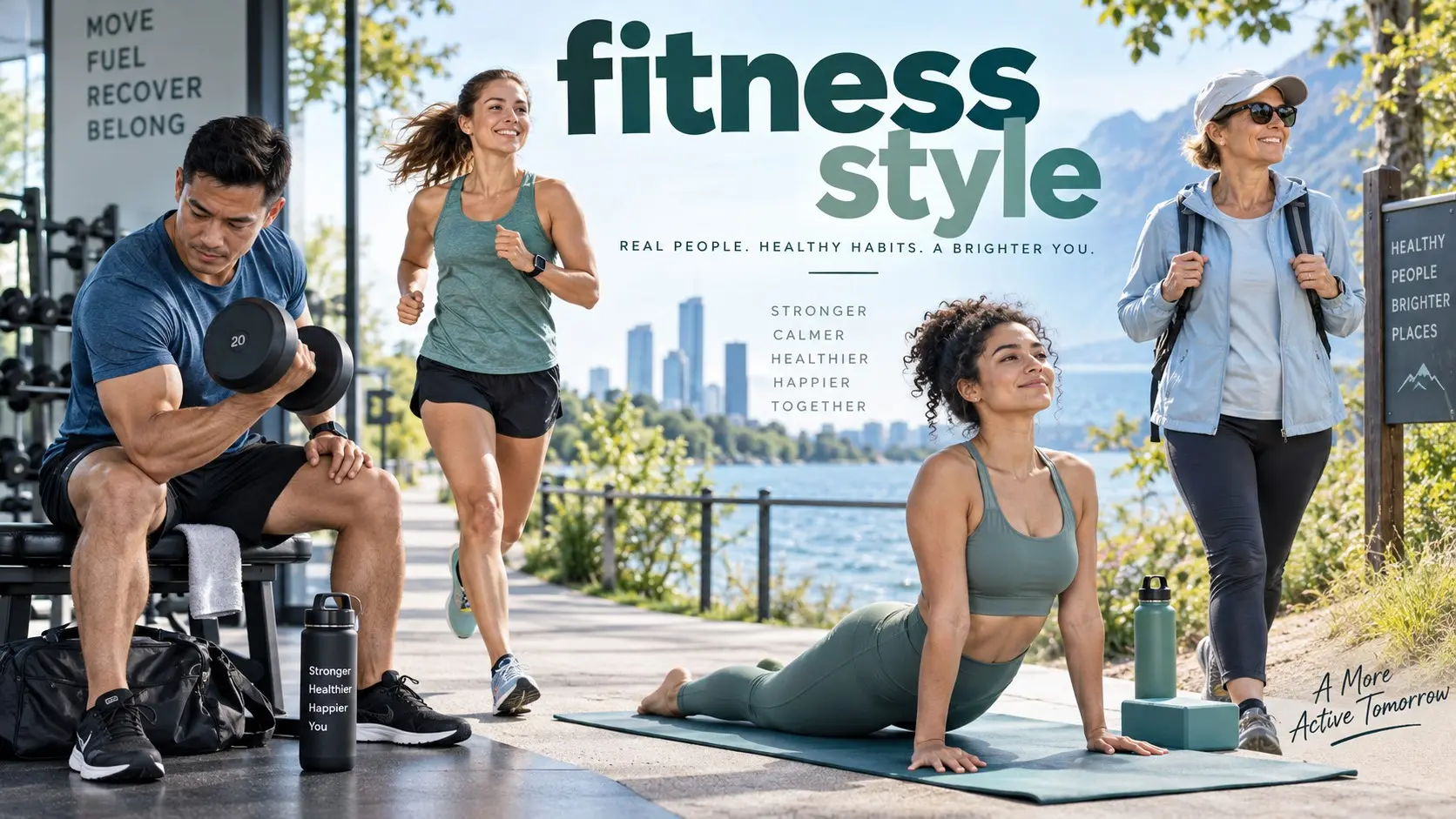
Topic: Fitness Style
Written and Source-Checked by: Adel Galal, Founder and Lead Writer at NextFitLife
Reading Time: About 16 minutes
Fitness style is not about having the most expensive clothes.
It is not about copying a fitness influencer.
And it is not about wearing a certain body size.
Good fitness style starts with one simple idea.
Your clothes should help you move.
They should feel comfortable.
Your shoes should fit your activity.
Your outfit should match the weather.
Then you can add colors, patterns, and details that make the look feel like you.
I have spent more than 30 years personally interested in fitness, health, nutrition, wellness, and healthy aging. Over time, I have learned that simple gear usually works best. A shirt that moves well, shoes that fit, and clothes you do not have to keep fixing during exercise can matter more than a trendy label.
This guide gives you 10 practical ways to build a workout wardrobe that looks good, feels good, and works with your training.
For broader exercise guidance, start with the NextFitLife Fitness Hub.
Quick Answer: What Is Fitness Style?
Fitness style is the way you combine function, comfort, safety, and personal taste in the clothes and shoes you use for exercise.
A good gym outfit should let you:
- Move without restriction
- Stay reasonably comfortable
- Use the right footwear for the activity
- Dress for heat, cold, sun, wind, or rain
- Avoid clothing that catches on equipment
- Feel confident without losing function
Style comes after function.
But style still matters if it helps you enjoy what you wear.
10 Start Fitness Style Tips
1. Choose Function Before Fashion
Start with the workout.
Then choose the clothes.
A running outfit does not have the same job as a lifting outfit.
Yoga clothes do not have the same needs as hiking clothes.
Your workout attire should match how your body will move.
Ask:
- Will I run?
- Will I lift?
- Will I stretch?
- Will I cycle?
- Will I exercise outside?
- Will I use machines?
This simple step can stop you from buying clothes that look good but do not work for your activity.
2. Make Sure Your Clothes Let You Move
Fit matters.
MedlinePlus advises choosing exercise clothing that does not get in the way of movement or catch on equipment.
Your exercise clothing should let you bend, reach, squat, walk, run, and stretch without constant adjustment.
Test clothes before you train.
Try:
- A bodyweight squat
- An overhead reach
- A forward bend
- A walking step
- A lunge
If the waistband rolls badly, the shirt keeps moving, or the fabric pulls at your joints, try another size or design.
There is no perfect fit for everyone.
Some people prefer loose clothes.
Some prefer close-fitting clothes.
Use what lets you move safely and comfortably.
3. Choose Fabric for Comfort, Not Marketing Hype
You will see many claims about moisture wicking fabric.
Some quick drying materials can feel more comfortable because they hold less moisture against the skin.
But do not assume that one fabric will automatically improve your performance.
Research on sports clothing and heat is mixed.
Studies have not shown one fabric type to be universally best for body temperature, comfort, or performance in every exercise setting.
That means the practical choice is simple.
Pick fabric that:
- Feels comfortable against your skin
- Lets you move
- Does not become painfully heavy when wet
- Dries at a useful rate for your activity
- Does not cause rubbing
- Works in your climate
Polyester, nylon, wool, cotton, and blended fabrics can all have a place.
Use your own comfort as part of the decision.
4. Match Your Shoes to Your Workout
Your shoes are one of the most important parts of your fitness style.
They are also equipment.
MedlinePlus recommends matching footwear to the activity.
Running shoes are designed for running.
Walking shoes can have different support and stiffness.
Strength training shoes may need a stable base.
Field sports may require sport-specific footwear.
Your athletic shoes should also fit your feet.
Do not buy a shoe only because:
- It looks good
- Your friend wears it
- An influencer promotes it
- It is expensive
- It has a famous logo
Your feet are not your friend's feet.
Your training shoes should feel comfortable when you try them.
Do not depend on a painful shoe becoming comfortable later.
If you run regularly, read more training guidance in the Cardio and Endurance section.
5. Pick the Right Support for Your Activity
Support needs change with movement.
Running creates different demands than gentle yoga.
Lifting creates different demands than cycling.
For people who wear sports bras, support should match the activity and feel secure without causing painful pressure.
Socks matter too.
They should fit without bunching inside the shoe.
If you get repeated rubbing or blisters, review both your sock and shoe fit.
Also check:
- Waistbands
- Straps
- Seams
- Elastic edges
- Shoe pressure points
A stylish outfit is not useful if it hurts.
6. Dress Differently for Hot Weather
Heat changes what you should wear.
The CDC advises athletes exercising in hot conditions to use loose, lightweight, light colored clothing.
Heat also increases the risk of dehydration and heat illness.
For outdoor summer training, your activewear may include:
- Lightweight clothing
- A breathable top
- Comfortable shorts or light pants
- A hat when appropriate
- Sunglasses with UV protection
- Water
Exercise earlier or later when possible if the middle of the day is very hot.
Slow your pace when needed.
If you feel faint or weak in the heat, stop activity and move to a cool place.
7. Add Sun Protection to Outdoor Fitness Style
Outdoor style should protect more than your appearance.
The American Academy of Dermatology recommends using clothing as part of sun protection.
Sun-protective clothing can include:
- Lightweight long sleeve tops
- Longer pants when practical
- A wide brimmed hat
- Sunglasses with UV protection
- Clothing with a UPF label
Apply broad spectrum, water resistant sunscreen with SPF 30 or higher to skin that clothing does not cover.
Reapply as directed, especially after heavy sweating.
Do not assume a thin shirt blocks all ultraviolet radiation.
8. Use Layers in Cold Weather
Cold weather needs a different approach.
Layers make it easier to adjust as your body warms up.
A simple outdoor setup may include:
- A comfortable first layer
- A warmer middle layer
- An outer layer for wind or rain when needed
MedlinePlus recommends taking layers off as you get warmer.
This can help reduce the problem of becoming very sweaty and then getting cold later.
Gloves, a hat, and ear coverage may also be useful in colder weather.
The right amount depends on the temperature, wind, rain, exercise intensity, and how your body responds.
9. Make Yourself Easier to See in Low Light
Fashion becomes a safety issue when you exercise near traffic.
Dark clothes can be hard for drivers to see in low light.
For early morning or evening outdoor exercise, add reflective gear.
This may include:
- Reflective strips on clothing
- A reflective vest
- A reflective belt
- Bright visible outerwear
- Lights made for runners or cyclists
Do not assume a bright color alone makes you visible enough.
Use routes with safe lighting when possible.
10. Build a Small Wardrobe You Actually Use
You do not need a closet full of fitness fashion.
A small set of pieces can cover most workouts.
A basic workout wardrobe may include:
- Two or three comfortable tops
- Two or three bottoms
- Activity appropriate shoes
- Several pairs of good socks
- A light outer layer
- A weather appropriate layer for outdoor exercise
- A sports bra if you use one
Pick colors that work together.
This makes mixing outfits easier.
You can add one bright color, pattern, or accessory if that makes the outfit feel more personal.
Best Fitness Style for Different Workouts
| Workout | Clothing Goal | Footwear | Useful Extra |
|---|---|---|---|
| Strength Training | Comfortable clothes that allow full movement and stay clear of equipment | Stable training shoes suited to your lifting style | Small towel and water bottle |
| Running | Light clothing that does not rub and feels comfortable when sweaty | Properly fitted running shoes | Reflective items for low light |
| Walking | Comfortable clothes suited to the weather | Supportive walking or suitable athletic shoes | Hat or light outer layer |
| Yoga | Flexible clothes that stay in place during bends and stretches | Usually barefoot unless the class or your needs require otherwise | Yoga mat |
| Cycling | Clothes that do not interfere with the bike or moving parts | Footwear suited to the bike and riding style | Helmet and visibility gear |
| Outdoor Training | Weather appropriate clothing with room to move | Shoes suited to the surface | Sun, rain, cold, or visibility protection as needed |
If strength training is your main activity, explore the NextFitLife Strength Training and Muscle Building Guide.
If you train at home, visit the Home Workouts and Equipment Guide.
For yoga, stretching, and mobility, use the Yoga and Flexibility Guide.
Fitness Style for Hot, Cold, and Wet Weather
| Conditions | Clothing Approach | Safety Focus |
|---|---|---|
| Hot and Sunny | Loose, lightweight clothing with sun protection | Heat, hydration, shade, sunscreen |
| Warm and Humid | Light clothing that feels comfortable when wet | Watch for overheating and heat illness |
| Cold | Several adjustable layers | Stay warm without becoming soaked in sweat |
| Wind | Light protective outer layer | Reduce wind exposure |
| Rain | Weather resistant outer layer when useful | Visibility and slippery surfaces |
| Low Light | Visible clothing and reflective details | Make yourself easier for drivers and others to see |
Does Expensive Activewear Improve Performance?
Not automatically.
Price does not prove performance.
A premium shirt may feel great.
It may fit well.
It may last a long time.
Those can be good reasons to buy it.
But a high price does not mean your body will run faster or lift more.
Research on sports clothing shows that claims about special fabrics and thermoregulation are often more complex than advertising suggests.
Your priorities should be:
- Fit
- Comfort
- Movement
- Activity needs
- Weather
- Safety
- Durability
- Style
What About Compression Clothing?
Compression clothing is popular.
Some people like how it feels.
Some like the support sensation.
But do not assume it will make you faster.
A recent systematic review and meta-analysis of running studies found no clear improvement in race time or time to exhaustion from compression garments.
That does not mean you cannot wear them.
It means performance claims should be treated with care.
Wear compression clothing because it is comfortable for you.
Do not buy it because an advertisement promises major athletic gains.
Can Fitness Style Improve Motivation?
Clothes cannot create fitness.
But they can affect how ready you feel.
You may enjoy training more when:
- Your clothes fit well
- You like the colors
- You do not feel self conscious
- You are not constantly adjusting your outfit
- Your shoes feel comfortable
That is a useful reason to care about style.
But your outfit does not need to look like anyone else's.
Your body does not need to look like a fitness model either.
A good fitness style helps you focus on movement rather than comparison.
For more on sustainable habits, read Fitness Lifestyle Tips.
How to Build Fitness Style on a Budget
You do not need expensive brands.
Start with the pieces that matter most.
Spend First on Shoes When Footwear Matters
A good fitting shoe for your activity is more useful than a logo on a shirt.
Buy Simple Colours That Mix
Black, navy, gray, white, and other neutral colours are easy to combine.
Add one or two colors you enjoy.
Buy for Your Real Workout
Do not buy running gear if you mostly lift.
Do not buy heavy gym clothes if you mostly walk outside in heat.
Use Sales Carefully
A low price is not a good deal if the item does not fit.
Replace Gear When Function Is Gone
Do not replace clothes only because a new style appears.
Replace shoes when they become worn, damaged, uncomfortable, or no longer give you the support you need.
How to Test a Workout Outfit Before You Buy It
Use this simple test.
- Raise both arms.
- Squat.
- Bend forward.
- Take a long step.
- Turn your body.
- Check the waistband.
- Check seams and straps.
- Check whether the fabric feels rough.
- Check whether the clothes become too transparent when stretched.
- Make sure you can move without constant adjustment.
For shoes, walk around.
If possible, make a few movements similar to your activity.
A running shoe should feel good while running.
A training shoe should feel stable during training movements.
How to Care for Workout Clothes
Start with the care label.
Different fabrics need different care.
Good habits include:
- Do not leave wet clothes in a gym bag for days
- Wash sweaty clothes regularly
- Follow the recommended water temperature
- Use the recommended drying method
- Let shoes dry after wet workouts
- Do not store damp shoes in a closed bag
- Check clothes for damaged seams
- Check shoe soles for wear
Good care can help your gear last longer.
Common Fitness Style Mistakes
Choosing Looks Over Movement
If an outfit stops you from moving well, it is not a good training outfit.
Wearing the Wrong Shoes
One pair of shoes may not be ideal for every sport.
Believing Every Fabric Claim
Marketing language can sound more certain than the research.
Wearing Too Much in Hot Weather
Extra clothing can increase heat stress.
Ignoring Visibility Outdoors
Dark clothing can be hard to see near traffic.
Buying Clothing That Hurts
Pressure, rubbing, or painful straps are not signs that the clothing is working.
Comparing Your Body With Models
Fitness clothes should fit your body.
Your body does not need to fit an advertisement.
When Should Clothing or Shoes Make You Stop Exercising?
Stop and check your gear if you develop:
- Sharp foot pain
- New numbness
- Persistent tingling
- Severe rubbing
- Large blisters
- Loss of circulation feeling
- A shoe that feels unstable
- Clothing that catches on equipment
Persistent pain should not be solved only by buying different clothes.
If pain continues, talk with a qualified healthcare professional.
A Simple Fitness Style Checklist
| Question | What You Want |
|---|---|
| Can I move freely? | Yes, without painful pulling or restriction |
| Does it fit my workout? | The clothing and shoes match the activity |
| Will I be comfortable when sweaty? | The fabric and fit remain tolerable during exercise |
| Does it match the weather? | Enough protection from heat, cold, rain, and sun |
| Can others see me outdoors? | Reflective or visible details when needed |
| Do the shoes feel good now? | No need to wait for painful shoes to become comfortable |
| Do I like how it looks? | The style feels like you |
Conclusion: Make Fitness Style Work for You
Fitness style should help you move, not distract you from moving.
Choose clothes that fit.
Choose shoes for your activity.
Dress for the weather.
Use sun protection outdoors.
Add visibility when light is low.
Be careful with performance claims.
Then add the colors and details that make you feel good.
Your next step: check the workout outfit you use most. Ask whether the fit, shoes, comfort, and weather protection match what you actually do. Change one thing that would make your next workout easier.
References and Sources
- MedlinePlus, Exercise Clothing and ShoesPractical guidance on exercise clothing, fit, fabrics, activity specific shoes, outdoor layers, and visibility.MedlinePlus Exercise Clothing and Shoes
- Centers for Disease Control and Prevention, Heat and AthletesGuidance for exercising safely in hot weather, including lightweight clothing, hydration, timing, and warning signs.CDC Heat and Athletes
- American Academy of Dermatology, What to Wear to Protect Your Skin From the SunGuidance on UPF clothing, hats, sunglasses, fabric coverage, and sun protection for outdoor activity.AAD Sun Protective Clothing Guidance
- National Library of Medicine, The Role of Sports Clothing in Thermoregulation, Comfort, and Performance During Exercise in the HeatOpen research review showing that fabric, comfort, heat, and performance claims are complex and that no single sports fabric is universally superior.Sports Clothing and Exercise Review
- National Library of Medicine, Compression Garments and Running PerformanceOpen systematic review and meta analysis finding no clear improvement in race time or time to exhaustion from compression garments.Compression Garments and Running Performance Review
Explore More NextFitLife Fitness Guides
- NextFitLife Fitness Hub
- What Is Physical Fitness?
- Fitness Lifestyle Tips
- Strength Training and Muscle Building Guide
- Cardio and Endurance Guide
- Home Workouts and Equipment Guide
- Yoga and Flexibility Guide
- Physical Fitness and Mental Health
About the Author
Adel Galal is the founder and lead writer of NextFitLife.com.
Adel has maintained a personal interest in health, fitness, nutrition, sleep, wellness, and healthy aging for more than 30 years.
His health and wellness writing experience spans more than 15 years.
His role at NextFitLife is to research topics, compare reputable sources, organize evidence, identify important limits, and explain complex information in simple language.
His fitness content focuses on realistic movement, strength, cardio, mobility, recovery, exercise habits, equipment, and practical choices that fit normal adult life.
Before focusing on NextFitLife, Adel spent 29 years working in information technology management. That work developed skills in research, data review, structured problem solving, information management, and clear communication.
These skills support his research and publishing work.
They are not medical qualifications.
This content is for general educational purposes and does not replace professional medical advice, diagnosis, or treatment. Consult an appropriately qualified healthcare professional for personal medical concerns. This article explains published guidance and does not provide a personal clinical assessment. Always consult qualified medical professionals for diagnosis and treatment of any health condition.
Learn more about Adel Galal, NextFitLife, source checking, corrections, and editorial standards on the About Us page.
Frequently Asked Questions About Fitness Style
What does fitness style mean?
Fitness style is the way you combine workout clothing, footwear, comfort, safety, weather needs, and personal taste. The best fitness style lets you move freely and suits your activity.
What should I wear to the gym?
Wear comfortable clothes that allow your full range of motion and do not catch on equipment. Choose shoes that match your activity. Strength training, running, cycling, and court sports can have different footwear needs.
What fabric is best for workout clothes?
There is no single fabric that is best for every person or workout. Quick-drying synthetic fabrics can be comfortable for sweaty exercise, while other fabrics may work well in different climates. Fit, construction, comfort, and weather also matter.
Are moisture wicking clothes better for exercise?
Moisture wicking clothes can feel more comfortable because they are designed to move moisture away from the skin and dry quickly. However, research does not show that one fabric automatically improves exercise performance in every setting.
Do compression clothes improve workout performance?
Not reliably. Research in runners has not shown a clear improvement in race time or time to exhaustion from compression garments. Some people still prefer their feel or support.
Do I need expensive workout clothes?
No. Fit, comfort, movement, suitable footwear, and weather protection matter more than brand price. A simple outfit can work very well.
Should running shoes be different from gym shoes?
Often, yes. Running shoes are designed for repeated forward movement and impact. Strength or general training shoes may provide a different type of stability. Match the shoe to your main activity.
What should I wear when exercising in hot weather?
The CDC recommends loose, lightweight, light colored clothing for exercise in hot conditions. Drink enough water, slow down when needed, and try to exercise during cooler parts of the day.
What should I wear for outdoor exercise in the sun?
Consider lightweight sun protective clothing, sunglasses with UV protection, and a wide brimmed hat when practical. Apply broad spectrum, water resistant sunscreen with SPF 30 or higher to exposed skin.
How can I make my gym clothes look more stylish?
Start with simple pieces that fit well. Pick colors that work together. Add one color, pattern, headband, watch, jacket, or other detail you enjoy. Style should not reduce comfort or safety.
How many workout outfits do I need?
There is no required number. A few tops and bottoms that mix together, good socks, suitable shoes, and weather layers can be enough for many people.
When should I replace workout shoes?
Replace them when the soles are badly worn, the structure is damaged, they become uncomfortable, or they no longer provide the support you need. Replacement timing depends on the shoe and how you use it.

Health & wellness writer with 30+ years of experience in nutrition, fitness, and healthy aging. Founder of NextFitLife.com — evidence-based health guidance.