
Published on: Jul 30, 2024
Updated: November 1, 2026
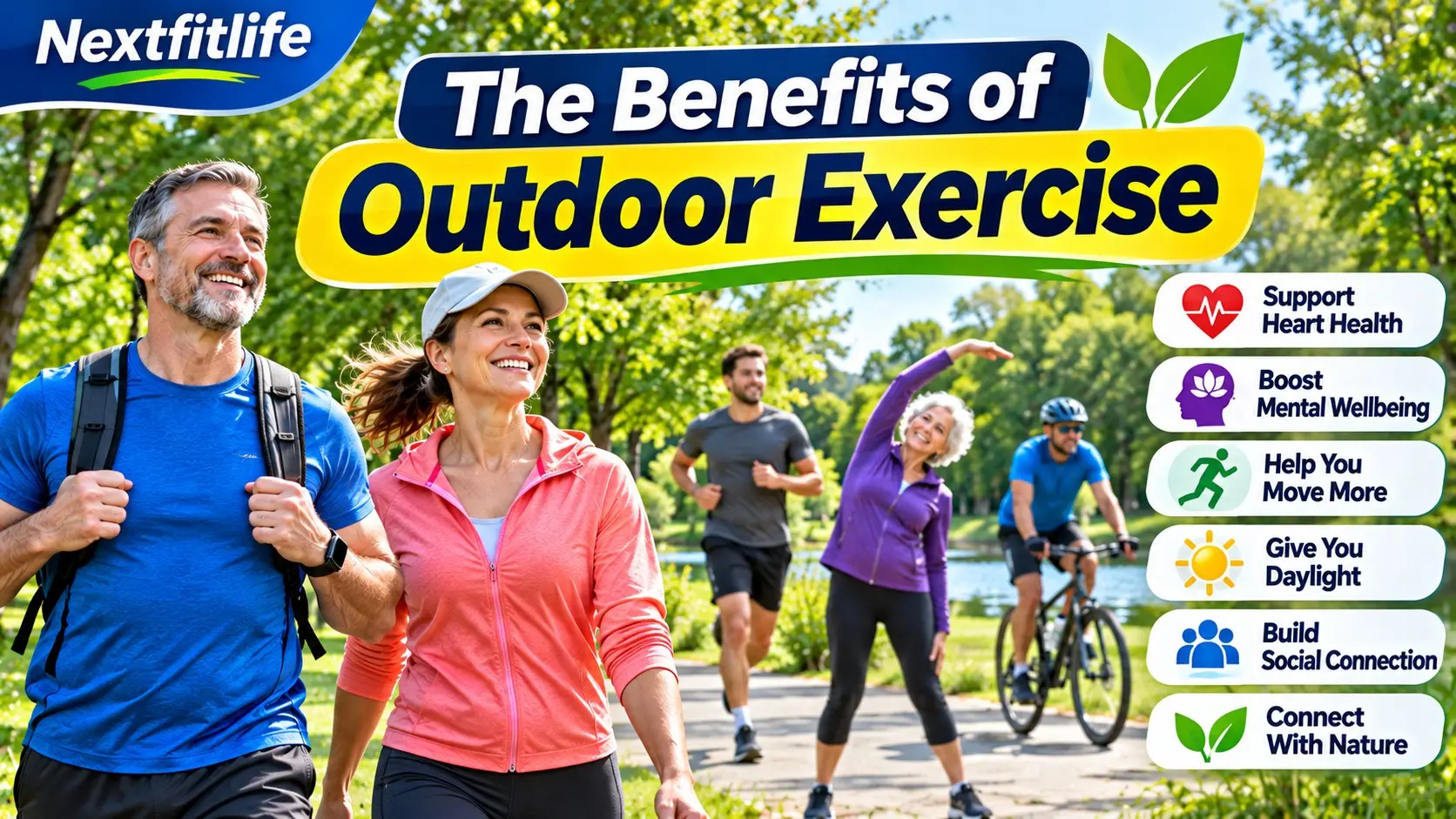
The Benefits of outdoor exercise go beyond simply changing where you work out.
When you walk, run, cycle, stretch, or do strength work outside, you still get the normal benefits of physical activity. But you may also gain something extra from daylight, green space, fresh scenery, social contact, and a setting that simply feels more enjoyable.
That does not mean outdoor exercise is always better than indoor exercise. A gym, home workout, or treadmill can be just as useful if it helps you stay active.
The real advantage is finding a setting that makes movement easier to repeat.
This article is for general information and education. It does not replace medical advice, diagnosis, or treatment.
Quick answer: The Benefits of Outdoor Exercise include the normal heart, muscle, and fitness benefits of physical activity plus possible added gains in mood, wellbeing, enjoyment, social connection, and exposure to natural environments. Recent reviews suggest green exercise can improve mental wellbeing and may help people enjoy and maintain activity. Outdoor exercise is not automatically better for every person, and it does not guarantee more calorie burn, stronger immunity, or perfect vitamin D levels.
Safety first: Outdoor exercise brings weather, heat, cold, air pollution, traffic, uneven surfaces, insects, and sun exposure into the picture. Choose a safe route, adjust intensity for the weather, carry water when needed, use sun protection, and move indoors when outdoor conditions are unsafe.
Table of Contents
- What counts as outdoor exercise?
- Is outdoor exercise better than indoor exercise?
- 17 benefits of outdoor exercise
- Supports heart health
- Builds aerobic fitness
- May improve mental wellbeing
- May reduce stress
- Can improve mood
- Can make exercise more enjoyable
- May help you move more
- Adds daylight exposure
- Provides varied terrain
- Can support balance and coordination
- Creates social opportunities
- May reduce boredom
- Can support healthy aging
- Offers low-cost exercise options
- Can break up sitting
- May support better routines
- Connects exercise with nature
- Outdoor exercise and mental health
- Outdoor exercise and vitamin D
- Outdoor exercise and immunity
- Outdoor versus indoor calorie burn
- Best outdoor workouts
- Outdoor safety
- Frequently asked questions
What Counts as Outdoor Exercise?
Outdoor exercise can be almost any form of movement done outside.
Examples include:
- Walking
- Jogging
- Hiking
- Cycling
- Outdoor yoga
- Bodyweight exercise
- Park workouts
- Sports
- Outdoor fitness equipment
You do not need a mountain trail.
A local park, quiet street, garden, beach path, or outdoor fitness area can work.
Is Outdoor Exercise Better Than Indoor Exercise?
Not always.
Both can improve health if the workout is appropriate and consistent.
The physical benefits mainly come from being active.
The outdoor setting may add extra value through green exercise, daylight, scenery, enjoyment, and social connection.
A 2026 meta-analysis found that green exercise improved well-being and positive affect compared with indoor exercise.
Still, indoor exercise has important advantages.
It gives you climate control, predictable surfaces, easier access to equipment, and fewer weather problems.
The best setting is the one that helps you exercise safely and regularly.
17 Strong Benefits of Outdoor Exercise
1. Supports Heart Health
Outdoor walking, cycling, jogging, and similar activities can provide moderate or vigorous aerobic exercise.
That matters because regular physical activity helps support heart and blood vessel health.
CDC recommends adults work toward at least 150 minutes of moderate aerobic activity each week.
2. Builds Aerobic Fitness
A brisk outdoor walk or bike ride challenges your heart and lungs.
Over time, this can improve endurance.
The outdoor setting is not what creates the fitness benefit. The movement does.
3. May Improve Mental Wellbeing
This is one of the strongest reasons to consider exercise in nature.
A 2026 systematic review and meta-analysis found that green exercise improved wellbeing and positive mood compared with indoor exercise and non-exercise conditions.
The effect varies from person to person, but the overall direction is encouraging.
4. May Reduce Stress
Nature exposure and physical activity may work together to make a walk or workout feel restorative.
A 2026 review of green and blue space experiments found that brief nature exposure often reduced stress and supported psychological restoration.
This does not mean a park walk treats chronic anxiety or another mental health condition by itself.
5. Can improve mood
Outdoor workouts may improve positive affect and reduce negative affect.
That can make outdoor movement useful on days when you feel mentally tired or stuck indoors.
6. Can Make Exercise More Enjoyable
Enjoyment matters because people are more likely to repeat activities they like.
A park walk may feel less repetitive than walking on the same treadmill every day.
Changing scenery can also make a long session feel easier to tolerate.
7. May Help You Move More
A 2026 review of community based outdoor physical activity programs found that green exercise interventions could improve physical activity participation.
That is useful because the best workout is often the one you actually keep doing.
8. Gives You Daylight Exposure
Outdoor exercise gives you natural daylight.
Daylight helps provide environmental timing cues to your body clock.
Morning and daytime light exposure can be useful for circadian timing.
That does not mean every outdoor workout will fix poor sleep.
9. Adds Varied Terrain
Outdoor routes can include:
- Small hills
- Grass
- Paths
- Curves
- Different surfaces
This can make movement more varied than a flat treadmill.
But uneven terrain also raises trip risk, so harder is not always better.
10. Can Challenge Balance and Coordination
Outdoor paths may require small changes in foot placement and direction.
This can add coordination demands.
People with poor balance should choose flat, predictable surfaces rather than seeking unstable terrain for extra challenge.
11. Creates Social Opportunities
Outdoor exercise makes it easy to join:
- Walking groups
- Running groups
- Cycling clubs
- Outdoor classes
- Community fitness programs
Social contact can make activity more enjoyable and may help people keep showing up.
12. May Reduce Workout Boredom
You can change the route, scenery, distance, pace, and location without changing the basic activity.
This variety can make a simple walking habit feel less repetitive.
13. Can Support Healthy Aging
Walking, cycling, and outdoor strength exercise can all contribute to an active lifestyle as you age.
Adults 65 and older still need aerobic activity, strength work, and balance activities.
Outdoor exercise can provide part of that plan.
For a senior walking routine, see Walking Exercise for Seniors.
14. Offers Low-Cost Exercise Options
Walking outdoors can cost almost nothing once you have suitable clothing and shoes.
Parks and outdoor fitness equipment can also provide free activity spaces in many areas.
A 2026 systematic review found outdoor fitness equipment programs improved physical activity and several physical fitness outcomes.
15. Can Break Up Sitting
A short walk outside is an easy way to interrupt a long period at a desk.
You do not need to turn every movement break into a workout.
Five or ten minutes outside can still add useful daily activity.
16. May Support Better Exercise Routines
Outdoor movement can become attached to parts of your day.
You might:
- Walk after breakfast
- Take a lunchtime park walk
- Cycle after work
- Walk after dinner
A routine that fits naturally into your day is easier to repeat.
17. Connects Physical Activity With Nature
This is the benefit indoor exercise cannot fully copy.
Nature exposure adds trees, plants, water, sky, changing light, sounds, and weather to the movement experience.
Recent research suggests natural environments may provide additional mental wellbeing benefits beyond exercise alone.
17 Benefits at a Glance
| Benefit | What Helps | Key Note |
|---|---|---|
| Heart health | Aerobic activity | Not unique to outdoors |
| Fitness | Walking, cycling, running | Depends on effort |
| Wellbeing | Green exercise | Good evidence |
| Stress | Nature exposure | May help |
| Mood | Exercise plus nature | May improve |
| Enjoyment | Scenery and variety | Personal |
| Activity level | Accessible outdoor options | May support adherence |
| Daylight | Outdoor time | Useful for body clock cues |
| Terrain | Outdoor routes | Can add challenge |
| Balance | Varied surfaces | Safety comes first |
| Social contact | Groups and parks | Can aid consistency |
| Less boredom | Changing scenery | Personal preference |
| Healthy aging | Regular movement | Strength still needed |
| Low cost | Walking and parks | Often free |
| Sitting breaks | Short outdoor walks | Easy to add |
| Routine | Habit cues | Repeatability matters |
| Nature connection | Green and blue spaces | Possible extra wellbeing benefit |
Outdoor Exercise and Mental Health
This is where the outdoor setting may add the most value.
A 2026 systematic review of 51 studies found that green exercise improved wellbeing, positive affect, and negative affect compared with indoor exercise, built environments, and no exercise.
Another 2026 network meta analysis also found green exercise performed better than indoor exercise for symptoms of depression and anxiety.
Those findings are promising, but they should not be turned into a claim that nature is a medical treatment for everyone.
Exercise can support mental health. Clinical depression, severe anxiety, or other mental health conditions may still require professional care.
Can Nature Reduce Stress?
It may.
A recent review of experiments involving green and blue spaces found that brief exposure often improved mood and stress recovery.
More natural settings such as forests, lakesides, and greener environments often performed better than heavily built spaces.
That does not mean a city park is useless.
Use the best green space you can access safely.
Does Outdoor Exercise Improve Anxiety?
The answer is promising but not simple.
Some reviews report improvements in anxiety symptoms with green exercise.
Other studies find mixed results.
A 2026 review of outdoor physical activity in university students found positive results for stress, mood, and wellbeing, but no consistent conclusion for anxiety.
So it is better to say outdoor exercise may help rather than guarantee it.
Does Outdoor Exercise Help Depression?
Physical activity can support mental health, and green exercise may offer extra benefit for some people.
A 2026 meta-analysis found green exercise improved depression and anxiety outcomes compared with control and performed better than indoor exercise.
Outdoor exercise can be one supportive tool, but it should not replace needed mental health care.
Does Outdoor Exercise Improve Sleep?
Regular physical activity can support sleep.
Outdoor activity also gives you daylight exposure, which can help your body's timing system.
But it is too strong to say that outdoor exercise automatically produces better sleep than indoor exercise for everyone.
Sleep also depends on:
- Stress
- Caffeine
- Sleep schedule
- Medical conditions
- Medications
- Light exposure at night
Does Outdoor Exercise Increase Vitamin D?
Sunlight can help the skin produce vitamin D.
But outdoor exercise does not guarantee adequate vitamin D.
Vitamin D production varies with:
- Season
- Time of day
- Cloud cover
- Clothing
- Skin exposure
- Skin pigmentation
- Latitude
- Age
- Sunscreen use
Do not use vitamin D as a reason to exercise in strong sun without protection.
Should You Skip Sunscreen to Make Vitamin D?
No.
Do not trade sun safety for a vitamin claim.
Protect your skin when UV exposure is significant.
Vitamin D can also come from food and supplements when medically appropriate.
Does Outdoor Exercise Boost Immunity?
Regular moderate physical activity can support normal immune function.
But there is not strong evidence that exercising outside has a special immune boosting effect compared with exercising indoors.
The live version of this article made claims about increased white blood cells, natural killer cells, microbes, and up to 50 percent fewer respiratory infections.
Those claims are too specific to present as a proven benefit of the outdoor setting itself.
The safer message is simple: regular physical activity supports overall health, whether you do it outside or inside.
Does Fresh Air Improve Lung Function?
Not automatically.
Outdoor air can be cleaner than some indoor spaces, but it can also contain:
- Air pollution
- Smoke
- Pollen
- Dust
- Cold dry air
People with asthma or allergies may actually feel worse outdoors under certain conditions.
Check air quality and pollen when those are problems for you.
Does Outdoor Exercise Burn More Calories?
Not automatically.
The old article suggested outdoor workouts could burn 10 to 15 percent more calories than similar indoor sessions.
That should not be treated as a general rule.
Energy use depends on:
- Speed
- Incline
- Wind
- Terrain
- Body size
- Workout duration
- Exercise type
A hilly outdoor walk may be harder than a flat treadmill walk.
But a hard treadmill session can also be much harder than an easy park walk.
Can Outdoor Exercise Improve Balance?
Outdoor terrain can add balance and coordination demands.
That can be useful for people who already have good control.
But unstable terrain is not automatically healthier.
If fall risk is high, choose a flat, well-lit path and practice specific balance exercises separately.
Is Outdoor Walking Better Than Treadmill Walking?
Both are useful.
Outdoor walking offers:
- Scenery
- Green space
- Natural daylight
- Changing terrain
- Social opportunities
Treadmills offer:
- Climate control
- Predictable surfaces
- Controlled speed
- Controlled incline
- Easy access in bad weather
Use both if you enjoy them.
Best Outdoor Exercises for Beginners
1. Walking
Start with 10 to 20 minutes if you are inactive.
For a structured plan, see Daily Walking Challenge.
2. Easy Cycling
A bike ride can provide aerobic activity with less impact than running.
3. Park Strength Training
Use:
- Bench sit to stands
- Wall or rail push ups
- Calf raises
- Step ups
4. Outdoor Yoga or Mobility
Choose a flat, clean surface.
Keep the practice simple if the ground is uneven.
5. Hiking
Start with easy routes before adding steep hills or long distances.
Read Long Distance Walking before planning very long routes.
A Simple 30 Minute Outdoor Workout
| Time | Activity |
|---|---|
| 0 to 5 min | Easy walk |
| 5 to 10 min | Brisk walk |
| 10 to 15 min | Easy walk or gentle hill |
| 15 to 18 min | Bench sit to stands and wall push ups |
| 18 to 25 min | Brisk walking |
| 25 to 30 min | Easy cool-down walk |
Outdoor Exercise for Weight Loss
Outdoor exercise can support weight management by increasing physical activity.
The setting itself does not create weight loss.
Your results still depend on:
- Total activity
- Food intake
- Sleep
- Medications
- Body size
- Health conditions
For a walking based plan, see Walking Routine to Lose Weight.
Outdoor Exercise for Seniors
Outdoor walking can support mobility and aerobic activity in later life.
But older adults should also include strength and balance training.
Choose:
- Flat routes
- Good lighting
- Safe shoes
- Moderate temperatures
- Nearby support if balance is limited
See Walking Exercise for Seniors.
Outdoor Exercise and Children
Outdoor play can support movement and reduce sitting time for children.
A 2025 systematic review found outdoor active play was associated with healthier movement patterns in children, although much of the evidence was observational.
For children, fun and safety matter more than turning outdoor play into a strict workout.
Outdoor Exercise in Hot Weather
Heat can make exercise harder and more dangerous.
In hot conditions:
- Exercise earlier or later in the day.
- Use shade.
- Reduce intensity.
- Drink according to your needs.
- Wear light clothing.
Stop for confusion, fainting, severe weakness, or severe dizziness.
Outdoor Exercise in Cold Weather
Cold can also change the workout.
Wear layers, keep wet clothing under control, and choose safe surfaces.
Ice is not an exercise challenge.
Move indoors if footing is unsafe.
Outdoor Exercise and Air Pollution
Outdoor exercise is not always the healthiest choice when air quality is poor.
Heavy exercise makes you breathe more air, so pollution exposure can increase.
On bad air days, choose an indoor option when possible.
Outdoor Exercise and Allergies
Pollen can make outdoor exercise uncomfortable for some people.
If you have seasonal allergies:
- Check pollen conditions.
- Choose another time of day when helpful.
- Use prescribed treatment correctly.
- Exercise indoors on severe days.
Outdoor Exercise and Asthma
Outdoor exercise is possible for many people with asthma.
But cold air, pollen, pollution, or intense exercise can trigger symptoms.
Use your prescribed asthma action plan and do not rely on “fresh air” as treatment.
How Much Outdoor Exercise Do You Need?
There is no separate outdoor exercise quota.
The general physical activity target matters more.
CDC recommends adults aim for at least:
- 150 minutes of moderate aerobic activity each week
- 2 days of muscle strengthening activity
Outdoor activity can provide some or all of that aerobic time.
Do You Need to Exercise Outside Every Day?
No.
You can mix indoor and outdoor sessions.
A practical week might include:
- Outdoor walks
- Home strength training
- An indoor workout in bad weather
- A weekend hike or bike ride
Consistency matters more than location.
How to Make Outdoor Exercise a Habit
Choose a Nearby Route
The easier it is to reach, the more likely you are to use it.
Keep an Indoor Backup
Weather should not destroy your routine.
Try Indoor Walking Exercise when outside is not practical.
Walk With Someone
Social exercise may feel easier to maintain.
Use a Regular Time
Attach the activity to breakfast, lunch, or the end of work.
Start Small
A 10 minute outdoor walk is better than a one hour plan you never begin.
Common Outdoor Exercise Myths
Myth 1: Outdoor Exercise Always Burns More Calories
Not true. Intensity, terrain, speed, and duration determine energy use.
Myth 2: Outdoor Exercise Automatically Boosts Immunity
Regular physical activity supports health, but outdoor location itself is not a proven special immune treatment.
Myth 3: Sunshine Guarantees Enough Vitamin D
Vitamin D production varies widely.
Myth 4: Fresh Air Always Helps the Lungs
Pollution, smoke, pollen, and cold air can make outdoor breathing harder.
Myth 5: Uneven Terrain Is Always Better
It can add challenge, but it also increases trip risk.
Myth 6: Nature Can Replace Mental Health Treatment
Outdoor activity can support wellbeing, but serious mental health conditions may need professional care.
Myth 7: You Must Exercise Outdoors Daily
A mixed indoor and outdoor plan can work very well.
Outdoor Exercise Safety Checklist
- Choose a safe route.
- Check weather conditions.
- Use sun protection when needed.
- Adjust exercise in heat or cold.
- Check air quality if pollution is a concern.
- Consider pollen if you have allergies.
- Wear suitable shoes.
- Carry water for longer or hotter sessions.
- Use reflective clothing in low light.
- Keep your phone available when walking alone.
- Use flat terrain if balance is poor.
- Move indoors when conditions are unsafe.
Conclusion
The Benefits of Outdoor Exercise are real, but they do not need exaggerated claims to sound impressive.
Moving outside can give you the normal benefits of exercise plus green space, daylight, changing scenery, social opportunities, and a setting that may improve mood and enjoyment.
Outdoor exercise does not automatically burn more calories, guarantee enough vitamin D, strengthen immunity more than indoor exercise, or cure anxiety and depression.
The real value is simpler: if being outside helps you move more, enjoy exercise more, and keep showing up, it can become a powerful part of your fitness routine.
Your next step: take one workout outside this week. Start with a 20-minute walk in a safe green space and notice how the setting affects your mood, effort, and desire to do it again.
References and Sources
- Centers for Disease Control and Prevention. What You Can Do to Meet Physical Activity Recommendations.
https://www.cdc.gov/physical-activity-basics/guidelines/index.html - World Health Organization. WHO Guidelines on Physical Activity and Sedentary Behaviour.
https://www.who.int/publications/b/55501 - Liu J, Sun H, Wang J, Dong X, Samsudin S. Effects of Green Exercise on Mental Health: A Systematic Review and Meta Analysis, 2026.
https://pubmed.ncbi.nlm.nih.gov/42058299/ - Liang X, Wei Y, Min Y. Comparative Efficacy of Green Exercise Versus Indoor Exercise for Depression and Anxiety: Systematic Review and Network Meta-Analysis, 2026.
https://pubmed.ncbi.nlm.nih.gov/42293588/ - The Effects of Community-Based Green Exercise on Health, Wellbeing, and Physical Activity Participation. Systematic Review and Meta-Analysis, 2026.
https://pubmed.ncbi.nlm.nih.gov/41370711/ - Understanding Acute Mental Health Effects of Blue and Green Space Exposure Through Experimental Approaches. Scoping Review, 2026.
https://pubmed.ncbi.nlm.nih.gov/42837880/ - Tang Y, et al. Effectiveness of Outdoor Fitness Equipment Intervention on Health Outcomes: Systematic Review and Meta-Analysis, 2026.
https://pubmed.ncbi.nlm.nih.gov/41810291/ - Green space Exposure and Associated Health Outcomes: A Systematic Review of Reviews.
https://pmc.ncbi.nlm.nih.gov/articles/PMC12426596/
Internal Links + Hub
- NextFitLife Fitness Hub
- Fitness Program Guide
- Walking Routine to Lose Weight
- Daily Walking Challenge
- Long Distance Walking
- Best Exercises to Do While Walking
- Indoor Walking Exercise
- Walking Exercise for Seniors
- Getting Fit at 60
- Chair Yoga for Seniors
- Simple Strength Training Exercises at Home
- How to Maintain Muscle Mass
About the Author
Adel Galal is the founder and lead writer of NextFitLife.com and the founder of Parnthub.com.
He is a father of four, three sons and a daughter, and a grandfather of four, with more than 33 years of hands-on family experience. Adel is based in Cairo, Egypt.
He has maintained a personal interest in health, fitness, nutrition, sleep, mobility, wellness, outdoor activity, and healthy aging for more than 30 years and has more than 15 years of health and wellness writing experience.
His work focuses on reviewing trusted sources, separating useful health guidance from exaggerated claims, and turning research into practical steps readers can use every day.
Adel is not a doctor, physical therapist, exercise physiologist, psychologist, certified personal trainer, or other licensed healthcare professional. NextFitLife content is for general information and education and does not replace individual medical or exercise advice.
Learn more about Adel and NextFitLife on the About Us page.
Frequently Asked Questions
What are The Benefits of Outdoor Exercise?
The Benefits of Outdoor Exercise include the normal health gains of physical activity plus possible added benefits from green space, daylight, scenery, enjoyment, and social connection.
Is outdoor exercise better than indoor exercise?
Not always. Both can improve health. Outdoor exercise may offer extra mental wellbeing and nature related benefits, while indoor exercise provides more control over weather and equipment.
Is outdoor exercise good for mental health?
Yes. Recent reviews suggest green exercise can improve wellbeing, positive mood, stress, and some mental health outcomes.
Can outdoor exercise reduce stress?
It may. Research on green and blue spaces suggests brief nature exposure can support stress recovery and psychological restoration.
Does outdoor exercise help anxiety?
It may help some people, but evidence is mixed across populations. It should not replace professional mental health treatment when needed.
Does outdoor exercise help depression?
Green exercise has shown promising effects on depressive symptoms in recent reviews, but it is a supportive strategy rather than a replacement for medical or psychological care.
Does outdoor exercise improve sleep?
Physical activity and daylight can support sleep and body clock timing, but outdoor exercise does not guarantee better sleep for everyone.
Does outdoor exercise increase vitamin D?
Sunlight can support vitamin D production, but outdoor exercise does not guarantee an adequate vitamin D level.
Should I skip sunscreen for vitamin D?
No. Protect your skin when UV exposure is significant. Do not trade sun safety for a vitamin D goal.
Does outdoor exercise boost immunity?
Regular physical activity supports overall health and immune function, but there is no powerful evidence that outdoor exercise has a unique immune-boosting effect compared with indoor exercise.
Does fresh air improve lung health?
Not always. Pollution, pollen, smoke, and cold air can worsen breathing for some people.
Does outdoor exercise burn more calories?
Not automatically. Calorie use depends on pace, terrain, wind, body size, duration, and workout intensity.
Does outdoor exercise improve balance?
Varied terrain can challenge balance, but unstable ground is not suitable for everyone. Specific balance exercises are safer for people at higher fall risk.
Is outdoor walking better than treadmill walking?
Neither is always better. Outdoor walking offers green space and daylight, while treadmills provide predictable conditions and controlled speed.
What is the best outdoor exercise for beginners?
Walking is one of the easiest options. Easy cycling, park strength exercises, and simple outdoor mobility work can also be good choices.
How long should beginners exercise outside?
Ten to twenty minutes can be a good starting point. Increase gradually as your fitness improves.
Can seniors exercise outdoors?
Yes. Choose safe surfaces, moderate weather, suitable footwear, and activities that match current balance and fitness.
Can outdoor exercise help with weight loss?
It can support weight management by increasing physical activity, but the outdoor setting itself does not guarantee weight loss.
Can I exercise outside every day?
You can if the activity matches your fitness and recovery, but daily outdoor exercise is not required.
What if outdoor air quality is poor?
Move the workout indoors or reduce exposure when pollution levels are high.
Can people with allergies exercise outdoors?
Many can, but high pollen days may worsen symptoms. Check local conditions and follow your treatment plan.
Can people with asthma exercise outdoors?
Many can. Pollution, pollen, cold air, and intense exercise may trigger symptoms, so follow your asthma action plan.
What should I do in very hot weather?
Exercise earlier or later, use shade, lower the intensity, and move indoors if conditions are unsafe.
Do I need green space for outdoor exercise to count?
No. Any outdoor physical activity can count, although greener environments may provide additional wellbeing benefits.
How much exercise do adults need each week?
CDC recommends at least 150 minutes of moderate aerobic activity plus muscle strengthening on at least two days each week.

Health & wellness writer with 30+ years of experience in nutrition, fitness, and healthy aging. Founder of NextFitLife.com — evidence-based health guidance.

