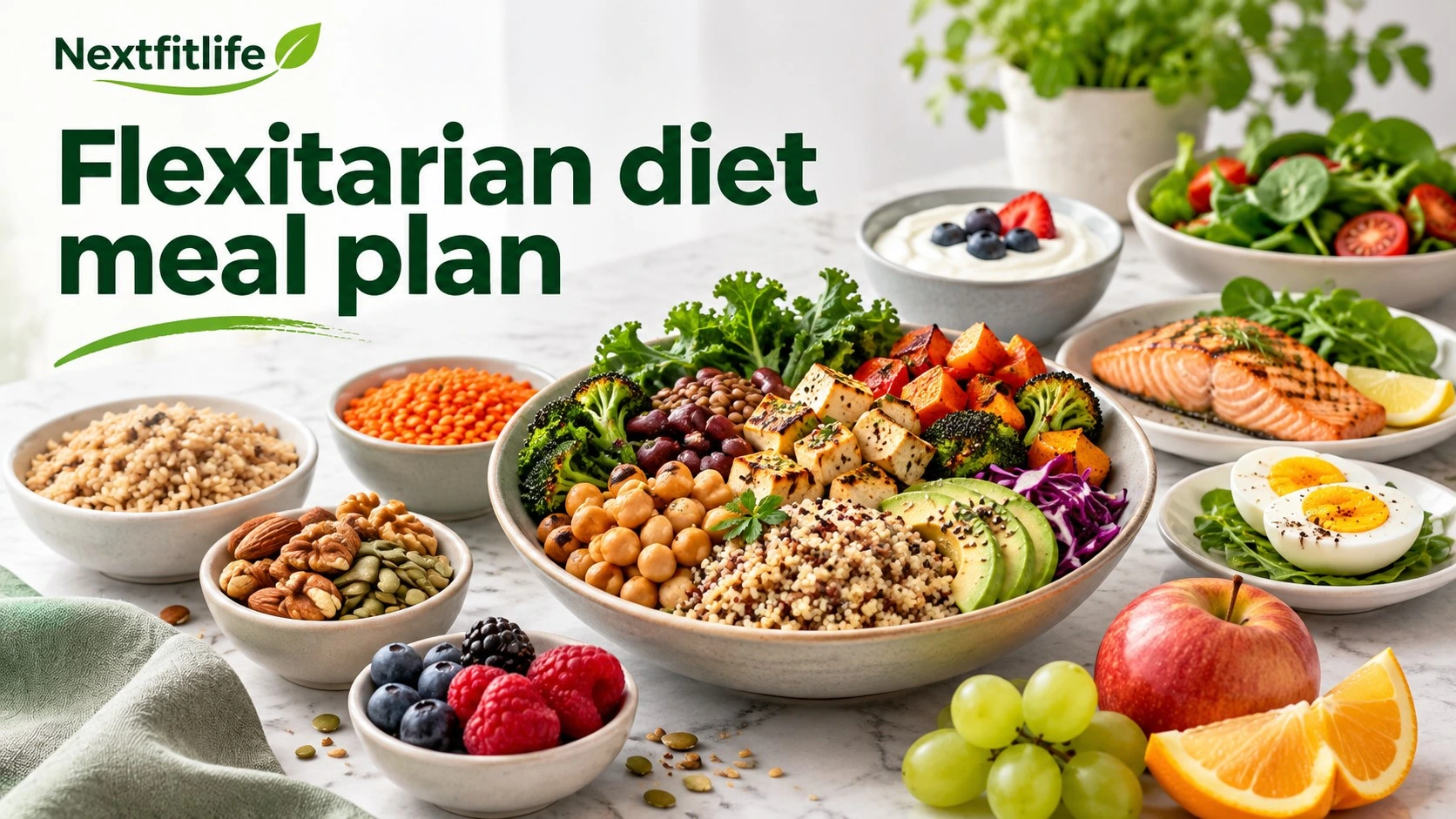
A good flexitarian diet meal plan should make plants the normal choice without turning meat into a forbidden food.
Build most meals around vegetables, fruit, beans, lentils, whole grains, nuts, seeds, tofu, and other plant foods. Then use eggs, dairy, fish, poultry, or meat when they fit your preferences and nutrition needs.
A flexitarian diet meal plan is a mostly plant-based eating pattern that still allows animal foods. Build meals around vegetables, fruit, whole grains, beans, lentils, nuts, seeds, and useful protein, then add eggs, dairy, fish, poultry, or meat when you want them.
The word flexitarian combines flexible and vegetarian. Mayo Clinic describes it as a mostly plant-based style that still includes meat, poultry, fish, dairy, or eggs in small amounts or from time to time.
That flexibility is the point.
This article is for general information and education. It does not replace medical advice, diagnosis, or treatment.
For the wider food pattern, see the NextFitLife Healthy Eating Lifestyle Hub. It explains how to build balanced meals without turning healthy eating into a strict short term diet.
What You Will Learn
- What flexitarian eating actually means
- How much meat you need to remove
- A practical seven day meal plan
- How to build protein into plant focused meals
- Which nutrients deserve extra attention
- What to put on your shopping list
- How to make simple swaps without cooking two dinners
- Who should get personal nutrition advice first
Table of Contents
- What Is a Flexitarian Diet?
- How Much Meat Can You Eat?
- How to Build a Flexitarian Plate
- 7 Day Meal Plan
- Protein Without Meat at Every Meal
- Vitamin B12 and Other Nutrients
- Flexitarian Shopping List
- Easy Food Swaps
- Weight Loss and Flexitarian Eating
- Flexitarian vs Vegetarian
- Flexitarian vs Mediterranean
- Common Mistakes
- Who Needs Personal Advice?
- Conclusion
- References and Sources
- Internal Links and Hub
- About the Author
- Frequently Asked Questions
What Is a Flexitarian Diet?
A flexitarian diet is a plant focused eating pattern that leaves room for animal foods.
That means your normal week might include lentil soup, tofu stir fry, bean tacos, oatmeal, vegetables, nuts, fruit, eggs, yogurt, fish, and perhaps one or two meals containing chicken or meat.
There is no medical rule saying you must become vegetarian five days each week.
Some popular versions use stages that gradually reduce meat. That can help people who like structure, but it is not required for the eating pattern to be useful.
Plant foods should do most of the work. Animal foods are optional additions rather than the automatic center of every meal.
How Much Meat Can You Eat on a Flexitarian Diet?
There is no single official amount.
Cleveland Clinic describes beginner, intermediate, and more advanced approaches that progressively reduce meat. Those stages are one way to organize the diet, not a universal nutrition law.
A simpler approach works well for many people:
- Start with one or two meatless meals each week.
- Move to several plant focused dinners when that feels easy.
- Keep fish, eggs, dairy, poultry, or meat where they genuinely improve the meal.
- Do not force a vegetarian meal when it leaves you hungry because you forgot the protein.
The goal is a repeatable pattern, not a purity score.
How Should You Build a Flexitarian Plate?
A good meal is easier to build when you stop thinking in terms of “meat meal” and “no meat meal.”
Instead, build four parts.
| Part | Good Choices | Why It Helps |
|---|---|---|
| Vegetables or fruit | Leafy greens, tomatoes, peppers, broccoli, berries, apples, oranges | Adds fiber, volume, vitamins, and minerals |
| Protein | Beans, lentils, tofu, tempeh, edamame, eggs, yogurt, fish, chicken | Makes meals more satisfying and supports body tissues |
| Whole grain or starch | Oats, barley, brown rice, quinoa, potatoes, whole grain bread | Provides useful carbohydrate and more fiber |
| Unsaturated fat | Olive oil, nuts, seeds, avocado, tahini | Adds flavor and helps build a satisfying meal |
If you already enjoy Mediterranean style food, this will feel familiar. The Mediterranean Diet Breakfast Ideas guide has several breakfasts that fit a flexitarian week with almost no changes.
Your 7 Day Flexitarian Diet Meal Plan
This plan is an example, not a calorie prescription.
Portion sizes should match your appetite, body size, activity, goals, and medical needs.
| Day | Breakfast | Lunch | Dinner | Snack Idea |
|---|---|---|---|---|
| Day 1 | Oatmeal with berries, walnuts, and fortified soy milk | Lentil soup with whole grain bread and salad | Chickpea vegetable curry with brown rice | Apple with peanut butter |
| Day 2 | Eggs with spinach, tomato, and whole grain toast | Hummus bowl with cucumber, tomato, chickpeas, and whole grain pita | Tofu stir fry with vegetables and rice | Plain yogurt with fruit |
| Day 3 | Plain yogurt or fortified soy yogurt with oats, fruit, and seeds | Black bean and corn wrap with lettuce and avocado | Baked salmon with roasted vegetables and barley | Pear and almonds |
| Day 4 | Whole grain toast with tahini, banana, and chia | White bean and vegetable soup | Lentil pasta with tomato sauce, mushrooms, spinach, and side salad | Carrots with hummus |
| Day 5 | Overnight oats with fortified plant milk, chia, and berries | Quinoa bowl with edamame, vegetables, and sesame dressing | Lean chicken with roasted vegetables and potatoes | Orange with pistachios |
| Day 6 | Vegetable omelet with fruit | Lentil and roasted vegetable grain bowl | Bean tacos with cabbage, tomato, avocado, and salsa | Berries with yogurt or soy yogurt |
| Day 7 | Oats with apple, cinnamon, walnuts, and milk or fortified soy milk | Chickpea salad sandwich with vegetable soup | Mushroom and bean chili with brown rice and salad | Whole fruit with nuts |
It does not make every day vegan, and it does not place chicken or fish at every meal. Plant foods are the base, while animal foods appear where they are useful.
How Do You Get Enough Protein Without Meat at Every Meal?
This is where weak flexitarian plans fall apart.
Removing meat is easy. Replacing the protein takes a little thought.
Useful plant based protein foods include:
- Beans and lentils
- Chickpeas
- Tofu
- Tempeh
- Edamame
- Soy foods
- Nuts and seeds
- Peanut or nut butter
- Higher protein whole grains
Eggs, dairy, fish, and poultry can also fill protein gaps when you include them.
If you use plant milk regularly, the High Protein Plant Milk Guide explains why fortified soy and pea based options are usually better protein choices than standard almond or rice drinks.
Vitamin B12 Deserves More Attention as Animal Foods Drop
This is the nutrition point many simple meal plans miss.
Vitamin B12 comes naturally mainly from animal foods, while some plant foods and drinks are fortified with it.
A 2026 systematic review of randomized trials found that replacing more animal protein with plant protein improved some cardiovascular markers, including LDL cholesterol and total cholesterol, but B12 status was lower in people eating the highest proportion of plant protein.
If your flexitarian pattern still includes eggs, dairy, fish, or meat regularly, B12 may be easy to cover.
If your eating pattern moves close to vegan, fortified foods or supplementation deserve more attention.
If animal foods become rare or disappear, ask a healthcare professional or registered dietitian how to meet B12 needs reliably.
What About Iron?
Iron is available from both plant and animal foods.
Useful plant sources include lentils, beans, tofu, fortified cereals, seeds, and some leafy greens.
Plant iron is absorbed differently from the iron in meat. Pairing an iron rich plant food with a vitamin C source is a simple way to improve the meal.
Examples include:
- Lentils with tomatoes
- Beans with peppers
- Tofu with broccoli
- Fortified cereal with berries
People with heavy menstrual bleeding, pregnancy, known anemia, or other causes of low iron need personal advice rather than assuming more beans alone will fix the problem.
Do Calcium and Vitamin D Still Matter?
Yes.
If you reduce dairy as well as meat, check what replaces it.
A well fortified soy drink can provide protein plus useful calcium and vitamin D. Other plant drinks vary widely, so read the label instead of assuming every carton is nutritionally similar.
If dairy remains part of your flexitarian pattern, plain yogurt and milk can also contribute these nutrients.
Where Do Omega 3 Fats Fit?
A flexible diet makes this easy because fish can stay on the menu.
Salmon, sardines, trout, and other oily fish provide long chain omega 3 fats.
Plant choices such as walnuts, chia, and flax also provide an omega 3 fat called ALA.
You do not have to choose between “plant eater” and “fish eater.” Flexitarian eating gives you room for both.
A Practical Flexitarian Shopping List
| Section | What to Buy |
|---|---|
| Vegetables | Leafy greens, broccoli, peppers, carrots, tomatoes, mushrooms, onions, frozen mixed vegetables |
| Fruit | Berries, apples, pears, oranges, bananas, kiwi, seasonal fruit |
| Plant protein | Lentils, chickpeas, beans, tofu, tempeh, edamame |
| Whole grains | Oats, brown rice, barley, quinoa, whole grain pasta, whole grain bread |
| Nuts and seeds | Walnuts, almonds, pistachios, chia, flax, sesame, nut butter |
| Flexible animal foods | Eggs, plain yogurt, milk, fish, lean chicken, occasional lean meat |
| Fats and flavor | Olive oil, tahini, avocado, herbs, spices, lemon, vinegar |
For easy fruit options, use the High Fiber Fruits List. It helps you compare practical choices such as berries, pears, apples, kiwi, avocado, and guava.
Seven Easy Flexitarian Food Swaps
| Instead of This | Try This | Why It Works |
|---|---|---|
| Beef taco filling | Black beans or lentils | Keeps protein and adds fiber |
| Chicken curry every week | Chickpea curry some weeks | Same flavor style, plant protein base |
| Meat pasta sauce | Lentil mushroom sauce | Adds fiber and keeps a hearty texture |
| Deli meat lunch | Hummus, chickpea salad, or egg | Easy lunch change without special recipes |
| Meat centered grain bowl | Edamame or tofu grain bowl | Keeps useful protein |
| Low protein plant milk | Fortified soy or pea based milk | Makes breakfast more protein aware |
| Meat at every dinner | Alternate bean, tofu, fish, and poultry dinners | Creates flexibility without rigid rules |
Can a Flexitarian Diet Help With Weight Management?
It can fit a weight management plan, but “flexitarian” does not automatically mean low calorie.
A meal can be completely plant based and still contain far more energy than you need if it is built around large portions of oils, nuts, fried foods, sweets, and refined snacks.
The stronger pattern uses vegetables, whole fruit, legumes, whole grains, useful protein, and sensible portions of energy dense foods.
A 2026 systematic review of randomized trials found improvements in body weight and several cardiovascular risk markers when more animal protein was replaced with plant protein. That is encouraging, but it does not mean every flexitarian menu causes weight loss.
Is a Flexitarian Diet Healthy for the Heart?
A well planned version can fit a heart healthy eating pattern because it tends to emphasize vegetables, fruit, legumes, nuts, seeds, and whole grains while reducing the need for red and processed meat at every meal.
The 2025 Dietary Guidelines Advisory Committee scientific report specifically recommended greater emphasis on beans, peas, and lentils while reducing red and processed meats in healthy dietary patterns.
The current Dietary Guidelines for Americans are the 2025 to 2030 edition.
Still, the label alone means little. A flexitarian diet based mainly on fries, pastries, sweet drinks, and highly refined foods misses the point.
Flexitarian vs Vegetarian: What Is the Difference?
| Pattern | Meat and Fish | Main Idea |
|---|---|---|
| Flexitarian | Allowed sometimes | Mostly plants with flexibility |
| Vegetarian | Usually excluded | No meat, poultry, or fish |
| Vegan | Excluded | Excludes animal derived foods |
A flexitarian plan can therefore work well for someone who wants to eat more plants without deciding that chicken, salmon, eggs, or family meals are permanently off limits.
Flexitarian vs Mediterranean Diet
These patterns overlap a lot.
Both can emphasize vegetables, fruit, beans, whole grains, nuts, seeds, and unsaturated fats.
The Mediterranean diet has a broader traditional food pattern that commonly includes olive oil, seafood, beans, vegetables, grains, nuts, and modest amounts of animal foods.
Flexitarian eating is defined more by flexibility around animal foods.
You can easily eat in a way that is both Mediterranean style and flexitarian.
Can You Drink Smoothies on a Flexitarian Diet?
Of course.
Make the smoothie do a nutritional job rather than simply blending several servings of fruit and calling it breakfast.
A stronger version can include whole fruit, oats, fortified soy milk, chia, flax, or plain yogurt.
For ideas, see High Fiber Drinks: 12 Smart Choices.
Five Flexitarian Mistakes I Would Avoid
- Removing meat without replacing the protein. Pasta with tomato sauce is not the nutritional equivalent of lentil pasta with beans or tofu.
- Living on highly processed meat substitutes. They can be convenient, but beans, lentils, tofu, tempeh, nuts, and seeds deserve regular space too.
- Forgetting vitamin B12. The closer the diet moves toward vegan, the more this deserves deliberate planning.
- Assuming plant based means low calorie. Oils, nuts, desserts, chips, and refined foods can still add a lot of energy.
- Making meat the reward meal. Flexibility works better when animal foods are ordinary options rather than something you “earn” after several meatless days.
Who Should Get Personal Nutrition Advice?
Most healthy adults can make a gradual shift toward more plant foods without a complicated program.
Get personal advice before making large dietary changes if you have:
- Kidney disease
- A history of iron deficiency or anemia
- Pregnancy
- An eating disorder or a history of restrictive eating
- A food allergy that removes major protein sources
- Significant digestive disease
- Diabetes treated with medicines that can cause low blood sugar
- A prescribed therapeutic diet
Children and older adults can also have different energy and protein needs, so a generic adult plan should not simply be copied for everyone in the household.
How to Start Without Changing Everything at Once
Do not buy seventeen unfamiliar ingredients on Sunday.
Start with three meals you already eat.
- Change one meat dinner into a bean or lentil dinner.
- Use one plant protein at lunch, such as hummus, tofu, beans, or chickpeas.
- Make one breakfast plant focused with oats, fruit, nuts, seeds, and a useful protein source.
- Keep fish, eggs, dairy, poultry, or meat in meals where you genuinely enjoy them.
Once those meals feel normal, change another one.
That is how flexible eating becomes a lifestyle instead of another diet that lasts twelve days.
Conclusion
A useful flexitarian diet meal plan makes plants the default without creating unnecessary food rules.
Build meals around vegetables, fruit, legumes, whole grains, nuts, seeds, and useful protein. Keep eggs, dairy, fish, poultry, or meat where they fit your preferences, culture, budget, and nutrition needs.
Your next step: choose two dinners from the seven day plan and buy the ingredients this week. Start there instead of trying to rebuild every meal at once.
References and Sources
- Mayo Clinic. Vegetarian Diet: How to Get the Best Nutrition.
Mayo Clinic vegetarian nutrition guidance - Mayo Clinic. Meatless Meals: The Benefits of Eating Less Meat.
Mayo Clinic meatless meals guidance - Cleveland Clinic. What Is the Flexitarian Diet?
Cleveland Clinic flexitarian diet guide - National Library of Medicine. Partially Replacing Animal Based Protein Foods With Plant Based Protein Foods: A Systematic Review of Randomized Controlled Trials in Healthy Adults. 2026.
2026 systematic review on plant and animal protein replacement - Dietary Guidelines for Americans. Current 2025 to 2030 Dietary Guidelines and history.
Dietary Guidelines for Americans - 2025 Dietary Guidelines Advisory Committee. Scientific Report supporting greater emphasis on beans, peas, lentils, and other plant protein foods.
Scientific Report of the Dietary Guidelines Advisory Committee
Internal Links and NextFitLife Hub
About the Author
Adel Galal is the founder and lead writer of NextFitLife.com. He has more than 15 years of health and wellness writing experience. He is not a licensed healthcare professional. Read the About page for sources and review rules.
Adel is not a medical professional; health articles cite trusted sources and are for general information only.
Frequently Asked Questions
What is a flexitarian diet meal plan?
A flexitarian diet meal plan is a mostly plant based eating plan that still allows animal foods. Meals center on vegetables, fruit, beans, lentils, whole grains, nuts, seeds, and plant protein while eggs, dairy, fish, poultry, or meat remain optional.
How many days a week can you eat meat on a flexitarian diet?
There is no official number. Some structured versions use meatless days, but the basic idea is simply to eat mostly plant foods and use meat less often rather than banning it completely.
Can you eat chicken on a flexitarian diet?
Yes. Chicken can fit into a flexitarian diet. The difference is that animal protein is not automatically the center of every meal, so beans, lentils, tofu, fish, eggs, and other proteins also get regular space.
Can you eat fish on a flexitarian diet?
Yes. Fish fits easily into flexitarian eating. You can use fish occasionally while keeping most meals centered on plant foods.
How do flexitarians get enough protein?
Beans, lentils, chickpeas, tofu, tempeh, edamame, nuts, seeds, soy foods, eggs, dairy, fish, and occasional poultry or meat can all contribute protein. The key is replacing meat with another real protein source rather than simply removing it.
Do flexitarians need vitamin B12 supplements?
Not everyone does. People who still eat regular amounts of eggs, dairy, fish, or meat may get enough vitamin B12 from food. If animal foods become rare or disappear, fortified foods or supplementation deserve more attention.
Is a flexitarian diet good for weight loss?
It can fit a weight loss plan, but the label does not guarantee weight loss. Portions, total energy intake, food quality, activity, sleep, medicines, and individual health still matter.
What is the easiest way to start a flexitarian diet?
Start with one or two meals you already enjoy and replace the meat with beans, lentils, tofu, chickpeas, or another protein. Once those meals feel normal, add another plant focused meal instead of changing your entire week at once.

Health & wellness writer with 30+ years of experience in nutrition, fitness, and healthy aging. Founder of NextFitLife.com — evidence-based health guidance.