Last Updated: August 3, 2026
Next Review: August 2027
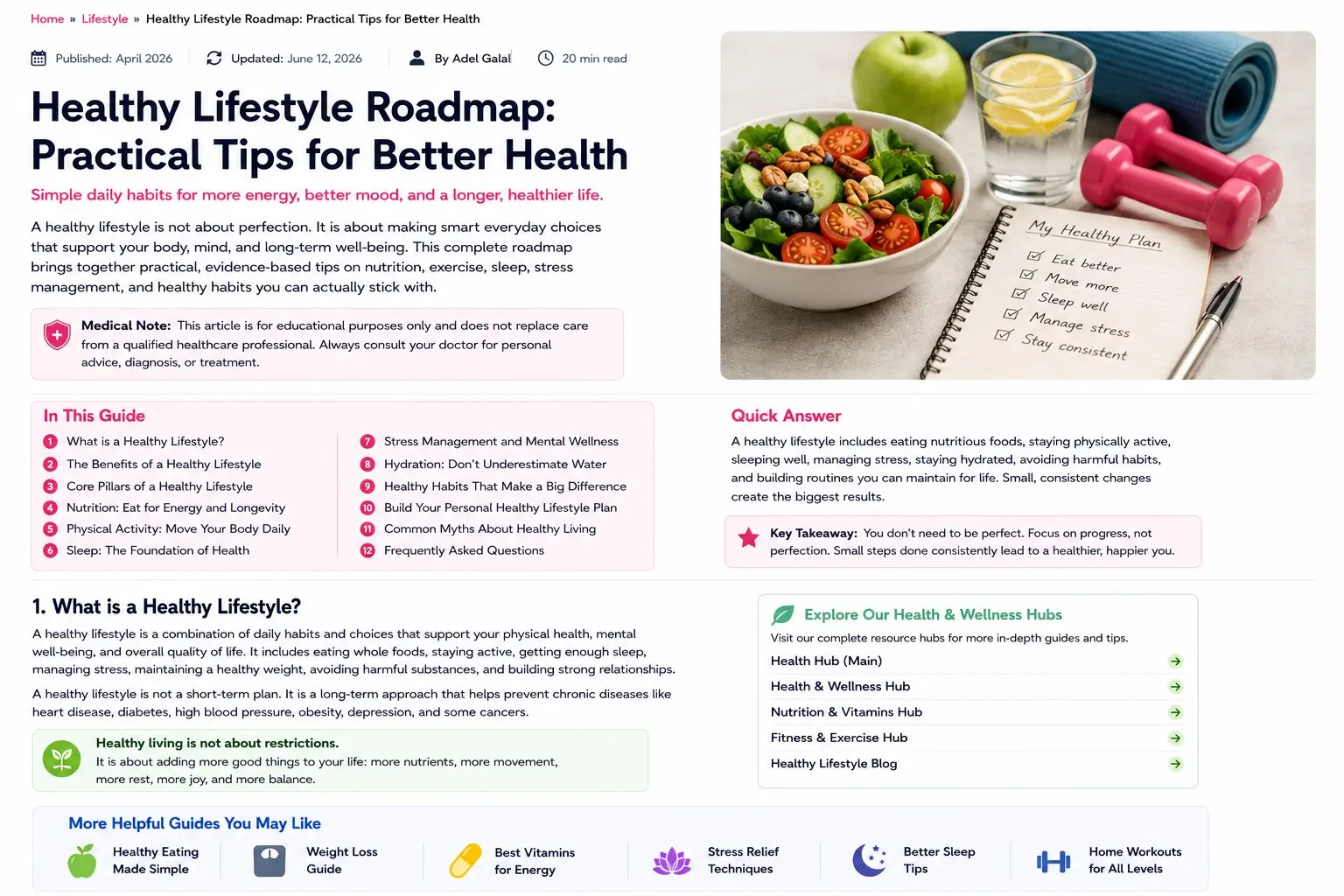
A healthy lifestyle is not one perfect diet. It is not one hard workout. It is not a short challenge.
It is a set of simple choices that support your body and mind. These choices include food, movement, sleep, stress care, social support, preventive care, and a safe daily routine.
This guide brings together the most useful ideas from six older NextFitLife lifestyle and wellness articles. It removes repeated advice. It keeps the steps that are practical, safe, and easy to use.
Quick answer
A healthy lifestyle means eating mostly nourishing food, moving often, building strength, sleeping enough, managing stress, avoiding tobacco, limiting alcohol, caring for your teeth and eyes, keeping up with health checks, and building habits that fit your real life.
Medical note: I am not a dermatologist or a doctor, and this content does not replace professional medical advice. What I share comes from real-life experience, extensive research, and consultation with healthcare providers. Always consult qualified medical professionals for diagnosis and treatment of any health condition.
What you will learn
- What healthy living means
- The main parts of a balanced routine
- How to eat well without a strict diet
- How much movement and sleep adults need
- How to manage stress and digital overload
- Why relationships and purpose matter
- How to use health checks and vaccines
- How to start with a seven-day and thirty-day plan
- How to make habits last
What Is a Healthy Lifestyle?
A healthy lifestyle is a pattern of actions that supports physical, mental, and social health.
It may include:
- A balanced diet
- Regular physical activity
- Strength and balance work
- Enough sleep
- Stress care
- Water and safe hydration
- No tobacco
- Less alcohol or no alcohol
- Dental and eye care
- Vaccines and health screening
- Supportive relationships
- Time for rest, hobbies, nature, and purpose
Healthy living does not mean that every meal is perfect. It does not mean that you train every day.
It means that most of your choices move your health in a good direction.
Why a Healthy Lifestyle Matters?
Daily habits affect energy, strength, sleep, mood, blood pressure, blood sugar, digestion, weight, mobility, and quality of life.
Healthy habits may lower the risk of many long term conditions. They can also help people manage a condition that is already present.
No lifestyle can promise perfect health. Genes, age, work, income, food access, medicine, illness, and the environment also matter.
The goal is not control over everything. The goal is to improve what you can.
For a wider view of general wellness topics, visit the General Wellness and Lifestyle Hub.
The 18 Parts of a Healthy Lifestyle Roadmap
1. Build meals around simple whole foods
The World Health Organization supports a varied eating pattern that includes vegetables, fruit, legumes, whole grains, and nuts. It also advises less salt, free sugar, and unhealthy fat.
Use foods you know and enjoy. Healthy food does not need to be costly or rare.
A simple plate can include:
- Half vegetables or fruit
- One source of protein
- One source of high fibre carbohydrate
- A small amount of healthy fat
Protein choices include eggs, fish, chicken, yogurt, beans, lentils, tofu, and lean meat.
High fibre choices include oats, beans, brown rice, potatoes, whole grain bread, fruit, and vegetables.
Healthy fat choices include olive oil, nuts, seeds, avocado, and tahini.
Visit the Foods and Nutrition Hub for food guides and meal ideas.
2. Eat more fibre, but increase it slowly
Dietary fibre supports digestion and fullness. It can also help with blood sugar and cholesterol.
Easy ways to add fibre:
- Add beans to soup or rice
- Add vegetables to eggs and sandwiches
- Eat fruit as a snack
- Choose oats or whole grain bread
- Add lentils to a meal
- Use nuts or seeds in small amounts
Increase fibre in small steps. A sudden large change may cause gas or bloating.
Drink enough water as fibre rises.
3. Drink water based on your needs
Water supports temperature control, digestion, blood flow, concentration, and exercise.
There is no one water amount for every person. Needs change with climate, body size, activity, sweat, food, pregnancy, and health conditions.
Simple hydration habits include:
- Drink when you wake up
- Keep water close while working
- Drink during hot weather
- Drink before, during, and after exercise
- Use lemon, mint, or cucumber for taste
- Replace some sweet drinks with water
People with kidney, heart, or liver conditions may need personal fluid advice.
4. Move your body most days
Regular exercise supports the heart, lungs, bones, muscles, mood, sleep, and blood sugar.
The World Health Organization says adults should do at least 150 minutes of moderate activity each week, or 75 minutes of vigorous activity.
Moderate activity can include brisk walking, cycling, swimming, dancing, or active housework.
You do not need to start with a long workout. Begin with ten minutes.
Walk after one meal. Use stairs when safe. Play with children. Work in the garden. Choose an activity you enjoy.
Visit the Fitness Hub for beginner and age focused exercise guides.
5. Build strength at least twice each week
Strength training helps keep muscle and bone. It supports balance, joints, daily tasks, and healthy aging.
Beginner choices include:
- Chair squats
- Wall push ups
- Resistance band rows
- Light dumbbell lifts
- Step ups
- Glute bridges
- Simple core work
Start with a light effort. Use suitable form. Stop for chest pain, faintness, severe breathlessness, or sharp pain.
Ask a doctor or qualified trainer for help when you have an injury or medical condition.
6. Sit less during the day
A workout does not cancel every hour of sitting.
Use short movement breaks.
- Stand every thirty to sixty minutes
- Walk while taking a phone call
- Stretch your neck and hips
- Take a short walk after lunch
- Do ten chair squats
- Put useful items farther from your chair
Small movement breaks are easy to repeat. They also help reduce stiffness.
7. Protect your sleep
Sleep is part of health. It is not wasted time.
The CDC says adults age 18 to 60 should get at least seven hours of sleep. Needs can vary by person and age.
Good sleep habits include:
- Use a steady sleep and wake time
- Get morning light
- Reduce caffeine late in the day
- Keep the room dark and cool
- Lower screen use before bed
- Use a short calm routine at night
Ask for help if you have loud snoring, choking in sleep, morning headaches, severe daytime sleepiness, or sleep that never feels fresh.
Read our Sleep Deprivation Guide for causes and first steps.
8. Manage stress in small daily ways
Stress is part of life. Long lasting stress can affect sleep, appetite, mood, focus, relationships, and health choices.
Stress management does not remove every problem. It gives your body and mind time to recover.
Try:
- Slow breathing for two minutes
- A short outdoor walk
- Prayer or quiet thought
- Writing worries on paper
- Talking with a trusted person
- Planning tomorrow before bed
- Turning off constant news alerts
Visit the Mental Health and Wellness Hub for more support.
9. Avoid tobacco and nicotine
The World Health Organization says all forms of tobacco are harmful. Tobacco can damage nearly every organ.
Quitting may take more than one try. A return to smoking does not mean that you cannot quit.
Support may include:
- Behavior support
- A quit line
- Nicotine replacement when suitable
- Prescription medicine when suitable
- A plan for triggers
- Support from family or friends
Ask a healthcare professional about safe ways to stop.
10. Limit alcohol or avoid it
Alcohol can affect sleep, mood, liver health, blood pressure, judgment, weight, and cancer risk.
Some people should not drink. This includes people who are pregnant, use certain medicines, have liver disease, or have an alcohol use disorder.
Ways to drink less include:
- Use alcohol free days
- Drink slowly
- Use water between drinks
- Do not use alcohol for stress
- Keep less alcohol at home
- Ask for help when cutting back is hard
People who drink heavily may need medical care to stop safely. Sudden withdrawal can be dangerous.
11. Know your important health numbers
Some health problems have no clear early signs.
Ask how often you should check:
- Blood pressure
- Blood sugar or A1C
- Cholesterol and triglycerides
- Weight and waist size when useful
- Kidney function
- Liver function when needed
Home numbers can help, but they do not replace medical care.
For heart topics, visit the Heart and Cardiovascular Health Hub.
12. Keep up with preventive care
Preventive care can find some problems early. It can also prevent some illnesses.
The right plan depends on age, sex, family history, country, health conditions, and past results.
It may include:
- Blood pressure checks
- Cholesterol and diabetes screening
- Recommended cancer screening
- Vaccines based on age and risk
- Dental care
- Eye exams
- Medicine reviews
- Health counseling
The CDC says preventive care includes screening, vaccines, dental cleaning, and counselling that helps people make informed choices.
Use the Medical Tests and Screenings Hub to prepare for checkups.
13. Care for your eyes, teeth, skin, and hearing
Whole body health includes the parts people often forget.
For your eyes:
- Use regular eye exams based on your risk
- Wear sunglasses with strong UV protection
- Use screen breaks
- Control diabetes and blood pressure
- Get urgent care for sudden vision loss or severe pain
Read the Eye Health Complete Guide.
Brush with fluoride toothpaste. Clean between teeth. Get dental care when needed.
Ask about a hearing test when speech sounds unclear or the television must be very loud.
14. Build close relationships
Health is not only food and exercise.
Social connection can affect stress, mood, motivation, and daily choices.
Ways to build support:
- Plan time with family or friends
- Join a class or walking group
- Take part in a faith or community group
- Ask for help before stress grows
- Listen when another person needs support
- Limit contact that is unsafe or harmful
A healthy routine is easier when people around you support it.
15. Spend time in nature
Outdoor time can support movement, calm, daylight exposure, and a break from screens.
You do not need a forest or beach.
Walk in a local street. Sit near a tree. Work in a small garden. Drink tea near an open window.
Use sun and heat safety. Wear shade, sunscreen, and enough clothing for the weather.
16. Keep hobbies, learning, and purpose
A full life needs more than work and health tasks.
Hobbies can bring joy, skill, calm, and social contact.
Try reading, cooking, music, drawing, gardening, puzzles, photography, crafts, or learning a language.
Lifelong learning keeps the mind active. Purpose gives daily actions meaning.
Choose something that feels useful or enjoyable. It does not need to be productive.
17. Use technology as a tool, not a master
Apps and watches can help track steps, sleep, meals, workouts, or blood pressure.
They can also create stress.
Use one or two numbers that help you act. Ignore data that makes you anxious without giving useful guidance.
Take breaks from social media. Do not compare your body or health with edited online images.
For screen related eye care, use the Digital Eye Strain Relief Guide.
18. Start small and track what matters
The best healthy lifestyle habits are the ones you can repeat.
Choose one weekly goal:
- Walk twenty minutes on five days
- Add one vegetable at lunch
- Sleep thirty minutes earlier
- Prepare two meals at home
- Use one daily breathing break
- Replace one sweet drink with water
- Book an overdue checkup
Track only the action you are working on.
A check mark on paper may work better than a complex app.
How to Set a Health Goal That Works
A vague goal is hard to follow.
Instead of saying, “I will get healthy,” choose one clear action.
Examples:
- I will walk for ten minutes after dinner on Monday, Wednesday, and Friday.
- I will add fruit to breakfast on workdays.
- I will put my phone away at ten each night.
- I will do chair squats and wall push ups twice this week.
A good goal is clear, small, and linked with a time or place.
A Simple Seven Day Healthy Lifestyle Plan
Day 1: Improve one meal
Choose a meal with protein, vegetables or fruit, and a high fibre food.
Day 2: Walk after one meal
Walk for ten to twenty minutes. Keep the pace comfortable.
Day 3: Fix one hydration habit
Put a water bottle where you can see it. Replace one sugary drink.
Day 4: Add simple strength work
Try chair squats, wall push-ups, glute bridges, and light rows.
Day 5: Reset sleep
Choose a bedtime. Lower lights. Put the phone away.
Day 6: Plan two meals
Choose easy meals that use food you already like.
Day 7: Review the week
Ask what felt easy. Keep the easiest useful habit for next week.
A Thirty Day Roadmap
Week 1: Build the base
- Use a steady wake time
- Drink more water
- Walk ten minutes
- Add one vegetable each day
Week 2: Add strength and sleep care
- Do two short strength sessions
- Reduce late caffeine
- Use a calm night routine
- Stand more during work
Week 3: Add stress and social care
- Use two minutes of slow breathing
- Call or meet someone supportive
- Spend time outdoors
- Reduce one source of digital stress
Week 4: Review preventive care
- Check the date of your last health visit
- Review vaccines with a professional
- Book dental or eye care if overdue
- Choose the habits you will keep next month
Healthy Lifestyle for Busy People
Busy people do not need a perfect schedule. They need small choices that fit between tasks.
Try:
- A ten minute walk instead of no walk
- Frozen vegetables instead of no vegetables
- Eggs, yogurt, beans, or tuna for quick protein
- A short home workout
- A planned bedtime alarm
- A packed snack
- One quiet minute before a meeting
Read Improve Health With a Busy Schedule for more simple ideas.
Healthy Lifestyle for Weight Management
Weight is affected by food, movement, sleep, stress, medicine, hormones, illness, and the environment.
Useful habits include:
- Protein and fibre at meals
- Less liquid sugar
- Regular walking
- Strength training
- Enough sleep
- Meal planning
- Help for emotional eating
Do not use shame as a health tool.
Visit the Weight Management and Metabolism Hub.
Healthy Lifestyle After 40, 50, and 60
Healthy aging means keeping strength, balance, mobility, memory, independence, and social connection.
Important habits include:
- Strength work
- Balance practice
- Regular walking
- Enough protein
- Sleep care
- Eye, hearing, and dental checks
- Medicine reviews
- Fall prevention
Age changes the plan. It does not end the plan.
Visit the Healthy Aging and Longevity Hub.
A Healthy Morning Routine
A good morning does not need a long list.
Choose two or three actions that help you begin calmly.
- Wake at a similar time
- Open the curtains for morning light
- Drink water
- Eat a simple breakfast when hungry
- Walk or stretch for a few minutes
- Choose the main task for the day
Morning light can help the body clock. A small amount of movement can reduce stiffness.
Do not force an early wake time when it cuts your sleep. A healthy morning starts the night before.
A Healthy Workday Routine
Work can make healthy habits hard. Long sitting, missed meals, stress, and screen use can build up.
Use small anchors during the day.
- Stand when a meeting starts
- Keep water near the desk
- Plan lunch before hunger is strong
- Look away from the screen often
- Take stairs when it is safe
- Walk for five minutes after lunch
- Finish one task before checking social media
An office day does not need to be an inactive day.
A Healthy Evening Routine
The evening should help the body slow down.
Try:
- Eat a normal meal instead of skipping food all day and overeating late
- Take a short walk
- Prepare clothes or food for tomorrow
- Write down unfinished tasks
- Lower lights
- Put the phone away
- Use a calm activity before sleep
The goal is not a perfect night. It is a clear end to the day.
How to Build a Healthy Home Environment
Your environment shapes your choices.
Make useful actions easy.
- Keep fruit where you can see it
- Store water near your work area
- Place walking shoes near the door
- Keep a resistance band in the room
- Use smaller bowls for snacks
- Put the phone charger away from the bed
- Keep medicine in a safe place and use reminders
Do not rely on willpower for every choice.
Healthy Living on a Budget
A healthy lifestyle should fit the money you have.
Low-cost food ideas include:
- Beans and lentils
- Eggs
- Oats
- Seasonal fruit
- Frozen vegetables
- Canned fish
- Potatoes
- Plain yogurt
- Whole grain bread
Walking is free. Home strength work can use a chair, wall, backpack, or resistance band.
You do not need a gym, costly powder, smart watch, or special drink to improve health.
Healthy Living With a Family
Family routines can make health easier or harder.
Use shared actions.
- Take a walk after dinner
- Cook one simple meal together
- Keep fruit and water easy to reach
- Use a regular family bedtime routine
- Plan active weekend time
- Talk without phones during one meal
Avoid using food as a reward or punishment.
Children and adults learn from the routine they see every day.
How to Restart After a Setback
Everyone misses workouts. Everyone has hard weeks.
A setback is not the end of the plan.
Use this reset:
- Stop judging yourself.
- Choose the next useful action.
- Make it smaller than before.
- Return today, not next month.
- Ask what made the habit hard.
- Change the plan, not the goal.
Progress comes from many restarts.
Signs Your Lifestyle Plan Is Too Hard
A plan may need to change when:
- You feel tired all the time
- You are always hungry
- You avoid friends and family
- You feel guilty after normal food
- You train through pain
- You cannot sleep
- You spend too much money
- You stop prescribed medicine
- You cannot keep the plan for more than a few days
A healthy plan should support your life. It should not take over your life.
How to Measure Progress Without Obsession
Use measures that match your goal.
You may track:
- Walking days
- Strength sessions
- Bedtime
- Fruit and vegetable servings
- Blood pressure when advised
- Energy
- Mood
- How easy stairs feel
- How clothes fit
Do not track everything.
Choose one or two signs. Review them once each week.
Healthy Lifestyle Red Flags
Some symptoms need medical care, not another wellness tip.
Get urgent help for:
- Chest pain
- Severe trouble breathing
- Fainting
- Sudden weakness on one side
- Sudden trouble speaking
- Severe allergic reaction
- Thoughts of self-harm
Book medical care for unexplained weight loss, blood in stool, a new lump, severe fatigue, repeated dizziness, or symptoms that do not improve.
Common Healthy Lifestyle Mistakes
- Trying to change everything in one day
- Using an extreme diet
- Ignoring sleep
- Training through pain
- Using supplements instead of food and care
- Following health claims from influencers without checking them
- Skipping medical care for symptoms
- Thinking one missed day has ruined the plan
- Using guilt as motivation
- Comparing your life with another person's body or budget
A healthy lifestyle is built by returning to the plan after a hard day.
Do You Need Supplements?
Supplements can help in some cases. They are not the base of health.
A supplement may be useful for:
- A diagnosed deficiency
- A restricted diet
- A pregnancy-related need
- A medical condition
- A clinician recommendation
High doses can cause harm or interact with medicine.
Ask a qualified professional before using high-dose vitamins, herbs, weight loss products, or fitness supplements.
When to Get Medical Advice Before a Lifestyle Change
Talk to a healthcare professional first when you:
- Have heart, kidney, liver, lung, or metabolic disease
- Take prescription medicine
- Are pregnant or trying to become pregnant
- Have an eating disorder history
- Have chest pain, fainting, or severe breathlessness
- Have unexplained weight loss or severe fatigue
- Are starting exercise after a long inactive period
- Plan to stop heavy alcohol use
- Plan to use high dose supplements
Emergency symptoms need urgent care. Do not wait for a lifestyle plan to fix them.
My Experience With Healthy Living
I have studied and written about health, fitness, food, and healthy aging for more than fifteen years.
I have also practised these habits for more than thirty years.
The biggest lesson is simple. Hard plans often fail. Small plans last.
I do not try to be perfect. I focus on basic food, daily walking, strength work, sleep, water, family, reading, and regular health checks.
At 59, I care more about strength, energy, mobility, and clear thinking than a fast result.
My role is to research, organize, and explain useful information. I am not a medical professional. I check health claims against trusted public health sources and encourage readers to seek personal care when needed.
Conclusion
A healthy lifestyle is a roadmap, not a race.
Eat simple food. Move often. Build strength. Protect sleep. Manage stress. Avoid tobacco. Use preventive care. Stay close to people who support you.
Choose one step today. Repeat it for seven days. Then add the next step. That is how a healthy lifestyle becomes part of real life.
Explore More NextFitLife Guides
- Health Hub
- General Wellness and Lifestyle Hub
- Fitness Hub
- Foods and Nutrition Hub
- Mental Health and Wellness Hub
- Heart and Cardiovascular Health Hub
- Medical Tests and Screenings Hub
- Weight Management and Metabolism Hub
- Healthy Aging and Longevity Hub
- Eye Health Complete Guide
- Self Care Habits
- Healthy Lifestyle Benefits
- Effects of an Unhealthy Lifestyle
- Unhealthy Lifestyle Habits
- Improve Health With a Busy Schedule
- Sleep Deprivation Guide
References and Sources
- World Health Organization: Healthy diet fact sheet, updated January 26, 2026. Open source
- World Health Organization: Physical activity fact sheet and adult activity guidance. Open source
- Centers for Disease Control and Prevention: About sleep and adult sleep needs. Open source
- World Health Organization: Tobacco and nicotine fact sheet, updated June 26, 2026. Open source
- Centers for Disease Control and Prevention: Preventive care, screening, vaccines, dental care, and health counselling. Open source

Adel Galal has more than fifteen years of health and wellness writing experience and more than thirty years of personal practice with fitness, nutrition, sleep, and healthy aging. Before focusing on NextFitLife, he spent twenty-nine years working in information technology management, where he developed skills in research, data review, planning, and clear communication.
He uses those skills to organize public health information in simple language. He is not a licensed medical or healthcare professional.
Frequently Asked Questions About a Healthy Lifestyle
What is a healthy lifestyle?
A healthy lifestyle is a set of daily habits that supports the body and mind. It often includes balanced food, regular movement, good sleep, stress care, no tobacco, limited alcohol, preventive care, and strong social support.
What is the best healthy lifestyle habit to start first?
Start with the habit that is easiest to repeat. A ten-minute walk, an earlier bedtime, one extra vegetable, or replacing one sugary drink with water are good first steps.
How much exercise do adults need?
Most adults should aim for at least 150 minutes of moderate activity each week, or 75 minutes of vigorous activity, with muscle strengthening on two or more days.
How much sleep do adults need?
Most adults need at least seven hours of sleep each night. Some people need more. Sleep quality and a steady sleep schedule also matter.
Do I need supplements for a healthy lifestyle?
Not always. Food, movement, sleep, stress care, and preventive health come first. Supplements may help when there is a diagnosed need or a qualified professional recommends one.
How long does it take to build healthy habits?
There is no fixed time. Some habits feel easier within days. Others take weeks or months. The goal is to keep the step small enough to repeat.
Can a healthy lifestyle prevent every disease?
No. Healthy habits can lower some risks and support quality of life, but they cannot remove the effects of genes, age, infection, injury, environment, or every medical condition.
When should I ask a doctor before changing my lifestyle?
Ask first if you have a chronic condition, take prescription medicine, are pregnant, have a history of eating disorder, have chest pain or fainting, or plan a major diet, exercise, alcohol, or supplement change.
How can I stay consistent when life is busy?
Make the habit small, put it on your calendar, prepare the night before, remove extra steps, track one simple action, and restart at the next chance after a missed day.

Health & wellness writer with 30+ years of experience in nutrition, fitness, and healthy aging. Founder of NextFitLife.com — evidence-based health guidance.