Last Updated: August 3, 2026
Next Review: August 2027, or sooner if major heat safety guidance changes
Review Status: Editorially reviewed and checked against current CDC, NIOSH, OSHA, and Red Cross guidance
Heat exhaustion happens when the body cannot keep up with heat, activity, and fluid loss.
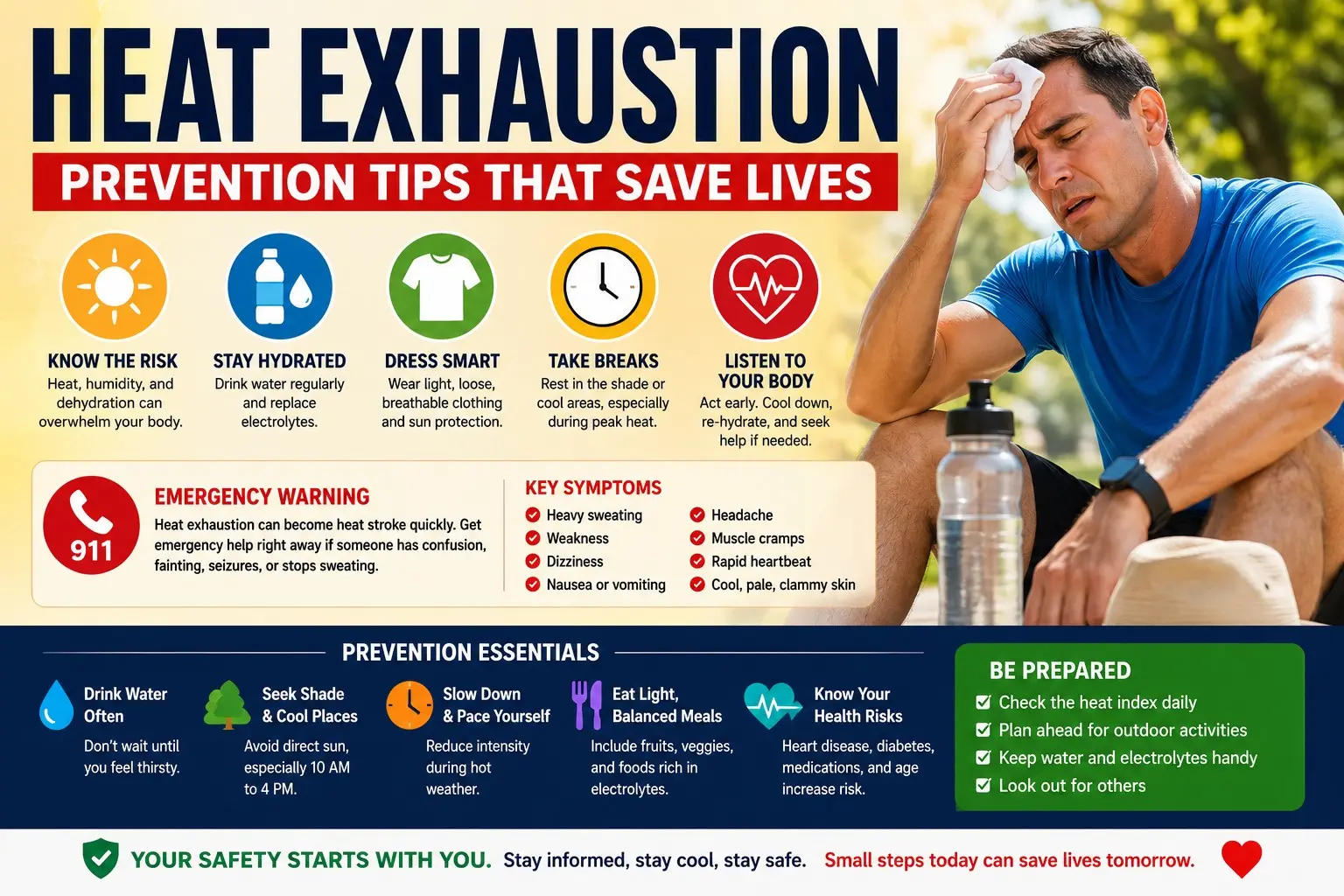
It may start with heavy sweating, thirst, headache, weakness, dizziness, nausea, or cramps. It can get worse fast. Without prompt cooling, it may progress to heat stroke, which is a medical emergency.
This complete guide combines the useful prevention and first aid information from the older Heat Exhaustion Treatment article with the main NextFitLife heat exhaustion guide. It also corrects unsafe or incorrect advice from the old version.
Quick answer
Move the person to a cool place. Stop all activity. Remove extra clothing. Cool the skin with water, wet cloths, cold packs, and moving air. Give small sips of cool water only if the person is fully alert and can swallow. Call emergency services for confusion, fainting, seizure, collapse, severe symptoms, repeated vomiting, or signs of heat stroke.
Emergency warning
Call your local emergency number now if the person is confused, behaves strangely, faints, has a seizure, cannot drink, keeps vomiting, collapses, or has very hot skin. Begin rapid cooling while help is coming. Do not wait for the person to stop sweating. A person with heat stroke may still sweat.
Medical note: This content is for general educational purposes and does not replace professional medical advice, diagnosis, or treatment. Consult an appropriately qualified healthcare professional for personal medical concerns. What I share comes from actual life experience, extensive research, and consultation with healthcare providers. Always consult qualified medical professionals for diagnosis and treatment of any health condition.
What you will learn
- What heat exhaustion is
- How it differs from heat stroke
- The major symptoms and red flags
- Safe first aid and cooling steps
- When water or an electrolyte drink may help
- Who has a higher risk?
- How workers, athletes, families, and older adults can stay safe
- How acclimatization works
- How to recover and return to activity
- How to build a heat safety plan
What Is Heat Exhaustion?
Heat exhaustion is a heat-related illness. It often happens after the body loses too much water and salt through sweating.
The body cools itself by sending blood to the skin and making sweat. Sweat must evaporate to remove heat. High humidity slows this process. Heavy clothing, hard work, poor airflow, direct sun, and dehydration can make cooling harder.
NIOSH lists heat exhaustion among the main heat-related illnesses that can affect people who work or exercise in hot places.2
Heat exhaustion is serious. It is not the same as ordinary tiredness after a hot day.
Prompt cooling can stop it from getting worse. Delay can allow body temperature to rise and organs to become stressed.
Heat Exhaustion and Heat Stroke Are Not the Same
Heatstroke is the most dangerous heat illness. It can harm the brain, heart, kidneys, muscles, and other organs.
| Feature | Heat exhaustion | Heat stroke |
|---|---|---|
| Awareness | Usually awake and able to answer | Confusion, strange behaviour, collapse, seizure, or loss of consciousness |
| Skin | Often sweaty, pale, cool, or clammy | May be hot, wet, or dry |
| Main symptoms | Thirst, weakness, headache, nausea, dizziness, cramps | Altered mental state, very high temperature, collapse, organ danger |
| Action | Stop activity, move to a cool place, begin cooling, watch closely | Call emergency services and cool rapidly at once |
Do not use sweating alone to decide. The Red Cross and OSHA focus on mental status, collapse, severe symptoms, and rapid cooling.34
Read the NextFitLife heat stroke guide for the emergency signs and prevention steps.
Common Heat Exhaustion Symptoms
The symptoms can begin slowly or appear during hard work or exercise.
Common signs include:
- Heavy sweating
- Thirst
- Weakness or unusual tiredness
- Headache
- Dizziness or lightheadedness
- Nausea or vomiting
- Muscle cramps
- Cool, pale, or clammy skin
- A fast heartbeat
- Irritability
- Reduced coordination
- Dark urine or less urine
Some symptoms overlap with other problems. Low blood sugar, infection, heart trouble, low blood pressure, medicine effects, and dehydration can look similar.
Do not assume every collapse in the heat is simple heat exhaustion.
Red Flags That May Mean Heat Stroke
Call emergency services for:
- Confusion
- Strange behavior
- Slurred speech
- Fainting
- Seizure
- Collapse
- Severe loss of coordination
- Very hot skin
- A body temperature near 104 degrees Fahrenheit or 40 degrees Celsius
- Repeated vomiting
- Inability to drink
- Symptoms that keep getting worse
Begin cooling while help is coming.
Do not wait for a thermometer. Do not wait for dry skin. Do not wait for all symptoms to appear.
First Aid for Heat Exhaustion
OSHA and the Red Cross both advice fast movement to a cooler place and immediate cooling.34
Step 1: Stop the activity
Have the person sit or lie down.
Do not let the person keep working, walking, driving, or exercising.
Step 2: Move to a cooler place
Use air conditioning when possible.
If that is not available, move to shade or the coolest safe place nearby.
Step 3: Remove extra clothing
Loosen tight clothes.
Remove jackets, heavy work gear, helmets, pads, and extra layers when safe.
Step 4: Cool the skin
Use one or more of these cooling methods:
- Wet the skin with cool water
- Use cool wet cloths
- Fan the wet skin
- Place cold packs near the neck, armpits, and groin
- Use a cool shower when the person can stand safely
- Use cold water immersion when trained help and safe equipment are available
Do not put ice directly on bare skin for a long time.
Step 5: Give fluids only when safe
Give small sips of cool water when the person is fully awake, can swallow, and is not vomiting.
Do not force large amounts.
Do not give fluids to a person who is confused, unconscious, seizing, or repeatedly vomiting.
Step 6: Stay with the person
Watch breathing, awareness, skin, and symptoms.
Do not leave the person alone.
Step 7: Get medical help when needed
Call emergency services if severe symptoms are present.
Get urgent medical advice if the person does not improve quickly after cooling, has a serious health condition, is pregnant, is very young or old, or had symptoms during hard exercise.
Simple first aid memory tool: Stop. Shade. Strip extra layers. Soak the skin. Sip only when alert. Stay with the person. Send for help when red flags appear.
What Not to Do
- Do not send the person back to work or sport
- Do not leave the person alone
- Do not force water
- Do not give alcohol
- Do not give a large amount of caffeine
- Do not rely on a fan alone in extreme heat
- Do not give fever medicine such as acetaminophen for heatstroke
- Do not wait for sweating to stop
- Do not use confusion as a normal heat exhaustion symptom
- Do not drive a confused or collapsing person to the hospital when emergency transport is available
Water, Electrolytes, and Salt
Hydration matters, but more is not always better.
Water is suitable for many short periods of heat exposure.
An electrolyte drink may help during long periods of heavy sweating, hard work, or endurance activity.
OSHA advises regular fluid access for workers and extra planning for long jobs in heat.3
Do not wait for strong thirst
Thirst can be a late sign during heavy work.
Drink at regular breaks when working in heat.
Do not drink extreme amounts
Very large amounts of plain water in a short time can lower blood sodium.
This is called hyponatremia. It can cause headache, nausea, confusion, seizure, and serious illness.
Balanced intake is safer than forcing water.
Ask for personal advice when needed
People with heart failure, kidney disease, liver disease, high blood pressure, diabetes, or a fluid limit need a personal plan.
Some sports drink contain a lot of sugar or sodium. Some salt substitutes contain potassium. These may not suit every person.
What causes heat exhaustion?
Heat exhaustion often comes from several factors at the same time.
High temperature
Hot air raises the amount of heat the body must remove.
High humidity
Humidity slows sweat evaporation.
Hard work or exercise
Muscles create heat. Heavy effort can raise body temperature quickly.
Direct sun
Sun adds radiant heat.
Heavy clothing
Protective gear can trap heat and block sweat evaporation.
Poor airflow
Hot kitchens, factories, vehicles, roofs, and closed rooms can be dangerous.
Dehydration
Low fluid levels reduce sweating and circulation.
No acclimatization
A person who is new to hot work is at higher risk.
NIOSH recommends a gradual rise in heat exposure over about 7 to 14 days.5
Who Has a Higher Risk?
Heat can affect anyone.
Risk is higher for:
- Infants and young children
- Older adults
- Pregnant people
- Outdoor workers
- Indoor workers in popular places
- Athletes
- Travellers who are new to a tropical climate
- People without reliable cooling
- People who live alone
- People with heart, lung, kidney, or diabetes conditions
- People with obesity
- People with fever or recent illness
- People who use alcohol or drugs
- People who take certain medicines
Medicines That Can Raise Heat Risk
Some medicines can affect sweating, thirst, blood pressure, kidney function, alertness, or fluid balance.
Examples may include:
- Diuretics
- Some blood pressure medicines
- Anticholinergic medicines
- Some antidepressants
- Some antipsychotic medicines
- Stimulants
- Some allergy medicines
- Some diabetes medicines
Do not stop medicine on your own.
Ask a doctor or pharmacist how heat affects your medicine, and what to do during a heatwave.
Heat Exhaustion Prevention
CDC advises people to stay cool, stay hydrated, and know the symptoms during hot weather.1
Check the forecast and heat index
The heat index combines temperature and humidity.
Direct sun, hard work, heavy clothing, and poor airflow can make the real risk higher.
Move activity to cooler hours
Use early morning or evening when possible.
Avoid the hottest part of the day.
Use shade and air conditioning
Air conditioning is one of the strongest protections during extreme heat.
Use a library, mall, community center, cooling center, or another safe cool place when home cooling is not enough.
Wear suitable clothing
Choose light, loose clothing when the job allows it.
Use a hat and sun protection outdoors.
Take planned breaks
Do not wait for symptoms.
Breaks should happen more often as heat, humidity, work rate, clothing, and sun exposure rise.
Use the buddy system
People may not notice their own confusion.
Workers, athletes, and families should watch each other.
Never leave anyone in a parked vehicle
Cars can heat up very fast.
Never leave a child, older adult, person with a disability, or pet in a parked vehicle.
Acclimatization
Acclimatization means the body slowly adapts to heat.
The body becomes better at sweating and controlling circulation.
NIOSH recommends gradual exposure over 7 to 14 days.5
New workers need a slower start.
People returning after a week away may lose part of their heat tolerance.
A safe plan may include:
- Shorter work periods
- More breaks
- Lower effort
- Close supervision
- Easy access to water
- A buddy system
Heat Safety for Outdoor and Indoor Workers
Workplace heat safety needs a written plan.
OSHA recommends water, rest, shade, training, and early first aid.3
A strong work plan includes:
- A person responsible for heat safety
- Weather and heat checks
- Cool rest areas
- Regular water access
- Work and rest schedules
- Acclimatization
- Training in symptoms
- A buddy system
- Emergency contact steps
- Rapid cooling supplies
Indoor workers also need protection.
High risk indoor places include kitchens, laundries, factories, warehouses, boiler rooms, bakeries, foundries, and vehicles.
Heat Safety for Athletes
Athletes can develop heat illness fast.
Risk rises with heavy effort, protective gear, poor sleep, illness, dehydration, and sudden hot weather.
Useful steps include:
- Acclimatize before full training
- Plan water breaks
- Reduce intensity in high heat
- Use lighter gear during practice when safe
- Stop for symptoms
- Keep cold water or ice bath equipment ready
- Have an emergency plan
Athletes with confusion, collapse, or seizure need emergency care and rapid cooling.
Heat Safety for Children
Children make more heat during activity and may not report symptoms early.
Adults should:
- Offer regular drinks
- Schedule breaks
- Use shade
- Reduce hard play in extreme heat
- Use light clothing
- Watch mood and coordination
- Never leave a child in a vehicle
A quiet, sleepy, confused, vomiting, or collapsing child needs urgent help.
Heat Safety for Older Adults
Older adults may feel less thirsty. They may sweat less. They may use medicines that affect heat control.
Check on older family members and neighbours during heat waves.
Make sure they have:
- A cool place
- Water within reach
- A medicine plan
- A phone
- Help with shopping or transport
- A cooling center plan
A fan may not be enough during very high indoor heat.
Heat Safety During Pregnancy
Pregnancy can raise heat strain.
Use more breaks. Avoid the hottest hours. Drink regularly. Reduce hard effort.
Seek medical advice for fainting, persistent contractions, reduced fetal movement, severe headache, repeated vomiting, or symptoms that do not improve.
Heat Exhaustion in People With Health Conditions
Heart disease
Heat makes the heart work harder.
Diuretics and blood pressure medicines may change fluid and blood pressure responses.
Diabetes
Heat can affect glucose, insulin storage, dehydration, and circulation.
Read the diabetes and heart diseases guide.
Kidney disease
Fluid and electrolyte advice must match kidney function.
Do not use salt tablets unless a clinician gives specific advice.
Lung disease
Hot humid air can make breathing harder.
Heat Exhaustion Recovery
Recovery time varies.
Many people improve after prompt cooling. Tiredness, headache, and weakness may continue.
After an episode:
- Rest in a cool place
- Drink in a balanced way
- Eat normal meals when able
- Avoid alcohol
- Avoid hard exercise
- Watch for returning symptoms
- Review medicines and health risks
Do not return to heavy work or sport the same day.
Get medical advice before a hard return after severe symptoms, collapse, repeated vomiting, or suspected heat stroke.
When to See a Doctor After Heat Exhaustion
Seek medical advice when:
- Symptoms do not improve quickly
- Vomiting continues
- Weakness is severe
- Urine stays very dark or low
- There is muscle pain or swelling
- The person has heart, kidney, lung, or diabetes conditions
- The person is pregnant
- The person is an infant or older adult
- The episode happened during hard exercise
- Medicine may have contributed
Severe muscle pain and dark brown urine after hard heat exposure can signal muscle breakdown. This needs urgent medical care.
Common Heat Exhaustion Myths
Myth: Heat exhaustion always means dry skin
False. Heavy sweating is common.
Myth: Heat stroke always means no sweating
False. A person with heat stroke may still sweat.
Myth: Confusion is a normal sign of mild heat exhaustion
False. Confusion is a red flag for severe heat illness and possible heat stroke.
Myth: Eight glasses of water protects everyone
False. Fluid needs change with work, weather, body size, health, and medicine.
Myth: Salt tablets are always useful
False. They can be unsafe and are not a routine first aid treatment.
Myth: A fan is enough in every heatwave
False. A very hot room may need air conditioning or a cooling center.
Myth: Only outdoor workers get heat illness
False. Heat exhaustion can happen indoors.
A Simple Heat Safety Plan
Use this plan before the next hot day.
Before the heat
- Check the forecast
- Know the nearest cool place
- Review medicine with a pharmacist when needed
- Prepare water and cooling supplies
- Plan lighter work
- Choose a buddy
During the heat
- Use regular drink breaks
- Rest before symptoms begin
- Move heavy work to cooler hours
- Watch mood, balance, and coordination
- Stop at the first warning sign
After the heat
- Cool down
- Review symptoms
- Replace used supplies
- Change the plan if anyone became ill
Heat Exhaustion, Dehydration, heat cramps, and heat rash
Heat illness can start in different ways.
Dehydration
Dehydration means the body has lost more fluid than it has replaced.
Signs may include thirst, dry mouth, dark urine, less urine, headache, and dizziness.
Dehydration can lead to heat exhaustion, but the two are not identical.
Heat cramps
Heat cramps are painful muscle spasms during or after heavy sweating.
Stop activity. Move to a cool place. Drink slowly when alert. Do not return to hard work for several hours after cramps settle.
Read the heat cramps guide.
Heat rash
Heat rash causes small red or itchy bumps where sweat is trapped.
Move to a cooler and drier place. Keep the skin dry. Avoid thick creams that trap heat.
Heat syncope
Heat syncope is fainting or near fainting in heat. It may happen after standing for a long time or rising quickly.
Fainting can also come from heart trouble, low blood sugar, bleeding, medicine, or another urgent problem.
Treat any unexplained collapse seriously.
How to Use the Heat Index
The heat index estimates how hot the air feels when humidity is included.
It is useful, but it does not show every risk.
The real heat load can be higher when a person is:
- In direct sun
- Wearing heavy clothing
- Working near hot equipment
- Running or doing hard exercise
- Inside a closed vehicle
- In a place with little airflow
Do not use one number as permission to ignore symptoms.
Check local heat alerts before work, sport, travel, or outdoor events.
How to Keep a Hot Home Safer
Some homes stay hot long after the sun goes down.
Use these steps:
- Close curtains on sunny windows
- Use external shade when safe
- Open windows only when outdoor air is cooler
- Use air conditioning when available
- Spend time in a public cool place
- Take cool showers
- Move sleeping space to the coolest safe room
- Check indoor temperature
- Check on people who live alone
Fans can help sweat evaporate in some conditions.
They should not be the only protection in a very hot room.
Heat Safety for Travel and Outdoor Events
Travellers may not be used to the local climate.
CDC travel guidance advises less intense activity during the first week in a popular place when acclimatization is limited.
Before a trip or event:
- Check the forecast
- Find shade and water points
- Know where medical help is located
- Carry medicine safely
- Use light clothing
- Plan breaks
- Avoid heavy alcohol use
- Stay with a group
At a festival, race, pilgrimage, beach, or crowded outdoor event, watch for people who slow down, stumble, stop responding normally, or vomit.
Fasting and Heat
Fasting can make heat planning more important.
People who cannot drink during daylight hours may need to reduce outdoor work and exercise.
Use cooler hours. Rest more. Discuss medicine and health conditions with a qualified professional.
People with diabetes, kidney disease, pregnancy, heart disease, or medicine that affects fluids need personal advice.
Stop the fast and seek urgent help when severe heat illness is possible. Protecting life comes first.
A Heat Emergency Kit
Keep a simple kit at home, in the car, at work, or near sport areas.
- Water
- Cold packs
- Clean towels
- A spray bottle
- A fan
- A thermometer
- Emergency contact details
- A list of medicines and health conditions
- Extra phone power
- Directions to the nearest cool place
Do not store medicine, insulin, or supplies in a hot car unless the product instructions allow it.
What to Tell a Healthcare Professional
Useful details include:
- When symptoms began
- The temperature and humidity
- The activity being done
- How long the person was in heat
- How much the person drank
- Whether vomiting, fainting, or confusion occurred
- What cooling steps were used
- Current medicine
- Heart, kidney, diabetes, or pregnancy status
- Urine color and amount
This information can help the clinician assess dehydration, kidney stress, muscle injury, and possible heatstroke.
My Approach to Heat Safety Information
I have more than thirty years of practical interest in health, fitness, nutrition, and healthy aging.
Heat illness is a first aid topic. Personal experience alone is not enough.
I compare each safety step with current guidance from public health, workplace safety, and first aid authorities.
Confusion can signal a medical emergency. Sweating does not rule out heat stroke. Fluid needs vary, and routine salt tablets or supplements are not universal treatment.
My goal is simple. Help readers spot danger, cool the person fast, and know when to call for emergency help.
Conclusion
Heat exhaustion can become dangerous fast.
Know the signs. Stop activity. Move to a cool place. Remove extra layers. Cool the skin. Give small sips only when the person is alert. Call emergency services for confusion, collapse, seizure, repeated vomiting, or other heat stroke signs.
Choose one action today. Save the emergency steps on your phone. Check on an older relative. Add water and cold packs to your work kit. Or share this guide with someone who works outdoors.
Explore Related NextFitLife Guides
References and Sources
- Centers for Disease Control and Prevention: About Heat and Your Health. Open source
- National Institute for Occupational Safety and Health: Heat-Related Illnesses. Updated March 3, 2026. Open source
- Occupational Safety and Health Administration: Heat-Related Illnesses and First Aid. Open source
- American Red Cross: Heat Exhaustion Symptoms, Causes, and First Aid. Open source
- National Institute for Occupational Safety and Health: Acclimatization for Heat Stress. Open source

Adel Galal has more than thirty years of personal experience with health, fitness, nutrition, and healthy aging. He uses careful research and consultation with healthcare providers to explain complex topics in simple language.
Heat illness is a high risk first aid topic. This article was source checked against current CDC, NIOSH, OSHA, and Red Cross guidance. It was not medically reviewed by a named emergency physician.
Frequently Asked Questions About Heat Exhaustion
What are the first signs of heat exhaustion?
Common early signs include heavy sweating, thirst, weakness, headache, dizziness, nausea, muscle cramps, irritability, and a fast heartbeat. Move the person to a cool place and begin cooling at once.
What is the fastest safe first aid for heat exhaustion?
Stop activity. Move the person to shade or air conditioning. Remove extra clothing. Cool the skin with water, wet cloths, cold packs, and moving air. Give small sips of cool water only when the person is fully awake and able to swallow.
When does heat exhaustion become an emergency?
Call emergency services for confusion, fainting, seizure, severe weakness, collapse, very hot skin, a temperature near 104 degrees Fahrenheit or 40 degrees Celsius, inability to drink, repeated vomiting, or symptoms that worsen or do not improve quickly.
Can a person with heat stroke still sweat?
Yes. A person with heat stroke may have dry skin or may keep sweating, especially after hard exercise. Confusion, collapse, seizure, or altered behavior are more important warning signs than sweating alone.
Should you give water to someone with heat exhaustion?
Give small sips of cool water when the person is alert, can swallow, and is not vomiting. Do not give fluids to a confused, unconscious, seizing, or repeatedly vomiting person because choking is possible.
How long does heat exhaustion last?
Many people improve after prompt cooling and rest, but tiredness can continue. The recovery time depends on severity, health, medicine, and how quickly cooling began. Medical advice is wise before returning to hard work or exercise.
Are sports drinks needed for heat exhaustion?
Water is suitable for many short periods of heat exposure. An electrolyte drink may help during long, heavy sweating or prolonged work. People with heart, kidney, blood pressure, or glucose conditions should ask about the safest choice.
Who has a higher risk of heat exhaustion?
Risk is higher for infants, older adults, outdoor workers, athletes, pregnant people, people without air conditioning, people with heart, lung, kidney, or diabetes conditions, and people using medicines that affect sweating, fluids, or blood pressure.
How can workers prevent heat exhaustion?
Use a heat plan. Provide water, cool rest areas, shorter work periods, training, a buddy system, and gradual acclimatization. Move heavy work to cooler hours when possible.
Can heat exhaustion happen indoors?
Yes. Hot kitchens, warehouses, factories, roofs, vehicles, homes without cooling, and rooms with poor airflow can all cause heat illness. Indoor heat can be dangerous even without direct sun.

Health & wellness writer with 30+ years of experience in nutrition, fitness, and healthy aging. Founder of NextFitLife.com — evidence-based health guidance.