Published: Jun 11, 2025
Last updated: July 2026
Reviewed for accuracy: Editorially reviewed and fact-checked against heart-health, vascular-health, diabetes, physical-activity, and public-health sources
Reading time: 15–20 minutes
It helps your heart, brain, muscles, skin, hands, feet, and organs work.
When blood flow is not good, you may feel cold hands, cold feet, leg cramps, numbness, tingling, swelling, tired legs, or slow-healing cuts. Sometimes the cause is simple. You sat too long. You did not move much. You are dehydrated. You are stressed. Your shoes or clothes are too tight.
But sometimes poor blood flow is a sign of a health problem. It can be linked with peripheral artery disease, diabetes, high blood pressure, high cholesterol, smoking, blood clots, vein disease, heart disease, and other conditions.
This guide explains how to increase blood flow safely with 10 easy daily habits. It also covers foods, exercises, natural support, quick fixes, red flags, and when to see a doctor.
For more help, visit our Heart & Cardiovascular Health Hub, Diabetes & Blood Sugar Management Hub, Pain Management & Conditions Hub, Nutrition & Vitamins Hub, Medical Tests & Screenings Hub, and Health Hub.
Medical note: This article is for education only. It does not diagnose or treat poor circulation, peripheral artery disease, heart disease, stroke, blood clots, diabetes complications, vein disease, erectile dysfunction, neuropathy, infection, or any medical condition. Get urgent help for chest pain, shortness of breath, sudden weakness, trouble speaking, face drooping, sudden vision loss, a swollen, painful calf, coughing up blood, or one limb that suddenly becomes cold, blue, pale, numb, weak, very painful, or hard to move.
Quick Answer: How to Increase Blood Flow Safely
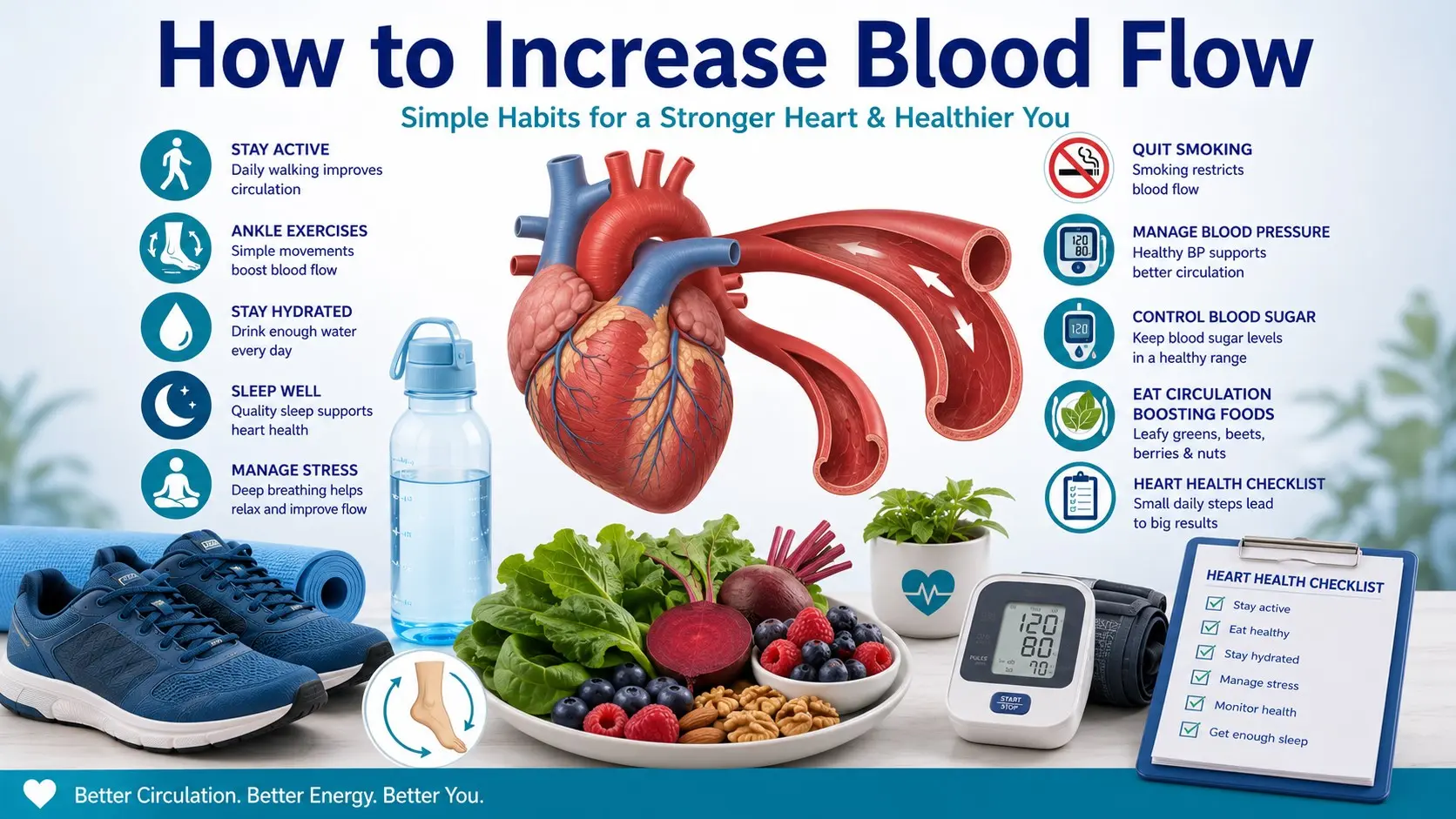
The safest way to increase blood flow is to support your heart and blood vessels every day.
Start with simple habits:
- Walk more often.
- Break up long sitting.
- Do ankle and calf moves.
- Drink enough water.
- Eat heart-friendly foods.
- Stop smoking.
- Manage blood pressure.
- Manage cholesterol.
- Manage blood sugar.
- Sleep better.
- Lower stress.
- Wear loose, comfortable clothing.
These steps can support healthy circulation.
But they do not replace medical care if blood flow is blocked or symptoms are serious.
What does blood flow mean?
Blood flow means blood moving through your body.
Your heart pumps blood.
Your arteries carry blood away from the heart.
Your veins carry blood back to the heart.
Your small blood vessels carry oxygen and nutrients to body tissues.
Healthy blood flow needs:
- A strong heart
- Open arteries
- Healthy veins
- Good blood pressure
- Healthy blood sugar
- Healthy cholesterol
- Movement from your muscles
- Enough fluids
Blood flow is not only about one body part.
It is whole-body health.
Signs Your Blood Flow May Be Poor
Poor blood flow can feel different for each person.
Common signs include:
- Cold hands
- Cold feet
- Numbness
- Tingling
- Leg cramps
- Leg pain when walking
- Pain that improves with rest
- Heavy legs
- Swelling in feet or ankles
- Skin color changes
- Shiny skin on legs
- Slow toenail growth
- Hair loss on legs or feet
- Slow-healing cuts
- Foot sores
- Weak pulse in feet
Some signs are mild.
Some are urgent.
Do not ignore pain, colour changes, wounds, or sudden symptoms.
When poor blood flow is an Emergency
Get urgent medical help now if you have:
- Chest pain
- Shortness of breath
- Sudden face drooping
- Sudden trouble speaking
- Sudden weakness on one side
- Sudden vision loss
- Sudden severe headache
- A swollen, painful calf
- Leg swelling with chest pain
- Coughing blood
- One foot or hand suddenly turns cold
- One foot or hand suddenly turns blue, pale, purple, black, or very dark
- You cannot feel or move a limb
- Sudden, severe leg or arm pain
- A wound with fever, pus, or spreading redness
These signs can point to a blood clot, blocked artery, stroke, heart attack, severe infection, or other emergency.
Do not try home remedies first.
Top Causes of Poor Blood Flow
Poor blood flow can have many causes.
Sometimes more than one cause happens at the same time.
1. Sitting too long
Long sitting can slow leg movement.
Your calf muscles help push blood back to the heart.
When you sit too long, your legs may feel heavy, stiff, or swollen.
2. Peripheral Artery Disease
Peripheral artery disease is often called PAD.
It happens when narrowed arteries reduce blood flow, often to the legs.
It can cause leg pain when walking, cold feet, numbness, slow-healing sores, and weak pulses.
3. Diabetes
Diabetes can damage nerves and blood vessels.
It can also raise the risk of foot wounds and slow healing.
For more help, read Type 2 Diabetes: Symptoms, Causes, and Smart Daily Care.
4. Smoking
Smoking harms blood vessels.
It raises the risk of poor circulation, PAD, heart disease, and stroke.
5. High blood pressure
High blood pressure can damage arteries over time.
For more help, read What Causes High Blood Pressure? And How to Lower Blood Pressure Safely.
6. High Cholesterol
High cholesterol can help plaque buildup in the arteries.
This can reduce blood flow.
For more help, read High Cholesterol: Symptoms, Causes, and Treatment and Cholesterol-Lowering Tips.
7. Blood Clots
A blood clot can block blood flow.
A clot in the leg can cause one-sided swelling, pain, warmth, and skin colour change.
This needs urgent care.
8. Vein Problems
Weak vein valves can let blood pool in the legs.
This may cause swelling, heavy legs, varicose veins, aching, itching, and skin changes.
9. Raynaud’s Phenomenon
Raynaud’s can make fingers or toes change colour in cold or stress.
They may feel numb, cold, or painful.
10. Low Movement and low fitness
Your muscles help move blood.
If you move very little, your circulation may feel worse.
Habit 1: Walk Every Day
Walking is one of the easiest ways to support blood flow.
It helps your heart pump.
It helps your leg muscles move blood.
It can support blood pressure, cholesterol, blood sugar, mood, and energy.
Start small.
Try:
- 5 minutes after breakfast
- 5 minutes after lunch
- 5 minutes after dinner
- A short walk during work breaks
- Walking while taking phone calls
- Parking farther away
- Using stairs is safe
If walking causes leg pain that improves with rest, tell your doctor.
That can be a sign of PAD.
Habit 2: Break Up Long Sitting
Sitting for hours can make legs feel heavy.
Move often.
Try to stand or walk every 30 to 60 minutes.
Simple options:
- Stand during calls.
- Walk to get water.
- Do 10 heel raises.
- Stretch your calves.
- March in place.
- Use a timer.
Minor breaks add up.
Habit 3: Do Ankle and Calf Exercises
Your calf muscles act like a pump.
They help push blood back toward the heart.
Try these while sitting:
- Ankle circles
- Toe raises
- Heel raises
- Toe curls
- Gentle marching
- Calf stretches
Do them gently.
Stop if pain is severe or sudden.
Habit 4: Drink Enough Water
Your body needs fluid to work well.
Water will not cure blocked arteries or blood clots.
But dehydration can make you feel tired, dizzy, cramped, or weak.
Try:
- Drink after waking.
- Drink with meals.
- Keep water at your desk.
- Drink more in the heat.
- Drink more with exercise.
Ask your doctor about fluid needs if you have heart, kidney, liver, or fluid restriction issues.
Habit 5: Eat Foods That Support Blood Vessels
Food can support your heart and blood vessels.
No food can magically open a blocked artery.
But healthy eating can support blood pressure, cholesterol, blood sugar, and weight.
Try to eat more:
- Leafy greens
- Beets
- Berries
- Citrus fruits
- Beans
- Lentils
- Oats
- Whole grains, if tolerated
- Fish rich in omega-3
- Nuts
- Seeds
- Olive oil
- Colorful vegetables
Try to limit:
- Too much salt
- Added sugar
- Fried foods
- Processed meats
- Too much saturated fat
- Too much alcohol
For more food help, visit our Nutrition & Vitamins Hub.
Habit 6: Stop Smoking
If you smoke, quitting is one of the best ways to protect blood flow.
Smoking damages blood vessels.
It raises the risk of PAD, heart disease, stroke, and many other problems.
Quitting is hard.
But support can help.
Ask your doctor about:
- Nicotine replacement
- Quit-smoking medicine
- Coaching
- Support groups
- Quit lines
- A plan for cravings
If you do not smoke, do not start.
Habit 7: Manage Blood Pressure
Blood pressure affects your arteries.
High blood pressure can damage blood vessels over time.
To support blood pressure:
- Check it as advised.
- Take medicine as prescribed.
- Move more.
- Limit salt if advised.
- Sleep well.
- Limit alcohol.
- Manage stress.
- Follow up with your doctor.
Do not stop blood pressure medicine without medical advice.
Habit 8: Manage Cholesterol
Cholesterol can affect artery health.
High LDL cholesterol can contribute to plaque buildup.
To support cholesterol:
- Eat more fibre.
- Choose healthy fats.
- Limit trans fats.
- Limit processed meats.
- Move more.
- Do not smoke.
- Take medicine if prescribed.
Ask your doctor how often to check cholesterol.
Habit 9: Manage Blood Sugar
Blood sugar matters for blood vessels and nerves.
If you have diabetes, follow your care plan.
Daily steps may include:
- Take medicine as prescribed.
- Check blood sugar if advised.
- Eat balanced meals.
- Move safely.
- Check feet daily.
- Wear good shoes.
- Keep medical visits.
Call your doctor for foot cuts, blisters, swelling, redness, warmth, colour changes, or sores.
Habit 10: Sleep and Stress Less
Sleep and stress affect your heart and blood vessels.
Poor sleep can raise stress and make healthy habits harder.
Try:
- Keep a steady wake time.
- Get morning light.
- Limit caffeine late in the day.
- Wind down before bed.
- Keep the room cool and dark.
- Ask about sleep apnea if you snore or wake gasping.
For stress, try:
- Slow breathing
- Prayer or meditation
- Short walks
- Journaling
- Music
- Talking to someone safe
- Reducing one's daily demand
Stress relief is not magic.
But it can help you sleep, move, eat, and care for your body better.
Quick Fixes to Get Blood Moving Today
These are simple steps for mild stiffness or heavy legs.
Do not use them for emergency symptoms.
- Take a 5-minute walk.
- Do 20 ankle circles.
- Do 10 heel raises.
- Stand and stretch.
- Drink water.
- Take a warm shower if safe.
- Wear loose clothing.
- Change tight socks or shoes.
- Raise your legs if they are swollen from standing.
- Breathe slowly for 1 minute.
If symptoms are sudden, severe, one-sided, or linked with chest pain or shortness of breath, get urgent care.
Foods That May Support Blood Flow
Food is not medicine for a blocked artery.
But healthy foods can support vessel health.
Leafy Greens
Spinach, lettuce, kale, and arugula can support a heart-friendly diet.
Beets
Beets contain natural nitrates. These may support nitric oxide pathways in the body.
Berries
Berries contain fibre and plant compounds that fit well in a heart-friendly diet.
Oats and Beans
Oats, beans, and lentils add fibre. Fibre can support cholesterol and blood sugar control.
Fish
Fatty fish can provide omega-3 fats. These can fit into a heart-healthy eating pattern.
Nuts and Seeds
Nuts and seeds can provide healthy fats, fibre, and minerals.
Water
Water supports normal body function. It is not a cure, but it helps your body work well.
Exercises to Increase Blood Flow
Exercise helps blood move.
Choose what is safe for you.
Walking
Walking is simple and low-cost.
Start with a short walk. Add time slowly.
Calf Raises
Stand near a wall or chair.
Lift your heels. Lower slowly.
Do 5 to 10 if safe.
Ankle Pumps
Sit down.
Point toes up. Point toes down.
Repeat 10 to 20 times.
Gentle Cycling
A bike or stationary bike can help with leg movement.
Start easy.
Swimming
Swimming can be gentle on joints.
Do not swim in contact lenses. Use safe footwear around pools if you have diabetes or foot risks.
Strength Training
Light strength work can support muscle and metabolism.
Ask for guidance if you are new, older, or have health problems.
Stretching
Stretching can help stiffness.
It does not replace cardio movement.
How to Increase Blood Flow to Legs
To support leg blood flow:
- Walk daily if safe.
- Break up sitting.
- Do ankle pumps.
- Do calf raises.
- Wear comfortable shoes.
- Avoid tight socks.
- Stop smoking.
- Manage diabetes.
- Manage blood pressure.
- Manage cholesterol.
- Ask about PAD if walking causes leg pain.
For more, read Poor Blood Circulation in Legs: Causes, Symptoms, Natural Remedies, and Quick Fixes.
How to Increase Blood Flow to Feet
To support foot blood flow:
- Check your feet daily.
- Keep feet warm.
- Do toe curls and ankle circles.
- Wear shoes that fit.
- Do not walk barefoot if you have diabetes or numbness.
- Do not use heating pads on numb feet.
- Call a doctor for foot wounds.
For more, read Poor Circulation in Feet: Causes, Symptoms, and Easy Fixes.
How to Support Blood Flow to the Brain
Brain blood flow is serious.
Do not try to self-treat stroke-like symptoms.
For brain and blood vessel health, focus on:
- Blood pressure control
- Cholesterol control
- Blood sugar control
- Not smoking
- Regular physical activity
- Healthy eating
- Sleep
- Medical follow-up
Get urgent help for face drooping, arm weakness, speech trouble, sudden vision loss, sudden severe headache, confusion, or one-sided weakness.
How to Support Blood Flow to the Heart
Your heart needs healthy blood flow, too.
Support heart blood flow by:
- Moving often
- Eating heart-friendly foods
- Not smoking
- Managing blood pressure
- Managing cholesterol
- Managing diabetes
- Sleeping well
- Taking medicine as prescribed
- Getting checkups
Get urgent help for chest pain, pressure, pain spreading to the arm or jaw, shortness of breath, sweating, fainting, or nausea with chest discomfort.
Do Supplements Increase Blood Flow?
Be careful with supplements.
Some products claim to increase blood flow fast.
Some may not work.
Some may be unsafe.
Some may interact with medicines.
Ask a doctor before taking supplements if you:
- Take blood thinners
- Take aspirin
- Take blood pressure medicine
- Take diabetes medicine
- Have kidney disease
- Have liver disease
- Have heart disease
- Are pregnant
- Have surgery planned
Do not use supplements instead of medical care for chest pain, leg pain, a clot, wounds, or sudden symptoms.
Are compression socks safe?
Compression socks may help some vein problems.
They can help some people with swelling or heavy legs.
But they are not safe for everyone.
If you may have PAD or poor blood flow, ask a doctor first.
Compression can be unsafe if arterial blood flow is poor.
What Not to Do
- Do not ignore chest pain.
- Do not ignore stroke-like symptoms.
- Do not ignore one swollen, painful calf.
- Do not massage a possible blood clot.
- Do not use home remedies for sudden cold, blue, numb, or painful limbs.
- Do not smoke.
- Do not sit for hours without moving.
- Do not use heating pads on numb feet.
- Do not walk barefoot if you have diabetes or numb feet.
- Do not stop medicine without medical advice.
- Do not take circulation supplements without checking safety.
- Do not rely on “detox” drinks to fix circulation.
Simple 7-Day Blood Flow Plan
This is a habit plan.
It is not a cure.
Day 1: Walk for 5 Minutes
Take one short walk if safe.
Day 2: Break Sitting
Stand or move every 30 to 60 minutes.
Day 3: Add Ankle Pumps
Do 10 to 20 ankle pumps while sitting.
Day 4: Drink Water
Keep water near you. Drink with meals.
Day 5: Eat a Heart-Friendly Meal
Add vegetables, beans, fish, oats, nuts, seeds, or fruit.
Day 6: Check Your Risk Factors
Think about smoking, blood pressure, cholesterol, diabetes, weight, and family history.
Day 7: Book Care if Needed
Book a visit if you have leg pain, cold feet, numbness, swelling, wounds, chest symptoms, or risk factors.
Daily Blood Flow Checklist
- Did I walk today?
- Did I break up long sitting?
- Did I do ankle or calf moves?
- Did I drink water?
- Did I eat heart-friendly foods?
- Did I avoid smoking?
- Did I take the prescribed medicine?
- Did I check my feet for diabetes?
- Did I sleep enough?
- Do I have any warning signs?
Questions to Ask Your Doctor
- Could I have poor circulation?
- Could this be peripheral artery disease?
- Could this be a blood clot?
- Could diabetes be affecting my blood flow?
- Do I need blood pressure treatment?
- Do I need cholesterol treatment?
- Do I need an ankle-brachial index test?
- Is walking safe for me?
- Are compression socks safe for me?
- Are circulation supplements safe with my medicines?
- What symptoms indicate emergency care?
- How often should I follow up?
FAQ
How to increase blood flow naturally?
You can support blood flow naturally by walking, moving often, doing ankle and calf exercises, drinking water, eating heart-friendly foods, stopping smoking, sleeping well, lowering stress, and managing blood pressure, cholesterol, and blood sugar.
What is the fastest way to get blood flowing?
For mild stiffness from sitting, take a short walk, do ankle pumps, do calf raises, stretch, drink water, and change tight clothing. For sudden, severe symptoms, get urgent medical help.
What foods increase blood flow?
No food instantly fixes circulation. Heart-friendly foods that support blood vessels include leafy greens, beets, berries, beans, oats, fish, nuts, seeds, olive oil, citrus fruits, and colourful vegetables.
What exercises improve blood flow?
Walking, ankle pumps, calf raises, cycling, swimming, light strength training, and stretching can support circulation. Start slowly and ask a doctor if you have symptoms or health risks.
Does drinking water increase blood flow?
Water helps your body work well and may help prevent dehydration. It does not cure blocked arteries, blood clots, or serious circulation problems.
Can poor circulation be serious?
Yes. Poor circulation can be linked with PAD, diabetes, blood clots, heart disease, stroke risk, vein disease, wounds, and infection. Warning signs need medical care.
Is walking good for blood flow?
Yes, walking can support blood flow and heart health. If walking causes leg pain that improves with rest, tell your doctor because this can be a PAD sign.
Do compression socks increase blood flow?
Compression socks may help some vein problems, swelling, or heavy legs. But they may be unsafe if the blood flow is poor. Ask a doctor first if PAD is possible.
What symptoms indicate urgent care?
Urgent symptoms include chest pain, shortness of breath, stroke signs, a swollen, painful calf, coughing up blood, sudden severe limb pain, or one limb becoming cold, blue, pale, numb, weak, or hard to move.
Can supplements increase blood flow?
Some supplements make circulation claims, but they may not be safe for everyone. Ask a doctor before using them, especially if you take blood thinners, blood pressure medicine, diabetes medicine, or have surgery planned.
Related Reading
- Poor Blood Circulation in Legs: Causes, Symptoms, Natural Remedies, and Quick Fixes
- Poor Circulation in Feet: Causes, Symptoms, and Easy Fixes
- Heart & Cardiovascular Health Hub
- Diabetes & Blood Sugar Management Hub
- Pain Management & Conditions Hub
- Nutrition & Vitamins Hub
- Medical Tests & Screenings Hub
- Health Hub
- Type 2 Diabetes: Symptoms, Causes, and Smart Daily Care
- How to Lower Blood Pressure Safely
- What Causes High Blood Pressure?
- High Cholesterol: Symptoms, Causes, and Treatment
- Cholesterol-Lowering Tips
- Healthy Lifestyle Roadmap: 14 Practical Tips for Better Health
Key Takeaway
How to increase blood flow starts with daily habits.
Walk more. Break up sitting. Do ankle and calf moves. Drink water. Eat heart-friendly foods. Stop smoking. Manage blood pressure, cholesterol, and blood sugar. Sleep better. Lower stress.
These steps can support healthy circulation.
But they do not replace medical care.
Get urgent help for chest pain, shortness of breath, stroke signs, a swollen painful calf, coughing blood, or one limb that suddenly becomes cold, blue, pale, numb, weak, very painful, or hard to move.
Sources
- American Heart Association — Why Physical Activity Is Important for Health and Well-Being
- American Heart Association — Recommendations for Physical Activity in Adults
- CDC — Benefits of Physical Activity
- NHS — Peripheral Arterial Disease Treatment
- Cleveland Clinic — Poor Circulation
- Cleveland Clinic — How to Improve Blood Circulation Naturally
- Mayo Clinic — Peripheral Artery Disease Diagnosis and Treatment
- Mayo Clinic — Peripheral Artery Disease Symptoms and Causes
- NHS — Deep Vein Thrombosis
- NIDDK — Diabetes and Foot Problems

Health & wellness writer with 30+ years of experience in nutrition, fitness, and healthy aging. Founder of NextFitLife.com — evidence-based health guidance.