Last Updated: August 4, 2026
Next Review: August 2027, or sooner if major vascular guidance changes
Review Status: Editorially reviewed and checked against current vascular, heart, diabetes, and public health guidance
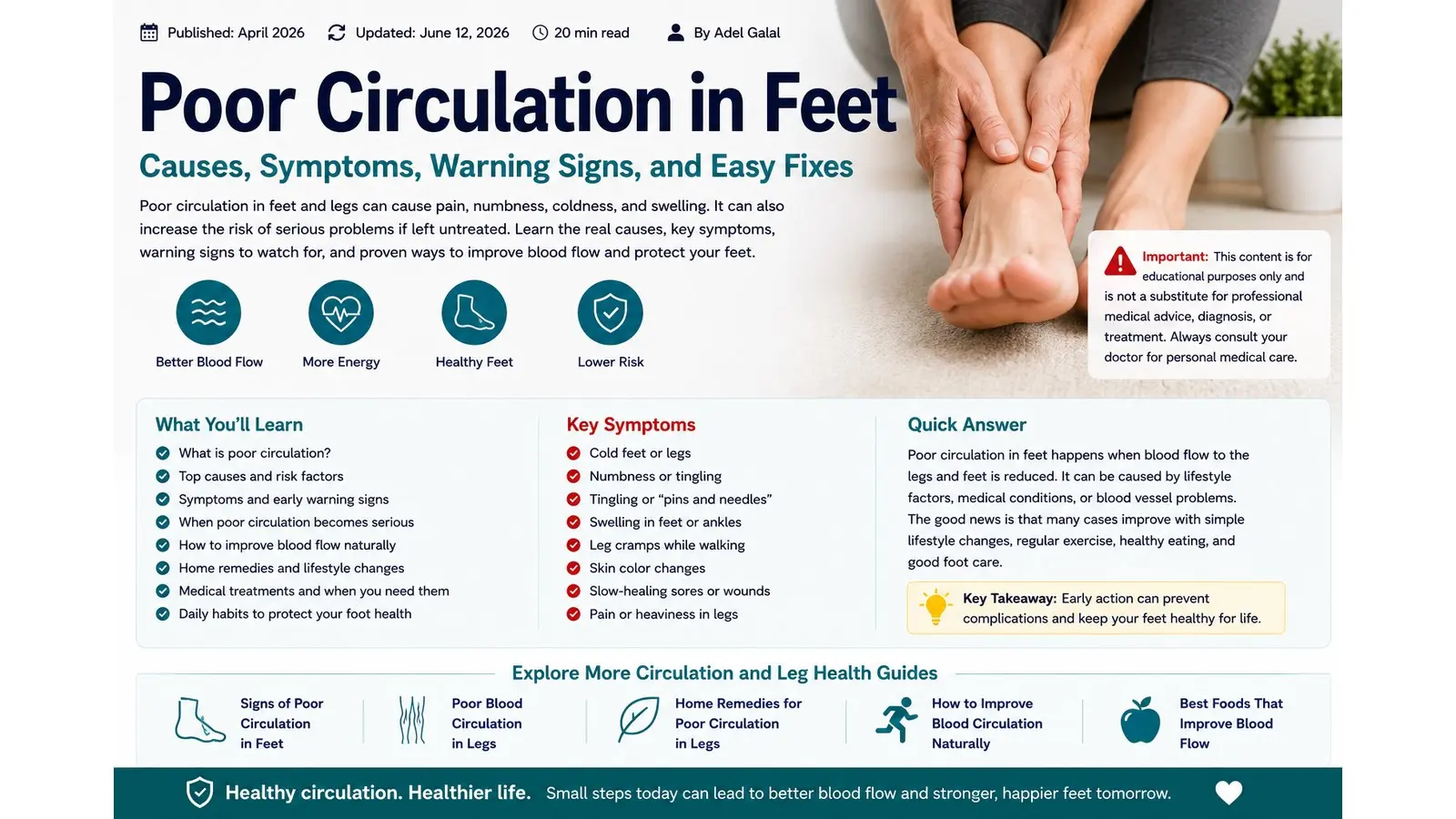
Poor circulation in feet can make your toes feel cold. Your feet may tingle or go numb. Your calves may cramp when you walk. Your ankles may swell. A small cut may take too long to heal.
These signs do not all mean the same thing.
Some come from narrow arteries. Some come from weak veins. Some come from nerve damage, diabetes, a blood clot, heart failure, Raynaud phenomenon, or another problem.
This guide combines the best information from four older NextFitLife articles into a single, clear resource. It explains the symptoms, causes, safe home steps, tests, treatment, foot care, and urgent warning signs.
Quick answer
Poor circulation in feet is not one disease. It is a symptom that may come from an artery problem, a vein problem, nerve damage, diabetes, a blood clot, or another condition. Safe first steps include walking when appropriate, moving the ankles, avoiding long sitting, stopping smoking, wearing good shoes, checking the feet each day, and managing blood sugar, blood pressure, and cholesterol. A cold, pale, blue, numb, very painful, or weak foot needs urgent care.
Emergency warning
Call your local emergency number if one foot or leg suddenly becomes very painful, pale, blue, cold, numb, weak, hard to move, or very different from the other side. Also get urgent help for a swollen, warm, red, painful leg with chest pain, shortness of breath, fainting, or coughing blood.
Medical note: This content is for general educational purposes and does not replace professional medical advice, diagnosis, or treatment. Consult an appropriately qualified healthcare professional for personal medical concerns. This article explains published guidance and does not provide a personal clinical assessment. Always consult qualified medical professionals for diagnosis and treatment of any health condition.
What you will learn
- What poor circulation really means
- The difference between artery, vein, and nerve problems
- The most common symptoms
- Urgent warning signs
- The main causes
- Safe home steps and their limits
- Why compression and massage are not safe for everyone
- How circulation is tested
- How peripheral artery disease is treated
- How diabetes changes foot care
What Does Poor Circulation in Feet Mean?
The phrase poor blood flow is often used for any cold, numb, swollen, painful, or tired foot.
That can be misleading.
Arteries carry oxygen-rich blood from the heart to the legs and feet. Veins carry blood back toward the heart. Nerves carry feeling and movement signals. A problem in any of these systems can create similar symptoms.
The safest question is not only, “How can I improve circulation?”
The better question is, “What is causing this symptom?”
Artery, Vein, and Nerve Problems Are Different
| Problem | Common clues | What may help |
|---|---|---|
| Artery problem | Cold foot, weak pulse, pain with walking, pain at rest, pale or blue skin, slow healing wound | Vascular testing, heart risk treatment, structured walking, medicine, or a procedure |
| Vein problem | Swelling, heaviness, aching, varicose veins, itching, brown skin near the ankle movement | , Elevation, professional compression advice, or vein treatment |
| Nerve problem | Burning, pins and needles, numbness, electric pain, reduced feeling | Find the cause, protect the feet, manage diabetes, and use treatment for nerve pain when prescribed |
These problems can happen together.
A person with diabetes may have both peripheral artery disease and peripheral neuropathy. A person with vein disease may also have heart failure. A person with a blood clot may later develop long-term vein symptoms.
Common Signs of Poor Circulation in Feet
Potential signs include:
- Cold feet or cold toes
- Numbness
- Tingling or pins and needles
- Leg cramps when walking
- Pain that improves after rest
- Foot pain while resting or lying down
- Pale, blue, purple, red, or darker skin
- Shiny or thin-looking skin
- Hair loss on the feet or lower legs
- Slow toenail growth
- Weak or hard-to-feel foot pulses
- Swollen feet or ankles
- Heavy or tired legs
- Slow- healing cuts, blisters, or sores
- Reduced walking distance
One symptom alone cannot diagnose the cause.
Cold feet may come from cold weather, Raynaud phenomenon, thyroid disease, anemia, anxiety, or normal temperature differences.
Numbness may come from diabetes, a trapped nerve, back disease, vitamin deficiency, or medicine.
Swelling often points toward a vein, heart, kidney, liver, medicine, or lymph problem rather than blocked arteries alone.
The Most Important Warning Signs
Sudden cold, pale, painful, or weak foot
A sudden loss of blood flow is called acute limb ischemia.
Vascular specialists often describe six warning signs:
- Sudden severe pain
- Pale color
- Weak or missing pulse
- Numbness or tingling
- Weakness or loss of movement
- A foot or leg that feels much colder than the other side
This is an emergency. Fast treatment may save the limb.
Rest pain, gangrene, or a wound that does not heal
Pain in the foot while resting, especially pain that wakes you at night, can be a sign of severe artery disease.
Black tissue, an open wound, a deep ulcer, or a sore that does not improve needs prompt vascular and wound care.
One swollen, warm, red, painful leg
This can be a sign of deep vein thrombosis.
A clot can travel to the lungs.
Call emergency services for shortness of breath, chest pain, fainting, a fast heartbeat, or coughing blood.
Infection in a foot wound
Seek prompt care for spreading redness, warmth, swelling, pus, bad smell, fever, red streaks, black skin, or increasing pain.
A person with diabetes or reduced feeling may have a serious wound without severe pain.
Major Causes of Poor Circulation in Feet
Peripheral artery disease
Peripheral artery disease, often called PAD, happens when plaque narrows arteries that carry blood to the legs and feet.
The classic symptom is intermittent claudication. This is aching, cramping, heaviness, fatigue, or pain during walking that improves after rest.
Many people with PAD do not have classic pain. They may walk less without noticing why. They may blame age, arthritis, or back pain.
Risk rises with:
- Smoking
- Diabetes
- High blood pressure
- High cholesterol
- Kidney disease
- Older age
- A history of heart disease or stroke
PAD matters beyond the feet. It is a sign of disease in the blood vessel system and is linked with heart attack and stroke risk.
Read the Diabetes and Heart Diseases Guide for the wider heart risk picture.
Diabetes and nerve damage
Diabetes can damage blood vessels and nerves.
Diabetic neuropathy may cause burning, tingling, pain, or loss of feeling.
Reduced feeling makes cuts, pressure, and blisters easy to miss. Reduced blood flow can slow healing.
This combination raises the risk of ulcers and infection.
A warm, red, swollen foot in a person with neuropathy may also be a sign of Charcot foot and needs prompt medical care.
Chronic vein disease and varicose veins
Leg veins contain valves that help move blood upward.
When these valves do not work well, blood can pool in the legs.
Potential signs include:
- Ankle swelling
- Heaviness
- Aching after standing
- Varicose veins
- Itchy skin
- Brown or red skin near the ankle
- A venous ulcer near the ankle
Symptoms may improve with walking or elevation.
Compression may help vein disease, but arterial blood flow should be checked when PAD is possible.
Blood clots
A DVT usually affects one leg.
It may cause swelling, warmth, pain, tenderness, redness, or discoloration.
Symptoms are not reliable enough to diagnose a clot at home. Ultrasound or other medical testing is needed.
Raynaud phenomenon
Raynaud phenomenon causes small blood vessels in the toes or fingers to narrow during cold or stress.
The toes may turn white, blue, and then red. They may feel cold, numb, tingly, or painful.
Frequent, severe, one sided, or ulcer causing attacks need assessment.
Heart failure, kidney disease, and fluid buildup
Heart failure can cause swelling in both feet and ankles, weight gain, tiredness, and shortness of breath.
Kidney disease can also cause fluid buildup.
New swelling with trouble breathing needs prompt care.
Smoking and nicotine
Smoking damages artery walls and raises PAD risk.
Nicotine also narrows blood vessels.
Stopping tobacco and nicotine is one of the most important steps for vascular health.
Long sitting, long standing, and low movement
The calf muscles help move blood through the veins.
Long sitting can reduce this muscle pump. Long standing can increase vein pressure.
Movement breaks may reduce stiffness and swelling, but they do not remove a blocked artery or treat a clot.
Poor Circulation in one foot versus both feet
One-sided symptoms deserve special attention.
A sudden change in one foot may come from an artery blockage, a blood clot, injury, infection, or nerve compression.
Symptoms in both feet may come from PAD, diabetes, neuropathy, vein disease, heart failure, kidney disease, medicine, or cold exposure.
This is only a pattern. It is not a diagnosis.
Poor Circulation in Feet at Night
Night symptoms can have several causes.
Severe PAD may cause burning or aching pain in the toes or forefoot while lying down. Some people say the pain improves when the foot hangs over the side of the bed.
Neuropathy can cause burning and tingling at night.
Night cramps may come from muscle fatigue, medicine, dehydration, or other causes.
Restless legs cause an urge to move the legs and differ from blocked circulation.
Night pain with cold toes, colour change, or a wound needs prompt assessment.
Safe Home Steps That May Help
Home steps should support care. They should not delay diagnosis.
1. Walk when it is safe
Walking is one of the most useful treatments for stable PAD.
A structured program may ask a person to walk until moderate discomfort, rest, and repeat.
Do not start this plan on your own when you have rest pain, a foot wound, severe symptoms, recent surgery, severe heart symptoms, or major balance problems.
Read How to Improve Blood Circulation for general movement habits.
2. Move the ankles during long sitting
Try ankle pumps, ankle circles, and gentle calf raises.
Stand or walk for a few minutes each hour when safe.
These steps support the calf muscle pump. They do not treat DVT or severe PAD.
3. Stop smoking
Ask a healthcare professional about counselling, quit support, and approved medicine.
Do not wait for severe symptoms.
4. Manage blood sugar, blood pressure, and cholesterol
These conditions affect blood vessels.
Take prescribed medicine. Keep follow-up visits. Ask about your personal goals.
5. Wear shoes that fit
Shoes should not rub, squeeze, or create pressure points.
Check inside the shoes before putting them on.
This matters when the feet are numb.
6. Keep the feet warm, not hot
Use loose socks and warm footwear.
Do not use a heating pad, hot water bottle, or very hot foot bath on numb feet. Burns may happen without being felt.
7. Drink fluids based on your needs
Dehydration can make a person feel weak or dizzy.
Water does not open blocked arteries.
People with heart failure, kidney disease, or a fluid limit should follow personal advice.
8. Eat for heart and vessel health
Choose more vegetables, fruit, beans, lentils, whole grains, fish, nuts, seeds, and unsaturated fats when they fit your health plan.
Limit tobacco, excess sodium, added sugar, and foods high in saturated fat.
No food or supplement can dissolve PAD at home.
Compression Socks: Helpful for Some, Unsafe for Others
Compression stockings can help vein-related swelling and heaviness.
They are not a general cure for every circulation problem.
Strong compression can reduce already limited arterial blood flow.
Ask for a vascular check before compression when you have:
- A cold foot
- A weak pulse
- Pain during walking
- Rest pain
- A foot wound
- Diabetes with PAD
- A history of artery surgery
The correct size and pressure also matter.
Leg Elevation: When It Helps and When It May Not
Elevation may help swelling from vein disease or fluid buildup.
Raise the legs on pillows while resting if a healthcare professional says it is suitable.
Severe arterial pain can become worse when the foot is raised.
If elevation causes more pain, coldness, numbness, or colour change, stop and seek advice.
Massage and Foot Devices
Gentle massage may feel relaxing.
It cannot open a blocked artery or remove a blood clot.
Avoid massage when one leg is suddenly swollen, warm, red, or painful.
Avoid strong massage over a wound, infection, fragile skin, recent surgery, or severe artery disease.
Vibration devices, foot spas, and magnetic products are not substitutes for vascular testing.
Home Remedies That Need Caution
Some “natural” circulation remedies lack evidence or can be unsafe.
Herbs and supplements
Ginkgo, garlic pills, fish oil, vitamin E, turmeric, and other products can interact with blood thinners or increase bleeding.
Supplements do not replace PAD treatment.
Very hot or alternating water
Hot water can burn numb feet.
Cold exposure can trigger Raynaud symptoms.
Use comfortable water and check it with your hand or a thermometer.
Salt tablets
Salt tablets can worsen blood pressure, swelling, heart failure, or kidney disease.
Self-testing pulses and nail colour
Foot pulses can be hard to find even in healthy people.
Nail colour return can be affected by temperature, nail disease, polish, and technique.
These home checks cannot rule out PAD.
Daily Foot Care
Daily care is important when circulation or feeling is reduced.
- Look at the top, sole, heel, sides, and between the toes
- Use a mirror when needed
- Wash with comfortable water
- Dry well, especially between the toes
- Use moisturizer on dry skin, but not between the toes
- Wear clean socks
- Wear supportive shoes
- Do not walk barefoot
- Trim nails carefully
- Ask a foot professional for help when nails are thick, or feeling is poor
Call a healthcare professional for a blister, cut, crack, red area, swelling, warmth, drainage, colour change, or sore.
How Doctors Check Circulation in the Feet
Diagnosis starts with the story and a physical exam.
A clinician may check:
- Skin color and temperature
- Wounds and pressure areas
- Foot pulses
- Capillary refill
- Nerve feeling
- Muscle strength
- Swelling
- Varicose veins
- Walking symptoms
Ankle brachial index
The ankle brachial index, or ABI, compares blood pressure at the ankle with blood pressure in the arm.
It is a common first test for PAD.
Diabetes and kidney disease can make ankle arteries stiff. A toe pressure or toe brachial index may then be useful.
Doppler and vascular ultrasound
Ultrasound can study blood flow and look for narrowing, blockage, or a vein clot.
Further imaging
CT angiography, MR angiography, or catheter angiography may be used when a procedure is being considered or the diagnosis is unclear.
Blood tests
Tests may include blood sugar, A1C, cholesterol, kidney function, blood count, and other tests based on symptoms.
Visit the Medical Tests and Screenings Hub for general test education.
Medical treatment depends on the Cause
Peripheral artery disease treatment
PAD care may include:
- Stopping smoking
- Structured or supervised exercise
- Cholesterol-lowering medicine
- Blood pressure and diabetes treatment
- Antiplatelet or other blood-thinning treatment for selected patients
- Medicine for walking symptoms in selected patients
- Angioplasty, stenting, or bypass when blood flow needs to be restored
Do not start aspirin or another blood thinner without professional advice.
Vein disease treatment
Care may include movement, elevation, prescribed compression, skin care, wound care, or a vein procedure.
Blood clot treatment
DVT usually needs anticoagulant medicine and medical follow-up.
A blood clot cannot be treated with massage, water, or exercise alone.
Raynaud treatment
Keeping the whole body warm and avoiding nicotine may reduce attacks.
Some people need medicine or evaluation for an autoimmune condition.
Diabetic foot treatment
Treatment may involve wound care, pressure relief, infection treatment, glucose care, vascular assessment, special shoes, and podiatry.
Special Advice for People With Diabetes
Diabetes can reduce feeling before a person notices a circulation problem.
Use these steps:
- Check the feet every day
- Remove shoes and socks during medical visits so the feet can be checked
- Wear shoes and socks
- Do not cut corns or calluses yourself
- Do not use acid corn removers
- Protect insulin and glucose supplies from extreme temperatures
- Call quickly for any wound or colour change
Read the Diabetes and Heart Diseases Guide and the Diabetes and Kidney Disease Guide.
Questions to Ask a Healthcare Professional
- Does this look like an artery, vein, nerve, or joint problem?
- Do I need an ABI or toe pressure test?
- Is compression safe for me?
- Is walking safe with my symptoms?
- Do I need a vascular specialist or podiatrist?
- What should I do about this wound?
- What are my blood pressure, cholesterol, and A1C goals?
- Could my medicine cause swelling or cold feet?
- Which symptoms mean emergency care?
Common Myths
Myth: Cold feet always mean blocked arteries
Cold feet have many causes.
Myth: Swelling always means poor arterial circulation
Swelling more often points toward veins, fluid buildup, medicine, injury, or inflammation.
Myth: Compression socks are safe for everyone
They can be unsafe when severe PAD is present.
Myth: Massage can break up a blood clot safely
Massage is not a DVT treatment and should be avoided when a clot is possible.
Myth: A vitamin can cure poor circulation
No vitamin opens a blocked artery.
Myth: If there is no pain, circulation is normal
PAD and diabetic foot problems can occur with little or no pain.
My Research Approach
I have more than thirty years of personal experience in health, fitness, nutrition, and healthy aging.
Circulation symptoms need extra care. I do not use personal experience to diagnose a vascular problem.
I compare important claims with current public health, vascular, heart, and diabetes guidance.
Compression is not safe for everyone. Massage does not treat a blood clot. Home pulse checks cannot diagnose the cause of symptoms, and supplements are not a cure for vascular disease.
My goal is to help readers notice warning signs, ask better questions, and get the right care sooner.
Conclusion
Poor circulation in feet can come from arteries, veins, nerves, diabetes, blood clots, heart disease, Raynaud phenomenon, or other conditions.
Safe habits matter. Walk when it is safe. Move often. Stop smoking. Wear good shoes. Check the feet every day. Manage blood sugar, blood pressure, and cholesterol.
Do not rely on home remedies when a foot is cold, pale, blue, numb, very painful, weak, wounded, or suddenly different.
Choose one action today. Check your feet. Book an overdue vascular or diabetes visit. Ask whether compression is safe. Or share the urgent warning signs with your family.
Explore Related NextFitLife Guides
- Health Hub
- Heart and Cardiovascular Health Hub
- Diabetes and Blood Sugar Management Hub
- Medical Tests and Screenings Hub
- First Aid and Home Remedies Hub
- How to Improve Blood Circulation
- Foods That Support Blood Flow
- Diabetes and Heart Diseases
- Diabetes and Kidney Disease
- Heart Failure Symptoms
- Signs of a Heart Attack
- Stroke Symptoms and FAST Signs
References and Sources
- American Heart Association: Peripheral artery disease symptoms, risks, diagnosis, and treatment. Updated in 2026. Open source
- National Institute of Diabetes and Digestive and Kidney Diseases: Diabetes and foot problems, including nerve damage, poor blood flow, sores, and daily foot care. Open source
- Centers for Disease Control and Prevention: Venous thromboembolism, DVT symptoms, pulmonary embolism warning signs, diagnosis, and prevention. Open source
- National Heart, Lung, and Blood Institute: Varicose veins, swelling, aching, skin changes, diagnosis, and treatment. Open source
- Society for Vascular Surgery: Acute limb ischemia and the urgent warning signs of sudden loss of blood flow. Open source

Adel Galal has more than thirty years of personal experience with health, fitness, nutrition, and healthy aging. He uses careful research and consultation with healthcare providers to explain complex topics in simple language.
Poor circulation, PAD, blood clots, diabetic foot problems, wounds, and medicine are high-risk medical topics. This article was source-checked against current vascular, heart, diabetes, and public health guidance. It was not medically reviewed by a named vascular specialist.
Frequently Asked Questions About Poor Circulation in Feet
What are the most common signs of poor circulation in feet?
Common signs include cold toes, numbness, tingling, pain or cramping during walking, skin colour changes, shiny skin, slow nail growth, weak foot pulses, swelling, and cuts or sores that heal slowly. These symptoms can also have other causes, so persistent changes need a professional check.
What causes poor circulation in feet?
Possible causes include peripheral artery disease, diabetes, nerve damage, smoking, high blood pressure, high cholesterol, chronic vein disease, blood clots, Raynaud phenomenon, heart failure, kidney disease, and long periods of sitting or standing.
When is poor circulation in one foot an emergency?
Call emergency services if one foot or leg suddenly becomes very painful, cold, pale, blue, numb, weak, hard to move, or very different from the other side. These signs may mean acute limb ischemia, which needs immediate treatment.
Can walking improve circulation in the feet?
Walking can help many people, especially those with stable peripheral artery disease, because the leg muscles support blood flow and walking tolerance. The safest plan depends on symptoms, wounds, heart health, balance, and diabetes complications. Severe rest pain or a new wound needs medical care before an exercise plan.
Should I wear compression socks for poor circulation?
Compression can help some vein-related swelling, but it may be unsafe when significant peripheral artery disease is present. Do not start strong compression for a cold, painful, pale, numb, or wounded foot until a qualified professional checks arterial blood flow.
Does elevating the legs improve circulation?
Elevation may reduce swelling caused by vein problems or fluid buildup. It may worsen pain caused by severe arterial disease in some people. The cause of the symptom should be identified before elevation is used as the main treatment.
Can massage fix poor circulation in the feet?
Massage may feel relaxing, but it does not open a blocked artery or treat a blood clot. Avoid massage when one leg is suddenly swollen, red, warm, or painful, or when a foot is cold, pale, blue, numb, or severely painful.
How do doctors test circulation in the feet?
A clinician may check skin, temperature, wounds, pulses, and nerve feeling. Tests may include an ankle-brachial index, toe pressure, Doppler ultrasound, vascular ultrasound, blood tests, or imaging. People with diabetes or kidney disease may need toe-based testing when ankle arteries are stiff.
Why do diabetes and poor circulation cause foot wounds?
Diabetes can damage both nerves and blood vessels. Loss of feeling makes an injury easy to miss, while reduced blood flow can slow healing. Daily foot checks, supportive shoes, glucose care, and prompt treatment of any wound are important.
Can poor circulation in feet be cured at home?
Home remedies can support circulation and reduce risk, but they cannot cure a blocked artery, a blood clot, severe vein disease, an infection, or a diabetic foot ulcer. Treatment must match the cause.

Health & wellness writer with 30+ years of experience in nutrition, fitness, and healthy aging. Founder of NextFitLife.com — evidence-based health guidance.