
Last updated: October 13, 2026
Written by: Adel Galal, Founder and Lead Writer at NextFitLife
Review status: Editorially reviewed and checked against current digestive health guidance. This article has not been medically reviewed by a doctor or gastroenterologist.
That tight, swollen feeling in your belly can be hard to ignore. You may feel pressure under your ribs, hear stomach noises, burp more than usual, or feel as if a bubble is stuck inside your abdomen.
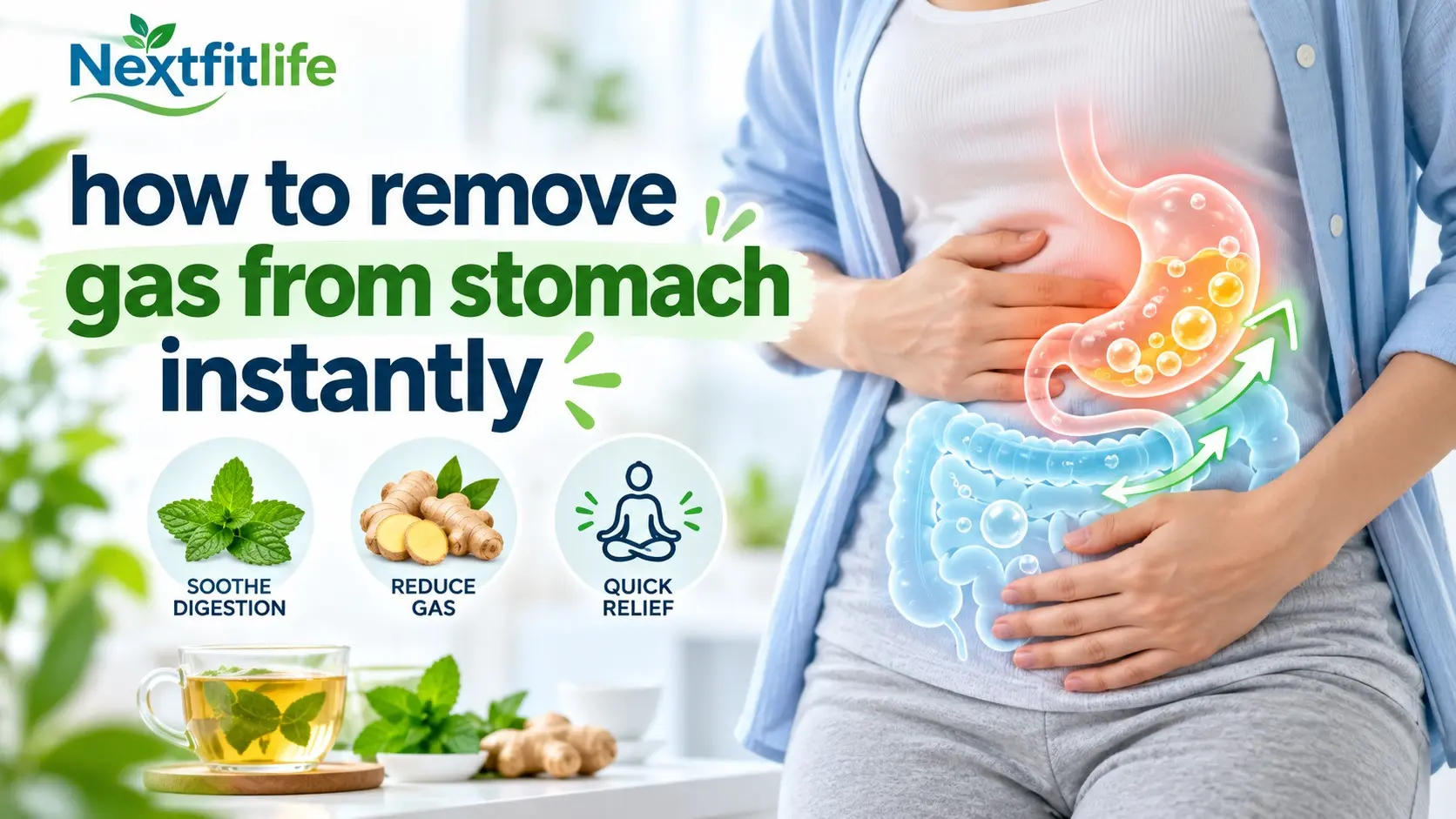
If you are searching for how to remove gas from stomach instantly, the first thing to know is that there is no guaranteed instant cure. However, several simple steps may help ordinary trapped gas move through your digestive system faster. Walking, sitting upright, changing position, avoiding more swallowed air, and treating a clear cause such as constipation or lactose intolerance can all help.
This guide gives you 21 practical options, starting with the quickest and simplest things to try. It also explains when gas may be more than gas.
Quick answer: For mild gas without warning signs, start by walking for 10 to 15 minutes, sit upright, loosen tight clothing, let yourself burp or pass gas naturally, and sip a non fizzy drink. If constipation is part of the problem, dealing with it may reduce the pressure. If dairy clearly triggers symptoms, lactose intolerance may be involved. Over the counter simethicone is another option for some adults when used according to its label.
Important: This article is for general information and education. It does not replace medical advice, diagnosis, or treatment. Severe or unexplained abdominal pain should not automatically be blamed on gas.
When Gas Pain Needs Urgent Medical Care
Most intestinal gas is harmless, but some serious problems can feel like gas at first. Do not keep trying home remedies if something feels very wrong.
Seek urgent medical care if you have severe or constant abdominal pain, a very swollen or hard abdomen, repeated vomiting, chest pain, trouble breathing, fainting, blood in your stool, black stool, high fever, or an inability to pass stool or gas.
You should also arrange medical advice if abdominal bloating keeps coming back, suddenly changes, is getting worse, or appears with unexplained weight loss, ongoing constipation, diarrhea, trouble swallowing, or loss of appetite.
Table of Contents
- What stomach gas really is
- 21 ways to relieve trapped gas
- The fastest order to try them
- Common causes of gas
- Foods and habits that may trigger gas
- How to prevent gas from returning
- When recurring gas needs a medical check
- Frequently asked questions
- References and Sources
What Is Stomach Gas?
Gas is a normal part of digestion. It enters your digestive tract in two main ways. You swallow air when you eat, drink, talk, chew gum, or drink fizzy beverages. Bacteria in your large intestine also make gas when they break down carbohydrates that were not fully digested earlier in the gut.
The gas can leave through your mouth as belching, or through your bowel as flatulence. Problems often start when gas feels trapped, moves slowly, or stretches a sensitive part of the gut.
Some people also feel strong gas pain even when the actual amount of gas is normal. Conditions such as irritable bowel syndrome can change how the gut senses pressure and movement.
If your belly also makes loud noises, see our guide to stomach gurgling and gas.
21 Proven Ways to Help Remove Gas From the Stomach
1. Take a Gentle Walk
Start with movement. A slow walk can encourage normal bowel movement and may help trapped gas travel through the intestine.
You do not need a workout. Try walking comfortably for about 10 to 15 minutes. Stop if movement makes the pain worse or if you feel dizzy or unwell.
2. Sit Upright
Slouching or lying flat after a large meal can make upper abdominal pressure feel worse for some people. Sit upright with your shoulders relaxed and give your abdomen room to move.
If you also have heartburn or reflux, staying upright after eating may feel more comfortable than lying flat.
3. Loosen Tight Clothing
A tight belt, waistband, or shapewear can press against an already bloated abdomen. Loosen anything that feels restrictive.
This does not remove gas by itself, but reducing outside pressure may make bloating easier to tolerate while the gas moves.
4. Do Not Hold Gas In
If you need to burp or pass gas, find a private place and let it happen naturally. Holding gas can add to the pressure and discomfort.
Do not strain hard. Normal gas should pass without force.
5. Try a Gentle Knee to Chest Position
Lie on your back if that feels comfortable. Bring one knee gently toward your chest, then change sides. You can also bring both knees toward your body without forcing the movement.
This position may help some people move intestinal gas. Stop if it causes sharp pain, dizziness, breathing trouble, or worsening discomfort.
6. Change Position Slowly
Gas pockets move. Sometimes a simple change from sitting to standing, or from lying down to sitting upright, is enough to change the feeling of pressure.
Move slowly and pay attention to what feels comfortable rather than forcing a special pose.
7. Use Gentle Belly Breathing
Place one hand over your abdomen. Breathe in gently through your nose and allow your belly to rise. Then breathe out slowly.
Relaxed breathing may reduce muscle tension around your abdomen. It can also help if stress makes you swallow extra air.
8. Apply Comfortable Warmth
A warm towel or heating pad may feel soothing when bloating comes with mild cramping. Keep the temperature comfortable and protect your skin from direct high heat.
Heat is mainly a comfort measure. It should never be used to hide severe or unexplained abdominal pain.
9. Sip Water or Another Non Fizzy Drink
Drink slowly instead of gulping. Water does not dissolve gas instantly, but fluids support normal digestion and are especially useful if constipation is adding to the pressure.
Avoid drinking very quickly because that can cause you to swallow more air.
10. Skip Carbonated Drinks
Soda, sparkling water, fizzy energy drinks, and other carbonated drinks add gas to the digestive system. If you already feel bloated, choose a still drink instead.
This simple change is especially useful when your symptoms begin after fizzy drinks.
11. Stop Chewing Gum for Now
Chewing gum can make you swallow more air. That swallowed air is sometimes called aerophagia.
If you burp often or feel upper stomach pressure, take a break from gum and hard candies and see whether the symptoms improve.
12. Eat More Slowly
Fast eating can bring extra air into your stomach. Slow down, take smaller bites, and chew before taking the next bite.
This is not just a long term prevention tip. If you still need to eat while bloated, a smaller and slower meal may feel easier than another large meal.
13. Eat a Smaller Meal
A very full stomach can make pressure and bloating feel worse. If you are already uncomfortable, choose a smaller portion instead of adding another large meal.
Large meals may also worsen indigestion or reflux in some people.
14. Check Whether Constipation Is Trapping Gas
Constipation can make it harder for gas to move through the bowel. Ask yourself when you last had a comfortable bowel movement and whether your normal bowel pattern has changed.
If constipation is common for you, see our guide to simple constipation exercises. Do not use strong laxatives repeatedly without understanding why constipation is happening.
15. Consider Simethicone When Appropriate
Simethicone is an over the counter medicine used for symptoms such as gas pressure, fullness, and bloating. It changes the surface tension of gas bubbles so they can combine and pass more easily.
It does not treat every cause of bloating, and Mayo Clinic notes that clinical evidence for gas symptom relief is limited. Follow the product label and ask a pharmacist or healthcare professional if you take other medicines, are pregnant, or are unsure whether it is suitable for you.
16. Use Lactase If Dairy Is the Clear Trigger
If milk, ice cream, or other dairy products repeatedly cause gas, cramps, and sometimes diarrhea, lactose intolerance may be the reason.
Lactase products can help some people digest lactose. They are not a general gas cure, so they make the most sense when lactose is the actual trigger.
17. Consider Alpha Galactosidase Before Certain Foods
Some over the counter enzyme products contain alpha galactosidase. The enzyme can help break down certain carbohydrates found in beans and some vegetables before gut bacteria ferment them.
These products are mainly preventive, so they are generally taken with the trigger food rather than after severe bloating has already started. Check the label and ask a healthcare professional if you have a medical condition.
18. Reduce Sugar Alcohols if They Trigger You
Sorbitol, mannitol, xylitol, erythritol, maltitol, and similar sweeteners can cause gas in some people. They are often found in sugar free gum, sweets, protein products, and low sugar foods.
Check ingredient labels when gas appears after these foods. You do not need to remove every sweetener unless you notice a clear pattern.
19. Increase Fiber Gradually Rather Than Suddenly
Fiber is important for health, but a sudden large increase can lead to more gas. Beans, lentils, whole grains, vegetables, and fiber supplements may be harder to tolerate if you increase them too quickly.
Build fiber intake step by step and drink enough fluid. For broader food guidance, see our gut health foods guide.
20. Keep a Food and Symptom Record
Recurring gas after eating is easier to understand when you record what happened before it started.
Write down meals, drinks, bowel movements, symptoms, and anything unusual. Look for repeated patterns rather than blaming one food after a single episode.
Possible triggers include dairy, fizzy drinks, very large meals, beans, lentils, onions, some fruits, high fiber foods, and sugar alcohols.
21. Treat the Cause Instead of Chasing Gas
If gas keeps returning, the best answer is usually not another quick trick. Find out what is causing it.
Repeated symptoms can occur with lactose intolerance, constipation, irritable bowel syndrome, celiac disease, functional dyspepsia, reflux, problems digesting certain carbohydrates, and other digestive conditions.
If bloating is a common problem, you may also find our guide to foods that can reduce bloating useful.
Quick Relief Guide
| Situation | First Step | Next Step |
|---|---|---|
| Gas after a large meal | Walk gently | Sit upright and avoid another large meal |
| Gas after fizzy drinks | Stop carbonation | Sip still water slowly |
| Gas with constipation | Gentle movement and fluids | Address recurring constipation |
| Gas after dairy | Note the dairy trigger | Discuss lactose intolerance or lactase |
| Frequent unexplained bloating | Keep a symptom record | Ask a healthcare professional about the cause |
| Severe pain or red flags | Stop self treating | Seek medical care |
What Is the Fastest Order to Try?
If you have ordinary mild gas and no warning signs, keep the first attempt simple.
- Stand up and walk gently for 10 to 15 minutes.
- Sit upright and loosen tight clothing.
- Let yourself burp or pass gas naturally.
- Sip still water slowly.
- Try a comfortable knee to chest position.
- Avoid more fizzy drinks, gum, and large meals.
- Think about constipation or a clear food trigger.
- If needed, ask a pharmacist about an appropriate over the counter option.
This order focuses first on low risk steps that do not depend on guessing the cause.
What Causes Gas in the Stomach and Intestines?
Gas usually comes from swallowed air and from bacteria breaking down undigested carbohydrates in the colon.
You may swallow more air when you eat quickly, drink with a straw, chew gum, suck hard candies, talk while eating, smoke, or drink carbonated beverages.
Food related gas is more personal. A food that makes one person very bloated may cause no problem for someone else.
Common triggers may include beans, lentils, broccoli, cauliflower, onions, some fruits, whole grains, dairy in people with lactose intolerance, and products containing sugar alcohols.
Understanding how long food moves through the digestive system can also help put symptoms in context. Read how long it takes to digest food for a simple explanation.
Gas, Bloating, and FODMAPs
FODMAPs are fermentable carbohydrates that can trigger bloating, pain, and bowel changes in some people, especially some people with IBS.
A low FODMAP diet is not meant to become a permanent list of forbidden foods. It is usually a short, structured process followed by reintroduction so you can find which foods actually matter.
Do not start removing large groups of healthy foods just because you have one episode of gas. If symptoms are frequent or severe, a registered dietitian or qualified healthcare professional can help you avoid unnecessary restrictions.
How to Prevent Gas From Coming Back
The best prevention plan depends on your trigger. Start with simple habits.
- Eat slowly.
- Chew food well.
- Choose smaller meals when large meals cause symptoms.
- Limit fizzy drinks if they make you bloated.
- Reduce gum if you swallow a lot of air.
- Drink without a straw if it causes more air swallowing.
- Increase fiber gradually.
- Stay physically active.
- Address constipation.
- Keep a food and symptom record if symptoms repeat.
- Do not remove nutritious foods without a clear reason.
For a wider look at everyday habits that support health, visit the NextFitLife General Wellness and Lifestyle Hub.
What About Peppermint, Ginger, and Herbal Tea?
Many people like warm herbal drinks when they feel bloated. The warmth and slow sipping may feel soothing, but that does not mean every tea has been proven to remove gas instantly.
Peppermint oil has evidence for some symptoms of irritable bowel syndrome, but peppermint can worsen heartburn in some people. Herbal products can also interact with medicines or be unsuitable during pregnancy or with some health conditions.
Ginger is widely used for digestive symptoms, particularly nausea, but it should not be presented as a guaranteed instant cure for trapped gas.
Use herbal drinks for comfort if they are safe for you, but avoid turning a mild home remedy into a substitute for medical assessment when symptoms keep returning.
What About Apple Cider Vinegar, Baking Soda, and Activated Charcoal?
These remedies appear often in online gas articles, but they deserve caution.
Apple cider vinegar has not been shown to be a reliable instant treatment for intestinal gas. It can irritate the mouth, throat, or stomach and may interact with some medicines.
Baking soda is not a routine gas remedy. It contains sodium and can create problems when taken in large amounts or used by people who need to limit sodium.
Activated charcoal is also not a first choice. Mayo Clinic notes that research has not shown a clear benefit for gas symptoms, and charcoal may interfere with the absorption of medicines.
Simple movement, slower eating, trigger identification, and cause specific treatment are usually more sensible starting points.
When Recurring Gas Should Be Checked
Occasional gas relief measures are one thing. Repeated symptoms deserve a closer look.
Talk with a healthcare professional if gas regularly disrupts your meals, work, sleep, exercise, or social life. Also seek advice if your symptoms suddenly change or keep returning with diarrhea, constipation, pain, or weight loss.
A clinician may ask about your diet, bowel habits, medicines, supplements, previous conditions, and the exact pattern of symptoms. Depending on the situation, testing may be needed to look for food intolerance, celiac disease, bowel disorders, or another cause.
Internal Links and Hub
- Stomach Gurgling and Gas: Causes, Quick Fixes, and When to Worry
- Foods That Can Reduce Bloating
- Gut Health Foods: Digestion, Fiber, and Bloating Guide
- Constipation Exercises: 10 Simple Moves That May Help
- How Long Does It Take to Digest Food?
- General Wellness and Lifestyle Hub
- Nutrition and Vitamins Hub
Conclusion: How to Remove Gas From Stomach Instantly
If you want to know how to remove gas from stomach instantly, start with the safest actions first. Walk gently, sit upright, loosen tight clothing, stop adding fizzy drinks, and let gas pass naturally. Then look for the cause, especially constipation, swallowed air, large meals, or a repeat food trigger.
Do not chase every internet remedy. Your long term goal is not only faster gas relief. It is understanding why the gas keeps happening.
If your symptoms are severe, unusual, or keep returning, contact a qualified healthcare professional and get the cause checked.
Frequently Asked Questions
How can I remove gas from my stomach instantly?
There is no guaranteed instant cure. For mild ordinary gas, try walking for 10 to 15 minutes, sitting upright, loosening tight clothing, allowing yourself to burp or pass gas naturally, and avoiding fizzy drinks. If symptoms are severe or unusual, seek medical advice.
What position helps trapped gas come out?
A gentle knee to chest position may help some people. Sitting upright and changing position slowly can also help. Stop if a position increases pain or makes you feel unwell.
Does drinking water help gas?
Water does not instantly remove gas, but drinking slowly supports normal digestion and may be useful when constipation is part of the problem. Choose still water rather than fizzy water when you are already bloated.
Can constipation cause trapped gas?
Yes. Constipation can make it harder for gas to move through the bowel. Treating the underlying constipation may reduce bloating and gas pressure.
Does simethicone remove gas?
Simethicone is used for symptoms such as gas pressure, fullness, and bloating. It helps gas bubbles combine so they may pass more easily. Evidence for symptom relief is not strong in every situation, so follow the label and ask a pharmacist or healthcare professional when needed.
Why do I get gas after eating dairy?
If milk, ice cream, or other dairy foods repeatedly cause gas, bloating, cramps, or diarrhea, lactose intolerance may be involved. A healthcare professional can help confirm the pattern, and lactase products may help some people.
What foods can make gas worse?
Common triggers include beans, lentils, onions, some cruciferous vegetables, certain fruits, fizzy drinks, dairy in people with lactose intolerance, and products containing sugar alcohols. The exact trigger varies from person to person.
When is gas a warning sign?
Seek medical care for gas or bloating with severe or constant pain, repeated vomiting, blood in stool, black stool, chest pain, fever, unexplained weight loss, a hard swollen abdomen, or inability to pass stool or gas.
References and Sources
- National Institute of Diabetes and Digestive and Kidney Diseases. Gas in the Digestive Tract. https://www.niddk.nih.gov/health-information/digestive-diseases/gas-digestive-tract
- National Institute of Diabetes and Digestive and Kidney Diseases. Treatment for Gas in the Digestive Tract. https://www.niddk.nih.gov/health-information/digestive-diseases/gas-digestive-tract/treatment
- Mayo Clinic. Gas and Gas Pains: Diagnosis and Treatment. https://www.mayoclinic.org/diseases-conditions/gas-and-gas-pains/diagnosis-treatment/drc-20372714
- MedlinePlus, U.S. National Library of Medicine. Gas. https://medlineplus.gov/gas.html
- American College of Gastroenterology. Belching, Bloating, and Flatulence. https://gi.org/topics/belching-bloating-and-flatulence/
About the Author
Adel Galal is the founder and lead writer of NextFitLife. He has maintained a personal interest in health, fitness, nutrition, sleep, wellness, and healthy aging for more than 30 years and has more than 15 years of health and wellness writing experience.
I am not a dermatologist or a doctor, and this content does not replace professional medical advice. What I share comes from real life experience, extensive research, and consultation with healthcare providers. Always consult qualified medical professionals for diagnosis and treatment of any health condition.
Learn more about the author, editorial approach, and NextFitLife at About Us.

Health & wellness writer with 30+ years of experience in nutrition, fitness, and healthy aging. Founder of NextFitLife.com — evidence-based health guidance.

