Published: Jul 15, 2024
Last updated: July 18, 2026
Next review: July 2027
Written by: Adel Galal, Founder and Lead Writer at NextFitLife
Editorial review: Updated and checked against current digestive health and nutrition guidance
Medical review status: This article has not been medically reviewed by a doctor or registered dietitian
Reading time: About 18 minutes
Foods that can reduce bloating may help when they replace a food that your digestive system does not tolerate well.
They do not work like a fast cure.
Bloating can come from gas, constipation, swallowed air, lactose intolerance, irritable bowel syndrome, a large meal, or another digestive problem.
This means one food may feel gentle for one person and uncomfortable for someone else.
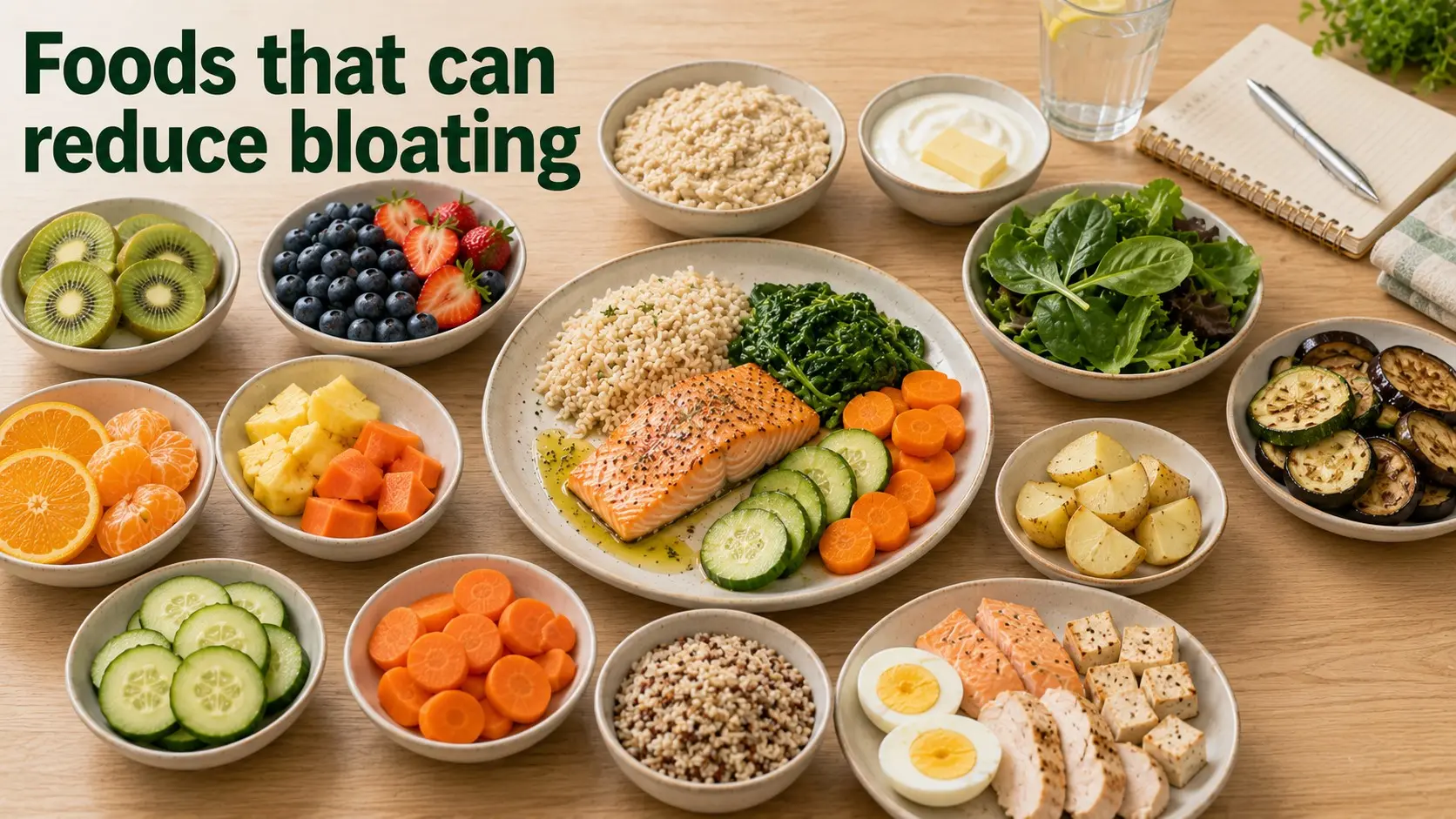
The best starting choices are simple foods that are easy to portion. Examples include kiwi, oranges, carrots, cucumber, oats, rice, potatoes, eggs, fish, and lactose free dairy when tolerated.
This guide explains 13 practical low FODMAP foods, common triggers, simple meal ideas, and warning signs that need medical care.
For a wider guide to daily digestive nutrition, visit the NextFitLife Gut Health and Digestion Foods Hub.
Important Medical Note
This content is for general educational purposes and does not replace professional medical advice, diagnosis, or treatment. Consult an appropriately qualified healthcare professional for personal medical concerns. I am also not a gastroenterologist, registered dietitian, pharmacist, gynecologist, or digestive health specialist.
This content does not replace professional medical advice.
This article explains published guidance and does not provide a personal clinical assessment.
Always consult qualified medical professionals for diagnosis and treatment of any health condition.
Do not begin a strict elimination diet, stop medicine, remove gluten before celiac testing, or use laxatives, digestive enzymes, herbal products, or supplements because of this article.
Quick Answer: What Are the Best Foods That Can Reduce Bloating?
Useful Foods that can reduce bloating may include:
- Kiwi
- Blueberries and strawberries
- Oranges and mandarins
- Pineapple or papaya
- Cucumber
- Carrots
- Zucchini and eggplant
- Spinach, kale, and lettuce
- Oatmeal
- Rice and quinoa
- Potatoes
- Lactose-free yogurt or hard cheese
- Eggs, fish, chicken, turkey, or firm tofu
These foods do not remove bloating for every person.
They may be easier to tolerate in suitable portions, especially when bloating is linked with IBS or certain fermentable carbohydrates.
Start with a small serving.
Change one part of your diet at a time.
Keep a simple food diary to find your personal pattern.
What Is Bloating?
Abdominal bloating is a feeling of fullness, pressure, tightness, or swelling in the belly.
You may also notice:
- More gas
- Burping
- Rumbling sounds
- Abdominal discomfort
- A belly that looks larger
- Clothes that feel tighter
Bloating and abdominal distension are not the same.
Bloating is the feeling.
Distension is a visible increase in the size of the abdomen.
You may have one without the other.
What Causes Bloating?
The most common cause is extra gas in the digestive tract.
Gas may increase when gut bacteria ferment carbohydrates that were not fully absorbed in the small intestine.
Other causes include:
- Constipation
- Food intolerance
- Lactose intolerance
- Fructose intolerance
- Irritable bowel syndrome
- Celiac disease
- Small intestinal bacterial overgrowth
- Slow stomach emptying
- Pelvic floor problems
- Swallowing too much air
- Large or high-fat meals
- Carbonated drinks
- Hormonal changes
- Some medicines
Stress may also affect the gut-brain connection and make digestive sensations feel stronger.
Bloating Is Not Always Caused by Food
It is easy to blame the last food you ate.
The real cause may be a bowel movement that has not happened, a medicine, your menstrual cycle, an infection, reflux, or another medical issue.
A meal may also trigger symptoms without causing the underlying condition.
Frequent bloating deserves a proper assessment instead of an endless list of foods to avoid.
How Foods That Can Reduce Bloating May Help
Foods may support bloating relief in several ways.
They May Replace a Personal Trigger
Rice may feel better than a large wheat meal for someone who reacts to wheat fructans.
Lactose-free yogurt may feel better than standard milk for someone with lactose intolerance.
They May Provide Soluble Fiber
Oats and kiwi contain soluble fibre.
This may help stool become softer when constipation is part of the problem.
Fibre must be added slowly.
Too much at once can make gas and bloating worse.
They May Reduce Swallowed Air
A simple meal eaten slowly may cause less discomfort than a rushed meal with fizzy drinks, gum, and a straw.
They May Be Lower in Fermentable Carbohydrates
Some people with IBS feel better when they temporarily reduce FODMAP carbohydrates.
Portion size still matters.
Top 13 Foods That Can Reduce Bloating
1. Kiwi
Kiwi is one of the most practical Foods that can reduce bloating when constipation contributes to the problem.
It provides fibre, water, vitamin C, and natural plant compounds.
Kiwi is also listed as a lower-FODMAP fruit in suitable portions.
Simple ways to eat kiwi include:
- Sliced with breakfast
- Added to plain oatmeal
- Served with lactose-free yogurt
- Mixed with blueberries
Start with one fruit.
More is not always better.
Kiwi can cause an allergic reaction in some people.
Stop eating it and seek urgent help for swelling, wheezing, breathing trouble, or faintness.
2. Blueberries and Strawberries
Blueberries and strawberries provide water, fibre, vitamin C, and plant compounds.
They may be easier to tolerate than apples, pears, mangoes, or watermelon for some people following a low FODMAP trial.
Use a modest portion with:
- Oatmeal
- Lactose-free yogurt
- Plain cereal
- A small handful of nuts when tolerated
Do not assume every berry is equal.
Blackberries can be higher in fermentable carbohydrates in common portions.
Individual response and portion size matter.
3. Oranges and Mandarins
Oranges and mandarins provide fluid, vitamin C, and fibre.
They are commonly included among lower FODMAP fruit choices.
Whole fruit is usually better than a large glass of juice.
Juice has less fibre and is easy to drink quickly.
Try:
- One small orange as a snack
- Mandarin pieces with oatmeal
- Orange segments beside eggs or rice
Citrus may worsen reflux in some people.
Choose another fruit when it causes burning or discomfort.
4. Pineapple or Papaya
Pineapple and papaya may fit a lower FODMAP eating pattern in suitable portions.
They provide water, fibre, vitamin C, and natural enzymes.
Pineapple contains bromelain.
Papaya contains papain.
These enzymes help break down protein in laboratory settings.
This does not prove that the fruit will quickly remove gas or cure a digestive condition.
Use a small serving as part of a balanced meal.
Avoid large smoothies that combine several fruits, juice, sweeteners, and sugar alcohols.
5. Cucumber
Cucumber is mostly water and is low in fermentable carbohydrates in normal portions.
It can add crunch and fluidity without a large amount of fiber.
Use cucumber:
- In a rice bowl
- Beside eggs
- With fish or chicken
- In a simple salad
- With lactose-free yogurt dip
Cucumber does not flush toxins from the body.
It is simply a light food that many people tolerate well.
Remove the skin or seeds when they seem to cause discomfort.
6. Carrots
Carrots provide fibre, beta carotene, potassium, and natural sweetness.
They are often easier to digest when cooked until tender.
Try carrots:
- Steamed
- Roasted
- Added to rice
- Mixed into soup
- Served with fish or chicken
Raw vegetables may feel harder to digest during a bloating flare.
Cooking can make the texture gentler.
7. Zucchini and Eggplant
Zucchini and eggplant are useful non-starchy vegetables.
They can replace larger servings of onions, cauliflower, asparagus, or mushrooms when those foods trigger gas.
Serve them:
- Roasted
- Grilled
- Cooked in olive oil
- Mixed with rice
- Added to eggs
Large amounts of oil may slow digestion and increase fullness.
Use a moderate amount.
8. Spinach, Kale, and Lettuce
Leafy vegetables provide folate, vitamin K, magnesium, and fibre.
Spinach, kale, and lettuce are included among lower FODMAP vegetable choices.
Cook spinach or kale until soft when raw salad causes discomfort.
Build a simple meal with:
- Cooked spinach
- Rice or potato
- Eggs, fish, chicken, or firm tofu
- A small amount of olive oil
Do not suddenly eat a very large salad when your usual diet is low in fibre.
9. Oatmeal
Oatmeal provides soluble fibre.
It may help when constipation and hard stools contribute to bloating.
Start with a small bowl.
Add fibre slowly over several days.
Useful toppings include:
- Kiwi
- Blueberries
- Strawberries
- Lactose-free yogurt
- A small amount of chia or ground flax when tolerated
Some flavoured oat products contain large amounts of sugar or sugar alcohols.
Choose plain oats and add your own flavour.
10. Rice and Quinoa
Rice and quinoa provide carbohydrate and energy without the wheat fructans found in many wheat products.
They can be useful during a short, structured low-FODMAP diet.
Try:
- Rice with salmon and carrots
- Quinoa with chicken and cucumber
- Rice with eggs and spinach
- Quinoa with firm tofu and zucchini
Gluten is not the only possible issue in wheat.
Some people with IBS react to fructans rather than gluten.
Do not remove gluten before celiac testing without medical advice.
11. Potatoes
Plain potatoes are naturally free from gluten and are lower in FODMAP carbohydrates.
They provide carbohydrate, potassium, and vitamin C.
Serve potatoes:
- Baked
- Boiled
- Mashed with a small amount of suitable milk
- Roasted with modest oil
The toppings may be more likely to cause symptoms than the potato.
Large amounts of cream, butter, onion, garlic, or soft cheese may increase discomfort in some people.
12. Lactose-Free Yogurt or Hard Cheese
Standard milk and yogurt may cause gas and bloating in people who do not digest lactose well.
Lactose-free yogurt or milk may be easier to tolerate.
Many hard cheeses contain little lactose.
Check the product label and your own response.
Yogurt is not a guaranteed probiotic cure.
Current evidence does not support recommending every probiotic product for gas-related symptoms.
Avoid dairy completely when you have a diagnosed milk allergy.
13. Eggs, Fish, Chicken, Turkey, or Firm Tofu
Plain protein foods contain little or no fermentable carbohydrate.
Useful choices include:
- Eggs
- Salmon
- White fish
- Chicken
- Turkey
- Firm tofu
- Tempeh when tolerated
Prepare them with simple herbs and a moderate amount of oil.
Onion, garlic, breading, processed sauces, and large fat portions may cause more symptoms than the protein itself.
Processed meats can contain garlic, onion, wheat, milk, or sweeteners.
Read the label.
Foods That May Increase Bloating
No food causes bloating in everyone.
Common gas-producing foods or drinks may include:
- Carbonated drinks
- Large servings of beans or lentils
- Onions
- Garlic
- Cauliflower
- Asparagus
- Some mushrooms
- Apples
- Pears
- Mango
- Watermelon
- Standard milk when lactose is not tolerated
- Large wheat meals
- High fructose corn syrup
- Honey in large amounts
- Sugar alcohols
- Very high-fat meals
This is not a permanent avoidance list.
Many of these foods are nutritious.
Only reduce foods that have a clear link with your symptoms or are part of a professional elimination trial.
Why do some healthy foods cause gas?
Healthy foods can contain fermentable carbohydrates or large amounts of fibre.
Gut bacteria break these carbohydrates down and produce gas.
This is a normal process.
More gas does not mean the food is toxic or damaging.
The problem is the amount of discomfort or sensitivity.
A person with IBS may feel normal gas movement more strongly than another person.
What Is a Low FODMAP Diet?
FODMAP means fermentable oligosaccharides, disaccharides, monosaccharides, and polyols.
These carbohydrates are not absorbed well by some people.
When they reach the colon, bacteria ferment them and create gas.
A low FODMAP diet may improve IBS bloating and abdominal pain in some people.
It does not cure IBS.
The Three Low FODMAP Phases
Phase 1: Short Elimination
High FODMAP foods are reduced for two to four weeks.
This phase should not continue forever.
Phase 2: Reintroduction
FODMAP groups are tested one at a time.
This shows which foods and portions cause symptoms.
Phase 3: Personalization
Only the foods that cause a real problem remain limited.
The goal is the widest balanced diet that controls symptoms.
Who Should Not Start a Strict Low-FODMAP Diet Alone?
Professional support is important when you:
- Have an eating disorder or a history of one
- Are underweight
- Are at risk of malnutrition
- Are pregnant
- Are younger than 18
- Follow a vegan or very restricted diet
- Have kidney or liver disease
- Have several food allergies
- Have a complex medical history
- Are you losing weight without trying
A registered dietitian can help you avoid unnecessary restriction.
Bloating Caused by Constipation
Constipation is a common cause of bloating.
Signs may include:
- Hard stool
- Straining
- Fewer bowel movements
- Feeling that the stool remains inside
- Lower abdominal pressure
Oats, kiwi, water, and gradual fibre may help mild constipation.
Adding too much fibre when the stool is severely backed up may increase discomfort.
Read the NextFitLife High Fibre Foods Chart for Constipation for more guidance.
Seek medical advice for severe pain, vomiting, blood, ongoing constipation, or an inability to pass stool or gas.
Bloating Caused by Lactose Intolerance
Lactose intolerance can cause:
- Bloating
- Gas
- Diarrhea
- Nausea
- Abdominal pain
- Rumbling sounds
Symptoms may begin within a few hours after milk or another lactose-containing food.
Some people can tolerate:
- Lactose-free milk
- Lactose-free yogurt
- Hard cheese
- Smaller dairy servings
Do not assume every dairy symptom is due to lactose intolerance.
A milk allergy is different and can be dangerous.
Bloating After Beans and Lentils
Beans and lentils provide fibre, protein, iron, and other useful nutrients.
They also contain fermentable carbohydrates.
Try:
- A smaller portion
- Canned beans that are drained and rinsed
- Adding them slowly
- Eating them regularly in modest amounts
- Testing one type at a time
During a structured low-FODMAP plan, certain canned and rinsed portions may fit better than large servings of dried beans.
Bloating After Wheat
Wheat contains gluten and fructans.
Celiac disease is an immune condition caused by gluten.
IBS symptoms may sometimes relate to wheat fructans instead.
Do not begin a gluten-free diet before celiac testing when celiac disease is possible.
Removing gluten can make test results less reliable.
What About Ginger?
Fresh ginger can add flavour and may help with nausea in some situations.
It has not been proven to remove bloating within a set number of minutes.
Use it in normal food amounts:
- Grated into rice
- Added to soup
- Steeped in hot water
- Cooked with fish or chicken
Candied ginger contains added sugar.
Large ginger supplement doses may interact with medicine.
What About Peppermint?
Peppermint tea may feel soothing for some people.
Research on enteric-coated peppermint oil capsules for IBS does not prove that peppermint tea works the same way.
Peppermint may worsen acid reflux.
Ask a healthcare professional before using concentrated peppermint oil.
Never swallow essential oil unless a qualified professional directs you to use an approved product.
What About Fennel?
Fennel has a long history as a digestive herb.
Strong evidence for fast bloating relief is limited.
Some fennel teas may also contain fermentable carbohydrates that other people with IBS.
Do not depend on fennel as a treatment for ongoing symptoms.
What About Lemon Water?
Lemon water can support hydration when you enjoy the taste.
It does not detox the body.
It does not make the body alkaline.
Your lungs and kidneys control blood acid balance.
Lemon may worsen reflux or irritate sensitive teeth.
What About Probiotic Foods?
Yogurt, kefir, and fermented foods are often marketed for gut health.
They do not help everyone.
Some products contain lactose, sugar, garlic, onion, or fermentable ingredients that may worsen symptoms.
Current evidence does not support recommending every probiotic for bloating and gas.
Choose a product based on tolerance, not marketing claims.
Drinks That May Feel Gentler
Useful drink choices may include:
- Still water
- Warm water
- Ginger tea in normal food amounts
- Peppermint tea when reflux is not a problem
- Lactose-free milk when tolerated
Reduce:
- Fizzy drinks
- Beer
- Large sweet drinks
- Energy drinks
- Large juice portions
- Drinks with sorbitol, mannitol, xylitol, or maltitol
Visit the NextFitLife Beverages and Drinks Hub for more drink guidance.
How to Eat to Reduce Swallowed Air
Food is only one part of the plan.
Try these habits:
- Eat slowly
- Chew with your mouth closed
- Sit down while eating
- Avoid talking with food in your mouth
- Avoid drinking through a straw
- Limit chewing gum
- Limit hard candy
- Choose still drinks
- Eat smaller meals
These steps may reduce swallowed air and trapped gas.
Why Smaller Meals May Help
An enormous meal stretches the stomach and may slow digestion.
Large, high-fat meals may also increase fullness and bloating.
Try three moderate meals and one small snack instead of one or two very large meals.
Eat enough food for your needs.
The goal is comfort, not starvation.
A One-Day Meal Plan With Foods That Can Reduce Bloating
This plan is a general example.
It is not a medical prescription.
Breakfast
Plain oatmeal with kiwi and blueberries.
Add lactose-free yogurt when tolerated.
Lunch
Rice with grilled chicken, cucumber, carrots, and cooked spinach.
Use lemon, chives, and herbs instead of onion and garlic during a low FODMAP trial.
Snack
One orange or a small serving of pineapple.
Dinner
Baked salmon with potato and roasted zucchini.
Alternative Vegetarian Dinner
Firm tofu with quinoa, eggplant, carrots, and spinach.
Three-Day Gentle Meal Plan
Day 1
Breakfast: Oatmeal with kiwi and blueberries.
Lunch: Chicken rice bowl with cucumber and carrots.
Dinner: Salmon, potato, and spinach.
Day 2
Breakfast: Eggs with spinach and potato.
Lunch: Quinoa with firm tofu, zucchini, and carrots.
Dinner: Turkey with rice, eggplant, and lettuce.
Day 3
Breakfast: Lactose-free yogurt with oats and strawberries.
Lunch: Tuna with potato, cucumber, and lettuce.
Dinner: Chicken with quinoa, spinach, and zucchini.
Use the NextFitLife Meal Prep and Recipes Hub for more planning ideas.
A Simple Shopping List
Fruit
- Kiwi
- Blueberries
- Strawberries
- Oranges
- Mandarins
- Pineapple
- Papaya
Vegetables
- Cucumber
- Carrots
- Zucchini
- Eggplant
- Spinach
- Kale
- Lettuce
- Potatoes
Grains
- Oats
- Rice
- Quinoa
- Suitable gluten-free bread or pasta when needed
Protein
- Eggs
- Salmon
- Tuna
- Chicken
- Turkey
- Firm tofu
Dairy Choices
- Lactose-free milk
- Lactose-free yogurt
- Hard cheese
Flavor
- Fresh ginger
- Chives
- Basil
- Parsley
- Rosemary
- Lemon
- Olive oil
How to Keep a Bloating Food Diary
A diary can help you find a real pattern.
Write down:
- What you ate
- The portion
- The time
- How quickly you ate
- Your bloating level
- Pain or cramps
- Gas or burping
- Bowel movements
- Your menstrual cycle, when relevant
- Stress and sleep
- Medicine or supplements
Do not remove ten foods at once.
You will not know which change helped.
When Bloating May Be Related to the Menstrual Cycle
Hormonal changes can cause fluid retention, constipation, and abdominal fullness.
Track symptoms across several cycles.
Seek medical advice when bloating is new, frequent, worsening, or does not go away.
Persistent bloating can sometimes be linked with a gynecologic condition and should not be dismissed as normal.
Can Walking Help Bloating?
Gentle movement may help gas move through the digestive tract.
Try a short walk after a meal.
Stop and seek care when exercise causes severe pain, dizziness, chest pain, or breathing trouble.
Movement cannot treat a bowel blockage or another emergency.
When to Contact a Healthcare Professional
Arrange a medical visit when:
- You feel bloated regularly
- Bloating does not go away
- Diet changes do not help
- You have ongoing constipation or diarrhea
- You feel full after eating only a small amount
- You have frequent reflux
- You suspect lactose intolerance or celiac disease
- You are losing weight without trying
- You have blood in your stool
- You have a lump or swelling in your abdomen
Warning Signs That Need Urgent Care
Seek urgent medical care for bloating with:
- Severe or sudden abdominal pain
- Repeated vomiting
- Vomiting blood
- Vomit that looks like coffee grounds
- High fever
- A very swollen or hard abdomen
- An inability to pass stool or gas
- Severe breathing difficulty
- Fainting
- Heavy rectal bleeding
Do not wait for ginger tea, lemon water, or another food remedy when these signs are present.
Common Myths About Foods That Can Reduce Bloating
Myth: Ginger removes bloating within 30 minutes
No food can promise relief within a fixed time.
Myth: Cucumbers flush toxins
No.
The liver and kidneys handle waste removal.
Myth: Lemon water makes the body alkaline
No.
Food does not meaningfully change blood pH in a healthy person.
Myth: Pineapple and papaya digest an entire meal
Their enzymes do not guarantee relief from gas or a digestive condition.
Myth: Yogurt fixes the gut microbiome
No single yogurt or probiotic works for every cause of bloating.
Myth: Avocado always reduces water retention
Avocado may cause symptoms in larger portions for some people because it contains fermentable carbohydrates.
Myth: Watermelon is always gentle
Watermelon can be high in fermentable carbohydrates and may worsen symptoms in some people with IBS.
Myth: More fibre always helps
Too much fibre too quickly can increase gas and bloating.
Myth: A low FODMAP diet should last forever
No.
The strict phase is brief and should be followed by food testing and personalization.
Myth: Bloating is always caused by gas
No.
Constipation, hormones, food intolerance, slow digestion, and other conditions may cause it.
Five High Authority References and Sources
- National Institute of Diabetes and Digestive and Kidney Diseases: Eating, Diet, and Nutrition for GasOpen guidance about gas-producing carbohydrates, fibre, high-fat meals, food diaries, lactose, fructose, and low FODMAP eating.
- American College of Gastroenterology: Low FODMAP DietOpen guidance updated in April 2026 covers suitable foods, portion effects, the elimination phase, food reintroduction, personalization, and dietitian support.
- American College of Gastroenterology: Belching, Bloating, and FlatulenceOpen medical guidance about causes, testing, treatment, constipation, swallowed air, probiotics, low FODMAP diets, and persistent symptoms.
- National Institute of Diabetes and Digestive and Kidney Diseases: Diet and Irritable Bowel SyndromeOpen guidance about soluble fibre, adding fibre slowly, IBS symptoms, fermentable carbohydrates, and short diet trials.
- National Health Service: BloatingOpen guidance reviewed in January 2026 covering causes, home steps, persistent bloating, warning signs, and emergency symptoms.
Conclusion: Foods That Can Reduce Bloating
Foods that can reduce bloating are not magic remedies.
They are practical choices that may feel gentler when eaten in suitable portions.
Start with one simple meal.
Try oatmeal with kiwi, rice with chicken and carrots, or salmon with potato and zucchini.
Eat slowly, avoid fizzy drinks, track symptoms, and treat constipation when it is part of the problem.
Contact a qualified healthcare professional when bloating is frequent, painful, worsening, or linked with weight loss, bleeding, vomiting, or another warning sign.
Internal Links and NextFitLife Hubs
- NextFitLife Foods and Nutrition Hub
- Gut Health and Digestion Foods Hub
- Healthy Eating and Lifestyle Hub
- Meal Prep and Recipes Hub
- Beverages and Drinks Hub
- Foods to Support Gut Health
- High Fibre Foods Chart for Constipation
- Exercises to Support Constipation Relief
- Anti-Inflammatory Dinner Ideas
Frequently Asked Questions About Foods That Can Reduce Bloating
What are the best Foods that can reduce bloating?
Foods that may feel gentler include kiwi, blueberries, oranges, cucumber, carrots, zucchini, spinach, oatmeal, rice, quinoa, potatoes, lactose-free yogurt, eggs, fish, chicken, and firm tofu.
What food reduces bloating fast?
No food can promise fast relief.
The best choice depends on whether the cause is constipation, lactose intolerance, IBS, swallowed air, or another problem.
What should I eat when my stomach feels bloated?
Try a small, simple meal such as rice with chicken and carrots, oatmeal with kiwi, or salmon with potato and zucchini.
Are bananas good for bloating?
An unripe banana may fit a lower FODMAP diet in a suitable portion.
Ripe bananas may cause more symptoms in some people.
Does cucumber reduce bloating?
Cucumber is light, hydrating, and low in fermentable carbohydrates.
It may feel gentle, but it does not flush toxins or guarantee relief.
Does yogurt help with bloating?
Lactose-free yogurt may help when regular yogurt causes symptoms from lactose.
Probiotic yogurt does not treat every cause of bloating.
Does ginger tea help bloating?
Ginger may feel soothing and may help with nausea.
It has not been proven to remove bloating within a fixed time.
Does peppermint tea help with gas?
Peppermint may feel helpful for some people.
It may worsen acid reflux, and tea does not have the same evidence as enteric-coated peppermint oil.
Can too much fibre cause bloating?
Yes.
Add fibre slowly because a sudden increase can cause gas and discomfort.
Should I avoid beans forever?
No.
Beans are nutritious.
Try a smaller portion, canned and rinsed beans, or test them during the reintroduction phase of a low FODMAP plan.
How long should I follow a low-FODMAP diet?
The strict phase usually lasts two to four weeks.
Foods should then be reintroduced, and the diet personalized.
When should I see a doctor for bloating?
Seek advice when bloating is frequent, painful, or linked with weight loss, blood in stool, vomiting, a lump, fever, or bowel changes.
When is bloating an emergency?
Seek urgent care for sudden severe pain, vomiting blood, severe breathing trouble, a very swollen abdomen, fainting, or an inability to pass stool or gas.

Health & wellness writer with 30+ years of experience in nutrition, fitness, and healthy aging. Founder of NextFitLife.com — evidence-based health guidance.