Updated on: November 7, 2026
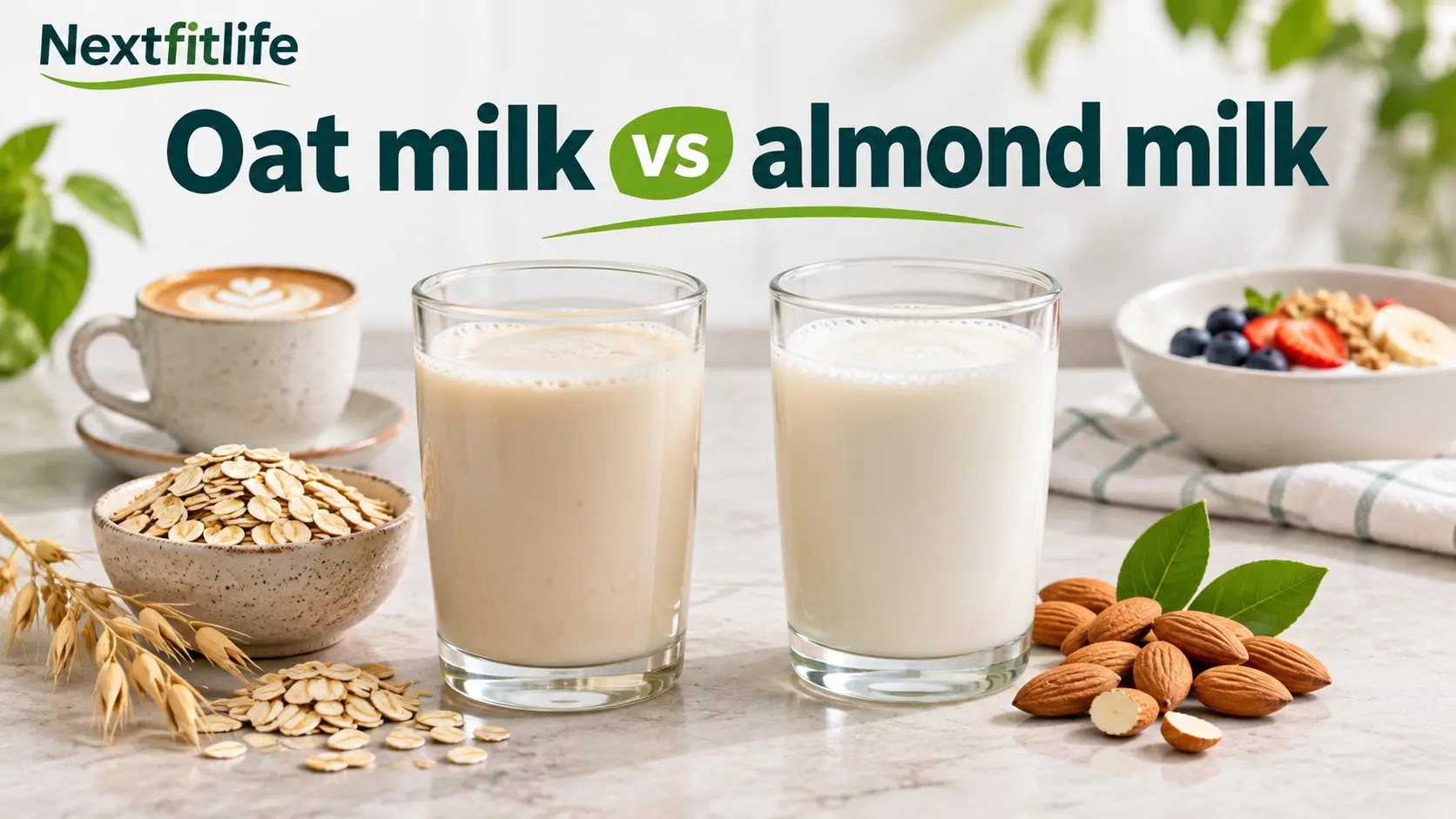
If you are comparing oat milk vs almond milk, there is no single winner for everyone.
For fewer calories and fewer carbohydrates, I would usually start with unsweetened almond milk. For coffee, a creamier texture, or a nut free option, oat milk is often the better fit.
But the carton matters more than many comparison articles admit. Two oat milks can have very different sugar, calorie, oil, protein, calcium, and vitamin D levels. The same is true for almond milk.
Oat milk vs almond milk comes down to your goal. Unsweetened almond milk is usually lower in calories and carbohydrates. Oat milk is usually creamier and contains more carbohydrates. Neither is a strong protein source compared with dairy milk or fortified soy milk. Check the label for calories, protein, added sugar, calcium, and vitamin D because brands vary widely.
That last point is the most useful one.
The FDA says nutrition can vary a lot between different types of plant-based milk and even between products made from the same plant. Processing, fortification, sugar, oil, and other ingredients all change the final drink.
This article is for general information and education. It does not replace medical advice, diagnosis, or treatment.
Almond milk is not suitable for someone with an almond allergy. People with celiac disease should choose oat products labelled gluten-free and discuss oats with their clinician or dietitian if needed. For babies and young children, plant-based drinks have different nutritional needs and should be discussed with a pediatric healthcare professional.
What You Will Learn
- Which drink is lower in calories
- How oat milk and almond milk nutrition compare
- Which tastes better in coffee
- Which has more protein and carbohydrates
- Which fits weight loss better
- What to choose for blood sugar goals
- What allergies and gluten concerns matter
- Why fortification changes the comparison
- How to read the carton before you buy
Table of Contents
- Quick Verdict
- Oat Milk vs Almond Milk Nutrition
- Calories
- Protein
- Carbohydrates and Sugar
- Fat
- Calcium and Vitamin D
- Taste and Texture
- Coffee and Lattes
- Weight Loss
- Blood Sugar Goals
- Allergies and Gluten
- Children
- Homemade vs Store-Bought
- How to Read the Carton
- Pros and Cons
- Which One Should You Choose?
- Conclusion
- References and Sources
- Internal Links and Hub
- About the Author
- Frequently Asked Questions
My Quick Verdict: Which One Should You Buy?
Here is the short version I would use in a real supermarket aisle.
| Your Goal | Better Starting Choice | Why |
|---|---|---|
| Lower calories | Unsweetened almond milk | Usually much lighter per cup |
| Lower carbohydrate | Unsweetened almond milk | Usually contains far less carbohydrate |
| Coffee and lattes | Oat milk | Usually creamier and fuller |
| Nut allergy | Oat milk | Almond milk contains tree nuts |
| Protein | Neither is my first choice | Both are usually modest protein sources |
| Weight management | Usually unsweetened almond milk | Can save calories without changing meal size |
| Creamy baking | Oat milk | Fuller body and mild sweetness |
Do not choose from the front of the carton. Turn it around and compare the Nutrition Facts label. That is where the real answer lives.
For more food comparisons and practical nutrition guidance, visit the NextFitLife Foods and Nutrition Hub.
Oat Milk vs Almond Milk Nutrition: The Big Difference
The most important thing to understand about oat milk vs almond milk nutrition is that there is no universal recipe.
A 2026 Northwestern Medicine comparison of unsweetened products lists almond milk at about 35 calories, 1 gram of protein, 3 grams of fat, and 1 gram of carbohydrate per cup. Its oat milk example contains about 100 calories, 3 grams of protein, 4 grams of fat, and 14 grams of carbohydrate.
Those figures are useful examples, not rules for every product.
The American Academy of Pediatrics also shows a large difference in representative products, with its comparison listing 37 calories for almond milk and 130 calories for oat milk per cup.
FDA guidance says nutrition differs both across plant milk types and within the same type because raw ingredients, processing, fortification, sugar, oils, and other ingredients vary.
| Nutrition Point | Oat Milk | Almond Milk |
|---|---|---|
| Calories | Usually higher | Usually lower when unsweetened |
| Carbohydrates | Usually higher | Usually lower |
| Protein | Usually modest | Usually low |
| Fat | Varies by formula | Varies by formula |
| Calcium | Often added | Often added |
| Vitamin D | Often added | Often added |
| Added sugar | Depends on product | Depends on product |
Oat Milk vs Almond Milk Calories: Almond Usually Wins
If calories are your main concern, unsweetened almond milk is usually the easier choice.
Representative unsweetened almond drinks can sit near 35 to 40 calories per cup, while oat drinks often contain far more.
That does not make oat milk unhealthy.
It simply means the calorie difference can matter if you use large amounts several times each day.
When Does the Calorie Difference Matter?
A small splash in one coffee is one thing.
A large latte, cereal bowl, smoothie, second coffee, and evening drink can add much more.
For someone working on weight loss, switching from a higher calorie oat drink to a lower calorie unsweetened almond drink can be an easy change if both taste good to you.
For a broader weight management plan, see the NextFitLife Complete Weight Loss Guide.
Which One Has More Protein?
Oat milk usually has a little more protein than almond milk.
I still would not choose either drink mainly for protein.
The 2026 University of Maine Cooperative Extension guide lists typical oat milk at about 2 to 3 grams of protein per serving and almond milk at about 1 gram. By comparison, fortified soy milk is usually much higher.
If protein matters, get it from the rest of the meal or compare another milk option. Do not assume that every drink called “milk” is protein rich.
Which Has Fewer Carbohydrates?
Almond milk wins this one clearly in most unsweetened comparisons.
Oats contain starch, so an oat beverage naturally tends to carry more carbohydrate than an almond-based drink.
Northwestern Medicine lists 14 grams of carbohydrate in its unsweetened oat example and only 1 gram in its unsweetened almond example.
Again, your carton may differ.
What If You Monitor Blood Sugar?
If carbohydrate intake matters because of diabetes or another health goal, unsweetened almond milk is often easier to fit.
Do not judge the drink alone, though. Your full meal affects blood sugar, not just the milk.
People using insulin or glucose lowering medicines should follow their personal care plan rather than using a generic internet carbohydrate rule.
What About Added Sugar?
This is where shoppers get caught.
“Original,” vanilla, chocolate, and cafe style products can be very different from unsweetened versions.
FDA guidance recommends checking the label and choosing plant-based beverages lower in added sugar.
Compare “Includes Added Sugars” on two cartons. Do not assume that almond is always unsweetened or that oat milk is always sweetened.
Which Has More Fat?
There is no clean winner because recipes vary.
Some oat drinks use added oil to improve texture. Some almond drinks contain more fat than others depending on the formula.
The type and amount of fat shown on the label matters more than the plant name.
FDA advice is to compare saturated fat and choose lower saturated fat options more often.
Calcium and Vitamin D Depend on Fortification
Do not assume almond milk is rich in calcium because almonds contain minerals.
Do not assume oat milk naturally provides a useful amount of vitamin D.
Many commercial drinks are fortified plant milks. That means manufacturers add nutrients such as calcium and vitamin D.
The amount differs by product.
FDA guidance specifically recommends comparing protein, vitamin D, calcium, and potassium on the Nutrition Facts label.
| Label Item | Why Check It? | What to Remember |
|---|---|---|
| Calcium | Supports bones and teeth | Amount varies with fortification |
| Vitamin D | Supports calcium balance and bone health | Often added rather than naturally high |
| Protein | Needed throughout the body | Both drinks are often modest sources |
| Added sugar | Adds calories without improving core nutrition | Unsweetened is often the simpler choice |
Oat Milk vs Almond Milk Taste: Oat Is Creamier
Oat milk vs almond milk taste is where the comparison becomes personal.
Oat milk usually has a thicker, smoother texture with a mild, cereal-like sweetness. Almond milk is usually lighter, thinner, and more nutty.
That difference matters more than it sounds because the best drink is one you actually enjoy using.
For Coffee
I would choose oat milk.
Its fuller body usually works better with espresso and gives coffee a creamier feel.
Barista oat milk is designed specifically to foam and blend well, although the nutrition can differ from a plain oat drink.
For Smoothies
I usually prefer almond milk when the smoothie already has banana, yogurt, nut butter, oats, or another thick ingredient.
It keeps the drink lighter.
For Cereal
Both work.
Choose oat for a richer bowl. Choose almond for a lighter taste.
For Baking
Oat milk often works well when you want more body and mild sweetness.
Almond milk is useful when a thinner liquid works well in the recipe.
Which Is Better for Weight Loss?
For most people trying to lower calories, I would start with unsweetened almond milk.
That is a calorie decision, not a claim that almond milk burns fat.
Weight loss still depends on your overall energy intake over time.
If oat milk makes your coffee satisfying enough that you stop buying a large sweet café drink, oat milk may still be the smarter choice. Context matters more than ranking foods as “good” or “bad.”
Which Is Better for Blood Sugar Goals?
Unsweetened almond milk usually has much less carbohydrate, so it is often easier to fit into a lower carbohydrate meal.
That does not make oat milk forbidden for diabetes.
Read the carbohydrate and added sugar lines on the carton, then consider the full meal.
If you use insulin or medicine that can lower blood glucose, follow your personal diabetes care plan.
Which Is Better for Allergies?
If You Have an Almond or Tree Nut Allergy
Avoid almond milk if almond is one of your allergens.
Oat milk may be an option, but still read the allergen statement because products can be made in facilities that process other allergens.
If You Have Celiac Disease
Almond milk avoids the oat issue, although all ingredients still need label checking.
For oat milk, choose a product carrying a gluten free label.
The Celiac Disease Foundation advises people with celiac disease to choose oats labeled gluten free because oats can be exposed to gluten containing grains during production.
Some people with celiac disease also react to avenin in oats, so personal clinical guidance matters if symptoms continue.
What About Children?
This is one area where I would not make a casual supermarket swap.
The American Academy of Pediatrics shows large nutrition differences between cow's milk and plant-based alternatives, especially for protein.
CDC guidance also says fortified dairy alternatives should not replace breast milk or infant formula before 12 months.
For young children, choose an unflavored, unsweetened, fortified product and discuss the choice with the child's doctor or nurse.
Protein, calories, calcium, vitamin D, and other nutrients differ greatly between products. A drink that works well in an adult coffee may not be an adequate main milk drink for a young child.
Homemade vs Store Bought Changes the Answer
Homemade sounds healthier, but that is not automatically true.
A homemade almond beverage made from almonds and water does not automatically have the calcium and vitamin D found in a fortified supermarket carton.
The same problem applies to homemade oat milk.
The American Academy of Pediatrics specifically notes that homemade milk alternatives do not have the same added vitamin profile as fortified commercial versions.
So if a plant drink is replacing a major nutrient source in your diet, check the whole diet rather than assuming homemade is nutritionally complete.
How to Read the Carton in 30 Seconds
Forget the front label for a moment.
Turn the carton around and check these items.
- Serving size: Make sure you are comparing the same amount.
- Calories: Especially important if you use several cups a day.
- Added sugar: Unsweetened and original are not always the same.
- Protein: Do not assume plant milk is protein rich.
- Carbohydrates: Useful if you monitor carbohydrate intake.
- Calcium: Check the actual fortified amount.
- Vitamin D: Look for the amount on the label.
- Saturated fat: Compare products rather than guessing.
- Allergen information: Essential for food allergies.
- Gluten free label: Important for oat products if you have celiac disease.
That 30 second check gives you more useful information than a health claim printed across the front.
For a wider eating pattern, see the NextFitLife Healthy Eating Lifestyle Guide.
Oat Milk Pros and Cons
| Oat Milk Pros | Oat Milk Cons |
|---|---|
| Creamy texture | Usually higher in calories |
| Works well in coffee | Usually higher in carbohydrates |
| Nut free when produced safely | Gluten labeling matters for celiac disease |
| Useful for baking and sauces | Some products contain added sugar or oils |
Almond Milk Pros and Cons
| Almond Milk Pros | Almond Milk Cons |
|---|---|
| Usually low calorie when unsweetened | Usually low in protein |
| Usually low carbohydrate | Not suitable for almond allergy |
| Light taste works in smoothies | Thinner texture than oat milk |
| Often fortified with calcium and vitamin D | Nutrition still varies by brand |
Oat Milk vs Almond Milk by Goal
| Goal | My Pick | Reason |
|---|---|---|
| Lower calories | Unsweetened almond | Usually much lighter |
| Lower carbs | Unsweetened almond | Usually far lower carbohydrate |
| Coffee | Oat | Creamier texture |
| Protein | Neither | Compare higher protein alternatives too |
| Nut allergy | Oat | Almond contains tree nuts |
| Celiac disease | Almond or labeled gluten free oat | Oat labeling needs extra attention |
| Baking | Often oat | Fuller texture |
| Light smoothie | Almond | Keeps the drink lighter |
Which One Would I Buy?
For smoothies and calorie control, I would choose unsweetened almond milk.
For coffee, I would choose oat milk.
If the drink were replacing dairy milk as a major part of my daily nutrition, I would stop asking only “oat or almond?” and compare protein, calcium, vitamin D, potassium, added sugar, and the rest of my diet.
FDA guidance makes the reason clear. Plant based drinks are not automatically nutritionally equivalent to dairy milk, and fortified soy beverage is treated differently because its nutrient profile is closer to milk.
Ask, “Which carton gives me the nutrition, taste, and function I need without adding things I do not want?”
Conclusion
The oat milk vs almond milk debate does not need a universal winner.
Choose unsweetened almond milk when lower calories and lower carbohydrates matter most. Choose oat milk when texture, coffee, baking, or avoiding tree nuts matters more.
Neither one should get a free health halo. Brands differ, fortification differs, and sweetened versions can change the comparison quickly.
Your next step: take the two cartons you buy most often and compare serving size, calories, carbohydrates, protein, added sugar, calcium, and vitamin D side by side. Pick the one that actually fits your goal.
References and Sources
- U.S. Food and Drug Administration. Using the Nutrition Facts Label to Choose Milk and Plant-Based Beverages.
https://www.fda.gov/food/nutrition-education-resources-materials/using-nutrition-facts-label-choose-milk-and-plant-based-beverages - U.S. Food and Drug Administration. Milk and Plant Based Milk Alternatives: Know the Nutrient Difference.
https://www.fda.gov/consumers/consumer-updates/milk-and-plant-based-milk-alternatives-know-nutrient-difference - American Academy of Pediatrics, HealthyChildren.org. Cow's Milk Alternatives: Parent FAQs.
https://www.healthychildren.org/English/healthy-living/nutrition/Pages/Milk-Allergy-Foods-and-Ingredients-to-Avoid.aspx - Northwestern Medicine. Is Oat Milk Healthier Than Cow's Milk?
https://www.nm.org/healthbeat/healthy-tips/nutrition/is-oat-milk-healthier-than-cows-milk - Celiac Disease Foundation. Label Reading and Gluten Free Oats Guidance.
https://celiac.org/gluten-free-living/gluten-free-foods/label-reading-the-fda/ - University of Maine Cooperative Extension. What's In Your Glass? A Guide to Milk and Plant Based Alternatives.
https://extension.umaine.edu/food-health/2026/04/16/milk-and-plant-based-alternatives/
Internal Links and NextFitLife Hub
About the Author
Adel Galal is a father of four, three sons and a daughter, and a grandfather of four, with 33 years of hands on parenting experience. He is the founder of Parnthub.com, based in Cairo, Egypt, where he shares practical guidance on feeding, development and family life from newborns to teenagers.
Adel is not a medical professional. Health articles cite trusted sources and are for general information only.
Learn more on the NextFitLife About Us page.
Frequently Asked Questions
Is oat milk healthier than almond milk?
Not for everyone. Oat milk is usually creamier and contains more carbohydrates, while unsweetened almond milk is usually lower in calories and carbohydrates. The best choice depends on your goal and the actual Nutrition Facts label.
Which has fewer calories, oat milk or almond milk?
Unsweetened almond milk usually has fewer calories. Representative products can differ widely, so compare the serving size and calories on the carton.
Which has more protein, oat milk or almond milk?
Oat milk often has a little more protein, but both are usually modest protein sources. If protein is important, compare other milk options and the rest of your meal.
Is oat milk or almond milk better for weight loss?
Unsweetened almond milk is usually easier to fit into a lower-calorie diet. Oat milk can still fit weight loss if your total calorie intake supports your goal.
Is oat milk or almond milk better in coffee?
Oat milk is usually the better choice for coffee because its thicker texture gives lattes and espresso drinks a creamier feel.
Which has fewer carbohydrates?
Unsweetened almond milk usually contains far fewer carbohydrates than oat milk. Check the individual label because recipes vary.
Can people with celiac disease drink oat milk?
Choose oat milk labeled gluten free and discuss oats with your healthcare professional or dietitian if needed. Oats can be exposed to gluten containing grains during production.
Can someone with a nut allergy drink almond milk?
Someone with an almond allergy should avoid almond milk. People with food allergies should check allergen statements and follow advice from their allergy healthcare team.
Is homemade almond or oat milk healthier?
Not automatically. Homemade drinks may not contain the calcium, vitamin D, and other nutrients added to fortified commercial products.
What should I check before buying plant based milk?
Check serving size, calories, protein, carbohydrates, added sugar, calcium, vitamin D, saturated fat, and allergen information. For oat milk, also check gluten labeling when relevant.

Health & wellness writer with 30+ years of experience in nutrition, fitness, and healthy aging. Founder of NextFitLife.com — evidence-based health guidance.