Published – February 4 Last Updated: February 4, 2026
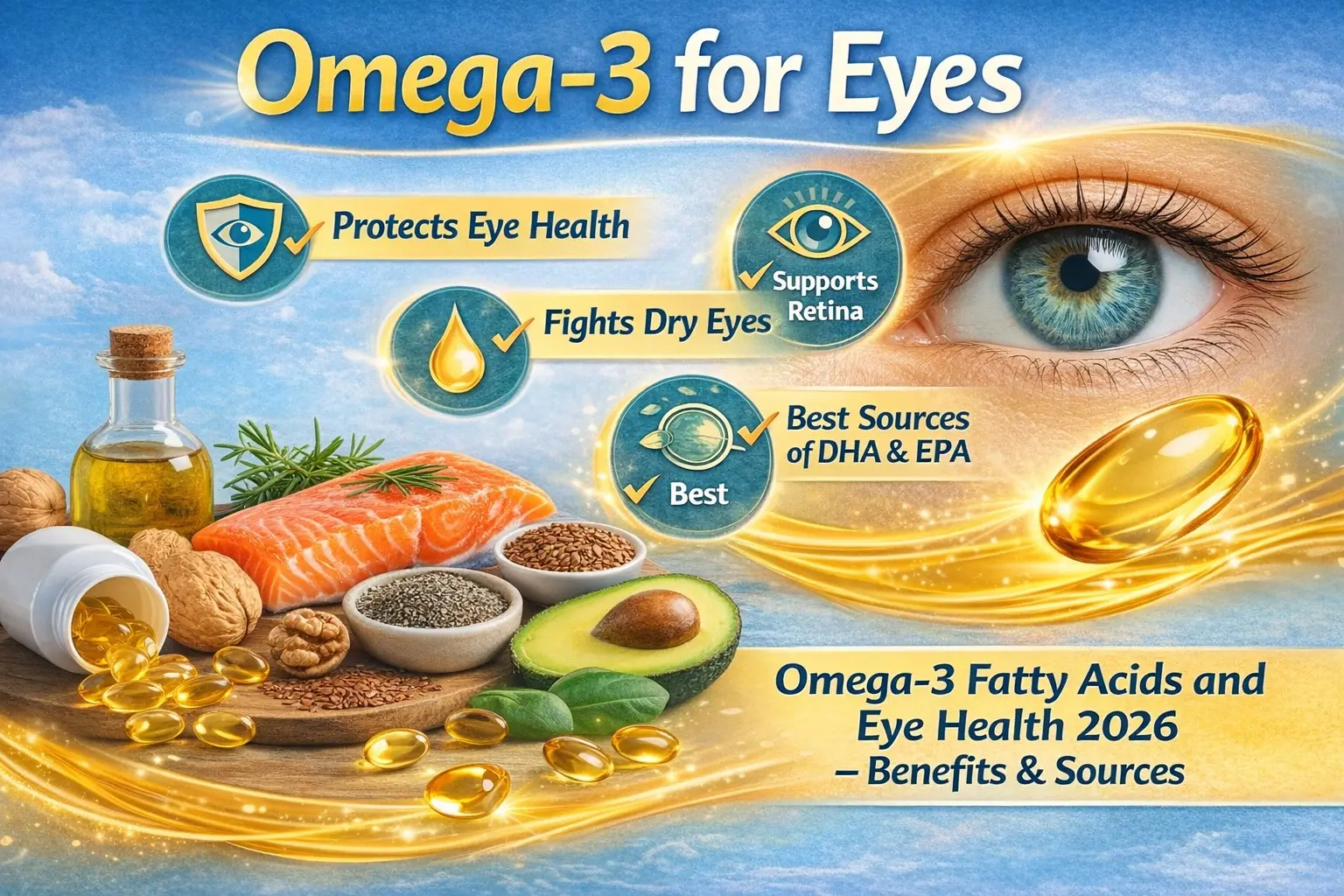
Did you know that omega-3 for eyes is one of the most important nutrients for eye health?
Your eyes need omega-3 fatty acids every single day. These healthy fats protect your retina, protect against dry eyes, and may even lower your risk of blindness.
In this complete guide, you’ll discover:
- Why omega-3s are crucial for eye health
- The difference between DHA and EPA
- Best food sources and supplements
- How much do you need daily
- How omega-3s prevent eye problems
Let’s dive into why omega-3 for eyes should be part of your daily routine!
What You’ll Learn
✓ Why your eyes need omega-3 fatty acids
✓ How DHA protects your retina
✓ Best fish sources for omega-3
✓ Omega-3 supplements vs. food
✓ How to prevent dry eyes naturally
What are Omega-3 Fatty Acids?
Omega-3s are essential fats. “Essential” means your body can’t make them. You must get them from food.
The Three Types
There are three main omega-3 fatty acids:
- DHA (Docosahexaenoic Acid)
- Found in fish
- Crucial for retina
- Most important for the eyes
- EPA (Eicosapentaenoic Acid)
- Found in fish
- Reduces inflammation
- Supports eye health
- ALA (Alpha-Linolenic Acid)
- Found in plants
- Your body converts some to DHA/EPA
- Conversion is very low (less than 5%)
For eye health, DHA and EPA from fish are best.
→ Complete guide: Complete Guide to Eye Health: Vision Care, Prevention & Wellness
Why Your Eyes Need Omega-3
Your retina is packed with omega-3 for eyes, especially DHA. Here’s why it matters.
DHA – The Eye Superfood
DHA for vision is critical because –
- Your retina is 60% fat – and much of that is DHA
- DHA makes up cell membranes in the retina
- It helps retinal cells communicate
- It protects against inflammation
- It supports the macula (center of vision)
Without enough DHA, your retina can’t work properly.
EPA – The Inflammation Fighter
EPA helps by –
- Reducing eye inflammation
- Supporting healthy blood vessels
- Protecting tear glands
- Working with DHA for eye health
The Research Is Clear
Studies show people with higher omega-3 for eyes have:
- 30% lower risk of age-related macular degeneration (AMD)
- 50% lower risk of dry eye syndrome
- Better visual development in babies
- Reduced risk of diabetic retinopathy
- Lower inflammation in eye tissues
The National Eye Institute has funded research proving omega-3s protect vision.
Omega-3 Benefits for Eye Health
Let’s look at specific ways omega-3s for eyes protect your vision.
1. Prevents Macular Degeneration
Age-related macular degeneration stands as the primary reason many seniors lose their vision. Omega-3s help prevent it.
How it works –
- DHA protects retaining cells from damage
- Reduces oxidative stress
- Fights inflammation in the macula
- Supports healthy blood vessels
Studies show that eating fish 2-3 times weekly lowers AMD risk by 30%.
Prevention guide: Macular Degeneration Prevention: Diet and Lifestyle Strategies
2. Relieves Dry Eye Syndrome
Dry eyes affect millions. Omega-3 for the eyes is one of the best natural treatments.
How omega-3s help dry eyes –
- Improve tear quality
- Reduce tear evaporation
- Decrease inflammation in the tear glands
- Support oil production in eyelids
Research shows –
- Taking omega-3s for 3 months reduces dry eye symptoms by 30-40%
- Works better than artificial tears alone
- Especially helpful for contact lens wearers
→ Dry eyes? Dry Eye Syndrome: Causes, Symptoms, and Natural Remedies.
3. Supports Infant Eye Development
DHA for vision is crucial during pregnancy and infancy.
For babies –
- DHA builds the retina before birth
- Supports visual development in the first year
- Improves visual acuity
- Helps brain-eye connections form
Pregnant women need 200-300 mg of DHA daily. Breastfeeding mothers need the same.
4. May Help Diabetic Retinopathy
Elevated glucose levels can harm the delicate blood vessels within the retina.Omega-3s may protect against this.
Benefits for diabetics:
- Reduces retinal inflammation
- Protects blood vessels
- May slow disease progression
- Lowers overall inflammation
If you have diabetes, talk to your doctor about omega-3 for eyes.
5. Reduces Eye Pressure
Some studies suggest omega-3s may:
- Lower intraocular pressure (eye pressure)
- Improve the drainage of eye fluid
- Help with glaucoma management
More research is needed, but early results are promising.
DHA vs. EPA: What’s the Difference?
Both are important, but they work differently.
DHA (Docosahexaenoic Acid)
Primary role – Structure and function
- Makes up retinal cell membranes
- Essential for photoreceptor cells
- Supports visual signal transmission
- Critical for DHA for vision health
Bottom line – DHA is the star for eye health.
EPA (Eicosapentaenoic Acid)
Primary role – Inflammation control
- Reduces inflammatory compounds
- Protects blood vessels
- Supports tear production
- Works with DHA
Bottom line – EPA supports DHA and fights inflammation.
What You Need
Most fish oil contains both. The ideal ratio is roughly:
- DHA – 200-500 mg daily
- EPA – 200-500 mg daily
- Combined – 500-1000 mg total
For dry eyes or macular degeneration, you may need more. Ask your doctor.
Best Food Sources of Omega-3
Food is the best source of omega-3 for eyes. Let’s look at the top choices.
Fatty Fish – The Top Source
Fish with the highest omega-3 –
- Salmon (wild-caught)
- 2,500 mg per 3.5 oz
- High in both DHA and EPA
- Easy to cook
- Mackerel
- 4,000 mg per 3.5 oz
- Very high omega-3
- Strong flavor
- Sardines
- 1,500 mg per 3.5 oz
- Affordable
- Canned = convenient
- Herring
- 2,000 mg per 3.5 oz
- Successful pickled or smoked
- Anchovies
- 2,000 mg per 3.5 oz
- High in nutrients
- Add to pizza or salads
- Tuna
- 1,000 mg per 3.5 oz
- Widely available
- Watch mercury in albacore
How much fish to eat –
- 2-3 servings per week
- Each serving = 3-4 oz (palm-sized)
- Various types to reduce mercury risk
Shellfish Sources
Other seafood options –
- Oysters: 500 mg per 3.5 oz
- Mussels: 700 mg per 3.5 oz
- Shrimp: 300 mg per 3.5 oz
Plant Sources (ALA)
These contain ALA, which converts poorly to DHA/EPA:
- Flax seeds – 2,300 mg ALA per tablespoon (ground)
- Chia seeds – 2,500 mg ALA per ounce
- Walnuts – 2,500 mg ALA per ounce
- Hemp seeds – 1,000 mg ALA per tablespoon
- Flaxseed oil – 7,000 mg ALA per tablespoon
Note: Only 5% of ALA converts to DHA. Plant sources help, but fish is better for DHA for vision.
Fortified Foods
Some foods now have added omega-3 –
- Eggs (from hens fed omega-3)
- Milk
- Yogurt
- Orange juice
- Bread
Check labels for DHA/EPA content.
→ More foods: 10 Best Foods for Eye Health and Better Vision
Quick & Easy Fish Recipes
Not sure how to cook fish? Here are simple recipes.
Simple Baked Salmon
Ingredients:
- 1 salmon fillet
- 1 tbsp olive oil
- Lemon juice
- Salt and pepper
Steps
- Preheat oven to 400°F
- Place salmon on foil
- Drizzle with oil and lemon
- Season with salt and pepper
- Bake 12-15 minutes
Omega-3: 2,000+ mg per serving!
Sardine Toast
Ingredients
- Canned sardines
- Whole-grain bread
- Avocado
- Lemon
Steps
- Toast bread
- Mash avocado on toast
- Top with sardines
- Squeeze lemon over the top
Omega-3 – 1,500+ mg per serving!
Tuna Salad
Ingredients:
- Canned tuna in water
- Greek yogurt
- Celery
- Mixed greens
Steps
- Mix tuna with yogurt
- Add chopped celery
- Serve over greens
Omega-3 – 1,000+ mg per serving!
Fish Oil Supplements – What You Need to Know
Can’t eat fish? Fish oil eye health supplements can help.
When to Consider Supplements
You might need fish oil eye health supplements if you:
- Don’t eat fish
- Are vegetarian/vegan (use algae oil)
- Have dry eyes
- Have macular degeneration
- Are pregnant (for the baby’s eye development)
- Have inflammatory eye conditions
Types of Omega-3 Supplements
- Fish Oil
- Most common
- Contains DHA and EPA
- From whole fish
- Cod Liver Oil
- High in omega-3
- Also has vitamin A and D
- Watch total vitamin A intake
- Krill Oil
- Omega-3 from tiny shrimp
- May absorb better
- More expensive
- Algae Oil
- Plant-based DHA
- Good for vegetarians
- From ocean algae
For eyes, choose supplements with
- At least 250 mg DHA
- At least 250 mg EPA
- Total 500-1000 mg combined
Quality Matters
Look for supplements that are:
- Third-party tested (USP, IFOS certified)
- Molecularly distilled (removes mercury)
- Fresh (check expiration date)
- Stored properly (some need refrigeration)
Tip – Take with food to reduce fishy burps!
Potential Side Effects
Most people tolerate omega-3s well. Potential side effects:
- Fishy aftertaste
- Mild stomach upset
- Loose stools (high doses)
- Increased bleeding (if on blood thinners)
Always tell your doctor if you take omega-3 supplements, especially before surgery.
→ All nutrients: Vitamins for Eye Health: Complete Guide to Essential Nutrients
How Much Omega-3 Do You Need?
Recommendations vary by health status.
For General Eye Health
Healthy adults
- 250-500 mg combined DHA+EPA daily
- Get 2-3 fish meals weekly
This equal
- 1 serving of salmon per week, plus
- 1 serving of sardines or tuna
For Dry Eye Relief
If you have dry eyes
- 1,000-2,000 mg combined DHA+EPA daily
- Higher dose needed for therapeutic effect
- Take for at least 3 months
For Macular Degeneration Prevention
At risk for AMD
- 500-1,000 mg DHA+EPA daily
- Combine with other eye nutrients (lutein, zeaxanthin, vitamins)
For Pregnancy
Pregnant or nursing
- At least 200 mg DHA daily
- Supports the baby’s eye and brain development
- Choose low-mercury fish
Maximum Safe Dose
Up to 3,000 mg daily is safe. Higher doses should be supervised by a doctor.
Maximizing Omega-3 Absorption
Get the most from omega-3 for eyes with these tips:
Take With Food
Omega-3s are absorbed better with fat. Take supplements with:
- Meals containing fat
- Avocado
- Nuts
- Olive oil
Store Properly
Fish oil is fragile
- Keep in a cool, dark place
- Refrigerate after opening (if recommended)
- Check expiration dates
- Don’t buy if the bottle feels warm
Look for Triggers Form
Supplements come in different forms:
- Triglyceride form – Natural, absorbs well
- Ethyl ester form – Concentrated but may absorb less
- Phospholipid form – From krill, may absorb best
The triglyceride form is usually best.
Pair With Antioxidants
Omega-3s work better with
- Vitamin E (protects omega-3 from oxidation)
- Vitamin C
- Lutein and zeaxanthin
Eat a variety of fish oil eye health foods and colourful vegetables.
Omega-3 and Dry Eye Disease
Let’s focus on one of the biggest benefits: dry eye relief.
How Omega-3 Helps Dry Eyes
Omega-3 for eyes treats dry eyes by –
- Improving tear quality
- Makes tears less likely to evaporate
- Increases the oil layer in tears
- Reducing inflammation
- Decreases inflammatory molecules
- Calms irritated tear glands
- Supporting meibomian glands
- These glands make tear oils
- Omega-3s keep them working
The Research
Studies show –
- 1,000 mg of omega-3 daily reduces dry eye symptoms significantly
- Works better when combined with warm compresses
- May reduce the need for artificial tears
- Improves contact lens comfort
Best Protocol for Dry Eyes
Try this for 3 months –
- Take 1,000-2,000 mg omega-3 (DHA+EPA) daily
- Use warm compresses on eyelids 2x daily
- Blink consciously when using screens
- Use preservative-free artificial tears as needed
- Drink plenty of water
Most people notice improvement in 4-6 weeks.
→ Complete dry eye guide: Dry Eye Syndrome: Causes, Symptoms, and Natural Remedies
Common Questions About Omega-3 and Eyes
Q: Can omega-3 improve my vision?
A: Omega-3s won’t improve vision clarity or reduce the need for glasses. But they protect eye health and may prevent vision loss from disease.
Q: Is fish oil better than eating fish?
A: Eating fish is better. You get omega-3 plus protein, vitamins, and minerals. But supplements work if you can’t eat fish.
Q: How long to see results?
A: For dry eyes, expect 4-6 weeks. For disease prevention, the benefits are long-term (months to years).
Q: Can I get too much omega-3?
A: Very high doses (over 3,000 mg daily) can increase bleeding risk. Stick to recommended amounts.
Q: What about mercury in fish?
A: Choose low-mercury fish like salmon, sardines, and anchovies. Limit tuna and avoid shark, swordfish, and king mackerel.
Q: Do plant omega-3s work for the eyes?
A: They help but aren’t as effective as DHA for vision from fish. Under 5% of the omega-3 ALA from plants is transformed by the body into DHA.
Q: Should kids take omega-3?
A: Yes! DHA supports eye and brain development. Talk to your pediatrician about dosage.
Q: Can omega-3 replace eye drops?
A: Not entirely, but it may reduce how often you need them. Use both for best results with dry eyes.
Your Omega-3 Action Plan
Ready to boost omega-3 for eyes?
Week 1 – Start Eating Fish
- Buy salmon, sardines, or tuna
- Try one simple recipe
- Eat fish 2 times this week
- Notice how you feel
Week 2 – Add More Sources
- Add walnuts to oatmeal
- Sprinkle chia seeds on yogurt
- Try a new fish recipe
- Keep eating fish 2x weekly
Week 3 – Consider Supplements
- Evaluate your fish intake
- If less than 2x weekly, get supplements
- Choose a quality brand
- Start taking daily with food
Week 4 – Make It a Habit
- Plan weekly fish meals
- Keep omega-3-rich snacks handy
- Take supplements consistently
- Track any improvements
Long-Term Success
Monthly
- Eat fish 8-12 times per month
- Try new fish recipes
- Check supplement supply
Every 3 Months
- Assess dry eye symptoms
- Notice vision changes
- Adjust intake if needed
Yearly
- Get a comprehensive eye exam
- Discuss omega-3 with your doctor
- Review your routine
Final Thoughts
Omega-3 for eyes is one of the most important nutrients for vision health. Your retina needs DHA to function. Your tear glands need omega-3s to work properly.
The science is clear: people who eat more omega-3s have healthier eyes and a lower risk of vision loss.
The simplest approach
- Eat fatty fish 2-3 times per week
- Choose salmon, sardines, or mackerel
- Add walnuts and chia seeds to meals
- Consider supplements if you don’t eat fish
Remember
- Your retina is 60% DHA
- DHA for vision comes mainly from fish
- Omega-3s prevent dry eyes
- They lower AMD risk by 30%
- Start today for lifelong benefits
Your eyes are worth it!
Medical Disclaimer
This article is for information only. It does not replace medical advice. Talk to your doctor before starting supplements, especially if you take blood thinners or have health conditions.

Adel Galal is a health and wellness writer with over 30 years of experience studying and writing about health, fitness, nutrition, and healthy living. He is the founder of NextFitLife.com, where he shares practical, evidence-based guidance to support long-term health at any age. Adel’s mission is simple:
to help people make smarter health choices that fit real life, at any age.