
Updated on: October 16, 2026
Written and source checked by: Adel Galal, Founder and Lead Writer at NextFitLife
Medical review status: This article has not been medically reviewed by a doctor, endocrinologist, rheumatologist, registered dietitian, pharmacist, physical therapist, or other licensed healthcare professional.
Osteoporosis is a disease in which bones become weak enough that fractures happen more easily. It often causes no symptoms until a bone breaks, which is why screening, fracture risk assessment, exercise, nutrition, fall prevention, and treatment matter before the first serious fracture.
The condition affects both women and men, but risk rises sharply with age and after menopause.
This article is for general information and education. It does not replace medical advice, diagnosis, or treatment.
For a broader overview of bone strength, fractures, nutrition, exercise, and healthy aging, visit the NextFitLife Bone and Joint Health Hub.
Table of Contents
- What osteoporosis really is
- 11 critical facts
- Bone loss is often silent
- Age and menopause change risk
- Fractures matter more than one number
- DXA is the main bone density test
- Calcium helps but is not enough
- Vitamin D matters
- Strength training matters
- Falls are part of the problem
- Medicines can weaken bone
- Osteoporosis can affect men
- Treatment can lower fracture risk
- Symptoms and warning signs
- Causes and risk factors
- Diagnosis and DXA results
- Prevention
- Treatment
- Living with osteoporosis
- Frequently asked questions
What Is Osteoporosis?
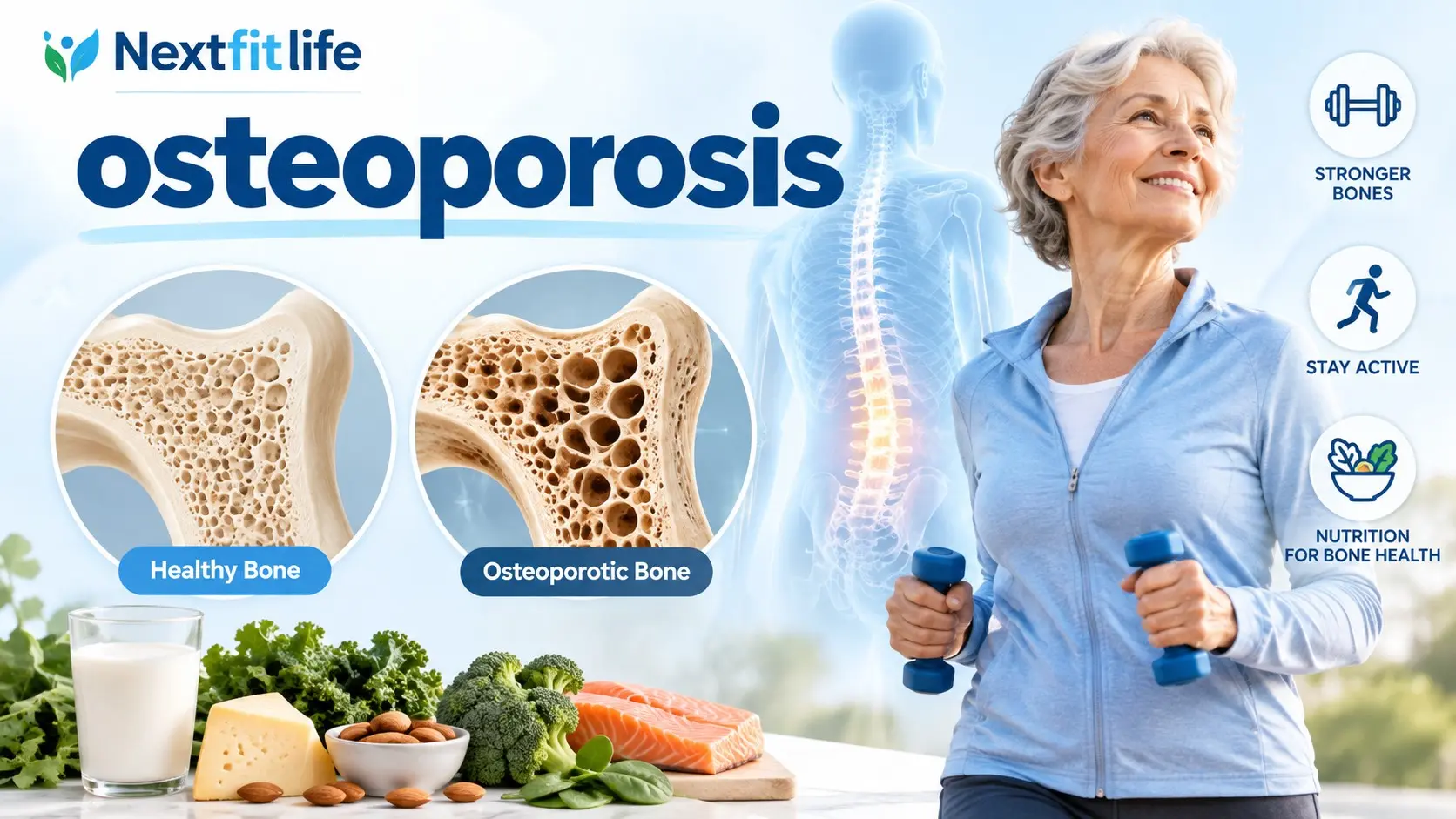
Osteoporosis means that bone strength has fallen enough to increase the chance of fracture.
Bone is living tissue.
Old bone is constantly broken down and replaced with new bone in a process called bone remodeling.
When bone breakdown begins to outpace new bone formation over time, bone becomes less dense and its internal structure becomes weaker.
This is not the same as saying bones simply become “hollow.”
Bone quality, structure, density, age, falls, and other health factors all contribute to fracture risk.
1. Osteoporosis Is Often Silent Until a Fracture Happens
This is the first thing people should know.
You usually cannot feel your bone mineral density falling.
Many people first learn they have osteoporosis after:
- A hip fracture
- A wrist fracture after a minor fall
- A vertebral compression fracture
- A bone density scan done because of age or risk factors
This is why “I feel strong” is not a screening test.
2. Age and Menopause Change Risk
Bone mass usually builds during childhood, adolescence, and early adulthood.
Later, bone loss becomes more likely.
After menopause, the drop in estrogen can speed bone loss, which is one reason osteoporosis is especially common in postmenopausal women.
Men can develop osteoporosis too, especially with older age, low testosterone, steroid use, low body weight, smoking, heavy alcohol use, or medical conditions that affect bone.
3. A Fracture History Can Matter More Than One DXA Number
Bone density is useful, but fracture risk is bigger than one test result.
A person who has already had a low trauma fracture may be at high risk even if the DXA number does not look dramatic.
Clinicians also consider:
- Age
- Previous fractures
- Family history
- Falls
- Smoking
- Alcohol
- Glucocorticoid use
- Medical conditions
- Body weight
This broader approach helps explain why two people with similar bone density can have very different fracture risk.
4. DXA Is the Main Bone Density Test
A DXA scan uses low dose X rays to measure bone mineral density, usually at the hip and spine.
It is quick and noninvasive.
DXA results often include a T score.
| T Score | Usual Interpretation |
|---|---|
| Minus 1.0 or higher | Usually considered normal bone density |
| Between minus 1.0 and minus 2.5 | Low bone mass, often called osteopenia |
| Minus 2.5 or lower | Meets the bone density definition used for osteoporosis in appropriate adults |
The number still needs context.
A clinician may also use fracture history and a risk calculator rather than relying on the T score alone.
5. Calcium Helps, but Calcium Alone Does Not Prevent Osteoporosis
This is one of the most common oversimplifications.
Calcium is a major mineral in bone, so getting enough matters.
Adults commonly need about 1,000 to 1,200 mg daily depending on age and sex.
Useful food sources include:
- Milk
- Yogurt
- Cheese
- Calcium fortified plant drinks
- Calcium set tofu
- Sardines with edible bones
- Canned salmon with bones
- Kale
- Bok choy
- Some beans
Food first is a practical approach when possible.
For a deeper guide, visit the Bone and Joint Nutrition Hub.
6. Vitamin D Matters Because Calcium Has to Be Absorbed
Vitamin D helps the body absorb calcium and also supports muscle function.
NIH recommends:
- 600 IU daily for adults age 19 through 70
- 800 IU daily for adults age 71 and older
Some people need a different amount because of deficiency, absorption problems, limited sun exposure, or medical conditions.
There is no safe universal rule such as “15 minutes of sun gives everyone enough vitamin D.”
Skin tone, age, season, latitude, clothing, and time outdoors all affect vitamin D production.
Read more in the Vitamin D Benefits Guide.
7. Strength Training Matters More Than Many People Realize
Walking is good for health.
Walking alone is not the full bone plan.
Resistance exercise loads muscles and bones in a different way and supports strength, mobility, and balance.
Examples include:
- Free weights
- Weight machines
- Resistance bands
- Chair squats
- Wall push ups
- Step exercises
Weight bearing activity also helps.
Examples include walking, hiking, dancing, stairs, and jogging when medically appropriate.
If you already have osteoporosis or spine fractures, exercise should be adapted to your condition.
For a broader movement plan, see Benefits of Physical Activity.
8. Fall Prevention Is Part of Osteoporosis Treatment
A fracture needs weak bone, force, or both.
That means preventing falls is just as practical as improving bone health.
Useful steps include:
- Improve home lighting
- Clear clutter from walkways
- Secure loose rugs
- Install rails where needed
- Use nonslip bathroom surfaces
- Check vision
- Review medicines that cause dizziness
- Train leg strength
- Practice balance exercises safely
For older adults, see Walking Exercise for Seniors.
9. Some Medicines Can Weaken Bone
Long term glucocorticoid treatment is a major example.
Other medicines and treatments can also affect bone through hormones, nutrition, balance, or fall risk.
Examples that may deserve review include:
- Long term oral steroids
- Some cancer treatments
- Some antiseizure medicines
- Some hormone lowering treatments
- Medicines that cause dizziness or sedation
Do not stop a prescribed medicine on your own.
Ask your doctor or pharmacist whether your medicines affect bone or fall risk and whether you need monitoring or preventive treatment.
10. Osteoporosis Affects Men Too
Osteoporosis is often treated as a women's health issue.
That is a mistake.
Men can lose bone because of:
- Aging
- Low testosterone
- Smoking
- Heavy alcohol use
- Low body weight
- Long term steroid treatment
- Chronic disease
- Some cancer treatments
The screening rules are less settled.
Current USPSTF guidance says there is not yet enough evidence to recommend routine population screening for all men.
That does not mean a man with a fracture or major risk factors should ignore bone health.
11. Osteoporosis Medicines Can Lower Fracture Risk
Healthy habits matter.
They are not always enough once osteoporosis is established.
Prescription treatment may be recommended for people with osteoporosis or high fracture risk.
Medicine groups include:
- Bisphosphonates
- Denosumab
- Selective estrogen receptor modulators in selected patients
- Anabolic bone building medicines
- Sclerostin inhibitor therapy in selected high risk patients
The right medicine depends on:
- Fracture history
- DXA results
- Age
- Kidney function
- Other medical conditions
- Pregnancy potential
- How high the fracture risk is
Do not stop some osteoporosis medicines abruptly without medical advice because treatment transitions can matter.
What Causes Osteoporosis?
Osteoporosis usually develops from more than one factor.
Age
Bone rebuilding becomes less efficient with age, so bone loss becomes more likely.
Menopause
Lower estrogen after menopause can accelerate bone loss.
Low sex hormone levels
Low estrogen or testosterone can reduce bone protection.
Low calcium or vitamin D
Long term inadequate intake can work against bone maintenance.
Low body weight or undernutrition
Very low body weight and inadequate nutrition can raise fracture risk.
Smoking
Smoking is associated with poorer bone health and higher fracture risk.
Heavy alcohol use
Heavy alcohol use affects bone and raises fall risk.
Low physical activity
Bone and muscle both benefit from regular loading and movement.
Long term steroid use
Glucocorticoids can cause significant bone loss in susceptible people.
Medical conditions
Conditions associated with bone loss can include celiac disease, some endocrine diseases, rheumatoid arthritis, chronic kidney disease, some liver disease, and certain cancers or treatments.
Which Risk Factors Can You Change?
| Risk Factor | Can You Change It? | Practical Action |
|---|---|---|
| Age | No | Screen and manage risk appropriately |
| Family history | No | Tell your clinician |
| Smoking | Yes | Use smoking cessation support |
| Heavy alcohol use | Yes | Reduce excess intake |
| Low calcium intake | Often | Increase suitable calcium rich foods |
| Low activity | Often | Add strength and weight bearing activity |
| Fall hazards | Often | Improve home safety and balance |
What Are the Symptoms of Osteoporosis?
Usually, there are none at first.
Osteoporosis becomes noticeable when complications appear.
Possible signs include:
- A fracture after a minor fall
- Sudden back pain from a vertebral fracture
- Loss of height
- Stooped posture
- Reduced mobility after a fracture
These signs are not specific to osteoporosis.
For example, back pain is common and usually has other causes.
Does Osteoporosis Cause Pain?
Low bone density itself usually does not hurt.
Pain tends to come from a fracture.
A vertebral compression fracture can cause sudden or persistent back pain, loss of height, or posture change.
A hip fracture usually causes major pain and difficulty standing or walking.
Do not assume unexplained pain is “bone loss.”
What Is Osteopenia?
Osteopenia means bone density is lower than the young adult reference range but has not reached the DXA threshold commonly used for osteoporosis.
It is not a guaranteed step toward osteoporosis.
Some people with osteopenia have low fracture risk.
Others have significant risk because of age, fractures, steroids, falls, or other factors.
The whole clinical picture matters.
Who Should Get Screened for Osteoporosis?
Current 2025 USPSTF guidance recommends osteoporosis screening for:
- Women age 65 and older
- Postmenopausal women younger than 65 who have increased fracture risk after clinical risk assessment
For men, current evidence is insufficient for USPSTF to recommend routine population screening.
That guidance applies to people without known osteoporosis or prior fragility fractures. People with conditions or medicines that cause secondary osteoporosis may need a different clinical approach.
Screening commonly uses DXA bone mineral density, with or without a fracture risk tool.
For a wider prevention guide, see Health Screening 101.
How Can You Help Prevent Osteoporosis?
Risk reduction works best as a package.
Get enough calcium
Meet your age appropriate intake through food when possible.
Get enough vitamin D
Vitamin D supports calcium absorption and muscle health.
Eat enough protein
Protein supports both bone structure and muscle.
Do weight bearing activity
Walking, stairs, dancing, and other suitable activities load the skeleton.
Do resistance exercise
Strength training supports muscle, bone, and fall prevention.
Train balance
Balance matters because fewer falls mean fewer fracture opportunities.
Do not smoke
Smoking increases fracture risk and works against bone health.
Avoid heavy alcohol use
Heavy drinking affects bone and makes falls more likely.
Protect adequate nutrition
Being very underweight or chronically underfed can raise risk.
For a detailed prevention plan, read How to Prevent Osteoporosis.
How Much Calcium Do Adults Need?
| Group | Recommended Calcium |
|---|---|
| Adults 19 to 50 | 1,000 mg daily |
| Women 51 to 70 | 1,200 mg daily |
| Men 51 to 70 | 1,000 mg daily |
| Adults 71 and older | 1,200 mg daily |
The total includes food, drinks, and supplements combined.
Do not assume more calcium automatically creates stronger bones.
Should Everyone Take Calcium Supplements?
No.
Start by estimating what you already eat.
A supplement can fill a real gap if food intake is low, but unnecessary high intake is not a better bone strategy.
Calcium can also interact with some medicines.
People with kidney disease, kidney stones, or complex medical conditions should discuss supplements with a clinician or pharmacist.
What About Magnesium and Vitamin K2?
Both magnesium and vitamin K have normal roles in the body.
But supplement marketing often stretches that fact too far.
Claims that vitamin K2 simply “moves calcium from arteries into bone” are an oversimplification.
Likewise, no magnesium blend can replace DXA screening, resistance exercise, fall prevention, or medical treatment when fracture risk is high.
For a wider nutrition review, visit Vitamins for Strong Bones and Joints.
How Is Osteoporosis Treated?
Treatment depends on fracture risk.
A plan may include:
- Calcium and vitamin D adequacy
- Resistance and weight bearing exercise
- Fall prevention
- Treatment of secondary causes
- Prescription osteoporosis medicine
Bisphosphonates
Medicines such as alendronate, risedronate, ibandronate, and zoledronic acid reduce bone breakdown.
Denosumab
Denosumab reduces bone resorption and is given by injection on a schedule determined by a clinician.
It should not simply be stopped or delayed without a medical plan because bone turnover can rebound after discontinuation.
Bone building medicines
Some people at very high fracture risk may receive anabolic treatment that stimulates new bone formation.
Romosozumab
This medicine increases bone formation and reduces bone breakdown. It is used in selected high risk patients and has cardiovascular considerations that clinicians assess before treatment.
The best medicine depends on your fracture risk, health history, kidney function, previous treatment, and other factors.
Can Osteoporosis Be Reversed?
This question deserves a careful answer.
Bone density can improve with effective treatment in some people.
That does not mean the diagnosis should be treated as if it never happened.
Previous fractures and long term fracture risk still matter.
A better goal is:
Be skeptical of programmes that promise to “reverse osteoporosis naturally” without considering fracture history, DXA results, age, and medical risk.
Can You Live Well With Osteoporosis?
Yes.
An osteoporosis diagnosis does not mean you must stop moving or expect a fracture.
Good care focuses on preserving independence.
That usually means:
- Staying active safely
- Building muscle
- Training balance
- Reducing fall hazards
- Taking medicines correctly when prescribed
- Maintaining useful nutrition
- Monitoring bone health when appropriate
Fear driven inactivity can weaken muscle and balance, which is the opposite of what most people need.
Which Exercises Need Extra Care After Osteoporosis?
Exercise is still important after diagnosis.
The programme simply needs to fit the person's fracture history and bone health.
People with vertebral osteoporosis or previous spine fractures may need guidance on loaded spinal flexion, forceful twisting, impact, and lifting technique.
A physical therapist familiar with osteoporosis can help adapt exercise safely.
Common Osteoporosis Myths
| Myth | What Is More Accurate |
|---|---|
| You will feel bone loss happening | Osteoporosis is often silent until fracture |
| Only women get osteoporosis | Men can develop osteoporosis too |
| Calcium prevents every fracture | Calcium is one part of a wider bone and fall prevention plan |
| Walking is enough exercise | Resistance and balance training matter too |
| All men need DXA at age 70 | USPSTF currently finds evidence insufficient for routine population screening in men |
| Supplements can replace osteoporosis medicine | High fracture risk may require prescription treatment |
When Should You Talk With a Clinician About Bone Health?
Ask for a bone health review if you have:
- A fracture after a minor fall
- Long term steroid use
- Early menopause
- Very low body weight
- Strong family history of hip fracture or osteoporosis
- Significant loss of height
- A condition that affects calcium or vitamin D absorption
- A disease or treatment known to affect bone
Do not wait for a hip fracture to start the conversation.
Conclusion: Treat Fracture Risk, Not Just a Bone Density Number
Osteoporosis is serious because weak bones can fracture, not because a scan produced a low number.
The strongest plan combines appropriate screening, calcium and vitamin D adequacy, enough protein, resistance and weight bearing exercise, balance work, fall prevention, medicine review, and osteoporosis treatment when fracture risk is high.
Your next step is simple: if you are age 65 or older, postmenopausal with risk factors, have had a low trauma fracture, or take long term steroids, ask your clinician whether a formal bone health assessment is due.
References and Sources
- US Preventive Services Task Force. Osteoporosis to Prevent Fractures: Screening.
Current 2025 guidance covering screening in women age 65 and older, younger postmenopausal women at increased risk, DXA, and evidence gaps in men.
https://www.uspreventiveservicestaskforce.org/uspstf/recommendation/osteoporosis-screening - NIH Office of Dietary Supplements. Calcium Fact Sheet for Health Professionals.
Covers calcium requirements, food sources, supplements, interactions, upper limits, and bone health.
https://ods.od.nih.gov/factsheets/Calcium-HealthProfessional/ - NIH Office of Dietary Supplements. Vitamin D Fact Sheet.
Covers vitamin D recommendations, food sources, deficiency, safety, and bone health.
https://ods.od.nih.gov/factsheets/VitaminD-Consumer/ - Bone Health and Osteoporosis Foundation. What Is Osteoporosis?
Covers bone loss, fracture risk, osteoporosis diagnosis, prevention, and treatment.
https://www.bonehealthandosteoporosis.org/patients/what-is-osteoporosis/ - Bone Health and Osteoporosis Foundation. Osteoporosis Prevention.
Covers calcium, vitamin D, exercise, smoking, alcohol, healthy weight, and bone health across the lifespan.
https://www.bonehealthandosteoporosis.org/preventing-fractures/prevention/ - CDC. Preventing Falls and Hip Fractures.
Covers fall prevention, home safety, strength, balance, medicine review, and hip fracture prevention.
https://www.cdc.gov/falls/prevention/index.html - UK Clinical Guideline for the Prevention and Treatment of Osteoporosis.
Evidence based guidance covering fracture risk assessment, nutrition, exercise, smoking, alcohol, falls, and osteoporosis treatment.
https://pmc.ncbi.nlm.nih.gov/articles/PMC12417299/
Internal Links and Helpful NextFitLife Guides
- Bone and Joint Health Hub
- How to Prevent Osteoporosis
- Bone and Joint Nutrition Hub
- Vitamins for Strong Bones and Joints
- Vitamin D Benefits
- Benefits of Physical Activity
- Walking Exercise for Seniors
- Health Screening Guide
About the Author
Adel Galal is the Founder and Lead Writer at NextFitLife. He researches bone health, nutrition, fitness, healthy aging, screening, and everyday wellness and turns current medical and public health guidance into clear practical information for everyday readers.
I am not a doctor or licensed healthcare professional, and this content does not replace professional medical advice, diagnosis, or treatment. I share information based on extensive research, real life experience, and consultation with healthcare providers. Always consult a qualified healthcare professional for diagnosis, treatment, or guidance about any health condition.
Learn more about Adel, NextFitLife, and the site's editorial approach on the About Us page.
Frequently Asked Questions
What is osteoporosis?
Osteoporosis is a disease in which bones become weak enough that fractures happen more easily. It often causes no symptoms before a fracture.
What causes osteoporosis?
Osteoporosis can result from aging, menopause, low sex hormone levels, low body weight, poor nutrition, smoking, heavy alcohol use, low activity, long term steroid treatment, genetics, and some medical conditions.
What are the early signs of osteoporosis?
There are usually no clear early symptoms. Possible later clues include a low trauma fracture, sudden back pain from a vertebral fracture, loss of height, or posture change.
Does osteoporosis cause pain?
Low bone density itself is usually painless. Pain commonly appears when a fracture occurs, especially a vertebral compression fracture or hip fracture.
What is the difference between osteopenia and osteoporosis?
Osteopenia means bone density is lower than the young adult reference range but not low enough to meet the usual DXA threshold for osteoporosis. Fracture risk still depends on many other factors.
Can osteoporosis be prevented?
Risk can often be reduced with enough calcium and vitamin D, protein, resistance and weight bearing exercise, no smoking, sensible alcohol use, healthy weight, fall prevention, and screening when appropriate. It cannot always be completely prevented.
Can osteoporosis be reversed?
Bone density can improve with treatment in some people, but previous fractures and long term fracture risk still matter. The goal is to strengthen bone and reduce future fractures.
How much calcium do adults need?
Most adults need about 1,000 to 1,200 mg daily depending on age and sex. This includes calcium from food, drinks, and supplements combined.
How much vitamin D do adults need?
NIH recommends 600 IU daily for adults age 19 through 70 and 800 IU daily from age 71 onward, although treatment needs can differ when deficiency is present.
Is walking enough for osteoporosis?
Walking is useful weight bearing activity, but resistance exercise and balance training are important additions for muscle strength and fall prevention.
Who should get a DXA scan?
Current USPSTF guidance recommends screening women age 65 and older and younger postmenopausal women at increased fracture risk. Other people may need testing because of fractures, medicines, or medical conditions.
Should men get osteoporosis screening?
USPSTF currently says evidence is insufficient to recommend routine population screening for all men. Men with fractures or important risk factors may still need individual assessment.
What medicines treat osteoporosis?
Treatments include bisphosphonates, denosumab, selected hormone related medicines, anabolic bone building treatments, and romosozumab. The choice depends on fracture risk and medical history.
Can you live well with osteoporosis?
Yes. Many people remain active and independent with appropriate exercise, fall prevention, nutrition, monitoring, and medication when treatment is needed.

Health & wellness writer with 30+ years of experience in nutrition, fitness, and healthy aging. Founder of NextFitLife.com — evidence-based health guidance.

