Last Updated: September 3, 2026
Sources Checked: September 3, 2026
Next Review: September 2027, or sooner if major respiratory or antibiotic guidance changes
Written and Source Checked by: Adel Galal, Founder and Lead Writer at NextFitLife
Review Status: Updated using current respiratory, mucus, cough, lung infection, and emergency guidance. This article has not been independently medically reviewed by a licensed clinician.
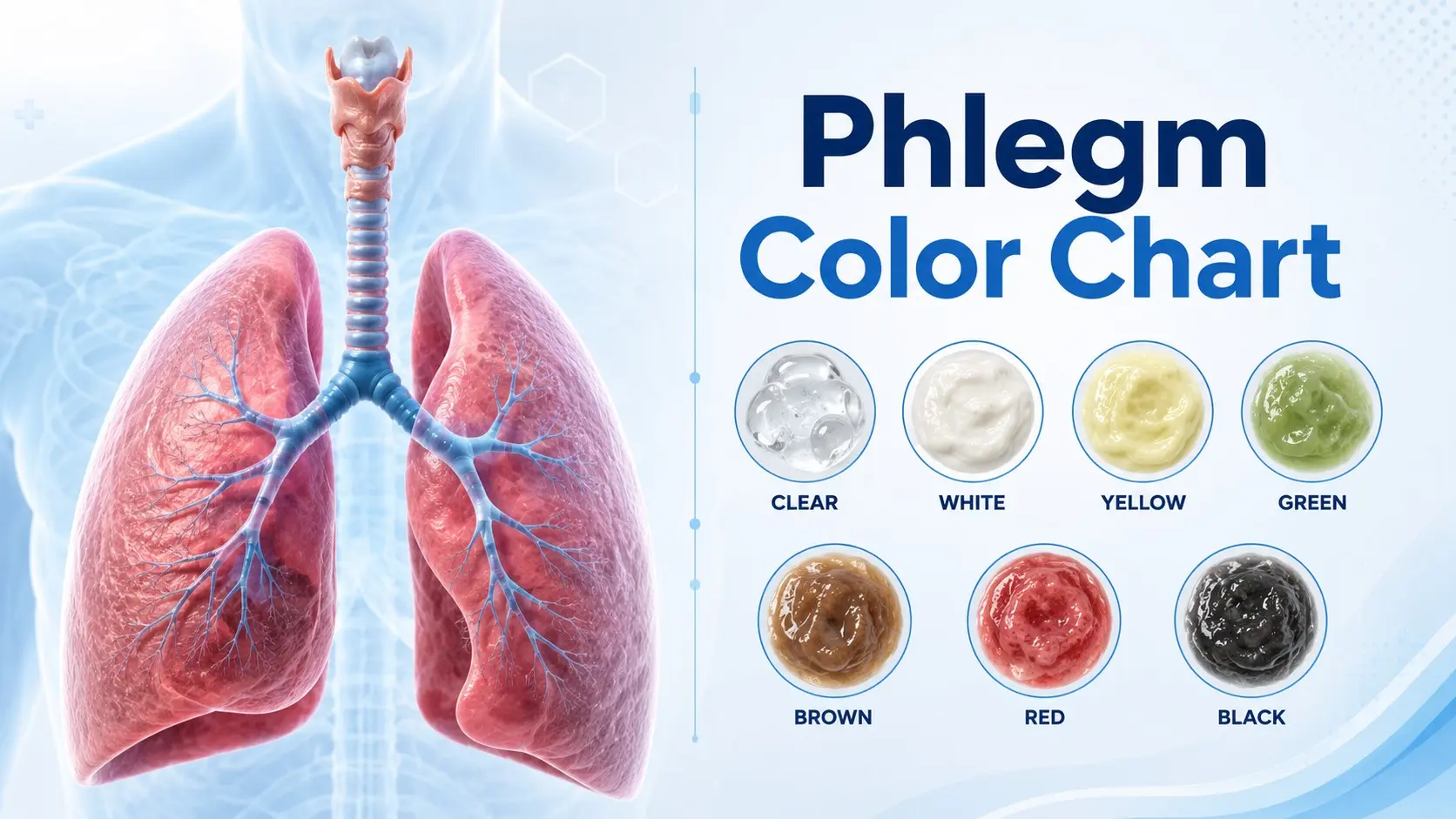
Phlegm color chart results can help you describe what is happening in your airways.
They cannot diagnose the cause by colour alone.
Clear mucus is usually normal.
White, yellow, and green mucus can appear when the airways are inflamed.
Brown can reflect old blood or inhaled particles.
Red, pink, or black mucus needs more attention depending on the rest of your symptoms.
Quick Answer: What Does Phlegm Color Tell You?
Phlegm color gives clues about mucus, inflammation, blood, or inhaled material, but color alone cannot tell you whether an infection is viral or bacterial. Yellow or green phlegm does not automatically mean antibiotics are needed. Breathlessness, fever, chest pain, blood, duration, smoking history, and chronic lung disease matter more.
Medical note: This content is for general educational purposes and does not replace professional medical advice, diagnosis, or treatment. Consult an appropriately qualified healthcare professional for personal medical concerns. This article explains published guidance and does not provide a personal clinical assessment. Always consult qualified medical professionals for diagnosis and treatment of any health condition.
Phlegm Color Chart at a Glance
| Phlegm Color | What It May Suggest | What Matters More |
|---|---|---|
| Clear phlegm | Normal airway mucus, allergy, irritation, or some viral illness | Amount, duration, cough, and wheezing |
| White phlegm | Thicker mucus, congestion, viral illness, airway inflammation, or chronic lung disease | Whether it is new and which symptoms appear with it |
| Yellow phlegm | Immune activity and airway inflammation, including respiratory infection | Fever, duration, breathing symptoms, and overall illness |
| Green phlegm | Strong inflammatory activity, infection, or chronic airway disease | Green color alone does not prove bacterial infection |
| Brown phlegm | Old blood, smoke, dust, pollution, or selected respiratory conditions | Persistence, smoking history, blood, and chest symptoms |
| Red phlegm | Blood in respiratory mucus | Amount of blood and whether breathing or chest symptoms are present |
| Pink frothy phlegm | Blood mixed with fluid and, in the right setting, possible pulmonary edema | Sudden breathlessness, wheezing, or difficulty lying flat |
| Black phlegm | Smoke, coal dust, dark particles, or uncommon fungal disease | Exposure history and whether it persists |
This chart is a starting point.
Do not stop at the color.
Ask:
- How long has the mucus looked different?
- Am I getting better or worse?
- Do I have a fever?
- Am I short of breath?
- Does my chest hurt?
- Am I wheezing?
- Is there visible blood?
- Do I smoke or vape?
- Do I have COPD, asthma, bronchiectasis, or another lung condition?
Those answers usually tell you more than the shade itself.
For the wider respiratory cluster, visit the NextFitLife Lung and Respiratory Health Hub.
What Is Phlegm?
Phlegm is mucus from the lower respiratory tract.
That means mucus coming from your airways and lungs.
When you cough it out, healthcare professionals often call it sputum.
Mucus is not automatically a sign that something is wrong.
Your lungs and airways normally produce it.
It helps trap dust, microbes, smoke, and other material that enters the respiratory tract.
The American Lung Association explains that healthy respiratory mucus is usually clear and helps protect the lungs and airways.
Changes in the amount, thickness, or color can happen when your airways become irritated or inflamed.
What Is the Difference Between Phlegm and Nasal Mucus?
The words get mixed together.
Phlegm or sputum usually means mucus coughed up from the lower respiratory tract.
Nasal mucus comes mainly from your nose and sinuses.
This matters because green drainage from your nose is not the same as green sputum coming from deep in the chest.
Postnasal drainage can run into the throat.
You may then cough or clear it and think it came from your lungs.
Try to notice where the mucus seems to start.
Is Clear Phlegm Normal?
Usually, yes.
Clear phlegm is the normal colour of healthy respiratory mucus.
You may notice more clear mucus when your airways are irritated.
Possible reasons include:
- Allergies
- A viral illness
- Smoke exposure
- Air pollution
- Asthma
- Postnasal drainage
- Other airway irritation
The amount matters.
A tiny amount of clear sputum is very different from suddenly coughing up large amounts all day.
If clear mucus appears with wheezing or chest tightness, think beyond the colour.
Read Wheezing at Night: Asthma, Reflux and Other Causes if noisy breathing is part of the pattern.
What Does White Phlegm Mean?
White phlegm is common.
It is also not very specific.
Mucus can look white when it becomes thicker or contains more immune cells and material.
White or cream colored mucus can appear with viral respiratory illness.
It can also occur with:
- Airway inflammation
- Congestion
- COPD
- Chronic bronchitis
- Some asthma patterns
- Other mucus-producing lung conditions
I would not translate white mucus as:
“This is definitely viral.”
The surrounding symptoms are more useful.
If white mucus is your main concern, read the dedicated NextFitLife guide: White Phlegm: Signs, Causes and Treatment Options.
Can White Phlegm Come From COPD?
Yes.
People with COPD can produce sputum because their airways remain inflamed.
The useful clue is usually a change from the person's normal pattern.
Track:
- Amount of mucus
- Thickness
- Color change
- Breathlessness
- Wheezing
- Fever
- Exercise tolerance
Someone with established lung disease should compare today's sputum with their normal baseline.
That is more useful than comparing it with a color chart made for everyone.
Does White Phlegm Mean Heart Failure?
White mucus alone does not diagnose heart failure.
The pattern becomes more concerning if mucus or cough appears with:
- Shortness of breath lying flat
- Swollen ankles
- Rapid weight gain from fluid
- Waking suddenly breathless
- Reduced ability to walk or exercise
If lying flat changes your breathing, read Shortness of Breath Lying Down: Causes and Red Flags.
What Does Yellow Phlegm Mean?
Yellow phlegm usually shows that immune activity is taking place in the airways.
Immune cells and proteins build up in mucus during inflammation.
That changes the color.
Yellow mucus can appear during respiratory infection.
Some infections are viral.
Some are bacterial.
The color cannot reliably separate them.
So yellow should mean:
“My airways are inflamed.”
Not:
“I definitely need an antibiotic.”
Does Yellow Phlegm Mean You Need Antibiotics?
No.
Yellow sputum does not prove bacterial infection.
Antibiotics treat selected bacterial infections.
The decision depends on the full picture.
That can include:
- How long you have been ill
- Fever
- Breathing symptoms
- Chest examination
- Underlying lung disease
- Your age and health history
- Selected tests when needed
Do not start leftover antibiotics because mucus changed from clear to yellow.
What Does Green Phlegm Mean?
This colour creates the most confusion.
Green phlegm usually reflects strong inflammatory activity.
White blood cells called neutrophils gather in inflamed airways.
An enzyme called myeloperoxidase contributes to the green appearance of sputum.
So green mucus tells you that immune activity is happening.
It does not tell you exactly what caused that activity.
Why Does Phlegm Turn Green?
During airway inflammation, large numbers of neutrophils can enter respiratory mucus.
These cells release enzymes.
One is myeloperoxidase.
That enzyme contributes green pigment.
This explains something very useful:
Green sputum is partly a sign of the immune response.
It is not a direct dye produced only by bacteria.
Does Green Phlegm Mean a Bacterial Infection?
No.
Not by itself.
This is the main myth I would remove from a typical mucus chart.
Research in adults with acute cough found that yellow or green sputum had only limited ability to identify bacterial infection.
The researchers concluded that sputum color should not determine whether an otherwise healthy adult with acute cough receives antibiotics.
Merck Manual also states that sputum color and thickness do not reliably separate bacterial causes from other causes.
So:
Green mucus is evidence of inflammation.
It is not proof of bacterial infection.
Can Green Phlegm Come From a Virus?
Yes.
A viral respiratory illness can produce green sputum.
Your immune system still sends neutrophils into the airways during many viral infections.
This can change mucus from clear to cloudy, yellow, and then green.
The colour may change again as you recover.
Do not assume the infection became bacterial just because the mucus became greener.
Green Phlegm Matters Differently if You Have COPD
This is where context changes the answer.
In an otherwise healthy adult with a short acute cough, green mucus is a weak bacterial marker.
In someone with established COPD, increased sputum purulence can carry more clinical information when it occurs with other signs of an exacerbation.
Those signs can include:
- More breathlessness
- More sputum
- A simple change in sputum colour
- More wheezing
- Reduced activity tolerance
The colour still does not make the decision alone.
If you have a personal COPD action plan, follow that plan.
What About Green Phlegm With Fever?
Now the overall illness matters.
Green mucus plus fever can occur with respiratory infection.
Possible causes include bronchitis, pneumonia, sinus drainage, and other respiratory illnesses.
Get medical advice sooner if you also have:
- Shortness of breath
- Chest pain
- Persistent fever
- Confusion
- Marked weakness
- Symptoms that improve and then become much worse
The fever and breathing symptoms carry more weight than the exact shade of green.
What Does Brown Phlegm Mean?
Brown phlegm can have several explanations.
Old blood can turn respiratory mucus brown.
Dark material that you inhale can also change the colour.
Possible sources include:
- Tobacco smoke
- Dust
- Pollution
- Other brown particles
- Selected respiratory infections
I would not look at brown mucus and declare pneumonia.
I also would not ignore brown sputum that keeps returning.
Can Smoking Cause Brown Phlegm?
Yes.
Smoke carries particles into the respiratory tract.
Long-term smoking also damages the normal mucus-clearing system of the airways.
A smoker can therefore produce darker sputum.
But a new change still deserves attention.
Especially with:
- Blood
- Unexplained weight loss
- Chest pain
- Increasing breathlessness
- A changing chronic cough
Those symptoms should not be blamed on smoking without assessment.
What Is Rust Colored Phlegm?
People use this color name loosely.
Rust sputum can look:
- Brown
- Orange brown
- Red brown
Old blood is one possibility.
Some respiratory infections can also produce rust colored sputum.
Historically, certain types of pneumonia have been linked with rust-colored mucus.
But the colour cannot identify the microorganism.
Treat rust colored phlegm as a clue.
Not a laboratory result.
What Does Red Phlegm Mean?
Red phlegm means blood is present until another explanation is found.
The medical term for coughing up blood is hemoptysis.
Blood can look like:
- Tiny red streaks
- Small flecks
- Pink staining
- Bright red blood
- Larger amounts of blood
Forceful coughing can irritate small blood vessels.
Respiratory infection can also produce small streaks.
But coughing blood also occurs with more serious conditions.
Repeated blood in sputum should be medically assessed.
When Is Blood in Phlegm an Emergency?
Seek urgent help if coughing blood is more than a few spots or streaks.
Emergency assessment is especially important when blood appears with:
- Difficulty breathing
- Chest pain
- Upper back pain
- A very fast heartbeat
- Feeling faint or very weak
Do not try to grade a significant bleeding episode using a color chart.
What Does Pink Phlegm Mean?
Pink mucus usually means a small amount of blood has mixed with respiratory secretions.
But one pattern is unique.
Pink frothy sputum plus sudden severe breathing trouble can occur with pulmonary edema.
That means fluid is accumulating inside the lungs.
Warning signs can include:
- Sudden severe breathlessness
- Gasping
- Wheezing
- Difficulty lying flat
- A feeling of suffocation
- Frothy or blood-tinged mucus
This is an urgent pattern.
Seek emergency medical help.
If breathing becomes worse in a flat position, read Shortness of Breath Lying Down.
What Does Black Phlegm Mean?
Black phlegm is unusual.
Sometimes the explanation is an obvious inhaled material.
Examples include:
- Heavy smoke exposure
- Coal dust
- Dark industrial particles
- Other dark material in the environment
Black sputum can also appear with selected uncommon fungal lung diseases.
I would not try to distinguish those causes by eye.
Persistent black sputum deserves medical assessment, especially without a clear exposure history.
What About Gray Phlegm?
Gray sputum is less specific.
Smoke, pollution, dust, and concentrated secretions can all darken mucus.
If you work around dust, fumes, smoke, or industrial material, tell your healthcare professional.
Occupational exposure is a useful respiratory history.
The colour itself does not tell you which material entered the lungs.
Does Thick Phlegm Mean the Infection Is Worse?
No.
Thick phlegm cannot tell you how severe an infection is.
Mucus can become thicker because:
- You are dehydrated
- Airway inflammation has increased
- The mucus contains more cells and debris
- You have chronic mucus-producing lung disease
- The mucus has remained in the airways longer
Merck Manual states that sputum thickness does not reliably separate bacterial disease from other causes.
So thick green mucus is not automatically more bacterial than thin yellow mucus.
What If Phlegm Is Very Sticky and Hard to Clear?
Now mucus clearance matters.
Sticky respiratory mucus can be difficult to move out of the airways.
This is particularly relevant in chronic conditions such as:
- COPD
- Bronchiectasis
- Cystic fibrosis
- Some chronic respiratory infections
For someone with chronic mucus production, the important question is:
Has the sputum changed from your normal amount and texture?
Your personal baseline matters.
Can Phlegm Color Change During a Cold?
Yes.
Mucus can start clear.
Then look cloudy.
Then yellow.
Then green.
Then become clearer again as the immune response settles.
This does not mean you developed a new disease every time the colour changed.
Look at the direction of the illness.
Are you breathing better?
Is the fever gone?
Is the cough easing?
Is your energy returning?
Those changes are more informative than comparing today's mucus shade with yesterday's.
Does Green Mucus Mean a Cold Became Bacterial?
No.
That conclusion is too simple.
Viral respiratory illnesses can produce yellow and green mucus.
Evidence from primary care studies does not support using sputum colour alone to decide that an otherwise healthy adult with an acute cough has a bacterial infection.
Get assessed if the illness becomes severe, lasts longer than expected, or clearly worsens.
How Long Can Colored Phlegm Last?
There is no single safe number of days based only on colour.
A respiratory illness can produce colored sputum for part of its course.
What matters is whether you are improving.
I would arrange medical review when mucus changes persist or appear with:
- Significant shortness of breath
- Persistent fever
- Chest pain
- Blood
- Repeated episodes
- Unexplained weight loss
- A major change in known lung disease
If coughing is the bigger problem, read Dry Cough at Night: 10 Causes and When to Get Help.
What If You Have COPD and Your Mucus Changes Color?
This situation deserves its own rule.
Do not apply a generic mucus chart to an established COPD action plan.
A COPD flare can involve:
- More breathlessness
- More coughing
- More sputum
- A change in sputum colour
- A change in sputum thickness
- Reduced activity tolerance
If you have a written COPD action plan, follow it.
Contact your healthcare team when the plan tells you to.
Do not borrow someone else's antibiotic or steroid plan.
What If You Have Bronchiectasis?
People with bronchiectasis can produce larger amounts of mucus.
They can also experience recurrent chest infections.
Useful changes to track include:
- Sputum volume
- Color
- Thickness
- Odor
- Breathlessness
- Fever
- Cough severity
Your normal sputum pattern is especially important.
A sudden change from your baseline deserves more attention than the colour alone.
Does the Smell of Phlegm Matter?
Yes.
A new strong or unpleasant odour is worth reporting.
Foul-smelling sputum can occur in some respiratory infections and in conditions where infected mucus remains trapped in abnormal airways.
Smell cannot diagnose the cause either.
Very foul sputum with fever, chest symptoms, or significant illness deserves assessment.
Why Does Phlegm Sometimes Taste Metallic?
Blood can produce a metallic taste.
Respiratory mucus also contains salts and other substances that affect taste.
If you repeatedly taste blood when you cough, look for visible blood in the sputum.
Persistent bleeding deserves medical review.
Can Dehydration Make Phlegm Thicker?
Yes.
Dehydration can make respiratory secretions feel thicker and harder to clear.
Adequate fluid intake can support normal mucus clearance when dehydration is contributing.
That does not mean water treats pneumonia or another underlying lung disease.
Hydration supports mucus movement.
It does not replace diagnosis.
Should You Suppress a Wet Cough?
Not automatically.
A cough has a job.
It clears mucus and other material from the airways.
A productive cough brings up sputum.
A dry cough produces little or no mucus.
The right approach depends on why you are coughing.
If mucus needs to move out of the lungs, completely suppressing an effective cough may not always be the goal.
Can Steam Clear Phlegm?
Moist air can make dry or irritated airways feel more comfortable.
It may also make thick secretions easier to move for some people.
But steam does not kill a lung infection.
Very hot steam can burn you.
Do not put your face over boiling water.
A warm shower or safely used humidification is a safer way to add moisture when dry air is contributing.
Should You Take Antibiotics for Yellow or Green Phlegm?
No.
Not because of the color alone.
This deserves a direct answer.
Research in adults with acute cough found that yellow or green sputum has limited value for identifying bacterial infection.
Antibiotic decisions should be based on the clinical picture.
That means symptoms, examination, health history, and selected tests when needed.
Green phlegm is not an antibiotic prescription.
How Does a Healthcare Professional Assess Colored Phlegm?
The history comes first.
You may be asked:
- How long have you been coughing?
- How much sputum are you producing?
- What colour is it?
- Did the amount of change?
- Do you have a fever?
- Do you have chest pain?
- Are you short of breath?
- Are you wheezing?
- Is there blood?
- Do you smoke or vape?
- Do you have asthma or COPD?
- Have you had repeated infections?
- Are you exposed to dust or chemicals at work?
Then comes the examination.
Further testing depends on what the pattern suggests.
What Is a Sputum Culture?
A sputum culture examines mucus coughed from the lower respiratory tract.
A laboratory can test the sample for selected bacteria or fungi.
This differs completely from judging infection by colour.
A culture examines organisms.
A colour chart examines appearance.
Depending on the symptoms, a healthcare professional may also use:
- Chest X-ray
- CT imaging
- Blood tests
- Oxygen measurement
- Other respiratory tests
For broader information on testing, visit the Medical Tests and Screenings Hub.
Do You Need a Sputum Culture Every Time Mucus Turns Green?
No.
Most short respiratory illnesses do not need sputum culture.
Testing becomes more useful in selected situations such as:
- Persistent symptoms
- Severe illness
- Repeated chest infections
- Chronic lung disease
- Treatment failure
- Concern about a specific infection
Your healthcare professional decides whether the test is useful.
Which Symptoms Matter More Than the Colour?
This is the most important section in the article.
Look at the person.
Not just the mucus.
Pay close attention to:
- Shortness of breath
- Chest pain
- Coughing blood
- Persistent fever
- Confusion
- Marked weakness
- Unexplained weight loss
- Rapidly worsening symptoms
- A major change in chronic lung disease
Merck Manual lists breathlessness, coughing blood, weight loss, and persistent fever among red flags during adult cough assessment.
Those signs matter far more than whether the mucus is yellow, green, or dark green.
When Should You See a Healthcare Professional?
Arrange medical assessment if:
- Your sputum stays unusually colored
- You produce much more mucus than usual
- Your cough keeps getting worse
- You have ongoing fever
- You are short of breath
- You have chest pain
- You repeatedly see blood
- You have unexplained weight loss
- You have COPD or another chronic lung disease and your mucus changes significantly
- You have repeated episodes of brown, black, or bloody sputum
A persistent change deserves a cause.
When Is Colored Phlegm an Emergency?
Seek emergency medical help for severe breathing difficulty.
Urgent assessment is also needed if you cough up more than a few spots or streaks of blood, especially with chest pain or breathing difficulty.
Sudden pink frothy sputum with severe breathlessness, wheezing, or a feeling of suffocation can occur with pulmonary edema.
That requires emergency care.
Do not spend time comparing mucus colours during a serious breathing emergency.
Phlegm Colour and Wheezing Tell You Uncommon Things
Mucus colour describes respiratory secretions.
Wheezing describes a musical sound caused by narrowed airways.
You can have green sputum without wheezing.
You can wheeze without producing mucus.
If noisy breathing is part of your symptoms, read Wheezing at Night.
Phlegm Color and Cough Timing Tell You Uncommon Things Too
The colour tells you something about the mucus.
The timing tells you something about the trigger.
For example:
Cough mainly after eating raises reflux or swallowing questions.
Cough mainly at night raises asthma, reflux, postnasal drainage, and other causes.
Read Cough After Eating if meals trigger your cough.
Read Dry Cough at Night if the cough is mainly dry and happens in bed.
Common Phlegm Color Myths
Myth: Green Phlegm Means Bacteria
False.
Green sputum reflects inflammatory immune activity.
Viral and bacterial respiratory illnesses can both produce it.
Myth: Green Phlegm Means You Need Antibiotics
False.
Sputum colour alone should not decide antibiotic treatment.
Myth: Clear Phlegm Always Means Healthy Lungs
False.
A new large increase in clear mucus can occur with allergies, airway irritation, and selected respiratory conditions.
Myth: Brown Phlegm Means Pneumonia
False.
Brown mucus can reflect old blood, smoke, dust, pollution, or several respiratory problems.
Myth: A Little Blood Never Matters After Hard Coughing
Forceful coughing can irritate small airway blood vessels.
But recurrent blood still needs assessment.
Myth: Pink Frothy Mucus Is Just Another Colour
False.
Pink frothy sputum with acute breathing difficulty is a different pattern and can occur with pulmonary edema.
Myth: A Phlegm Color Chart Can Diagnose the Infection
False.
Color gives clues.
Diagnosis comes from symptoms, history, examination, and selected tests.
My Approach to a Phlegm Color Chart
I use the chart in two passes.
First:
What colour is it?
Clear?
White?
Yellow?
Green?
Brown?
Bloody?
Black?
Then I almost stop looking at the color.
The second pass matters more.
How long has it been there?
Are symptoms improving?
Is there fever?
Chest pain?
Breathlessness?
Wheezing?
Blood?
A smoking history?
Known COPD?
Repeated infections?
My background in information technology management trained me to avoid making decisions from one data point.
I use that same habit when researching health information for NextFitLife.
For this article, I compared current American Lung Association guidance, Cleveland Clinic mucus guidance, Merck Manual cough guidance, open primary care research on sputum colour and bacterial infection, and current guidance on coughing blood.
The conclusion is simple.
Sputum colour is useful descriptive information.
It is weak diagnostic information when used alone.
Conclusion: Use a Phlegm Color Chart as a Clue
A phlegm color chart works best as a clue, not a diagnosis.
Clear mucus is usually normal.
White, yellow, and green mucus can appear during airway inflammation or infection.
Brown can reflect old blood or inhaled material.
Red, persistent black sputum, or pink frothy mucus deserves more attention.
Your next step: Track the colour, but also record how long it lasts and whether you have fever, chest pain, shortness of breath, wheezing, blood, or worsening symptoms. If warning signs appear, get medical advice instead of choosing treatment from the mucus colour alone.
References and Sources
This article was checked against current and publicly accessible respiratory and clinical sources.
- American Lung Association. Mucus.This current public resource explains normal respiratory mucus, phlegm and sputum, changes in colour and thickness, warning signs, and when sputum culture or imaging may be considered.Read the American Lung Association Mucus Guide
- Cleveland Clinic. Mucus.This medically reviewed guide explains clear, white, yellow, green, red, pink, brown, and black mucus and stresses that mucus colour alone cannot diagnose a specific infection.Read Cleveland Clinic Mucus Guidance
- Merck Manual Professional Edition. Cough in Adults.Merck explains that sputum colour and thickness do not reliably distinguish bacterial infection from other causes and lists breathlessness, coughing blood, persistent fever, and weight loss among important warning signs.Read Merck Manual Cough Guidance
- Altiner A and colleagues. Sputum Colour for Diagnosis of a Bacterial Infection in Patients With Acute Cough.This open access primary care study examined the relationship between sputum color and bacterial infection and concluded that yellow or green sputum should not determine antibiotic treatment in otherwise healthy adults with acute cough.Read the Open Access Sputum Colour Study
- NHS. Coughing Up Blood.This public health guidance explains when small amounts of blood in sputum need assessment and when coughing blood with breathing difficulty, chest pain, or other concerning symptoms needs emergency care.Read NHS Coughing Up Blood Guidance
Additional Source Used: Cleveland Clinic pulmonary edema guidance was checked for pink frothy or blood tinged sputum associated with acute pulmonary edema and severe breathing difficulty.
Read Cleveland Clinic Pulmonary Edema Guidance
Source Review Date: September 3, 2026
These organizations and researchers do not endorse NextFitLife.
Continue Reading on NextFitLife
Main Health Hub: NextFitLife Health
Primary Sub Hub: Lung and Respiratory Health
Medical Tests Hub: Medical Tests and Screenings
- White Phlegm: Signs, Causes and Treatment Options
- Dry Cough at Night: 10 Causes and When to Get Help
- Wheezing at Night: Asthma, Reflux and Other Causes
- Shortness of Breath Lying Down: Causes and Red Flags
- Cough After Eating: Reflux, Swallowing and Aspiration
- Silent Asthma: Symptoms Without Obvious Wheezing
- Persistent Phlegm in the Throat
About the Author
Adel Galal is the founder and lead writer of NextFitLife.
NextFitLife is an independent health and wellness website created to help adults understand health, fitness, foods and nutrition, beauty, and healthy aging in clear language.
Adel has maintained a personal interest in health, fitness, nutrition, sleep, wellness, and healthy aging for more than 30 years.
His health and wellness writing experience spans more than 15 years.
Before founding NextFitLife, Adel spent 29 years working as an IT Manager for the Nestlé Egypt Region.
His professional background developed skills in data analysis, research organization, systems thinking, information management, structured review, and problem solving.
At NextFitLife, he applies those skills to compare credible sources, examine how claims are supported, separate established guidance from uncertain conclusions, and explain complex health information in plain language.
For this article, his focus is on preventing readers from treating mucus color as a diagnosis. The article separates useful color clues from the symptoms that actually change medical concern, such as breathlessness, chest pain, blood, fever, smoking history, and chronic lung disease.
This content is for general educational purposes and does not replace professional medical advice, diagnosis, or treatment. Consult an appropriately qualified healthcare professional for personal medical concerns. This article explains published guidance and does not provide a personal clinical assessment. Always consult qualified medical professionals for diagnosis and treatment of any health condition.
Read more about Adel Galal, NextFitLife, and our editorial and source checking process.
Frequently Asked Questions About Phlegm Color
What color is healthy phlegm?
Healthy respiratory mucus is usually clear. A sudden increase in clear mucus can still occur with allergies, airway irritation, or selected respiratory conditions.
What does white phlegm mean?
White phlegm can appear when mucus becomes thicker during airway inflammation, congestion, viral illness, COPD, or other respiratory conditions. Color alone cannot identify the cause.
What does yellow phlegm mean?
Yellow phlegm reflects immune activity and inflammation in the airways. It can appear during viral or bacterial respiratory infections.
Does yellow phlegm mean I need antibiotics?
No. Yellow sputum does not prove bacterial infection. Antibiotic decisions depend on symptoms, examination, health history, and selected tests when needed.
What does green phlegm mean?
Green phlegm reflects inflammatory immune activity in the airways. Neutrophils and enzymes such as myeloperoxidase contribute to the green color.
Does green phlegm mean bacterial infection?
No. Viral and bacterial respiratory illnesses can both produce green sputum. Sputum color alone does not reliably distinguish bacterial infection.
Do you need antibiotics for green phlegm?
Not because of the color alone. Research in adults with acute cough found that yellow or green sputum should not be used by itself to decide on antibiotic treatment.
What does brown phlegm mean?
Brown phlegm can reflect old blood, tobacco smoke, dust, pollution, inhaled particles, or selected respiratory conditions. Persistent brown mucus deserves assessment.
What does black phlegm mean?
Black phlegm can occur after smoke, coal dust, or other dark particle exposure. It can also occur with uncommon fungal lung disease, so persistent black sputum should be checked.
What does red phlegm mean?
Red sputum means blood is present. Small streaks can occur after forceful coughing or infection, but recurring blood needs medical assessment.
What does pink frothy phlegm mean?
Pink frothy sputum with sudden severe breathlessness can occur with pulmonary edema. This is an emergency pattern and needs urgent medical help.
Can a viral infection cause green mucus?
Yes. Viral infections can trigger neutrophil activity and produce yellow or green respiratory mucus.
Can COPD change phlegm color?
Yes. A COPD flare can involve more sputum, thicker mucus, colour change, increased breathlessness, and worsening cough. Follow your personal COPD action plan.
Does thick phlegm mean bacterial infection?
No. Sputum thickness does not reliably distinguish bacterial infection from viral or other causes.
What is a sputum culture?
A sputum culture is a laboratory test that examines mucus coughed from the lower respiratory tract for selected bacteria or fungi.
When should colored phlegm be checked?
Seek medical advice when unusual mucus persists, becomes much more abundant, or appears with fever, shortness of breath, chest pain, blood, weight loss, or worsening chronic lung disease.
When is phlegm an emergency?
Seek emergency help for severe breathing difficulty, significant coughing of blood, or sudden pink frothy sputum with severe breathlessness, wheezing, or a feeling of suffocation.

Health & wellness writer with 30+ years of experience in nutrition, fitness, and healthy aging. Founder of NextFitLife.com — evidence-based health guidance.