Published – February 23 Last Updated: February 23, 2026
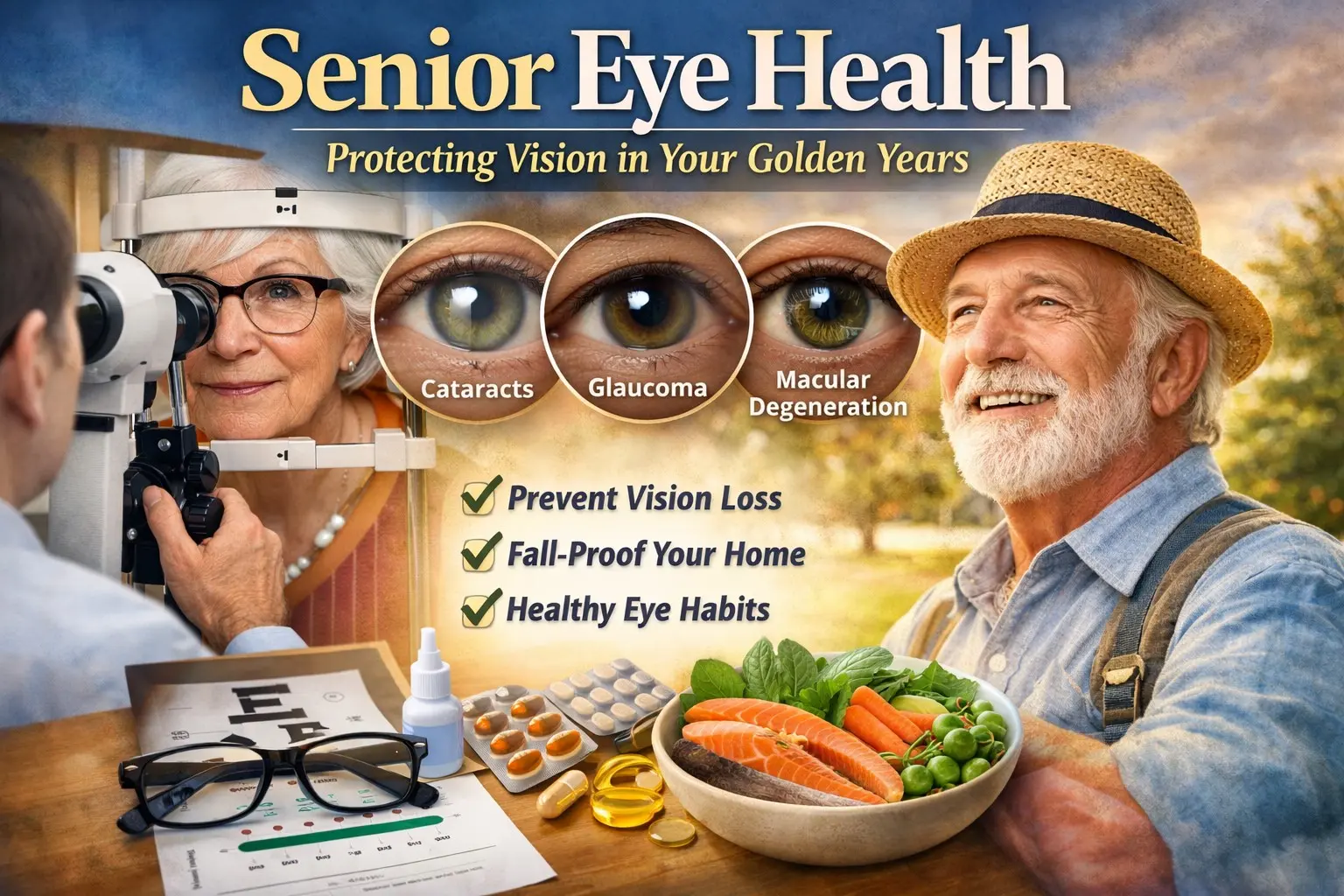
Your golden years should include golden vision! Senior eye care is crucial for maintaining independence and quality of life. After age 65, eye health becomes even more important. Vision changes accelerate. Disease risk increases. But with proper care, you can keep seeing well.
This guide covers –
- Common vision problems in seniors
- How to prevent falls and injuries
- Home modifications for better vision
- Essential eye care tips
- When to see your doctor
Let’s help you see clearly through your golden years! Senior eye care is the final chapter of our complete eye health guide — covering vision care from your 30s through your golden years.
What You’ll Learn
✓ Age-related eye conditions
✓ Fall prevention strategies
✓ Lighting improvements
✓ Medication effects on eyes
✓ Daily care routines
✓ Warning signs to watch for
Why Senior Eye Care Matters
Vision problems affect your entire life after 65.
The Impact of Vision Loss
Poor vision affects –
- Independence (driving, reading, daily tasks)
- Safety (increased fall risk)
- Mental health (isolation, depression)
- Quality of life (hobbies, social activities)
- Physical health (less activity)
Vision keeps you active and independent!
Common Changes After 65
Normal aging includes –
- Need for brighter light
- Difficulty with glare
- Slower dark adaptation
- Reduced color perception
- Decreased contrast sensitivity
Plus risk for diseases increases significantly.
→ Complete guide: Complete Guide to Eye Health: Vision Care, Prevention & Wellness
Most Common Senior Eye Conditions
Know what to watch for as you age.
Cataracts
Very common after 65 – affects most seniors, eventually.
Symptoms –
- Cloudy or foggy vision
- Colours appear faded or yellowish
- Increased glare from lights andthe sun
- Halos around lights at night
- Double vision in one eye
- Frequent prescription changes
Good news – Surgery is very safe and effective! Usually, an outpatient procedure has a quick recovery.
When to consider surgery –
- Vision interferes with daily activities
- Can’t read comfortably
- Driving becomes difficult or unsafe
- Reduced quality of life
→ Prevention tips: Cataracts Prevention: How to Protect Your Vision Naturally
Age-Related Macular Degeneration (AMD)
Leading cause of vision loss in seniors.
Two types –
Dry AMD (90% of cases):
- Develops slowly over the years
- Causes gradual central vision loss
- No current cure, but manageable
Wet AMD (10% of cases):
- Develops quickly
- More serious but treatable
- Requires immediate attention
Warning signs –
- Blurred or wavy central vision
- Dark or blank spots in the center of vision
- Straight lines appear wavy
- Difficulty recognizing faces
→ Complete guide – Macular Degeneration Prevention: Diet and Lifestyle Strategies
Glaucoma
The silent disease – no symptoms until advanced.
Why it’s dangerous –
- Damages the optic nerve permanently
- Causes irreversible vision loss
- Often no pain or symptoms
- Can lead to blindness if untreated
Regular screening saves vision! Annual eye exams are critical.
→ Learn more – Glaucoma Awareness: Early Detection and Prevention Tips
Diabetic Retinopathy
For seniors with diabetes – very common complication.
Progression –
- High blood sugar damages the blood vessels in the eye
- Can develop without symptoms
- Eventually causes vision loss
- Leading cause of blindness in diabetics
Prevention: Strict blood sugar control and annual dilated eye exams.
Dry Eye Syndrome
Extremely common in seniors, especially women.
Causes –
- Less tear production with age
- Medications (blood pressure, antihistamines)
- Health conditions
- Environmental factors
Solutions available! From simple drops to prescription treatments.
→ Treatment options: Dry Eye Syndrome: Causes, Symptoms, and Natural Remedies
Essential Eye Exam Schedule for Seniors
Regular exams are your best protection.
How Often to Get Checked
Ages 65 and older –
- Comprehensive eye exam every 1-2 years (minimum)
- Annually is strongly recommended
- More frequently, if you have risk factors
Annual exams if you have –
- Diabetes
- High blood pressure
- Family history of eye disease
- Previous eye surgery or injury
- Taking medications affecting vision
What a Comprehensive Exam Includes
Your eye doctor will check –
- Visual acuity (how well you see)
- Eye pressure (glaucoma screening)
- Pupil response
- Eye muscle coordination
- Peripheral vision
- Dilated retinal exam
- Optic nerve health
Don’t skip the dilation! It’s essential for detecting problems early.
Between Regular Exams
See your doctor immediately if you notice –
- Sudden vision loss or changes
- New floaters or flashes of light
- Eye pain or redness
- Double vision
- Curtain or veil over vision
- Sudden increase in eye pressure symptoms
These could be emergencies!
Fall Prevention Through Better Vision
Poor vision is a major fall risk factor.
The Vision-Fall Connection
How poor vision causes falls –
- Can’t see obstacles clearly
- Misjudge steps and curbs
- Poor depth perception
- Difficulty in dim lighting
- Miss visual cues
Statistics: Vision problems double your fall risk!
Home Safety Modifications
Improve lighting throughout your home –
Brighten hallways and stairs
- Install brighter bulbs (75-100 watts)
- Add night lights at strategic points
- Light switches are at both ends of the hallways
- Motion-sensor lights for nighttime
Eliminate glare
- Use lampshades to diffuse light
- Avoid bare bulbs
- Position lights to minimize reflections
- Use matte finishes on floors
Improve stairway safety
- Bright lighting on every step
- Contrasting tape on step edges
- Handrails on both sides
- Non-slip treads
Remove Hazards
Make your home safer –
- Remove throw rugs or secure them
- Clear walking paths
- Tack down electrical cords
- Remove clutter
- Use contrasting colours for furniture edges
Use Assistive Devices
Help yourself see better –
- Magnifying glasses for reading
- Large-print books and devices
- Talking clocks and watches
- High-contrast markers on controls
- Task lighting everywhere
Lighting: The Most Important Home Modification
Proper lighting dramatically improves senior eye care.
General Home Lighting Principles
Brighten everything –
- 2-3 times more light than younger adults need
- No dark corners or shadowy areas
- Even lighting throughout rooms
- Avoid sudden light changes
Task Lighting Essentials
Add focused light for –
- Reading and hobbies
- Cooking and food preparation
- Grooming and personal care
- Taking medications
- Writing and paperwork
Use adjustable lamps – Position light exactly where needed without glare.
Outdoor Lighting
Light all outdoor areas –
- Entrances and exits
- Driveways and walkways
- Steps and uneven surfaces
- Garage and carport
- Motion-sensor lights for security and safety
Reducing Glare
Glare is worse for aging eyes –
Solutions
- Dimmer switches for brightness control
- Blinds and curtains on windows
- Anti-glare screens on computers
- Matte surfaces instead of glossy
- Polarized sunglasses outdoors
Medications and Your Eyes
Many common medications affect vision in seniors.
Medications That Can Affect Eyes
Be aware that if you take –
Blood pressure medications
- Can cause dry eyes
- May affect vision clarity
Antihistamines
- Increase dry eye symptoms
- Can affect focusing
Antidepressants
- May cause dry eyes
- Can affect pupil size
Corticosteroids
- Long-term use increases cataract risk
- Can raise eye pressure (glaucoma risk)
Always tell your eye doctor about all medications!
What to Do
If medications affect your vision –
- Don’t stop without talking to a doctor
- Ask about alternative medications
- Use artificial tears for dryness
- Report on all vision changes
- Coordinate care between doctors
Daily Eye Care Routine for Seniors
Simple habits support elderly vision health.
Morning Routine
Start your day right
- Clean eyelids gently with a warm washcloth
- Use artificial tears if your eyes feel dry
- Put in prescription eye drops if needed
- Put on glasses or contacts
- Check that glasses are clean
Throughout the Day
Maintain good habits –
- Take breaks from close work every 20 minutes
- Blink frequently (especially when reading)
- Use good lighting for all tasks
- Wear sunglasses outdoors
- Stay hydrated (drink water regularly)
Evening Routine
Before bed –
- Remove eye makeup gently
- Take out contact lenses properly
- Apply nighttime eye drops if prescribed
- Clean glasses and store them safely
- Use a warm compress if the eyes feel tired
Weekly Tasks
Once a week –
- Deep clean glasses with proper cleaner
- Check lighting in all rooms
- Replace any burned-out bulbs
- Inspect the home for vision hazards
- Review of my medication schedule
Nutrition for Senior Eye Care Health
Diet matters even more than you age.
Essential Eye Nutrients
Focus on these daily –
Leafy greens
- Kale, spinach, collard greens
- Contains lutein and zeaxanthin
- Protect the macula from damage
Colourful vegetables
- Carrots, sweet potatoes
- Bell peppers, tomatoes
- Rich in antioxidants
Omega-3 fatty acids
- Salmon, sardines, tuna
- Walnuts, flaxseeds
- Support retina and reduce dry eyes
Citrus fruits
- Oranges, grapefruits
- Vitamin C protects the lens
→ Complete nutrition guide: 10 Best Foods for Eye Health and Better Vision
Supplements for Seniors
Consider these with doctor approval –
AREDS2 formula
- For intermediate or advanced AMD
- Proven to slow progression
- Contains vitamins C, E, lutein, zeaxanthin, and zinc
Omega-3 supplements
- If you don’t eat fish regularly
- 1,000-2,000 mg daily
- Helps with dry eyes
Hydration
Water is crucial –
- Helps prevent dry eyes
- Supports overall health
- Aim for 8 glasses daily
- More if taking diuretics
Lifestyle Adaptations for Better Vision
Minor changes make big differences in senior eye care.
Reading and Close Work
Make it easier
- Use bright, focused task lighting
- Increase font size on devices
- Hold the reading material at a comfortable distance
- Take frequent breaks
- Consider large-print books
Driving Safety
Stay safe on the road
- Have your eyes checked before license renewal
- Avoid driving at night if vision is poor
- Keep the windshield very clean
- Don’t drive in the weather if difficult
- Know when it’s time to stop driving
If vision affects driving, consider alternatives like rides from family, public transit, or senior transportation services.
Social Activities
Don’t let vision stop you
- Choose well-lit venues
- Sit where you can see best
- Use assistive devices without embarrassment
- Ask for help when needed
- Stay engaged with loved ones
Technology Help
Use helpful tools
- Voice-activated devices
- Screen magnification
- Text-to-speech programs
- Large-button phones
- Audio books
When to See Your Eye Doctor
Know the warning signs that need immediate attention.
Emergency Symptoms
Go to the doctor or ER immediately if you have
- Sudden vision loss
- Sudden increase in floaters
- Flashes of light
- Curtain or shadow over vision
- Severe eye pain
- Eye injury
These could indicate serious conditions requiring urgent care!
Schedule an appointment soon
Call for an appointment if you notice
- Gradual vision changes
- Increased difficulty reading
- More trouble with night vision
- Persistent dry eyes
- Frequent headaches
- Changes in color vision
Regular Check-Ups
Maintain your exam schedule
- Every 1-2 years at a minimum
- Annually strongly recommended
- Follow your doctor’s specific recommendations
- Don’t skip appointments
→ Related: Eye Health After 40: Essential Vision Care for Aging Eyes
Frequently Asked Questions about Senior Eye Health
Q: How much lighting do seniors really need?
A: 2-3 times more light than younger adults. Specific areas need task lighting besides general room lighting.
Q: Can I prevent age-related eye diseases?
A: You can significantly reduce risk through a healthy diet, UV protection, not smoking, and regular eye exams. Early detection is key.
Q: Are cataracts inevitable?
A: Most people develop some cataracts if they live long enough. But healthy habits can delay them, and surgery is very effective.
Q: How do I know if my vision is affecting my safety?
A: If you’re bumping into things, falling, having near-misses while driving, or avoiding activities because of vision, it’s time to see your doctor.
Q: Should I take AREDS supplements even if I don’t have AMD?
A: No. They’re only proven helpful for people with intermediate or advanced AMD. Focus on getting nutrients from food, otherwise.
Q: What if I can’t afford new glasses?
A: Various initiatives assist older adults in covering vision-related expenses. Ask your eye doctor, check with local senior centers, or contact Lions Clubs International.
Q: Do people typically require brighter lighting as they grow older?
A: Yes, completely normal. Older eyes often require much brighter light to see with clarity..
Final Thoughts
Senior eye care “Protecting your independence and overall well-being depends on healthy vision—and the encouraging part is that many aspects of eye health are within your control.
Key actions –
- Get annual comprehensive eye exams
- Improve lighting throughout your home
- Eat eye-healthy foods daily
- Take prescribed medications
- Protect eyes from UV light
- Address vision problems promptly
Start today
- Schedule your next eye exam
- Assess your home lighting
- Add more leafy greens to meals
- Clean your glasses
- Make a home safety check
Remember
- Vision changes are common but not inevitable
- Many conditions are treatable
- Early detection saves vision
- Simple adaptations make big differences
- You deserve to see well!
Your golden years should include clear, comfortable vision. Take care of your eyes, and they’ll continue serving you well!
Reference
Senior Vision: Over 60 Years of Age
https://www.aoa.org/healthy-eyes/eye-health-for-life/senior-vision
Eye Health Information for Adults Over 65
https://www.aao.org/eye-health/tips-prevention/seniors
A Comprehensive Guide to Eye Care for Seniors
https://ucfhealth.com/our-services/ophthalmology/eye-care-for-seniors-guide/
Medical Disclaimer
This article is for information only. It does not replace professional medical advice. Seniors should maintain regular eye exams and consult their eye doctor for personalized care recommendations.

Health & wellness writer with 30+ years of experience in nutrition, fitness, and healthy aging. Founder of NextFitLife.com — evidence-based health guidance.