Published – February 26 Last Updated: February 26, 2026
The Night I Realized Sleep and Eye Health Were Connected
I used to pride myself on functioning on four hours of sleep. Late nights’ binge-watching shows, early mornings at work. I thought I was managing fine.
Then one morning, I couldn’t focus on my computer screen. My eyes burned. Everything looked blurry. I rubbed them constantly, but nothing helped.
My eye doctor asked one simple question: “How much sleep are you getting?”
That question changed everything. Turns out, the connection between sleep and eye health was something I’d completely ignored. My eyes needed sleep just as much as the rest of my body.
→ Complete eye care: Complete Guide to Eye Health: Vision Care, Prevention & Wellness
Why Your Eyes Desperately Need Sleep
Think about what your eyes do all day. They focus constantly. They adjust to different lights. They process millions of visual signals.
Just like your body needs rest after a workout, your eyes need downtime too.
What Happens During Sleep
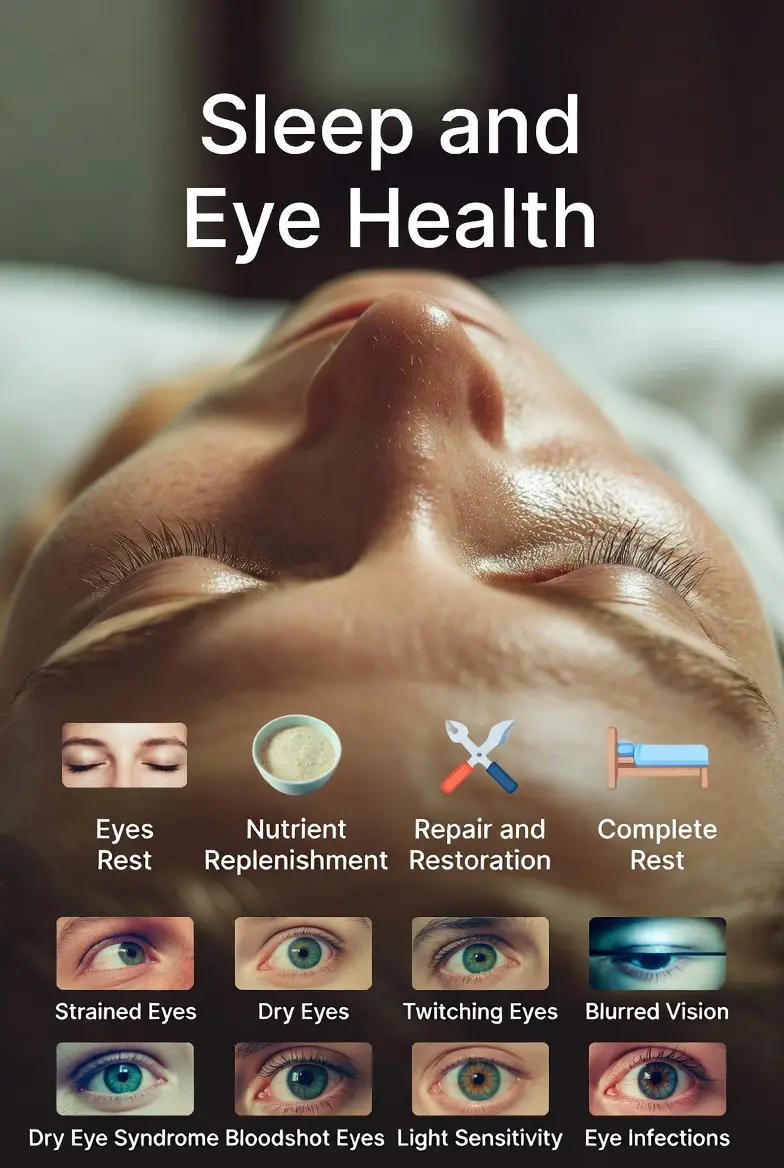
While you sleep, amazing things happen to your eyes:
Nutrient replenishment
- Blood flow increases to your eyes
- Essential nutrients get delivered
- Toxins accumulated during the day get cleared out
Repair and restoration
- Eye cells damaged by daily use get fixed
- Tear production resets
- Natural moisture balance restores
Complete rest
- Eye muscles fully relax
- No focusing required
- Zero light processing
According to recent research, sleep influences retinal function, tear film homeostasis, intraocular pressure regulation, and inflammatory responses.
The Minimum Sleep Your Eyes Need
At least 5 hours minimum
- Required to reset eyes fully
- Prepares them for the next day’s demands
- Less than this causes immediate problems
7-9 hours optimal
- What most adults actually need
- Gives eyes full recovery time
- Prevents cumulative damage
What Lack of Sleep Does to Your Eyes
Missing sleep once or twice isn’t ideal. But chronic sleep deprivation? That’s when serious problems start.
Immediate Effects (After One Bad Night)
Eye strain
- Difficulty focusing on screens
- Harder to read small print
- Fatigue sets in quickly
Dryness
- Burning sensation
- Gritty feeling
- Constant urge to rub eyes
Twitching
- Involuntary eyelid movement
- Usually, the lower lid
- Annoying but usually harmless
Blurred vision
- Temporary focusing problems
- Eye muscles are too tired
- Vision seems slightly off
Cumulative Effects (Chronic Sleep Deprivation)
Dry eye syndrome
- Research shows that people sleeping less than 5 hours have a significantly higher dry eye risk
- Tear production decreases
- Can become a persistent condition
Bloodshot eyes
- Blood vessels dilate
- Eyes look constantly red
- Makes you look exhausted
Light sensitivity
- Normal lighting feels too bright
- Need sunglasses more often
- Headaches from light exposure
Eye infections
- Weakened immune response
- Takes longer to fight off bacteria
- More frequent conjunctivitis
→ Dry eye info: Dry Eye Syndrome: Causes, Symptoms, and Natural Remedies
The Sleep-Eye Disease Connection
Recent studies reveal that poor sleep doesn’t just cause temporary discomfort. It may increase the risk of serious eye diseases.
Glaucoma Risk
The connection
- Sleep affects intraocular pressure
- Sleep apnea is particularly dangerous
- Chronic sleep deprivation may increase glaucoma risk
Why it matters
- Glaucoma causes irreversible vision loss
- Early detection critical
- Sleep quality might be a modifiable risk factor
Age-Related Macular Degeneration (AMD)
Emerging research
- Poor sleep linked to increased AMD risk
- Particularly in people over 50
- Sleep disruption affects retinal health
The mechanism
- Inflammation increases without adequate sleep
- Blood flow to the retina decreases
- Cellular repair processes are interrupted
Diabetic Retinopathy
For people with diabetes
- Sleep deprivation worsens blood sugar control
- This damages the eye blood vessels
- Accelerates diabetic eye disease
The cycle
- Poor sleep → worse blood sugar → more eye damage
- Eye damage → vision problems → worse sleep
- Breaking this cycle is crucial
Myopia (Nearsightedness)
Surprising findings
- Later bedtimes linked to myopia in children
- Later bedtimes have been associated with increased risk of myopia onset and progression in school-aged children
- Sleep timing might affect eye growth
Especially concerning for
- School-age children
- Teenagers with irregular sleep
- Anyone with a family history of myopia
Sleep Apnea and Your Eyes
Sleep apnea deserves special attention because it’s particularly damaging to the eyes.
What Sleep Apnea Does
During apnea episodes
- Oxygen levels drop repeatedly
- Blood flow to the eyes decreases
- Eye pressure fluctuates dangerously
Long-term effects
- Consistent evidence of an increased risk of floppy eyelid syndrome, non-arteritic anterior ischemic optic neuropathy, and diabetic macular edema
- Possible optic nerve damage
- Accelerated aging of eye tissues
Warning Signs
Get screened if you have
- Loud snoring
- Gasping during sleep
- Morning headaches
- Extreme daytime fatigue
- High blood pressure
Treatment helps
- CPAP therapy improves oxygen
- Eye health often improves
- Vision problems may stabilize
Screen Time, Sleep, and Eyes
Our modern screens create a perfect storm for eye problems.
The Blue Light Problem
What blue light does
- Suppresses melatonin production
- Tricks the brain into thinking it’s daytime
- Makes falling asleep much harder
The eye-sleep cycle
- Screens before bed → Poor sleep
- Poor sleep → More eye strain the next day
- More strain → More screen time checking symptoms
- Vicious cycle continues
Screen Time Statistics
Recent 2024 research found disturbing trends:
- 63.7% of adolescents have digital eye strain
- 51.2% have poor sleep quality
- Using screens before bedtime significantly increases both
Risk factors for both eye strain and poor sleep
- More than 2 hours daily screen time
- Using devices right before bed
- Not taking regular breaks
- Poor lighting while using screens
Improving Sleep to Protect Your Eyes
Good news: Improving your sleep can dramatically help your eyes.
The 1- Hour Rule
Stop screens 1 hour before bed
- Give your brain time to wind down
- Let melatonin production start
- Reduce eye strain before sleep
What to do instead
- Read a physical book
- Take a warm bath
- Listen to calming music
- Practice gentle stretching
Create a Sleep-Friendly Bedroom
Profound darkness
- Blackout curtains or an eye mask
- Cover any LED lights
- No light pollution from outside
Cool temperature
- 60-67°F is ideal
- Helps you fall asleep faster
- Improves sleep quality
Comfortable bedding
- Supportive pillow
- Breathable sheets
- Nothing is irritating your eyes
Establish a Sleep Schedule
Same bedtime every night
- Even on weekends
- Trains your body’s clock
- Makes falling asleep easier
Same wake time
- Don’t sleep in excessively
- Maintains circadian rhythm
- Better for your eyes long-term
The 20-20-20 Rule During the Day
Help your eyes handle screen time
- Every 20 minutes
- Look 20 feet away
- For 20 seconds
Why this helps
- Reduces eye strain during the day
- Less fatigue means better sleep
- Breaks the strain-poor sleep cycle
When to See a Doctor
Some eye and sleep problems need professional help.
See an Eye Doctor If –
Eye symptoms
- Persistent dryness despite sleep
- Vision changes that don’t improve
- Constant eye pain or redness
- New floaters or flashes
Sleep concerns
- Can’t fall asleep within 30 minutes
- Wake up frequently
- Still tired after 8+ hours
- Snoring with gasping
You Might Need Both Specialists
Eye doctor
- Checks for underlying eye diseases
- Evaluates tear production
- Screens for glaucoma and other conditions
Sleep specialist
- Tests for sleep apnea
- Addresses insomnia
- Optimizes sleep quality
Dark Circles: A Visible Sign
Those bags under your eyes aren’t just cosmetic.
What Causes Them
Poor circulation
- Blood pools under the eyes
- Skin there is slender
- Creates a dark appearance
Fluid retention
- Not enough sleep disrupts fluid balance
- Causes puffiness
- Makes circles more noticeable
Stress response
- Lack of sleep is a major stressor
- Increases cortisol
- Affects how skin looks
They’re Also a Warning
Dark circles tell you
- You’re not getting enough rest
- Your body is stressed
- Your eyes are suffering
Don’t just cover them
- Address the root cause
- Get more sleep
- Your eyes will thank you
The Sleep-Eye Health Action Plan
This Week
✅ Set a consistent bedtime
✅ Stop screens 1 hour before bed
✅ Create a dark sleep environment
✅ Track your sleep hours
This Month
✅ Aim for 7-9 hours nightly
✅ Use the 20-20-20 rule during the day
✅ Schedule eye exam if needed
✅ Notice improvements in eye comfort
Long-Term
✅ Make sleep a priority
✅ Maintain a consistent schedule
✅ Regular eye checkups
✅ Monitor for sleep disorders
FAQ about Sleep and Eye Health
Q: Can one night of poor sleep damage my eyes permanently?
A: No, but chronic sleep deprivation can increase disease risk over time. Your eyes are resilient, but they need consistent rest.
Q: How quickly will my eyes improve with better sleep?
A: Many people notice less dryness and strain within 2-3 days. Full recovery from chronic issues may take 2-4 weeks.
Q: Is sleep more important than eye drops for dry eyes?
A: Both matter! But the sleep quality of dry eye patients is significantly worse than that of the healthy population, suggesting sleep is a critical factor.
Q: Can sleeping too much hurt my eyes?
A: Not directly, but oversleeping can indicate other health issues. 7-9 hours is the sweet spot for most adults.
Q: Do naps help my eyes?
A: Short naps (20-30 minutes) can help, but they don’t replace nighttime sleep. Your eyes need sustained rest.
Q: Should I be concerned about sleeping with contacts?
A: Never sleep in contacts unless specifically approved by your doctor. This is a mushroom infection.
My Experience After Fixing My Sleep
After that wake-up call from my eye doctor, I made sleep non-negotiable.
What changed
- Screens off by 9:30 PM
- In bed by 10:00 PM
- 7-8 hours every night
The results shocked me
- Eyes stopped burning within a week
- Vision clarity improved
- No more afternoon eye strain
- Computer work became easier
The best part? I didn’t need special eye drops or expensive treatments. I just needed sleep.
Your eyes put in nonstop effort to support you every day. The least you can do is give them the rest they need.
Final Thoughts about Sleep and Eye Health
“Sleep plays a vital role in preserving your vision and overall eye health. Your eyes aren’t separate from the rest of your body—they need rest just like everything else.
Key takeaways:
- Minimum 7 hours nightly for eye health
- Poor sleep increases disease risk
- Screen time before bed is particularly harmful
- Many eye problems improve with better sleep
- Sleep disorders need treatment
Start tonight
- Set your bedtime alarm
- Turn off screens early
- Create a dark bedroom
- Commit to your eyes’ health
Your vision is precious. Protecting it might be as simple as getting more sleep.
Related Articles
Digital Eye Health:
- Digital Eye Strain: Symptoms, Causes, and Relief Strategies
- Blue Light and Eye Health: Protection Strategies for Screen Users
Age-Related:
- Eye Health After 40: Essential Vision Care for Aging Eyes
- Macular Degeneration Prevention: Diet and Lifestyle Strategies
References
Sleep influences retinal function, tear film homeostasis, and intraocular pressure regulation
https://www.maxapress.com/article/doi/10.48130/vns-0025-0008
- Consistent evidence of increased risk of eye conditions with sleep apnea
- https://pubmed.ncbi.nlm.nih.gov/35263016/
- Sleep quality of dry eye patients is significantly worse than that of the healthy population
- https://pmc.ncbi.nlm.nih.gov/articles/PMC10996221/
- Zeiss Vision Care, Multiple Research Studies
- https://www.zeiss.com/myopia/en/articles–insights/myopia-and-sleep.html
- Sleep and eye health connection
- https://www.aao.org/eye-health/
Medical Disclaimer
This article is for information only. It does not replace professional medical advice. If you have persistent eye problems or sleep disorders, consult appropriate healthcare professionals.

Health & wellness writer with 30+ years of experience in nutrition, fitness, and healthy aging. Founder of NextFitLife.com — evidence-based health guidance.