Published: Jun 29, 2023
Last Updated: October 2, 2026
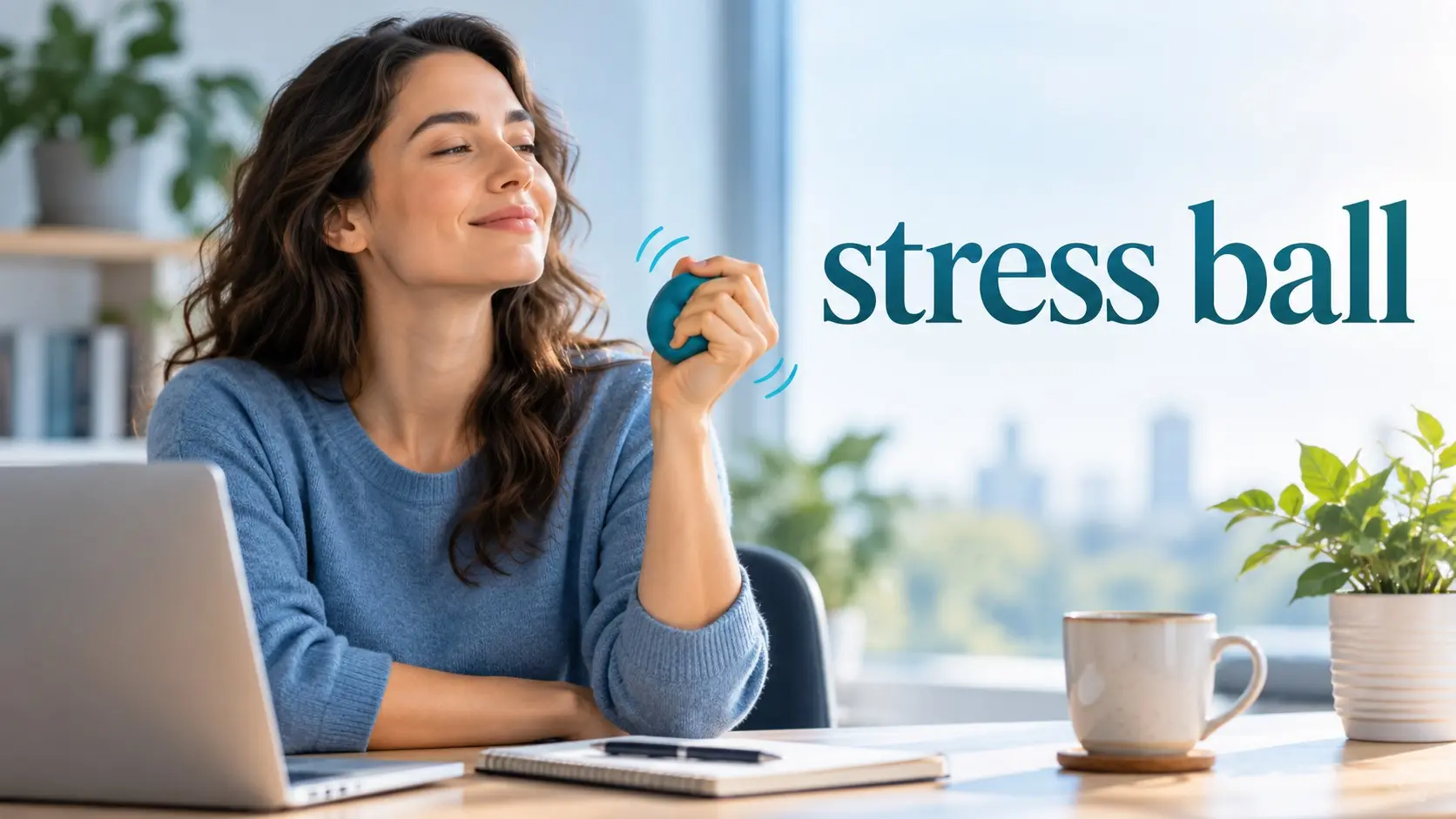
A stress ball looks almost too simple to matter. You hold it, squeeze it, let go, and repeat.
For some people, that small action feels calming. It gives restless hands something to do and gives the mind one simple thing to notice. You can use one at a desk, while waiting for an appointment, before a meeting, or during another tense moment.
Research suggests that stress balls may help with short term anxiety in some situations, especially when they are used as a distraction during medical procedures. Still, the evidence is not strong enough to call a stress ball a treatment for chronic stress, panic, depression, or an anxiety disorder.
Quick answer: A stress ball may help some people manage brief tension by giving the hands and mind a simple physical focus. Small studies have reported less anxiety or discomfort in some medical settings, but results are mixed and the research is still limited. Use a stress ball as one small part of stress management, not as a cure for ongoing anxiety or chronic stress.
For a wider approach to stress, sleep, mood, relaxation, and emotional wellbeing, visit the NextFitLife Mental Health and Wellness Hub.
Medical note: This content is for general educational purposes and does not replace professional medical advice, diagnosis, or treatment. Consult an appropriately qualified healthcare professional for personal medical concerns. This article explains published guidance and does not provide a personal clinical assessment. Always consult qualified medical professionals for diagnosis and treatment of any health condition.
Table of Contents
- What is a stress ball?
- Do stress balls really work?
- What the latest research says
- 9 ways a stress ball may help
- A simple 60 second routine
- Stress balls and anxiety
- Stress balls and focus
- Stress balls and hand strength
- How to choose the right ball
- Who should be careful?
- Common myths and facts
- What works better for long term stress?
- When to seek professional help
- References and Sources
- Related NextFitLife guides
- About the author
- Frequently asked questions
What Is a Stress Ball?
A stress ball is a small object made to fit in your hand. Most are soft enough to squeeze and then return to their normal shape.
Some are made from foam. Others contain gel or use rubber or silicone. Texture and firmness can also vary.
The idea is simple. Your hand presses the ball, then relaxes. This repeated action gives you a form of tactile stimulation and a physical task that needs very little thought.
That can make a stress ball useful as a sensory tool, a quiet fidget tool, or a gentle hand exercise.
Those uses overlap, but they are not exactly the same. Using a ball to settle nervous hands is different from using resistance exercise as part of hand rehabilitation.
Do Stress Balls Really Work?
The best answer is: sometimes, for some people, and usually for a short time.
Stress balls have been studied during medical procedures, dialysis, surgery, and other situations where people may feel anxious or uncomfortable.
Several studies have reported lower anxiety, distress, or pain when people squeezed a stress ball. Other studies have found little or no clear difference.
This means a stress ball may be useful, but it is not a guaranteed treatment.
It also means we should be careful with claims such as:
- A stress ball removes anxiety.
- A stress ball lowers cortisol.
- A stress ball boosts endorphins.
- A stress ball prevents panic attacks.
- A stress ball treats high blood pressure.
Those statements go beyond what the evidence can show.
What Does the Latest Research Say?
A 2026 systematic review and meta analysis looked at randomized trials in people who were awake during medical procedures.
The review found that stress ball use may produce a small and fairly consistent drop in anxiety.
That sounds encouraging, but there is an important limit. Only a small number of studies were available, many included small groups, and the way people used the stress balls differed between studies.
The researchers therefore said that more strong trials are needed before we can make broad claims.
A randomized study published in 2024 also found lower anxiety and pain scores in people using a stress ball during coronary angiography.
Other research has reported benefits during endoscopy, dialysis, cataract surgery, and some other procedures.
Yet not every trial has found a clear effect. One randomized study during skin cancer surgery found no meaningful difference in anxiety between the stress ball group and the control group.
What this means for everyday life: A stress ball may help you feel calmer in a tense moment, but most research has taken place in specific medical settings. We cannot assume that the same effect will apply to every type of work stress, relationship stress, chronic worry, or anxiety disorder.
9 Ways a Stress Ball May Help
1. It Gives Your Mind a Simple Distraction
Stress can fill your attention with worries, deadlines, physical sensations, and repeated thoughts.
Squeezing a ball gives your brain one small task to notice. You can feel the shape, texture, pressure, and movement in your hand.
This may provide a brief break from stressful thoughts.
This type of distraction does not solve the source of stress, but a short pause can sometimes make the next step feel easier.
2. It Gives Nervous Hands Something to Do
Some people move more when they are tense. They tap a foot, click a pen, bite their nails, twist jewelry, or clench their hands.
A stress ball gives that nervous energy somewhere simple to go.
This can be helpful at a desk or while waiting because the movement is quiet and easy to control.
The goal is not to squeeze as hard as possible. Gentle movement is usually enough for stress relief.
3. It Can Bring Attention Back to the Present
The feel of a stress ball can become a simple grounding technique.
Instead of following every worried thought, notice what is happening in your hand.
Ask yourself:
- Is the ball soft or firm?
- Does it feel warm or cool?
- Can I feel each finger around it?
- What changes when I release my grip?
This does not need to become a complicated meditation exercise. The goal is simply to shift some attention back to what you can feel right now.
For broader emotional health strategies, explore the Mental Health and Wellness Hub.
4. It Pairs Well With Slow Breathing
A stress ball becomes more useful when you connect the hand movement with calm breathing.
You might squeeze gently while breathing in, then loosen the hand as you breathe out slowly.
Do not force the breath or hold it for a long time.
The NHS recommends gentle, regular breathing for stress. It suggests allowing the breath to move comfortably into the belly and then breathing out gently.
The ball is simply something your hand can follow while you breathe.
5. It Helps You Notice Muscle Tension
Stress can make muscles tighten without you noticing.
Your jaw may clench. Your shoulders may rise. Your hands may grip harder.
When you deliberately squeeze and then fully release a soft ball, you can feel the difference between tension and relaxation.
This idea is similar to one part of progressive muscle relaxation, where people learn to notice and release muscle tension.
A stress ball is not the same as a full progressive muscle relaxation exercise, but it can remind you to stop gripping.
6. It May Help With Short Term Situational Anxiety
This is where much of the direct research has been done.
Some randomized trials show that squeezing a stress ball during an uncomfortable medical procedure may reduce anxiety or pain.
A 2026 review reached a similar overall conclusion, although it also warned that the evidence remains limited.
That makes a stress ball reasonable as an extra comfort tool when you feel nervous.
It does not make it a treatment for generalized anxiety disorder, panic disorder, trauma, or depression.
7. It Can Support Gentle Hand Exercise
Squeezing a soft ball makes the finger and hand muscles work.
NHS hand exercise guidance sometimes includes squeezing a soft ball as part of strengthening exercises.
That means a suitable ball may support hand grip strength when used correctly.
However, there is an important difference between casual squeezing and rehabilitation.
If you are recovering from surgery or an injury, or you have arthritis, tendon pain, nerve problems, or weakness, use the exercise plan given by your doctor, physiotherapist, occupational therapist, or hand therapist.
A random firm stress ball may be too hard for an injured hand.
8. It Is Quiet, Small, and Portable
A useful coping tool needs to fit into real life.
Stress balls can sit in a desk drawer, bag, or home office. They make little noise and do not need batteries, a screen, or much space.
This makes them easy to reach during a tense call, a long wait, or a busy workday.
Convenience does not make the tool more powerful, but it can make you more likely to use a calming habit when you need one.
9. It Can Become a Cue for a Better Stress Routine
This may be the most useful role of all.
Instead of treating the stress ball as the whole solution, let it remind you to do something else that supports your health.
When you pick it up, you could:
- Relax your jaw.
- Drop your shoulders.
- Take a slow breath.
- Check whether you need water or food.
- Stand up if you have been sitting too long.
- Write down the problem that is worrying you.
- Decide what you can change and what must wait.
In that way, the ball becomes the start of a healthier response instead of an attempt to squeeze stress away.
For more ideas, read Stress Busting Techniques for Everyday Calm.
Stress Ball Benefits at a Glance
| Possible Benefit | What It May Do | Important Limit |
|---|---|---|
| Brief distraction | Gives attention a simple physical task | Does not remove the source of stress |
| Short term calm | May help some people settle during tense moments | Research results vary |
| Situational anxiety | Some medical studies report lower anxiety | Not a treatment for anxiety disorders |
| Mindful attention | Provides a texture and movement to notice | Benefits depend on how you use it |
| Breathing cue | Can help you remember to slow down and breathe | The breathing practice is doing part of the work |
| Hand exercise | Uses the hand and finger muscles | Rehabilitation needs individual guidance |
| Quiet fidgeting | Provides a discreet movement outlet | Focus benefits are not well proven |
A Simple 60 Second Stress Ball Routine
There is no proven perfect dose for everyday stress ball use.
If you simply want a brief calming routine, keep it gentle.
- Sit or stand in a comfortable position.
- Let your shoulders drop.
- Hold a soft stress ball in one hand.
- Squeeze gently for about three seconds.
- Breathe normally and avoid holding your breath.
- Release the ball fully for about five seconds.
- Notice the hand becoming softer.
- Repeat five to ten times.
- Switch hands if that feels comfortable.
The pressure should feel easy to moderate, not painful.
If you notice pain, numbness, tingling, cramping, or increasing weakness, stop.
Try the Stress Ball With Slow Breathing
You can also connect the movement to your breath.
- Hold the ball gently.
- Breathe in slowly through your nose.
- Use a light squeeze as you breathe in.
- Slowly breathe out.
- Let your whole hand soften as you breathe out.
- Repeat for a few comfortable cycles.
Do not force yourself to take very large breaths. Gentle breathing should feel comfortable.
If breathing exercises make you dizzy or uncomfortable, return to normal breathing.
Can a Stress Ball Help Anxiety?
It may help with mild or short lived anxiety.
This is especially possible when the ball gives you something neutral to focus on while the anxious feeling passes.
Research in medical settings also suggests a possible benefit for short term situational anxiety.
However, anxiety that is strong, frequent, or hard to control needs more than a fidget tool.
NIMH advises looking for professional support when distressing symptoms last or begin to interfere with normal tasks, sleep, concentration, relationships, or daily life.
A stress ball can still be part of your coping plan, but it should not delay treatment.
Can a Stress Ball Stop a Panic Attack?
A stress ball may give you a physical object to focus on during panic, but there is not strong evidence that it stops panic attacks.
Panic symptoms can feel intense. A person may have a racing heart, fast breathing, trembling, sweating, dizziness, chest discomfort, or a feeling of losing control.
If panic keeps happening, speak with a qualified mental health professional or healthcare professional. Effective treatments are available.
Do Stress Balls Improve Focus?
Many people say they focus better when their hands are busy.
That personal experience is valid, but the science is less clear.
Research on fidget tools does not show a reliable improvement in concentration for everyone. Some people may focus better because the movement reduces restlessness or anxiety rather than because the object directly improves attention.
Try it and judge the result honestly.
If the ball helps you listen or work without distracting you or anyone around you, it may be useful.
If you spend more time squeezing, throwing, or playing with the ball than doing your task, it is not helping your focus.
Can a Stress Ball Strengthen Your Hands?
Yes, squeezing resistance can work the hand and finger muscles.
This is why soft balls and therapy putty can appear in hand exercise programs.
Still, stronger is not always better.
A very firm ball places more load on the fingers, thumb, wrist, and forearm. This may not be suitable when a joint, tendon, or nerve is irritated.
If your goal is rehabilitation rather than stress relief, ask a clinician what resistance, number of repetitions, and movement are right for you.
Can a Stress Ball Help Arthritis?
Some people with hand arthritis use gentle strengthening exercises.
That does not mean every person with arthritis should squeeze a firm ball.
A painful or swollen joint may need rest, a different movement, or professional advice.
Do not push through sharp pain.
If a ball makes hand pain worse, stop and ask a healthcare professional or hand therapist what type of exercise is safer.
What About Carpal Tunnel Syndrome?
Do not assume that more gripping will fix carpal tunnel symptoms.
Carpal tunnel syndrome involves pressure on the median nerve at the wrist.
Symptoms can include numbness, tingling, burning, pain, and hand weakness.
Repeated gripping can irritate symptoms in some people. If squeezing a ball increases numbness or tingling, stop using it and get advice.
How Firm Should a Stress Ball Be?
The right resistance depends on why you are using it.
| Firmness | May Suit | Watch For |
|---|---|---|
| Soft | Relaxation, sensory use, light squeezing | Material that tears or leaks |
| Medium | Everyday squeezing and light hand exercise | Finger or wrist fatigue |
| Firm | Selected strengthening goals | Too much load for painful or injured hands |
If your main goal is stress relief, you do not need the hardest ball you can find.
How to Choose a Stress Ball
Choose a Comfortable Size
You should be able to hold the ball without stretching your fingers too far.
A ball that is too large may make gripping awkward. A very small ball may put more pressure through the fingertips.
Choose the Right Firmness
For relaxation, start softer.
Firm resistance is more useful when strength is the goal and your hand can tolerate it.
Think About Texture
Some people like a smooth surface. Others prefer bumps, ridges, or another strong sensory texture.
Pick a surface that feels calming rather than irritating.
Check the Material
Look for a product that is made for repeated squeezing and follow its care instructions.
Replace a ball that has split, leaked, become sticky, or started to break apart.
Keep It Clean
A desk stress ball can collect oil, dust, and dirt from your hands and work surface.
Clean it according to the product instructions, especially if several people use it.
Who Should Be Careful With Stress Balls?
Speak with a healthcare professional or hand therapist before regular resistance exercise if you have:
- A recent hand or wrist injury
- Recent hand surgery
- Severe arthritis pain
- Swollen finger joints
- Tendon problems
- Carpal tunnel symptoms
- Persistent numbness
- Persistent tingling
- Loss of grip strength
- Unexplained hand pain
A stress ball should not make a hand problem worse.
Stress Ball Myths and Facts
| Claim | What We Know |
|---|---|
| Stress balls cure stress | No. They may provide short term comfort but do not remove chronic stressors. |
| Stress balls release endorphins | There is not good evidence that squeezing a stress ball specifically produces a meaningful endorphin effect. |
| Stress balls lower cortisol | This has not been established as a reliable effect of everyday stress ball use. |
| Stress balls treat anxiety disorders | No. They can be a coping tool but are not a substitute for evidence based mental health treatment. |
| Stress balls always improve focus | No. Some people find them helpful, but research on fidget tools and attention is mixed. |
| Stress balls can exercise the hand | Yes. Squeezing provides resistance, but medical rehabilitation should be individualized. |
| The hardest ball works best | No. Stress relief usually needs comfort, not maximum resistance. |
Does a Stress Ball Lower Blood Pressure?
Some small studies in medical settings have reported changes in blood pressure or other physical measures while people used stress balls.
That is not enough to use a stress ball as a blood pressure treatment.
High blood pressure can damage the heart, brain, kidneys, and blood vessels even when you feel fine.
Use prescribed treatment and follow the care plan given by your healthcare professional.
Does a Stress Ball Lower Cortisol?
Stress and cortisol are connected, but that does not mean every relaxing activity has been proven to lower cortisol in a meaningful way.
Research on stress balls does not support a clear claim that routine squeezing reliably lowers cortisol.
If an article or product makes that promise, look for the actual human study behind it.
What Works Better for Long Term Stress?
A stress ball can help for a minute. Long term stress often needs changes that last much longer.
The American Psychological Association and NIMH recommend a broader approach that can include movement, sleep, relaxation, social support, healthy routines, and professional help when needed.
Move Your Body
Regular activity can support mood, sleep, and stress management.
That does not require an extreme workout.
Walking is a good place to begin for many people.
You can learn more in Physical Fitness and Mental Health.
Protect Your Sleep
Stress can make sleep harder, and poor sleep can make stress feel harder to manage.
Keep a regular sleep routine when possible and give yourself time to wind down.
Use Relaxation Skills
Slow breathing, meditation, muscle relaxation, and similar practices may help calm the stress response.
Choose a method that feels comfortable and practice it before your stress reaches its highest point.
Reduce the Actual Stressor When You Can
Relaxation helps you cope, but sometimes the real answer is practical.
You may need to change a deadline, ask for help, set a boundary, reduce a commitment, solve a money problem, or talk through a conflict.
Stress care should not become a way to tolerate every problem forever.
Stay Connected
Support from friends, relatives, colleagues, or professionals can make difficult periods easier to manage.
You do not need to solve every problem alone.
Get Professional Support When Needed
Therapy and other professional mental health care can help when stress is persistent, overwhelming, or linked with anxiety, depression, trauma, or major life problems.
A stress ball can sit beside that care. It should not replace it.
When Should You Get Help for Stress?
Stress is common, but ongoing distress deserves attention.
Talk with a qualified healthcare or mental health professional if symptoms:
- Last for weeks
- Keep getting worse
- Interfere with sleep
- Make concentration very hard
- Interfere with work or study
- Damage relationships
- Cause you to avoid normal activities
- Lead to frequent panic
- Make normal daily tasks hard
- Come with persistent low mood or loss of interest
If you feel unable to keep yourself or another person safe, seek immediate emergency or crisis support where you live.
A Better Way to Use Your Stress Ball
Instead of asking, “Can this ball remove my stress?” ask a more useful question:
“Can this ball help me pause long enough to choose a healthier next step?”
That next step might be a slow breath, a short walk, a glass of water, a conversation, a boundary, a rest break, or professional help.
This approach gives the stress ball a realistic job.
It becomes a cue, not a cure.
Conclusion
A stress ball can be a simple and low effort tool for brief tension, restless hands, tactile stimulation, and short moments of situational anxiety. Research from medical settings suggests that it may help some people, but the benefits are modest and the evidence is still developing.
Use a comfortable ball, squeeze gently, relax your grip fully, and stop if your hand hurts or becomes numb. Most importantly, combine the ball with better supported habits such as sleep, movement, slow breathing, social connection, and practical problem solving.
If stress begins to control your sleep, mood, work, relationships, or daily life, speak with a qualified professional. A small tool can create a pause, but lasting stress care usually needs a bigger plan.
References and Sources
- Journal of PeriAnesthesia Nursing. The Effect of Stress Ball Application on Anxiety During Conscious Surgical Interventions: A Systematic Review and Meta Analysis of Randomized Controlled Trials.
Published online July 20, 2026.
https://pubmed.ncbi.nlm.nih.gov/42474403/ - Yüksel D, Güneş D. The Effect of Stress Ball on Anxiety and Pain Levels in Angiography: A Randomized Controlled Trial.
Open access research article.
https://pmc.ncbi.nlm.nih.gov/articles/PMC11366058/ - American Psychological Association. Healthy Ways to Handle Life's Stressors.
Updated October 22, 2024.
https://www.apa.org/topics/stress/tips - National Institute of Mental Health. Caring for Your Mental Health.
https://www.nimh.nih.gov/health/topics/caring-for-your-mental-health - University Hospitals Sussex NHS Foundation Trust. Hand Exercises.
Includes guidance on gentle squeezing with a soft ball as part of hand exercise.
https://www.uhsussex.nhs.uk/resources/hand-exercises/
Related NextFitLife Guides
Use a stress ball as one small piece of a wider wellbeing plan. These NextFitLife guides can help you build the rest of that plan:
- Mental Health and Wellness Hub
- Stress Busting Techniques for Everyday Calm
- Physical Fitness and Mental Health
- General Wellness and Healthy Lifestyle Guide
- Ways to Support Your Mental Health
About the Author
Adel Galal is the founder and lead writer of NextFitLife. He has more than 30 years of personal study and practice across health, fitness, nutrition, sleep, wellness, and healthy aging, along with more than 15 years of health and wellness writing experience.
His work focuses on comparing health claims with information from recognized medical, public health, mental health, and academic sources, then explaining the evidence in clear language.
Adel is not a doctor, psychologist, psychiatrist, therapist, physiotherapist, occupational therapist, or other licensed healthcare professional. NextFitLife content is educational and does not replace individual medical or mental health care.
Learn more about Adel and NextFitLife on the About Us page.
Frequently Asked Questions
Do stress balls really reduce stress?
They may reduce short term tension for some people by providing a physical distraction and something simple to focus on. Research is promising in some medical settings, but stress balls are not a proven treatment for chronic stress.
How long should I squeeze a stress ball?
There is no proven ideal time for everyday stress relief. Try a short, gentle session and stop when your hand feels tired. You should not have pain, numbness, or tingling.
Can a stress ball help anxiety?
It may help some people with mild or situational anxiety by providing a sensory distraction. It does not replace therapy, medication, or professional care for an anxiety disorder.
Can stress balls stop panic attacks?
A stress ball may give you something physical to focus on, but it has not been proven to stop panic attacks. Repeated or severe panic deserves professional assessment.
Do stress balls improve concentration?
Some people feel that quiet fidgeting helps them stay settled, but research does not show a reliable focus benefit for everyone. The effect may come from reducing restlessness or anxiety rather than directly improving attention.
Can squeezing a stress ball strengthen your hands?
Yes. Squeezing resistance works the hand and finger muscles. Soft balls are used in some hand exercise programs, but rehabilitation after injury or surgery should follow a clinician's plan.
Can a stress ball help arthritis?
Gentle hand strengthening can be useful for some people, but a painful or swollen arthritic hand may not tolerate squeezing. Stop if pain increases and ask a healthcare professional or hand therapist for advice.
Can stress balls make carpal tunnel syndrome worse?
Repeated gripping may aggravate symptoms in some people. Stop if squeezing causes more numbness, tingling, pain, or weakness and seek professional advice.
Do stress balls lower cortisol?
There is not enough evidence to say that squeezing a stress ball reliably lowers cortisol in everyday life. It is better described as a possible short term coping tool.
Do stress balls lower blood pressure?
Some small clinical studies have reported changes in blood pressure during stress ball use, but this does not make stress balls a treatment for high blood pressure.
Which stress ball is best for stress relief?
A soft or medium ball that fits comfortably in your hand is usually enough for relaxation. The hardest ball is not automatically better.
When should stress be treated professionally?
Seek help when stress lasts, keeps getting worse, disrupts sleep or concentration, affects relationships or work, causes frequent panic, or makes normal daily activities difficult.

Health & wellness writer with 30+ years of experience in nutrition, fitness, and healthy aging. Founder of NextFitLife.com — evidence-based health guidance.