Published: July 2023
Last Updated: August 15, 2026
Next Review: August 2027, or sooner if major public health guidance changes
Written and source checked by:
Adel Galal,
Founder and Lead Writer of NextFitLife
Medical review status:
This article has not been formally reviewed by a physician or another licensed healthcare professional.
It does not need a hard workout.
It does not need an expensive plan.It is a group of simple choices that you repeat.
Food matters.
Movement matters.
Sleep matters.
Stress matters.
Your relationships matter.
Medical care matters too.
The goal is not to control every part of your health.
That is not possible.
The goal is to make useful choices more often.
This guide gives you a clear roadmap.
You can use it at home, at work, on a busy day, or as you get older.
Quick Answer: What Is a Healthy Lifestyle?
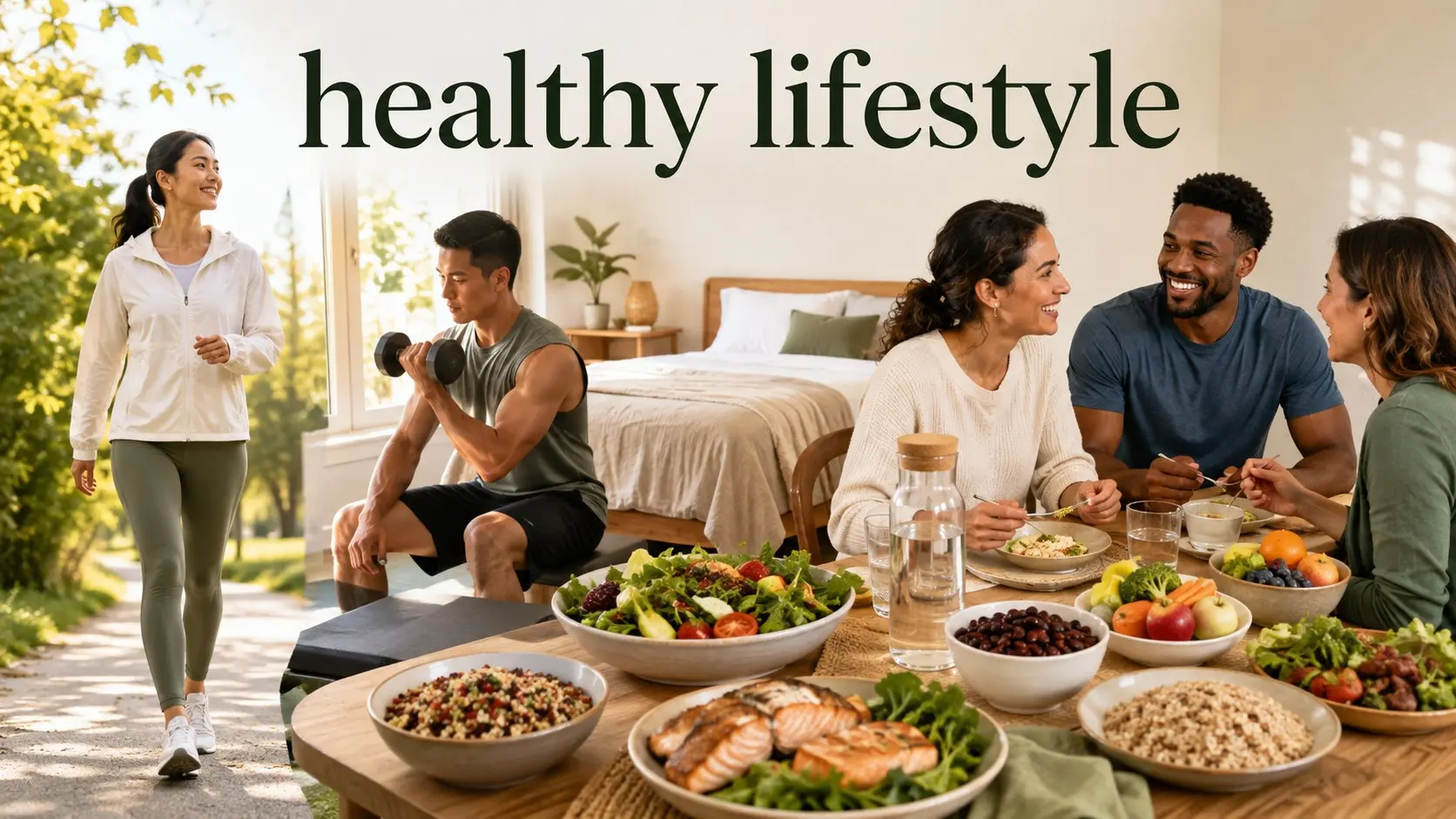
A healthy lifestyle is a way of living that supports your physical, mental and social health.
It usually includes a balanced diet, regular physical activity,
enough sleep, stress management, no tobacco, less alcohol,
good hygiene, preventive care, supportive relationships and habits that fit real life.
You do not need to change everything today.
Pick one useful habit.
Make it easy.
Repeat it.
Then build from there.
Medical note:
I am not a dermatologist or A doctor, and this content does not replace professional medical advice. What I share comes from real-life experience, extensive research, and consultation with healthcare providers. Always consult qualified medical professionals for diagnosis and treatment of any health condition.
Healthy Lifestyle Key Takeaways
- Build most meals around simple whole foods.
- Move often and work toward regular weekly activity.
- Include strength training when it is safe for you.
- Protect your sleep instead of treating it as spare time.
- Use simple ways to manage daily stress.
- Avoid tobacco and nicotine products.
- If you drink alcohol, drinking less is better for health than drinking more.
- Keep up with suitable screening, vaccines, dental care and eye care.
- Make time for family, friends, hobbies and meaningful work.
- Build healthy lifestyle habits slowly enough that you can keep them.
What Does Healthy Living Really Mean?
Healthy living is not about looking a certain way.
It is not a number on a scale.
It is not eating salad every day.
It is not exercising until you hurt.
A useful health plan supports daily life.
It may help you feel stronger.
It may help you move better.
It may support sleep, energy, mood and long term health.
A strong daily wellness routine can include:
- Nutritious food
- Regular movement
- Muscle strengthening
- Enough sleep
- Water based on your needs
- Stress care
- Good oral hygiene
- Safe sun habits
- No tobacco
- Less alcohol or no alcohol
- Health screening
- Vaccines based on age and risk
- Supportive relationships
- Rest and hobbies
- Learning and purpose
Your plan may look different from another person's plan.
Age matters.
Health conditions matter.
Money matters.
Culture matters.
Work matters.
Family duties matter.
Food access matters.
A healthy plan should work with your real life.
Why Does a Healthy Lifestyle Matter?
Many common health problems are linked with everyday risk factors.
The CDC highlights tobacco use, poor nutrition, physical inactivity
and excessive alcohol use as major preventable risk factors for chronic disease.
That does not mean lifestyle causes every disease.
Genes, age, infection, injury, medicine, environment and social conditions also affect health.
A healthy lifestyle cannot promise that you will never become sick.
It can give your body a stronger base.
It can also work together with medical care when you already have a health condition.
The 20 Parts of a Healthy Lifestyle Roadmap
1. Build Meals Around Simple Whole Foods
Start with food you know.
You do not need rare foods.
You do not need a detox.
You do not need a perfect meal plan.
WHO describes a healthy diet using four basic ideas:
adequacy, balance, moderation and variety.
A simple balanced diet can include:
- Vegetables
- Fruit
- Beans and lentils
- Whole grains
- Eggs
- Fish
- Lean meat or poultry
- Tofu and other plant proteins
- Plain yogurt or suitable alternatives
- Nuts and seeds
- Unsaturated oils such as olive oil
Try to eat a variety of foods.
Frozen vegetables and fruit can be useful too.
Canned options can also work when they do not contain too much added sugar or salt.
For more food guidance, visit the
Foods and Nutrition Hub
.
2. Add More Plants to Your Plate
Vegetables, fruit, beans, lentils and whole grains add fibre, vitamins, minerals and many useful plant compounds.
You do not have to become vegetarian.
Just add more plants where they fit.
Try:
- Fruit with breakfast
- Vegetables with lunch
- Beans in soup
- Lentils with rice
- A vegetable side with dinner
- Nuts or seeds as a small snack
Small additions can be easier than strict food rules.
3. Get Enough Fibre
Dietary fibre supports normal digestion.
It can also support fullness, blood sugar control and healthy cholesterol levels.
Good sources include:
- Beans
- Lentils
- Oats
- Whole grains
- Vegetables
- Fruit
- Nuts
- Seeds
Increase fibre slowly.
A large change in one day can cause gas or bloating.
Drink enough fluid as you add more fibre.
4. Drink Water Based on Your Needs
Water is important.
But there is no single water target that is right for every person.
Your needs can change with:
- Body size
- Weather
- Exercise
- Sweating
- Pregnancy
- Food intake
- Health conditions
Simple hydration habits can help.
- Keep water where you can see it
- Drink when thirsty
- Drink more during hot weather when appropriate
- Replace some sweet drinks with water
- Take water when you exercise
Do not force large amounts of water because an online article gave you a fixed number.
People with heart, kidney or liver disease may need personal fluid advice.
5. Move Your Body Every Week
Regular physical activity is one of the strongest parts of a healthy routine.
WHO says adults should aim for 150 to 300 minutes of moderate activity each week,
or 75 to 150 minutes of vigorous activity,
or a suitable mix of both.
You do not have to reach that amount on day one.
Start where you are.
Examples include:
- Brisk walking
- Cycling
- Swimming
- Dancing
- Active housework
- Gardening
- Sports
Ten minutes still counts.
Some movement is better than none.
For exercise guides, visit the
NextFitLife Fitness Hub
.
6. Build Strength Two or More Days Each Week
WHO also recommends muscle strengthening activity on two or more days each week for adults.
Strength training can support muscle, bones, balance and daily function.
Simple options include:
- Chair squats
- Wall push ups
- Resistance band rows
- Light dumbbell work
- Step ups
- Glute bridges
- Carrying suitable household items
Start with a level you can control.
Stop if you develop chest pain, faintness, severe breathlessness or sharp pain.
Ask a qualified professional for help if you have a medical condition or injury that affects exercise safety.
7. Sit Less and Break Up Long Screen Time
A workout does not mean the rest of the day has to be still.
Use short movement breaks.
- Stand up often
- Walk during a phone call
- Stretch your shoulders and hips
- Walk after lunch
- Use stairs when safe
- Change position during long work sessions
You do not need a standing desk to move more.
The goal is to avoid staying in one position for too long.
For screen related vision care, read the
Digital Eye Strain Relief Guide
.
8. Protect Your Sleep
Sleep is a basic health need.
CDC guidance says adults between 18 and 60 should generally get at least seven hours of sleep each day.
Needs change with age.
Useful sleep habits include:
- Use a regular sleep time when possible
- Wake at a similar time
- Get daylight after waking
- Reduce caffeine later in the day
- Keep the bedroom dark and comfortable
- Use a calm routine before sleep
- Reduce stimulating screen use near bedtime
Do not cut sleep just to wake very early.
A healthy morning begins with enough sleep.
Talk with a healthcare professional if you have loud snoring,
gasping during sleep, severe daytime sleepiness,
morning headaches or sleep that never feels refreshing.
Read the
Sleep Deprivation Guide
for more information.
9. Manage Stress in Small Ways
Stress cannot always be removed.
But your body needs chances to recover.
Simple stress management ideas include:
- Slow breathing
- A short walk
- Prayer
- Quiet time
- Writing down worries
- Talking with someone you trust
- Listening to music
- Gardening
- Reading
- Reducing constant notifications
You do not have to meditate to manage stress.
Choose something that helps you slow down.
For more support, visit the
Mental Health and Wellness Hub
.
10. Protect Your Mental Well Being
A healthy body and a healthy mind are connected.
Pay attention to your mood.
Notice when worry, sadness, anger or stress starts to affect sleep, work, food, relationships or daily tasks.
Useful steps may include:
- Talking with someone you trust
- Creating better work boundaries
- Taking regular breaks
- Spending time outdoors
- Doing something enjoyable
- Getting professional support when needed
Seeking help is a health action.
Urgent mental health symptoms need urgent professional support.
11. Avoid Tobacco and Nicotine
WHO states that all forms of tobacco are harmful.
There is no safe level of tobacco exposure.
Tobacco affects much more than the lungs.
It is linked with serious disease throughout the body.
Nicotine is also highly addictive.
If you use tobacco, support can help.
A quit plan may include professional advice,
behavior support, approved medicines or nicotine replacement when suitable,
and help from family or friends.
You may need more than one attempt.
That is common.
12. Drink Less Alcohol or Do Not Drink
If you do not drink alcohol, you do not need to start for health.
If you do drink, less alcohol is better for health than more.
Alcohol can affect sleep, judgment, blood pressure, liver health and cancer risk.
Simple ways to drink less include:
- Use alcohol free days
- Drink water with meals
- Do not use alcohol as your main stress tool
- Keep less alcohol at home
- Choose alcohol free drinks
- Ask for help when cutting back feels difficult
Some people should not drink alcohol.
This can include people who are pregnant,
people taking certain medicines,
and people with some medical conditions.
People who drink heavily may need medical help to stop safely.
13. Keep Up With Preventive Care
Healthy habits are only one part of health.
Preventive care matters too.
CDC preventive guidance includes regular medical and dental care,
suitable screening tests,
vaccines,
and health education.
Your personal plan depends on:
- Age
- Sex
- Family history
- Country
- Past test results
- Health conditions
- Medicines
Ask a healthcare professional which checks are right for you.
Use the
Medical Tests and Screenings Hub
to learn about common tests.
14. Know the Health Numbers That Matter to You
Some health problems can exist before you feel ill.
Depending on your age and risk,
your healthcare professional may discuss:
- Blood pressure
- Blood sugar
- A1C
- Cholesterol
- Kidney tests
- Weight or waist measures when useful
Do not chase a perfect number from the internet.
A result needs context.
For heart health, visit the
Heart and Cardiovascular Health Hub
.
15. Care for Your Teeth, Eyes, Skin and Hearing
Whole body health includes areas that are easy to forget.
For oral health:
- Brush your teeth with fluoride toothpaste
- Clean between your teeth
- Get dental care when needed
- Do not use harsh home treatments in the mouth
For eye health:
- Use eye exams based on your needs and risk
- Protect your eyes from strong ultraviolet light
- Take screen breaks
- Manage diabetes and blood pressure with professional care
- Get urgent care for sudden vision loss or severe eye pain
For hearing:
- Protect your ears from very loud sound
- Do not push objects deep into the ear
- Ask about a hearing check if speech becomes hard to understand
For medical skin, hair and nail information, visit the
Skin, Hair and Nail Health Hub
.
16. Build Strong Social Connections
Health is not only food, sleep and exercise.
Social connection is part of a full life.
Make time for people who support you.
Simple ideas include:
- Call a friend
- Eat with family
- Join a walking group
- Take part in a community group
- Volunteer
- Attend a class
- Listen when someone needs support
Quality matters more than having a large number of contacts.
Keep distance from relationships that are unsafe or harmful.
17. Make Time for Hobbies, Learning and Purpose
Your health plan should leave room for life.
Hobbies can give you rest, enjoyment, learning and connection.
Try:
- Reading
- Cooking
- Drawing
- Music
- Gardening
- Photography
- Puzzles
- Crafts
- Learning a language
- Learning a new skill
A hobby does not have to make money.
It can simply make your day better.
18. Use Technology as a Tool
Phones, watches and health apps can be useful.
They can track steps, sleep, exercise or blood pressure.
But more data is not always better.
Track information that helps you act.
Ignore numbers that only make you anxious.
Take breaks from social media.
Do not compare your body or health with edited pictures online.
19. Make the Healthy Choice Easier at Home
Your environment can shape your healthy lifestyle habits.
Do not depend on willpower for every choice.
Make useful actions easy.
- Keep fruit where you can see it
- Keep water near your work area
- Put walking shoes near the door
- Keep simple food ready
- Put a resistance band where you use it
- Charge your phone away from the bed
- Plan meals before you become very hungry
A small change in the room can help a habit happen more often.
20. Start Small and Build Consistency
This may be the most important step.
Do not try to rebuild your whole life on Monday morning.
Choose one action.
Examples:
- Walk for ten minutes after dinner
- Add one vegetable to lunch
- Go to bed thirty minutes earlier
- Prepare one meal at home
- Drink water instead of one sweet drink
- Stand up during work breaks
- Book an overdue checkup
The best healthy habits are not always the hardest habits.
They are the habits you can repeat.
How to Set a Health Goal That You Can Actually Follow
A goal such as “I want to get healthy” is too wide.
Make the goal clear.
Make it small.
Give it a time and place.
For example:
- I will walk for ten minutes after dinner on Monday, Wednesday and Friday.
- I will eat fruit with breakfast on workdays.
- I will put my phone away at ten each night.
- I will do chair squats and wall push ups twice this week.
- I will prepare lunch at home twice this week.
Do not start with ten goals.
One completed goal can build confidence for the next one.
A Simple Seven Day Healthy Lifestyle Plan
Day 1: Improve One Meal
Choose one meal.
Add protein, vegetables or fruit, and a fibre rich food.
Day 2: Walk After One Meal
Walk for ten to twenty minutes if it is safe for you.
Keep the pace comfortable.
Day 3: Fix One Hydration Habit
Put water where you can see it.
Replace one sweet drink with water.
Day 4: Add Simple Strength Work
Try a few chair squats, wall push ups, glute bridges or light rows.
Day 5: Protect Sleep
Choose a sensible bedtime.
Lower the lights.
Put the phone away.
Day 6: Prepare Food Before You Are Hungry
Plan two easy meals.
Use foods you already enjoy.
Day 7: Review the Week
Ask one question:
Which healthy action was easiest to repeat?
Keep that one next week.
A Simple Thirty Day Healthy Lifestyle Roadmap
Week 1: Build the Base
- Use a steady wake time
- Drink water regularly
- Walk for ten minutes
- Add vegetables or fruit each day
Week 2: Add Strength and Sleep Care
- Do two short strength sessions
- Reduce late caffeine
- Use a calm night routine
- Break up long sitting time
Week 3: Add Stress and Social Care
- Use two minutes of slow breathing
- Call or meet someone supportive
- Spend time outside
- Reduce one source of digital stress
Week 4: Review Preventive Care
- Check when you last saw your healthcare professional
- Ask whether vaccines are up to date
- Book dental or eye care if needed
- Choose the habits you want to keep next month
How Can You Live a Healthy Lifestyle When You Are Busy?
A busy person does not need a perfect schedule.
You need options that fit between tasks.
Try:
- Ten minutes of walking instead of no walking
- Frozen vegetables when fresh cooking is hard
- Eggs, yogurt, beans, fish or tofu for quick protein
- A short home strength session
- A bedtime reminder
- A simple packed snack
- Water on your desk
- One quiet minute before a difficult meeting
- Standing during some phone calls
Do not wait for a free two hour block.
Small actions can fit into a real workday.
Can You Build a Healthy Lifestyle on a Budget?
Yes.
Health does not require expensive powders, watches or special foods.
Low cost nutritious foods can include:
- Beans
- Lentils
- Eggs
- Oats
- Potatoes
- Seasonal fruit
- Frozen vegetables
- Canned fish
- Plain yogurt
- Whole grain bread
Walking can be free.
Simple strength work can use a chair, wall, backpack or resistance band.
Choose what fits your budget.
Healthy Living With a Family
A family routine can make healthy choices easier.
Try shared actions.
- Take a walk after dinner
- Cook one simple meal together
- Keep fruit and water easy to reach
- Use a regular bedtime routine
- Plan active weekend time
- Have one meal without phones
Children learn from what they see.
Avoid using food as punishment.
Try not to label normal foods as morally good or bad.
How Does a Healthy Lifestyle Change After 40, 50 and 60?
The basics stay similar.
But some priorities become more important with age.
For healthy aging, pay more attention to:
- Muscle strength
- Balance
- Walking and mobility
- Enough protein
- Bone health
- Sleep
- Vision
- Hearing
- Dental health
- Medicine review
- Fall prevention
- Social connection
Age changes the plan.
It does not end the plan.
Visit the
Healthy Aging and Longevity Hub
.
A Simple Healthy Morning Routine
Your morning does not need twelve steps.
Choose two or three.
- Wake at a similar time
- Open the curtains
- Drink water if you are thirsty
- Eat a simple breakfast when hungry
- Walk or stretch
- Choose your main task for the day
Do not wake very early if it means losing needed sleep.
A Healthy Workday Routine
Work can bring long sitting, stress, screens and missed meals.
Use small anchors.
- Keep water nearby
- Plan lunch before you become very hungry
- Stand during some calls
- Look away from the screen often
- Walk for a few minutes after lunch
- Stretch during long work periods
- Finish one task before checking social media
A desk job does not have to mean a completely inactive day.
A Healthy Evening Routine
The evening can help your body slow down.
Try:
- Eat a normal evening meal
- Take a gentle walk
- Prepare clothes or food for tomorrow
- Write down unfinished tasks
- Lower bright light
- Put your phone away
- Read or use another calm activity before bed
The goal is not a perfect evening.
The goal is a clear end to the day.
How Should You Measure Healthy Lifestyle Progress?
Do not measure everything.
Track what matches your goal.
You might track:
- Walking days
- Strength sessions
- Bedtime consistency
- Vegetables and fruit
- Home cooked meals
- Energy
- Mood
- How easy stairs feel
- Blood pressure when a healthcare professional recommends monitoring it
Choose one or two measures.
Review them once each week.
Your health is bigger than a scale number.
How Do You Restart After a Setback?
Everyone has hard days.
You may miss exercise.
You may sleep badly.
You may eat differently from your plan.
That does not erase your progress.
- Stop judging yourself.
- Choose the next useful action.
- Make the action smaller if needed.
- Restart today.
- Ask what made the habit difficult.
- Change the plan when the plan does not fit your life.
Consistency does not mean never stopping.
It means learning how to start again.
Signs Your Healthy Lifestyle Plan Is Too Hard
More is not always better.
Your plan may need to change if:
- You feel tired all the time
- You are always very hungry
- You cannot sleep
- You train through pain
- You feel guilty after normal meals
- You stop seeing family or friends
- You spend more money than you can afford
- You use many supplements without a clear need
- You stop prescribed medicine
- You cannot follow the plan for more than a few days
A healthy routine should support your life.
It should not take over your life.
Common Healthy Lifestyle Mistakes
- Changing everything at once
- Following an extreme diet
- Ignoring sleep
- Training through pain
- Believing detox claims
- Using supplements as a replacement for food
- Following health claims without checking the source
- Skipping medical care for ongoing symptoms
- Thinking one missed day has ruined the plan
- Using guilt as motivation
- Comparing your health with edited online images
- Using one fixed water target for everyone
Simple plans are often easier to keep.
Do You Need Supplements for a Healthy Lifestyle?
Not always.
Supplements are not the base of a healthy lifestyle.
Food, activity, sleep, stress care and suitable medical care come first.
A supplement may be useful when there is:
- A diagnosed deficiency
- A specific diet need
- A pregnancy related need
- A medical condition
- A recommendation from a qualified professional
High doses can cause harm.
Supplements can also interact with medicines.
Do not assume that natural means safe.
Visit the
Nutrition and Vitamins Hub
for more information.
When Should You Get Medical Advice Before Changing Your Lifestyle?
Talk with a qualified healthcare professional before making a major change if you:
- Have heart disease
- Have kidney disease
- Have liver disease
- Have lung disease
- Have diabetes or another metabolic condition
- Take prescription medicine
- Are pregnant or trying to become pregnant
- Have a history of an eating disorder
- Have chest pain
- Have fainting episodes
- Have severe breathlessness
- Have unexplained weight loss
- Have severe ongoing fatigue
- Plan a major exercise change after a long inactive period
- Plan to stop heavy alcohol use
- Plan to use high dose supplements
Medical symptoms need medical assessment.
A lifestyle plan is not a substitute for diagnosis or treatment.
Health Warning Signs That Need More Than a Wellness Tip
Get urgent medical help for symptoms such as:
- Chest pain or severe chest pressure
- Severe trouble breathing
- Fainting
- Sudden weakness on one side
- Sudden trouble speaking
- A severe allergic reaction
- Uncontrolled bleeding
- A prolonged seizure
- Severe new confusion
- Thoughts of self harm or suicide
Arrange medical assessment for ongoing symptoms such as unexplained weight loss,
blood in stool,
a new lump,
severe fatigue,
repeated dizziness,
or symptoms that keep returning.
What I Have Learned From Years of Healthy Living and Health Writing
I have written about health, fitness and nutrition for more than fifteen years.
I have also spent more than thirty years practicing many of the basic habits I write about,
including regular exercise, simple nutrition, sleep care and healthy aging.
Before I focused on NextFitLife,
I spent twenty nine years working in information technology management.
That work taught me to review information carefully,
compare data,
look for errors,
organize complex subjects,
and explain them in a clear way.
I now use the same approach when I research health topics.
One lesson keeps coming back.
Hard plans are easy to start.
Simple plans are easier to live with.
I do not believe good health comes from one secret food,
one workout,
one supplement,
or one perfect morning routine.
I focus on the basics:
food,
movement,
strength,
sleep,
water,
family,
learning,
preventive care,
and habits that can survive a busy week.
My role is to research, organize and explain general health information.
I do not diagnose disease or prescribe treatment.
References and Sources
The health guidance in this article was checked against current public health sources available in August 2026.
- World Health Organization.
Healthy diet.
Updated January 26, 2026.
Open WHO healthy diet guidance
. - World Health Organization.
Physical activity.
Current WHO guidance on movement, sedentary behaviour and muscle strengthening.
Open WHO physical activity guidance
. - Centers for Disease Control and Prevention.
About Sleep.
Guidance on sleep needs by age and healthy sleep.
Open CDC sleep guidance
. - World Health Organization.
Tobacco and nicotine.
Updated June 26, 2026.
Open WHO tobacco and nicotine guidance
. - Centers for Disease Control and Prevention.
Preventing Chronic Diseases: What You Can Do Now.
Updated May 14, 2026.
Open CDC chronic disease prevention guidance
.
These organizations do not endorse NextFitLife.
They are listed because they provide public health information relevant to the subjects covered in this guide.
Conclusion
A healthy lifestyle is built from simple actions that you can repeat.
Eat nourishing food.
Move often.
Build strength.
Protect sleep.
Manage stress.
Avoid tobacco.
Drink less alcohol.
Stay connected.
Use preventive care.
Do not try to fix everything today.
Choose one step from this healthy lifestyle roadmap.
Do it today.
Repeat it for seven days.
Then choose the next useful step.
Your next action:
Pick one habit from this page and put it into your calendar before you leave.
Editorial Policies and Trust
About the Author

Frequently Asked Questions About a Healthy Lifestyle
What is a healthy lifestyle?
A healthy lifestyle is a group of daily habits that support physical,
mental and social health.
It can include nourishing food,
regular movement,
enough sleep,
stress care,
no tobacco,
less alcohol,
preventive care
and supportive relationships.
What are the most important healthy lifestyle habits?
Start with the basics.
Eat a varied diet.
Move regularly.
Build strength.
Sleep enough.
Avoid tobacco.
Manage stress.
Keep up with preventive care.
Stay connected with people who support you.
What is the easiest healthy habit to start?
Choose the easiest useful action you can repeat.
A ten minute walk,
one extra vegetable,
an earlier bedtime,
or replacing one sweet drink with water can be a good starting point.
How much exercise do adults need?
WHO recommends that adults aim for 150 to 300 minutes of moderate activity each week,
or 75 to 150 minutes of vigorous activity,
or a suitable mix of both.
Muscle strengthening activity is also recommended on two or more days each week.
How much sleep do adults need?
Sleep needs change with age.
CDC guidance says adults from age 18 to 60 generally need at least seven hours each day.
Good sleep quality and a regular routine matter too.
Do I need to drink eight glasses of water every day?
Not everyone needs the same amount of water.
Fluid needs change with body size,
weather,
activity,
food,
pregnancy
and health conditions.
Drink based on your needs and follow medical advice if you have a condition that affects fluids.
Do I need supplements to be healthy?
Not always.
A varied diet,
regular movement,
sleep,
stress care
and preventive health are the main base.
Supplements may be useful for a diagnosed deficiency,
a specific medical need
or when a qualified professional recommends them.
Can a healthy lifestyle prevent every disease?
No.
Healthy habits can reduce some health risks and support wellbeing,
but they cannot remove the effects of age,
genes,
infection,
injury,
environment
or every medical condition.
How can I live healthier when I have a busy job?
Make each action smaller.
Walk for ten minutes.
Keep water nearby.
Prepare simple food.
Stand during some calls.
Use a short home workout.
Protect your bedtime.
Small actions are easier to fit into a busy day.
How long does it take to build a healthy lifestyle?
There is no fixed number of days.
Some habits become easier quickly.
Others take weeks or months.
Focus on making the action simple enough to repeat instead of trying to reach a perfect deadline.
What should I do after I miss a healthy habit?
Restart at the next useful chance.
Do not wait for Monday or next month.
Ask why the habit was hard,
make the plan smaller,
and continue.
Is a healthy lifestyle expensive?
It does not have to be.
Beans,
lentils,
eggs,
oats,
potatoes,
frozen vegetables
and seasonal fruit can be useful lower cost foods.
Walking and many home exercises can also be free.
Should I see a doctor before starting a new diet or exercise plan?
Ask a qualified healthcare professional first if you have a chronic medical condition,
take prescription medicine,
are pregnant,
have a history of an eating disorder,
have chest pain or fainting,
or plan a major change in diet,
exercise,
alcohol use
or supplements.
Can healthy habits replace medicine?
No.
Lifestyle habits can support health,
but they do not replace prescribed treatment.
Do not stop or change medicine because of information in an online article.
What is the best way to stay consistent?
Choose one clear action.
Attach it to a time or place.
Make it easy to start.
Track one simple result.
If you miss a day,
restart at the next chance.
Medical Disclaimer
NextFitLife provides general educational information.
It does not provide medical advice,
diagnosis,
treatment,
emergency care
or personal medical recommendations.
Always speak with an appropriately qualified healthcare professional about symptoms,
medical conditions,
tests,
medicines,
supplements,
pregnancy,
diet,
exercise
or treatment decisions.
Do not delay medical care because of information you read online.
If you have severe,
sudden
or rapidly worsening symptoms,
seek urgent medical care.

Health & wellness writer with 30+ years of experience in nutrition, fitness, and healthy aging. Founder of NextFitLife.com — evidence-based health guidance.