
Published on: May 2026
Updated on: November 6, 2026
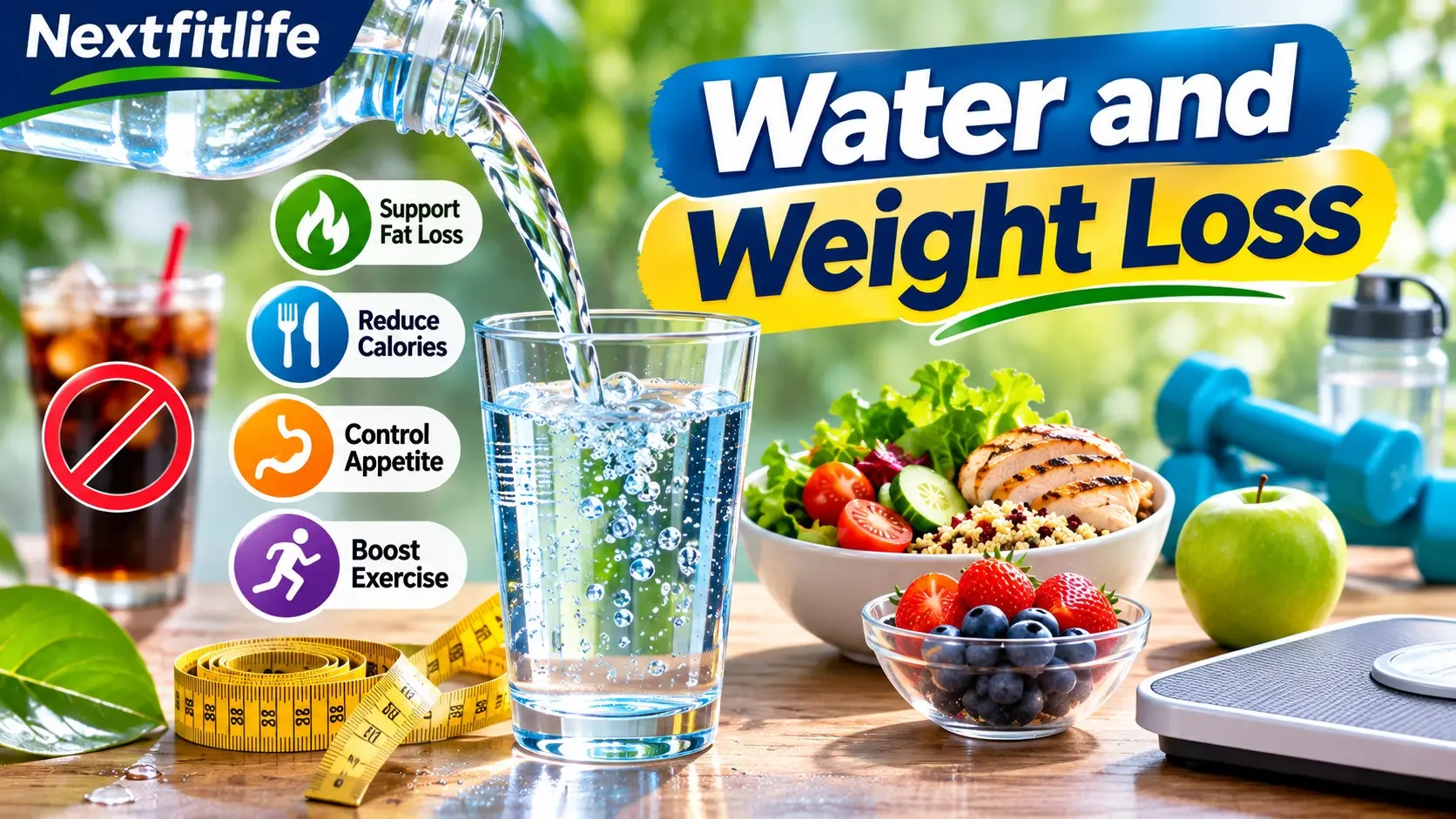
Water and weight loss are connected, but not because water melts fat or dramatically speeds your metabolism.
The strongest benefit is much simpler. Water has no calories, so replacing sugary or calorie heavy drinks with water can reduce daily energy intake. Staying well hydrated also supports normal body function and can help you exercise comfortably.
Drinking water before meals may help some adults eat less, but the effect is not guaranteed. Simply forcing yourself to drink more water all day has not consistently produced meaningful fat loss in randomized trials.
So the answer is clear: water can support weight loss, but it is not a weight loss treatment by itself.
If you need the basic fat loss science first, read How Weight Loss Works. If you want to estimate a starting calorie target, use the Calorie Deficit Calculator.
Important: This article is for general information and education. It does not replace medical advice, diagnosis, or treatment.
Get medical advice about fluid intake if you have:
- Heart failure
- Advanced kidney disease
- A prescribed fluid restriction
- Severe liver disease with fluid retention
- Persistent swelling
- Very low blood sodium
- Unusual thirst with excessive urination
During or after prolonged exercise, confusion, severe headache, vomiting, seizures, or collapse after drinking large amounts of water can be signs of dangerously low blood sodium and require urgent medical attention.
Table of Contents
- Quick Answer
- How Water Can Help
- 18 Smart Facts
- Water Before Meals
- Water and Metabolism
- Cold Water
- Thirst vs Hunger
- Sugary Drinks
- Daily Water Needs
- Exercise Hydration
- Electrolytes
- Overhydration
- Water Weight
- Water Rich Foods
- Practical Hydration Habits
- Common Myths
- Conclusion
- References and Sources
- Internal Links + Weight Loss Hub
- About the Author
- Frequently Asked Questions
Quick Answer: Does Drinking Water Help You Lose Weight?
It can help, but the effect is indirect.
Water can support weight management by:
- Replacing calorie containing drinks
- Supporting normal hydration
- Helping some people feel fuller when taken before a meal
- Supporting exercise and physical activity
- Providing a simple zero calorie drink choice
What water does not do is directly burn significant body fat.
Fat loss still requires a sustained calorie deficit.
What Does the Latest Evidence Say?
A systematic review and meta analysis of eight randomized controlled trials looked at water intake and body weight in adults with overweight or obesity.
Increasing water intake overall did not produce a statistically significant reduction in body weight, BMI, or waist circumference.
However, replacing sugar sweetened beverages with water showed a modest favorable trend for body weight.
A separate systematic review of randomized trials found that several adult studies using water before meals reported greater weight loss, while another study increasing general daily water intake found no weight benefit.
The practical lesson: water is most useful when it replaces calories or supports a sustainable healthy routine. More water is not automatically more fat loss.
18 Smart Facts About Water and Weight Loss
1. Water Does Not Directly Burn Body Fat
Water is essential for life and normal metabolism, but drinking a glass does not cause stored body fat to disappear.
Your body loses fat when average energy intake remains below energy expenditure over time.
Water can support that process. It does not replace it.
2. Drinking More Water Alone Has Mixed Weight Loss Evidence
The idea that simply increasing daily water intake causes meaningful weight loss sounds reasonable, but randomized trials have produced mixed results.
A meta analysis of eight trials found no significant overall reduction in body weight from water interventions alone.
That means you should not expect an extra liter of water to create the same result as changing calorie intake.
3. Replacing Sugary Drinks With Water Can Help
This is one of the strongest practical uses of water during weight loss.
CDC notes that water has no calories. Replacing sweetened drinks with plain water can therefore reduce calorie intake.
Examples include replacing:
- Regular soda
- Sweetened iced tea
- Fruit drinks
- Energy drinks
- Sweetened coffee drinks
- Sweetened water
The exact calories saved depend on what you normally drink.
See Stop Eating Sugar to Lose Weight for a broader strategy.
4. Water Before Meals May Help Some Adults
Several randomized studies have found greater weight loss when adults with overweight or obesity drank water before meals while following a calorie controlled plan.
A commonly studied amount has been around 500 mL before a meal.
However, this should be viewed as an optional strategy rather than a universal prescription.
5. You Do Not Need 500 mL Before Every Meal
If drinking a large amount before a meal makes you uncomfortable, bloated, or less able to enjoy the meal, there is no reason to force it.
You can simply drink normally with meals and throughout the day.
The goal is sustainable hydration, not filling your stomach with water before every bite.
6. Water Does Not Reliably Raise Metabolism by 30 Percent
An early small study reported that 500 mL of water raised metabolic rate by about 30 percent.
This finding became one of the most repeated water and weight loss claims online.
Later controlled research challenged it.
One randomized crossover study found that about 500 mL of room temperature water did not significantly increase energy expenditure.
Another study using a sham comparison found only tiny changes that were not different from the control condition.
7. Cold Water Burns Very Few Extra Calories
Your body must warm cold water to body temperature, but the energy cost is small.
Controlled research using very cold water found only a modest short term increase in energy expenditure.
It is nowhere near enough to make water temperature a useful fat loss strategy.
Drink water at the temperature you enjoy.
8. Thirst Is Not Simply Hunger in Disguise
You may have heard that people constantly mistake thirst for hunger.
The science is more complicated.
Hunger and thirst are separate biological signals, and eating and drinking are also influenced by habits, food availability, social settings, and sensory cues.
Drinking water can be reasonable when you are thirsty, but do not use water to suppress genuine hunger.
9. There Is No Single Perfect Water Target
Daily water intake varies with:
- Body size
- Climate
- Activity
- Sweat rate
- Diet
- Pregnancy
- Breastfeeding
- Illness
- Medication
You therefore do not need to force the same number of liters as someone else.
10. The Famous 3.7 L and 2.7 L Numbers Include Food
The National Academies set adequate intake values of about:
- 3.7 liters of total water per day for young adult men
- 2.7 liters of total water per day for young adult women
These figures include water from all beverages and food.
They are not instructions to drink 3.7 or 2.7 liters of plain water on top of everything else.
11. Exercise Fluid Needs Should Be Individualized
Exercise hydration cannot be reduced to one fixed number per hour.
Sweat rates vary enormously between people.
They are affected by:
- Heat
- Humidity
- Exercise intensity
- Body size
- Clothing
- Heat adaptation
A 2026 sports hydration consensus recommends individualized strategies based on sweat rate, exercise duration, environment, access to fluids, and tolerance.
12. More Water Is Not Always Better
Normal hydration is healthy.
Excessive water consumption is not.
Your kidneys can remove excess water, but there are limits to how quickly the body can handle very large volumes.
This becomes especially important during prolonged exercise.
13. Too Much Water Can Cause Hyponatremia
Hyponatremia means blood sodium becomes too low.
During prolonged exercise, drinking far more fluid than you lose can contribute to exercise associated hyponatremia.
Severe cases can cause:
- Headache
- Vomiting
- Confusion
- Seizures
- Loss of consciousness
- Breathing problems
Overdrinking is therefore not a safe shortcut to better hydration.
14. Water Weight Is Not Body Fat
Water weight describes temporary changes in body water.
Your scale may move quickly because body water changed even though body fat did not change by the same amount.
This is why one morning weigh in should not decide whether your diet is working.
For better progress tracking, see Weight Loss Tracking.
15. Sodium, Carbohydrate, Hormones, and Exercise Can Move the Scale
Temporary fluid changes can occur after:
- A salty meal
- A high carbohydrate meal
- Hard resistance training
- Long travel
- Menstrual cycle changes
- Changes in glycogen stores
A rapid scale increase after one meal is usually not the same amount of new body fat.
16. Water Rich Foods Count Too
Fruits and vegetables contribute to hydration.
Useful examples include:
- Watermelon
- Oranges
- Berries
- Cucumber
- Tomatoes
- Lettuce
- Soups
These foods also provide nutrients and can add meal volume.
See Best Vegetables for Weight Loss for more ideas.
17. Sports Drinks Are Not Needed for Every Workout
For many short or moderate workouts, plain water plus normal meals is enough.
Electrolyte and carbohydrate drinks become more relevant during prolonged exercise, very high sweat losses, hot conditions, or specific training situations.
The right choice depends on the session.
18. Hydration Supports a Weight Loss Plan but Does Not Replace One
Water is one part of a complete plan.
The stronger foundations remain:
- A sustainable calorie deficit
- Protein rich meals
- Fiber rich foods
- Regular physical activity
- Resistance training
- Sleep
- Long term adherence
Use water to support those habits rather than expecting water to do their job.
Does Drinking Water Before Meals Reduce Appetite?
It can for some people.
The stomach expands when it contains food or fluid, and this may contribute to short term fullness.
Several weight loss trials have found benefits from drinking water before meals, particularly in adults with overweight or obesity following a calorie controlled plan.
However, the research base is still relatively small.
If premeal water helps you comfortably eat an appropriate portion, use it.
If it does not, there is no need to force the habit.
Does Water Boost Metabolism?
Not enough to matter for practical weight loss.
The famous claim that water causes a large increase in metabolism came from a small study published more than two decades ago.
Later controlled studies did not reproduce a meaningful effect with room temperature water.
This means you should not count water calories burned in your daily deficit.
Does Cold Water Burn More Fat?
No meaningful amount.
Cold water has to be warmed by your body, which costs some energy.
But the effect is tiny compared with the calories involved in normal eating and activity.
Cold water is fine if you prefer it. Room temperature water is also fine.
Is Replacing Soda With Water Worth It?
Yes, especially if you drink sugary beverages regularly.
CDC states that a 12 ounce regular soda can contain about 150 calories and around 42 grams of added sugar.
If a person regularly drinks two such sodas and replaces them with water, that is a meaningful reduction in calories and added sugar.
Your exact result depends on what you currently drink and whether those calories are replaced elsewhere.
What About Juice?
Juice can provide nutrients, but it also contains calories and is easy to drink quickly.
Whole fruit usually provides more fiber and requires more chewing.
You do not need to classify juice as poison. Simply account for it within the full diet.
What About Diet Soda?
Replacing a sugary drink with a zero calorie drink can reduce calories.
Replacing that zero calorie drink with water does not automatically produce more weight loss.
Water is an excellent default beverage, but the evidence does not require every person to eliminate all low calorie beverages.
How Much Water Should You Drink?
There is no universal plain water prescription for weight loss.
General adequate intake values from the National Academies are about:
| Group | Total Water | Important Context |
|---|---|---|
| Adult men | About 3.7 L per day | Includes beverages and food |
| Adult women | About 2.7 L per day | Includes beverages and food |
These are population adequate intake values, not individualized medical prescriptions.
Your needs may be higher or lower.
Do You Need to Drink Eight Glasses Every Day?
Eight glasses is a simple memory aid, not a universal biological requirement.
A person's fluid needs depend on much more than one fixed rule.
Food, coffee, tea, milk, and other beverages also contribute fluid.
Do Coffee and Tea Count as Fluid?
Yes.
Unsweetened coffee and tea contribute to fluid intake.
CDC also lists plain coffee and tea as low calorie beverage choices.
Added cream, sugar, syrups, or large specialty coffee portions can change the calorie total substantially.
How Much Should You Drink During Exercise?
A universal hourly number is not ideal.
Sweat rates can differ several fold between two people doing the same type of activity.
For long or demanding sessions, an individualized hydration plan may use:
- Body weight before exercise
- Body weight after exercise
- Fluid consumed
- Exercise duration
- Environmental conditions
This can estimate personal sweat loss.
If you exercise mainly for general health or weight loss, see Best Cardiovascular Workout and Walking for Weight Loss.
When Do You Need Electrolytes?
Most ordinary diets provide electrolytes through food.
Additional electrolyte drinks may become useful when:
- Exercise is prolonged
- Sweat losses are high
- Conditions are very hot
- You are exercising intensely for a long time
- A healthcare professional recommends them
A sports drink is not automatically healthier than water just because it contains electrolytes.
Can You Drink Too Much Water?
Yes.
Excessive water intake can dilute blood sodium.
This is particularly important during endurance exercise when people sometimes drink continuously because they fear dehydration.
Exercise hydration guidelines emphasize avoiding both severe dehydration and overdrinking.
What Is Water Weight?
Water weight is temporary scale weight related to changes in body fluid.
It is not a separate type of fat.
For example, storing more glycogen after eating more carbohydrate also stores additional water.
A salty restaurant meal may cause temporary fluid retention.
Hard resistance exercise can also temporarily increase water in recovering muscle tissue.
Should You Try to Lose Water Weight?
Not as your main goal.
Rapid water loss can make the scale fall without producing the body fat loss you actually want.
Avoid using:
- Diuretics without medical guidance
- Dehydration
- Sweat suits
- Saunas as a fat loss method
- Extreme low carbohydrate diets solely to drop scale water
For a healthier progress approach, use Weight Loss Tracking.
Can Drinking More Water Stop Sugar Cravings?
Not reliably.
Drink when you are thirsty and keep normal hydration, but do not assume every craving means you need water.
Sugar cravings can involve:
- Physical hunger
- Sleep
- Habit
- Food cues
- Restriction
- Emotion
See Sugar Cravings and Weight Loss.
Can Water Help Emotional Eating?
Water does not treat stress, boredom, sadness, or loneliness.
If you are emotionally eating, drinking a glass of water may create a short pause, but it does not address the trigger itself.
Read Emotional Eating and Weight Loss for a better approach.
Simple Hydration Habits That Actually Help
Keep Water Easy to Reach
A bottle on your desk or in your bag can reduce the chance that you simply forget to drink.
Use Water as Your Default Everyday Drink
This makes calorie intake easier to control without turning hydration into a diet challenge.
Flavor Water if Plain Water Feels Boring
Try:
- Lemon
- Lime
- Cucumber
- Berries
- Mint
CDC recommends similar flavor additions as a way to make water easier to drink.
Drink More When Conditions Demand It
Your needs increase with:
- Heat
- Exercise
- Fever
- Vomiting
- Diarrhea
Fluid replacement during illness can require medical guidance in vulnerable people.
Eat Water Rich Foods
Fruit, vegetables, soups, yogurt, and other foods contribute to total fluid intake.
Common Water and Weight Loss Myths
| Claim | What the Evidence Says |
|---|---|
| Water burns fat | No meaningful direct fat burning effect has been established |
| 500 mL boosts metabolism 30% | Later controlled research found little or no meaningful effect |
| Cold water burns many calories | The effect is very small |
| Thirst is usually mistaken for hunger | The relationship is more complex and not a reliable rule |
| Everyone needs eight glasses | Needs vary and food also contributes water |
| More water is always healthier | Excessive intake can cause dangerous hyponatremia |
| Sports drinks are always needed for exercise | Plain water is often enough for shorter ordinary activity |
How Water Fits Into a Real Weight Loss Plan
Water should make your plan easier, not become the plan.
Combine hydration with:
- A realistic calorie deficit
- Protein rich foods
- Vegetables, fruit, legumes, and whole grains
- Regular walking
- Resistance training
- Good sleep
- Consistent habits
If your weight has stopped moving despite good adherence, do not assume you simply need more water. Use the Weight Loss Plateau Guide.
Conclusion
Water and weight loss have a useful connection, but water is not a fat burning shortcut.
The clearest benefit comes from choosing water instead of calorie heavy drinks. Premeal water may help some people eat less, while normal hydration supports health and exercise.
What does not hold up well is the idea that drinking large volumes of water dramatically boosts metabolism or directly melts fat.
Your needs also vary with climate, activity, food, health, and sweat rate, so there is no perfect number that every adult must force down each day.
Your next step: look at what you currently drink. If sugary drinks are common, replace one regular daily drink with plain or unsweetened water this week. That change is more useful for weight loss than trying to force an arbitrary gallon target.
References and Sources
- Centers for Disease Control and Prevention. About Water and Healthier Drinks. Updated March 5, 2026. Covers hydration, calorie free water, sugary drink replacement, heat, activity, illness, and healthier beverage choices.
https://www.cdc.gov/healthy-weight-growth/water-healthy-drinks/ - Water Intake and Adiposity Outcomes Among Overweight and Obese Individuals. Systematic review and meta analysis of eight randomized controlled trials. Found no significant overall weight reduction from increased water intake, with a modest possible benefit when replacing sugar sweetened beverages.
https://pmc.ncbi.nlm.nih.gov/articles/PMC11013432/ - Outcomes in Randomized Clinical Trials Testing Changes in Daily Water Intake. Systematic review of randomized trials examining weight loss, kidney stones, glucose, headaches, and other outcomes. Several adult premeal studies reported greater weight loss, while increasing general daily water intake did not always help.
https://pmc.ncbi.nlm.nih.gov/articles/PMC11589796/ - National Academies of Sciences. Dietary Reference Intakes for Water. Establishes adequate total water intake values of about 3.7 L per day for young adult men and 2.7 L for young adult women, including food and beverages.
https://www.nationalacademies.org/read/10925/chapter/2 - Water Induced Thermogenesis and Fat Oxidation: A Reassessment. Controlled research finding that 500 mL of room temperature water did not meaningfully increase resting energy expenditure or fat oxidation compared with sham drinking.
https://pmc.ncbi.nlm.nih.gov/articles/PMC4735055/ - Hydration Management for Athletes. 2026 consensus statement recommending individualized fluid replacement based on sweat rate, exercise duration, environmental conditions, and tolerance rather than one fixed fluid prescription.
https://www.sciencedirect.com/science/article/pii/S2666337626001198 - Wilderness Medical Society. Clinical Practice Guidelines for Exercise Associated Hyponatremia. Explains the danger of excessive fluid intake and recommends avoiding overdrinking during prolonged activity.
https://journals.sagepub.com/doi/full/10.1016/j.wem.2019.11.003
Internal Links + Weight Loss Hub
- How Weight Loss Works
- Calorie Deficit Calculator
- Calorie Counting for Weight Loss
- Weight Loss Tracking
- Healthy Rate of Weight Loss
- Weight Loss Goals
- Why Am I Not Losing Weight?
- Weight Loss Plateau Guide
- High Protein Foods for Weight Loss
- Best Vegetables for Weight Loss
- Weight Loss Meal Prep
- Stop Eating Sugar to Lose Weight
- Sugar Cravings and Weight Loss
- Emotional Eating and Weight Loss
- Walking for Weight Loss
- Best Cardiovascular Workout
- Strength Training and Muscle Building
- NextFitLife Fitness Hub
About the Author
Adel Galal is a father of four (three sons and a daughter) and a grandfather of four, with 33 years of hands-on parenting experience. He is the founder of Parnthub.com, based in Cairo, Egypt, where he shares practical guidance on feeding, development and family life from newborns to teenagers. Adel is not a medical professional; health articles cite trusted sources and are for general information only.
Learn more on the NextFitLife About Us page.
Frequently Asked Questions
Does drinking water help you lose weight?
Water can support weight loss, especially when it replaces sugary or calorie containing drinks. Increasing water intake alone has not consistently produced meaningful weight loss in randomized trials.
Does water burn body fat?
No. Water does not directly burn meaningful amounts of body fat. Fat loss still depends on maintaining an energy deficit over time.
Does drinking water before meals help with weight loss?
It may help some adults. Several trials found greater weight loss when water was consumed before meals, but results across studies are mixed and the strategy is optional.
Does 500 mL of water increase metabolism by 30 percent?
This claim came from an early small study. Later controlled research found little or no meaningful rise in energy expenditure from drinking room temperature water.
Does cold water burn more calories?
Very cold water can cause a small rise in energy expenditure because the body warms it, but the effect is too small to matter for practical fat loss.
How much water should I drink to lose weight?
There is no special weight loss water target. General total water needs vary with body size, activity, climate, food, health, pregnancy, and other factors.
Do the 3.7 L and 2.7 L guidelines mean plain drinking water?
No. National Academies adequate intake values refer to total water from all drinks and food, not plain water alone.
Can drinking too much water be dangerous?
Yes. Excessive water intake can dilute blood sodium and cause hyponatremia, particularly during prolonged exercise when fluid intake exceeds losses.
Do I need electrolytes every time I exercise?
No. Plain water and normal meals are often enough for shorter everyday workouts. Electrolytes may become more useful during prolonged exercise, high sweat losses, or hot conditions.
Is water weight the same as fat gain?
No. Water weight is a temporary change in body fluid. Sodium, carbohydrate intake, hormones, exercise, travel, and glycogen can move the scale without the same change in body fat.
Can dehydration make me think I am hungry?
Hunger and thirst are different signals, and evidence does not support treating every hunger sensation as hidden thirst. Drink when you need fluid, but do not use water to replace food when genuinely hungry.
What is the best water habit for weight loss?
For many people, the most useful habit is making plain or unsweetened water the default drink and using it to replace regular sugary beverages.

Health & wellness writer with 30+ years of experience in nutrition, fitness, and healthy aging. Founder of NextFitLife.com — evidence-based health guidance.

