
Originally published: Apr 17, 2023
Last updated: July 17, 2026
Next review: July 2027
Written by: Adel Galal, Founder and Lead Writer at NextFitLife
Review status: Editorially reviewed and checked against current CDC, NIH, NCCIH, MedlinePlus, and NHS guidance. This page has not been medically reviewed by a doctor, infectious disease specialist, pharmacist, pediatrician, or registered dietitian.
Reading time: About 20 minutes
Warm food may soothe a sore throat or stuffy nose for a short time.
But food cannot kill a cold virus.
Food cannot cure influenza.
Vitamin C, garlic, ginger, soup, honey, and yogurt cannot replace medical treatment.
Flu can become serious.
People at higher risk may need antiviral medicine.
These medicines work best when started early.
A nutritious diet supports a normal immune system.
It does not create instant immunity.
The best foods during illness are foods you can tolerate, prepare safely, and eat without making nausea, reflux, diabetes, kidney disease, or another condition worse.
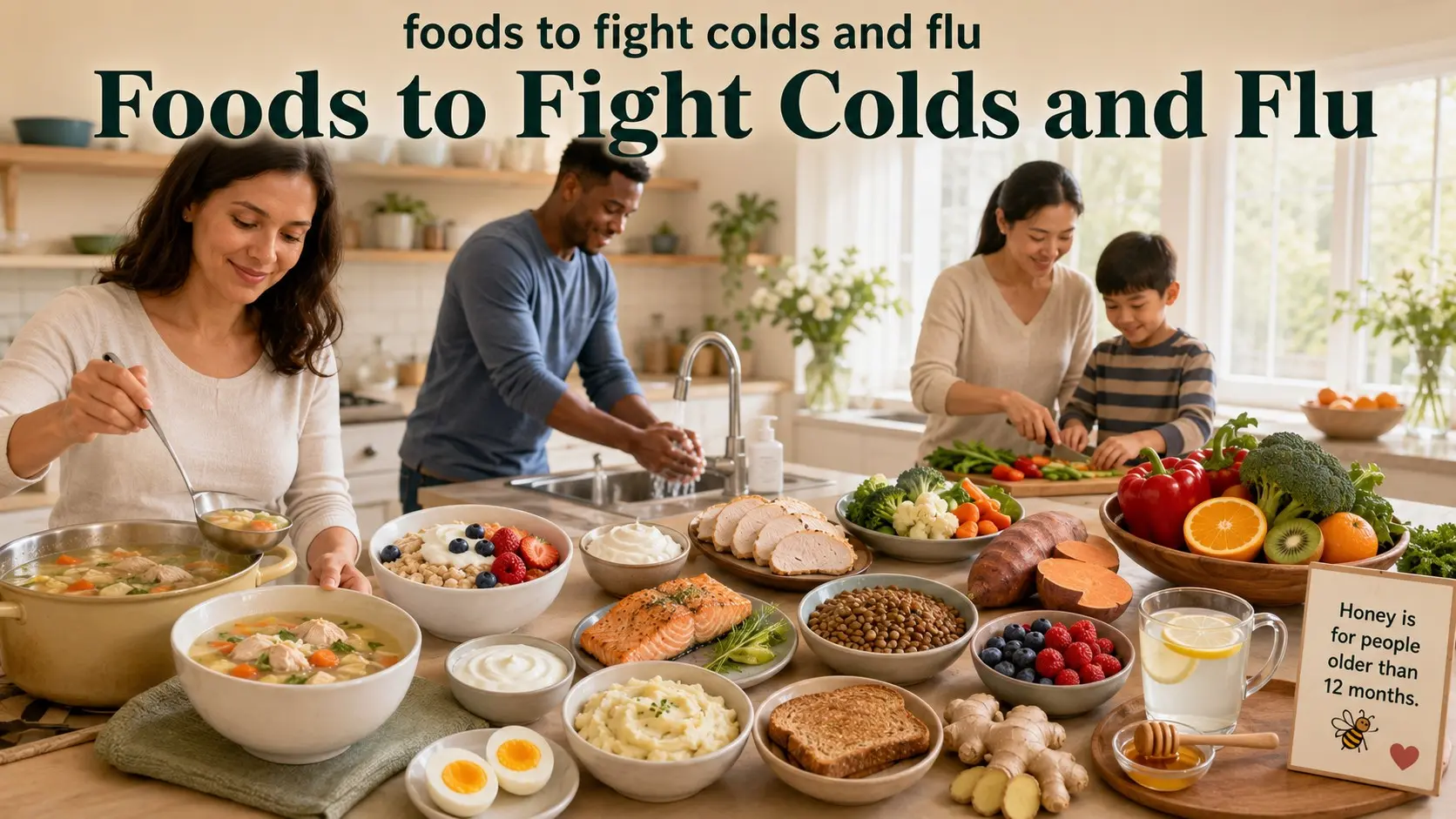
This guide explains 15 practical foods to fight colds and flu in the safe sense of supporting comfort, nutrition, and recovery.
It also covers fluids, honey safety, children, supplements, flu treatment, and emergency warning signs.
For a broader review of immune health claims, read the NextFitLife Immunity Booster Drinks Guide.
Foods to Fight Colds and Flu: Quick Answer
No food cures a cold or the flu.
Useful choices during illness include:
- Chicken or vegetable soup
- Oatmeal
- Rice, potatoes, and toast
- Plain pasteurized yogurt or kefir
- Fully cooked eggs
- Chicken or turkey
- Fully cooked fish
- Beans and lentils
- Oranges and other citrus fruit
- Kiwi
- Berries
- Bell peppers
- Broccoli and cauliflower
- Sweet potatoes and carrots
- Ginger
Water, soup, milk, and other suitable drinks can help with hydration.
Honey may soothe a cough for adults and children older than 12 months.
Never give honey to a baby younger than 12 months.
Contact a clinician quickly for suspected flu if you are pregnant, older, very young, immunocompromised, or have a chronic medical condition.
Editorial and Advertising Disclosure
This guide was written and editorially reviewed by Adel Galal.
Adel is a health and wellness writer.
He is not a doctor, infectious disease specialist, pharmacist, pediatrician, or registered dietitian.
This page cannot diagnose flu, COVID-19, RSV, pneumonia, strep throat, dehydration, or another infection.
NextFitLife uses display advertising to support the website.
Advertising does not decide the foods, claims, medical warnings, references, or conclusions on this page.
Read the
Editorial Policy,
Medical Review Policy,
and
Corrections Policy.
Important Cold and Flu Safety Note
Do not use food to delay medical care.
Do not use soup, juice, honey, herbs, or supplements as treatment for breathing trouble, pneumonia, severe dehydration, or a flu complication.
Antibiotics do not treat a viral cold or influenza.
Flu antiviral drugs are different from antibiotics.
They may shorten illness and lower the risk of some complications.
They work best when treatment begins early.
Seek urgent care for breathing difficulty, chest pressure, confusion, seizures, fainting, severe weakness, very low urine output, or symptoms that improve and then return or worsen.
Cold, Flu, or Another Respiratory Infection?
The common cold and influenza are both caused by viruses.
They are not the same illness.
Cold Symptoms
A cold often develops gradually.
Common symptoms include:
- A blocked or runny nose
- Sneezing
- A sore throat
- A cough
- A hoarse voice
- Mild tiredness
Flu Symptoms
Flu often begins quickly.
Symptoms may include:
- Fever or chills
- Body aches
- Strong tiredness
- A dry cough
- A sore throat
- A headache
- Loss of appetite
Not every person with flu has a fever.
Symptoms Can Overlap
COVID 19, RSV, human metapneumovirus, pneumonia, allergies, and other conditions can produce similar symptoms.
A food list cannot identify the cause.
Testing or medical assessment may be needed.
Stomach Flu Is Not Influenza
Influenza mainly affects the respiratory system.
Vomiting and diarrhea may occur, especially in children, but the phrase stomach flu usually describes a different infection.
What Foods to Fight Colds and Flu Can Really Do
The phrase foods to fight colds and flu should not be understood as food killing a virus.
Food supports the body while it responds to illness.
Food May Help You
- Replace energy when appetite is reduced
- Provide protein
- Provide vitamins and minerals
- Maintain fluid intake
- Soothe a dry or painful throat
- Make medicine easier to tolerate when it should be taken with food
- Prevent excessive weight loss during a long illness
Food Cannot
- Cure influenza
- Kill every cold virus
- Replace a flu vaccine
- Replace antiviral medicine
- Treat pneumonia
- Open a blocked airway
- Correct severe dehydration instantly
- Prevent every respiratory infection
Normal Nutrient Intake Matters
Vitamin A, vitamin C, vitamin D, vitamin E, selenium, zinc, iron, folate, and other nutrients support normal body functions.
A true nutrient deficiency can weaken health.
Taking large doses when you are not deficient does not create unlimited immune protection.
Review the Top Vitamin D Foods Guide for careful food and supplement advice.
15 Foods to Fight Colds and Flu Through Comfort and Nutrition
These foods may help you eat and drink during illness.
They do not cure infection.
| Food | Why it may help | Important caution |
|---|---|---|
| Chicken or vegetable soup | Provides warm fluid, energy, and easy food | Packaged soup may contain a lot of sodium. |
| Oatmeal | Soft texture, carbohydrate, and fibre | Use less added sugar. |
| Rice, potatoes, and toast | Plain energy foods when appetite is low | They do not provide complete nutrition alone. |
| Plain yogurt or kefir | Provides fluid, protein, and calcium | Choose pasteurized products. |
| Fully cooked eggs | Provide protein and several nutrients | Avoid raw or partly cooked eggs when food safety is a concern. |
| Chicken or turkey | Provides protein for meals and soup | Cook poultry fully. |
| Fully cooked fish | Provides protein and useful fats | Choose suitable fish during pregnancy. |
| Beans and lentils | Provide protein, fibre, iron, and folate | Use smaller portions when bloating is severe. |
| Citrus fruit | Provides vitamin C, fluid, and carbohydrate | Acid may cause reflux or a sore mouth. |
| Kiwi | Provides vitamin C and fibre | Avoid it if you have a known kiwi allergy. |
| Berries | Provide vitamin C, fibre, and plant compounds | Wash fresh fruit carefully. |
| Bell peppers | Provide vitamin C and food variety | Cook them when raw food irritates the throat or stomach. |
| Broccoli and cauliflower | Provide vitamin C, folate, and fibre | Soft cooking may improve tolerance. |
| Sweet potatoes and carrots | Provide carbohydrates and carotenoids | They do not treat infection. |
| Ginger | Adds flavour and may feel soothing | Large concentrated amounts may interact with medicine. |
1. Chicken or Vegetable Soup
Warm soup is one of the most practical foods during a respiratory infection.
It provides fluid.
It may temporarily soothe congestion and a sore throat.
It can also provide vegetables, grains, beans, chicken, or tofu.
Soup does not cure a cold or flu.
Build a More Complete Soup
Add one or more of the following:
- Chicken or turkey
- Beans or lentils
- Rice, oats, noodles, or potatoes
- Carrots
- Broccoli
- Spinach
- Tofu
Choose a lower-sodium stock when blood pressure, heart failure, or kidney disease is a concern.
2. Oatmeal
Oatmeal is warm, soft, and easy to prepare.
It provides carbohydrate for energy and soluble fibre.
Add plain yogurt, milk, fortified soy drink, berries, banana, or smooth nut butter when tolerated.
Avoid turning it into a very sweet meal with large amounts of syrup or sugar.
3. Rice, Potatoes, and Toast
Simple starch foods can be easier to eat when nausea or poor appetite makes a full meal difficult.
They provide energy.
They do not provide enough protein or micronutrients by themselves.
Add eggs, yogurt, beans, fish, chicken, or tofu when appetite begins to improve.
Gentle Meal Ideas
- Rice with chicken broth
- Mashed potatoes with an egg
- Toast with smooth nut butter
- Rice with lentil soup
4. Plain Pasteurized Yogurt or Kefir
Yogurt and kefir can provide fluid, protein, calcium, and vitamin B12.
Some products contain live cultures.
This does not mean they cure a cold or the flu.
Choose pasteurized products.
Choose plain products with little or no added sugar.
Avoid dairy if it clearly worsens nausea or diarrhea for you.
5. Fully Cooked Eggs
Eggs are a simple, rich food.
They also provide vitamin B12, choline, selenium, and other nutrients.
Try scrambled, boiled, poached, or baked eggs.
Cook them safely.
Do not add raw eggs to smoothies.
6. Chicken or Turkey
Chicken and turkey provide protein.
They can be added to soup, rice, potatoes, pasta, or sandwiches.
Choose softer preparations when swallowing is painful.
Cook poultry fully.
Do not use undercooked poultry in a home remedy.
7. Fully Cooked Fish
Fish provides protein.
Oily fish may also provide vitamin D and omega fats.
Try baked salmon, trout, sardines, or another suitable fish.
Avoid very salty smoked fish when sodium is a concern.
Pregnant people should follow local mercury advice.
8. Beans and Lentils
Beans and lentils provide plant protein, iron, folate, and fibre.
They work well in soup and soft stews.
Blend them when chewing or swallowing is difficult.
Start with a smaller serving when illness has caused gas, diarrhea, or stomach pain.
People with kidney disease may need personal potassium and phosphorus limits.
Review the Diet for Kidney Disease Guide before making major changes.
9. Oranges and Other Citrus Fruit
Oranges, mandarins, grapefruit, lemons, and limes provide vitamin C.
Vitamin C supports normal immune function.
It does not prevent every cold.
Starting a large vitamin C dose after symptoms begin has not been shown to cure the illness.
Choose whole fruit more often than juice.
Grapefruit can interact with several medicines.
10. Kiwi
Kiwi provides vitamin C, fiber, and fluid.
Eat it alone or add it to oatmeal or yogurt.
Its acidity may irritate a sore mouth.
Kiwi can also cause an allergy in some people.
11. Berries
Strawberries, blueberries, raspberries, and blackberries provide vitamin C, fibre, and plant compounds.
Fresh and frozen berries can both fit.
Wash fresh berries carefully.
Frozen berries can be cooked into oatmeal or a soft compote.
12. Bell Peppers
Bell peppers are a useful food source of vitamin C.
Red and yellow peppers often provide more vitamin C than green peppers.
Add them to soup, eggs, rice, or pasta.
Cook them until soft, as raw vegetables are difficult to tolerate.
13. Broccoli and Cauliflower
Broccoli and cauliflower provide vitamin C, folate, and fibre.
Steam them or add them to soup.
Soft-cooked vegetables may be easier to swallow.
Large servings may worsen gas in some people.
14. Sweet Potatoes and Carrots
Sweet potatoes and carrots provide carbohydrates and carotenoids.
The body can use some carotenoids to make vitamin A.
Vitamin A support normal tissues and immune function.
These foods do not cure infection.
Serve them mashed, roasted, steamed, or blended into soup.
15. Ginger
Ginger can add flavour to soup, tea, rice, or vegetables.
It may feel soothing and may help some types of nausea.
It has not been proven to cure a cold or the flu.
Large amounts and concentrated extracts may interact with medicine or worse reflux.
Use a small culinary amount.
Hydration During Colds and Flu
Fever, sweating, vomiting, diarrhea, fast breathing, and reduced intake can increase the risk of dehydration.
Drink small amounts regularly when a full glass feels difficult.
Suitable Drinks May Include
- Water
- Soup or broth
- Milk or a fortified alternative
- Warm, caffeine-free tea
- A small smoothie
- An oral rehydration solution is medically appropriate
Oral Rehydration differ from a Sports Drink
A medical oral rehydration product has a measured balance of water, glucose, and salts.
An ordinary sports drink is not the same product.
Children, older adults, and people with significant vomiting or diarrhea may need professional advice.
More Fluid Is Not Always Better
People with heart failure, kidney failure, dialysis, or low blood sodium may have a fluid limit.
Follow the amount given by the medical team.
For more details, visit the Healthy Drinks Guide.
Signs of Dehydration
- Very dry mouth
- Dark urine
- Much less urine
- Dizziness
- Weakness
- No tears in a crying child
- Unusual sleepiness
- Confusion
Severe dehydration needs medical care.
Foods and Drinks for Cough and Sore Throat Comfort
Food does not treat the cause of every cough.
It may help with comfort.
Honey
Honey may help soothe a cough in adults and children older than 12 months.
Add a small amount to warm water or lemon water.
Do not give honey to a child younger than 12 months.
Honey still contains sugar.
People with diabetes should count it as part of their carbohydrate intake.
Warm Drinks
Warm water, soup, or caffeine-free tea may soothe the throat.
Do not serve a dangerously hot drink.
Hot liquid can burn the mouth and throat.
Cold Foods
Cold water, ice pops, chilled yogurt, or soft fruit may feel better for some people.
Use the temperature that feels comfortable.
Acidic Foods
Citrus fruit, tomato, and vinegar may sting a very sore throat or mouth.
Choose gentler foods when this happens.
What to Eat With Low Appetite or Nausea
Flu may reduce appetite.
Do not force an enormous meal.
Try small portions more often.
Gentle Choices
- Soup
- Oatmeal
- Toast
- Rice
- Potatoes
- Banana
- Plain yogurt
- Eggs
- A small smoothie
Add Protein When Possible
Use eggs, yogurt, chicken, fish, tofu, beans, milk, or a fortified soy drink.
Protein is especially important during a longer illness or recovery.
Vomiting and Diarrhea
Take small sips.
Do not rely on oily, spicy, or very rich food when it worsens symptoms.
Persistent vomiting, blood, severe pain, or inability to keep fluids down requires medical advice.
Foods to Fight Colds and Flu for Children
Children often eat less for a few days when they are ill.
Fluid intake is the first concern.
Offer Small Portions
Suitable choices may include:
- Soup
- Oatmeal
- Rice
- Mashed potatoes
- Pasteurized yogurt
- Fully cooked egg
- Soft fruit
- Toast
No, Honey Under 12 Months
Honey can cause infant botulism.
Do not put honey in a baby’s food, water, formula, medicine, or pacifier.
Avoid Choking Hazards
Do not give whole nuts, hard candy, or unsuitable throat lozenges to a young child.
Do Not Give Adult Supplements
Children should not receive adult zinc, vitamin, elderberry, or herbal products without pediatric advice.
Urgent Signs in Children
Seek urgent care for fast breathing, blue lips, ribs pulling inward, chest pain, severe dehydration, seizures, poor alertness, or symptoms that improve and then worsen.
A baby younger than 12 weeks with a fever needs urgent medical assessment.
Pregnancy and People at Higher Risk From Flu
Some people have a higher risk of severe flu or respiratory complications.
They should contact a clinician early rather than relying on food remedies.
Higher Risk Groups May Include
- Pregnant people
- Young children
- Older adults
- People with asthma or chronic lung disease
- People with heart disease
- People with diabetes
- People with kidney disease
- People with a weakened immune system
- People with certain neurologic conditions
Pregnancy Food Safety
Use pasteurized milk, yogurt, juice, and cheese.
Cook eggs, meat, poultry, fish, and seafood safely.
Review herbs and supplements with a doctor, midwife, or pharmacist.
Pregnant people with suspected flu should contact their maternity or medical team promptly.
Cold and Flu Foods With Medical Conditions
Diabetes
Illness can make blood glucose harder to control.
Juice, honey, sweet tea, sports drinks, and large smoothies contain carbohydrate.
Follow your sick day plan.
Continue monitoring as advised.
Seek help for ketones, repeated vomiting, severe high glucose, or low glucose that does not improve.
Kidney Disease
Soups, broth, sports drinks, fruit, and dairy may contain sodium, potassium, phosphorus, or fluid that must be limited.
Follow the kidney plan.
Heart Failure
Do not drink unlimited fluids when you have a prescribed limit.
Packaged soup and broth may contain a lot of sodium.
High Blood Pressure
Some cold medicines can raise blood pressure.
Ask a pharmacist before using a decongestant.
No tea or food safely treats a dangerous blood pressure reading.
Read What to Drink to Lower Blood Pressure Quickly for emergency guidance.
Vitamin, Zinc, Garlic, and Herbal Supplement Facts
Vitamin C
Vitamin C supports normal immune function.
For most people, vitamin C supplements do not prevent the common cold.
Regular use may slightly shorten a cold for some people.
Starting it after symptoms begin does not appear to offer an obvious benefit.
Large doses may cause diarrhea, nausea, or kidney stone concerns.
Zinc
Some oral zinc lozenges or syrup products may shorten a cold when started early.
The best product, dose, and treatment length remain uncertain.
Zinc can cause nausea and interact with medicine.
Do not use zinc products inside the nose.
They have been linked with long lasting or permanent loss of smell.
Garlic
Garlic is a useful food flavor.
Evidence does not show that garlic reliably prevents or cures colds.
Concentrated garlic supplements may interact with blood-thinning medicine.
Echinacea
Research results are uncertain.
Echinacea may cause an allergy and may not be suitable for some medicines or immune conditions.
Elderberry
Elderberry has not been proven to prevent or cure the flu.
Raw or unripe berries and some plant parts may be toxic.
Do not use homemade elderberry remedies without safe identification and preparation knowledge.
More Is Not Better
Combining several supplements can create excessive doses.
Tell your doctor and pharmacist about every tablet, powder, syrup, gummy, and herbal product you use.
Flu Treatment Is More Than Foods to Fight Colds and Flu
Influenza can cause pneumonia, dehydration, and worsening of chronic health conditions.
Antiviral Medicine
Prescription flu antiviral medicine may:
- Make illness milder
- Shorten the time you are sick
- Lower the risk of some complications
Treatment works best when started early, ideally within the first two days.
It may still help later in severe illness or for people at higher risk.
Contact a clinician quickly rather than waiting to see whether soup or supplements work.
Antibiotics
Antibiotics do not treat influenza.
They may be used only when a clinician diagnoses a bacterial infection.
Medicine Safety
Cold and flu products may contain the same ingredient under different brand names.
Check labels to avoid taking too much.
Some medicines are not suitable during pregnancy, for young children, or with high blood pressure and other conditions.
Ask a pharmacist.
What Actually Helps Prevent Flu and Respiratory Illness?
Food is only one part of general health.
Vaccination
Annual flu vaccination is a key way to lower the risk of influenza and serious complications.
Food and supplements do not provide the same protection.
Stay Home When Sick
Avoid close contact when you have a fever or do not feel well enough for normal activities.
Improve Air and Hygiene
Wash hands.
Cover coughs and sneezes.
Clean frequently touched surfaces.
Improve indoor air when practical.
Support General Health
Eat a varied diet.
Get suitable sleep.
Be physically active when well.
Do not smoke.
Manage chronic conditions.
Visit the Foods and Nutrition Hub for practical everyday meal guidance.
Common Myths About Foods to Fight Colds and Flu
Myth: Chicken Soup Cures a Cold
No.
It provides warm fluid and may temporarily ease symptoms.
Myth: Orange Juice Stops Flu
No.
Orange juice provides vitamin C and carbohydrates.
It does not replace vaccination or antiviral medicine.
Myth: Garlic Kills Cold Viruses in the Body
No reliable clinical evidence proves this.
Myth: Honey Is Safe for Every Child
No.
Honey is unsafe for babies younger than 12 months.
Myth: Feed a Cold and Starve a Fever
No.
Drink suitable fluids and eat according to appetite.
Do not intentionally starve during a fever.
Myth: A Strong Immune System Means You Never Get Sick
No.
Healthy people can still catch respiratory viruses.
Myth: Natural Supplements Cannot Cause Harm
No.
Supplements can cause side effects, excessive intake, allergy, and medicine interactions.
When Colds and Flu Need Medical Care
Seek Emergency Care for Adults With
- Difficulty breathing or shortness of breath
- Persistent chest or abdominal pressure
- Persistent dizziness
- Confusion or inability to wake
- A seizure
- Not urinating
- Severe muscle pain
- Severe weakness or unsteadiness
- Fever or cough that improves and then returns or worsens
Seek Emergency Care for Children With
- Fast breathing or trouble breathing
- Blue or gray lips or face
- Ribs pulling inward with each breath
- Chest pain
- Severe muscle pain
- No urine for eight hours
- Dry mouth and no tears
- Poor alertness
- A seizure
- Symptoms that improve and then worsen
Contact a Clinician Promptly When
- You are pregnant and may have flu
- You are at higher risk of complications
- A high temperature continues for several days
- Symptoms worsen
- A cold does not improve after about ten days
- A cough lasts more than three weeks
- You cannot keep fluid down
- You have a chronic heart, lung, kidney, or metabolic condition
Conclusion
The best foods to fight colds and flu do not kill viruses.
They support hydration, energy, protein intake, and comfort while the body recovers.
Choose soup, oatmeal, rice, potatoes, yogurt, eggs, poultry, fish, beans, fruit, vegetables, and small amounts of ginger.
Use honey only for adults and children older than 12 months.
Do not depend on large vitamin or herbal doses.
Contact a clinician early when flu is suspected in a high-risk person.
Seek urgent help for breathing trouble, chest pressure, confusion, seizures, severe dehydration, or worsening symptoms.
Use this foods to fight colds and flu guide by choosing one gentle meal, drinking suitable fluids, and getting medical help when warning signs appear.
References and Sources
- Centers for Disease Control and Prevention. Treating Flu With Antiviral Drugs.Current guidance about early treatment, high-risk groups, flu complications, antibiotics, antiviral medicine, side effects, and vaccination.
- Centers for Disease Control and Prevention. About Respiratory Illnesses.Current emergency warning signs for adults and children with flu, COVID-19, RSV, and other respiratory infections.
- National Center for Complementary and Integrative Health. Colds, Flu, and Complementary Health Approaches.Open evidence about vitamin C, zinc, honey, echinacea, garlic, elderberry, nasal zinc, and the limits of complementary flu treatments.
- National Institutes of Health Office of Dietary Supplements. Immune Function and Infectious Diseases.Current information about nutrients, immune function, deficiency, supplements, common colds, influenza, and infectious disease claims.
- MedlinePlus. Chicken Soup and Sickness.Open medical information explaining that soup may provide fluid and temporary comfort but does not cure a cold.
- Centers for Disease Control and Prevention. Foods and Drinks to Avoid or Limit for Young Children.Current safety guidance explains why honey must not be given before 12 months and why unpasteurized foods should be avoided.
- NHS. Common Cold.Open guidance about cold symptoms, fluids, healthy food, warm lemon and honey drinks, supplement evidence, and when to seek care.
- NHS. Flu.Open information about flu symptoms, rapid onset, appetite loss, illness severity, and the differences between cold and flu.
Continue Reading on NextFitLife
Frequently Asked Questions
What are the best foods to fight colds and flu?
Useful foods include soup, oatmeal, rice, potatoes, yogurt, eggs, poultry, fish, beans, citrus fruit, kiwi, berries, peppers, broccoli, carrots, sweet potatoes, and small amounts of ginger.
Can foods to fight colds and flu cure the infection?
No. Food supports hydration and nutrition. It does not cure influenza or kill every cold virus.
Does chicken soup cure a cold?
No. Warm soup may soothe symptoms for a short time and provide fluid, but it does not cure the virus.
Does vitamin C prevent colds?
For most people, vitamin C supplements do not prevent colds. Regular intake may slightly shorten illness in some people.
Does orange juice cure the flu?
No. Orange juice provides vitamin C and carbohydrate but does not replace flu vaccination, antiviral medicine, or medical care.
Is honey good for a cough?
Honey may soothe a cough in adults and children older than 12 months. Never give honey to a baby younger than 12 months.
Does ginger cure a cold?
No. Ginger may feel soothing and may help with some nausea, but it does not cure a cold or the flu.
Should I take zinc for a cold?
Some oral zinc products may shorten a cold when started early, but dosing is uncertain, and side effects can occur. Never use zinc inside the nose.
What should I eat when the flu causes nausea?
Try small servings of soup, oatmeal, toast, rice, potatoes, banana, yogurt, or eggs. Take small sips of fluid.
What should a child eat with a cold?
Offer small portions of soup, oatmeal, rice, potatoes, pasteurized yogurt, eggs, soft fruit, or toast. Focus on suitable fluid intake.
Can a baby have honey for a cough?
No. Honey can cause infant botulism and must not be given before 12 months of age.
When should I ask about flu antiviral medicine?
Contact a clinician early if flu is suspected, especially during pregnancy, in young children, older adults, or people with chronic illness or reduced immunity.
Do antibiotics treat the flu?
No. Antibiotics treat certain bacterial infections. Influenza is caused by a virus.
What are emergency warning signs?
Seek urgent help for breathing trouble, chest pressure, confusion, seizures, severe weakness, very low urine output, blue lips, or symptoms that improve and then worsen.
Is this article medical advice?
No. It provides general education. A qualified healthcare professional should diagnose and treat respiratory illness.
Cold, Flu, and Medical Disclaimer
This content is for education only.
It does not replace respiratory testing, diagnosis, vaccination, prescribed medicine, pediatric care, pregnancy care, or emergency services.
I am not a dermatologist or A doctor, and this content does not replace professional medical advice. What I share comes from real-life experience, extensive research, and consultation with healthcare providers. Always consult qualified medical professionals for diagnosis and treatment of any health condition.
Seek urgent medical care for breathing difficulty, chest pressure, confusion, seizures, blue lips, severe dehydration, very low urine output, or symptoms that improve and then become worse.
```

Health & wellness writer with 30+ years of experience in nutrition, fitness, and healthy aging. Founder of NextFitLife.com — evidence-based health guidance.