Last updated: July 20, 2026
Next review: July 2027
Written and source-checked by: Adel Galal, Founder and Lead Writer at NextFitLife
Review status: Editorially reviewed and source checked. This article has not been medically reviewed by a doctor or registered dietitian.
Foods High in Vitamin D can help you add more of this important nutrient to your normal meals.
Vitamin D helps your body absorb calcium.
It supports bones, muscles, nerves, and normal immune function.
But only a small number of foods naturally contain much vitamin D.
Fatty fish are among the strongest natural sources.
Egg yolks, liver, tuna, sardines, and cheese provide smaller amounts.
Some mushrooms provide useful vitamin D when they have been exposed to ultraviolet light.
Milk, plant drinks, cereal, yogurt, and orange juice may provide vitamin D when manufacturers add it.
Always read the label.
Not every brand is fortified.
Food is only one part of vitamin D health.
Your skin can make vitamin D when it receives ultraviolet B light from the sun.
Some people may also need a supplement.
The safest choice depends on your age, diet, health, medicines, sun exposure, and medical advice.
This guide explains the best vitamin D rich foods, daily needs, simple meals, food labels, deficiency risks, and supplement safety.
For more guides about vitamins and minerals, visit the NextFitLife Nutrition and Vitamins Foods Hub.
Quick Answer
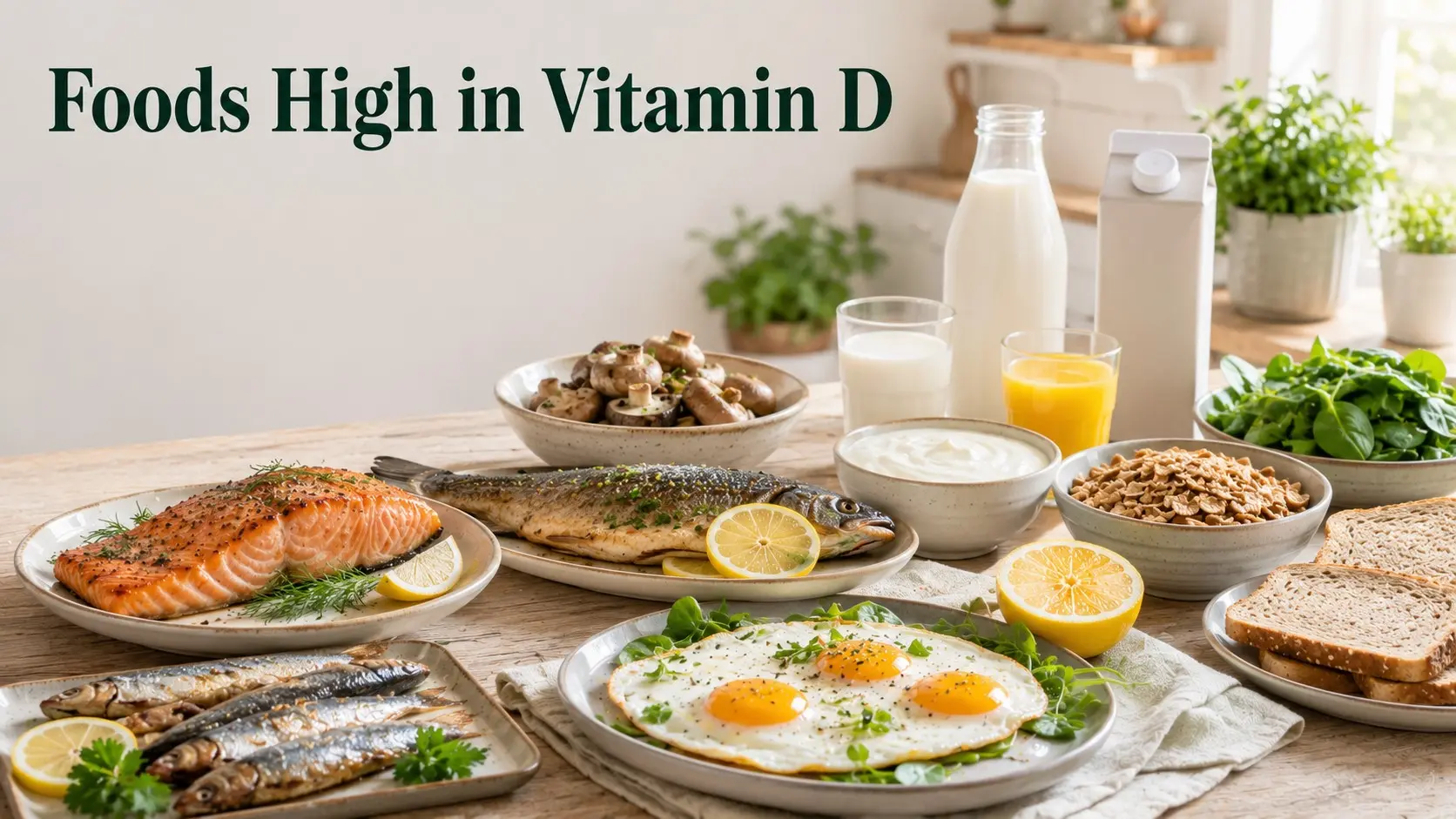
The best Foods High in Vitamin D include rainbow trout, salmon, mackerel, herring, UV-exposed mushrooms, fortified milk, fortified plant drinks, fortified cereal, sardines, eggs, tuna, and some fortified yogurts and juices.
Most adults age 19 to 70 need about 15 micrograms, or 600 IU, each day.
Adults over age 70 need about 20 micrograms, or 800 IU, each day.
Food amounts vary by species, farming, processing, brand, and serving size. Read labels and ask a healthcare professional before using a high dose supplement.
Important Medical Note
I am not a licensed healthcare professional, and this content does not replace professional medical advice.
This article explains published guidance and does not provide a personal clinical assessment.
Always consult qualified medical professionals for diagnosis and treatment of any health condition.
Do not diagnose vitamin D deficiency from tiredness, aches, hair changes, mood changes, or internet symptom lists.
These symptoms can have many causes.
Do not take a high dose vitamin D product unless a qualified professional recommends it.
People with kidney disease, kidney stones, high calcium, sarcoidosis, parathyroid disease, pregnancy, or medicine interactions need personal advice before taking vitamin D supplements.
What Is Vitamin D?
Vitamin D is a fat-soluble vitamin.
Your body uses it in several normal processes.
Vitamin D from food, sunlight, and supplements must be converted into active forms inside the body.
The liver makes the first change.
The kidneys make another important change.
This active form helps control calcium and phosphorus.
Vitamin D2 and Vitamin D3
There are two main forms used in foods and supplements.
- Vitamin D2 and D3 are also called ergocalciferol and cholecalciferol.
- Vitamin D2 is often made from yeast or mushrooms.
- Vitamin D3 is commonly found in animal foods and many supplements.
- Some vegan vitamin D3 products are made from lichen.
Both forms can raise vitamin D levels.
The amount, dose, frequency, and your starting level also matter.
You do not need to choose a supplement form without professional advice.
Why Does Vitamin D Matter?
Vitamin D Supports Calcium Absorption
Vitamin D helps your intestines absorb calcium from food.
This is why vitamin D and calcium are often discussed together.
Enough calcium absorption supports normal bone mineralization.
Learn more about calcium sources in our Calcium Rich Foods Guide.
Vitamin D Supports Bone Health
Severe vitamin D deficiency can cause rickets in children.
It can cause osteomalacia in adults.
Osteomalacia means bones become soft and weak.
Vitamin D also works with calcium as part of a wider bone health plan.
Strong bones also need enough protein, movement, medical care, and other nutrients.
Explore the NextFitLife Bone and Joint Health Hub for related guidance.
Vitamin D Supports Muscles and Nerves
Your muscles need vitamin D for normal function.
Your nerves also use vitamin D-related pathways.
Low levels may occur with muscle weakness or bone pain.
These signs are not specific.
A medical evaluation is needed when symptoms continue.
Vitamin D Supports Normal Immune Function
Vitamin D is involved in normal immune function.
This does not mean that more vitamin D always creates a stronger immune system.
It does not mean that a supplement prevents every infection.
Correcting a true deficiency is different from taking extra vitamin D when your level is already adequate.
Vitamin D is not a Cure
Vitamin D has been studied in relation to cancer, heart disease, diabetes, mood, weight, and many other conditions.
Links found in observational studies do not prove that vitamin D supplements prevent or treat these diseases.
Healthy adults should not take very high doses to prevent chronic disease without a medical reason.
How much vitamin D Do You Need?
Your daily vitamin D intake depends mainly on age.
The values below are the United States Recommended Dietary Allowances.
Guidance may differ slightly by country.
| Life stage | Micrograms each day | IU each day |
|---|---|---|
| Birth to 12 months | 10 micrograms | 400 IU |
| Children age 1 to 13 | 15 micrograms | 600 IU |
| Teens age 14 to 18 | 15 micrograms | 600 IU |
| Adults age 19 to 70 | 15 micrograms | 600 IU |
| Adults over age 70 | 20 micrograms | 800 IU |
| Pregnancy and breastfeeding | 15 micrograms | 600 IU |
One microgram of vitamin D equals 40 IU.
The Food and Drug Administration uses a Daily Value of 20 micrograms, or 800 IU, on labels for adults and children age four and older.
The Daily Value helps you compare packaged foods.
It is not the same as a personal medical prescription.
15 Best Foods High in Vitamin D
The exact amount of vitamin D in food can change.
Fish species, feed, farming, ultraviolet treatment, fortification, brand, and serving size all make a difference.
Use labels and official food databases when you need a precise amount.
1. Rainbow Trout
Cooked farmed rainbow trout is one of the strongest natural vitamin D food sources.
A three-ounce serving can provide about 16.2 micrograms, or 645 IU.
That is about 81 percent of the Food and Drug Administration's Daily Value.
Bake trout with lemon, garlic, pepper, and herbs.
Serve it with vegetables, potatoes, rice, or whole grain bread.
2. Salmon
Salmon is another powerful source.
Three ounces of cooked sockeye salmon can provide about 14.2 micrograms, or 570 IU.
The amount changes by salmon type and farming method.
Choose baked, grilled, poached, or canned salmon.
Check sodium when buying smoked salmon.
3. UV Exposed Mushrooms
Mushrooms can make vitamin D2 after exposure to ultraviolet light.
Half a cup of raw sliced white mushrooms exposed to ultraviolet light can provide about 9.2 micrograms, or 366 IU.
Normal mushrooms that were not treated may contain very little vitamin D.
Look for words such as vitamin D mushrooms, UV-treated, or ultraviolet-exposed on the package.
UV-exposed mushrooms are one of the most useful non-animal options.
4. Mackerel
Mackerel is an oily fish that can provide vitamin D, protein, vitamin B12, selenium, and omega-3 fats.
The vitamin D amount varies by species and preparation.
Choose grilled, baked, or canned mackerel.
Compare sodium in smoked and canned products.
5. Herring
Herring is another oily fish that may provide useful vitamin D.
Fresh, smoked, and pickled herring can have different nutrient and sodium levels.
Read the label when buying a prepared product.
Serve fresh herring with potatoes, vegetables, or whole grain bread.
6. Fortified Cow Milk
In the United States, most cow milk is fortified with vitamin D.
One cup often contains about 2.9 micrograms, or 120 IU.
Check the label because rules and products differ by country.
Milk also provides protein and calcium.
People with a milk allergy need a safe alternative.
7. Fortified Plant Drinks
Fortified soy, almond, and oat drinks may contain about 2.5 to 3.6 micrograms, or 100 to 144 IU, per cup.
Not every plant drink contains vitamin D.
Shake the container when the label tells you to do so.
Added nutrients can settle.
Compare vitamin D, calcium, protein, vitamin B12, iodine, and added sugar.
Fortified soy drinks often provide more protein than many other plant drinks.
8. Fortified Breakfast Cereal
Some breakfast cereals contain added vitamin D.
A cereal fortified with 10 percent of the Daily Value provides about 2 micrograms, or 80 IU, per serving.
The amount differs by product.
Check the serving size.
Choose a cereal that also fits your needs for fibre, added sugar, and sodium.
Serve it with fortified milk, or a fortified plant drink to add more vitamin D.
9. Fortified Yogurt
Some yogurts contain added vitamin D.
Others do not.
Read the label instead of assuming.
Plain yogurt can be served with fruit, oats, nuts, or seeds.
Compare added sugar in flavoured products.
10. Fortified Orange Juice
Some orange juice brands add vitamin D and calcium.
Many brands do not.
Check the front and the Nutrition Facts label.
Juice does not contain the same fibre as whole fruit.
Use a suitable serving, especially if you manage blood sugar.
11. Sardines
Two canned Atlantic sardines in oil can provide about 1.2 micrograms, or 46 IU.
This is less than many old food lists claim.
Sardines can still provide protein, vitamin B12, and omega-3 fats.
Sardines with edible bones also provide calcium.
Compare sodium between brands.
12. Eggs
One large scrambled egg can provide about 1.1 micrograms, or 44 IU.
Vitamin D is in the yolk.
Egg amounts vary with chicken feed and farming.
Eggs are useful, but one egg will not meet your full daily vitamin D needs.
Serve eggs with UV-exposed mushrooms, vegetables, and fortified milk for a stronger meal.
13. Canned Light Tuna
Three ounces of canned light tuna in water can provide about 1 microgram, or 40 IU.
Tuna provides a smaller amount than trout or salmon.
It can still contribute to your weekly total.
Pregnant people and children should follow local advice about fish types and mercury.
14. Beef Liver
Three ounces of braised beef liver can provide about 1 microgram, or 42 IU.
The liver is rich in several nutrients, but it is not one of the strongest vitamin D sources.
It can contain a large amount of vitamin A.
Pregnant people should follow professional guidance about liver and vitamin A.
15. Cheese
Cheese usually provides only a small amount of vitamin D unless the product is fortified.
One and a half ounces of cheddar can provide about 0.4 micrograms, or 17 IU.
Cheese should not be your main vitamin D source.
It can still contribute calcium, protein, and flavour.
Compare sodium and saturated fat when choosing a product.
Vitamin D Content of Common Foods
This table uses selected examples from the National Institutes of Health.
Amounts are estimates.
Check labels and food databases for your exact product.
| Food | Serving | Vitamin D | Daily Value |
|---|---|---|---|
| Rainbow trout, cooked | 3 ounces | 16.2 micrograms or 645 IU | 81 percent |
| Sockeye salmon, cooked | 3 ounces | 14.2 micrograms or 570 IU | 71 percent |
| White mushrooms exposed to ultraviolet light | Half a cup | 9.2 micrograms or 366 IU | 46 percent |
| Fortified cow milk | 1 cup | 2.9 micrograms or 120 IU | 15 percent |
| Fortified plant drink | 1 cup | 2.5 to 3.6 micrograms or 100 to 144 IU | 13 to 18 percent |
| Fortified cereal | 1 serving | About 2 micrograms or 80 IU | 10 percent |
| Canned sardines | 2 sardines | 1.2 micrograms or 46 IU | 6 percent |
| Large scrambled egg | 1 egg | 1.1 micrograms or 44 IU | 6 percent |
| Braised beef liver | 3 ounces | 1 microgram or 42 IU | 5 percent |
| Canned light tuna | 3 ounces | 1 microgram or 40 IU | 5 percent |
| Cheddar cheese | 1.5 ounces | 0.4 micrograms or 17 IU | 2 percent |
Are Fruits High in Vitamin D?
No common whole fruit is a natural source of vitamin D.
Apples, bananas, berries, grapes, oranges, and most other fruits contain no meaningful vitamin D.
Some orange juice is fortified.
Vitamin D was added during production.
Fruit is still useful for fibre, vitamins, minerals, and a balanced diet.
It simply should not be described as a natural vitamin D source.
Are Vegetables High in Vitamin D?
Most vegetables do not provide vitamin D.
Broccoli, carrots, leafy greens, tomatoes, potatoes, and peppers are not vitamin D sources.
Mushrooms are the major exception.
The amount is useful only when the mushrooms naturally contain vitamin D or have been exposed to ultraviolet light.
Check the package.
Foods High in Vitamin D for Vegetarians and Vegans
Vegetarians and vegans have fewer natural food choices.
Fortified products are often important.
Vegetarian Options
- UV-exposed mushrooms
- Fortified milk
- Fortified yogurt
- Egg yolks
- Fortified cereal
- Fortified orange juice
- Fortified plant drinks
Vegan Options
- UV-exposed mushrooms
- Fortified soy drink
- Fortified oat drink
- Fortified almond drink
- Fortified cereal
- Fortified orange juice
- Some fortified tofu or yogurt alternatives
Check whether the added vitamin D is D2 or vegan D3 when this matters to you.
Read our full Vitamin D Foods for Vegetarians Guide for more plant-based vitamin D options.
Do Mushrooms Provide Enough Vitamin D?
Some UV-exposed mushrooms can provide a useful amount.
Normal mushrooms may provide almost none.
Mushroom vitamin D also varies by product and storage.
Do not assume every mushroom is rich in vitamin D.
Simple Meal Ideas with Foods High in Vitamin D
These meals combine vitamin D foods with vegetables, grains, protein, and calcium foods.
Change portions to match your health and hunger.
Breakfast Idea 1: Fortified Cereal Bowl
- Fortified whole grain cereal
- Fortified milk or soy drink
- Berries or sliced fruit
- A small amount of nuts or seeds
Breakfast Idea 2: Eggs and UV Mushrooms
- Two eggs
- UV-exposed mushrooms
- Spinach or peppers
- Whole grain toast
- Fortified milk or plant drink
Find more morning meals in our Healthy Breakfast Ideas Guide.
Lunch Idea 1: Salmon Salad Bowl
- Cooked or canned salmon
- Leafy greens
- Tomatoes and cucumber
- Potatoes, rice, or whole grain bread
- Olive oil and lemon
Lunch Idea 2: Mushroom and Tofu Bowl
- UV-exposed mushrooms
- Calcium set tofu
- Brown rice or quinoa
- Broccoli and peppers
- A simple low-sodium sauce
Dinner Idea 1: Baked Trout
- Baked rainbow trout
- Roasted vegetables
- Potatoes or brown rice
- Plain fortified yogurt sauce
Dinner Idea 2: Mackerel and Vegetable Plate
- Grilled or canned mackerel
- Cabbage salad
- Whole grain bread
- Fresh fruit
Snack Ideas
- Fortified yogurt with fruit
- A boiled egg with whole grain crackers
- Fortified cereal with milk
- A small smoothie made with fortified soy drink
Seven-Day Foods High in Vitamin D Meal Plan
This plan is an example of general wellness.
It is not a treatment for a diagnosed deficiency.
| Day | Breakfast | Main vitamin D meal |
|---|---|---|
| Day 1 | Fortified cereal, fortified milk, and berries | Baked salmon with vegetables and potatoes |
| Day 2 | Eggs with UV-exposed mushrooms and toast | Tuna, rice, and vegetable bowl |
| Day 3 | Fortified yogurt with fruit and oats | Rainbow trout with green beans and potatoes |
| Day 4 | Smoothie with fortified soy drink and fruit | Mushroom and tofu rice bowl |
| Day 5 | Egg and vegetable toast with fortified milk | Mackerel with salad and whole grain bread |
| Day 6 | Fortified cereal and fortified plant drink | Sardine and potato salad with vegetables |
| Day 7 | UV mushroom omelet with toast | Herring or salmon with rice and vegetables |
How to Improve Vitamin D Absorption
Vitamin D is fat-soluble.
Your body absorbs it with dietary fat.
Many natural sources already contain fat.
Salmon, trout, mackerel, sardines, eggs, and milk provide some fat.
You can serve mushrooms or fortified foods with a balanced meal containing olive oil, avocado, nuts, seeds, eggs, fish, dairy, or another suitable fat.
You do not need a very high-fat meal.
Digestive conditions that reduce fat absorption can also reduce vitamin D absorption.
These may include celiac disease, Crohn’s disease, ulcerative colitis, cystic fibrosis, and some liver or pancreatic conditions.
People who have had gastric bypass surgery may also have a greater risk.
Personal medical care is needed in these cases.
How to Find Vitamin D on a Food Label
Check the Amount in Micrograms
Vitamin D must be shown in micrograms on many Nutrition Facts labels.
Some labels also show IU.
Remember that one microgram equals 40 IU.
Check the Percent Daily Value
The Daily Value is 20 micrograms, or 800 IU, for adults and children aged four and older.
- Five percent Daily Value or less is considered low.
- Twenty percent Daily Value or more is considered high.
Check the Serving Size
The vitamin D amount applies to one listed serving.
Your cup, bowl, or bottle may contain more than one serving.
Look for Fortification
Useful words include:
- Fortified with vitamin D
- Vitamin D added
- Vitamin D2
- Vitamin D3
- Cholecalciferol
- Ergocalciferol
Fortified foods can provide a large part of vitamin D intake.
But the amount differs by country and brand.
Compare the Whole Product
Food does not become healthy only because it has vitamin D.
Also compare protein, calcium, fibre, added sugar, sodium, and serving size.
Vitamin D and Sunlight
Your skin can make vitamin D when it receives ultraviolet B light.
The amount made can change with:
- Season
- Time of day
- Cloud cover
- Air pollution
- Latitude
- Skin pigmentation
- Age
- Clothing
- Time spent outdoors
- Sunscreen use
- How much skin is exposed
This is why one fixed sun time cannot work for everyone.
Do not seek sunburn to make vitamin D.
Do not use a tanning bed as a vitamin D treatment.
Tanning beds expose skin to harmful ultraviolet radiation.
Follow local skin safety advice.
People at high risk of skin cancer should discuss vitamin D food and supplement options with a healthcare professional.
Who May Be at Risk of Low Vitamin D?
Some people have a greater chance of having inadequate vitamin D.
These groups may include:
- Breastfed infants
- Older adults
- People with little sun exposure
- People who cover most of their skin outdoors
- People with darker skin pigmentation
- People with conditions that reduce fat absorption
- People with obesity
- People who have had gastric bypass surgery
- People who eat few foods containing vitamin D
- Some vegetarians and vegans
- People taking medicines that affect vitamin D
Possible Signs of Vitamin D Deficiency
Mild deficiency may cause no obvious symptoms.
Potential signs can include:
- Bone pain
- Muscle weakness
- Muscle aches
- Fractures
- Slow growth or bone changes in children
Tiredness, low mood, hair loss, and general aches are often blamed on vitamin D.
These symptoms are common in many health conditions.
They do not prove a deficiency.
Vitamin D Blood Tests
The usual vitamin D blood test measures 25-hydroxyvitamin D.
Routine testing is not recommended for every healthy adult with no symptoms or risk factors.
A clinician may order a test when your health history, symptoms, medicine, bones, or risk factors suggest a need.
Do not order repeated tests or treat a result without professional interpretation.
Do You Need a Vitamin D Supplement?
Some people can meet their needs through food, fortified products, and safe outdoor activity.
Others may need vitamin D supplements.
A supplement may be discussed when you:
- Have a diagnosed deficiency
- Have limited sun exposure
- Have a condition that affects absorption
- Are you an older adult
- Are pregnant
- Are you an infant or child with specific guidance
- Follow a diet with few vitamin D sources
- Take medicine that changes vitamin D metabolism
Healthy Adults and High Doses
Healthy adults under age 75 are unlikely to benefit from taking more than the standard recommended intake solely to prevent disease.
More is not always better.
Upper Limit
For most adults, the tolerable upper intake level is 100 micrograms, or 4,000 IU, each day from food and supplements.
This is an upper safety limit.
It is not a daily target.
A doctor may prescribe more for a limited time to treat a deficiency.
That medical treatment should be monitored.
Vitamin D Toxicity
Too much vitamin D from supplements can raise calcium in the blood.
Potential signs include:
- Nausea
- Vomiting
- Weakness
- Loss of appetite
- Strong thirst
- Frequent urination
- Dehydration
- Confusion
- Kidney stones
- Kidney damage
- Abnormal heart rhythm
Seek medical help if you may have taken too much.
Cod Liver Oil Needs Extra Care
Cod liver oil can contain a large amount of vitamin D.
One tablespoon may contain about 34 micrograms, or 1,360 IU.
It can also contain vitamin A.
Too much preformed vitamin A can be harmful.
This is especially important during pregnancy.
Do not add cod liver oil to smoothies or salad dressing as if it were normal cooking oil.
Treat it as a supplement.
Check the dose and ask a qualified professional.
Medicine Interactions
Vitamin D can interact with some medicines.
Medicines that may matter include:
- Orlistat
- Some statins
- Steroid medicines
- Thiazide diuretics
Tell your doctor and pharmacist about every supplement you use.
Foods Often Mistaken for Strong Vitamin D Sources
Cheese
Most cheese contains only a small amount unless it is fortified.
Beef
Normal beef muscle is not a strong source.
Liver provides only a modest amount.
Chicken
Chicken breast provides almost no vitamin D.
Shrimp and Oysters
Amounts vary by species and database.
They should not replace more reliable sources such as trout, salmon, fortified milk, or UV-exposed mushrooms.
Raw oysters can carry serious bacteria.
Pregnant people, young children, older adults, and people with weak immune systems or liver disease should avoid raw shellfish.
Fruit and Vegetables
Most do not contain vitamin D.
They are still important parts of a healthy eating pattern.
Common Mistakes with Foods High in Vitamin D
Believing Every Mushroom Is Rich in Vitamin D
Only certain mushrooms contain useful amounts.
Look for ultraviolet treatment or vitamin D on the label.
Assuming Every Milk or Yogurt Is Fortified
Fortification differs by country and brand.
Always read the label.
Using Cheese as the Main Source
Cheese usually provides a small amount.
Taking Cod Liver Oil Without Checking Vitamin A
Cod liver oil can provide both vitamins A and D.
Using several supplements can lead to too much.
Following Fixed Sunlight Rules
No single number of minutes is right for every skin type, season, climate, or health history.
Avoid sunburn.
Taking High Doses for Energy or Weight Loss
Vitamin D is not a stimulant.
It does not cause fat loss.
Correcting deficiency may help related symptoms.
Taking extra vitamin D when your level is adequate does not create endless energy.
Diagnosing Deficiency from Symptoms Alone
Bone pain, weakness, tiredness, and low mood can have many causes.
Seek a proper assessment.
Ignoring the Full Diet
Vitamin D works as part of a wider nutrition pattern.
Your body also needs calcium, protein, magnesium, vitamin K, and enough total food.
Read our guides to vitamins for strong bones and joints and vitamin K2 benefits.
Conclusion: Add Foods High in Vitamin D Safely
Foods High in Vitamin D include trout, salmon, mackerel, herring, UV exposed mushrooms, fortified milk, fortified plant drinks, fortified cereal, sardines, eggs, tuna, and selected fortified products.
Start with food labels.
Choose one powerful source several times during the week.
Combine it with calcium-rich foods, vegetables, protein, and a balanced meal.
Do not depend on cheese, fruit, normal mushrooms, or ordinary meat for large amounts.
Do not use unsafe sun exposure or high-dose supplements to raise your level quickly.
Try one simple step today.
Add salmon or trout to dinner.
Choose a fortified milk.
Buy UV-exposed mushrooms.
Or compare the vitamin D amount in two breakfast cereals.
Save this Foods High in Vitamin D guide and share it with someone who wants safer and clearer nutrition advice.
References and Sources
- National Institutes of Health Office of Dietary Supplements: Vitamin D Fact Sheet for Health Professionals
- Endocrine Society: Vitamin D for the Prevention of Disease Clinical Practice Guideline
- National Health Service: Vitamin D Guidance
- U.S. Food and Drug Administration: How to Understand and Use the Nutrition Facts Label
- U.S. Department of Agriculture: FoodData Central
Frequently Asked Questions About Foods High in Vitamin D
What are the best foods high in Vitamin D?
The best Foods High in Vitamin D include rainbow trout, salmon, mackerel, herring, UV-exposed mushrooms, fortified milk, fortified plant drinks, fortified cereal, sardines, eggs, tuna, and some fortified yogurts and juices.
Which food has the most vitamin D?
Among normal foods, cooked rainbow trout and salmon are strong natural sources. Cod liver oil contains more, but it is a supplement and may also contain a large amount of vitamin A.
Which fruit is high in vitamin D?
No common whole fruit is naturally high in vitamin D. Some orange juice contains vitamin D because manufacturers add it. Check the label.
Which vegetables contain vitamin D?
Most vegetables contain no vitamin D. Mushrooms can provide vitamin D2 when they have been exposed to ultraviolet light. Normal mushrooms may contain very little.
Are eggs high in vitamin D?
Egg yolks contain vitamin D, but the amount is modest. One large scrambled egg provides about 44 IU. Eggs can contribute to your total but usually cannot meet the full daily need alone.
Is milk naturally high in vitamin D?
Cow's milk is not naturally a strong vitamin D source. In many countries, manufacturers add vitamin D. Check the label because fortification rules differ.
Can I get enough vitamin D from food?
Some people can meet their needs through fatty fish, fortified foods, mushrooms, eggs, and safe outdoor activity. Other people may need a supplement because of age, limited sun exposure, diet, absorption problems, or a diagnosed deficiency.
How much vitamin D do adults need?
Adults age 19 to 70 generally need 15 micrograms, or 600 IU, each day. Adults over age 70 need 20 micrograms, or 800 IU. Personal medical needs can differ.
How can vegetarians get vitamin D?
Vegetarians can use UV exposed mushrooms, eggs, fortified milk, fortified yogurt, fortified plant drinks, cereal, and fortified orange juice. Vegans can use mushrooms and suitable fortified plant products.
Do Foods High in Vitamin D fix a deficiency?
Food can improve intake, but a diagnosed deficiency may require a treatment dose prescribed by a healthcare professional. Do not try to treat a low blood level with random high dose supplements.
Should I take vitamin D every day?
This depends on your age, country, diet, sun exposure, health, medicines, and medical advice. Healthy adults should not assume that a dose above the recommended intake provides extra protection.
Can too much vitamin D be harmful?
Yes. Too much vitamin D from supplements can cause high calcium, nausea, weakness, thirst, frequent urination, kidney stones, kidney damage, and heart rhythm problems.

Health & wellness writer with 30+ years of experience in nutrition, fitness, and healthy aging. Founder of NextFitLife.com — evidence-based health guidance.