Last updated: September 8, 2026
Next review: September 2027 or sooner if major nutrition or food safety guidance changes
Written and source-checked by: Adel Galal, Founder and Lead Writer at NextFitLife
Review status: Written and checked against current food composition, watermelon carotenoid, fruit, diabetes, ripeness, storage, and food safety guidance. This article has not been medically reviewed by a doctor or registered dietitian.Quick answer: Yellow Watermelon is a natural yellow-flesh form of the same watermelon species as red watermelon. It is mostly water, low in calories, and similar to red watermelon in carbohydrate, sugar, protein, fat, and fibre. The biggest difference is pigment. Red types are rich in lycopene, while yellow varieties contain different carotenoids.Cut open a normal-looking watermelon.
Then find bright yellow flesh inside.
It looks unusual.
It is not fake.
It is not simply an unripe red watermelon.
And yellow flesh does not automatically mean the fruit has more sugar.
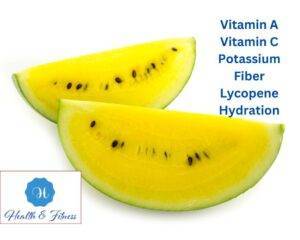
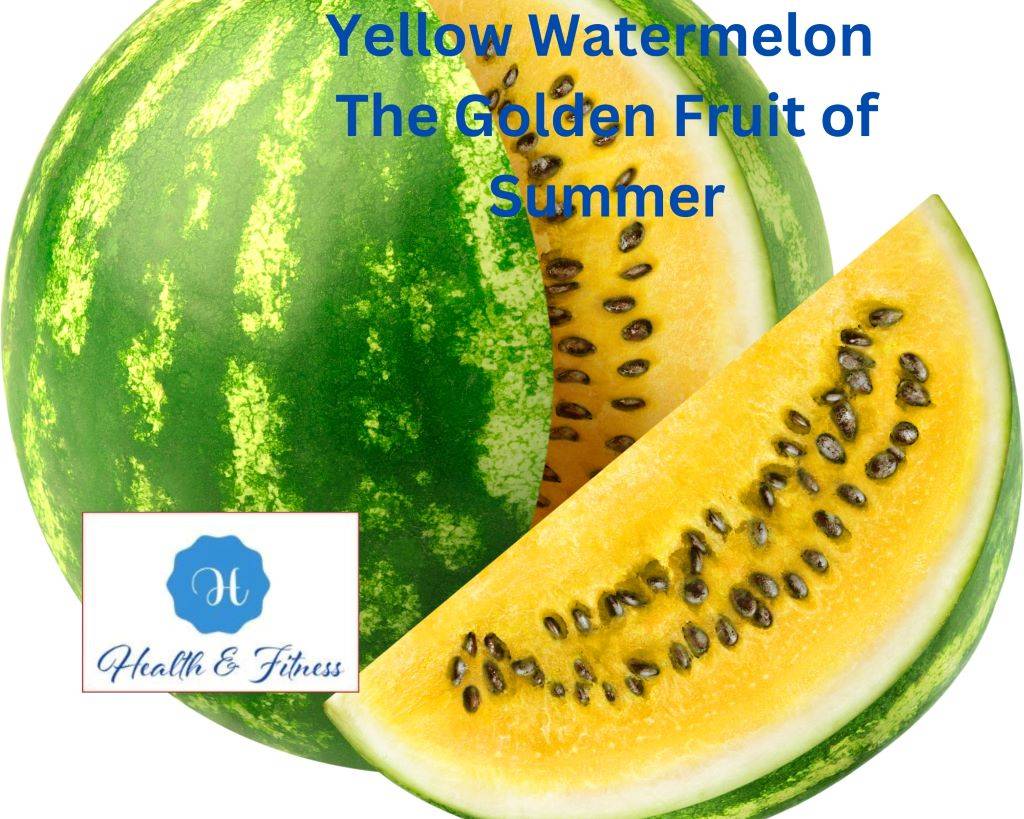
Yellow watermelon is simply one of the natural colour forms found within watermelon.
The useful questions are much simpler.
How does it compare with red watermelon?
Is it sweeter?
Does it have the same calories?
What makes it yellow?
How do you choose a ripe one?
And does the colour change its health value?
This guide answers those questions without turning a colourful fruit into a miracle food.
For more practical fruit and nutrition guides, visit the NextFitLife Foods and Nutrition Hub.
What is Yellow Watermelon?
Yellow-flesh watermelon belongs to the same species as common red watermelon, Citrullus lunatus.
The yellow colour comes from differences in the pigments that build up as the fruit develops.
Watermelon flesh can naturally be:
- Red
- Pink
- Orange
- Yellow
- Pale or white
Yellow varieties are not one single type.
There are several cultivars.
Some have seeds.
Some are seedless.
Some are small personal size melons.
Others grow much larger.
Utah State University lists yellow flesh varieties such as Yellow Baby and Golden Crown.
Penn State Extension also lists Yellow Doll.
Seedless yellow varieties exist too.
7 powerful Yellow Watermelon facts worth knowing
1. Yellow and red watermelon have similar basic nutrition
The colour looks dramatically different.
The basic food is less different than you might expect.
Research reviews comparing red and yellow watermelon report broadly similar:
- Water content
- Calories
- Carbohydrate
- Natural sugars
- Protein
- Fat
- Fibre
That means yellow watermelon nutrition should not be treated as a completely different food from red watermelon.
Standard raw watermelon contains around 30 calories per 100 g.
A diced cup is roughly 46 calories.
Because macronutrient values are broadly similar across flesh colours, those figures are a useful practical estimate for plain raw yellow watermelon.
Exact values can vary by cultivar and growing conditions.
If calories are your main question, read our full Watermelon Calories Guide.
2. Its yellow colour comes from a different carotenoid pattern
This is the real nutritional difference.
Red watermelon gets much of its colour from lycopene.
Yellow watermelon does not simply contain yellow lycopene.
Its pigment chemistry is different.
Research has found different yellow cultivars containing carotenoids such as:
- Beta carotene
- Alpha carotene
- Lutein
- Violaxanthin
- Zeta carotene
The exact mix depends on the cultivar.
This point matters.
It would be inaccurate to say every yellow watermelon is especially rich in one specific carotenoid.
One study of a yellow cultivar found lutein and violaxanthin patterns during ripening.
Older USDA research on other yellow cultivars found zeta carotene as a major pigment.
A recent review also describes beta carotene, alpha carotene, and lutein as important pigments in yellow forms.
In other words:
Yellow watermelon carotenoids vary.
Colour tells you the pigment profile is different.
It does not give you an exact vitamin dose.
3. Yellow watermelon is still mostly water
Watermelon is one of the most water-rich fruits.
USDA nutrition education resources describe watermelon as more than 90 percent water.
That includes yellow types because the basic fruit structure is similar.
This gives yellow watermelon a low calorie density.
You get a large, juicy portion without a large calorie load.
Watermelon hydration is one practical benefit.
Fruit contributes to total fluid intake.
But watermelon does not replace all your water needs.
It also does not replace oral rehydration treatment when someone has severe fluid loss from illness, vomiting, diarrhea, or heat illness.
Think of the water in the fruit as a useful bonus.
4. Yellow watermelon can taste very sweet, but colour does not prove more sugar
This is one of the most repeated claims online.
Yellow watermelon is often described as sweeter or more honey like.
Some cultivars really do taste very sweet.
But taste changes with:
- Variety
- Ripeness
- Growing conditions
- Harvest timing
- Sugar concentration
USDA research comparing yellow and orange watermelon found that total sugar and sugar type differed little across flesh colours in the cultivars studied.
So yellow watermelon taste can be sweeter to you without yellow flesh automatically containing much more sugar.
Sweetness is also affected by aroma and flavour compounds.
This is why two watermelons with similar sugar can taste different.
5. Yellow watermelon can be seeded or seedless
Yellow flesh does not tell you whether seeds will be inside.
Both types exist.
For example:
- Yellow Doll is a seeded yellow type listed by Penn State Extension
- Yellow Baby is a yellow flesh variety listed by Utah State University
- Yellow Buttercup is listed as a seedless yellow flesh type by Utah State University
A seedless yellow watermelon can still contain small soft white seed coats.
That is normal for seedless watermelon.
It does not mean something went wrong.
Seedless commercial watermelon plants are usually triploid cultivars.
The fruit develops with few or no mature black seeds.
6. It can fit weight management and diabetes eating plans
Yellow watermelon does not burn fat.
It also does not need to be banned because it tastes sweet.
Its high water content and low calorie density make it a practical fruit for many eating patterns.
If your goal is weight management, use it as a whole fruit.
It can replace a more calorie-dense sweet snack.
But the replacement matters.
Adding a huge bowl on top of everything else does not create weight loss.
For broader guidance, visit the Weight Loss and Metabolism Hub.
People with diabetes can eat watermelon too.
The American Diabetes Association includes watermelon among fruits that can fit a diabetes meal plan.
Fruit still contains carbohydrate.
So portion size matters if you count carbohydrates or use insulin.
Use whole watermelon more often than sweetened watermelon juice or drinks.
Yellow watermelon and diabetes are mainly a portion and meal planning question.
It is not a forbidden fruit question.
7. Ripeness matters more than colour when you shop
You cannot judge yellow flesh from the outside.
The rind may look much like a normal watermelon.
Use the same ripeness clues you would use with red watermelon.
Look for a melon that:
- Feels heavy for its size
- Feels firm
- Has no major cuts or soft, damaged areas
- Has a creamy yellow ground spot
- Has a duller mature rind rather than a very shiny immature look
That yellow ground spot is important.
It is the area that rested on the soil.
It has nothing to do with the yellow flesh inside.
University of Minnesota Extension notes that watermelon does not continue to ripen after harvest.
So choosing a ripe melon at the shop matters.
This is the key lesson for how to pick a ripe watermelon.
Yellow Watermelon vs red watermelon
| Feature | Yellow watermelon | Red watermelon |
|---|---|---|
| Species | Citrullus lanatus | Citrullus lanatus |
| Flesh colour | Yellow to golden | Pink to deep red |
| Calories | Broadly similar | About 30 kcal per 100 g |
| Water | More than 90 percent | More than 90 percent |
| Carbohydrate | Broadly similar | Broadly similar |
| Sugar | Varies by cultivar and ripeness | Varies by cultivar and ripeness |
| Main colour pigments | Variable carotenoids including yellow and orange pigments | Lycopene is usually dominant |
| Seeds | Seeded and seedless types exist | Seeded and seedless types exist |
| Taste | Often mild, sweet, sometimes described as honey-like | Classic sweet watermelon flavour |
The simplest summary of yellow watermelon vs red watermelon is this:
The basic nutrition is similar.
The pigments are different.
The exact flavour depends more on cultivar and ripeness than on colour alone.
How many calories are in Yellow Watermelon?
There is no single universal calorie number for every yellow cultivar.
But current reviews find no major difference in basic macronutrient composition compared with red watermelon.
That makes standard raw watermelon values useful for everyday estimates.
| Portion | Practical calorie estimate |
|---|---|
| 100 g | About 30 calories |
| Half cup diced | About 23 calories |
| 1 cup diced | About 46 calories |
| 300 g | About 90 calories |
| 500 g | About 150 calories |
These are estimates.
Your actual fruit can vary.
The important point is that yellow watermelon calories remain low for the amount of food you get.
Is Yellow Watermelon healthier than red watermelon?
I would not rank them that way.
They offer different pigment profiles.
Red watermelon is a strong food source of lycopene.
Yellow watermelon can provide other carotenoids.
Both give you:
- Water
- Natural carbohydrate
- Vitamin C
- Small amounts of minerals
- Plant compounds
Eating different colours of fruit can add variety.
But yellow watermelon does not need to beat red watermelon to be worth eating.
Choose the one you enjoy.
Does Yellow Watermelon have beta carotene?
Some yellow varieties contain beta carotene.
Beta carotene is a carotenoid that the body can convert to vitamin A when needed.
But yellow flesh does not guarantee a large amount.
Research has shown real variation between cultivars.
Some yellow watermelon studies have found beta carotene, lutein, violaxanthin, or zeta carotene in different amounts.
This is why I would avoid statements such as:
Yellow watermelon is always high in vitamin A.
The cultivar matters.
Does Yellow Watermelon contain lycopene?
Usually much less than red watermelon.
USDA research found very low lycopene levels in yellow and orange watermelons compared with red flesh varieties.
That makes sense.
Lycopene is the red pigment that gives classic watermelon much of its red colour.
If lycopene is your specific nutrition goal, red watermelon is the stronger choice.
If variety is your goal, yellow is a useful alternative.
Is Yellow Watermelon good for hydration?
Yes, as food.
Watermelon is more than 90 percent water.
A cold bowl can be especially appealing in hot weather.
It also provides carbohydrate.
This makes it useful as a light fruit snack.
Still, do not rely on watermelon alone for fluid needs during hard exercise or extreme heat.
Water and, when appropriate, electrolytes still matter.
Is Yellow Watermelon good for weight loss?
It can fit a weight management plan.
Here is why.
A large amount of fruit gives you relatively few calories.
That can help when it replaces a smaller, calorie-dense snack.
But watermelon is low in protein and fairly low in fibre.
So it may not keep everyone full for long.
For a more filling snack, pair it with:
- Plain yoghurt
- Cottage cheese
- A small portion of nuts
- Seeds
No fruit burns body fat.
No watermelon colour changes that.
You can also read Natural Weight Loss for a broader plan.
Can you eat Yellow Watermelon with diabetes?
Yes.
Whole fruit can fit many diabetes eating plans.
The American Diabetes Association recommends counting fruit carbohydrate as part of the meal plan.
That includes watermelon.
Useful habits include:
- Choose whole fruit
- Watch your portion
- Count carbohydrate when your treatment plan requires it
- Avoid adding sugar
- Be careful with large fruit drinks
If you use insulin or medicine that can cause low blood sugar, follow your personal meal plan.
Do not change medicine because of an online food article.
Does Yellow Watermelon taste like pineapple or honey?
Sometimes people describe it that way.
But this is taste language.
It is not a scientific rule.
A ripe yellow cultivar can taste:
- Very sweet
- Mild
- Honey like
- Floral
- Similar to red watermelon
The cultivar matters.
So does ripeness.
If your yellow watermelon tastes bland, the colour probably is not the problem.
It may simply have been harvested too early.
Popular Yellow Watermelon varieties
| Variety | Type | What to know |
|---|---|---|
| Yellow Baby | Yellow flesh | Listed by Utah State University as a yellow variety |
| Golden Crown | Yellow flesh | Another yellow type listed by Utah State University |
| Yellow Doll | Seeded yellow icebox type | Listed by Penn State Extension |
| Yellow Buttercup | Seedless yellow flesh | Listed by Utah State University |
Availability depends on where you live.
Farmers' markets and specialty produce shops may have more unusual cultivars than large supermarkets.
How do you know Yellow Watermelon is ripe?
Do not wait for the outside to turn yellow.
That is not what happens.
Look for the normal watermelon clues.
Check the field spot
The area that rested on the ground should look creamy yellow rather than bright white.
Feel the weight
A good watermelon should feel heavy for its size.
Check the rind
A mature watermelon often has a less shiny surface.
Check for damage
Avoid deep cuts, large bruises, leaking areas, or soft spots.
If it is still on the vine
The tendril closest to the fruit becomes brown and dry as maturity approaches.
Watermelon does not ripen much after harvest.
Choose well the first time.
Can Yellow Watermelon ripen on the kitchen counter?
No.
Watermelon is a non-climacteric fruit.
That means it does not keep ripening the way a banana or avocado does after harvest.
Leaving an underripe watermelon on the counter will not turn it into a beautifully ripe one.
This is why harvest timing matters so much.
How should you store Yellow Watermelon?
Whole and cut melons need different care.
Whole melon
Keep it in a cool place until you are ready to use it.
For longer storage, follow the guidance that applies to the variety and your local conditions.
Before cutting
Wash or scrub the outside under running water.
Do this even though you will not eat the rind.
A knife can carry germs from the surface into the flesh.
After cutting
Refrigerate cut watermelon promptly.
CDC advises not leaving cut melon at room temperature for more than two hours.
If the temperature is above 90ยฐF, or about 32ยฐC, the limit drops to one hour.
CDC also advises using refrigerated cut melon within seven days.
USDA SNAP Ed gives up to five days as a simple storage guide for cut watermelon.
I would use it sooner when possible for better texture and flavour.
Can you freeze Yellow Watermelon?
Yes.
The texture changes after freezing.
It becomes softer when thawed.
That makes frozen cubes better for:
- Smoothies
- Sorbet
- Frozen fruit bowls
- Cold drinks
Freeze cubes in a single layer first.
Then transfer them to a sealed freezer container.
Can you juice Yellow Watermelon?
Yes.
But whole fruit is usually the better everyday choice.
A blender makes it easy to drink several cups quickly.
If you make juice:
- Do not add sugar automatically
- Keep the pulp when possible
- Watch how much fruit goes into one glass
- Refrigerate it promptly
Whole fruit also makes portion size easier to see.
What can you make with Yellow Watermelon?
It works anywhere you would use red watermelon.
Simple chilled slices
Cold slices need nothing else.
Fruit salad
Mix yellow watermelon with berries, kiwi, grapes, or citrus fruit.
For more fruit ideas, see our Vitamin C Foods Guide.
Watermelon and yoghurt
Add plain Greek yogurt for protein.
Yellow watermelon salad
Try watermelon with cucumber, mint, herbs, and a small amount of cheese if that fits your diet.
Frozen cubes
Freeze them for a simple summer snack.
Breakfast bowl
Add a small amount to yogurt, oats, berries, and seeds.
For more ideas, visit Healthy Breakfast Foods.
Can children eat Yellow Watermelon?
Yes, when prepared in a form that is safe for the child's age and development.
Remove hard mature seeds when needed.
Cut the fruit into suitable pieces.
Young children need age-appropriate food shapes to reduce choking risk.
If a child has feeding problems, food allergy concerns, or a medical diet, ask a qualified pediatric professional.
Can you eat Yellow Watermelon during pregnancy?
Yellow watermelon is a normal fruit and can fit a healthy pregnancy diet for most people.
Food safety matters more during pregnancy.
Wash the whole melon before cutting.
Use a clean knife and board.
Refrigerate cut melon quickly.
Pregnant people are at higher risk from some foodborne infections, including Listeria.
Do not eat cut melon that has been left warm for too long.
Is Yellow Watermelon genetically modified?
Yellow flesh alone does not mean genetic modification.
Yellow watermelon is a normal cultivated watermelon colour type.
Plant breeders have selected different flesh colours for many years.
Yellow, orange, pink, red, and pale flesh cultivars all occur within watermelon breeding material.
Seedless does not mean genetically modified either.
Seedless watermelon is normally produced using chromosome breeding methods that create triploid plants.
Common Yellow Watermelon myths
Yellow watermelon has no sugar
False.
It contains natural fruit sugar.
Yellow watermelon is always sweeter than red
Not necessarily.
Variety and ripeness matter more.
Yellow watermelon is unripe red watermelon
False.
The flesh colour is a cultivar trait.
Yellow watermelon has no antioxidants
False.
It contains carotenoids, but the pigment profile differs from red types.
Yellow watermelon burns fat
No.
No watermelon colour burns body fat.
Seedless yellow watermelon is genetically modified
No.
Seedless watermelon is normally produced through plant breeding, not genetic modification.
Who should think more carefully about portions?
Most people can enjoy watermelon as a normal fruit.
Personal advice may be useful if you:
- Have diabetes and use insulin
- Have kidney disease
- Have a prescribed potassium or fluid limit
- Follow a medically prescribed diet
- Have a digestive condition affected by large fruit portions
- Have an eating disorder or history of disordered eating
A general fruit article cannot replace an individual nutrition plan.
How NextFitLife checks fruit nutrition claims
Colourful fruit attracts colourful claims.
I try to separate the two.
For this article, I checked:
- USDA food composition resources
- USDA Agricultural Research Service watermelon research
- Peer-reviewed carotenoid studies
- University extension harvest guidance
- American Diabetes Association fruit guidance
- CDC food safety advice
The main conclusion is simple.
Yellow watermelon is interesting because its pigment profile differs from red watermelon.
Its basic food value is much more familiar.
It is still watermelon.
Conclusion
Yellow Watermelon is worth trying because it gives you the same refreshing watermelon experience with a different colour and carotenoid profile.
It is mostly water.
It is low in calories.
It can be seeded or seedless.
It can taste very sweet.
And it fits many normal eating plans.
Do not buy it because you expect a miracle benefit.
Buy it because fruit variety is useful and because a ripe yellow watermelon can be genuinely delicious.
Your next step: if you see one at the market, check that it feels heavy, has a creamy ground spot, and has no major soft areas. Chill it, cut it safely, and compare the taste with your usual red watermelon.
References and Sources
These sources are public and clickable so readers can review the original nutrition, pigment, ripeness, and fruit guidance.
- United States Department of Agriculture FoodData Central
Food Composition Database
https://fdc.nal.usda.gov/
Used for standard watermelon food composition and calorie context. - United States Department of Agriculture Agricultural Research Service
Identification of Carotenoids in Orange and Yellow Fleshed Watermelon
https://www.ars.usda.gov/research/publications/publication/?seqNo115=142296
Used for research on carotenoids that occur in yellow and orange watermelon cultivars. - National Library of Medicine PubMed Central
Watermelon Nutritional Composition With a Focus on Citrulline and Cardiovascular Health
https://pmc.ncbi.nlm.nih.gov/articles/PMC12566930/
Used for the comparison of red and yellow watermelon nutrition and current discussion of carotenoid differences. - University of Minnesota Extension
Harvesting and Storing Melons
https://extension.umn.edu/agriculture/specialty-crops/commercial-fruit-production/harvesting-and-storing-melons-squash-and-pumpkins
Used for watermelon ripeness, field spot, tendril, storage, and the fact that watermelon does not continue to ripen after harvest. - American Diabetes Association
Best Fruit Choices for Diabetes
https://diabetes.org/food-nutrition/reading-food-labels/fruit
Used for whole fruit, carbohydrate counting, melon portions, and fruit within a diabetes eating plan.
Explore More on NextFitLife
Foods and Nutrition Hub
Watermelon Calories
Nutrition and Vitamins Hub
Vitamin C Foods
Healthy Breakfast Foods
Weight Loss and Metabolism Hub
Natural Weight Loss
Foods That Can Reduce Bloating
About the Author
Adel Galal
Founder and Lead Writer at NextFitLife
Adel Galal is the founder and lead writer of NextFitLife.
He has maintained a personal interest in health, fitness, nutrition, sleep, wellness, and healthy aging for more than 30 years.
His health and wellness writing and research communication experience spans more than 15 years.
At NextFitLife, Adel researches health and nutrition topics, compares reputable sources, explains uncertainty, checks strong claims, and turns complex information into clear everyday guidance.
His approach to food writing is simple.
A colourful food can be interesting without being a miracle food.
A healthy fruit does not need exaggerated disease claims to be worth eating.
Adel is not a physician, registered dietitian, pharmacist, dermatologist, or other licensed healthcare professional.
I am not a dermatologist or A doctor, and this content does not replace professional medical advice. What I share comes from real-life experience, extensive research, and consultation with healthcare providers. Always consult qualified medical professionals for diagnosis and treatment of any health condition.
Learn more about Adel Galal and NextFitLife
Frequently Asked Questions
What is Yellow Watermelon?
Yellow watermelon is a natural yellow flesh form of Citrullus lanatus. It belongs to the same species as common red watermelon but contains a different mix of carotenoid pigments.
Why is Yellow Watermelon yellow?
The colour comes from its carotenoid profile. Red watermelon is usually dominated by lycopene, while yellow cultivars contain different carotenoids such as beta carotene, lutein, violaxanthin, zeta carotene, and related pigments in varying amounts.
Is Yellow Watermelon healthier than red watermelon?
Neither colour needs to be ranked as universally healthier. Their calories, water, sugars, carbohydrates, protein, fat, and fibre are broadly similar. Their main nutritional difference is the carotenoid profile.
How many calories are in Yellow Watermelon?
Yellow and red watermelon have similar basic macronutrient profiles. A practical estimate is about 30 calories per 100 g and around 46 calories per diced cup, although exact varieties can differ.
Is Yellow Watermelon sweeter than red watermelon?
Some yellow varieties taste very sweet and may have honey like notes. Colour alone does not prove a higher sugar level. Cultivar, growing conditions, and ripeness affect sweetness.
Does Yellow Watermelon contain lycopene?
Yellow watermelon usually contains far less lycopene than red watermelon. Red flesh varieties accumulate large amounts of lycopene, which is responsible for much of their red colour.
Does Yellow Watermelon have beta carotene?
Some yellow cultivars contain beta carotene. The carotenoid profile varies widely, so yellow colour alone does not guarantee a specific beta carotene amount.
Is Yellow Watermelon seedless?
It can be. Both seeded and seedless yellow watermelon varieties exist. Yellow Buttercup is one example of a seedless yellow flesh type.
Can people with diabetes eat Yellow Watermelon?
Yes. Whole watermelon can fit a diabetes eating plan. It contains carbohydrates, so serving size and carbohydrate counting still matter when required by your treatment plan.
Is Yellow Watermelon good for weight loss?
It can fit a weight management plan because it is mostly water and low in calories. It does not burn fat, and weight change depends on the full eating pattern and energy intake.
How do I know if Yellow Watermelon is ripe?
Choose one that feels heavy for its size, has a creamy yellow field spot, has a firm rind, and has no major cuts or soft areas. Watermelon does not continue to ripen much after harvest.
How long does cut Yellow Watermelon last?
Refrigerate cut watermelon promptly. USDA nutrition education guidance suggests using cut watermelon within about five days, while CDC food safety guidance advises keeping refrigerated cut melon for no more than seven days.

Health & wellness writer with 30+ years of experience in nutrition, fitness, and healthy aging. Founder of NextFitLife.com โ evidence-based health guidance.