Next review: September 2027 or sooner if major vegetarian nutrition, protein, vitamin B12, iron, or dietary guidance changes
Written and source checked by: Adel Galal, Founder and Lead Writer at NextFitLife
Review status: Checked against the 2025 Academy of Nutrition and Dietetics position on vegetarian diets, NIH nutrient guidance, current Dietary Reference Intakes, and the Dietary Guidelines for Americans 2025 to 2030. This article has not been medically reviewed by a physician or registered dietitian.Quick answer: The best High Protein Vegetarian Meals combine more than one useful protein food. Think lentils with quinoa, tofu with edamame, eggs with beans, Greek yogurt with oats, tempeh with grains, or cottage cheese with potatoes. A varied vegetarian diet can meet adult protein needs, but vitamin B12, iron, calcium, zinc, iodine, and omega 3 intake still deserve attention.
You do not need chicken to build a high protein meal.
You also do not need to live on protein powder.
A vegetarian plate can contain plenty of protein.
The trick is simple.
Do not make one small spoonful of beans carry the whole meal.
Stack protein sources.
Lentils plus quinoa.
Tofu plus edamame.
Eggs plus beans.
Greek yogurt plus oats and seeds.
Cottage cheese plus a baked potato and vegetables.
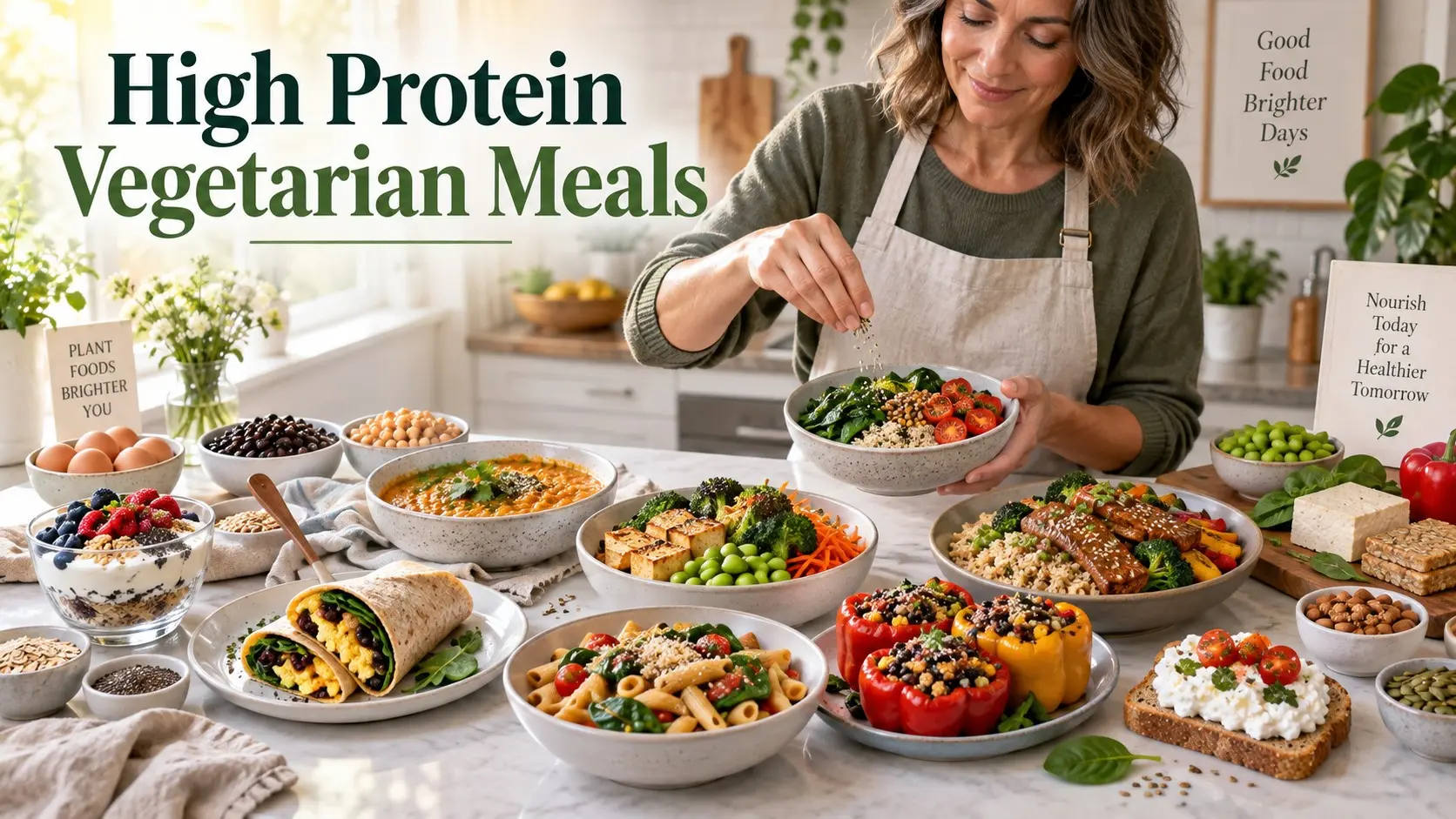
That is how I would build high protein vegetarian meals in normal life.
No complicated food combining chart.
No fake promise that every vegetarian needs the same number of protein grams.
Just real food with a clear protein anchor.
For the bigger nutrition picture, visit the NextFitLife Foods and Nutrition Hub.
Can a vegetarian diet really provide enough protein?
Yes.
The Academy of Nutrition and Dietetics updated its position on vegetarian and vegan diets in 2025.
Its conclusion is clear.
Well planned vegetarian and vegan eating patterns can be nutritionally adequate for adults.
Protein does require some thought.
But not fear.
The standard adult protein Recommended Dietary Allowance is based on about 0.8 grams per kilogram of body weight per day.
That is a basic reference for healthy adults.
It is not a perfect target for every person.
Needs can differ with:
- Age
- Body size
- Training
- Pregnancy
- Illness
- Recovery
- Total food intake
- Kidney function
Older adults, athletes, and people with certain health goals can have different needs.
If you need a personal target, a registered dietitian can calculate one around your health and activity.
Do plant proteins need to be combined at every meal?
No.
This old rule has made vegetarian eating sound harder than it is.
Plant foods contain different amounts of essential amino acids.
But the Academy's 2025 position explains that a varied vegetarian diet can provide all the essential amino acids across the day when total food and protein intake are adequate.
You do not have to eat beans and rice in the same bite to make the protein “count.”
That said, combining protein foods still makes sense.
Not because your body demands a perfect pairing chart.
Because two protein foods usually make a more substantial meal.
That is why most recipes below contain more than one vegetarian protein source.
What counts as vegetarian in this guide?
I am using a typical lacto ovo vegetarian pattern.
That means no:
- Meat
- Poultry
- Fish
But eggs and dairy can be included.
If you avoid eggs or dairy, I give plant based swaps throughout the guide.
A vegan diet excludes all animal foods.
That changes some nutrient planning, especially vitamin B12.
The easiest formula for a high protein vegetarian meal
Start with one strong protein anchor.
Then add another source if it fits.
| Meal part | Examples |
|---|---|
| Main protein | Tofu, tempeh, lentils, beans, eggs, Greek yogurt, cottage cheese |
| Second protein source | Edamame, peas, quinoa, dairy, eggs, beans, seeds |
| Vegetables or fruit | Spinach, broccoli, peppers, tomatoes, berries, oranges |
| Useful carbohydrate | Oats, potatoes, brown rice, quinoa, whole grain bread |
| Healthy fat | Olive oil, nuts, seeds, avocado |
This gives you protein plus fiber, minerals, vitamins, and enough food to feel like you actually ate dinner.
15 High Protein Vegetarian Meals worth repeating
1. Greek yogurt oats and berry breakfast bowl
This is the easiest high protein vegetarian breakfast on the list.
Use:
- Plain Greek yogurt
- Rolled oats
- Berries
- Chia seeds
- Walnuts or almonds
Greek yogurt does most of the protein work.
Oats, chia, and nuts add more.
The fruit adds flavor without turning breakfast into dessert.
If you want it sweeter, add whole fruit before reaching for lots of syrup.
Vegan swap: Use a high protein fortified soy yogurt and check the label for protein and vitamin B12.
For more morning options, see Healthy Breakfast Foods.
2. Cottage cheese avocado toast with tomatoes
Cottage cheese is one of the simplest vegetarian protein anchors.
Use:
- Cottage cheese
- Whole grain toast
- Sliced tomatoes
- Avocado
- Black pepper
- Fresh herbs
Spread cottage cheese over the toast.
Add tomato and avocado.
That is breakfast or lunch in minutes.
If you need a larger meal, add fruit or a side of vegetables.
Plant based swap: Use seasoned mashed tofu or a protein rich soy spread.
3. Egg black bean and spinach breakfast wrap
Eggs alone are fine.
Eggs plus beans are better for a bigger meal.
Use:
- Eggs
- Black beans
- Spinach
- Tomatoes
- Whole grain tortilla
- Salsa
Scramble the eggs.
Warm the beans.
Add spinach until it softens.
Wrap everything with tomato or salsa.
You get protein from the eggs, beans, and tortilla.
You also get fiber from the beans and vegetables.
Vegan swap: Replace the eggs with tofu scramble.
4. Tofu scramble with edamame and potatoes
Tofu scramble becomes much stronger when you stop serving tofu by itself.
Add edamame.
Use:
- Firm tofu
- Edamame
- Spinach
- Peppers
- Mushrooms
- Roasted or boiled potatoes
Crumble the tofu.
Cook it with vegetables and seasoning.
Add the edamame near the end.
Serve with potatoes.
This works for breakfast.
It also works for dinner.
Soy foods are among the most useful plant based protein options because tofu, tempeh, soybeans, and edamame are easy to build into real meals.
5. Lentil quinoa power bowl
This is the meal I would recommend to someone who thinks vegetarian lunches are just salads.
Use:
- Cooked lentils
- Quinoa
- Roasted peppers
- Cucumber
- Tomatoes
- Spinach
- Lemon
- Olive oil
Lentils are the main protein.
Quinoa contributes more.
Add vegetables until the bowl looks like a meal rather than a pile of beige grains.
If you eat dairy, feta can fit.
If you do not, leave it out.
This is one of the easiest meals for vegetarian meal prep.
6. Tempeh broccoli and brown rice bowl
Tempeh has a firmer texture than tofu.
It works well when you want something you can slice and brown in a pan.
Use:
- Tempeh
- Broccoli
- Brown rice
- Carrots
- Sesame seeds
- Ginger
- Garlic
Cook the tempeh until the edges brown.
Add broccoli and carrots.
Serve over rice.
Use a lower sodium sauce if your usual sauce adds a lot of salt.
Tempeh plus grains plus vegetables makes a much more complete dinner than a tiny meat substitute sitting beside lettuce.
7. Chickpea pasta with ricotta spinach and tomato
Regular pasta can contain protein.
Chickpea or lentil pasta usually gives the meal a stronger legume base.
Use:
- Chickpea pasta
- Ricotta
- Spinach
- Tomatoes
- Garlic
- Basil
Cook the pasta.
Stir in spinach and tomatoes.
Add ricotta at the end.
Simple.
For a vegan meal, leave out the ricotta or replace it with seasoned tofu.
Check packaged pasta labels because protein content varies by brand.
8. Black bean quinoa chili with Greek yogurt
Chili is one of the easiest ways to make vegetarian food feel substantial.
Use:
- Black beans
- Kidney beans
- Quinoa
- Tomatoes
- Peppers
- Onion
- Chili spices
- Plain Greek yogurt
The beans carry most of the meal.
Quinoa adds more protein and carbohydrate.
Greek yogurt replaces sour cream and adds another protein source.
Vegan swap: Use unsweetened fortified soy yogurt or skip the topping.
Make a large pot.
Freeze portions.
This is protein meal prep that actually saves time.
9. Red lentil dal with spinach and yogurt
Red lentils cook quickly.
That alone makes them worth keeping in the cupboard.
Use:
- Red lentils
- Spinach
- Tomatoes
- Onion
- Garlic
- Ginger
- Spices
- Plain yogurt
- Brown rice if desired
Cook the lentils until soft.
Add the vegetables and spices.
Serve with yogurt.
Add rice if your appetite and energy needs call for it.
Vegan swap: Use fortified soy yogurt.
10. Tofu peanut noodle bowl with edamame
This one does not taste like a “diet meal.”
Good.
Use:
- Firm tofu
- Edamame
- Soba or whole grain noodles
- Cabbage
- Carrots
- Cucumber
- Peanut sauce
Brown the tofu.
Cook the noodles.
Add vegetables and edamame.
Use enough peanut sauce for flavor without turning the bowl into a swimming pool.
Tofu plus edamame gives this meal two strong soy protein sources.
11. Egg fried brown rice with edamame
Leftover rice becomes lunch very quickly.
Use:
- Eggs
- Edamame
- Brown rice
- Peas
- Carrots
- Spring onion
Cook the egg first.
Add the rice and vegetables.
Mix in edamame.
Keep the sauce amount reasonable if sodium is a concern.
Vegan swap: Use crumbled tofu instead of egg.
12. Paneer chickpea and spinach curry
This meal stacks dairy protein with legumes.
Use:
- Paneer
- Chickpeas
- Spinach
- Tomatoes
- Onion
- Garlic
- Spices
Paneer can be higher in saturated fat than tofu or legumes.
That does not mean you need to ban it.
Use a sensible amount.
Let chickpeas and spinach take up plenty of space too.
Vegan swap: Replace paneer with firm tofu.
13. Cottage cheese baked potato with broccoli
This is almost too simple to call a recipe.
That is why I like it.
Use:
- Baked potato
- Cottage cheese
- Broccoli
- Spring onions
- Black pepper
Split the potato.
Add cottage cheese.
Add steamed broccoli.
Season it.
Done.
Potatoes provide useful carbohydrate and potassium.
Cottage cheese supplies the main protein.
If you need more protein, add beans too.
14. Mediterranean lentil feta bowl
This works cold.
That makes it an easy high protein vegetarian lunch.
Use:
- Lentils
- Feta
- Cucumber
- Tomatoes
- Peppers
- Parsley
- Whole grain pita or quinoa
- Lemon
Lentils are the main protein source.
Feta adds more.
If you want less sodium, use a smaller amount of feta and let herbs and lemon carry more flavor.
Vegan swap: Add edamame, tofu, or more lentils instead of cheese.
15. Bean quinoa and cheese stuffed peppers
This makes a useful high protein vegetarian dinner because the protein sits inside the meal rather than beside it.
Use:
- Bell peppers
- Black beans or kidney beans
- Quinoa
- Tomatoes
- Corn if desired
- Cheese
- Herbs and spices
Mix the cooked beans and quinoa.
Add tomato and seasoning.
Fill the peppers.
Add a modest amount of cheese.
Bake until the peppers soften.
Vegan swap: Leave out the cheese and add tofu, edamame, or extra beans.
15 meals at a glance
| Meal | Main protein sources | Best use |
|---|---|---|
| Greek yogurt oat bowl | Greek yogurt, oats, chia, nuts | Breakfast |
| Cottage cheese avocado toast | Cottage cheese, whole grains | Breakfast or lunch |
| Egg black bean wrap | Eggs, black beans | Breakfast |
| Tofu scramble | Tofu, edamame | Breakfast or dinner |
| Lentil quinoa bowl | Lentils, quinoa | Lunch |
| Tempeh broccoli bowl | Tempeh, brown rice | Lunch or dinner |
| Chickpea pasta | Chickpea pasta, ricotta | Dinner |
| Black bean chili | Beans, quinoa, Greek yogurt | Lunch or dinner |
| Red lentil dal | Lentils, yogurt | Dinner |
| Tofu noodle bowl | Tofu, edamame, noodles | Lunch or dinner |
| Egg fried rice | Eggs, edamame | Lunch |
| Paneer chickpea curry | Paneer, chickpeas | Dinner |
| Cottage cheese potato | Cottage cheese, optional beans | Lunch or dinner |
| Mediterranean lentil bowl | Lentils, feta | Lunch |
| Stuffed peppers | Beans, quinoa, cheese | Dinner |
Why I did not put one protein number beside every meal
Because it would create fake precision.
The protein in one bowl depends on:
- How much tofu you use
- The yogurt brand
- The cottage cheese serving
- The number of eggs
- The amount of beans
- The type of pasta
- The amount of quinoa
- Whether you use the vegan swap
Two bowls with the same recipe name can have very different protein totals.
If a precise amount matters for sport, medical care, or another goal, weigh your ingredients and use the food label or USDA FoodData Central.
For normal meal planning, start by making the protein source obvious.
What are the best vegetarian protein foods?
The most useful choices are the ones you can turn into meals.
Soy foods
- Tofu
- Tempeh
- Edamame
- Soybeans
- Fortified soy milk
- High protein soy yogurt
Legumes
- Lentils
- Chickpeas
- Black beans
- Kidney beans
- White beans
- Peas
Eggs and dairy for lacto ovo vegetarians
- Eggs
- Greek yogurt
- Cottage cheese
- Milk
- Cheese
Grains and seeds that add more
- Quinoa
- Oats
- Whole grains
- Chia seeds
- Hemp seeds
- Pumpkin seeds
For a broader list that includes both vegetarian and nonvegetarian sources, see High Protein Foods for Weight Loss.
Are tofu and soy safe to eat regularly?
Soy foods can be useful protein sources in a healthy vegetarian eating pattern.
You do not need to avoid tofu because of internet claims that all soy destroys hormones.
Choose normal food portions.
Use tofu, tempeh, edamame, or soy milk as part of a varied diet.
If you have a medical condition or take medicine that creates a specific food interaction, follow your healthcare professional's advice.
Do vegetarian athletes need more protein?
Vegetarian athletes need enough total energy and protein for their training.
That is the first issue.
The 2025 Academy position notes that plant proteins can support muscle protein synthesis and training outcomes when total protein intake is adequate.
Active people may need more protein than the basic adult RDA.
The exact amount depends on:
- Training type
- Body size
- Training volume
- Energy intake
- Age
- Goal
- Health
If you train hard, spread useful protein foods across the day rather than trying to repair the entire diet with one enormous dinner.
Can you build muscle on vegetarian food?
Yes.
Muscle does not require meat.
It requires:
- Resistance training
- Enough energy
- Enough protein
- Recovery
- Consistency
Plant proteins can support muscle growth when the overall diet is adequate.
Eggs and dairy can make protein planning easier for lacto ovo vegetarians.
Vegans can use soy, legumes, grains, seeds, nuts, and fortified foods.
Protein is not the only nutrient vegetarians should plan
This section matters more than another recipe.
A high protein vegetarian diet can still be poorly planned.
Vitamin B12
Vitamin B12 for vegetarians deserves special attention.
NIH states that vitamin B12 occurs naturally in animal foods.
Vegetarians can get B12 from foods such as:
- Milk
- Yogurt
- Cheese
- Eggs
Vegans need reliable fortified foods or appropriate supplements because unfortified plant foods are not reliable natural B12 sources.
Fortified options can include:
- Some breakfast cereals
- Some plant milks
- Fortified nutritional yeast
Check the label.
Fortification varies.
For a detailed guide, visit B12 Rich Foods.
Iron
Iron rich vegetarian foods include:
- Lentils
- Beans
- Spinach
- Peas
- Nuts
- Seeds
- Fortified cereals
NIH explains that vegetarian diets contain nonheme iron.
The body absorbs it less efficiently than heme iron from animal foods.
NIH therefore states that vegetarians who eat no meat, poultry, or seafood need almost twice as much dietary iron as the standard table amounts.
Pair plant iron foods with vitamin C rich foods.
Examples include:
- Peppers
- Tomatoes
- Citrus fruit
- Strawberries
- Broccoli
Vitamin C helps the body absorb plant iron.
Our Vitamin C Foods Guide gives you easy pairings.
Calcium
Dairy makes calcium easier for many vegetarians.
Vegans can use:
- Calcium fortified plant milk
- Calcium set tofu when listed on the label
- Some leafy greens
- Fortified foods
Read labels.
Plant milk products are not nutritionally identical.
Zinc
Vegetarian zinc sources include:
- Beans
- Lentils
- Nuts
- Seeds
- Whole grains
- Dairy foods
A varied diet matters more than chasing one zinc food.
Iodine
Iodine can become easy to forget when dairy, eggs, seafood, and iodized salt are limited.
Do not assume specialty sea salt contains useful iodine.
If your diet excludes common iodine sources, discuss your intake with a qualified professional.
Omega 3 fats
Vegetarian sources of the omega 3 fat ALA include:
- Ground flaxseed
- Chia seeds
- Walnuts
- Canola oil
Add them because they are useful foods.
Not because one spoonful turns a poor diet into a healthy one.
Is a vegetarian diet automatically healthier?
No.
Removing meat does not automatically improve the rest of your plate.
A vegetarian diet can still contain lots of:
- Sugary drinks
- Refined snacks
- Desserts
- Highly processed foods
- Large portions
The 2025 to 2030 Dietary Guidelines emphasize whole, nutrient dense foods.
That fits vegetarian eating very well.
Build around:
- Beans
- Lentils
- Soy foods
- Vegetables
- Fruit
- Whole grains
- Nuts
- Seeds
- Eggs and dairy when included
A vegetarian label is not a nutrition guarantee.
How can you make vegetarian meals more filling?
Do not rely on vegetables alone.
Vegetables are excellent.
But a plate of lettuce, cucumber, and tomatoes is not a high protein meal.
Add:
Protein + fiber + useful carbohydrate + some fat.
For example:
Lentils.
Quinoa.
Vegetables.
Olive oil.
Or:
Tofu.
Edamame.
Rice.
Broccoli.
Or:
Greek yogurt.
Oats.
Berries.
Seeds.
That is much harder to mistake for rabbit food.
Are vegetarian protein powders necessary?
No.
Protein powders are convenience foods.
They can help some people.
They are not required.
Food sources include:
- Tofu
- Tempeh
- Beans
- Lentils
- Edamame
- Eggs
- Greek yogurt
- Cottage cheese
If you struggle to meet a real protein need because of appetite, training, travel, or another reason, a suitable protein powder can be convenient.
It should not replace most of your meals.
What is the best high protein vegetarian breakfast?
My easiest choices are:
- Greek yogurt with oats, berries, and seeds
- Eggs with black beans and vegetables
- Tofu scramble with edamame
- Cottage cheese toast with vegetables
Make the protein obvious.
Then add fruit, vegetables, or whole grains.
What is the easiest high protein vegetarian lunch?
Lunch is where lentils and beans shine.
Try:
- Lentil quinoa bowls
- Black bean chili
- Mediterranean lentil salad
- Tempeh rice bowls
- Cottage cheese baked potatoes
These also work well as leftovers.
What is the best high protein vegetarian dinner?
Use a warm meal with a clear protein anchor.
Examples:
- Red lentil dal
- Tofu edamame noodle bowls
- Tempeh and broccoli rice bowls
- Paneer chickpea curry
- Bean and quinoa stuffed peppers
Do not make dinner complicated because it is vegetarian.
A simple 3 day vegetarian protein plan
Day 1
Breakfast: Greek yogurt with oats, berries, and chia.
Lunch: Lentil quinoa bowl.
Dinner: Tofu edamame noodle bowl.
Day 2
Breakfast: Egg and black bean wrap.
Lunch: Mediterranean lentil feta bowl.
Dinner: Tempeh broccoli brown rice bowl.
Day 3
Breakfast: Tofu scramble with edamame and potatoes.
Lunch: Cottage cheese baked potato with broccoli.
Dinner: Red lentil dal with spinach.
Swap meals around.
No day has to be perfect.
A quick vegetarian protein shopping list
Keep in the fridge
- Tofu
- Tempeh
- Edamame
- Eggs
- Greek yogurt
- Cottage cheese
- Milk or fortified soy milk
- Vegetables
Keep in the cupboard
- Lentils
- Beans
- Chickpeas
- Oats
- Quinoa
- Brown rice
- Chickpea or lentil pasta
- Nuts
- Seeds
Keep in the freezer
- Edamame
- Spinach
- Mixed vegetables
- Portioned cooked beans
- Leftover chili
- Leftover lentil curry
If the protein food is already in your kitchen, dinner becomes easier.
How to meal prep these recipes without spending all day cooking
Do not cook fifteen recipes on Sunday.
Prepare parts.
Cook one pot of lentils
Use them for bowls, curry, salad, and soup.
Cook one grain
Make brown rice or quinoa.
Prepare one soy protein
Bake tofu or tempeh.
Wash and cut vegetables
Keep them ready.
Keep fast protein in the fridge
Examples:
- Greek yogurt
- Cottage cheese
- Eggs
- Edamame
Now you are assembling meals.
Not starting from zero every night.
Can these meals help with weight loss?
They can fit a weight management plan.
Protein and fiber can make meals more satisfying.
But vegetarian food does not automatically cause fat loss.
Portions still matter.
So do drinks, snacks, activity, sleep, and total food intake.
Nuts, seeds, cheese, oils, and avocado are nutritious.
They are also energy dense.
Use portions that fit your goals.
For the complete strategy, visit the Weight Loss and Metabolism Hub.
What about kidney disease?
A high protein eating pattern is not appropriate for everyone.
Kidney disease can change:
- Protein needs
- Potassium needs
- Phosphorus needs
- Sodium needs
- Fluid needs
Do not copy a high protein vegetarian meal plan if you have chronic kidney disease without checking what applies to you.
A renal dietitian can adapt vegetarian eating around your laboratory results and treatment plan.
What about pregnancy?
Vegetarian diets can be used during pregnancy.
But pregnancy raises the stakes for nutrient planning.
Protein, vitamin B12, iron, iodine, calcium, vitamin D, choline, and omega 3 intake deserve specific attention.
Do not use a generic fitness meal plan as pregnancy nutrition advice.
Work with your prenatal healthcare team.
When should you ask about blood tests?
Do not order a supplement stack because you feel tired.
Fatigue has many causes.
Ask for medical advice if you have persistent:
- Fatigue
- Weakness
- Shortness of breath
- Pale skin
- Numbness or tingling
- Balance changes
- Heavy menstrual bleeding
- Unexplained weight change
Vitamin B12 deficiency and iron deficiency are only two possibilities.
Symptoms cannot diagnose the cause by themselves.
Common vegetarian protein mistakes
Eating vegetables but forgetting protein
A salad needs an anchor.
Add lentils, beans, tofu, tempeh, eggs, yogurt, or cottage cheese.
Using cheese as the only vegetarian protein
Cheese can fit.
It does not need to carry every meal.
Rotate legumes, soy foods, eggs, dairy, nuts, seeds, and grains.
Thinking nuts are a complete high protein meal
Nuts provide protein.
They also contain a lot of fat and energy.
Use them as an addition rather than the entire protein strategy.
Ignoring vitamin B12
This matters most for vegans and vegetarians who eat very little dairy or eggs.
Ignoring iron
Use lentils, beans, fortified grains, seeds, and greens.
Add vitamin C rich foods.
Buying fake meat for every meal
Meat alternatives can be useful.
You do not need them at breakfast, lunch, and dinner.
Whole foods such as lentils, beans, tofu, and tempeh are often easier foundations.
Chasing protein while eating too little overall
Your body needs enough total food too.
Protein is not the only nutrient.
How I approach High Protein Vegetarian Meals
At NextFitLife, I do not call a meal high protein simply because somebody sprinkled seeds over vegetables.
I look for a clear protein anchor.
Then I ask whether the meal also brings fiber, vegetables, useful carbohydrates, and other nutrients.
For this update, I checked the 2025 Academy of Nutrition and Dietetics vegetarian position paper, NIH vitamin B12 and iron guidance, current protein reference values, and the Dietary Guidelines for Americans 2025 to 2030.
The useful message is simple.
Vegetarian protein is not hard to find.
Planning becomes important when the diet becomes narrow.
Variety is the real strategy.
Conclusion
The best High Protein Vegetarian Meals do not need fake meat, giant protein shakes, or complicated amino acid charts.
Use tofu.
Tempeh.
Lentils.
Beans.
Edamame.
Eggs and dairy if you eat them.
Add grains, vegetables, fruit, nuts, and seeds.
Then rotate your meals.
Your next step: choose three recipes from this list. Buy the main protein foods today. Cook enough for leftovers, and make sure vitamin B12 and iron are part of your whole vegetarian diet, not an afterthought.
References and Sources
These sources are public and clickable so readers can review the original nutrition guidance.
- Academy of Nutrition and Dietetics
Vegetarian Dietary Patterns for Adults: Position of the Academy of Nutrition and Dietetics
https://www.eatrightpro.org/practice/guidelines-and-positions/academy-positions/vegetarian-dietary-patterns-for-adults
Used for current vegetarian and vegan diet adequacy, plant protein quality, essential amino acids, muscle health, and nutrient planning. - National Institutes of Health Office of Dietary Supplements
Vitamin B12 Fact Sheet for Consumers
https://ods.od.nih.gov/factsheets/VitaminB12-Consumer/
Used for vitamin B12 food sources and the increased risk of inadequate B12 intake in people eating little or no animal food. - National Institutes of Health Office of Dietary Supplements
Iron Fact Sheet for Consumers
https://ods.od.nih.gov/factsheets/Iron-Consumer/
Used for vegetarian iron needs, nonheme iron, beans and lentils as iron sources, and vitamin C support for plant iron absorption. - National Academies via NCBI Bookshelf
Dietary Reference Intakes Reference Tables
https://www.ncbi.nlm.nih.gov/books/NBK208874/
Used for the adult protein Recommended Dietary Allowance reference of 0.8 grams per kilogram of body weight. - U.S. Department of Health and Human Services and U.S. Department of Agriculture
Dietary Guidelines for Americans 2025 to 2030
https://odphp.health.gov/our-work/nutrition-physical-activity/dietary-guidelines/current-dietary-guidelines
Used for current whole food and nutrient dense eating guidance.
Explore More on NextFitLife
Foods and Nutrition Hub
Nutrition and Vitamins Hub
High Protein Foods for Weight Loss
B12 Rich Foods
Vitamin C Foods
Healthy Breakfast Foods
Weight Loss and Metabolism Hub
About the Author
Adel Galal
Founder and Lead Writer at NextFitLife
Adel Galal is the founder and lead writer of NextFitLife, an independent health and wellness website focused on practical health, fitness, nutrition, beauty, and healthy aging information.
His editorial approach is evidence focused.
For nutrition guides, he compares authoritative sources, checks strong health claims, separates general food advice from medical nutrition, and highlights nutrients that deserve extra attention in restrictive eating patterns.
For this vegetarian protein guide, that means looking beyond the protein number.
A useful vegetarian diet also needs attention to vitamin B12, iron, calcium, zinc, iodine, omega 3 fats, total energy, and food variety.
Adel is not a physician, registered dietitian, pharmacist, or other licensed healthcare professional.
I am not a dermatologist or A doctor, and this content does not replace professional medical advice. What I share comes from real-life experience, extensive research, and consultation with healthcare providers. Always consult qualified medical professionals for diagnosis and treatment of any health condition.
Learn more about Adel Galal and NextFitLife
Frequently Asked Questions
What are the best High Protein Vegetarian Meals?
Useful choices include lentil quinoa bowls, tofu with edamame, tempeh with brown rice, bean chili, egg and bean wraps, Greek yogurt bowls, red lentil dal, chickpea pasta, and cottage cheese meals.
Can vegetarians get enough protein without meat?
Yes. Appropriately planned vegetarian diets can provide enough protein through legumes, soy foods, dairy, eggs, grains, nuts, and seeds.
What vegetarian food has the most protein?
There is no single best food because serving size matters. Tofu, tempeh, edamame, lentils, beans, Greek yogurt, cottage cheese, eggs, and some fortified soy foods are practical protein sources.
Do I need to combine vegetarian proteins at every meal?
No. A varied diet that provides enough total protein and energy can supply essential amino acids across the day. You do not have to match specific plant proteins at every meal.
Is tofu a complete protein?
Soy foods provide all essential amino acids and are useful vegetarian protein sources. Tofu, tempeh, soybeans, and edamame can all fit a balanced diet.
Is quinoa a complete protein?
Quinoa contains all essential amino acids, but it is still better viewed as one part of a meal rather than your only protein food. Pair it with lentils, beans, tofu, eggs, or dairy when useful.
What is the easiest high protein vegetarian breakfast?
Greek yogurt with oats and seeds, eggs with black beans, tofu scramble with edamame, or cottage cheese on whole grain toast are simple options.
What is a good high protein vegetarian lunch?
Lentil quinoa bowls, black bean chili, tempeh rice bowls, Mediterranean lentil salad, and cottage cheese baked potatoes are easy lunch choices.
What is a good high protein vegetarian dinner?
Try red lentil dal, tofu and edamame noodles, tempeh with broccoli and rice, paneer with chickpeas, or bean and quinoa stuffed peppers.
Can vegans use these meals?
Yes. Replace eggs and dairy with foods such as tofu, tempeh, edamame, beans, lentils, fortified soy yogurt, or fortified soy milk.
Do vegetarians need vitamin B12?
Yes. Vitamin B12 is essential. Eggs and dairy provide some B12 for lacto ovo vegetarians. Vegans need reliable fortified foods or suitable supplementation because unfortified plant foods are not reliable natural B12 sources.
Do vegetarians need more iron?
NIH states that vegetarians who do not eat meat, poultry, or seafood need almost twice the iron listed in standard recommendations because plant nonheme iron is absorbed less efficiently.
How can vegetarians absorb more iron from food?
Pair iron rich plant foods such as lentils, beans, spinach, and fortified grains with vitamin C rich foods such as peppers, tomatoes, citrus fruit, strawberries, or broccoli.
Can I build muscle on a vegetarian diet?
Yes. Muscle gain requires resistance training, enough energy, enough protein, and recovery. A well planned vegetarian or vegan diet can provide the protein needed to support training.
Do I need vegetarian protein powder?
No. Protein powder is optional. Tofu, tempeh, lentils, beans, edamame, eggs, Greek yogurt, cottage cheese, grains, nuts, and seeds can provide protein from food.
Can high protein vegetarian meals help with weight loss?
They can fit a weight loss plan because protein and fiber can make meals more satisfying. Weight loss still depends on the full eating pattern, portions, activity, sleep, health, and total energy intake.
Is a high protein vegetarian diet safe with kidney disease?
Kidney disease can change safe protein, potassium, phosphorus, sodium, and fluid intake. Ask your healthcare professional or renal dietitian before following a high protein diet.

Health & wellness writer with 30+ years of experience in nutrition, fitness, and healthy aging. Founder of NextFitLife.com — evidence-based health guidance.