Published: Sep 8, 2023
Last updated: July 2026
Reviewed for accuracy: Editorially reviewed and fact-checked against heart-health, emergency-care, blood-pressure, arrhythmia, and public-health sources
Reading time: 15–20 minutes
Low blood pressure and high heart rate can feel scary.
You may feel dizzy.
Your heart may race.
You may feel weak.
You may sweat.
You may feel like you will faint.
Sometimes, this happens from mild dehydration.
Sometimes, it happens after standing too fast.
But sometimes, it can be serious.
Low blood pressure means your body may not be getting enough blood flow.
A high heart rate can be your body’s way of trying to push more blood around.
This guide explains low blood pressure and high heart rate, common causes, danger signs, what to do, tests, care options, and when to seek urgent help.
For more help, visit our Heart & Cardiovascular Health Hub, Medical Tests & Screenings Hub, First Aid & Home Remedies Hub, General Wellness & Lifestyle Hub, and Health Hub.
Medical note: This article is for education only. It does not diagnose or treat low blood pressure, tachycardia, arrhythmia, shock, heart attack, blood loss, dehydration, sepsis, allergic reaction, POTS, anemia, thyroid disease, pregnancy problems, or any medical condition. Get urgent medical help for Low Blood Pressure and High Heart Rate with chest pain, shortness of breath, fainting, confusion, cold, clammy skin, severe weakness, blue lips, heavy bleeding, black stools, fever with feeling very unwell, or signs of shock.
Quick Answer: Are low blood pressure and high heart rate dangerous?
It can be.
Low blood pressure and high heart rate may happen when your body is under stress.
It can happen with:
- Dehydration
- Blood loss
- Severe infection
- Shock
- Heart rhythm problems
- Heart attack
- Allergic reaction
- Heat illness
- Medicines
- Anemia
- Pregnancy
- Standing up too fast
Sometimes it is mild.
Sometimes it is an emergency.
The danger depends on symptoms, cause, and how low the pressure is.
What counts as low blood pressure?
Blood pressure has two numbers.
The top number is systolic pressure.
The bottom number is diastolic pressure.
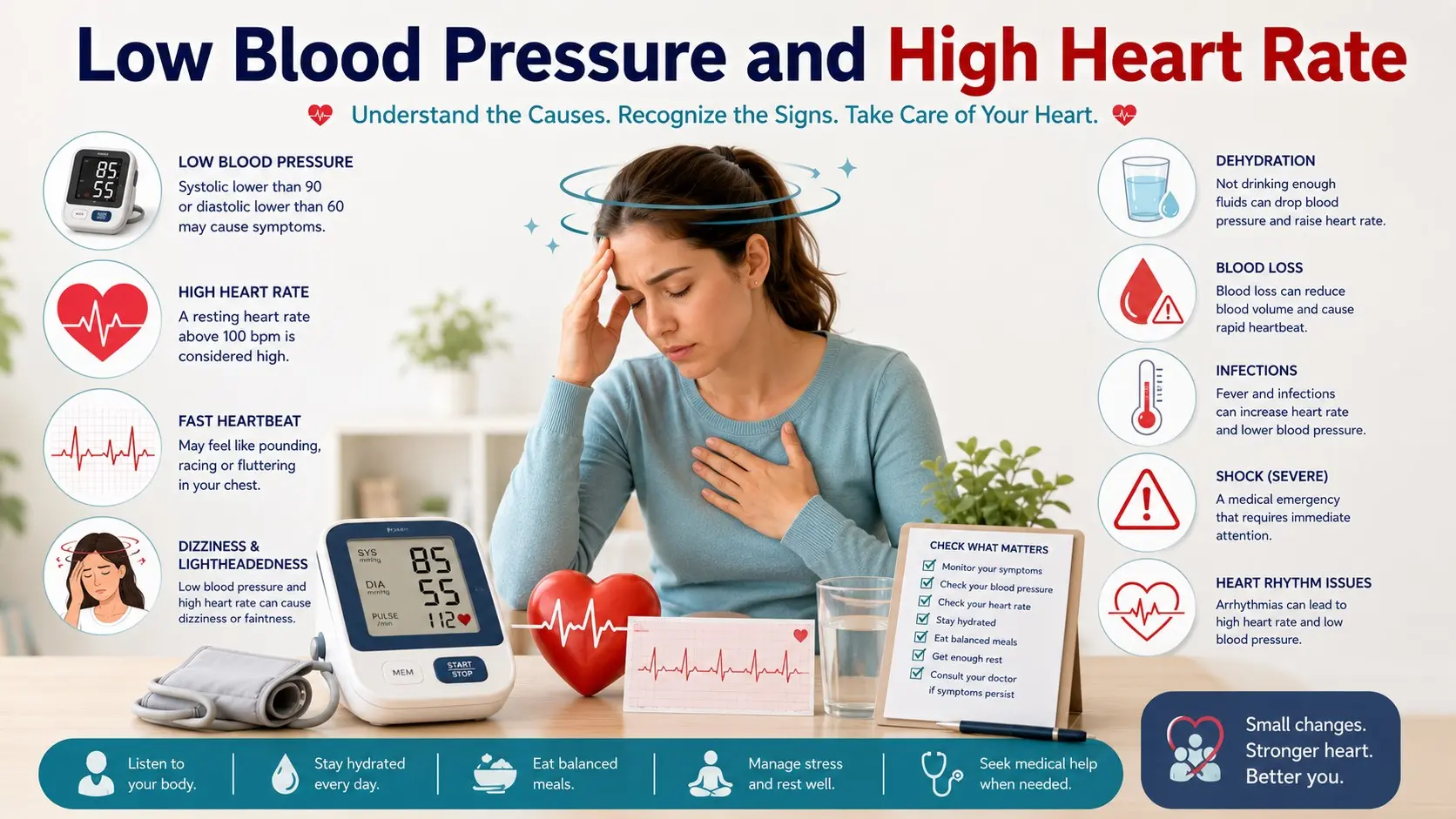
Many people call blood pressure low when it is around 90/60 mmHg or lower.
But numbers alone do not tell the full story.
Some people naturally have lower blood pressure and feel fine.
Low blood pressure matters more when it causes symptoms.
Symptoms can mean your brain, heart, or organs are not getting enough blood flow.
What counts as a high heart rate?
A resting heart rate above 100 beats per minute is often called tachycardia.
But heart rate can rise for normal reasons, too.
Your pulse can go up with:
- Exercise
- Stress
- Pain
- Fever
- Dehydration
- Caffeine
- Anxiety
- Low oxygen
A fast pulse is more concerning when it happens at rest or with low blood pressure.
Why Can Low Blood Pressure Cause a Fast Heart Rate?
Your body tries to protect blood flow.
If pressure drops, the heart may beat faster.
This is a backup plan.
The faster pulse tries to move more blood to your brain, heart, and organs.
But if the cause is serious, the fast pulse may not be enough.
That is why symptoms matter.
Common Symptoms
Low blood pressure and high heart rate may cause:
- Dizziness
- Lightheadedness
- Fainting
- Weakness
- Shaky feeling
- Fast heartbeat
- Pounding heartbeat
- Palpitations
- Blurred vision
- Nausea
- Cold sweat
- Fatigue
- Confusion
- Shortness of breath
- Chest discomfort
Do not ignore these signs if they are new, strong, or getting worse.
Emergency Red Flags
Call emergency services now if low blood pressure and high heart rate happen with:
- Chest pain
- Severe shortness of breath
- Fainting
- Confusion
- Cold, clammy skin
- Blue lips or fingers
- Severe weakness
- Fast breathing
- Severe belly pain
- Heavy bleeding
- Black stools
- Vomiting blood
- High fever with feeling very unwell
- Severe allergic reaction
- Swelling of lips, tongue, or throat
- Severe dehydration
- Very little urine
- New irregular heartbeat
- One-sided leg swelling with pain
These may be signs of shock, heart problems, bleeding, infection, allergic reaction, or blood clot.
Cause 1: Dehydration
Dehydration is a common cause.
When you lose too much fluid, blood volume can drop.
Blood pressure may fall.
The heart may beat faster.
Dehydration can happen from:
- Not drinking enough
- Vomiting
- Diarrhea
- Fever
- Heat
- Heavy sweating
- Too much alcohol
- Some water pills
Signs may include dry mouth, thirst, dark urine, dizziness, and weakness.
Severe dehydration needs medical care.
Cause 2: Blood Loss
Blood loss can lower blood pressure.
The heart may race to make up for lost blood.
Blood loss may be outside the body or inside the body.
Warning signs include:
- Heavy bleeding
- Black stool
- Blood in stool
- Vomiting blood
- Severe belly pain
- Severe weakness
- Fainting
- Pale skin
- Cold sweat
This can be an emergency.
Cause 3: Severe Infection or Sepsis
A serious infection can lower blood pressure.
It can also raise heart rate.
This may happen with sepsis.
Warning signs can include:
- Fever or very low temperature
- Fast heart rate
- Fast breathing
- Confusion
- Severe weakness
- Low blood pressure
- Cold or mottled skin
- Very little urine
Sepsis is an emergency.
Get help fast.
Cause 4: Shock
Shock means the body is not getting enough blood flow.
This is serious.
Shock can happen from:
- Blood loss
- Severe dehydration
- Heart attack
- Severe infection
- Severe allergic reaction
- Major injury
- Severe burns
Signs may include fast pulse, low blood pressure, cold sweat, confusion, weakness, and fast breathing.
Call emergency services.
Cause 5: Heart rhythm problems
A fast heart rhythm can make the heart pump poorly.
If the heart beats too fast, it may not fill well between beats.
This can lower blood pressure.
Symptoms may include:
- Sudden racing heart
- Chest pain
- Shortness of breath
- Dizziness
- Fainting
- Weakness
- Palpitations
Examples can include supraventricular tachycardia, atrial fibrillation with fast rate, or ventricular tachycardia.
A new fast or irregular heartbeat needs medical care.
Cause 6: Orthostatic Hypotension
Orthostatic hypotension means blood pressure drops when you stand.
You may feel dizzy or faint.
Your heart rate may rise as your body tries to adjust.
Common triggers include:
- Dehydration
- Long bed rest
- Standing too fast
- Heat
- Alcohol
- Some medicines
- Nerve problems
- Diabetes
If this happens often, get checked.
Cause 7: POTS
POTS means postural orthostatic tachycardia syndrome.
It can cause a big rise in heart rate after standing.
Some people feel dizzy, weak, or tired.
POTS is not the same as shock.
But symptoms can feel scary.
It needs a medical diagnosis and a care plan.
Cause 8: Medicines
Some medicines can lower blood pressure or raise heart rate.
Examples may include:
- Blood pressure medicine
- Water pills
- Heart medicines
- Antidepressants
- Some anxiety medicines
- Opioid pain medicine
- Medicines for erectile dysfunction
- Some allergy medicines
- Some thyroid medicine doses
Do not stop medicine on your own.
Ask your doctor or pharmacist.
Cause 9: Anemia
Anemia means you do not have enough healthy red blood cells.
Your heart may beat faster to move oxygen around.
You may feel weak, tired, dizzy, or short of breath.
Anemia can happen from:
- Iron deficiency
- Heavy periods
- Bleeding in the gut
- Low vitamin B12
- Low folate
- Chronic disease
Blood tests can check this.
Cause 10: Thyroid Problems
An overactive thyroid can cause a fast heart rate.
It may also cause:
- Feeling hot
- Weight loss
- Shaking hands
- Anxiety
- Loose stools
- Trouble sleeping
- Palpitations
A blood test can check thyroid levels.
Cause 11: Allergic Reaction
A severe allergic reaction can lower blood pressure.
It can also raise heart rate.
This is called anaphylaxis.
Warning signs include:
- Swelling of lips, tongue, or throat
- Trouble breathing
- Wheezing
- Hives
- Vomiting
- Fainting
- Low blood pressure
- Fast pulse
This is an emergency.
Cause 12: Pregnancy
Blood pressure can be lower in pregnancy.
Heart rate may also rise.
But some symptoms need urgent care.
Get checked right away for:
- Fainting
- Severe belly pain
- Bleeding
- Chest pain
- Shortness of breath
- Severe headache
- One-sided leg swelling
- Severe weakness
Pregnancy symptoms should be reviewed by a healthcare professional.
What to do right away
If you feel dizzy or faint, act fast.
- Sit or lie down.
- Raise your legs if you can.
- Do not drive.
- Check your blood pressure if you have a monitor.
- Check your pulse.
- Drink water if you are awake, not vomiting, and not on fluid restriction.
- Call for help if symptoms are strong.
Call emergency services if you have red flags.
When Home Care May Be Enough
Home care may be enough only if symptoms are mild and clearly linked to a simple cause.
Examples:
- You stood up too fast.
- You skipped water on a hot day.
- You had mild dehydration.
- You feel better after rest and fluids.
Even then, get checked if it keeps happening.
When to Call a Doctor Soon
Call a doctor soon if you have:
- Repeated low blood pressure readings
- A resting heart rate above 100 often
- New palpitations
- Dizziness often
- Near-fainting
- Fainting even once
- Symptoms after a new medicine
- Weight loss
- Heavy periods
- Black stools
- Ongoing diarrhea or vomiting
- Symptoms when standing
- Symptoms during pregnancy
Do not wait if symptoms are getting worse.
How to Measure Blood Pressure and Pulse
Use a calm setup.
- Sit for 5 minutes.
- Keep feet flat.
- Rest your arm at heart level.
- Use the right cuff size.
- Do not talk during the reading.
- Write down the numbers.
- Write down your pulse.
- Write down symptoms.
If you feel dizzy when standing, your doctor may ask for sitting and standing readings.
Do not keep checking again and again in a panic.
Write clear notes and call your doctor.
Useful Numbers to Track
Write:
- Blood pressure reading
- Heart rate
- Time of day
- Position: lying, sitting, or standing
- Symptoms
- Recent meals
- Water intake
- Medicines taken
- Fever
- Bleeding
- Vomiting or diarrhea
This helps your doctor find the cause.
Tests Your Doctor May Use
Tests depend on symptoms.
Your doctor may consider:
- Blood pressure check
- Standing blood pressure test
- Pulse check
- ECG or EKG
- Heart monitor
- Blood count
- Iron tests
- Electrolytes
- Kidney function
- Liver tests
- Thyroid test
- Blood sugar
- Pregnancy test if relevant
- Infection tests
- Urine test
- Echocardiogram if needed
- Tilt table test in selected cases
Do not guess from one reading.
Find the cause.
Care Depends on the Cause
Treatment is not the same for everyone.
Care may include:
- Fluids for dehydration
- Salt adjustment only if a doctor advises it
- Medicine changes
- Treating infection
- Treating bleeding
- Treating anemia
- Heart rhythm treatment
- Allergy emergency treatment
- Compression stockings in selected cases
- Slow position changes
- POTS care plan
- More testing if needed
The safest treatment is the one that matches the cause.
Safe Daily Tips for Mild Low Blood Pressure
Use these only if your doctor says they are safe for you.
- Drink enough fluid.
- Stand up slowly.
- Avoid sudden position changes.
- Avoid long hot showers.
- Limit alcohol.
- Eat regular meals.
- Do not skip meals.
- Ask if compression socks may help.
- Review medicines with your doctor.
- Track symptoms.
Do not increase salt unless a doctor says it is safe.
Salt can be risky for some people.
What Not to Do
- Do not drive when dizzy.
- Do not stand up fast.
- Do not ignore fainting.
- Do not ignore chest pain.
- Do not ignore shortness of breath.
- Do not take extra salt without advice.
- Do not stop heart or blood pressure medicine alone.
- Do not use stimulant pills to raise energy.
- Do not assume anxiety is the cause.
- Do not delay care for shock signs.
Low blood pressure and high heart rate after exercise
Your heart rate rises during exercise.
That is normal.
But feeling faint after exercise can happen if blood pressure drops.
Possible triggers include:
- Stopping suddenly
- Dehydration
- Heat
- Low blood sugar
- Overtraining
- Heart rhythm problems
Cool down slowly.
Drink water.
Get checked if you faint, have chest pain, or feel very short of breath.
Low Blood Pressure and High Heart Rate at Night
A racing heart at night can have many causes.
Examples include:
- Anxiety
- Alcohol
- Dehydration
- Sleep apnea
- Heart rhythm problems
- Low blood sugar
- Fever
- Medicine effects
Get checked if it happens often or wakes you with chest pain, breathlessness, fainting, or sweating.
Low Blood Pressure and High Heart Rate When Standing
This can happen when your body has trouble adjusting to standing.
It may be orthostatic hypotension.
It may be POTS.
It may be dehydration or medicine-related.
Track lying, sitting, and standing symptoms.
Ask your doctor how to test safely.
Low Blood Pressure and High Heart Rate With Fever
Fever can raise heart rate.
But fever plus low blood pressure can be serious.
Get medical help if fever comes with:
- Confusion
- Very fast breathing
- Cold clammy skin
- Severe weakness
- Low urine
- Severe pain
- Rash that does not fade
- Feeling very unwell
This may be a serious infection.
Low Blood Pressure and High Heart Rate With Chest Pain
This is urgent.
Do not wait.
Chest pain with low blood pressure and a fast pulse may be linked with heart attack, dangerous rhythm, blood clot, or shock.
Call emergency services.
Simple 7-Day Safety Plan
This plan does not replace medical care.
It helps you organize symptoms.
Day 1: Write Your Readings
Record blood pressure, pulse, time, and symptoms.
Day 2: Check Fluids
Notice water intake, sweating, vomiting, or diarrhea.
Day 3: Review Medicines
Write all medicines, herbs, and supplements.
Day 4: Track Position
Notice if symptoms happen when standing.
Day 5: Check red flags
Look for chest pain, fainting, confusion, fever, bleeding, or breathlessness.
Day 6: Book Care
Book a doctor visit if symptoms repeat.
Day 7: Bring Your Notes
Bring readings and symptoms to your appointment.
Daily Checklist
- Did I feel dizzy today?
- Did I faint or nearly faint?
- What was my blood pressure?
- What was my heart rate?
- Was I sitting, lying, or standing?
- Did I drink enough fluid?
- Did I have vomiting or diarrhea?
- Did I have a fever?
- Did I have bleeding?
- Did I have chest pain or shortness of breath?
- Did I start a new medicine?
- Do I need urgent help?
Questions to Ask Your Doctor
- Why is my blood pressure low?
- Why is my heart rate high?
- Could this be dehydration?
- Could this be a medicine side effect?
- Could I have an arrhythmia?
- Do I need an ECG?
- Do I need a heart monitor?
- Do I need blood tests?
- Could I have anemia?
- Could thyroid disease be involved?
- Could this be POTS?
- Should I check standing blood pressure?
- What symptoms mean emergency care?
FAQ
What does Low Blood Pressure and High Heart Rate mean?
Low Blood Pressure and High Heart Rate means your blood pressure is low while your pulse is fast. It may happen when your body tries to keep blood flowing to your brain and organs.
Is low blood pressure and high heart rate dangerous?
It can be dangerous if it comes with fainting, confusion, chest pain, shortness of breath, cold clammy skin, heavy bleeding, fever, or severe weakness. These can be emergency signs.
Can dehydration cause low blood pressure and a fast pulse?
Yes. Dehydration can lower blood volume. This can lower blood pressure and make the heart beat faster. Severe dehydration needs medical care.
Can anxiety cause low blood pressure and high heart rate?
Anxiety can raise heart rate. But low blood pressure with a fast heart rate should not be blamed on anxiety without checking for dehydration, bleeding, infection, medicine effects, or heart rhythm problems.
What heart rate is too high?
A resting heart rate above 100 beats per minute is often called tachycardia. It is more concerning when it is new, irregular, very fast, or linked with low blood pressure or symptoms.
What should I do if I feel dizzy with a fast pulse?
Sit or lie down. Raise your legs if you can. Do not drive. Drink water only if safe for you. Call for medical help if symptoms are strong, new, or linked with red flags.
Can low blood pressure and a high heart rate happen when standing?
Yes. It may happen with dehydration, orthostatic hypotension, POTS, or medicine effects. If it happens often, ask your doctor about sitting and standing blood pressure checks.
When should I go to the ER?
Go to the ER or call emergency services if you have chest pain, shortness of breath, fainting, confusion, cold, clammy skin, blue lips, heavy bleeding, black stool, severe allergic reaction, or signs of shock.
Can medicines cause low blood pressure and high heart rate?
Yes. Some blood pressure medicines, water pills, heart medicines, antidepressants, and other medicines can affect blood pressure or heart rate. Ask your doctor or pharmacist before changing medicine.
How is low blood pressure and high heart rate treated?
Treatment depends on the cause. It may include fluids, medicine changes, infection treatment, bleeding treatment, anemia care, heart rhythm treatment, allergy emergency care, or a POTS care plan.
Related Reading
- Heart & Cardiovascular Health Hub
- Lower Blood Pressure: Safe Steps and Long-Term Control
- What Causes High Blood Pressure?
- Signs of a Heart Attack: Symptoms and Emergency Help
- Chest Pain vs Heart Attack: How to Tell the Difference
- Heart Failure Symptoms: Early Signs and When to Worry
- Congestive Heart Failure: Symptoms, Stages, and Care
- How to Increase Blood Flow: 10 Easy Daily Habits
- Poor Blood Circulation in Legs: Causes and Safe Tips
- Medical Tests & Screenings Hub
- Health Hub
Key Takeaway
Low blood pressure and high heart rate can happen for many reasons.
Some causes are mild. Some are serious. Common causes include dehydration, bleeding, infection, shock, heart rhythm problems, medicine effects, anemia, thyroid problems, pregnancy, and standing too fast.
Do not ignore symptoms. Get urgent help for chest pain, shortness of breath, fainting, confusion, cold, clammy skin, blue lips, heavy bleeding, fever with severe weakness, or signs of shock.
The safest care is to find and treat the cause.
Best 5 Trusted Sources
- American Heart Association — Low Blood Pressure: When Blood Pressure Is Too Low
- Mayo Clinic — Low Blood Pressure Symptoms and Causes
- Cleveland Clinic — Tachycardia
- MedlinePlus — Cardiogenic Shock
- NHS — Low Blood Pressure

Health & wellness writer with 30+ years of experience in nutrition, fitness, and healthy aging. Founder of NextFitLife.com — evidence-based health guidance.