Published on: Jan 21, 2026
Last Updated: August 28, 2026
Next Review: August 2027, or sooner if important allergy, angioedema, medicine, dental, or emergency guidance changes
Written and Source Checked by: Adel Galal, Founder and Lead Writer of NextFitLife
Medical Review Status: This article has not been formally reviewed by a physician, dermatologist, allergist, dentist, pharmacist, or another licensed healthcare professional.
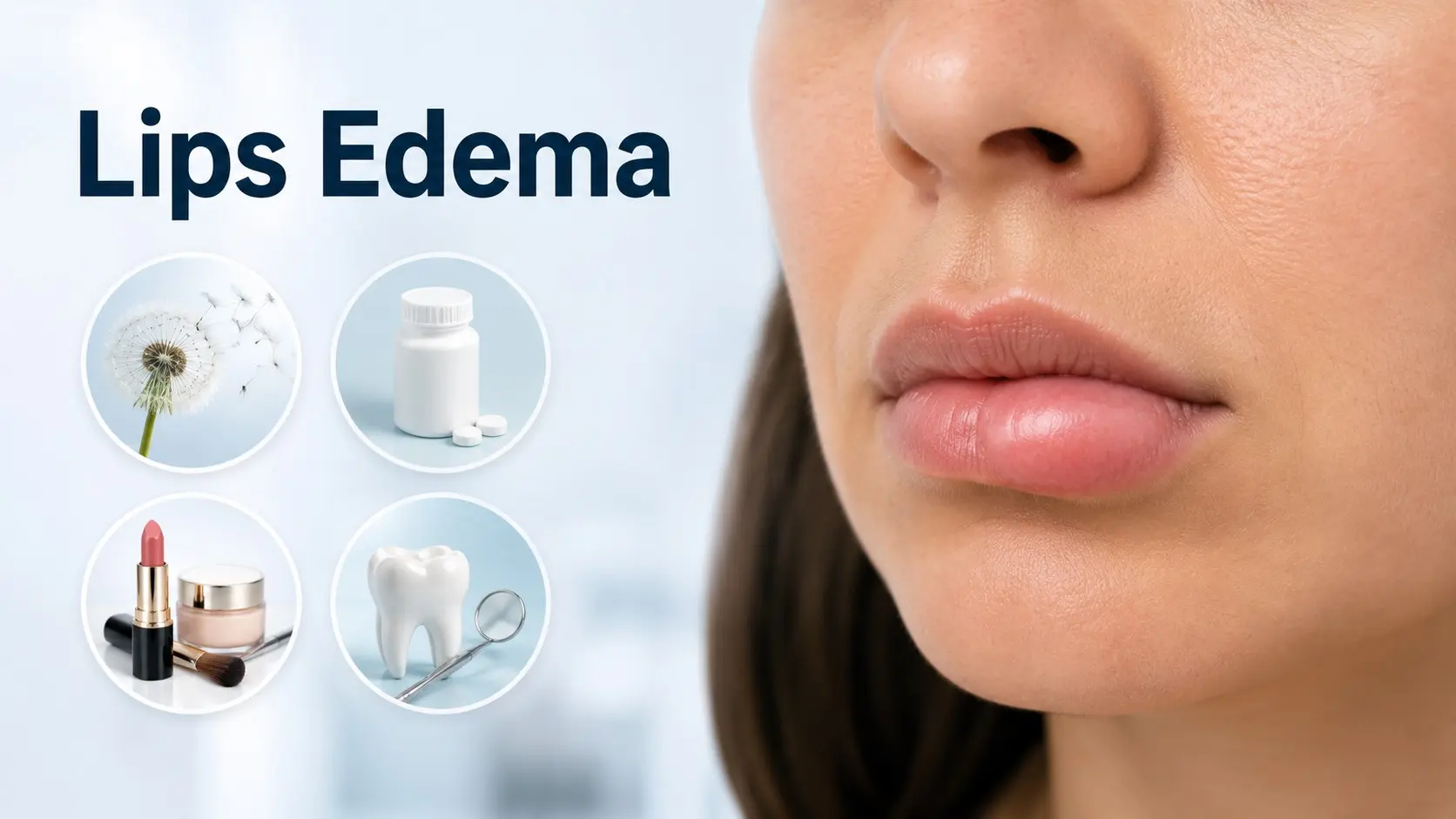
Lips edema means swelling of one or both lips.
Sometimes the cause is simple.
You may have bitten your lip.
A new lip balm may have irritated it.
A dental procedure may leave temporary swelling.
But sudden lip swelling can also be a sign of angioedema or a serious allergic reaction.
That is why the first question is not:
"How do I make the swelling disappear?"
The first question is:
"Why is my lip swollen, and are there any emergency signs?"
Quick Answer: What Causes Lips Edema?
Lips Edema can come from allergies, angioedema, medicines, lip products, toothpaste, food, insect stings, injuries, dental infections, skin inflammation, cold sores, or other medical conditions.
Sudden swelling that also affects the tongue or throat, makes breathing or swallowing difficult, causes wheezing, dizziness, fainting, or a major allergic reaction needs emergency medical help.
Emergency Warning: Swollen Lips Can Sometimes Be Serious
Get emergency medical help if lip swelling comes with:
- Trouble breathing
- Trouble swallowing
- A swollen tongue
- A swollen throat
- A tight feeling in the throat
- Wheezing or noisy breathing
- A sudden hoarse voice
- Severe dizziness
- Fainting
- Confusion
- Blue, gray, or unusually pale lips or skin
- Rapidly spreading facial swelling
These may be signs of anaphylaxis or severe angioedema.
If you have been prescribed an epinephrine device for severe allergy, follow your emergency allergy plan and call your local emergency service.
Do not wait for breathing problems to become severe.
Medical note: I am not a dermatologist or A doctor, and this content does not replace professional medical advice. This article explains published guidance and does not provide a personal clinical assessment. Always consult qualified medical professionals for diagnosis and treatment of any health condition.
What Is Lip Edema?
Edema means swelling caused by fluid or inflammation in body tissue.
When this happens in the lips, the lips may look:
- Puffy
- Enlarged
- Uneven
- Red
- Tight
- Shiny
The swelling may affect:
- The upper lip
- The lower lip
- One side
- Both lips
- The lips and face
- The lips and tongue
The pattern gives useful clues.
Sudden swelling is different from swelling that builds slowly for weeks.
An itchy swollen lip is different from a hot and painful swollen lip.
A blistered lip is different from deep swelling without a rash.
Lips Edema Versus Angioedema
Lips Edema is a description of swelling.
Angioedema is one possible cause.
Angioedema is deeper swelling beneath the skin.
It often affects:
- Lips
- Eyelids
- Tongue
- Face
- Hands
- Feet
It may happen with hives.
But hives are not always present.
This difference matters.
Some forms of angioedema are linked to histamine and allergy.
Other forms are not.
That means the same treatment does not work for every swollen lip.
Common Causes of Lips Edema
1. Food Allergy
A food allergy can cause sudden swelling of the lips.
Other symptoms may include:
- Itching
- Hives
- Tongue swelling
- Throat symptoms
- Wheezing
- Vomiting
- Dizziness
Common food allergens vary from person to person.
Do not assume a food is safe because you have eaten it before.
Allergies can appear later in life.
2. Medicine Reactions
Medicines can cause swollen lips.
This may happen because of a true medicine allergy.
It can also happen through a non allergic medicine reaction.
An important example is a group of blood pressure medicines called ACE inhibitors.
Examples include:
- Lisinopril
- Enalapril
- Ramipril
- Captopril
- Perindopril
ACE inhibitors can cause swelling of the lips, face, or tongue.
This reaction can occur even after a person has taken the medicine for some time.
If you develop unexplained lip, face, or tongue swelling while taking an ACE inhibitor, seek urgent medical advice.
Do not simply treat it as dry lips.
3. Lipstick, Lip Balm and Cosmetics
Lip products are a common source of contact cheilitis.
Possible triggers include:
- Fragrance
- Flavoring
- Preservatives
- Colorants
- Metals
- Sunscreen ingredients
- Lip plumping ingredients
A reaction may cause:
- Swelling
- Redness
- Burning
- Itching
- Dryness
- Cracking
If the lips are mainly dry, scaly, itchy, and inflamed, read the NextFitLife guide to Eczema Lips.
4. Toothpaste and Mouth Products
Toothpaste can also cause lip reactions in some people.
Possible triggers include:
- Flavorings
- Mint
- Cinnamon
- Preservatives
- Other oral care ingredients
Allergic contact cheilitis from toothpaste may cause dry, itchy, sore, or swollen lips.
Mouthwash and dental products can sometimes cause similar problems.
5. Insect Stings and Bites
A sting close to the mouth may cause local swelling.
A person with an insect allergy may develop a more serious reaction.
Watch for:
- Swelling beyond the sting area
- Hives
- Wheezing
- Tongue swelling
- Throat swelling
- Dizziness
Those symptoms need urgent assessment.
6. Lip Injury
Trauma can make a lip swell quickly.
Common causes include:
- Biting your lip
- Being hit in the mouth
- Sports injuries
- A fall
- Dental treatment
- Braces
- Oral surgery
A small injury often has an obvious cause.
Severe pain, uncontrolled bleeding, a deep cut, loose teeth, or major facial injury needs professional assessment.
7. Dental Infection
A tooth or gum infection can sometimes cause swelling around the mouth and face.
Clues may include:
- Tooth pain
- Throbbing pain
- Swollen gums
- Bad taste
- Fever
- Facial swelling
- Pain when chewing
A dental abscess needs dental treatment.
Home remedies do not remove the source of the infection.
Spreading facial swelling needs urgent care.
8. Infection of the Lip or Skin
A lip that becomes hot, painful, red, or increasingly swollen may be infected.
Possible infections include bacterial skin infection.
A clinician may need to check whether antibiotics or drainage are required.
Do not squeeze a painful swollen area.
9. Cold Sores
A cold sore can cause localized swelling.
It often starts with:
- Tingling
- Burning
- Itching
Small fluid-filled blisters usually follow.
This is different from deep, diffuse angioedema.
Read Herpes on Lip if you have a typical blistering cold sore pattern.
10. Dry, Irritated or Inflamed Lips
Dry air, wind, sun, repeated lip licking, and harsh products may irritate the lips.
They usually cause dryness and inflammation more than dramatic sudden edema.
If your main problem is dryness rather than sudden swelling, the cause may be cheilitis instead of angioedema.
11. Oral Allergy Syndrome
Some people with pollen allergies get itching, tingling, or mild swelling of the lips and mouth after eating certain raw fruits, vegetables, or nuts.
This is often called pollen food syndrome or oral allergy syndrome.
Symptoms usually begin soon after the trigger food.
Do not self-diagnose a serious food allergy as oral allergy syndrome.
Breathing or throat symptoms still require urgent medical help.
12. Hereditary Angioedema
Hereditary angioedema is rare.
It can cause repeated episodes of swelling.
Possible areas include:
- Lips
- Face
- Hands
- Feet
- Airway
- Digestive tract
It may occur without hives.
Typical allergy treatments may not work well for this type.
Repeated unexplained swelling deserves specialist assessment.
Why Does Only One Lip Swell?
One sided lip swelling can happen.
Possible causes include:
- A bite
- A sting
- A local skin reaction
- A dental problem
- A cyst
- An infection
- A localized allergic reaction
Angioedema can also be uneven.
Do not use the fact that only one side is swollen to rule out allergy.
What Causes Both Lips to Swell?
Swelling of both lips may be more suggestive of a widespread reaction.
Possible causes include:
- Angioedema
- Food allergy
- Medicine reaction
- Cosmetic allergy
- Contact cheilitis
- Some inflammatory conditions
The timing and other symptoms matter more than the number of lips affected.
Swollen Lip With Hives
Hives are raised, itchy welts.
Lip swelling plus hives often points toward a histamine-related reaction.
This can happen after:
- Food
- Medicine
- An insect sting
- Another allergen
But hives do not tell you how serious a reaction will become.
If breathing, swallowing, tongue, throat, dizziness, or fainting symptoms appear, get emergency help.
Swollen Lip Without Hives
Angioedema can happen without hives.
This is especially important with:
- ACE inhibitor reactions
- Hereditary angioedema
- Some unexplained recurrent angioedema
Do not assume swelling is harmless because the skin does not itch.
Swollen Lip After Eating
If your lip swells soon after eating, think about:
- Food allergy
- Pollen food syndrome
- Direct irritation
- Spicy food
- A bite or injury while chewing
Write down what you ate.
Also note:
- How quickly swelling started
- Whether you had hives
- Whether your tongue was involved
- Whether breathing changed
- Whether you felt dizzy
Do not intentionally eat the suspected food again to test yourself after a significant reaction.
Swollen Lip After Dental Work
Dental treatment can sometimes cause temporary swelling.
Possible reasons include:
- Tissue trauma
- Accidental lip biting while numb
- Dental infection
- A reaction to a product used during treatment
True allergy to modern dental local anesthetic medicine is uncommon.
But any sudden swelling involving the tongue, throat, or breathing still needs urgent care.
Call your dentist if swelling is increasing rather than improving.
Lip Swelling From ACE Inhibitors
This deserves special attention.
ACE inhibitor angioedema can affect:
- Lips
- Tongue
- Face
- Throat
It may occur without itching or hives.
Examples of ACE inhibitors include lisinopril, ramipril, enalapril, captopril, and perindopril.
The FDA lists swelling of the face, eyes, lips, tongue, and difficulty breathing or swallowing among warning signs that need medical attention in people taking these medicines.
If this happens, seek urgent medical advice before taking another dose.
Do not try to manage unexplained facial or tongue swelling with lip balm.
Lips Edema From Lip Products
A new lip product is worth considering if swelling started after you used:
- Lipstick
- Lip gloss
- Lip balm
- Lip plumper
- Lip sunscreen
- A flavoured cosmetic
Stop the suspected product.
Use simple lip care while the skin settles.
If reactions keep returning, a dermatologist or allergy specialist may consider patch testing.
Patch testing can help identify delayed contact allergy.
Can Toothpaste Make Your Lips Swell?
Yes, although it is not common compared with how many people use toothpaste every day.
Flavourings are an important source of toothpaste contact reactions.
Possible symptoms include:
- Dryness
- Itching
- Burning
- Cracking
- Redness
- Swelling
If symptoms repeatedly improve when one product is stopped and return when it is used again, tell your clinician.
Do not keep repeatedly testing a product that has caused immediate major swelling.
What Does Lip Infection Look Like?
An infected lip may be:
- Hot
- Painful
- Tender
- Very red
- Increasingly swollen
You may also develop fever or feel unwell.
An abscess may form a tender lump.
This needs assessment.
A painful swollen lip with spreading redness should not be treated as a simple allergy without medical advice.
Can Lip Edema Be Caused by Dehydration?
Dehydration commonly causes dry lips.
It does not usually explain major sudden isolated lip swelling.
If your lips are mainly:
- Dry
- Cracked
- Flaky
- Sore
then dryness or cheilitis may be more likely.
If dry mouth is also a problem, read Why Do I Wake Up With Dry Mouth?
Does Salt Cause Swollen Lips?
A salty meal can contribute to general fluid retention in some people.
But salt alone is not a common explanation for sudden isolated Lips Edema.
Sudden lip swelling deserves a more specific cause assessment.
How Is Lips Edema Diagnosed?
There is no single test for every swollen lip.
A clinician may ask:
- When did it start?
- Was it sudden or gradual?
- Did you eat anything new?
- Did you use a new cosmetic?
- Did you change toothpaste?
- Did an insect sting you?
- Did you injure your lip?
- Have you had dental treatment?
- What medicines do you take?
- Do you take an ACE inhibitor?
- Do you have hives?
- Does the swelling keep returning?
- Does anyone in your family have similar episodes?
Testing depends on the suspected cause.
Tests That May Be Used
Depending on your symptoms, evaluation may include:
- Physical examination
- Allergy assessment
- Patch testing for contact allergy
- Dental examination
- Blood tests
- Testing for hereditary angioedema
- Imaging for a suspected abscess or deeper problem
Most people do not need every test.
The history usually guides the next step.
How Is Lips Edema Treated?
The right treatment depends on the cause.
There is no single cure for swollen lips.
| Possible cause | Typical medical approach |
|---|---|
| Allergic angioedema | Cause avoidance and medical treatment based on severity. Emergency treatment is needed when the airway may be involved. |
| ACE inhibitor angioedema | Urgent medical evaluation and medication review by the treating clinician. |
| Contact cheilitis | Stop the trigger and use gentle skin care. Patch testing may be used when the trigger is unclear. |
| Dental infection | Dental treatment. Antibiotics or drainage may be required depending on the infection. |
| Skin infection | Medical evaluation and cause-specific treatment. |
| Trauma | Cool compress and injury care when the injury is minor. Serious wounds need assessment. |
| Hereditary angioedema | Specialist treatment. Standard allergy treatment may not work in the same way. |
Do Antihistamines Help Swollen Lips?
Sometimes.
Antihistamines may help when swelling is driven by histamine, such as some allergic reactions.
But they do not treat every cause of lip edema.
They may not adequately treat:
- ACE inhibitor angioedema
- Hereditary angioedema
- Dental abscess
- Bacterial infection
- Traumatic injury
Do not use an antihistamine as a reason to delay emergency care if you have breathing or throat symptoms.
Can a Cold Compress Help?
A cool compress may make mild swelling from irritation or a minor injury feel better.
Wrap something cool in a clean cloth.
Do not place ice directly on the lip.
A cold compress can reduce discomfort.
It does not treat serious angioedema, anaphylaxis, or infection.
Safe Home Care for Mild Lip Swelling
Home care is only reasonable when the swelling is mild, you have no emergency warning signs, and there is an obvious low risk cause such as minor irritation.
You can:
- Stop any new lip product
- Stop a suspected irritating cosmetic
- Rinse the lips gently
- Use a brief cool compress
- Use a simple fragrance free lip moisturizer if the skin is dry
- Avoid licking the lips
- Avoid scratching or picking
- Watch for worsening symptoms
If you are unsure why the swelling occurred, seek professional advice.
What Not to Put on a Swollen Lip
Avoid harsh home remedies.
Do not apply:
- Undiluted essential oils
- Lemon juice
- Toothpaste as a treatment
- Strong acids
- Alcohol
- Hot spices
- Unknown herbal mixtures
Do not puncture or squeeze the swollen area.
These methods can irritate the skin or hide the real cause.
When Should You See a Doctor?
Arrange medical assessment if:
- You have never had unexplained lip swelling before
- The swelling keeps returning
- You cannot identify the cause
- The swelling is getting worse
- It lasts longer than expected
- You develop fever
- The lip is hot and painful
- You have a new medicine
- You take an ACE inhibitor
- You have repeated swelling without hives
- The swelling affects other parts of your body
When Should You See a Dentist?
Contact a dentist if swollen lips occur with:
- Severe toothache
- Swollen gums
- A loose or damaged tooth
- Bad taste from the tooth or gum
- Facial swelling near a tooth
- Recent dental injury
A dental abscess does not usually go away just because pain improves.
The cause still needs treatment.
When Should You See an Allergist?
An allergist may be useful when:
- Swelling keeps returning
- A food reaction is suspected
- Hives occur with swelling
- An insect sting caused a reaction
- There is a history of anaphylaxis
- Hereditary angioedema is possible
An allergy specialist can decide which tests are useful.
Not every swollen lip needs broad allergy testing.
When Should You See a Dermatologist?
A dermatologist may help when swelling is linked with:
- Persistent lip eczema
- Dryness and scaling
- Repeated reactions to cosmetics
- Suspected contact dermatitis
- Chronic unexplained lip inflammation
Patch testing may help find a contact allergen.
What If Lip Swelling Keeps Coming Back?
Repeated swelling should not be ignored.
Keep a simple record.
Write down:
- Date and time
- Foods eaten
- Medicines taken
- New products used
- Dental treatment
- Exercise
- Insect exposure
- Whether hives appeared
- How long swelling lasted
This may help a clinician see a pattern.
Repeated swelling without hives may need assessment for less common types of angioedema.
Chronic Lip Swelling
Lip swelling that persists for weeks or months is different from a sudden allergic reaction.
Rare causes can include chronic inflammatory disorders.
One example is orofacial granulomatosis.
Persistent lip swelling can also occur with other medical conditions.
A clinician may need to examine the lips, mouth, skin, digestive symptoms, medicines, and general health.
Do not try to diagnose a rare condition from photos online.
Lips Edema and Lip Fillers
Temporary swelling can happen after cosmetic lip procedures.
Follow the instructions from the qualified professional who performed the procedure.
Get urgent medical help if swelling is severe, rapidly increasing, affects breathing or swallowing, or is accompanied by major pain or colour change.
Delayed or unusual swelling also needs professional assessment.
How to Reduce the Risk of Lip Swelling
Not every episode can be prevented.
But you can lower some avoidable triggers.
Know Your Allergies
Avoid allergens that have caused a confirmed reaction.
Introduce New Lip Products Carefully
Do not start several new cosmetics at the same time.
Check Products After a Reaction
Write down the exact lipstick, balm, toothpaste, mouthwash, or food involved.
Keep Your Medicine List Updated
Tell clinicians about every medicine and supplement you take.
Follow Your Allergy Action Plan
If you have a known serious allergy, carry prescribed emergency medicine as directed.
Protect Your Lips
Avoid repeated biting, licking, and picking.
Take Dental Infections Seriously
Do not wait for major facial swelling before getting a painful tooth checked.
Lips Edema Myths
Myth: Every Swollen Lip Is an Allergy
False.
Infection, injury, dental problems, contact irritation, medicines, and other conditions can also cause swelling.
Myth: No Hives Means It Cannot Be Angioedema
False.
Some forms of angioedema occur without hives.
Myth: Antihistamines Treat Every Swollen Lip
False.
Treatment depends on the cause.
Myth: Dry Lips Cause Severe Sudden Edema
Usually false.
Dryness more often causes cracking, flaking, and irritation.
Myth: A Swollen Lip Can Always Be Treated at Home
False.
Airway symptoms and severe allergic reactions are emergencies.
My Approach to Researching Lip Edema
I do not treat swollen lips as a cosmetic problem first.
I look at the possible cause.
I also look for the signs that change the level of urgency.
For this guide, I compared current information from MedlinePlus, NHS, the FDA, MSD Manual, and DermNet.
I focused on the difference between:
- Mild irritation
- Contact allergy
- Angioedema
- Anaphylaxis
- Medicine reactions
- Dental infection
- Chronic lip swelling
My background in information technology management taught me to review information carefully, compare sources, question strong claims, and organize complex subjects into practical steps.
I use those same skills when researching health content for NextFitLife.
The aim is not to diagnose a swollen lip online.
The aim is to help you know what may be happening, what is safe to do, and when professional care matters.
Conclusion: Lips Edema Needs Cause-Based Care
Lips Edema can be minor, but it should not automatically be treated as simple irritation.
Look at how quickly it started.
Look for hives.
Check your medicines.
Think about new foods, cosmetics, toothpaste, dental work, and injuries.
Most importantly, watch for tongue or throat swelling, trouble breathing, difficulty swallowing, dizziness, or fainting.
Your next step: If the cause is unclear, the swelling keeps returning, or this is your first significant episode, arrange medical advice. If airway or severe allergy signs appear, get emergency help immediately.
References and Sources
This guide was checked against the following five publicly accessible medical sources.
- MSD Manual Professional Edition: Lip Swelling.Reviewed April 2026.This clinical reference explains acute and chronic causes of lip swelling, including allergic reactions, medicines, environmental factors, hereditary angioedema, and rare chronic disorders. It also emphasizes airway assessment when angioedema is suspected.
- MedlinePlus: Angioedema.Reviewed January 20, 2026.This National Library of Medicine resource explains sudden deeper swelling around the lips and eyes, associated hives, breathing risks, hereditary angioedema, and when emergency care is needed.
- NHS: Angioedema.This public health resource explains the common areas affected by angioedema, emergency warning signs, allergic and non allergic causes, ACE inhibitor reactions, and hereditary angioedema.Read NHS Angioedema Guidance
- U.S. Food and Drug Administration: High Blood Pressure Medicines.The FDA lists important ACE inhibitor warnings, including swelling of the face, eyes, lips, or tongue and problems with breathing or swallowing.Read FDA Blood Pressure Medicine Guidance
- DermNet: Allergic Contact Cheilitis.This dermatologist-written resource explains allergic inflammation of the lips, common triggers such as lip cosmetics, toothpaste, dental materials, foods, and medicines, and the role of patch testing.Read DermNet Allergic Contact Cheilitis
Source Review Date: August 28, 2026
These organizations do not endorse NextFitLife.
Continue Reading on NextFitLife
Health Hub: NextFitLife Health
Special Health Topics: Special Health Topics Hub
About the Author
Adel Galal is the founder and health and wellness writer at NextFitLife.
He has more than 30 years of personal experience studying health, fitness, nutrition, skin care, weight management, and healthy aging.
Before focusing on NextFitLife, Adel spent 29 years working in information technology management.
That background developed his skills in research, data review, structured analysis, problem solving, source comparison, and clear communication.
He now uses those skills to compare public health guidance, review medical sources, identify exaggerated health claims, and explain complicated topics in simple language.
For this article, his focus is on helping readers distinguish minor swollen lip causes from angioedema, medication reactions, infection, and the emergency symptoms that require immediate attention.
I am not a dermatologist or A doctor, and this content does not replace professional medical advice. This article explains published guidance and does not provide a personal clinical assessment. Always consult qualified medical professionals for diagnosis and treatment of any health condition.
Read the full Adel Galal author profile and NextFitLife editorial approach.
Frequently Asked Questions About Lips Edema
What is Lips Edema?
Lips Edema means swelling of one or both lips. It can be caused by allergy, angioedema, medicines, infection, injury, dental problems, contact irritation, or other conditions.
What is the most common cause of swollen lips?
There is no single cause for everyone. Common causes include allergic reactions, contact reactions to lip products, injuries, medicines, and inflammation.
When is a swollen lip an emergency?
Get emergency help when lip swelling occurs with tongue or throat swelling, trouble breathing, trouble swallowing, wheezing, severe dizziness, fainting, confusion, or rapidly worsening facial swelling.
Can angioedema affect only the lips?
Yes. Angioedema can affect the lips, although it may also involve the tongue, eyelids, face, hands, feet, digestive tract, or airway.
Can you have angioedema without hives?
Yes. Some forms of angioedema, including ACE inhibitor related and hereditary angioedema, may happen without hives.
Can blood pressure medicine cause swollen lips?
Yes. ACE inhibitors can cause angioedema involving the lips, face, or tongue. Unexplained swelling while taking an ACE inhibitor needs urgent medical advice.
Can toothpaste cause swollen lips?
Yes. Some people develop contact reactions to flavourings or other ingredients in toothpaste or mouth products.
Can lipstick cause lip edema?
Yes. Lipsticks, balms, glosses, plumpers, and other cosmetics can trigger allergic or irritant contact cheilitis in some people.
Do antihistamines help lip swelling?
They may help some histamine-related allergic swelling, but they do not treat every cause. ACE inhibitor angioedema, hereditary angioedema, infection, and dental abscess need different care.
Can I use ice on a swollen lip?
A brief cool compress may help mild swelling after irritation or a minor injury. Do not apply ice directly to the lip, and do not rely on cold treatment for serious allergic swelling.
How long should a swollen lip last?
The duration depends on the cause. Mild irritation may improve relatively quickly, while infection, angioedema, and chronic inflammatory causes have different timelines. Persistent or recurrent swelling should be assessed.
Why does my lip keep swelling for no reason?
Repeated unexplained swelling may be linked to medicines, allergy, recurrent angioedema, hereditary angioedema, contact reactions, or less common inflammatory conditions. Medical evaluation is appropriate.
Can a dental abscess cause lip swelling?
Yes. A tooth or gum infection can cause swelling around the mouth or face. Tooth pain, gum swelling, fever, bad taste, or spreading facial swelling should prompt dental care.
Is a swollen lip from dehydration?
Dehydration can contribute to dry and cracked lips, but it does not usually explain major sudden isolated lip swelling.
What doctor should I see for recurring lip swelling?
Your primary care clinician can start the evaluation. Depending on the suspected cause, you may be referred to an allergist, dermatologist, dentist, oral medicine specialist, or another appropriate specialist.

Health & wellness writer with 30+ years of experience in nutrition, fitness, and healthy aging. Founder of NextFitLife.com — evidence-based health guidance.