Last Updated: June 2026 — Written with 2026 NIH and AAO research
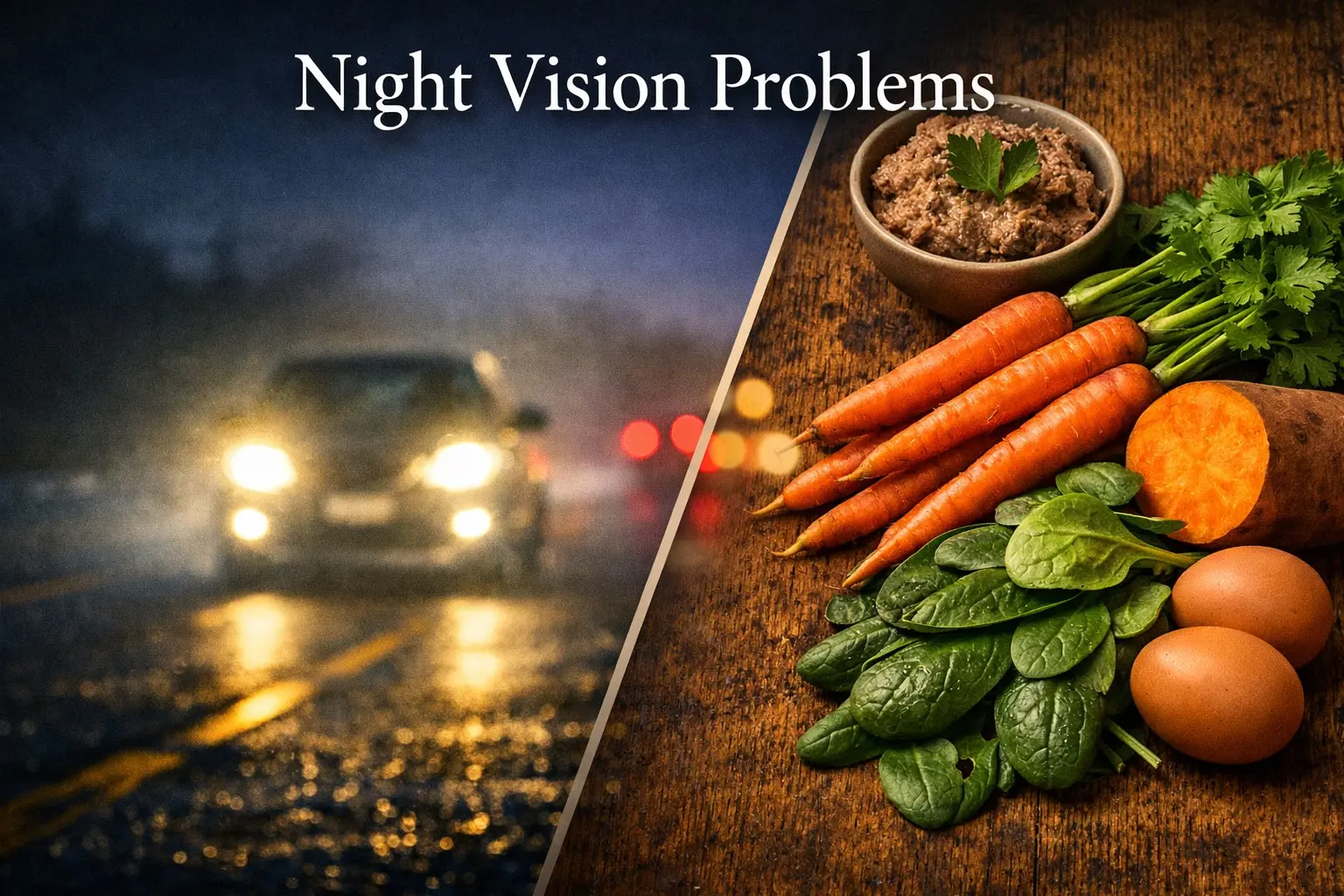
Have you ever stepped out of a brightly lit room and felt momentarily blind? Or struggled to see clearly while driving at night, even with your glasses on? I’ve experienced that too. For years, I brushed off those moments as normal, but they were early signs of night vision problems. At 58, I began paying closer attention when I realized my ability to see in the dark had gradually declined over time.
What I learned surprised me. Poor night vision is rarely just aging. It is often a signal from your body about something fixable. Sometimes it is nutrition. Sometimes it is an eye condition that is starting to develop. And sometimes it is as simple as needing an updated glasses prescription. In this guide, I break it all down in plain language.
complete eye health guide: vision care, prevention and wellness
| KEY FACTS | Your eyes need 20 to 30 minutes to fully adjust from bright light to darkness Vitamin A deficiency is the number one preventable cause of night blindness worldwide Cataracts are the most common medical cause of poor night vision in adults over 50 Retinitis pigmentosa affects 1 in 4,000 people and begins with night vision loss Zinc deficiency impairs the conversion of vitamin A into the pigment your eyes need at night In most healthy adults, poor night vision can usually be treated or effectively managed. |
What is Night Vision Problems, and why does it change?
Your eyes use two types of light-sensing cells. Cone cells handle colour and detail in bright light. Rod cells are what you rely on in dim conditions. Your eyes contain roughly 120 million rod cells. They are concentrated around the outer edges of your retina and are incredibly sensitive to low light.
Rod cells depend on a pigment called rhodopsin, also known as visual purple. When light strikes rhodopsin, it breaks apart and sends a signal to your brain that enables vision. In darkness, rhodopsin regenerates. This regeneration process is what we call dark adaptation. It takes about 20 to 30 minutes for full adaptation to happen.
When this process is slow, incomplete, or impaired, you experience what most people call night blindness or poor night vision. The medical term is nyctalopia. It is not true blindness. It is a reduced ability to see well in low-light conditions.
What Causes Night Vision Problems? A Complete Breakdown
I have spoken to several people over the years who assumed poor night vision was just part of getting older. Sometimes it is. But in many cases, there is a specific, addressable cause.
| Cause | Who It Affects | Severity | Treatable? |
| Vitamin A deficiency | Any age, especially low-diet adults | Mild to severe | Yes — diet and supplements |
| Zinc deficiency | Adults over 50, plant-based diets | Mild | Yes — dietary change |
| Cataracts | Adults over 50 | Moderate to severe | Yes — surgery |
| Glaucoma | Adults over 40 | Mild to moderate | Managed, not cured |
| Retinitis pigmentosa | Any age (genetic) | Progressive | No cure, managed |
| Myopia (short-sightedness) | Any age | Mild | Yes — glasses/contacts/surgery |
| Diabetes-related retinopathy | Adults with diabetes | Variable | Managed with blood sugar control |
| Medications (antihistamines, some BP drugs) | Any age | Mild | Yes — medication review |
| Age-related pupil changes | Adults over 60 | Mild | Partially — lighting changes |
Vitamin A and Night Vision: The Connection Most People Miss
I had no idea how directly vitamin A is linked to night vision until I researched it properly. Rhodopsin — the pigment your rod cells need — is made from vitamin A called retinal. No vitamin A, no rhodopsin. No rhodopsin, no night vision.
The World Health Organization estimates that vitamin A deficiency is the leading cause of preventable blindness in children globally. In adults, it is less dramatic but still real. If you eat a diet low in liver, eggs, dairy, and orange-yellow vegetables, your rhodopsin production may be quietly compromised.
best foods for eye health and better vision
Best Foods for Night Vision — Vitamin A Sources
| Food | Vitamin A Content (per serving) | Additional Eye Benefit |
| Beef liver (85g) | 6,582 mcg RAE — 731% daily value | Zinc, B12, iron |
| Sweet potato (1 medium) | 1,403 mcg RAE — 156% DV | Beta-carotene, antioxidants |
| Carrots (1 cup raw) | 1,069 mcg RAE — 119% DV | Lutein, zeaxanthin |
| Spinach (cooked, 1 cup) | 943 mcg RAE — 105% DV | Lutein, zeaxanthin, and iron |
| Butternut squash (1 cup) | 1,144 mcg RAE — 127% DV | Vitamin C, fibre |
| Eggs (2 large) | 149 mcg RAE — 17% DV | Lutein, zeaxanthin, zinc |
| Full-fat milk (1 cup) | 149 mcg RAE — 17% DV | Calcium, D3, B12 |
I personally added one baked sweet potato to my weekly meals after learning this. I like it because it is cheap, easy to prepare, and genuinely one of the most nutrient-dense foods available for retinal health. You can also eat eggs almost every day — they are one of the most bioavailable sources of both vitamin A and lutein.
Zinc and Night Vision - The Overlooked Mineral
Zinc does not get nearly the credit it deserves for eye health. Zinc is the mineral that carries vitamin A from your liver to your retina. Without sufficient zinc, vitamin A cannot do its job — even if you are eating plenty of it.
I have seen this pattern in older adults who eat well but still have vision complaints. A 2019 review in Nutrients confirmed that zinc depletion is common in adults over 60 and is strongly associated with increased risk of macular degeneration and poor dark adaptation. The AREDS2 clinical trial included zinc specifically because of its essential role in retinal function.
Best zinc food sources for eye health: oysters, beef, pumpkin seeds, chickpeas, cashews, and dark meat chicken. For adults, the recommended daily amount is between 8 and 11 milligrams
. Complete guide to vitamins and nutrients for eye health
Cataracts and Night Vision: The Most Common Fixable Cause in Adults Over 50
If your night vision has gotten noticeably worse and you are over 50, cataracts are the first thing worth ruling out. Cataracts cloud the lens of your eye, reducing the amount and quality of light that reaches your retina. At night, when light is already scarce, this cloudiness matters much more.
A telltale sign of cataracts affecting night vision is halos or starbursts around lights when driving at night. I remember a friend describing exactly this — every streetlight had a halo around it. He thought it was just tired eyes. It was early cataract. After surgery, he described the improvement as dramatic.
Cataracts are highly treatable. Cataract surgery is the most commonly performed surgical procedure in the world and has an extremely high success rate. If cataracts are causing your night vision problems, surgery restores clarity remarkably well.
How to prevent cataracts naturally
Natural Remedies for Night Vision Problems: What Actually Works
I want to be honest here. Some supplements marketed for night vision have weak evidence. Others genuinely help. Here is a realistic assessment.
| Remedy | Evidence Level | How It Helps | How to Use? |
| Vitamin A from food | Very strong | Directly rebuilds rhodopsin | Eat liver, eggs, and orange vegetables regularly |
| Zinc from food or a supplement | Strong | Transports vitamin A to the retina | 11mg daily, food first or gentle supplement |
| Lutein and zeaxanthin | Good | Reduces macular oxidative stress | Leafy greens, eggs, or 10mg/2mg supplement |
| Bilberry extract | Moderate — mixed evidence | May improve dark adaptation | Used in traditional medicine, the evidence is limited |
| Omega-3 (DHA) | Good for overall retinal health | Supports rod cell membrane function | Fish twice weekly or 1g DHA supplement |
| Vitamin D | Emerging evidence | May support retinal ganglion cells | Sun exposure plus 2,000 IU if deficient |
| Reducing screen brightness at night | Practical — logic-based | Preserves dark adaptation before bed | Use night mode, dim screens after sunset |
A Note About Bilberry
Bilberries became famous during World War II when British RAF pilots supposedly ate bilberry jam to improve their night vision. I like this story because it put bilberry on the map. The reality is more nuanced. Some small studies show bilberry extract may support dark adaptation. But large controlled trials have not confirmed dramatic effects. It is safe and worth trying as a supplement to proper nutrition, not as a replacement.
how sleep affects your night vision and eye restoration
Lifestyle Habits That Support Better Night Vision
Beyond nutrition, several practical habits protect and support your low-light vision.
- Give your eyes time to adapt — when moving from a bright room to darkness, wait 20 to 30 minutes before judging your night vision. True dark adaptation takes time.
- Reduce blue light exposure before bed — screens emit blue light that suppresses rhodopsin regeneration. Use night mode after sunset and dim your screen in the evening.
- Protect from UV during the day — cumulative UV damage accelerates cataract formation, which worsens night vision. Wear UV400 sunglasses every day outdoors.
- Get regular eye exams — many conditions that affect night vision, including glaucoma and early cataracts, are detectable long before they cause obvious symptoms. Annual exams after age 40 catch these early.
- Control blood sugar — diabetic retinopathy is a progressive cause of night vision deterioration. Proper control of blood sugar is vital for keeping the retina healthy.
- Adjust car headlights and mirrors — dirty windscreens and poorly adjusted mirrors massively worsen driving night vision. Clean your windscreen inside and out weekly.
UV protection for eyes — ultimate sun safety guide
When do night vision problems need professional attention?
Not every case of poor night vision needs urgent care. But some do. Here is a clear guide.
| Symptom | Likely Cause | What to Do |
| Halos around lights at night | Cataracts or glaucoma | See an eye doctor this week |
| Gradual worsening over months | Cataracts, nutritional deficit | Schedule a comprehensive eye exam |
| Night vision loss starting in youth | Retinitis pigmentosa | Urgent referral for genetic testing |
| Night vision worse after illness | Vitamin A deficiency | Blood test, see your doctor |
| Sudden loss of night vision | Retinal detachment or vascular event | Emergency — seek care today |
| Night vision poor with dry eyes | Vitamin A or omega-3 deficiency | Dietary review and eye exam |
| Night driving unsafe | Any of the above | Do not drive at night — see a doctor |
Important points: What I learned and what you should do
| KEY TAKEAWAYS | Night vision problems are rarely just aging — most have a specific addressable cause Vitamin A is the most critical nutrient for night vision. Eat liver, eggs, and orange vegetables Zinc carries vitamin A to the retina; a deficiency undermines the whole system Cataracts are the most common and treatable cause of poor night vision in adults over 50 Halos around lights at night are a warning sign get an eye exam Reducing screen brightness after sunset helps preserve your dark adaptation ability Annual eye exams after age 40 catch the conditions that damage night vision early If night driving feels unsafe, stop driving at night and see a doctor promptly |
My Personal Approach to Night Vision at 58
| Adel Galal | I started noticing that driving at night felt less comfortable around age 54. Oncoming Headlights seemed brighter and more distracting than they used to. My eye exam showed no cataracts and normal eye pressure. What my doctor did find was My zinc levels were on the low side of normal. I also was not eating nearly enough Vitamin A-rich foods. I made three changes: Added one portion of liver per week (I cook it with onions and spices — it is good). Started eating eggs most mornings instead of cereal. Added a zinc supplement (15mg) for 3 months, then switched to pumpkin seeds daily. Six months later, my night driving felt noticeably more comfortable. Was it all nutrition? I cannot say for certain. But the timing and mechanism are consistent with what the research says about zinc and vitamin A in rhodopsin production. I also clean my car windscreen inside and out every week now. That alone made a surprising difference. |
References and Sources
1- Vitamin A and Vision — National Institutes of Health Office of Dietary Supplements
https://ods.od.nih.gov/factsheets/VitaminA-HealthProfessional/
NIH authority. Use for: rhodopsin mechanism, vitamin A RDA, food sources, and deficiency consequences.
2- Night Blindness (Nyctalopia) — American Academy of Ophthalmology
https://www.aao.org/eye-health/diseases/what-is-nyctalopia
Leading ophthalmology body. Use for: clinical definition, causes, diagnosis, and treatment of night vision loss.
3- Zinc and Age-Related Macular Degeneration — AREDS2 Study, NEI/NIH
https://www.nei.nih.gov/research/clinical-trials/age-related-eye-disease-studies-aredsareds2
Clinical trial authority. Use for: zinc role in retinal vitamin A transport and AREDS2 formula evidence.
4- Retinitis Pigmentosa — National Eye Institute
https://www.nei.nih.gov/learn-about-eye-health/eye-conditions-and-diseases/retinitis-pigmentosa
NIH/NEI authority. Use for: retinitis pigmentosa prevalence (1 in 4,000), symptoms, and progression.
5- Nutrition and the Aging Eye — Review, Nutrients Journal (PubMed)
https://pubmed.ncbi.nlm.nih.gov/32074451/
Peer-reviewed journal. Use for: zinc depletion in adults over 60 and dark adaptation impairment data.
Adel Galal
Health and Wellness Writer | 30+ Years Personal Practice | Founder, NextFitLife.com
Adel Galal has studied health, vision care, and natural aging for over 30 years. At 58,
he writes from genuine lived experience — including personal night vision changes and the
nutritional approach that helped. He is not a doctor or ophthalmologist. Everything shared
reflects personal research, experience, and consultation with healthcare providers. Always
consult a qualified eye care professional for any vision or eye health concern.
Part of our Eye Health Series
This article is part of our complete eye health resource. Read all eye health topics in our
Complete Eye Health Guide: Vision Care, Prevention and Wellness,
or browse our full
Eye Health and Vision Resource Directory.

Health & wellness writer with 30+ years of experience in nutrition, fitness, and healthy aging. Founder of NextFitLife.com — evidence-based health guidance.