Published: October 11, 2026
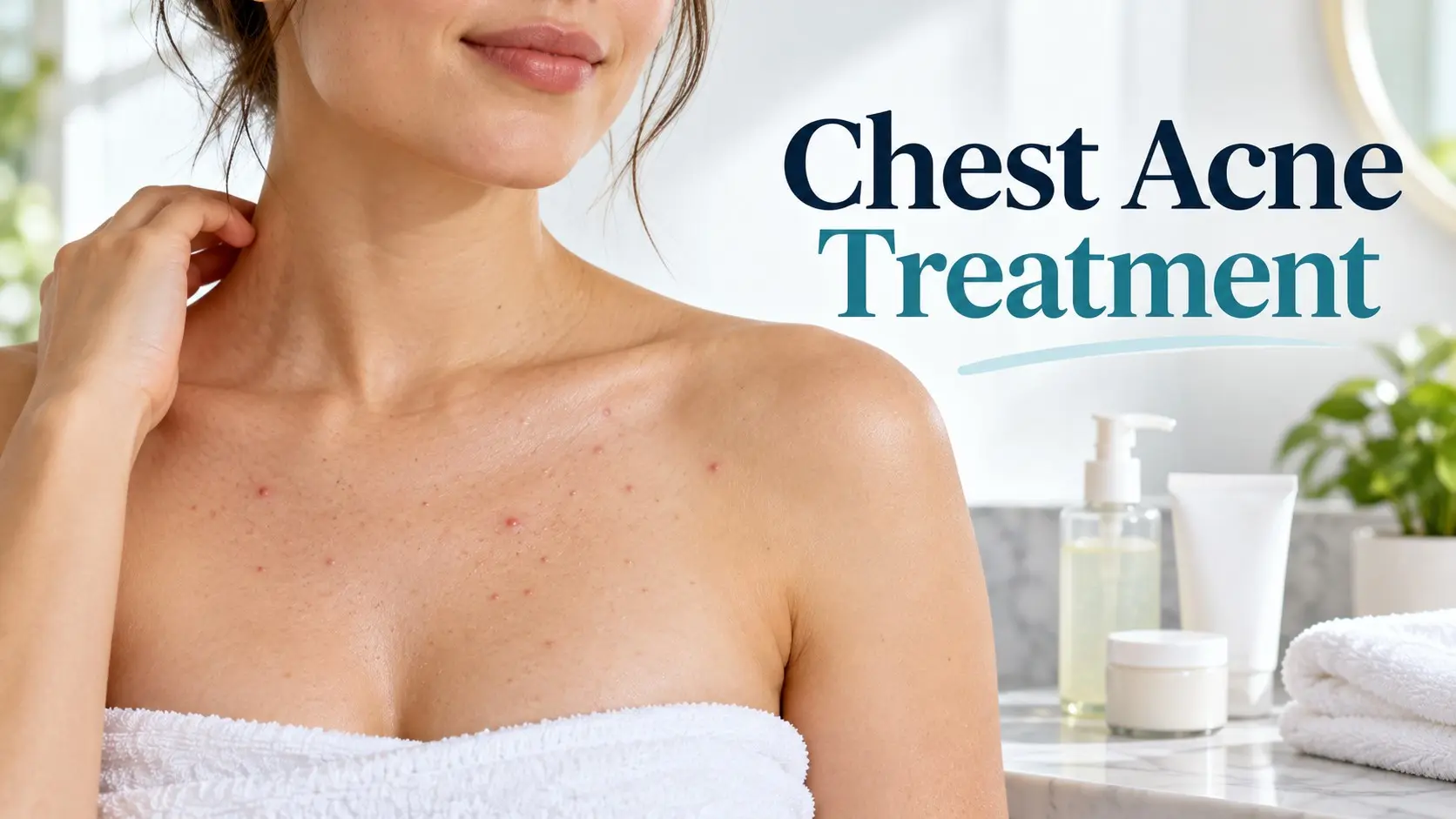
Chest acne treatment works best when the treatment matches the type of bumps you actually have. Benzoyl peroxide is useful for red inflamed pimples, salicylic acid helps clogged pores, and adapalene helps stop new acne from forming. Very itchy, uniform, painful, deep, or scarring bumps need a closer look because not every chest breakout is acne.
That difference matters. A chest covered with blackheads, whiteheads, and several types of pimples behaves differently from a chest covered with dozens of tiny itchy bumps that all look the same.
Before buying a stronger body wash, identify the pattern first.
Medical note: This article is for general information and education. It does not replace medical advice, diagnosis, or treatment.
I am not a dermatologist or a doctor, and this content does not replace professional medical advice. What I share comes from real life experience, extensive research, and consultation with healthcare providers. Always consult qualified medical professionals for diagnosis and treatment of any health condition.
Clinical review status: This article has not been medically reviewed by a dermatologist.
Table of Contents
- Is It Really Chest Acne?
- Warning Signs
- 11 Proven Treatment Steps
- Benzoyl Peroxide
- Salicylic Acid
- Adapalene
- Azelaic Acid
- Gentle Cleansing
- Sweat and Friction Control
- Product Changes
- Female Chest Acne
- Chest Acne in Men
- Dark Marks and Scars
- Professional Treatment
- Treatment Comparison
- Back and Chest Acne
- Itchy Chest Bumps
- Pregnancy
- 8 Week Routine
- Common Mistakes
- Frequently Asked Questions
- References and Sources
Is It Really Chest Acne?
Start here because the wrong diagnosis leads to the wrong treatment.
Ordinary acne develops when hair follicles become blocked with oil and dead skin cells. Inflammation can then create red pimples, pustules, or deeper tender lumps.
Chest acne can include:
- Blackheads
- Whiteheads
- Small red pimples
- Pus filled pimples
- Tender deeper bumps
- A mixture of several types at the same time
The mix is useful information. Acne usually does not produce one perfectly identical crop of bumps.
If you have acne on your upper back too, read the NextFitLife Back Acne guide. The causes and treatments overlap, but chest skin can react more easily to some strong products.
What if every bump looks the same?
Think beyond acne.
Malassezia folliculitis can produce many small, similar looking, itchy bumps on the chest and upper back. Blackheads and whiteheads are usually absent.
Bacterial folliculitis can also cause pimple like bumps around hair follicles, especially after shaving, rubbing, heat, or moisture.
The difference is more than a label. Standard acne treatment may do little for a fungal folliculitis, and repeated antibiotic use can sometimes make Malassezia folliculitis more likely.
If the bumps are very itchy, unusually uniform, or getting worse despite acne treatment, a doctor or dermatologist can help identify what you are actually treating.
When Do Chest Bumps Need Prompt Medical Care?
Typical mild acne is not an emergency, but an infected skin problem can look like a bad breakout.
Seek prompt medical care for:
- Fast spreading redness
- Marked warmth
- Severe swelling
- Increasing pain
- Large amounts of pus or drainage
- Fever
- Red streaks spreading away from the area
- A rapidly worsening rash
- Blistering or peeling skin
These signs can point to infection or another skin condition rather than simple body acne.
11 Proven Chest Acne Treatment Steps
1. Use Benzoyl Peroxide for Inflamed Pimples
If your chest is covered mainly with red inflamed pimples or pustules, benzoyl peroxide is one of the strongest over the counter starting options.
The American Academy of Dermatology strongly recommends benzoyl peroxide as an acne treatment. It reduces acne related bacteria and also helps reduce inflammation.
A benzoyl peroxide wash makes practical sense on the chest because it can cover a broad area in the shower.
Do not assume a stronger concentration is automatically better. Lower strengths can be easier to tolerate, and irritation can make a good routine impossible to continue.
Follow the product instructions. Some body washes are left on briefly before being rinsed, but more contact is not always better if your skin becomes red, sore, or very dry.
Benzoyl peroxide can bleach:
- Towels
- Shirts
- Bras
- Bed sheets
- Hair
White towels can save some frustration.
What should you know about benzoyl peroxide and benzene?
The benzene reports need context.
In March 2025, the United States Food and Drug Administration reported testing 95 acne products containing benzoyl peroxide. More than 90 percent contained undetectable or extremely low benzene levels. Six tested products had elevated levels and were involved in retail level recalls.
The FDA stated that even with decades of daily use of the recalled products, the estimated cancer risk from the detected benzene was very low.
Heat can increase benzoyl peroxide breakdown. Store the product according to its label and away from excessive heat. Do not leave it in a hot car or another very hot place.
Also check current FDA recall information if you are concerned about a specific product.
2. Choose Salicylic Acid for Clogged Pores
Does the chest feel rough and bumpy, with more blackheads and whiteheads than angry red pimples?
Salicylic acid may fit that pattern better.
A salicylic acid body wash helps loosen dead skin and clear clogged pores. It is also useful when sweat, heat, pressure, and friction are part of the problem.
Do not pair an acid wash with hard scrubbing.
The acid is already doing the exfoliating. A rough brush or gritty scrub adds friction and can make an inflamed chest look worse.
3. Consider Adapalene When Breakouts Keep Returning
Spot treatments deal with today's pimples. A retinoid such as adapalene works more on the process that creates new clogged pores.
That makes adapalene useful when chest acne comes back week after week.
Apply acne medicines over the acne prone area as directed rather than treating only the spot you can see today. Acne starts forming before a pimple becomes visible.
Retinoids can cause dryness, peeling, stinging, or redness when you start too quickly.
I would rather begin slowly and stay consistent than turn the chest bright red in three nights.
A suitable noncomedogenic moisturizer can make retinoid treatment much easier to tolerate.
If you want a broader evidence based acne overview, see the NextFitLife Acne Treatment Guide.
4. Use Azelaic Acid When Acne and Dark Marks Overlap
Azelaic acid deserves more attention in body acne guides.
It can help treat acne while also helping some of the dark marks that remain after inflammation settles.
Those marks are known as post inflammatory hyperpigmentation.
They are not the same as permanent acne scars.
A flat brown, gray, or dark mark after a pimple has healed is pigment. A dent, pit, or raised area is a structural scar.
That distinction matters because the treatment is different.
People with medium and deeper skin tones may notice these marks long after the active pimple disappears.
If redness is the bigger issue after acne heals, see the Post Inflammatory Erythema guide.
5. Clean Gently Instead of Trying to Scrub Acne Away
Chest acne is not proof that you are dirty.
Scrubbing harder does not clean acne out of the pores. It irritates skin that is already inflamed.
Wash gently with your hands and a mild cleanser. Avoid rough body brushes, aggressive loofahs, scratchy exfoliating gloves, and harsh grain scrubs over active acne.
Too many showers can also become a problem if every shower uses strong soap and very hot water.
The goal is clean skin, not stripped skin.
For basic skin barrier care, read Healthy Skin 101.
6. Reduce Sweat, Pressure, and Friction
A workout does not cause acne because exercise is bad for your skin.
The problem is what happens around the workout.
Heat, sweat, tight fabric, pressure, and rubbing can trap moisture against the chest and irritate hair follicles.
This pattern is called acne mechanica.
Common triggers include:
- Tight sports bras
- Compression shirts
- Chest protectors
- Shoulder straps
- Body armor
- Heavy backpacks
- Sweaty synthetic shirts
After exercise, change out of damp clothes when you can. Shower soon after a sweaty workout, then put on clean dry clothing.
Wash sports bras and workout shirts after use rather than letting sweat, skin oil, and product residue build up.
If sports equipment touches the same chest area every session, clean the equipment too.
7. Check the Products That Run Across Your Chest
This is easy to miss.
Hair conditioner runs down the chest in the shower. Body oils sit beneath clothing. Thick sunscreen can stay trapped under a sports bra. Fragranced lotion can irritate sensitive skin.
If your breakout began after a new product, look at the timing before assuming hormones are responsible.
For acne prone skin, products labeled noncomedogenic or designed not to clog pores are a sensible starting point.
That label is useful but not a guarantee. The full formula and your own skin response still matter.
Read Noncomedogenic Skincare Meaning for a deeper explanation.
8. Female Chest Acne Treatment Should Include Hormonal Clues
Female chest acne treatment still starts with the same proven topical treatments, but hormones can change the plan.
Pay attention to timing.
Hormonal acne becomes more likely when breakouts reliably flare around menstrual periods or appear alongside persistent jawline acne.
Other clues worth discussing with a clinician include irregular periods, new excess facial or body hair, or scalp hair thinning.
The American Academy of Dermatology includes combined oral contraceptives and spironolactone among treatment options for appropriate female patients with acne.
These are prescription medicines and are not right for everyone.
For more about hormonal patterns around the lower face, read Jawline Acne Causes.
9. Chest Acne Treatment for Men Uses the Same Basics, but Ask About Testosterone
Chest acne treatment for men follows the same main rules. Match the active ingredient to the type of acne, reduce friction, and seek treatment for deep or scarring disease.
One extra question can be useful: did the chest and back acne become much worse after starting testosterone or using anabolic steroids?
Hormonal and medication changes can contribute to acne.
Do not stop prescribed testosterone on your own. Tell the prescribing clinician when the acne started and how severe it has become.
Chest shaving can also create follicle irritation, ingrown hairs, or bacterial folliculitis. If the bumps follow shaved hair follicles rather than normal acne patterns, changing the shaving method may matter more than buying another acne wash.
10. Prevent Dark Marks and Scars by Treating Inflammation Early
Picking chest pimples is tempting because many of them are easy to see and reach.
Do not squeeze them.
Picking increases inflammation and can increase the chance of dark marks and scars.
The best scar strategy is to prevent repeated deep inflammation in the first place.
See a dermatologist earlier if you are developing:
- Deep painful nodules
- Cysts
- Dents in the skin
- Raised scars
- Dark marks after almost every breakout
A body wash cannot undo an established deep acne scar.
11. Know When Professional Chest Acne Treatment Is the Better Choice
There is a point where adding another drugstore product stops making sense.
See a dermatologist or qualified healthcare professional if you have:
- Deep painful acne
- Scarring
- Large areas of the chest and back involved
- Acne that is getting worse quickly
- Very itchy uniform bumps
- A suspected folliculitis
- Acne that affects your confidence or daily life
- No meaningful improvement after a consistent treatment trial
Prescription treatment can include topical retinoids, prescription combination medicines, oral antibiotics, hormonal treatments for selected patients, and isotretinoin for severe or treatment resistant acne.
Modern acne guidance also tries to limit unnecessary antibiotic use because antibiotic resistance matters.
Which Chest Acne Treatment Fits Your Breakout?
| What You See | Useful Starting Option | Why | When to Get Help |
|---|---|---|---|
| Red inflamed pimples | Benzoyl peroxide | Targets acne related bacteria and inflammation | If widespread, painful, or scarring |
| Blackheads and whiteheads | Salicylic acid or adapalene | Helps clear and prevent clogged pores | If several months of correct treatment fail |
| Repeated mixed breakouts | Adapalene plus a compatible routine | Targets new acne formation | If deep lesions or scars appear |
| Acne plus dark marks | Azelaic acid may help | Treats acne and can help discoloration | If marks or acne keep increasing |
| Deep painful lumps | Professional assessment | Higher risk of scarring | Arrange care rather than relying on washes alone |
| Many identical itchy bumps | Check the diagnosis | Folliculitis may be more likely than acne | Seek medical advice if persistent |
Is Back and Chest Acne Treatment Different From Face Treatment?
Back and chest acne treatment uses many of the same active ingredients as facial acne care, but body treatment has practical differences.
The chest and back cover more skin. That makes washes convenient.
These areas also spend more time beneath clothing, bags, workout gear, sweat, and pressure.
So body acne treatment has two jobs:
- Treat the blocked and inflamed follicles
- Remove repeated friction, heat, sweat, or occlusion where possible
If you treat only the spots but keep wearing the same damp tight training shirt for hours, you are making the routine harder than it needs to be.
For detailed back care, visit Back Acne: 11 Smart Fixes That Really Help.
Why Is My Chest Acne So Itchy?
Itch deserves attention because it can help separate acne from an acne lookalike.
Ordinary acne can itch from time to time, especially when irritated or healing. Strong ongoing itch plus dozens of tiny similar bumps is different.
Malassezia folliculitis commonly affects the upper chest and back. DermNet describes the bumps as small, uniform, and itchy, with no comedones.
Risk factors include:
- Hot humid weather
- Heavy sweating
- Occlusive skin products
- Antibiotic use
- Some forms of immune suppression
If the pattern fits, do not keep escalating acne acids for months.
A clinician can confirm whether the problem is acne, fungal folliculitis, bacterial folliculitis, contact irritation, heat rash, or another skin condition.
What Chest Acne Treatment Is Safer During Pregnancy?
Pregnancy changes which acne medicines are appropriate.
Topical retinoids such as adapalene should be avoided during pregnancy unless your healthcare team gives different specific advice.
The American College of Obstetricians and Gynecologists lists several over the counter ingredients that can be used during pregnancy, including:
- Topical benzoyl peroxide
- Azelaic acid
- Topical salicylic acid
- Glycolic acid
Your own health, skin area, product strength, and pregnancy history still matter.
If you are pregnant, trying to become pregnant, or breastfeeding, tell your doctor or pharmacist before starting a new acne medicine.
Prescription isotretinoin must not be used during pregnancy.
A Simple 8 Week Chest Acne Treatment Plan
Most mild acne does not need a complicated calendar.
Weeks 1 and 2
Choose one main acne active based on the breakout.
If red inflamed pimples dominate, consider a benzoyl peroxide wash. If clogged pores dominate, salicylic acid may make more sense.
Use a gentle cleanser when you are not using a medicated wash.
Add a simple noncomedogenic moisturizer if the skin becomes dry.
Change out of sweaty clothes and stop scrubbing.
Weeks 3 and 4
Keep the routine steady if your skin is tolerating it.
Do not abandon a sensible treatment because you still have pimples after ten days.
Look for fewer new lesions rather than demanding perfectly clear skin.
If acne keeps forming and you are not pregnant, discuss or consider whether adapalene is suitable.
Weeks 5 and 6
Take a photo in the same light and from the same angle.
Compare new breakouts, not just old dark marks. Pigment can remain after the active acne has improved.
If irritation is becoming the main problem, reduce the active ingredients and repair the skin barrier instead of adding more.
Weeks 7 and 8
Ask one simple question: am I clearly getting fewer new pimples?
If yes, keep going.
If no, check the diagnosis, the way you use the medicine, and the triggers around clothing and sweating.
Deep, painful, spreading, or scarring acne should not wait for an eight week experiment.
What Should You Stop Doing?
Do Not Scrub the Chest Hard
More friction creates more irritation. Acne is not dirt trapped on the surface.
Do Not Pop Pimples
Squeezing can push inflammation deeper and raise the chance of dark marks and scars.
Do Not Use Toothpaste
Toothpaste is made for teeth. It is not a balanced acne medicine.
Do Not Cover the Chest With Harsh Alcohol
Burning and tightness do not prove a product is working.
Do Not Add Five Active Ingredients at Once
If the skin becomes irritated, you will not know which product caused it.
Do Not Assume Natural Means Gentle
Lemon juice, undiluted essential oils, vinegar, and harsh homemade acids can irritate or burn skin.
Can Diet Clear Chest Acne?
I would not make a restrictive diet the first chest acne treatment.
The current American Academy of Dermatology acne guideline found that evidence was not strong enough to issue specific dietary treatment recommendations.
That does not mean food has no relationship with acne in any person. It means there is not enough evidence to tell every person with chest acne to remove one specific food group.
If you see a repeatable personal pattern, write it down. Then discuss it with a qualified healthcare professional or registered dietitian before making a restrictive change.
Does Tea Tree Oil Work for Chest Acne?
Tea tree oil has some acne research behind it, but the evidence is not as strong as it is for standard treatments such as benzoyl peroxide, retinoids, salicylic acid, and azelaic acid.
Essential oils can also irritate or trigger allergic skin reactions.
I would not choose tea tree oil as the main treatment for widespread chest acne.
Can Pimple Patches Treat Chest Acne?
Hydrocolloid patches can protect a surface pimple from touching and picking.
They do not treat a whole field of chest breakouts, and they do little for deep nodules or widespread clogged pores.
Think of them as a small protective tool, not a complete body acne plan.
For deep lesions, read Pimple Patches on Cystic Acne.
How Long Does Chest Acne Treatment Take?
Do not judge acne treatment after three days.
The American Academy of Dermatology advises that many acne treatments need about six to eight weeks before improvement becomes clear. Full clearing may take longer.
The first positive change is often fewer new pimples.
Old dark spots can stay visible after the acne itself is under better control.
That is why photos taken every two weeks can be more useful than checking your chest in the mirror every morning.
When Should You See a Dermatologist?
Book an appointment if your chest acne is:
- Deep
- Painful
- Scarring
- Widespread
- Rapidly worsening
- Very itchy and uniform
- Not improving after a consistent treatment trial
- Leaving more dark marks each month
- Affecting exercise, clothing, relationships, or confidence
You do not need to wait until your skin is medically severe before asking for help.
A good dermatologist visit can save months of buying products for the wrong diagnosis.
Conclusion
Chest acne treatment does not need ten products. Start by deciding whether the bumps truly look like acne, then choose one evidence based active ingredient that matches the pattern.
Use benzoyl peroxide for inflammatory breakouts, salicylic acid for clogged pores, and consider adapalene for repeated acne when it is appropriate for you. Reduce sweat and friction, stop harsh scrubbing, and give a simple routine enough time to work.
Your next step is practical: look at your chest today and decide whether you see mixed acne lesions or many identical itchy bumps. If the breakout is deep, painful, scarring, very itchy, or not improving, arrange professional care instead of buying another stronger cleanser.
References and Sources
- American Academy of Dermatology. Acne Clinical Guideline.
https://www.aad.org/member/clinical-quality/guidelines/acne - American Academy of Dermatology. Updated Guidelines for the Management of Acne.
https://www.aad.org/news/updated-guidelines-acne-management - U.S. Food and Drug Administration. Benzoyl Peroxide Product Testing and 2025 Recall Information.
https://www.fda.gov/drugs/drug-alerts-and-statements/limited-number-voluntary-recalls-initiated-after-fda-testing-acne-products-benzene-findings-show - DermNet. Malassezia Folliculitis.
https://dermnetnz.org/topics/malassezia-folliculitis - American College of Obstetricians and Gynecologists. Skin Conditions During Pregnancy.
https://www.acog.org/womens-health/faqs/skin-conditions-during-pregnancy - American Academy of Dermatology. Acne Diagnosis and Treatment.
https://www.aad.org/public/diseases/acne/derm-treat/treat
Internal Links + Hub
- Skin Health Hub
- Complete Acne Treatment Guide
- Back Acne Guide
- Jawline Acne Causes
- Noncomedogenic Skincare Meaning
- Post Inflammatory Erythema Acne
- Skin Purging vs Breakout
- Healthy Skin 101
- Best Acne Treatment for Teens
- Pimple Patches on Cystic Acne
About the Author
Adel Galal is the Founder and Lead Writer at NextFitLife. He writes about health, fitness, nutrition, skin care, and healthy aging with a focus on turning detailed guidance into practical steps readers can understand and use.
He is not a dermatologist, physician, or other licensed medical professional. His health content is based on extensive research, real life experience, trusted medical guidance, and consultation with healthcare providers. It is written for education and does not replace individual diagnosis or treatment.
Learn more about NextFitLife, the author, and its editorial approach on the About Us page.
Frequently Asked Questions
What is the best chest acne treatment?
The best chest acne treatment depends on the type of breakout. Benzoyl peroxide is useful for inflamed pimples, salicylic acid helps clogged pores, and adapalene helps prevent repeated acne. Deep, painful, scarring, or very itchy bumps need professional assessment.
How long does chest acne treatment take to work?
Many acne treatments need about six to eight weeks before clear improvement appears. Full clearing can take longer. Look for fewer new pimples rather than expecting every old mark to disappear at once.
Is benzoyl peroxide or salicylic acid better for chest acne?
Benzoyl peroxide is usually a better fit for red inflamed pimples and pustules. Salicylic acid is useful when blackheads, whiteheads, rough texture, and clogged pores are the bigger problem.
Why do I get chest acne after working out?
Heat, sweat, pressure, tight clothing, and friction can contribute to acne mechanica. Change out of damp clothing, wash workout clothes after use, shower after heavy sweating when possible, and reduce repeated rubbing against the chest.
What is the best female chest acne treatment?
Female chest acne treatment uses the same proven topical medicines, but hormonal treatment may be useful when acne is persistent or follows a hormonal pattern. A clinician can decide whether options such as combined oral contraceptives or spironolactone are suitable.
Is chest acne treatment different for men?
The main treatments are the same. Men should mention testosterone, anabolic steroid use, chest shaving, and sudden acne changes because these can affect the cause and treatment plan.
Why is my chest acne very itchy?
Very itchy bumps that all look similar may be folliculitis rather than ordinary acne. Malassezia folliculitis commonly affects the upper chest and back and usually does not cause blackheads or whiteheads.
Can I use adapalene for chest acne?
Adapalene can help repeated chest acne by unclogging pores and preventing new lesions. Start slowly because it can irritate the skin. Topical retinoids such as adapalene should be avoided during pregnancy unless a healthcare professional specifically advises otherwise.
Should I scrub chest acne?
No. Hard scrubbing can increase irritation and inflammation. Wash gently with your hands and let evidence based acne treatment do the work.
When should I see a dermatologist for chest acne?
See a dermatologist if chest acne is deep, painful, scarring, widespread, rapidly worsening, very itchy, or not improving after a consistent treatment trial. Seek prompt care for spreading redness, severe swelling, fever, or signs of skin infection.

Health & wellness writer with 30+ years of experience in nutrition, fitness, and healthy aging. Founder of NextFitLife.com — evidence-based health guidance.