Published: October 11, 2026
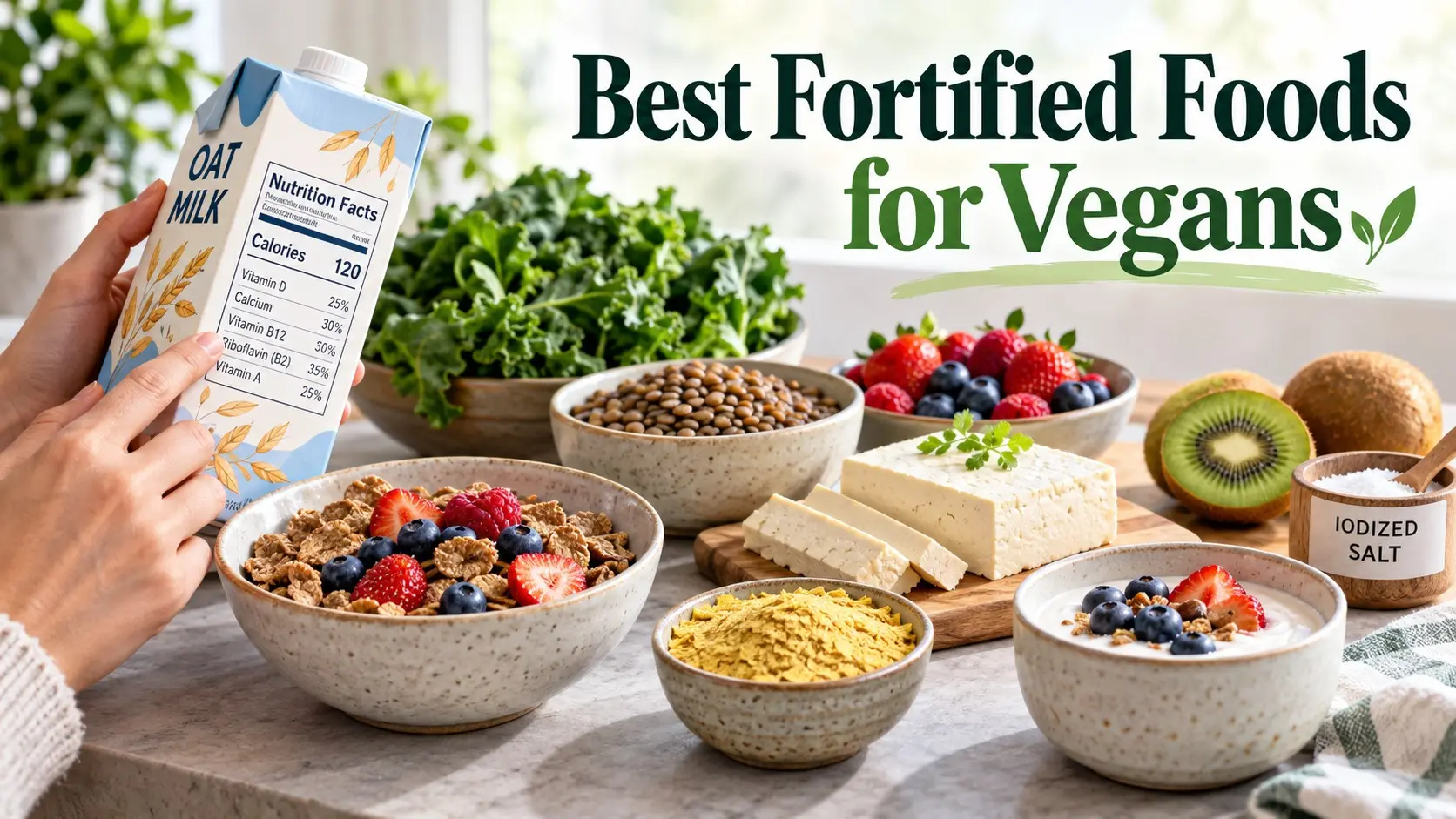
Best fortified foods for vegans make it easier to cover nutrients that deserve extra attention on a fully plant based diet. The most useful choices include fortified plant milk, plant yogurt, nutritional yeast, breakfast cereal, hot cereal, iodized salt, fortified spreads, selected meat alternatives, and fortified juice.
The trick is not to buy every food with the word “fortified” on the package. I would choose two or three foods that solve a clear nutrition job, check the label, then build the rest of the day around beans, lentils, tofu, vegetables, fruit, whole grains, nuts, and seeds.
Vitamin B12 deserves the most attention. Plant foods do not naturally provide reliable vitamin B12, so vegans need a dependable source from fortified foods or supplements. Calcium, vitamin D, iodine, and iron also deserve thoughtful planning.
Health note: This article is for general information and education. It does not replace medical advice, diagnosis, or treatment.
I am not a dermatologist, doctor, or registered dietitian. What I share comes from real life experience, extensive research, and consultation with healthcare providers. Always consult qualified medical professionals for diagnosis and treatment of any health condition.
Table of Contents
- Why Fortified Foods Matter
- The 30 Second Label Test
- 9 Best Fortified Foods for Vegans
- Fortified Plant Milk
- Fortified Plant Yogurt
- Fortified Nutritional Yeast
- Fortified Breakfast Cereal
- Fortified Hot Cereal
- Iodized Salt
- Fortified Vegan Spreads
- Fortified Meat Alternatives
- Fortified Juice
- Which Nutrients Matter Most?
- A Simple Vegan Day
- Food First Does Not Mean Food Only
- Common Shopping Mistakes
- Who Needs Extra Help?
- Frequently Asked Questions
- References and Sources
Why Do Fortified Foods Matter on a Vegan Diet?
A varied vegan diet can provide protein, fiber, healthy fats, iron, zinc, magnesium, folate, potassium, vitamin C, and many other nutrients from ordinary foods.
Some nutrients need a more deliberate plan.
Vitamin B12 is the clearest example. The National Institutes of Health states that plant foods do not naturally contain vitamin B12 unless the nutrient has been added. Fortified breakfast cereal and fortified nutritional yeast are recognized B12 sources.
That makes vitamin B12 fortified foods different from many other foods in a vegan kitchen. They are not simply convenient. They can fill a gap that beans, vegetables, fruit, grains, nuts, and seeds cannot reliably fill on their own.
Fortified foods can also make calcium, vitamin D, iodine, and iron easier to manage.
For a broader look at vitamins, minerals, food sources, deficiencies, and supplement safety, use the NextFitLife Nutrition & Vitamins Hub.
My 30 Second Test for Vegan Nutrition Labels
I would not choose a product because the front of the carton says healthy, natural, plant powered, or fortified.
Turn it around.
Start with the serving size, then find the nutrient you actually want. If you are buying plant milk for calcium, look at calcium. If you want nutritional yeast for B12, look at vitamin B12.
The FDA gives a useful shortcut for vegan nutrition labels. Five percent Daily Value or less is considered low, while 20 percent or more is considered high.
That does not mean every fortified food needs 20 percent or more of every nutrient. It gives you a fast way to compare similar products.
| Label Check | What to Ask | Why It Matters |
|---|---|---|
| Serving Size | How much food gives the listed nutrients? | A tiny serving can make a label look better than your real portion. |
| Vitamin B12 | Has B12 actually been added? | Unfortified plant foods are not reliable B12 sources. |
| Calcium | Does this product make a useful contribution? | Fortified plant milk can be an easy daily calcium source. |
| Vitamin D | Is vitamin D listed? | Very few foods naturally contain much vitamin D. |
| Added Sugar | Can I get similar nutrients with less added sugar? | Fortification does not automatically make a food a better everyday choice. |
One more rule helps: compare like with like. Compare plant milks with plant milks and cereals with cereals, using similar serving sizes.
9 Best Fortified Foods for Vegans
1. Fortified Plant Milk Is My Best All Round Pick
If I had to choose one fortified food to make a vegan diet easier, I would start with fortified plant milk.
Soy, almond, oat, pea, and other plant drinks can contain added calcium, vitamin D, B12, and sometimes other nutrients. The exact amounts change by brand, so the carton matters more than the type of plant pictured on the front.
The NIH calcium reference table lists one cup of calcium fortified soy milk at about 299 mg of calcium. NIH vitamin D data also show that fortified soy, almond, and oat drinks can provide vitamin D, although amounts vary by product.
For an everyday milk replacement, I would check four things:
- Calcium
- Vitamin D
- Vitamin B12
- Protein
If two products have similar fortification, I would usually choose the one with less added sugar. If the drink is replacing dairy milk in meals, protein is also worth comparing.
Use plant milk in cereal, oats, smoothies, coffee, soups, sauces, mashed potatoes, or baking. Shake the carton before pouring because some added minerals can settle.
For related calcium guidance, see Calcium Rich Foods Without Dairy and Vitamin D and Calcium Foods.
2. Fortified Plant Yogurt Works Best When You Actually Like It
Plant yogurt can provide another easy calcium source during the day, but products vary more than many shoppers expect.
Some contain added calcium, vitamin D, and B12. Others contain little of those nutrients.
That means coconut yogurt, almond yogurt, oat yogurt, and soy yogurt are not nutritionally interchangeable.
Check the label for calcium first. Then look at B12, vitamin D, protein, and added sugar.
I would choose a product you will actually eat. A yogurt with excellent numbers does little for your diet if it sits unopened in the fridge.
Use it with berries and oats, add nuts or seeds, blend it into a smoothie, or turn plain yogurt into a savory sauce with herbs and lemon.
3. Fortified Nutritional Yeast Is Useful, but Not All Nutritional Yeast Has B12
This is one of the most important label lessons in vegan nutrition.
Fortified nutritional yeast can provide vitamin B12. Unfortified nutritional yeast cannot be assumed to provide a reliable amount.
NIH lists fortified nutritional yeast among the readily available plant friendly sources of B12.
Look for vitamin B12 on the Nutrition Facts panel or ingredient list. Do not assume that every yellow flake in a bag is nutritionally identical.
Nutritional yeast works well on pasta, popcorn, potatoes, beans, soup, vegetables, tofu scramble, and savory sauces.
For a deeper guide to B12 foods, see B12 Rich Foods.
4. Fortified Breakfast Cereal Can Be Surprisingly Useful
Cereal gets judged too quickly. Some products are mostly refined grain and sugar, while others can provide fiber plus useful amounts of B vitamins, B12, iron, or vitamin D.
The label decides which one you are looking at.
An iron fortified cereal can be especially practical for people eating a plant based diet because plant iron is nonheme iron, which is less readily absorbed than heme iron from animal foods.
Pairing an iron containing cereal with vitamin C rich fruit makes sense. Try strawberries, kiwi, orange, or another fruit you enjoy.
Vitamin C helps the body absorb nonheme iron.
For a full food pairing guide, read Foods That Help Iron Absorption.
My ideal bowl is simple: a lower sugar fortified cereal, fortified plant milk, fruit, and a spoonful of seeds.
5. Fortified Hot Cereal Can Make Breakfast Easier
Some instant oatmeal, wheat cereals, and other hot cereals have iron, folic acid, B vitamins, or other nutrients added.
This category is easy to miss because people tend to think only about cold boxed cereal when they hear the word fortified.
Again, check the label. Plain oats are nutritious, but they are not automatically fortified.
If you choose a fortified hot cereal, pair it with plant milk, fruit, nuts, seeds, or nut butter. That turns one small bowl into a more complete breakfast.
I would still watch the added sugar in flavored packets. You can sweeten a plain version with fruit if you prefer more control.
6. Iodized Salt Solves a Very Specific Problem
Iodized salt is not glamorous, but it is one of the most practical ways to obtain iodine.
Iodine supports normal thyroid hormone production. NIH lists people following vegan diets among the groups who may have more difficulty getting enough iodine because dairy, seafood, and eggs are absent.
The answer is not to eat more salt.
If you already use salt in normal cooking, check whether some of it is iodized.
Many specialty salts, sea salts, and pink salts are not iodized. Processed food also cannot be assumed to provide iodized salt.
Seaweed can contain iodine, but the amount varies widely. Some types can contain very high amounts, so “eat more seaweed” is not a precise iodine strategy.
For a full guide, use Plant Based Iodine Sources.
7. Fortified Vegan Spreads Can Add Small Amounts That Count
Some vegan margarines and spreads contain added vitamin D, vitamin A, B12, or other nutrients.
This is not a reason to eat large portions of spread. It is simply a smart place to notice what a food you already use can contribute.
If two spreads fit your cooking needs, compare the labels. A fortified option may add useful vitamin D or B12 without changing the meal.
Vitamin D is especially relevant because few foods naturally contain much of it. NIH notes that fortified foods supply much of the dietary vitamin D in the United States.
8. Fortified Vegan Meat Alternatives Can Help, but Read the Whole Label
Some vegan burgers, sausages, mince, nuggets, and similar foods contain added B12, iron, zinc, or other nutrients.
That is useful, but I would not buy one simply because it is fortified.
Compare protein, fiber, sodium, saturated fat, added nutrients, and serving size together.
A product can be plant based and fortified while still containing more sodium than you want for an everyday food.
For most meals, beans, lentils, chickpeas, tofu, tempeh, nuts, seeds, and whole grains still deserve plenty of space.
Fortified meat alternatives are best treated as convenient tools, not the foundation of a healthy vegan diet.
9. Fortified Juice Can Help When It Fills a Real Gap
Some orange juice and other juices contain added calcium and vitamin D.
The NIH calcium table lists calcium fortified orange juice at about 349 mg calcium per cup in one reference example. Real products vary, so check your label.
Fortified juice can be useful for someone who dislikes plant milk or needs another calcium option.
I would still choose whole fruit most of the time because whole fruit provides fiber and is usually more filling.
Use fortified juice because it solves a nutrition problem, not because adding calcium turns juice into a health food.
Bonus: Calcium Set Tofu Is Worth Knowing About
Calcium set tofu is not exactly the same as a classic fortified food, and that distinction is worth making.
Some tofu is made with calcium sulfate. The calcium used during production becomes part of the tofu, which can make that product a useful calcium source.
NIH lists firm tofu made with calcium sulfate at about 253 mg calcium per half cup in one reference example.
But not every tofu uses calcium sulfate.
Check the ingredient list and nutrition label. Some tofu contains much less calcium.
This is a good example of why specific products matter more than generic food lists.
Which Nutrients Should Vegans Watch Most Closely?
Different people have different needs, but five nutrients come up again and again when fortified foods are discussed.
| Nutrient | Why It Needs Attention | Useful Fortified Sources | FDA Daily Value |
|---|---|---|---|
| Vitamin B12 | Unfortified plant foods are not reliable sources. | Plant milk, cereal, nutritional yeast, selected meat alternatives | 2.4 mcg |
| Calcium | Dairy is absent, so deliberate plant sources help. | Plant milk, plant yogurt, fortified juice | 1,300 mg |
| Vitamin D | Few foods naturally contain much vitamin D. | Plant milk, cereal, spreads, selected juices | 20 mcg |
| Iodine | Common animal sources are absent from a vegan diet. | Iodized salt and selected fortified products | 150 mcg |
| Iron | Plant foods contain nonheme iron, which is less readily absorbed. | Fortified cereal, enriched grain products, selected meat alternatives | 18 mg |
These FDA Daily Values are label reference amounts for comparing products. They are not personal prescriptions. Your needs can differ with age, sex, pregnancy, breastfeeding, medical conditions, and other factors.
Should Vegans Choose Vitamin D2 or D3?
This small label detail matters if you avoid all animal derived ingredients.
Vitamin D2 is produced from yeast. Vitamin D3 is often made from lanolin, which comes from sheep wool, although vegan D3 made from lichen is also available.
If a product says only “vitamin D3” and vegan sourcing matters to you, check the package or manufacturer information.
Both D2 and D3 can raise vitamin D levels, although NIH notes that D3 tends to raise and maintain blood vitamin D levels more effectively.
What Does a Practical Vegan Day Look Like?
You do not need nine fortified foods every day.
Two or three well chosen products can do plenty.
Breakfast
Try fortified cereal with fortified soy milk, berries or kiwi, and chia or ground flax.
Depending on the labels, that breakfast can contribute B12, calcium, vitamin D, iron, protein, fiber, and vitamin C.
Lunch
Build lunch around lentils, chickpeas, beans, or tofu with whole grains and vegetables.
Bell peppers, tomatoes, broccoli, kiwi, or citrus fruit can supply vitamin C alongside plant iron.
Snack
Use fortified plant yogurt with fruit and nuts, or make a smoothie with fortified plant milk.
Dinner
Try calcium set tofu, beans, or tempeh with rice, potatoes, noodles, or another grain and plenty of vegetables.
If you normally cook with salt, use some iodized salt within your usual sodium intake.
Flavor Boost
Add fortified nutritional yeast to pasta, soup, beans, vegetables, or popcorn if you enjoy it.
This is the pattern I recommend: ordinary whole foods first, then strategic fortification where it solves a specific problem.
Food First Does Not Mean Food Only
This matters most for vitamin B12.
A vegan diet needs a reliable B12 source. Fortified foods can provide it, but only when they are eaten often enough and contain enough B12.
If your B12 strategy depends on three foods and you stop buying them, change brands, travel, or simply forget to eat them, your intake changes too.
A B12 supplement can therefore be a simpler and more dependable option for many vegans.
That does not make the diet less “natural.” It makes the nutrient plan more reliable.
If you think you may already have a B12 deficiency, do not try to correct it with breakfast cereal alone. A healthcare professional can arrange testing and recommend treatment when needed.
Do Fortified Foods Replace Whole Plant Foods?
No.
Fortification fills specific nutrient gaps. It does not replace the fiber, protein, healthy fats, carbohydrates, vitamins, minerals, and plant compounds found across a varied diet.
A strong food first vegan nutrition pattern still includes:
- Beans
- Lentils
- Chickpeas
- Tofu and tempeh
- Whole grains
- Vegetables
- Fruit
- Nuts
- Seeds
Fortified foods sit inside that pattern rather than replacing it.
For broader food habits, see Healthy Eating Lifestyle.
Are Fortified Foods Too Processed?
Most fortified packaged foods are processed in some way. That fact alone does not tell you whether a product is useful.
Adding B12 to nutritional yeast, iodine to salt, or calcium to plant milk is a form of processing. It also serves a clear nutrition purpose.
I would judge the whole product.
Look at its added sugar, sodium, saturated fat, protein, fiber, ingredients, and the nutrients it contributes.
The word processed is too broad to make the decision for you.
5 Common Mistakes When Buying Fortified Vegan Foods
1. Assuming Every Plant Milk Is the Same
One carton may contain calcium, vitamin D, and B12. Another may contain little or none.
Check every brand.
2. Assuming Nutritional Yeast Always Contains B12
It does not.
Only use nutritional yeast as a B12 source when the label confirms that it has been fortified.
3. Replacing Iodized Salt With Specialty Salt Without Checking
Sea salt, pink salt, and gourmet salts are not automatically iodized.
If iodized salt was your iodine source, this swap can quietly remove it.
4. Thinking More Iron Is Always Better
Iron needs vary widely.
Do not take high dose iron because you feel tired. Fatigue has many causes, and too much iron can be harmful.
5. Looking Only at the Nutrient Claim on the Front
A cereal can be fortified and still be very high in added sugar.
A meat alternative can contain B12 and still be high in sodium.
Use the full Nutrition Facts panel, not one front label claim.
Can Vegans Get Too Much From Fortified Foods?
It is possible to stack several fortified foods and supplements without realizing how much of a nutrient you are getting.
This matters more for some nutrients than others.
Iodine and iron are good examples where “more” is not automatically better.
If you take a multivitamin, B12, vitamin D, iron, iodine, or other supplements, look at those labels alongside your regular fortified foods.
Do not treat symptoms as proof of a deficiency. Testing and medical history matter.
Who Should Get Individual Nutrition Advice?
General food advice is not enough for everyone.
Speak with a doctor or registered dietitian if you:
- Are pregnant or breastfeeding
- Are planning a fully vegan diet for a child
- Have a diagnosed nutrient deficiency
- Have had bariatric surgery
- Have Crohn's disease, celiac disease, or another condition that affects absorption
- Take medicines that can affect nutrient status
- Have unexplained fatigue, weakness, numbness, tingling, or balance problems
- Have thyroid disease or another condition affecting iodine needs
Children and pregnancy need their own nutrition plans because nutrient requirements differ from those of a typical adult.
My Practical Shopping Formula
If you want to keep this simple, use one formula.
1. Choose the nutrient job.
Decide whether you need the food mainly for B12, calcium, vitamin D, iodine, iron, protein, or convenience.
2. Check the amount per serving.
Use the Nutrition Facts panel and compare similar serving sizes.
3. Check the rest of the product.
Look at added sugar, sodium, saturated fat, fiber, and protein where they matter.
4. Ask whether you will really eat it.
A useful food is one that fits your normal meals and gets eaten regularly.
This method is more reliable than memorizing brand names because recipes and fortification levels change.
Conclusion
Best fortified foods for vegans are the ones that solve a real nutrition need and fit meals you already enjoy. For most people, a well fortified plant milk is the easiest place to start, followed by a dependable B12 source and a clear iodine plan.
Do not try to collect every fortified product on the shelf. Pick a few that earn their place, keep whole plant foods at the center of your meals, and check labels whenever you change brands.
Your next step is simple: look at the plant milk, cereal, yogurt, nutritional yeast, and salt you already use. Find out what they actually provide before buying anything new.
Internal Links + Hub
- Nutrition & Vitamins Hub
- B12 Rich Foods
- Calcium Rich Foods Without Dairy
- Vitamin D and Calcium Foods
- Foods That Help Iron Absorption
- Plant Based Iodine Sources
- Vegan Choline Sources
- Vegan Selenium Sources
- Healthy Eating Lifestyle
About the Author
Adel Galal is the Founder and Lead Writer at NextFitLife. He has more than 30 years of experience exploring health, fitness, nutrition, and healthy aging topics and focuses on turning detailed health information into clear, practical guidance readers can use.
He is not a doctor, dermatologist, registered dietitian, or other licensed medical professional. His work is based on extensive research, real life experience, trusted health guidance, and consultation with healthcare providers. It is written for education and does not replace individual medical care.
Learn more about NextFitLife, its author, and its editorial approach on the About Us page.
Frequently Asked Questions
What are the best fortified foods for vegans?
The best fortified foods for vegans include fortified plant milk, plant yogurt, nutritional yeast, breakfast cereal, fortified hot cereal, iodized salt, vegan spreads, selected meat alternatives, and fortified juice. The best choice depends on the nutrient you need.
What is the best fortified food for vitamin B12?
Fortified nutritional yeast, breakfast cereal, and some plant milks can provide vitamin B12. Check the label because unfortified versions may contain little or no B12.
What is the best fortified food for calcium?
Fortified plant milk is one of the easiest everyday calcium options. Some plant yogurts and juices are also fortified with calcium, while calcium set tofu can provide useful calcium even though it is not a classic fortified food.
Do vegans need fortified foods?
Fortified foods are very useful, especially for vitamin B12, calcium, vitamin D, and iodine. Vitamin B12 needs a deliberate reliable source from fortified foods or supplements because ordinary unfortified plant foods do not provide dependable B12.
Is nutritional yeast always fortified with vitamin B12?
No. Some nutritional yeast contains added B12, while other products are unfortified. Always check the Nutrition Facts panel or ingredient list.
Is iodized salt useful on a vegan diet?
Yes. Iodized salt can provide a dependable source of iodine when used within your normal salt intake. You do not need to increase sodium intake to obtain more iodine.
Is fortified plant milk better than regular plant milk?
For someone using plant milk as a regular dairy alternative, fortification with calcium, vitamin D, and B12 can make it nutritionally more useful. Compare the label, protein, added sugar, and serving size rather than relying on the product name.
Can fortified foods replace a vitamin B12 supplement?
They can provide B12 when the amount and frequency are reliable. Many vegans still find a B12 supplement simpler and more consistent. Ask a healthcare professional if you have symptoms, absorption problems, pregnancy, or a known deficiency.
References and Sources
- National Institutes of Health Office of Dietary Supplements. Vitamin B12 Fact Sheet for Health Professionals.
https://ods.od.nih.gov/factsheets/VitaminB12-HealthProfessional/ - National Institutes of Health Office of Dietary Supplements. Calcium Fact Sheet for Health Professionals.
https://ods.od.nih.gov/factsheets/Calcium-HealthProfessional/ - National Institutes of Health Office of Dietary Supplements. Vitamin D Fact Sheet for Health Professionals.
https://ods.od.nih.gov/factsheets/VitaminD-HealthProfessional/ - National Institutes of Health Office of Dietary Supplements. Iodine Fact Sheet for Health Professionals.
https://ods.od.nih.gov/factsheets/Iodine-HealthProfessional/ - National Institutes of Health Office of Dietary Supplements. Iron Fact Sheet for Health Professionals.
https://ods.od.nih.gov/factsheets/Iron-HealthProfessional/ - U.S. Food and Drug Administration. Daily Value on the Nutrition and Supplement Facts Labels.
https://www.fda.gov/food/nutrition-facts-label/daily-value-nutrition-and-supplement-facts-labels

Health & wellness writer with 30+ years of experience in nutrition, fitness, and healthy aging. Founder of NextFitLife.com — evidence-based health guidance.