Published: October 11, 2026
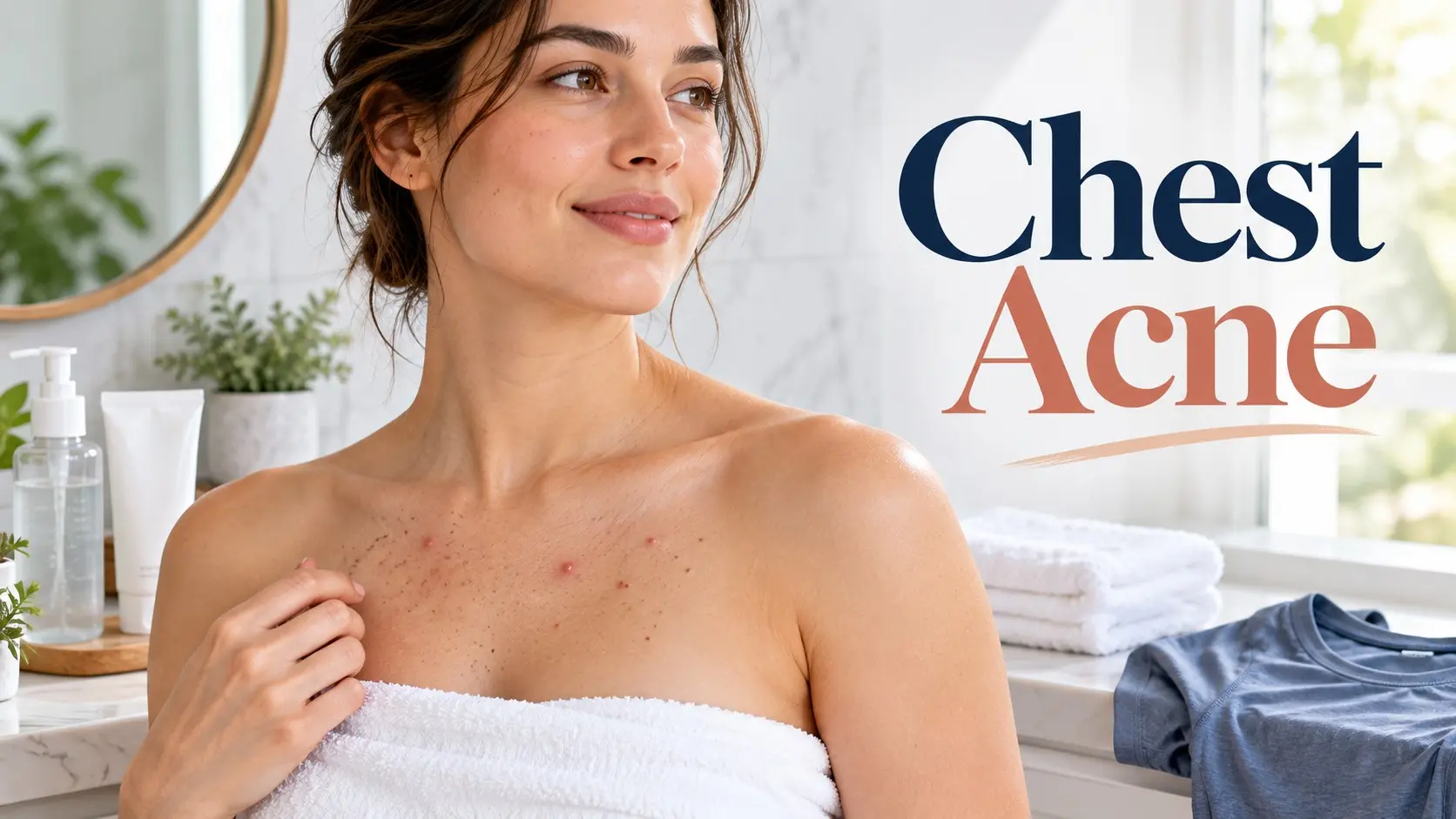
Chest acne happens when hair follicles on the chest become blocked and inflamed. Sweat, friction, hormones, oily products, and some medicines can make it worse. Mild breakouts often improve with proven acne treatments, but very itchy, identical, deep, painful, or scarring bumps need a closer look because they may not be ordinary acne.
The first useful step is simple: look at the bumps before you treat them.
If you see blackheads, whiteheads, red pimples, and a few pus filled spots, acne is likely. If almost every bump looks the same and the area is very itchy, think about folliculitis too.
Medical note: This article is for general information and education. It does not replace medical advice, diagnosis, or treatment.
I am not a dermatologist or a doctor, and this content does not replace professional medical advice. What I share comes from real life experience, extensive research, and consultation with healthcare providers. Always consult qualified medical professionals for diagnosis and treatment of any health condition.
Clinical review status: This article has not been medically reviewed by a dermatologist.
Table of Contents
- What Chest Acne Looks Like
- Chest Acne Causes
- Acne or Folliculitis?
- 11 Proven Ways to Clear Chest Acne
- Benzoyl Peroxide
- Salicylic Acid
- Adapalene
- Azelaic Acid
- Gentle Cleansing
- Workout Care
- Reduce Friction
- Check Body Products
- Do Not Pick
- Give Treatment Time
- Know When to Get Help
- Simple Treatment Guide
- Women and Hormones
- Chest Acne in Men
- Pregnancy
- 8 Week Routine
- Common Mistakes
- Frequently Asked Questions
- References and Sources
What Does Chest Acne Look Like?
Chest acne is acne vulgaris on the upper body. It forms when oil, dead skin cells, and inflammation affect a hair follicle.
You may see:
- Blackheads
- Whiteheads
- Small red pimples
- Pus filled pimples
- Deep tender bumps
- Several types at the same time
The mix matters.
Ordinary acne often gives you different looking spots at the same time. You might have a whitehead beside a red pimple and a blackhead a few centimeters away.
A chest filled with nearly identical itchy bumps is a different pattern.
If you also have acne across your shoulders or upper back, read the NextFitLife Back Acne guide.
What Causes Chest Acne?
Chest acne causes are usually a mix of blocked follicles, oil, inflammation, hormones, and daily triggers.
Oil and Clogged Pores
Your chest has oil glands and hair follicles just like your face.
Oil and dead skin cells can build up inside a follicle. This creates clogged pores, which appear as blackheads or whiteheads.
When inflammation develops, the spot can become red, swollen, or painful.
Hormones
Hormones influence oil production.
Breakouts can become worse during puberty, menstrual cycles, pregnancy, or other hormonal changes. Some medicines and hormone treatments can also affect acne.
Persistent lower face acne plus chest acne can sometimes point toward a hormonal pattern. For more detail, see Jawline Acne Causes.
Sweat, Heat, and Friction
Sweat is not dirt.
The bigger problem is what happens when sweat sits under tight clothing while fabric or equipment keeps rubbing the same area.
This can cause acne mechanica.
Common triggers include:
- Sports bras
- Compression shirts
- Tight synthetic workout tops
- Chest protectors
- Backpack straps
- Weight training benches
- Protective sports gear
The American Academy of Dermatology explains that trapped heat, sweat, pressure, and rubbing can cause acne mechanica.
Skin and Hair Products
Body oil, heavy lotion, sunscreen, hair conditioner, and styling products can sit on the chest.
That does not mean every rich product causes acne, but acne prone skin may do better with products labeled noncomedogenic or made not to clog pores.
For a deeper guide, read Noncomedogenic Skincare Meaning.
Medicines
Some medicines can worsen acne in some people.
Mayo Clinic notes that corticosteroids, testosterone, and lithium are among the medicines linked with acne flares.
Do not stop a prescribed medicine on your own.
Tell the clinician who prescribed it when the acne started and how severe it has become.
Is It Chest Acne or Folliculitis?
This is one of the most useful questions in the whole article.
Malassezia folliculitis can look like chest acne, but it behaves differently.
DermNet describes it as small, uniform, itchy bumps and pustules that commonly affect the upper chest and back. Blackheads and whiteheads are usually absent.
| Clue | Chest Acne | Malassezia Folliculitis |
|---|---|---|
| Blackheads | Common | Usually absent |
| Whiteheads | Common | Usually absent |
| Spot Size | Often mixed | Usually very similar |
| Itching | Can happen | Often strong |
| Chest and Back | Common | Common |
Bacterial folliculitis can also look like acne.
Shaving, tight clothing, hot damp skin, rubbing, and damaged follicles can make folliculitis more likely.
If the bumps are very itchy, all look the same, or refuse to improve with sensible acne treatment, get the diagnosis checked.
11 Proven Ways to Clear Chest Acne
1. Use Benzoyl Peroxide for Red Inflamed Pimples
If inflamed pimples and pustules are the main problem, benzoyl peroxide is a strong first choice.
The American Academy of Dermatology strongly recommends benzoyl peroxide for acne.
A wash is practical on the chest because it covers a wide area quickly.
Start gently.
AAD guidance notes that 2.5 percent benzoyl peroxide can be a useful starting strength because stronger products can cause more dryness and irritation.
Follow the product directions and rinse well.
Benzoyl peroxide can bleach towels, shirts, bras, bedding, and hair.
What About Benzoyl Peroxide and Benzene?
There was concern about benzene in some benzoyl peroxide products, but the FDA findings need context.
In March 2025, FDA tested 95 benzoyl peroxide acne products. More than 90 percent had undetectable or extremely low benzene levels. Six tested products had elevated levels.
The FDA said the estimated cancer risk from exposure to the recalled products, even with daily use for decades, was very low.
Benzoyl peroxide can break down into benzene under certain conditions, including extreme heat.
Store the product as directed, keep it away from excessive heat, discard expired products, and check FDA recall information if you are worried about a specific brand or lot.
2. Use Salicylic Acid for Blackheads and Rough Clogged Pores
If your chest feels rough and has more blackheads and whiteheads than angry red pimples, salicylic acid may fit better.
Salicylic acid helps unclog pores and exfoliate dead skin.
AAD includes it among recommended topical acne treatments.
It can also be helpful in acne mechanica, where clothing or sports gear creates heat and friction.
A body wash is easy to use over the chest.
Do not add a rough scrub on top of it.
3. Consider Adapalene When New Acne Keeps Appearing
If your chest keeps making new blackheads, whiteheads, and pimples, prevention matters.
Adapalene is a topical retinoid. It helps keep pores from clogging and reduces inflammation.
AAD strongly recommends topical retinoids for acne.
Apply treatment over the acne prone area as directed rather than putting it only on visible pimples.
Retinoids can cause dryness and irritation at first. A simple noncomedogenic moisturizer can help.
Do not use topical retinoids during pregnancy unless your healthcare team gives specific advice. ACOG recommends avoiding topical retinoids during pregnancy.
4. Consider Azelaic Acid When Dark Marks Are Part of the Problem
Azelaic acid can help acne and can also help fade some dark marks that remain after a breakout.
AAD includes azelaic acid among recommended topical options.
A flat dark mark after a pimple is usually post inflammatory hyperpigmentation, not a true scar.
A dent or raised scar is different.
For more help separating marks from scars, read Acne Marks vs Acne Scars.
You can also read Post Inflammatory Hyperpigmentation Acne.
5. Wash Gently
Chest acne does not mean you are dirty.
Harsh soap and scrubbing can make acne worse.
AAD advises gentle washing with fingertips and a mild cleanser rather than scrubbing acne prone skin.
Use warm water, not very hot water.
Avoid rough body brushes, abrasive gloves, and gritty scrubs over active acne.
For simple skin barrier habits, see Healthy Skin 101.
6. Change Out of Sweaty Clothes
You do not need to stop working out.
Instead, change the conditions around the workout.
AAD recommends clean workout clothes, gentle sweat removal, showering after exercise when possible, and changing out of sweaty clothes when you cannot shower.
Wash sports bras and workout tops after use.
Do not leave damp fabric pressed against acne prone skin for hours.
7. Reduce Friction
Look at where the acne appears.
If it follows the edge of a bra, chest pad, backpack strap, or tight shirt, that pattern matters.
AAD recommends moisture wicking clothing, looser workout clothes, and clean soft padding between equipment and the skin when friction causes acne mechanica.
Keep treating the acne, but also stop recreating the irritation every day.
8. Check Body and Hair Products
Conditioner can run down the chest. Body oils can sit under clothing. Thick creams can stay trapped beneath a sports bra.
If acne appeared after a new product, change one thing at a time.
Choose noncomedogenic products when possible.
The label is useful, but it is not a guarantee.
For the full explanation, read Noncomedogenic Skincare Meaning.
9. Do Not Squeeze Chest Pimples
Picking and squeezing can push inflammation deeper into the skin.
It can also increase dark marks and scarring.
AAD advises against popping or squeezing acne.
Deep painful lumps need proper treatment, not pressure from your fingers.
10. Give Treatment Enough Time
Do not judge an acne treatment after four days.
AAD advises using a suitable over the counter active consistently for about 6 to 8 weeks before deciding whether it is helping. Fewer breakouts may appear within 4 to 8 weeks, while fuller clearing takes longer.
This is why changing products every week makes treatment harder to judge.
Take a photo every two weeks in similar light. Look for fewer new pimples rather than staring at old marks.
11. Get Professional Help Before Deep Acne Scars
Deep nodules and cysts are different from a few surface pimples.
They hurt more and carry a greater risk of scars.
See a dermatologist if you have:
- Deep painful bumps
- Cysts or nodules
- New scars
- Large areas of chest and back acne
- Rapid worsening
- Very itchy uniform bumps
- No clear improvement after a consistent treatment trial
- Acne that affects exercise, clothing, confidence, or daily life
Prescription options can include topical retinoids, oral antibiotics, hormonal treatments for selected patients, and isotretinoin for severe acne. Current AAD guidance also recommends limiting systemic antibiotic use and combining antibiotics with suitable topical treatment.
Which Treatment Fits Your Chest Acne?
| What You See | Good Starting Option | Why It Fits |
|---|---|---|
| Red inflamed pimples | Benzoyl peroxide | Targets acne related bacteria and inflammation |
| Blackheads and whiteheads | Salicylic acid | Helps clear clogged pores |
| Repeated mixed breakouts | Adapalene | Helps prevent new blocked follicles |
| Acne plus dark marks | Azelaic acid | Treats acne and may help discoloration |
| Many identical itchy bumps | Check the diagnosis | Folliculitis may be more likely |
| Deep painful lumps | Dermatologist | Higher risk of scarring |
How to Get Rid of Chest Acne After Exercise
If exercise seems to trigger chest breakouts, do not stop training.
Instead:
- Wear clean workout clothes.
- Choose breathable or moisture wicking fabric.
- Reduce tight pressure on the same skin.
- Pat sweat instead of rubbing.
- Shower after heavy sweating when possible.
- Change out of damp clothes.
- Wash workout tops and sports bras after use.
- Clean equipment that touches your chest.
These steps match AAD advice for workout related acne.
How to Clear Chest Acne in 8 Weeks
Weeks 1 and 2
Pick one main active ingredient based on the breakout.
Use benzoyl peroxide if red pimples dominate. Use salicylic acid if blackheads and rough clogged pores are the bigger problem.
Use a gentle cleanser at other times.
Stop picking and stop scrubbing.
Weeks 3 and 4
Keep the routine steady if your skin is comfortable.
Do not add another active just because the chest is not clear yet.
Look for fewer new pimples.
Weeks 5 and 6
Take a photo in the same light.
If acne keeps forming and a retinoid is appropriate for you, consider whether adapalene fits your plan.
If your skin is becoming very sore, reduce irritation rather than adding more products.
Weeks 7 and 8
Ask whether the number of new pimples is clearly lower.
If yes, keep going.
If not, check the diagnosis, the treatment, your clothing, sweat habits, and products.
If the acne is deep, painful, scarring, or very itchy, get professional help instead of extending the experiment.
Female Chest Acne and Hormones
Hormonal acne can affect the chest as well as the face.
Hormones deserve more attention when breakouts:
- Flare around menstrual periods
- Appear with persistent jawline acne
- Are deep and tender
- Keep returning despite good topical care
AAD includes combined oral contraceptives and spironolactone among acne treatment options for appropriate women.
These are prescription treatments.
If acne comes with very irregular periods, new facial hair, or scalp hair thinning, discuss the whole pattern with a healthcare professional.
Chest Acne in Men
The basic treatment is the same.
Look at whether the acne is inflamed, clogged, deep, itchy, or related to friction.
One extra clue matters: testosterone.
Testosterone therapy and anabolic steroid use can worsen acne in some people.
Do not stop prescribed testosterone on your own. Tell the prescribing clinician when the acne appeared.
Chest shaving can also create ingrown hairs or bacterial folliculitis. If bumps appear mainly around shaved follicles, the shaving method may be part of the problem.
What About Chest Acne During Pregnancy?
Pregnancy changes the treatment plan.
ACOG lists topical benzoyl peroxide, azelaic acid, topical salicylic acid, and glycolic acid among over the counter ingredients that can be used during pregnancy.
Topical retinoids should be avoided during pregnancy unless your healthcare team gives specific advice.
If you are pregnant, trying to become pregnant, or breastfeeding, check new acne medicines with your doctor or pharmacist.
Does Diet Cause Chest Acne?
I would not make a strict diet the first treatment.
AAD's updated acne guidance found that evidence was not strong enough to make specific dietary treatment recommendations for acne.
That does not mean food never affects one person's acne.
If you notice a repeatable food pattern, track it.
Do not remove several food groups at once and then assume you learned which one mattered.
What Should You Avoid?
Hard Scrubs
Scrubbing can irritate acne and make inflammation worse.
Toothpaste
Toothpaste is made for teeth, not acne.
Lemon Juice
Kitchen acids can irritate or burn skin.
Undiluted Essential Oils
Natural does not mean gentle.
Five New Products at Once
If your skin reacts, you will not know which product caused it.
Can Chest Acne Leave Scars?
Yes.
Deep inflammatory acne, nodules, cysts, and repeated picking increase the risk.
Do not wait months while painful acne keeps making new scars.
A dermatologist can treat severe acne earlier and may reduce the chance of more permanent scarring.
For help telling pigment marks from true scars, read Acne Marks vs Acne Scars.
When Should You See a Dermatologist?
Arrange professional care if your chest acne is:
- Deep
- Painful
- Scarring
- Widespread
- Getting worse quickly
- Very itchy and uniform
- Not improving after a consistent treatment trial
- Affecting confidence or daily life
Seek prompt care for spreading redness, severe swelling, warmth, fever, strong pain, drainage, or other signs of a skin infection.
Conclusion
Chest acne gets easier to manage when you stop treating every bump the same way.
Use benzoyl peroxide for inflamed acne, salicylic acid for clogged pores, and consider adapalene for repeated breakouts when it is appropriate. Reduce friction, change sweaty clothing, wash gently, and give treatment time.
Your next step is simple: look closely at your chest today. If you see a mix of blackheads, whiteheads, and pimples, start a basic acne routine. If you see dozens of identical itchy bumps, deep painful lumps, or new scars, stop guessing and arrange professional care.
References and Sources
- American Academy of Dermatology. Acne Clinical Guideline.
https://www.aad.org/member/clinical-quality/guidelines/acne - American Academy of Dermatology. Updated Guidelines for the Management of Acne.
https://www.aad.org/news/updated-guidelines-acne-management - American Academy of Dermatology. Is Sports Equipment Causing Your Acne?
https://www.aad.org/public/diseases/acne/causes/sports-equipment - DermNet. Malassezia Folliculitis.
https://dermnetnz.org/topics/malassezia-folliculitis - U.S. Food and Drug Administration. Benzoyl Peroxide Product Testing and 2025 Recall Information.
https://www.fda.gov/drugs/drug-alerts-and-statements/limited-number-voluntary-recalls-initiated-after-fda-testing-acne-products-benzene-findings-show - American College of Obstetricians and Gynecologists. Skin Conditions During Pregnancy.
https://www.acog.org/womens-health/faqs/skin-conditions-during-pregnancy - Mayo Clinic. Facts About Body Acne.
https://newsnetwork.mayoclinic.org/discussion/mayo-clinic-q-and-a-facts-about-body-acne/
Internal Links + Hub
- Skin Health Hub
- Acne, Whiteheads and Pores Hub
- Chest Acne Treatment Guide
- Back Acne Guide
- Jawline Acne Causes
- Noncomedogenic Skincare Meaning
- Post Inflammatory Hyperpigmentation Acne
- Post Inflammatory Erythema Acne
- Acne Marks vs Acne Scars
- Skin Purging vs Breakout
About the Author
Adel Galal is the Founder and Lead Writer at NextFitLife. He writes about health, fitness, nutrition, skincare, and healthy aging with a focus on turning detailed guidance into clear practical steps.
He is not a dermatologist, physician, or other licensed medical professional. His health content is based on extensive research, real life experience, trusted medical guidance, and consultation with healthcare providers. It is written for education and does not replace individual diagnosis or treatment.
Learn more about NextFitLife, its author, and its editorial approach on the About Us page.
Frequently Asked Questions
What is the main cause of chest acne?
Chest acne forms when hair follicles become clogged and inflamed. Oil, dead skin cells, hormones, friction, sweat trapped under clothing, oily products, and some medicines can contribute.
How do you get rid of chest acne?
Choose treatment based on the breakout. Benzoyl peroxide is useful for red inflamed pimples, salicylic acid helps clogged pores, and adapalene helps prevent new acne. Reduce friction, change sweaty clothes, avoid picking, and give treatment enough time.
How can I clear chest acne fast?
There is no safe overnight cure. The fastest sensible approach is to use one proven treatment that matches the acne type, reduce sweat and friction triggers, and seek early medical help for deep or scarring acne.
Why am I suddenly getting chest acne?
Possible triggers include hormonal changes, hotter weather, heavier sweating, tight workout clothing, new body or hair products, new medicines, testosterone, or increased friction. Sudden very itchy uniform bumps can also be folliculitis.
Why is my chest acne itchy?
Mild acne can itch, but strong itching with many similar bumps raises the possibility of Malassezia folliculitis. This commonly affects the chest and back and usually does not cause blackheads or whiteheads.
Does sweat cause chest acne?
Sweat alone is not the whole cause. Heat and sweat trapped under tight clothing, combined with pressure and rubbing, can contribute to acne mechanica.
Can salicylic acid clear chest acne?
Salicylic acid can help when blackheads, whiteheads, rough texture, and clogged pores are the main problem. It helps exfoliate skin and clear pores.
Can benzoyl peroxide clear chest acne?
Benzoyl peroxide is a proven treatment for inflammatory acne. It can reduce acne related bacteria and inflammation, but it can irritate skin and bleach fabric.
When should I see a dermatologist for chest acne?
See a dermatologist if chest acne is deep, painful, scarring, widespread, rapidly worsening, very itchy, or not improving after a consistent treatment trial. Seek prompt care for fever, spreading redness, strong swelling, or signs of infection.

Health & wellness writer with 30+ years of experience in nutrition, fitness, and healthy aging. Founder of NextFitLife.com — evidence-based health guidance.