Published on: October 23, 2026
Updated on: October 23, 2026
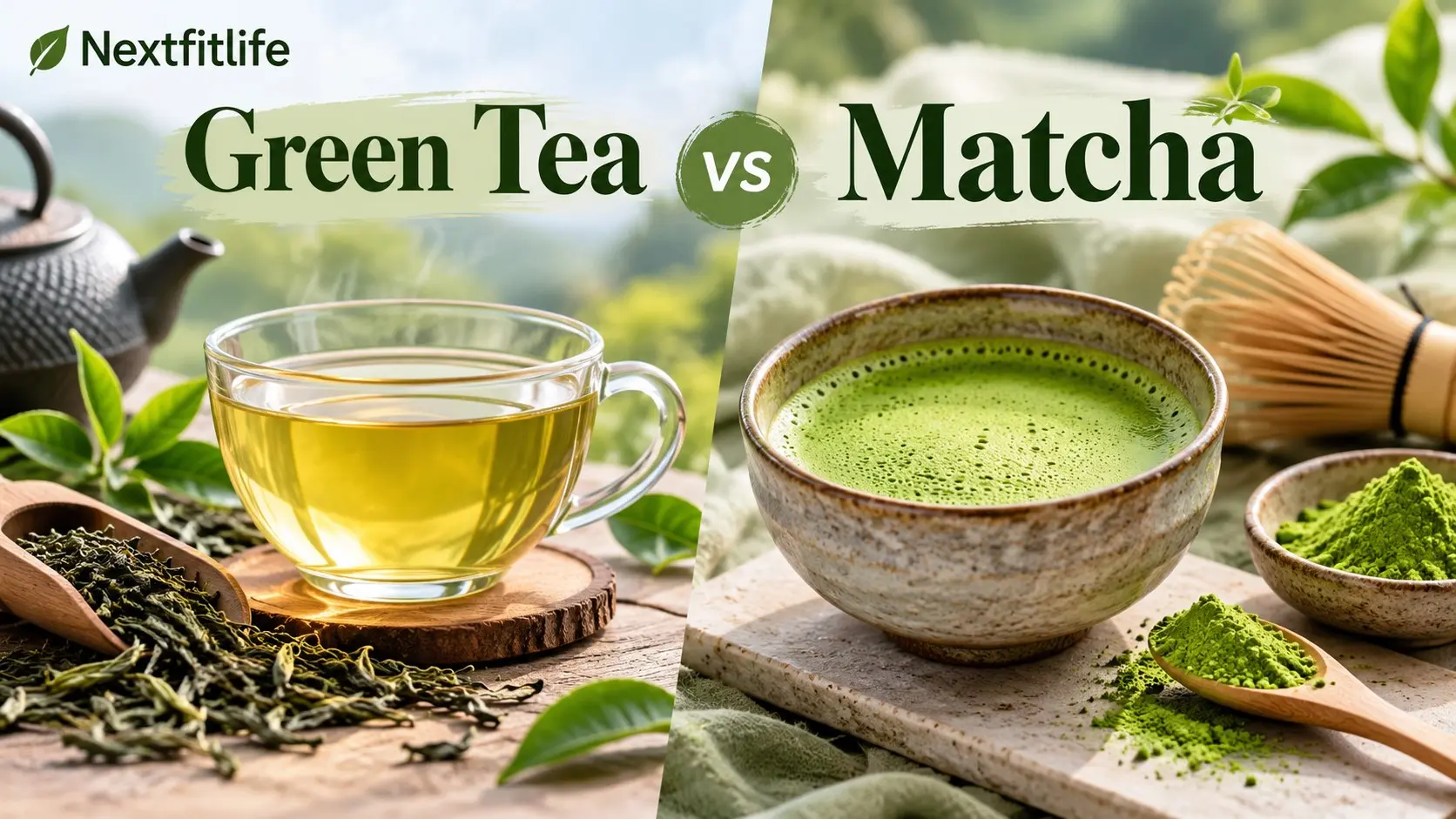
Green tea vs matcha has a simpler answer than most comparison articles make it seem. Choose regular green tea if you want a lighter, cheaper, usually lower caffeine drink for everyday use. Choose matcha if you enjoy a stronger flavor and want a more concentrated serving of tea leaf compounds.
Neither one automatically wins for health.
Both come from Camellia sinensis. The big difference is what reaches your cup. With traditional green tea, you steep the leaves and remove them. With matcha, you whisk finely powdered tea leaf into water and consume the powder itself.
That changes caffeine, taste, preparation, concentration, price, and a few health considerations.
Important: This article is for general information and education. It does not replace medical advice, diagnosis, or treatment.
I am not a dermatologist or a doctor, and this content does not replace professional medical advice. What I share comes from real life experience, extensive research, and consultation with healthcare providers. Always consult qualified medical professionals for diagnosis and treatment of any health condition.
Table of Contents
- Quick Verdict
- What Makes Matcha Different?
- Green Tea vs Matcha Nutrition
- 7 Differences That Matter
- Caffeine
- Tea compounds
- Taste
- Preparation
- Cost
- Weight loss claims
- Safety and tolerance
- Which Is Better for Your Goal?
- Matcha Latte Reality Check
- Iron and Tea
- Pregnancy and Caffeine
- Green Tea Extract Warning
- Frequently Asked Questions
- References and Sources
Green Tea vs Matcha: Which Is Better?
For most people, there is no universal winner.
| Your Goal | Better Fit | Why |
|---|---|---|
| Lower caffeine | Green tea | Usually easier to keep the caffeine dose lower. |
| Stronger caffeine effect | Matcha | A normal serving usually contains more caffeine. |
| Daily budget friendly tea | Green tea | Tea bags and loose leaf tea are usually cheaper. |
| More concentrated tea compounds | Matcha | You consume powdered tea leaf rather than only the brewed infusion. |
| Weight management | Either | Neither produces major fat loss by itself. |
| Simple preparation | Green tea | Steep, remove the leaves, and drink. |
| Latte or culinary use | Matcha | Powder mixes easily into milk, yogurt, and recipes. |
My practical choice for an everyday tea would be regular green tea. Matcha makes more sense when you specifically enjoy its flavor, want a stronger drink, or prefer using powdered tea in lattes and food.
For more evidence based drink choices, see Best Foods and Drinks for Weight Loss.
What Makes Matcha Different From Green Tea?
Both drinks begin with tea leaves from Camellia sinensis, but they are prepared differently.
For normal green tea, hot water draws some compounds from the leaves. You then remove the leaves and drink the infusion.
With matcha, finely ground tea powder is mixed into water. You drink the suspended powder itself.
This is why matcha nutrition cannot be compared with brewed tea as though they were identical products.
Matcha gives you more of the physical leaf. That includes compounds that may remain behind when ordinary tea leaves are discarded.
Green Tea vs Matcha Nutrition at a Glance
The exact nutrition depends heavily on serving size.
Plain versions of both drinks provide very few calories. The main differences people notice are caffeine and concentration of tea compounds.
| Feature | Green Tea | Matcha |
|---|---|---|
| Tea leaf consumed | No, leaves are normally removed | Yes, powdered leaf is consumed |
| Caffeine | Usually lower per typical serving | Usually higher per typical serving |
| Catechin exposure | Depends on brewing | More concentrated because the leaf is consumed |
| Taste | Light, grassy, vegetal | Stronger, richer, vegetal, umami |
| Preparation | Steep and remove leaves | Whisk or froth powder into liquid |
| Price | Usually lower | Usually higher |
1. Matcha Usually Has More Caffeine
This is one of the clearest practical differences.
Japan's Ministry of Agriculture, Forestry and Fisheries lists matcha powder at 3.2 grams of caffeine per 100 grams. Its example serving uses 1.5 grams of matcha in 70 mL water, which provides about 48 mg caffeine.
The same Japanese data list brewed sencha at about 20 mg caffeine per 100 mL when prepared using the specified laboratory method.
That does not give us one universal number for every cup. Tea strength changes with the leaf amount, water temperature, steep time, product, and serving size.
Still, if caffeine sensitivity is your main concern, ordinary green tea is usually the easier choice.
The FDA cites 400 mg caffeine per day as an amount not generally associated with negative effects for most healthy adults. Sensitivity differs widely, so your useful limit can be much lower.
If tea leaves you jittery, anxious, or unable to sleep, drinking more because it fits under a population guideline makes little sense.
2. Matcha Gives You a More Concentrated Dose of Tea Compounds
Both green tea and matcha contain plant compounds called catechins.
One of the most studied is EGCG, or epigallocatechin gallate.
Matcha tends to deliver a more concentrated exposure because you consume the powdered leaf instead of only drinking compounds that entered the brewing water.
That sounds like an automatic win for matcha, but it is not quite that simple.
More of a plant compound does not always equal a larger measurable health benefit. Absorption, dose, diet, health, and the actual outcome being studied all matter.
The broader human evidence base is much larger for green tea than it is for matcha specifically.
3. Green Tea Has a Larger Human Research Base
Green tea has been studied in randomized trials, prospective studies, and systematic reviews for cardiovascular risk factors, body weight, blood glucose, and other outcomes.
For example, a systematic review of 31 randomized trials involving 3,321 people found modest reductions in total cholesterol and LDL cholesterol with green tea consumption.
More recent research remains cautious. A 2026 meta analysis in postmenopausal women found a small reduction in total cholesterol but no significant benefit for several other metabolic outcomes.
That is a good example of how tea research should be discussed.
A small measurable effect is not the same thing as saying green tea prevents heart disease or treats high cholesterol.
Matcha contains many of the same compounds, but matcha specific clinical outcome research is much thinner.
4. Matcha Has a Stronger Flavor and Different Texture
This difference matters more than people admit.
Green tea is usually lighter. Depending on the leaves and brewing method, it can taste grassy, vegetal, nutty, floral, or mildly bitter.
Matcha is thicker because the powder remains in the drink. Good matcha can taste rich, vegetal, creamy, and savory with noticeable umami.
Poor quality or badly prepared matcha can taste harsh and very bitter.
If you dislike strong vegetal tea, buying expensive matcha because someone called it a superfood is unlikely to create a lasting health habit.
5. Green Tea Is Easier and Usually Cheaper
This one is straightforward.
Green tea requires leaves or a tea bag, hot water, and a few minutes.
Matcha usually requires measuring powder and whisking, shaking, or frothing it evenly into liquid.
You do not need an elaborate bamboo whisk to drink matcha. A small frother can work well.
Price also matters because good quality matcha normally costs more per serving than everyday green tea.
A healthy habit should fit your budget as well as your nutrition goals.
6. Neither Green Tea nor Matcha Is a Serious Weight Loss Tool
This is where marketing gets ahead of the evidence.
A 2024 network meta analysis of randomized trials found that green tea produced a small average weight reduction compared with placebo or water, but the certainty of evidence was low or very low.
A separate meta analysis of green tea supplementation found modest changes in weight and waist circumference.
There is an important catch: studies using green tea supplements or concentrated extracts should not automatically be treated as studies of a normal cup of tea.
For practical weight management, the bigger question is what the drink replaces.
Unsweetened green tea instead of soda can reduce drink calories.
Plain matcha instead of a large sweet coffee can do the same.
A large matcha latte with sweetened milk and syrup can go in the opposite direction.
For the larger weight management picture, use the NextFitLife Complete Weight Loss Guide and Best Foods and Drinks for Weight Loss.
7. Green Tea Can Be Easier for Caffeine Sensitive People
If caffeine makes you shaky, anxious, restless, or unable to sleep, concentration is not an advantage.
Matcha normally gives you a stronger caffeine dose.
Regular green tea makes it easier to use less caffeine while still enjoying tea.
You can also:
- Use less tea.
- Steep for less time.
- Drink it earlier in the day.
- Choose decaffeinated green tea.
If sleep is already difficult, improving the timing of caffeine can matter more than arguing about antioxidants.
See How to Optimize Sleep for Fitness Outcomes for more on sleep and recovery.
Is Matcha Better for Focus?
If you want a more noticeable caffeine effect without coffee, matcha is the more logical choice.
Tea also contains the amino acid L theanine, and matcha is commonly discussed as a source of both caffeine and L theanine.
I would still avoid the popular claim that L theanine automatically cancels caffeine jitters or guarantees calm concentration.
People respond differently.
A person who handles one serving of matcha well may find two servings unpleasant.
For a wider look at food, exercise, sleep, and concentration, read Fitful Focus Get Fit Stay Full Be Focused.
The Matcha Latte Changes the Comparison
A plain matcha drink and a café matcha latte are not nutritionally identical.
Matcha powder itself contributes little energy at normal beverage amounts.
A latte can also contain:
- Milk
- Sweetened plant milk
- Sugar
- Flavored syrup
- Cream
Those ingredients can change the calorie and sugar content far more than the difference between matcha and brewed green tea.
If weight management matters to you, judge the whole drink.
This is the same reason plain tea can fit easily into the drink guidance in Weight Loss and Metabolism: Practical Food Guide.
Does Green Tea Burn Belly Fat?
No tea selectively burns abdominal fat.
Green tea research suggests any average effect on body weight is small. It does not override total food intake, activity, sleep, medicines, health, and genetics.
Matcha has even less direct clinical evidence showing that drinking it creates meaningful additional fat loss.
Drink tea because you enjoy it and because unsweetened tea can be a useful lower calorie drink.
Do not use it as a replacement for a realistic weight loss plan.
See Healthy Weight Loss Techniques for a more useful approach.
Green Tea vs Matcha for Heart Health
I would call this a draw rather than declare matcha the winner.
Green tea has the stronger human evidence base.
Randomized trials suggest modest improvements in some lipid measures. Observational research has also studied green tea intake and cardiovascular outcomes.
Those findings do not mean tea replaces blood pressure medicine, statins, exercise, sleep, or a balanced diet.
Matcha contains many of the same tea compounds, but we have much less direct clinical evidence showing that matcha produces superior cardiovascular outcomes.
Tea Can Affect Iron Absorption
This matters if you have low iron.
Tea polyphenols can reduce absorption of nonheme iron, which is the type found in plant foods and many fortified foods.
A controlled study in healthy women found lower iron absorption when tea was consumed with an iron containing meal. Waiting one hour after the meal reduced the inhibitory effect.
Healthy people with good iron status do not necessarily need to avoid tea with every meal.
If you have iron deficiency, heavy menstrual bleeding, pregnancy, or take an oral iron supplement, it makes sense to discuss tea timing with a doctor or registered dietitian.
Do not swallow your iron tablet with matcha or green tea and assume the interaction does not matter because tea is natural.
What About Matcha During Pregnancy?
Matcha is still a caffeinated drink.
The American College of Obstetricians and Gynecologists recommends keeping caffeine below 200 mg per day during pregnancy.
That total includes:
- Green tea
- Matcha
- Coffee
- Chocolate
- Soft drinks
- Energy drinks
Because matcha often contains more caffeine per serving than ordinary green tea, measure the powder instead of guessing.
Green Tea Drinks and Green Tea Extract Are Not the Same
This distinction is easy to miss.
The National Center for Complementary and Integrative Health says green tea consumed as a beverage has not raised the same safety concerns seen with concentrated green tea extracts.
Green tea extract supplements can deliver much larger doses of catechins and have been linked with side effects and rare cases of liver injury.
Extracts can also interact with medicines.
A mug of tea, a bowl of matcha, and a concentrated EGCG supplement should not be treated as interchangeable.
Can Green Tea Interact With Medicines?
Yes.
NCCIH reports an interaction between green tea and the beta blocker nadolol. Green tea extracts have also been reported to interact with some other medicines.
If you take prescription medication every day, especially medication with a narrow dosing range, ask your pharmacist before using concentrated tea extracts.
A pharmacist can check your specific medicine rather than relying on a generic online list.
Should You Worry About Contaminants in Matcha?
There is a sensible point here without turning it into a scare story.
Tea plants can take up metals and other compounds from soil and the environment. Levels vary by location, processing, and product.
With brewed tea, some material stays in the discarded leaves. With matcha, you consume the powdered leaf.
That does not mean matcha is unsafe.
It means I would buy matcha from a reputable company that provides clear origin and quality information rather than choosing an anonymous powder solely because it is cheap or intensely green.
Does Ceremonial Grade Mean Healthier Matcha?
No.
A premium label tells you more about intended use, flavor, texture, and product positioning than it tells you about proven health effects.
It does not automatically reveal:
- Caffeine concentration
- EGCG content
- Contaminant levels
- Freshness
- Independent testing
If you drink matcha plain, paying more for better flavor can make sense.
If you mainly bake with it or mix it into smoothies, a culinary product may be perfectly suitable.
How to Prepare Green Tea Without Making It Bitter
Green tea can become harsh when the water is too hot or the leaves sit too long.
A practical method is:
- Use fresh water.
- Let boiling water cool before pouring it over delicate green tea.
- Steep according to the tea maker's guidance.
- Remove the leaves once the tea tastes balanced.
Different Japanese and Chinese green teas need different temperatures and times, so one universal recipe is not ideal.
How to Prepare Matcha
You do not need a tea ceremony for an everyday bowl.
- Measure about 1 to 2 grams of matcha according to your taste and caffeine needs.
- Add a small amount of warm water.
- Whisk or froth until the powder is evenly suspended.
- Add more water if you prefer a longer drink.
A bamboo whisk works well, but a small electric frother is also practical.
If you make a latte, choose the milk and sweetener separately rather than assuming a drink is healthy simply because it contains matcha.
Green Tea vs Matcha: Best Choice by Goal
| Goal | My Pick | Reason |
|---|---|---|
| Everyday healthy drink | Green tea | Affordable, simple, lower caffeine, strong research base. |
| More noticeable caffeine | Matcha | Usually more caffeine in a normal serving. |
| Caffeine sensitivity | Green tea | Easier to keep intake modest. |
| Weight loss | Either plain | Neither has a large direct weight loss effect. |
| Strong tea flavor | Matcha | Richer and more concentrated. |
| Lowest cost | Green tea | Usually cheaper per serving. |
| Latte | Matcha | Powder blends directly into milk. |
My Practical Recommendation
If you have no special reason to choose one, start with a good quality green tea.
It is easy to prepare, easy to afford, and has a larger human research base.
Choose matcha when you specifically want its stronger flavor, more concentrated tea leaf, or larger caffeine dose.
There is no reason you cannot keep both.
Green tea can be your light afternoon drink while matcha can fill the stronger morning tea role.
Conclusion
The useful answer to green tea vs matcha is not that one is a superfood and the other is second best. Both come from the same tea plant, while matcha gives you a more concentrated serving because you consume the leaf itself.
Choose green tea for simplicity, lower caffeine, and cost. Choose matcha for stronger flavor, greater concentration, and a more noticeable caffeine effect.
For weight loss, keep either one plain or lightly sweetened and focus on your full eating pattern. Your next step is simple: try each unsweetened, notice how the caffeine and taste feel, and keep the one you genuinely enjoy drinking.
References and Sources
- Japan Ministry of Agriculture, Forestry and Fisheries. Caffeine Content of Foods and Beverages.
https://www.maff.go.jp/j/syouan/seisaku/risk_analysis/priority/hazard_chem/caffeine.html - U.S. Food and Drug Administration. Spilling the Beans: How Much Caffeine Is Too Much?
https://www.fda.gov/consumers/consumer-updates/spilling-beans-how-much-caffeine-too-much - National Center for Complementary and Integrative Health. Green Tea.
https://www.nccih.nih.gov/health/green-tea - American College of Obstetricians and Gynecologists. Caffeine During Pregnancy.
https://www.acog.org/womens-health/experts-and-stories/ask-acog/how-much-coffee-can-i-drink-while-pregnant - Green Tea Consumption and Blood Lipids: Systematic Review and Meta Analysis of Randomized Controlled Trials.
https://pubmed.ncbi.nlm.nih.gov/32434539/ - Comparative Effects of Tea and Coffee Drinking on Body Weight: Systematic Review and Network Meta Analysis.
https://pubmed.ncbi.nlm.nih.gov/39497467/ - Tea Timing and Nonheme Iron Absorption: Controlled Trial.
https://pubmed.ncbi.nlm.nih.gov/29046302/
Internal Links + Hub
- NextFitLife Foods and Nutrition Hub for evidence based nutrition and food guidance.
- Best Foods and Drinks for Weight Loss for practical drink and food choices.
- Complete Weight Loss Guide for sustainable weight management.
- Weight Loss and Metabolism for realistic food and metabolism guidance.
- Healthy Weight Loss Techniques for evidence based fat loss habits.
- Detox Drinks to Lose Weight for drink choices without cleanse myths.
- Fitful Focus Get Fit Stay Full Be Focused for nutrition, movement, sleep, and concentration.
- Optimize Sleep for Fitness Outcomes if caffeine timing affects your sleep.
About the Author
Adel Galal is a father of four, three sons and a daughter, and a grandfather of four, with 33 years of hands on parenting experience. He is the founder of Parnthub.com, based in Cairo, Egypt, where he shares practical guidance on feeding, development and family life from newborns to teenagers.
Adel is not a medical professional. Health articles cite trusted sources and are for general information only.
For NextFitLife nutrition content, the focus is on practical food choices, realistic health claims, and evidence based guidance rather than superfood marketing or quick fixes.
Learn more about Adel and NextFitLife on the About Us page.
Frequently Asked Questions
Is matcha healthier than green tea?
Not in a way that supports calling matcha universally healthier. Matcha is more concentrated because you consume powdered tea leaf, while ordinary green tea has a larger human research base. Both can fit a healthy diet.
Does matcha have more caffeine than green tea?
Usually yes. Japanese government data list about 48 mg of caffeine from 1.5 grams of matcha powder. Brewed green tea varies with leaf amount, water temperature, time, and serving size.
Which has more antioxidants, green tea or matcha?
Matcha normally provides a more concentrated exposure to catechins because you consume the powdered leaf itself. However, a higher antioxidant concentration does not automatically prove a larger health benefit.
Is matcha better than green tea for weight loss?
No strong evidence shows that choosing matcha rather than green tea produces meaningful extra weight loss. Research suggests any average weight effect from green tea is small.
Which is better for focus?
Matcha is often the better fit when you want a stronger caffeine effect. Green tea may suit people who want a gentler level of stimulation or are more sensitive to caffeine.
Can I drink green tea and matcha on the same day?
Yes, if the total caffeine fits your health needs and tolerance. Remember to count coffee, chocolate, energy drinks, and other caffeine sources as well.
Can green tea or matcha reduce iron absorption?
Tea polyphenols can reduce nonheme iron absorption when tea is consumed with a meal. People at risk of iron deficiency may benefit from separating tea from iron rich meals or supplements.
Is matcha safe during pregnancy?
Matcha contains caffeine. ACOG recommends keeping total caffeine intake below 200 mg per day during pregnancy, so matcha should be counted with all other caffeine sources.
Is a matcha latte healthy?
It depends on the full drink. Plain matcha with unsweetened milk can fit a healthy diet, while large amounts of syrup, sugar, cream, or sweetened milk can substantially increase calories and added sugar.
Does green tea burn belly fat?
No. Green tea does not selectively burn abdominal fat. Research suggests any average effect on body weight is small and should not replace a sustainable nutrition and activity plan.
Is green tea extract the same as drinking green tea?
No. Concentrated green tea extracts can deliver much larger catechin doses and have different safety concerns, including rare reports of liver injury. A beverage and a supplement should not be treated as interchangeable.
Which is cheaper, green tea or matcha?
Ordinary green tea is usually cheaper per serving. Good quality matcha requires more specialized production and is commonly more expensive.

Health & wellness writer with 30+ years of experience in nutrition, fitness, and healthy aging. Founder of NextFitLife.com — evidence-based health guidance.